
智能驾驶

Search documents
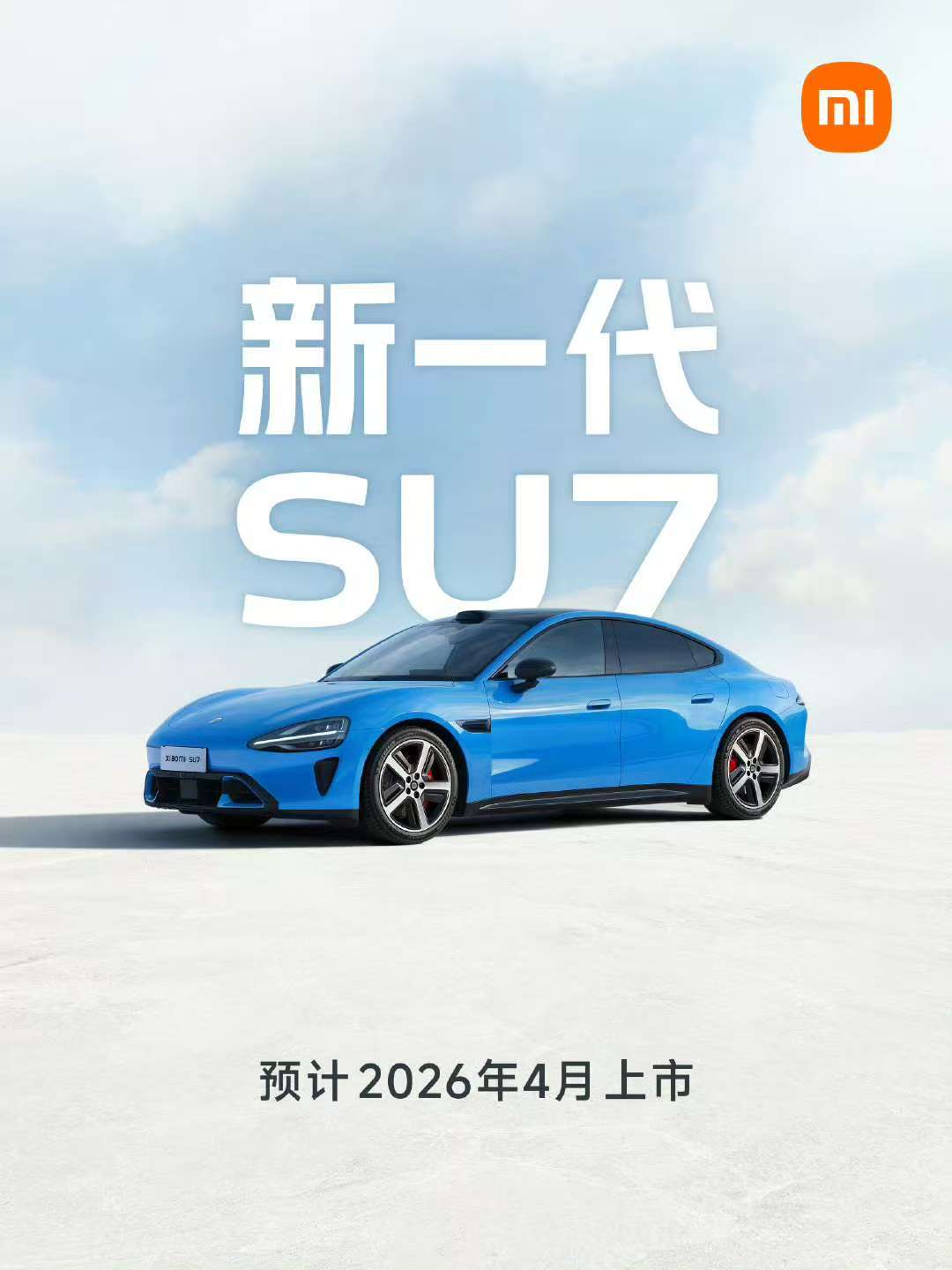
雷军宣布新一代小米SU7今年4月上市,标配智驾 续航最高902km
Jin Rong Jie· 2026-01-07 03:03
Group 1 - The core announcement is that Xiaomi's SU7 will soon undergo its first facelift, with the new generation model expected to launch in April and pre-orders starting today [1] - The current SU7 model has delivered over 360,000 units in just 1 year and 9 months, averaging over 17,000 units per month, making it a top-selling vehicle in the over 200,000 yuan segment [1] - The new generation SU7 will have a starting price of 229,900 yuan for the standard version, 259,900 yuan for the Pro version, and 309,900 yuan for the Max version [4] Group 2 - The new generation SU7 features enhanced safety with a 2200MPa ultra-strong steel embedded roll cage, nine airbags, and two additional rear side airbags [4] - It is equipped with advanced technology including laser radar, 700 TOPS computing power, 4D millimeter-wave radar, and Xiaomi's end-to-end driving assistance [5] - The Pro version offers a CLTC range of up to 902 km, while the Max version can gain 670 km of range with just 15 minutes of charging [5] Group 3 - The new model includes aesthetic upgrades such as new colors and wheel designs, and all versions are equipped with the V6s PLUS super motor for improved performance [8] - The Pro and Max versions feature closed dual-chamber air suspension and variable damping shock absorbers [8] - Interior redesign includes a new dark night black color scheme and a two-tone steering wheel, with a 1,000 yuan deposit required for pre-orders [8]


英伟达发布开源智驾模型与L4生态,关注港股通汽车ETF易方达(159121)投资机会
Mei Ri Jing Ji Xin Wen· 2026-01-07 03:02
Core Insights - Nvidia has launched the new open-source VLA model Alpamayo at the CES conference, which will first be integrated into the new Mercedes-Benz CLA model [1] - The unveiling of Nvidia's global L4 autonomous driving and Robotaxi ecosystem indicates that the "chip + algorithm" integrated model is becoming the mainstream supply path for advanced intelligent driving [1] - The industry is entering a critical acceleration phase for commercial operation of L4 autonomous driving, with a resonance of trends both domestically and internationally, presenting opportunities for valuation recovery from technology development to scale profitability [1] Industry Overview - The Hang Seng Hong Kong Stock Connect Automotive Theme Index consists of 40 stocks related to the automotive industry within the Stock Connect range, covering leading companies in the Hong Kong automotive sector and core companies in the intelligent supply chain [1] - Investors can track investment opportunities in the intelligent driving industry chain through products like the E Fund Automotive ETF (159121) [1]

智能驾驶+汽车电子概念联动4连板!索菱股份9:25再度涨停,背后逻辑揭晓
Jin Rong Jie· 2026-01-07 02:01
Group 1 - The core point of the article highlights that Suoling Co., Ltd. has achieved a four-day consecutive limit-up in stock trading, indicating strong market interest and performance [1] - The stock reached a trading limit at 9:25 AM with a transaction volume of 73 million yuan and a turnover rate of 1.06% [1] - The controlling shareholder's concerted action participant, Tanghe Holdings, successfully bid for and purchased 37.5 million shares of the company, having fully paid the auction transaction amount [1] Group 2 - The company's business includes in-vehicle intelligent terminals and autonomous driving systems, linking it to developments in the smart driving sector [1]

滚动更新丨A股指数小幅高开,半导体产业链大涨,普冉股份创历史新高
Di Yi Cai Jing· 2026-01-07 01:40
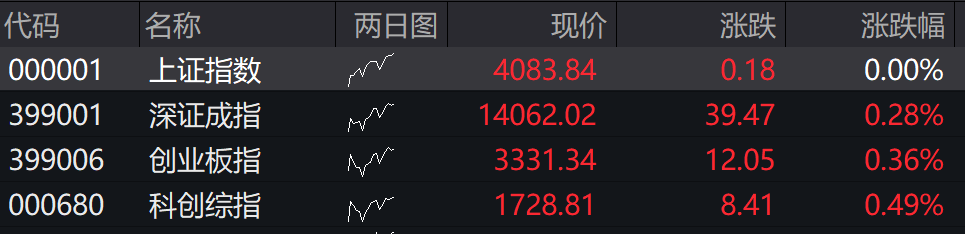
Group 1: Market Overview - The semiconductor sector is leading the market with significant gains, particularly in storage chips, with companies like Purun Co., Ltd. hitting a 20% limit up and reaching a historical high [1] - The A-share market opened with the Shanghai Composite Index slightly higher, while the Shenzhen Component Index and the ChiNext Index opened up by 0.28% and 0.36% respectively [2][3] - The semiconductor industry chain is experiencing a surge, with storage and advanced packaging sectors leading the gains, while rare earth, consumer electronics, AI applications, and smart driving concept stocks are also active [3] Group 2: Individual Company Performance - Shangfeng Cement opened over 3% higher after announcing plans to invest 900 million yuan to jointly establish a semiconductor industry fund [3] - Times New Material opened 3.38% higher following the signing of a sales contract for wind turbine blades worth approximately 3.32 billion yuan [3] Group 3: Hong Kong Market Performance - The Hong Kong stock market opened lower, with the Hang Seng Index down 0.41% and the Hang Seng Tech Index down 0.28%, while companies like Alibaba and NIO saw declines of over 2% [5][6]


信心加码!佑驾创新(02431)启动2亿港元回购计划,董事长个人再度增持5万股
智通财经网· 2026-01-07 01:39
Core Viewpoint - The company, Youjia Innovation, is demonstrating confidence in its business outlook through a combination of share buybacks and the chairman's increased shareholding, signaling a commitment to long-term value creation [1][2][3]. Group 1: Share Buyback and Chairman's Purchase - Youjia Innovation plans to repurchase up to HKD 200 million of its H-shares in the open market, reflecting the board's confidence in the company's business prospects [1]. - The chairman, Liu Guoqing, has purchased an additional 50,000 shares at an average price of approximately HKD 13.94 per share, totaling 100,000 shares over two days, reinforcing his commitment to the company's growth [2][3]. Group 2: Company Performance and Market Position - In the first half of 2025, Youjia Innovation achieved revenue of CNY 346 million, a year-on-year increase of 46%, with gross profit rising by 54.8% to CNY 52 million, and gross margin improving to 15% [6]. - The company has established a diverse product matrix and has successfully commercialized both L2 and L4 autonomous driving technologies, making it one of the few players in the market with capabilities across these segments [6]. - Youjia Innovation has partnered with 42 vehicle manufacturers, including major brands, and is expanding its international presence, with recent successes in its autonomous driving and cockpit business [6]. Group 3: Industry Trends and Future Growth - The company is well-positioned to benefit from industry policy incentives and the commercialization wave in autonomous driving, particularly with the recent green light for L3-level autonomous driving [7][8]. - The transition to human-machine co-driving and the anticipated standardization of driver status monitoring in smart vehicles align with the company's long-standing focus on intelligent cockpit solutions, indicating a growth trajectory [8]. - Youjia Innovation's robust fundamentals and strategic positioning are expected to enable it to navigate market volatility and continue delivering long-term value through technological advancements and global expansion [8].
中方加强两用物项对日出口管制;美股存储芯片概念大涨丨盘前情报
2 1 Shi Ji Jing Ji Bao Dao· 2026-01-07 01:00
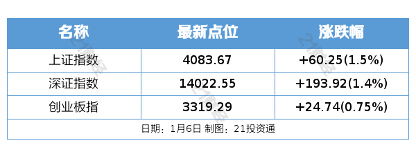
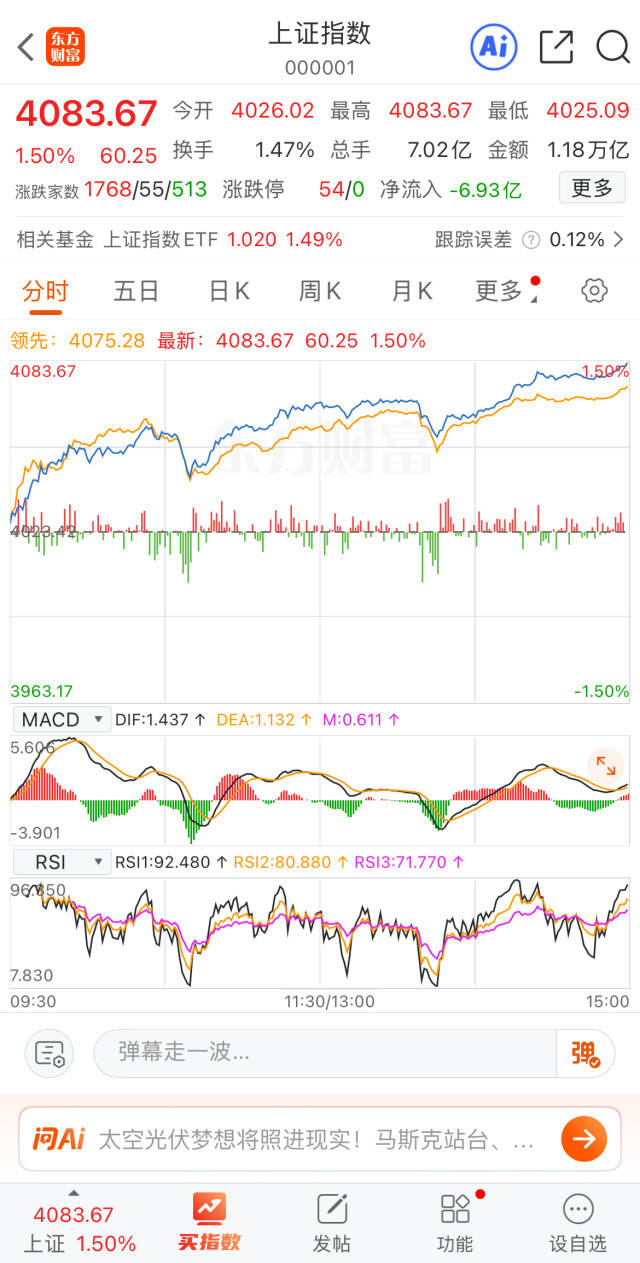
Market Performance - On January 6, major indices in China saw collective gains, with the Shanghai Composite Index rising by 1.5% to close at 4083.67 points, the Shenzhen Component Index increasing by 1.4% to 14022.55 points, and the ChiNext Index up by 0.75% to 3319.29 points [1][2] - The trading volume in the Shanghai and Shenzhen markets reached 2.81 trillion yuan, an increase of 260.2 billion yuan compared to the previous trading day [1] Sector Highlights - The commercial aerospace sector experienced significant activity, with over ten constituent stocks hitting the daily limit [1] - The brain-computer interface concept continued to show strength, while the financial sector collectively surged [1] - The intelligent driving concept gained traction, and the chemical sector also saw positive performance, along with active movements in the non-ferrous metals sector [1] International Market Overview - In the U.S., major stock indices also rose on January 6, with the Dow Jones Industrial Average increasing by 484.90 points (0.99%) to 49462.08 points, the S&P 500 up by 42.77 points (0.62%) to 6944.82 points, and the Nasdaq Composite rising by 151.35 points (0.65%) to 23547.17 points [3] - The storage sector in the U.S. saw significant gains, with Micron Technology rising over 10% and Western Digital increasing by over 16% [3] Commodity Prices - International oil prices fell on January 6, with light crude oil futures for February delivery dropping by $1.19 to $57.13 per barrel (a decrease of 2.04%), and Brent crude oil for March delivery down by $1.06 to $60.70 per barrel (a decrease of 1.72%) [4][5] Monetary Policy Insights - The People's Bank of China emphasized the continuation of a moderately loose monetary policy, focusing on promoting high-quality economic development and reasonable price recovery [6] - The central bank plans to utilize various monetary policy tools flexibly and efficiently, maintaining ample liquidity and relatively loose financing conditions [6] Rare Earth Export Regulations - China is considering tightening export license reviews for rare earths to Japan, potentially impacting economic relations and trade dynamics [8] - If restrictions on rare earth exports to Japan last for three months, it could result in an estimated loss of 660 billion yen, affecting GDP by 0.11% [8] Investment Opportunities - Analysts suggest that the tightening of rare earth export controls could enhance the strategic value of the rare earth industry, leading to a revaluation of related listed companies [8] - Companies such as Huahong Technology, China Rare Earth, and Northern Rare Earth are highlighted as potential investment opportunities in the context of rising rare earth prices [8]
青年理财看重“精准化+多元化”
Sou Hu Cai Jing· 2026-01-07 00:50
Core Insights - The 2025 financial market has reached a historic turning point, with significant changes in interest rates and investment strategies among the youth [2][3] - The trend of "diversified allocation" is emerging as young investors shift from passive saving to active financial planning [7][9] Group 1: Financial Market Trends - In 2025, the interest rate for demand deposits at major state-owned banks dropped to 0.05%, nearing a "zero interest rate" scenario, while the three-year fixed deposit rates remained between 1.5% and 1.75% [2] - The stock market and gold prices have been on the rise, leading to a more diverse range of multi-asset and multi-strategy products in the investment market [2] - By October 2025, the total scale of bank wealth management products reached a historical high of 33.18 trillion yuan, with a month-on-month increase of 1.05 trillion yuan [4] Group 2: Youth Investment Behavior - The youth demographic is increasingly abandoning the "lying flat" saving mentality, opting instead for a diversified strategy centered around "new three golds"—money market funds, bond funds, and gold funds [2][4] - As of April 2025, 937 million individuals from the post-90s and post-00s generations have begun to allocate their investments into standardized "new three gold" combinations [4] - The demand for long-term security among young people is evident, with a 62% year-on-year increase in the number of individuals aged around 30 participating in personal pension plans [5][6] Group 3: Regulatory and Product Developments - The personal pension product market has expanded significantly, with 1,256 products available, including savings, insurance, funds, and wealth management [5] - The regulatory framework is evolving, with the expansion of personal pension product trials nationwide, encouraging the issuance of long-term pension wealth management products [8][10] - By November 2025, the cumulative scale of pension wealth management products reached 110.2 billion yuan, with major institutions leading in market share [8] Group 4: Future Outlook for 2026 - In 2026, young investors are expected to seek diversified portfolios that balance liquidity, stability, and returns, with a focus on money market funds for short-term needs and bond funds for steady income [9][10] - Predictions indicate that technology-themed funds and gold investments will see significant growth, with potential annual returns exceeding 7.8% for certain funds [9][11] - The introduction of new categories of personal pension products, including government bonds, is anticipated to enhance the investment landscape for young individuals [11]

以旧换新带动消费3.92万亿,英伟达发布新一代AI平台 | 财经日日评
吴晓波频道· 2026-01-07 00:30
Group 1 - The core viewpoint of the article emphasizes the impact of government subsidy policies on consumer spending, particularly in the automotive and home appliance sectors, projecting a total consumption boost of 3.92 trillion yuan [2] - The government aims to replace 18.3 million vehicles under the old-for-new policy, with nearly 60% being new energy vehicles, and 192 million home appliances, with 90% being of first-level energy efficiency [2] - The continuation of the "national subsidy" policy is expected to support the recovery of domestic consumption, having previously activated latent demand in the automotive and home appliance industries [2][3] Group 2 - The ISM manufacturing index in the U.S. fell from 48.2 to 47.9 in December, marking the largest contraction since 2024, with 15 industries experiencing shrinkage [4] - The report indicates that new orders have contracted for four consecutive months, and employment numbers have decreased for 11 months, although the rate of decline has slowed [4] - High inflation and trade tensions are putting increasing pressure on U.S. manufacturing, leading to a decline in production willingness [4] Group 3 - Shanghai is accelerating the establishment of a low-altitude economy advanced manufacturing cluster, targeting a core industry scale of approximately 80 billion yuan by 2028 [5] - The recent measures provide clear quantitative goals and financial support for enterprises, indicating a systematic approach to developing the low-altitude economy [5][6] - The low-altitude economy is expected to create more opportunities in related industries as regional and supply chain collaborations become tighter [6] Group 4 - NVIDIA launched the new Rubin AI platform at CES, which significantly reduces the cost of inference token generation and the number of GPUs needed for training mixed expert models [7] - The platform represents a major advancement in AI chip technology, maintaining NVIDIA's competitive edge with annual updates [7][8] - NVIDIA's strategy includes strengthening its software ecosystem and providing new open-source models for applications in autonomous driving and robotics [8] Group 5 - Intel introduced its first 18A process PC chip, the Core Ultra3, which is expected to enhance local AI inference, graphics processing, and energy efficiency [9] - The 18A process represents Intel's highest level of semiconductor manufacturing technology, aimed at improving chip performance and power efficiency [9][10] - The launch of this chip is critical for Intel to demonstrate its technological capabilities and regain market position amid competitive pressures [10] Group 6 - Tesla has introduced a five-year interest-free car purchase plan for its Model 3 and Model Y vehicles in China, amid declining global sales [11] - The company faced an 8.6% year-over-year drop in global deliveries, marking the first time it was surpassed by BYD in electric vehicle sales [11][12] - Tesla's strategy appears to be shifting towards autonomous driving technology and robotics to explore new revenue growth avenues beyond vehicle sales [12] Group 7 - The China Securities Regulatory Commission (CSRC) is leading a multi-department initiative to combat financial fraud in the capital market, focusing on enhancing legal frameworks and company governance [13] - The initiative aims to create a comprehensive system to deter financial fraud and improve the overall integrity of the capital market [13][14] - Recent actions have seen several companies delisted due to financial fraud, highlighting the increased penalties and enforcement efforts [14] Group 8 - The stock market showed strong performance with the Shanghai Composite Index reaching a ten-year high, driven by significant trading volume and active market participation [15] - The market's upward trend is supported by favorable fiscal and monetary policies, alongside increased efforts to combat financial fraud [16] - The influx of external capital is primarily motivated by a fear of missing out on potential gains, indicating a bullish sentiment towards the A-share market [16]


沪指13连阳并创10年新高 超百只湘股上涨
Sou Hu Cai Jing· 2026-01-07 00:09
截至1月6日收盘,沪指涨1.5%,深成指涨1.4%,创业板指涨0.75%,北证50指数涨1.82%,沪深京三市 成交额超2.8万亿元,较上日放量2650亿元。盘面上,全市场超4100只个股上涨。其中有143只个股涨 停,连续两日超百股涨停。 (1月6日市场涨跌情况) 市场热点轮番活跃。板块题材上,脑机接口、化学化工、大金融、有色金属、商业航天、无人驾驶、半 导体等板块涨幅居前。脑机接口今日再度掀起涨停潮,三博脑科、伟思医疗、南京熊猫、国际医学、爱 朋医疗等近20股涨停。商业航天概念持续爆发,10余只成分股涨停,鲁信创投8天6板,北斗星通、中国 卫通6天4板。大金融板块集体拉升,华林证券、大智慧涨停。智能驾驶概念走强,万集科技、路畅科技 等多股涨停。化工板块走高,中泰化学、潞化科技、氯碱化工涨停。有色金属板块表现活跃,洛阳钼 业、紫金矿业等多股创历史新高。 | 序号 | 股票代码 | 股震筒称 | [ 现价(元) | 涨跌幅:前复权(%)(2)。 2026.01.06 | 张跌幅:前复权排名 2026.01.06 | 城市(7) | 所属同花顺行业 | | --- | --- | --- | --- | --- ...
天龙股份拟2.32亿控股苏州豪米波 业绩稳健跨界布局智能驾驶赛道
Chang Jiang Shang Bao· 2026-01-06 23:51
Core Viewpoint - Tianlong Co., Ltd. is making a significant strategic shift from a traditional automotive parts supplier to an intelligent perception integrator by acquiring a controlling stake in Suzhou Haomibo Technology Co., Ltd. for 232 million yuan [1][2]. Group 1: Acquisition Details - Tianlong plans to acquire 54.87% of Suzhou Haomibo through a combination of equity transfer and capital increase, with a total investment of 232 million yuan [1][2]. - The acquisition consists of two parts: 131.84 million yuan for acquiring 32.2998% equity from seven shareholders and 100 million yuan for capital increase to subscribe to the new registered capital of 7.608 million yuan [2]. - The deal includes performance-based clauses, requiring Suzhou Haomibo to achieve a cumulative revenue of 1.2 billion yuan and a net profit of 48 million yuan from 2026 to 2029 [2]. Group 2: Company Performance - Tianlong's financial performance remains robust, with a revenue of 947 million yuan and a net profit of 82.7036 million yuan for the first three quarters of 2025 [4]. - In Q3 2025, the company reported a revenue of 333 million yuan, a year-on-year increase of 2.03%, and a net profit of 26.1814 million yuan, up 6.31% [4]. - The company's net profit excluding non-recurring items grew by 21.56%, indicating strong resilience in its core business [4]. Group 3: Suzhou Haomibo's Growth - Suzhou Haomibo, established in 2016, focuses on R&D in intelligent perception devices, including 4D millimeter-wave radar and UWB sensors [2]. - The company has shown rapid revenue growth, achieving 33.7945 million yuan in revenue for the first three quarters of 2025, a staggering increase of 288.64% compared to the entire year of 2024 [3]. - With the increasing penetration of intelligent driving technology and the gradual mass production of projects, Suzhou Haomibo's operational performance is expected to continue improving [3]. Group 4: Market Outlook - The acquisition positions Tianlong to leverage Suzhou Haomibo's technological expertise in intelligent perception to enter high-growth sectors such as intelligent driving, low-altitude flight, smart transportation, and robotics [5]. - The market for 4D millimeter-wave radar is projected to experience explosive growth, with the Chinese market expected to reach 12.8 billion yuan in 2024 and 37 billion yuan by 2030, reflecting a compound annual growth rate of 20% [5].
