滞胀

Search documents
海外高频 | 美英达成贸易协议,联储例会“静观其变”
赵伟宏观探索· 2025-05-11 14:18
Core Viewpoint - The article discusses the potential risks of stagflation due to tariffs and the divided market expectations regarding the Federal Reserve's interest rate cuts, emphasizing the importance of financial market conditions in the Fed's decision-making process in 2025 [3][51]. Group 1: Overseas Major Assets & Events - The overseas asset performance showed divergence, with a significant rebound in oil prices. WTI crude oil increased by 4.7% to $61.0 per barrel, while COMEX gold rose by 3.1% to $3,326.3 per ounce [4][26][29]. - The S&P 500 index experienced a slight decline of 0.5%, with mixed performances across developed market indices. The 10-year U.S. Treasury yield rose by 4 basis points to 4.37% [4][13]. - The U.S. and the UK reached a trade agreement, with the U.S. maintaining a 10% tariff on UK imports while reducing tariffs on UK automobiles for the first 100,000 units [4][33]. Group 2: Federal Reserve Insights - The May FOMC meeting highlighted a "wait-and-see" approach, acknowledging the uncertainty in economic prospects and the rising risks of higher unemployment and inflation. The Fed maintained the federal funds rate target range at [4.25%-4.50%] [39][41]. - Fed officials expressed that the current economic conditions do not necessitate immediate adjustments to interest rates, emphasizing the need for more data to assess the impact of tariffs on the economy [41][39]. Group 3: Economic Indicators - U.S. initial jobless claims for the week ending May 3 were reported at 228,000, lower than the market expectation of 230,000, indicating a robust labor market [45]. - Germany's industrial production in March increased by 3% month-on-month, surpassing market expectations of 1%, driven by strong performances in pharmaceuticals and motor vehicles [43][44].


诺奖得主斯蒂格利茨:特朗普欲将美国变成世界上最大的避税港
Di Yi Cai Jing· 2025-05-11 12:33
Group 1 - The multilateral trade deficit reflects the gap between domestic savings and domestic investment, and tax cuts for billionaires will exacerbate this deficit by reducing national savings [1][2] - The Trump administration's policies, including tax cuts and withdrawal from international tax agreements, are seen as a strategy to undermine established systems that have been in place for 250 years [1][3] - Empirical studies show that tax cuts for the wealthy do not significantly impact economic growth or unemployment rates but increase income inequality [2][3] Group 2 - The U.S. has become a service-oriented economy, with key exports being tourism, education, and healthcare, which have been systematically weakened under Trump's policies [2][3] - The fear of stagflation has impacted stock and bond markets, with potential tax revenue decreasing by over 10% due to weakened enforcement and compliance [3][4] - The U.S. government's withdrawal from international tax cooperation and enforcement of anti-corruption laws indicates a deliberate pattern of dismantling frameworks aimed at combating tax evasion and money laundering [3][4] Group 3 - The rise of unregulated cryptocurrency markets under the Trump administration has contributed to the growth of the global illegal economy, with significant regulatory rollbacks [4][5] - The issuance of controversial stablecoins and the promotion of cryptocurrency by Trump and his associates reflect a broader attack on laws that threaten wealth accumulation [5][6] - Global cooperation has proven effective in addressing tax issues, as seen with the introduction of a global minimum tax rate by over 50 countries [5][6]
斯蒂芬·罗奇:一种更令人担忧的滞胀正在酝酿,全球衰退风险增加
Di Yi Cai Jing· 2025-05-11 12:33
Group 1 - The article discusses the emerging risks of stagflation in the U.S. and global economy, highlighting the potential for a prolonged economic downturn due to various factors, including supply chain disruptions and political influences on central banks [1][4] - It contrasts the current situation with the temporary supply chain issues experienced during the COVID-19 pandemic, indicating that the current stagflation could have more severe and lasting impacts on the economy and financial markets [1][3] - The article emphasizes the inefficiencies that may arise from the reorganization of global supply chains, which could lead to increased costs and prices globally, undermining the efficiency gains seen over the past decade [2][3] Group 2 - The politicalization of central banks, particularly the Federal Reserve, is highlighted as a significant concern, with references to former President Trump's criticisms and threats against the Fed's leadership, which could undermine its independence [3][4] - The article draws parallels between the current economic climate and the stagflation of the late 1970s, suggesting that a weak dollar and political pressure on monetary policy could exacerbate inflationary pressures [3][4] - The potential for retaliatory trade actions resulting from protectionist policies, such as tariffs, is discussed, with historical comparisons to the Smoot-Hawley Tariff Act and its devastating impact on global trade [5]
零度解读5月8日美联储利率决议发布会
Di Yi Cai Jing· 2025-05-11 07:35
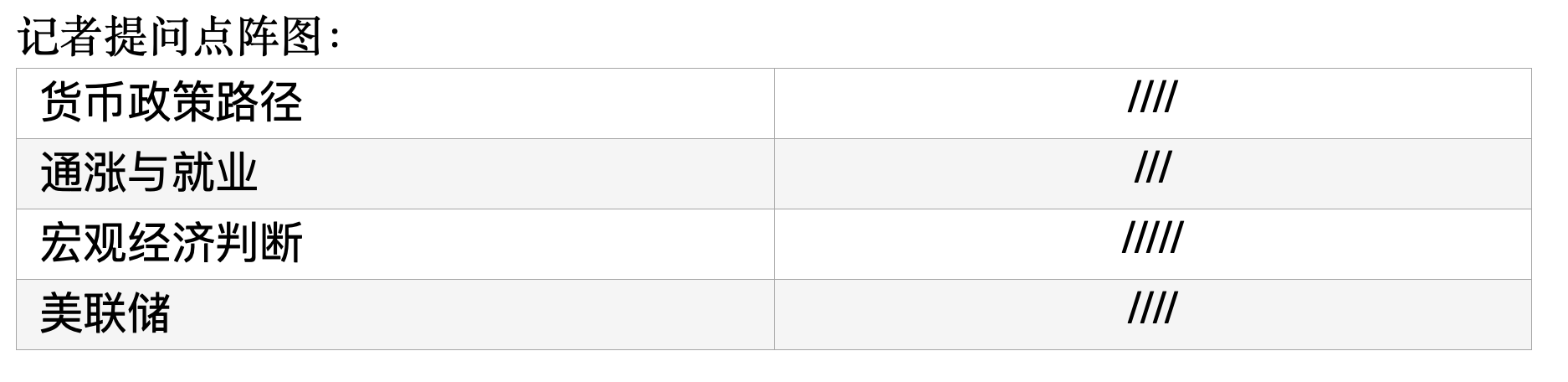
等到今年第四季度,大戏才会进入高潮。 一个多月前特朗普宣布对全球贸易伙伴征收大幅关税,放话要平衡美国巨额贸易赤字。一瞬间全球贸易秩序、国际间商品物流和价格体系、世界贸易和投资 的资金循环都被打破。股市出现大幅波动,美元汇率下跌,长期美债下跌。股债汇三杀的局面逆转了过去几十年来,每当风险资产遭到抛售,资金会进入美 元和美元债券进行避险的操作逻辑。许多美国企业在发布一季度财报时拒绝给出业绩指引,因为他们无法预判剧烈动荡中的经营情况。全球投资者认识到美 国经济的例外主义结束了,这条航船正在驶入未知的水域,远处天空布满了不祥的乌云。 美联储5月议息会议决定维持政策利率在4.25%~4.50%不变。这并不出人意料,因为通过央行管理双重目标的狭窄镜框所看到的经济硬数据依然稳定。但是 议息决议中出现了这么一句话:"如果大幅关税被继续实施,它可能造成通胀上升、经济增长放缓、失业率提高。" 美联储主席鲍威尔本可以直接说关税将 引发滞胀,但他怕会吓坏大家。这是美联储能对政府喊出的最大声的脏话,对经济发出的黑色风暴预警。 财经记者提问,"3月份预测今年有两次降息,没了吗?" "你今天不着急,下次该降息了吧?" "经济可能衰退,不能 ...
热点思考 | 金融压力或是美联储“转鸽”的主要矛盾 ——关税“压力测试”系列之六
申万宏源宏观· 2025-05-11 00:45
Core Viewpoint - The article discusses the potential impact of tariffs on inflation and the Federal Reserve's interest rate decisions, highlighting a divergence in market expectations regarding rate cuts in 2025 due to financial pressures and the risk of stagflation [1][5]. Group 1: Financial Pressure as a Key Factor - In a stagflation environment, the Federal Reserve faces challenges in balancing its dual mandate, with financial pressure emerging as a primary concern [2][48]. - The economic effects of tariffs are contributing to stagflation, as indicated by manufacturing PMI and short-term inflation expectations, suggesting that stagflation risks are increasing [2][48]. - The Federal Reserve's recent stance indicates a preference for a reactive approach rather than a preemptive one, focusing on the economic impact of tariffs and uncertainty in the economic outlook [7][48]. Group 2: Impact of Financial Pressure on Decision-Making - Sustained financial pressure may lead the Federal Reserve to consider policy adjustments, as rising financial pressure often signals economic downturn expectations [3][24]. - Historical instances show that rising financial pressure has been a significant condition for the Federal Reserve to adopt a dovish stance, such as during the 2015-2016 period and the onset of the COVID-19 pandemic [3][28]. - The article emphasizes that financial conditions, including credit, valuation, and liquidity, are critical in assessing the overall financial pressure faced by the economy [24][25]. Group 3: Expectations for Rate Cuts in 2025 - The article anticipates that the Federal Reserve may initiate rate cuts in the third quarter of 2025, as the economic narrative shifts from stagflation to recession [4][35]. - The upcoming months will see market focus on the balance between inflation and economic slowdown, with expectations that if inflationary pressures ease while economic downturns persist, the Federal Reserve's primary concerns will shift accordingly [4][35]. - The probability of rate cuts may decrease if financial markets remain stable, but overall financial pressures are expected to trend upward, paving the way for potential rate cuts later in the year [4][35].
海外高频 | 美英达成贸易协议,联储例会“静观其变”
申万宏源宏观· 2025-05-11 00:45
Group 1 - The article discusses the divergence in market expectations regarding the Federal Reserve's interest rate cuts in the context of potential stagflation risks due to tariffs [1][43] - The Federal Open Market Committee (FOMC) meeting in May emphasized a "wait-and-see" approach, indicating that the economic outlook remains uncertain with rising risks of higher unemployment and inflation [2][31] - The article highlights the recent trade agreement between the US and the UK, where the US retains a 10% tariff on UK imports while reducing tariffs on certain automotive products [25][29] Group 2 - The performance of major overseas assets showed mixed results, with a notable rebound in oil prices, as WTI crude oil increased by 4.7% to $61.0 per barrel [19][20] - The article notes that the 10-year US Treasury yield rose by 4 basis points to 4.37%, reflecting a general upward trend in developed market bond yields [8][12] - Emerging market bond yields exhibited a mixed trend, with India's 10-year yield rising by 13 basis points to 6.48%, while Brazil's yield fell by 36 basis points to 13.70% [9][12] Group 3 - The article reports that US initial jobless claims were lower than market expectations, with 228,000 claims filed, indicating a robust labor market that supports the Fed's cautious stance [37] - The article mentions that Germany's industrial production in March exceeded market expectations, rising by 3% month-on-month, which may reflect increased exports to the US [35][36]

中美接触前,特朗普又出幺蛾子,几分钟后,美联储传出噩耗
Sou Hu Cai Jing· 2025-05-10 13:06
Group 1 - The core viewpoint of the articles revolves around the upcoming meeting between Chinese Vice Premier and U.S. Treasury Secretary, which is seen as a step towards de-escalating trade tensions between the two countries [1][3][5] - The meeting is a response to the pressure from U.S. businesses and consumers, indicating that China is willing to engage in dialogue after careful consideration of the U.S. stance [1][3] - The Chinese government has maintained a firm position on tariffs but has shown flexibility by agreeing to talks, suggesting a potential shift from confrontation to a more balanced competition and cooperation with the U.S. [3][5] Group 2 - The U.S. Federal Reserve's decision to maintain interest rates has been influenced by the significant impact of tariffs on the economy, with concerns about inflation and unemployment rising [5][6] - The stock market experienced volatility following the Fed's announcement, with major indices initially dropping before recovering to close higher, indicating investor uncertainty amid trade tensions [5][8] - Fed Chairman Powell emphasized that the current trajectory of government debt growth is unsustainable, highlighting potential risks to economic stability [6][8]
美股盘中跳水,特斯拉涨超4%
新华网财经· 2025-05-10 01:52
Market Overview - On May 9, US stock indices opened higher but experienced a decline, leading to weak fluctuations. The Dow Jones Industrial Average fell by 0.29%, the S&P 500 decreased by 0.07%, and the Nasdaq remained flat [3] - The technology sector showed mixed performance, with the Wind US Technology Seven Giants Index rising by 0.16%. Tesla saw a significant increase, closing up by 4.72% after peaking at over 7% during the day [5] Commodity Market - International gold and oil prices both increased, with oil prices showing a more pronounced rise. The dollar index declined [9] - As of May 9, London spot gold and COMEX gold futures both rose, with increases of 0.65% and 0.7% respectively. NYMEX WTI crude oil futures and ICE Brent crude oil futures also saw gains of 1.92% and 1.65% respectively [10][11] Chinese Stocks - The Nasdaq Golden Dragon China Index closed down by 0.45%, with mixed performances among Chinese stocks. Notable gainers included Brain Rebirth, which surged over 72%, and Yikaton Technology, which rose over 14% [7] Future Outlook - For gold prices, long-term factors such as uncertainty in international trade policies and geopolitical risks are expected to support gold prices [10] - In contrast, for oil prices, expectations of weak demand and increased production from OPEC+ are likely to lead to a bearish trend in international crude oil futures [12]

【月度观察·渣油】:4月跌幅收窄 5月或区间震荡
Sou Hu Cai Jing· 2025-05-10 01:12
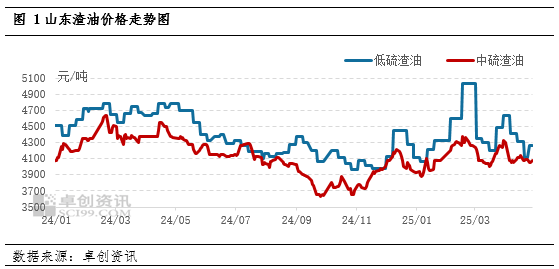
Core Viewpoint - The supply pressure in the residual oil market has decreased in April, but downstream demand remains limited, leading to an overall decline in prices, with a slight narrowing of the decline [1][2][4]. Supply and Demand Analysis - In April, the average price of low-sulfur residual oil was 4260 yuan/ton, down 370 yuan/ton or 7.99% from the beginning of the month, while the average price of medium-sulfur residual oil was 4080 yuan/ton, down 240 yuan/ton or 5.56% [1]. - The average operating load of domestic major refineries in April was 75.35%, a decrease of 3.32 percentage points month-on-month, while the average operating load of Shandong independent refineries was 54.74%, an increase of 0.02 percentage points [6]. - The actual external supply of residual oil in April was around 360,000 tons, a decrease of 27.21% month-on-month, indicating a tightening supply situation [6]. Price Trends - The international oil price showed a trend of continuous decline followed by moderate rebound, with the WTI average price at $62.96/barrel, down $4.98/barrel or 7.33% month-on-month, and the Brent average price at $66.46/barrel, down $5.01/barrel or 7.01% [4]. - The average profit of Shandong independent refineries' coking units in April was 337 yuan/ton, down 101 yuan/ton from the previous month, indicating reduced profitability and lower procurement willingness for residual oil [8]. Future Outlook - For May, residual oil prices are expected to fluctuate within a range, with limited upward momentum due to weak downstream demand and continued weakening of cost support [10][11]. - The forecast for low-sulfur residual oil prices is between 4015-4380 yuan/ton, while medium-sulfur residual oil prices are expected to range from 3850-4200 yuan/ton [12].
失业率上升,经济增长放缓,美联储理事急发警告
Sou Hu Cai Jing· 2025-05-10 01:06
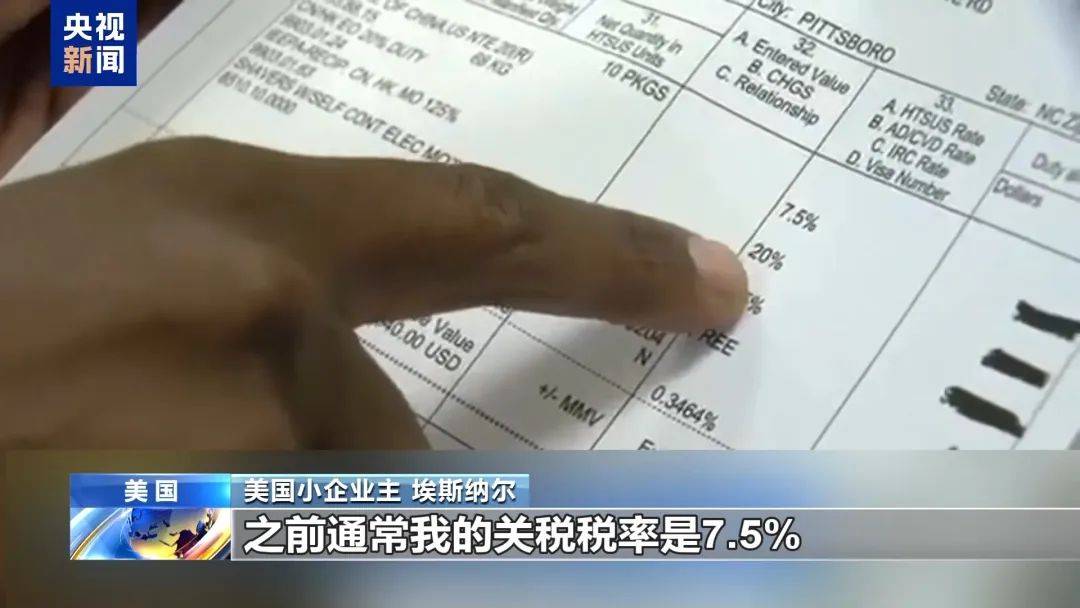
Group 1: Economic Impact of Tariffs - The Federal Reserve Board member Michael Barr warns that the tariff policy from the Trump administration may lead to a slowdown in U.S. economic growth and an increase in inflation later this year [1] - Barr believes that higher tariffs could disrupt global supply chains, causing persistent upward pressure on inflation and potentially increasing unemployment rates as economic growth slows [1] - The Seattle port officials report a significant drop in import volumes due to tariff policies, with no container ships currently docked, indicating a rare and concerning trend [2] Group 2: Challenges Faced by Small Businesses - Small business owners are severely impacted by high tariffs, with one owner revealing that his tariff bill exceeded the cost of the imported goods, paying $4,600 in tariffs on $3,000 worth of products [3][4] - Unlike large corporations, small businesses lack sufficient financial buffers to cope with high tariffs, facing challenges such as layoffs, reduced hiring, and potential closures [9] - Recent surveys indicate that nearly 80% of small business owners are worried about the impact of tariffs on their operations [11]