
算力

Search documents
华尔街见闻早餐FM-Radio | 2025年12月22日
Hua Er Jie Jian Wen· 2025-12-21 23:00
Market Overview - Technology stocks supported the market, with major U.S. indices continuing to rise despite the "Triple Witching" day volatility, with the Nasdaq gaining over 1% in two days [2] - Oracle surged 6.6% following news of a TikTok agreement, boosting AI and semiconductor stocks, with the semiconductor index rising 3% [2] - European stocks hit record highs after the ECB raised economic forecasts, while global bond markets fell following the Bank of Japan's interest rate hike [2] - The dollar index rose for three consecutive days, while the offshore yuan retreated from a 14-month high [2] Company News - ByteDance's profit is reportedly expected to reach $50 billion this year, although insiders claim this data is inaccurate [26] - Wall Street is closely watching the competition for the Federal Reserve chair, with Waller performing well in interviews and gaining support from corporate executives [19] - Wall Street analysts are optimistic about the upcoming IPOs of AI companies, with Zhipu AI and MiniMax disclosing their prospectuses [27][34] - The GPU company Wallen Technology is set to go public in Hong Kong, with a maximum offer price of HKD 19.60 per share [27] Industry Developments - The new generation GPU architecture "Huagang" by Moore Threads is set to improve efficiency by 10 times, with mass production expected next year [26] - The global first commercial supercritical carbon dioxide power generation unit has been successfully put into operation, marking a significant technological breakthrough [43] - ByteDance is advancing partnerships with hardware manufacturers like Vivo and Lenovo to develop AI smartphones, aiming to gain user entry points [44] - The Shanghai Jiao Tong University has achieved a breakthrough in optical computing chips, which could significantly enhance AI computational capabilities [43]



电子行业周报:多款重磅AI模型更新,存储板块延续高景气趋势-20251221
KAIYUAN SECURITIES· 2025-12-21 10:16
Investment Rating - The industry investment rating is "Overweight" (maintained) [1] Core Views - The electronic industry index decreased by 3.02% during the week of December 15-19, 2025, with semiconductor and consumer electronics sectors experiencing declines of 3.26% and 4.12%, respectively [3] - The storage sector showed resilience, with significant gains in major companies such as Micron and SanDisk, indicating a strong performance amidst overall market fluctuations [3][4] - The report highlights the ongoing updates in AI models and the sustained high demand in the storage sector, suggesting a positive outlook for companies involved in AI computing and storage solutions [4][6] Market Review - The U.S. tech sector rebounded after a significant drop, while the A-share electronic sector faced a general decline [3] - Notable performances included Nvidia rising by 3.41%, Tesla by 4.85%, and Micron by 10.28%, while Apple and Google saw slight declines [3] Industry Updates - Multiple significant AI model updates were released, with companies like Xiaomi and Google launching advanced models that enhance performance and efficiency [4] - Apple is collaborating with Broadcom to develop an AI inference chip, expected to enter mass production in 2026 [5] Storage Sector Insights - Storage prices are continuing to rise, impacting downstream terminal pricing, with Dell planning to increase commercial PC prices by 10% to 30% [6] - Micron's FY26Q1 revenue reached $13.64 billion, a year-over-year increase of 57%, with guidance for FY26Q2 revenue also exceeding market expectations [6] Investment Recommendations - The report suggests focusing on high-growth sectors such as storage and AI computing, as well as the end-side AI sector, which is expected to maintain strong demand [7] - Beneficiary companies include North Huachuang, Tuojing Technology, and others involved in the AI and storage sectors [7]


液冷的二阶段
GOLDEN SUN SECURITIES· 2025-12-21 08:53
Investment Rating - The report maintains a "Buy" rating for key companies in the liquid cooling industry, including Zhongji Xuchuang, Xinyi Sheng, and Yingweike, among others [10]. Core Insights - The liquid cooling industry is transitioning from a phase driven by expectations to one focused on performance realization, marked by the mass production of NVIDIA's GB300 and the upcoming Vera Rubin platform [1][19]. - The market is expected to see a significant shift as high-power cabinets (100kW+) become the norm, with major companies like AWS and Meta adopting liquid cooling solutions for their self-developed ASICs starting in 2026 [2][20]. - The competitive landscape is evolving from component-level competition to a focus on comprehensive system capabilities, emphasizing the importance of integrated thermal management systems [3][21]. Summary by Sections Investment Strategy - The report suggests focusing on the computing power sector, particularly in optical communication and liquid cooling, highlighting companies like Zhongji Xuchuang and Yingweike as key players [24][13]. Industry Trends - The liquid cooling industry is entering a second development phase characterized by confirmed orders and capacity realization, with a strong emphasis on system integration and operational capabilities [6][22]. - The competitive focus has shifted to complete thermal management systems, increasing customer reliance on solution providers [3][21]. Key Companies and Recommendations - Recommended companies include Zhongji Xuchuang, Xinyi Sheng, and Yingweike, which are positioned to benefit from the industry's growth and the shift towards liquid cooling solutions [10][24]. - The report also highlights the importance of upstream and downstream partnerships within the liquid cooling supply chain, indicating a trend towards comprehensive solutions rather than standalone components [23][24].
沐曦上市,他们投出四个千亿新贵
3 6 Ke· 2025-12-21 07:51
Core Insights - The article highlights the significant rise of China's computing power sector, marked by the recent IPOs of companies like Moore Threads and Muxi, which have collectively reached a market value exceeding 1.6 trillion yuan [1][3] - Lenovo Ventures has emerged as a key player in this sector, successfully investing in four major companies: Cambricon, Haiguang Information, Moore Threads, and Muxi, showcasing its strategic foresight in the computing power landscape [3][4] Investment Strategy - Lenovo Ventures began its investment journey in the computing power sector in 2017, focusing on AI computing as a critical component of future technological advancements, despite the sector being largely overlooked at the time [4][5] - The firm has a systematic approach to investment, conducting in-depth research annually to identify emerging trends and opportunities in the industry [7][8] Notable Investments - Cambricon, a pioneer in AI-specific chip design, has seen its market value soar to over 600 billion yuan, validating Lenovo Ventures' early investment decision [4][5] - Haiguang Information, recognized for its capabilities in high-end CPU and GPU development, has also experienced significant growth, with its stock price increasing over sevenfold since its IPO [5][6] - Moore Threads and Muxi were identified and invested in during their early stages, reflecting Lenovo Ventures' commitment to supporting domestic GPU development [5][7] Ecosystem Development - Lenovo Ventures has created a complementary ecosystem among its portfolio companies, enhancing their market validation and operational efficiency through collaboration with Lenovo Group [10][11] - The firm emphasizes the importance of synergy between its investments and Lenovo's core business, aiming to integrate innovative technologies into its product offerings [10][12] Future Outlook - Lenovo Ventures is focused on disruptive computing architectures, including technologies like quantum computing and RISC-V, positioning itself to capitalize on the next wave of technological advancements [11][12] - The firm aims to remain at the forefront of the computing revolution, recognizing the evolving nature of computing and its implications for various industries [11][13]



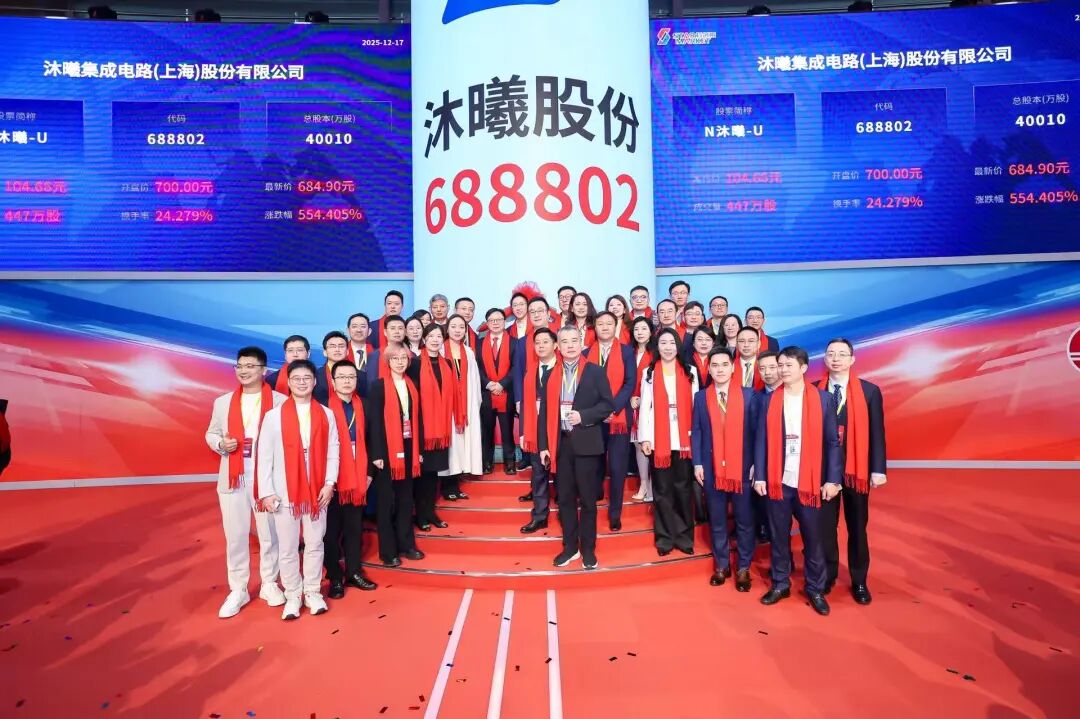
沐曦上市,他们投出四个千亿新贵
投资界· 2025-12-21 07:39
Core Viewpoint - The article highlights the emergence of a "computing power landscape" in China, marked by significant IPOs and the rise of key players in the AI chip sector, particularly focusing on the investments made by Lenovo Ventures in companies like Cambricon, Haiguang Information, Moer Technology, and Muxi, collectively valued over 1.6 trillion yuan [2][4]. Investment Strategy - Lenovo Ventures has uniquely positioned itself by investing in four major companies in the computing power sector, which is a rare achievement among investment firms [4]. - The firm began its investments in the computing power space in 2017, recognizing the potential for exponential growth in computing demand driven by AI applications [5][6]. Key Investments - Cambricon was identified as a pioneer in AI-specific chip design, leading to Lenovo Ventures' participation in all four rounds of its funding, resulting in a peak market valuation of over 600 billion yuan [6]. - Haiguang Information was another strategic investment, noted for its dual capabilities in high-end CPU and GPU development, with its stock price increasing over sevenfold since its IPO [6][7]. - In 2021, Lenovo Ventures invested in Moer Technology and Muxi, both of which were in the early stages of GPU development, anticipating a surge in demand for computing power [7][9]. Ecosystem Development - Lenovo Ventures has created a complementary technology matrix among its portfolio companies, with each focusing on different aspects of computing power: Cambricon on AI chips, Haiguang on x86 compatibility, Moer on full-function GPUs, and Muxi on data center GPUs [10]. - The firm emphasizes a research-driven investment approach, conducting extensive industry research annually to identify emerging trends and opportunities [10]. Future Directions - Lenovo Ventures is exploring further investments in cutting-edge technologies such as quantum computing, RISC-V, and brain-like computing, which are seen as pivotal for the next wave of technological advancement [14][16]. - The firm believes that the integration of advanced computing architectures and AI terminals will reshape industry dynamics and societal structures [14][15].

谷歌创始人罕见反思:低估 Transformer,也低估了 AI 编程的风险,“代码错了,代价更高”
AI前线· 2025-12-21 05:32
Group 1 - The core viewpoint of the article emphasizes the rapid advancements in AI, particularly in code generation, while also highlighting the associated risks and challenges, as noted by Sergey Brin [2][3][20] - Brin pointed out that AI's ability to write code can lead to significant errors, making it more suitable for creative tasks where mistakes are less critical [2][38] - He reflected on Google's initial hesitations regarding generative AI and the underestimation of the importance of scaling computational power and algorithms [2][22][24] Group 2 - The discussion included a historical overview of Google's founding, emphasizing the creative and experimental environment at Stanford that fostered innovation [4][6][10] - Brin noted that the early days of Google were characterized by a lack of clear direction, with many ideas being tested without strict limitations [6][9] - The importance of a strong academic foundation in shaping Google's culture and approach to research and development was highlighted [12][13] Group 3 - Brin discussed the competitive landscape of AI, noting that significant investments in AI infrastructure have reached hundreds of billions, with companies racing to lead in this space [21][22] - He acknowledged that while Google has made substantial contributions to AI, there were missed opportunities in the past due to insufficient investment and fear of releasing products prematurely [22][23][24] - The conversation also touched on the evolving nature of AI, with Brin expressing uncertainty about its future capabilities and the potential for AI to surpass human abilities [27][29][30] Group 4 - Brin emphasized the need for a balance between computational power and algorithmic advancements, stating that algorithmic progress has outpaced scaling efforts in recent years [3][55] - He mentioned that deep technology and foundational research are crucial for maintaining a competitive edge in AI [24][25] - The discussion concluded with reflections on the role of universities in the future, considering the rapid changes in education and knowledge dissemination due to technology [41][42]


【国盛计算机】算力&存力依旧
Xin Lang Cai Jing· 2025-12-21 02:42
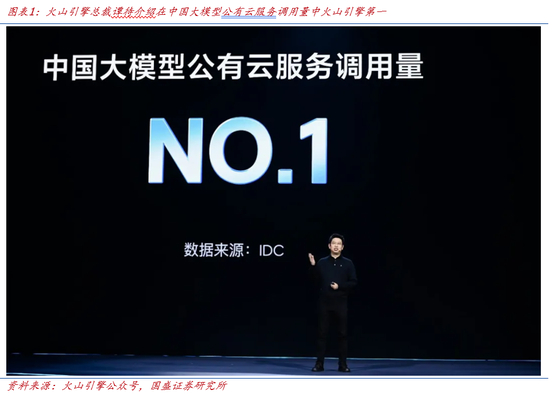
Group 1 - ByteDance's Doubao model has surpassed 50 trillion daily tokens usage, ranking first in China and third globally, with over 100 companies using more than 1 trillion tokens on the platform [1][24][30] - Tencent has announced a restructuring of its AI model development architecture, establishing new departments to enhance its AI capabilities, with former OpenAI researcher Yao Shunyu appointed as Chief AI Scientist [1][9][32] - The competition among major internet companies in the AI model sector is intensifying, indicating a sustained demand for computing power [1][10][30] Group 2 - Google's Gemini 3 Pro has made significant advancements in multimodal understanding and planning capabilities, excelling in tasks involving text, images, and other data types [2][25] - OpenAI's GPT-5.2 focuses on professional knowledge work, showing improved performance in complex document handling and data analysis, with a new evaluation system introduced to measure economic value [2][11][12] - The DeepSeek V3.2 series has achieved notable improvements through innovations like sparse attention mechanisms and extensive post-training, although it acknowledges limitations in pre-training [2][12][14] Group 3 - Micron Technology reported better-than-expected earnings, with all HBM production capacity sold out for 2026, and anticipates the HBM market to reach $100 billion by 2028 [3][15][26] - The demand for AI-driven storage solutions is surging, leading to a structural shift in production priorities, with data centers consuming significant memory resources [3][16][26] - The launch of ByteDance's Doubao mobile assistant marks a significant breakthrough in AI application, transitioning towards an agent-based interaction model [4][17][27]

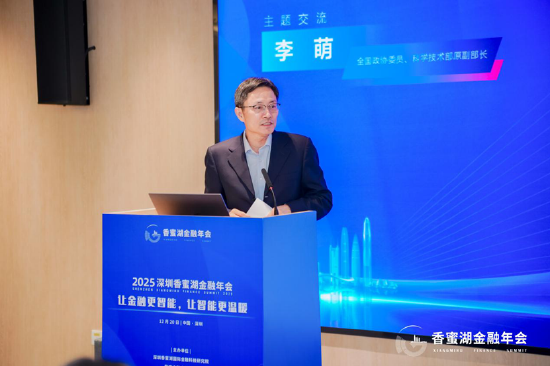
全国政协委员、科学技术部原副部长李萌:算力的短板就是中国AI产业的短板 呼吁“三大效率革命”破解困局
Xin Lang Cai Jing· 2025-12-20 13:29
Core Insights - The 2025 Shenzhen Xiangmi Lake Financial Annual Conference will be held on December 20-21, focusing on promoting a virtuous cycle of technology, industry, and finance in the Guangdong-Hong Kong-Macao Greater Bay Area [1][4] - Li Meng, a member of the National Committee of the Chinese People's Political Consultative Conference and former Vice Minister of Science and Technology, emphasized that computing power is a critical bottleneck for China's AI development and modernization [1][4] Group 1: Three Efficiency Revolutions - The "Three Efficiency Revolutions" driven by engineering and technological breakthroughs include: - Model Efficiency Revolution, which aims to reduce the training and usage costs of large models through technological innovation [3][6] - Computing Power Efficiency Revolution, which enhances resource utilization through new structural technologies like pooling and slicing [3][6] - Data Efficiency Revolution, which seeks to convert China's data scale advantage into an advantage for intelligent agents [3][6] - These three revolutions are fundamentally changing the logic of intelligence in industries such as finance [3][6] Group 2: Current State of Computing Power in China - Despite ranking second globally in total computing power, China faces significant structural issues, with intelligent computing (smart computing) only accounting for 30% of the total computing power [3][6] - Li Meng elevated the issue of computing power to a national strategic level, identifying it as a key development bottleneck [3][6] - The shortcomings in computing power are seen as limitations for China's AI capabilities and modernization efforts, with the computing power efficiency revolution viewed as a technical solution to bridge the substantial gap between supply and demand [3][6]
对话文远知行韩旭:中国真正的L4只有3家,马斯克不上激光雷达干不过Waymo | MEET2026
量子位· 2025-12-20 11:19
Core Insights - The article discusses the evolution of the autonomous driving industry, highlighting the achievements of the company WeRide under the leadership of Han Xu, who emphasizes the importance of talent acquisition and technological advancements in the field of Robotaxi [1][2][5]. Group 1: Company Achievements - WeRide has become the first publicly listed Robotaxi company in both the US and Hong Kong, marking a significant milestone in its eight-year journey [2][8]. - The company has successfully transitioned from a phase of skepticism about autonomous driving to achieving operational milestones, including the removal of safety drivers from vehicles [17][18]. - WeRide has deployed its Robotaxi services in 11 countries, demonstrating its global reach and operational capabilities [15][18]. Group 2: Industry Insights - Han Xu asserts that only three companies in China can truly operate Level 4 (L4) autonomous vehicles, emphasizing the technical barriers that still exist between Level 2 (L2) and L4 technologies [6][19][22]. - The article highlights the distinction between companies claiming to have L4 capabilities and those that have demonstrated actual operational success with a fleet of autonomous vehicles [21][24]. - Han Xu predicts that if Tesla continues to rely solely on production vehicles without integrating advanced sensor technologies, it will struggle to achieve the same level of autonomy as competitors like Waymo [45]. Group 3: Talent Acquisition and AI Impact - The company is actively recruiting top talent with salaries ranging from 3 to 5 million, reflecting the increasing demand for skilled professionals in the AI and autonomous driving sectors [46][49]. - Han Xu describes AI as a significant amplifier of talent value, suggesting that exceptional individuals can command much higher salaries in the current market [46][48]. - The company aims to attract talent by offering competitive compensation packages, indicating its financial strength and commitment to innovation [50][51]. Group 4: Future Predictions - Han Xu forecasts that within three years, if Tesla does not adopt multi-modal sensor technology for its Robotaxi, it will not reach the operational standards set by Waymo [53]. - He also predicts the emergence of a "Superdriver" within eight years, a level of autonomous driving that surpasses the capabilities of the best human drivers [53].

Altman直面1.4万亿美元质疑:只要算力还短缺,OpenAI就必须继续烧钱
Hua Er Jie Jian Wen· 2025-12-20 06:10
Group 1 - The core viewpoint is that OpenAI's current losses are attributed to aggressive expansion in model training, and the company believes that as revenue grows, the increasing share of inference in the computing cluster will eventually cover training costs [1][2]. - OpenAI is currently in a "compute deficit" state, which is limiting its revenue growth potential, and the company must continue to invest heavily in training to maintain its technological edge and market expansion [2][4]. - Altman acknowledges that without significant increases in training costs, the company would have already been profitable, indicating a clear strategy to invest in training large models while expecting to earn more through inference [2][4]. Group 2 - Altman describes compute as the "lifeline" of the company, emphasizing that insufficient compute resources directly impact revenue performance and that the company has always been in a compute deficit [3][4]. - The financial outlook suggests that OpenAI may face approximately $120 billion in losses before achieving profitability around 2028 or 2029, with a focus on using revenue growth to support compute expansion rather than retracting due to short-term losses [2][4]. - Altman believes that as technology advances, the efficiency of compute per dollar will improve, which is part of the company's planning to address the current compute limitations [4].