
贸易保护主义

Search documents
墨西哥对中国商品加征关税,只是因为美国吗?
Guan Cha Zhe Wang· 2025-09-12 10:24
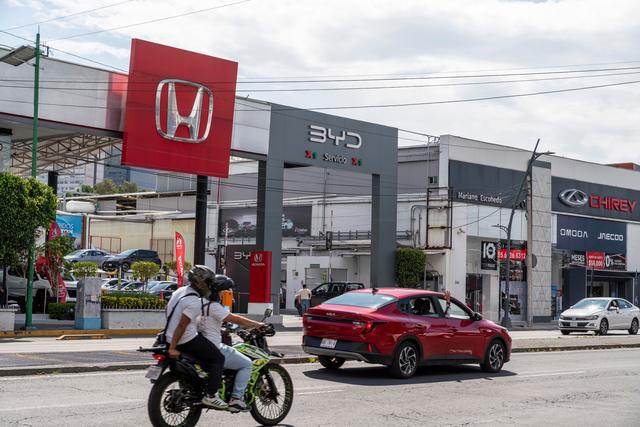
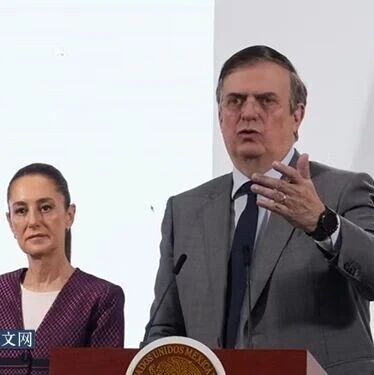
【文/观察者网 潘昱辰 编辑/高莘】据墨西哥《每日报》报道,墨西哥总统辛鲍姆于9月9日向国会下议 院提交了一项立法提案,旨在修改《一般进出口税法》,以便对来自没有与墨西哥达成自由贸易协定的 国家的各种进口商品,征收最高达50%的关税。 墨西哥经济部长埃布拉德于9月10日进一步表示,墨西哥将把中国和其他没有与墨西哥达成自由贸易协 定的其他国家(如韩国和印度)制造的汽车的关税,提高到世界贸易组织允许的最高水平(即50%)。 而目前墨西哥对来自以上国家的汽车等产品征收20%的关税。 同为全球南方重要成员,墨西哥为何突然考虑对中国产品加征关税?仅仅是因为美国施压? Banco Base经济分析总监加布里埃拉·席勒(Gabriela Siller)在X上表示,墨西哥将加征关税的进口商品 超过70%来自中国,加权平均关税估计为33.96%。在此背景下,墨西哥对中国汽车的需求将在短期内增 加,进而提高其价格。 在她看来,墨西哥提高对中国商品关税的目标有两个,其一是增加税收,其二则是安抚特朗普,从而有 利于墨西哥在明年USMCA审查期间与美国和加拿大的谈判。 位于墨西哥城的比亚迪、奇瑞与本田4S店 视觉中国 为安抚美国? 近 ...

专访丨中国倡议为完善全球治理注入强大动力——访南非政治分析师索玛多达·菲克尼
Xin Hua She· 2025-09-12 10:07
Core Viewpoint - China's global governance initiative provides significant guidance for establishing a more just and reasonable international order, injecting strong momentum into the reform of the global governance system [1][2]. Group 1: Global Governance Initiative - The initiative addresses the urgent need for reform in the current international governance system, calling for a governance framework that respects national sovereignty and cultural diversity while enhancing the representation and voice of developing countries [1][3]. - It aims to lead collaborative efforts with the international community to tackle global challenges such as climate change and promote a more equitable international order [1][2]. Group 2: China's Role in Global Governance - China plays a crucial role in global governance, advocating for and promoting reforms in multilateral institutions to enhance fairness and inclusivity, especially in the context of the U.S. withdrawing from multilateral mechanisms [2][3]. - The country has made significant contributions in areas like climate change and infrastructure development, demonstrating a commitment to true multilateralism that reflects the common aspirations of developing countries rather than serving the interests of a few [2][3]. Group 3: High-Quality Development - High-quality development is seen as key to addressing global inequality, with China's success in lifting over 700 million people out of poverty highlighting the importance of ensuring basic livelihoods for social development [2]. - China leverages its advantages in resources, infrastructure, and technology to bridge the development gap between the Global North and South, promoting more inclusive and balanced global development [2]. Group 4: Shanghai Cooperation Organization (SCO) - The SCO demonstrates significant stability and continuity, promoting a new type of international order shaped by non-Western countries through deepening institutional reforms and expanding cooperation [3]. - The global governance initiative aligns with China's previous initiatives, such as the global development, security, and civilization initiatives, reflecting the country's vision and responsibility as a major power [3].
美元熊市远未结束!别指望特朗普救市
Jin Shi Shu Ju· 2025-09-12 09:44
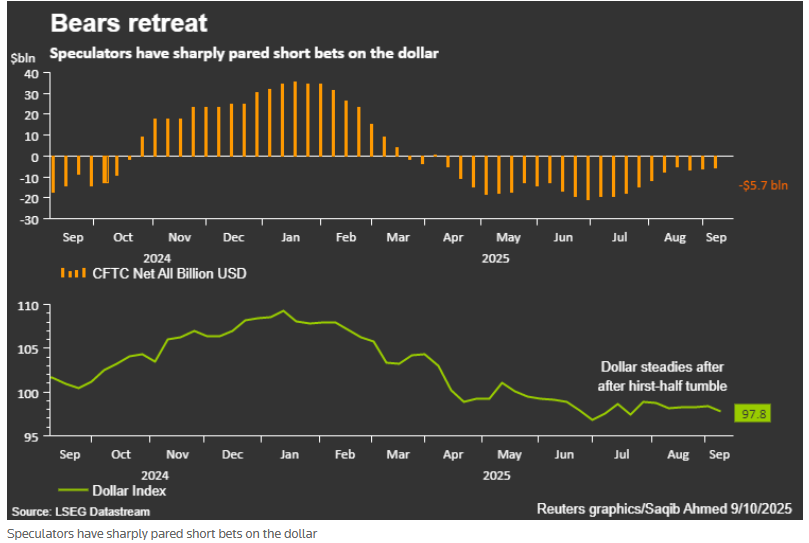
Core Viewpoint - The US dollar is currently in a bearish trend, with expectations of further depreciation despite a recent stabilization after a record drop earlier this year [1][2]. Group 1: Dollar Performance and Market Sentiment - The dollar index fell approximately 11% over the six months ending in June, marking one of its largest historical declines [1]. - Speculators' net short positions on the dollar reached $5.7 billion, significantly down from $21 billion at the end of June but still at historically high levels [1][2]. - Many investors believe the recent sell-off of the dollar is merely a pause rather than a reversal of trend, driven by concerns over persistent fiscal and trade deficits, a weak job market, and reassessment of currency hedging strategies [2][4]. Group 2: Economic Factors Influencing the Dollar - Weak employment data provides the Federal Reserve with room for aggressive rate cuts, which could diminish the dollar's interest rate advantage [2]. - The ongoing reassessment of the "American exceptionalism" narrative and concerns over trade protectionism under the Trump administration contribute to the bearish outlook on the dollar [2][6]. Group 3: Foreign Investment and Hedging Strategies - Global investors have high exposure to US assets, and any reduction in this exposure could exert downward pressure on the dollar [6]. - The recent underperformance of the dollar has prompted asset management companies to increase hedging operations, which typically involve selling dollars through forward contracts or swaps, thereby increasing dollar supply [6][7]. - The potential for further rate cuts by the Federal Reserve is expected to enhance the appeal of currency hedging for foreign investors [6]. Group 4: Future Outlook and Valuation - Experts predict that the dollar is unlikely to receive support from the Trump administration, as its "America First" agenda conflicts with the goal of a strong dollar [7]. - Many analysts believe the dollar remains overvalued relative to several currencies, which may deter potential buyers in the forex market [8]. - Despite the dollar's significant decline this year, there is still a possibility for it to find support, particularly if the US economic outlook unexpectedly improves [8].
墨西哥将对中国汽车等征收最高50%关税,背后有何算盘
日经中文网· 2025-09-12 02:38
Core Viewpoint - Mexico is increasing tariffs on automobiles imported from China and other countries without trade agreements, aiming to protect domestic industries and strengthen its negotiating position with the United States [2][4][10]. Group 1: Tariff Increases - Mexico's Economy Minister, Ebrard, announced a tariff increase on cars imported from China from approximately 20% to 50% [2][4]. - The increase in tariffs will also apply to imports from countries such as South Korea, Thailand, India, Indonesia, Russia, and Turkey, while Japan is exempt due to an economic partnership agreement [4][5]. - The total number of product categories affected by the tariff increase is around 1,400, including automobiles, auto parts, clothing, and steel products [5]. Group 2: Strategic Intentions - The Mexican government aims to impose strategic tariffs on countries without trade agreements to create a fairer competitive environment [5][10]. - This move is seen as aligning with the U.S. government's stance to reduce trade deficits and prevent Chinese goods from entering Mexico through other Asian countries [6][10]. - Mexico's actions are intended to leverage its position in ongoing trade negotiations with the U.S., particularly in light of previous tariff discussions initiated by the Trump administration [10][14]. Group 3: Legislative Process - The Mexican government plans to submit a bill to Congress for the implementation of these high tariffs, with expectations of smooth passage due to the ruling coalition's majority [10][11]. - The budget proposal for 2026, which includes these tariff plans, is expected to be approved without significant obstacles [10].
关税扰动供应链,整车出口逆势涨--2025上半年汽车出口分析
Zhong Guo Qi Che Bao Wang· 2025-09-12 01:22
Export Overview - In the first half of 2025, China's vehicle exports showed a fluctuating upward trend, with a peak of 666,300 units in May, leading to a total export of 3.3368 million vehicles, a year-on-year increase of 18.0% [1] - The total export value reached $59.396 billion, reflecting a year-on-year growth of 8.0%, although the growth rate has significantly slowed down [1] Export Structure Analysis - Passenger vehicles accounted for 84.2% of total vehicle exports, with a total of 2.8 million units exported, contributing 74.2% to the export value [3] - Exports of pure electric passenger vehicles reached 829,000 units, a year-on-year increase of 13.8%, but the export value decreased by 5.8% to $15.641 billion [3] - New energy vehicle exports totaled 1.482 million units, up 50.2% year-on-year, with an export value of $29.5 billion, representing 44.4% of total vehicle exports [3] Market Distribution - Asia was the largest market for vehicle exports, accounting for 39.5% of export volume and 41.3% of export value [4] - Europe ranked second with 826,400 units exported, valued at $15.970 billion, making up 24.8% and 26.9% of the total respectively [4] - Exports to North America saw a significant decline, primarily due to the impact of the U.S. tariff policies [4] Model-Specific Export Characteristics Passenger Vehicles - Asia led in passenger vehicle exports with 1.12 million units, a year-on-year increase of 40.6%, while Europe saw a decline in both volume and value [7] - The top three markets by export volume were Mexico, the UAE, and Russia, while by export value, the UAE, Belgium, and Mexico topped the list [7] Pure Electric Passenger Vehicles - Exports to Mexico and Turkey showed significant growth, with Mexico's exports reaching 45,700 units, up 161.8%, and Turkey's exports at 42,700 units, up 328.4% [8] Commercial Vehicles - Asia dominated commercial vehicle exports with 197,700 units, a year-on-year increase of 47.9% [10] - The top three markets for commercial vehicle exports by volume were Mexico, Vietnam, and Australia, while by value, Saudi Arabia, Vietnam, and Mexico led [10] Buses - Bus exports totaled 47,200 units, a year-on-year increase of 26.3%, with a total export value of $3.196 billion [11] - The main markets for bus exports were in the Middle East, Asia, and parts of Latin America [11] Trucks - Truck exports reached 373,800 units, a year-on-year increase of 35.4%, with an export value of $6.576 billion [12] - The leading markets for truck exports by volume were Mexico, Australia, and Vietnam [12] Provincial Export Rankings - Shanghai, Anhui, and Jiangsu were the top three provinces for vehicle exports in the first half of 2025, with Shanghai experiencing a 10.5% decline in export value despite volume growth [13] Global Market Sales Situation - In the first half of 2025, domestic vehicle sales in China reached 15.653 million units, a year-on-year increase of 11.4% [14] - The U.S. light vehicle market saw only a 3% year-on-year growth, totaling 8.14 million units, indicating a sluggish market [14] - The EU experienced a 1.9% decline in new passenger car sales, with pure electric vehicle sales growing by 8% [14] Export Outlook for the Second Half of 2025 - Global new vehicle sales are projected to reach 95.3147 million units in 2024, with China maintaining a significant market share [17] - The external macroeconomic environment remains challenging due to U.S. tariff policies and global economic uncertainties [18][19] - The geopolitical landscape is influencing the global new energy vehicle supply chain, particularly with the EU's anti-subsidy investigations against Chinese electric vehicles [22][23]

这个新动向,中国须高度警惕
Sou Hu Cai Jing· 2025-09-12 00:59
Core Viewpoint - Mexico is set to impose significant tariffs on imports from countries like China, with rates reaching up to 50%, which is seen as a response to U.S. pressure and a move to protect domestic industries [3][4][5]. Group 1: Tariff Details - Mexico plans to adjust tariffs on approximately 1,400 products, affecting imports worth $52 billion [4]. - The proposed tariffs will primarily target countries without trade agreements with Mexico, notably China, South Korea, Thailand, India, Indonesia, Russia, and Turkey [4][5]. - The tariffs are expected to pass easily due to the ruling party's majority in both chambers of Congress [4]. Group 2: Economic Implications - China is Mexico's second-largest trading partner, with bilateral trade projected to reach $109.426 billion in 2024 [10]. - The automotive sector is particularly vulnerable, as Mexico is a key destination for Chinese automotive exports [12][13]. - The tariffs could severely impact Chinese companies looking to enter or expand in the Mexican market [9]. Group 3: Political Context - The tariff proposal is viewed as a protective measure influenced by the U.S., aiming to increase fiscal revenue and appease U.S. demands [7][8]. - The move is characterized as a form of protectionism reminiscent of policies from the Trump administration, aiming to create a coalition against China [7][8]. Group 4: Reactions and Future Outlook - China has expressed disappointment over Mexico's decision, emphasizing the importance of mutual economic cooperation [15]. - The Chinese government has indicated it will closely monitor Mexico's actions and may respond to unilateral tariff increases [15]. - There are concerns that Mexico's actions could set a precedent for other countries to follow suit, potentially escalating trade tensions [19][20].
墨西哥要对华加税50%,关税政策还没生效,中方警告就来了
Sou Hu Cai Jing· 2025-09-11 14:21
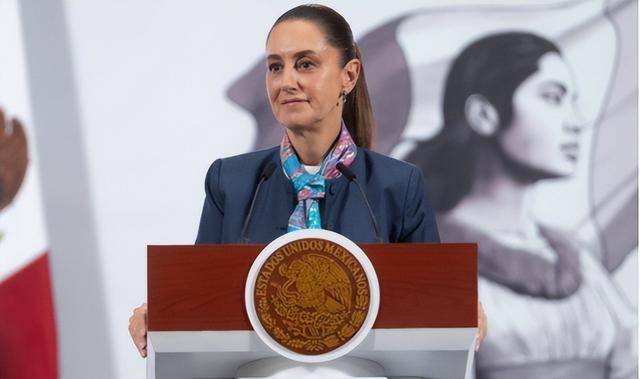
文/三玄 9月10日,墨西哥总统克劳迪娅・辛鲍姆公布了关税改革提案,其中备受关注的一点是,墨西哥计划对 中国和一些亚洲国家生产的汽车和其他产品征收50%关税,该改革针对没有与墨西哥签订自由贸易协定 的国家,新关税将适用于1371个关税代码下的进口商品,占墨西哥所有关税代码的 16.8%,预计于2026 年12月31日前实施。 外交部发言人林剑 而从现实来看,我们可以采取的措施有很多。从贸易层面看,中国是墨西哥的第二大贸易伙伴,去年两 国的双边贸易额接近 1100 亿美元,中国是墨西哥原油、牛油果、蓝莓等农产品、机电产品和金属矿及 矿砂等商品的主要买家,一旦我们对这些商品加征关税,毫无疑问将导致他们的竞争力下降,出口量锐 减,尤其是原油收入的减少,将直接影响墨西哥的相关产业链及政府财政收入。 在投资领域,中国企业在墨西哥投资众多,涉及民生、基建、教育、汽车制造等多领域,协议金额超 100 亿美元。墨西哥如果贸然对中国加征关税,实际上是在损害自己的信誉与形象,也会让中国企业对 其产生怀疑,从而重新评估投资环境与风险,减少或暂停在墨投资项目。 辛鲍姆声称,此举是为了 "保护墨西哥的就业"、"防止不公平竞争",捍卫其 ...
比美国出手还狠,墨西哥屈服于特朗普,准备将对华关税提高到50%
Sou Hu Cai Jing· 2025-09-11 10:41
Core Points - Mexico is under pressure from the U.S. to renegotiate the USMCA, with a focus on aligning trade rules with U.S. interests [1][3] - The U.S. aims to modify regional trade rules, particularly in the automotive sector, which is crucial for Mexico's economy [7][9] - Mexico's decision to impose tariffs on countries without trade agreements, specifically targeting China, marks a significant shift in its trade policy [17][19] Trade Negotiations - The U.S. Secretary of State's visit to Mexico coincides with the announcement of the USMCA renegotiation, emphasizing trade and non-trade barriers [3][5] - The automotive industry is a focal point, with Mexico exporting 40% of its automotive and parts to the U.S., and 2.8 million vehicles expected to be exported in 2024 [7][9] - New U.S. rules require a significant increase in North American content for automotive parts, which could exclude many Mexican factories [9][11] Economic Impact - The proposed U.S. tariffs have increased production costs for Mexican vehicles, with an estimated $4,000 increase per vehicle and $12,000 for electric vehicles [11][13] - Mexico's steel exports to the U.S. are also under threat from a 25% tariff, leading to an additional cost of $828 million [13] - The automotive sector, contributing 5% to GDP, and trade with the U.S., accounting for 32% of total exports, are critical to Mexico's economy [13] Shift in Trade Policy - President of Mexico, Sin Baurm, announced tariffs on countries without trade agreements, explicitly naming China, indicating a shift from a neutral stance [17][19] - The U.S. is exerting dual pressure on Mexico, affecting its national interests and trade policies [15][17] - Proposed tariffs on Chinese products could reach 50%, significantly impacting key sectors like automotive parts and textiles [19][21] Global Supply Chain Implications - The U.S. is reshaping trade rules to create a "firewall" against China, which has drawn criticism from other Latin American countries [23] - The renegotiation of the USMCA is seen as a tool for unilateral sanctions, affecting not only Mexico-China trade but also the stability of the global economic order [23] - The increase in tariffs is expected to raise production costs across North America, ultimately impacting U.S. consumers [23]

对华汽车关税或最高上调至50%,墨西哥被批“讨好美国”
Guan Cha Zhe Wang· 2025-09-11 05:18
Core Viewpoint - The Mexican government plans to increase tariffs on key imported goods from countries without trade agreements, aiming to boost local industries and reduce reliance on Asian imports [1][11]. Group 1: Tariff Adjustments - The import tariff on automobiles will rise to a maximum of 50%, significantly impacting Chinese imports, which currently face tariffs of 15% to 20% [1]. - The new tariff plan will cover over 1,400 product categories, affecting approximately $52 billion in imports from countries without trade agreements, with China being the largest source [11][12]. - The tariff adjustments are expected to protect 325,000 jobs in strategic industries and potentially create thousands of new jobs [11]. Group 2: Economic Implications - The tariff increase is seen as a response to U.S. pressure, particularly from the Trump administration, to impose tariffs on Chinese goods [1][2]. - While the measures may generate additional tax revenue and appease U.S. interests, they could also lead to higher domestic prices and inflationary pressures in Mexico [2][3]. - The automotive sector, which constitutes 23% of Mexico's manufacturing, is particularly emphasized for protection through these tariffs [12]. Group 3: Industry Reactions - Industry leaders express concerns that the tariff hikes will lead to increased car prices and limit consumer choices, as existing inventories are depleted [7]. - The tariffs will also affect the costs of electric and hybrid vehicles, raising their purchase prices [7]. - Analysts warn that the shift towards local suppliers may take years to implement effectively, impacting Mexico's competitiveness in global supply chains [14]. Group 4: Trade Relations - Mexico is China's second-largest trading partner in Latin America, with a total trade volume projected to reach $109.426 billion in 2024 [8]. - The new tariffs are part of a broader strategy to protect domestic industries and improve trade balance, while also aligning with North American trade negotiations [12][13].
墨西哥将对进口中国汽车征收50%关税
Guo Ji Jin Rong Bao· 2025-09-11 04:07
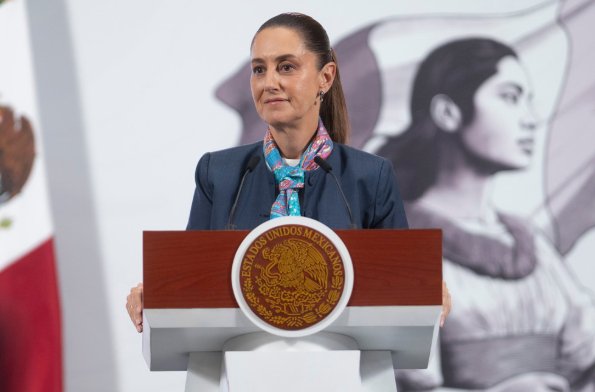
Core Points - The Mexican government plans to increase tariffs on key imported goods from countries without trade agreements to protect jobs and boost domestic industries [1][2] - The proposed tariff changes will affect nearly 1,500 items, including automobiles, steel, textiles, toys, appliances, and footwear, totaling approximately $52 billion [1] - Tariffs on automobiles from China and other Asian countries will rise to 50%, significantly impacting the Chinese automotive market in Mexico [4][5] Summary by Sections Tariff Implementation - The plan is part of the 2026 federal budget proposal and requires approval from the Mexican Congress, where the ruling party holds a majority, making passage likely [2] - The tariffs will specifically target countries without trade agreements with Mexico, notably China, South Korea, India, Indonesia, Russia, Thailand, and Turkey [2][3] Economic Impact - The proposed tariffs are expected to affect 8.6% of Mexico's import volume and aim to protect approximately 325,000 industrial and manufacturing jobs at risk [3] - Tariffs on steel, toys, and motorcycles will be set at 35%, while textile tariffs will range from 10% to 50% [4] Political Context - The measures are partly a response to pressure from the United States, which has encouraged Mexico to raise tariffs on Chinese imports [4] - Mexican officials acknowledge that these tariff changes are linked to ongoing trade negotiations between Mexico, the U.S., and Canada [4] Market Dynamics - Mexico has become the largest export market for Chinese automobiles, surpassing Russia, due to competitive pricing and attractive warranty offers [5] - The increase in tariffs on Chinese automobiles is expected to significantly impact their market presence in Mexico, with the new 50% rate being much higher than the current 15% to 20% [4][5]