
产业升级

Search documents
电网ETF(561380)涨超1.2%,政策与技术双轮驱动行业前景
Mei Ri Jing Ji Xin Wen· 2026-01-07 06:41
Core Insights - The electric grid ETF (561380) rose over 1.2%, driven by both policy and technological advancements in the industry [1] Industry Developments - Two large offshore wind power projects in China have achieved full capacity grid connection, indicating rapid development towards scale and efficiency in the offshore wind power sector [1] - The Gansu energy storage capacity compensation mechanism has been officially released, suggesting that core domestic regions for energy storage are likely to maintain a high level of prosperity [1] - The increase in silver prices may enhance the cost-effectiveness of HJT batteries [1] - The global AI computing power competition is intensifying, with Elon Musk's xAI planning to boost training computing power to 2GW [1] - Continuous growth in new energy installations, along with improvements in electricity pricing mechanisms and transmission channels, supports the energy transition [1] - The approval of the Shandong Dengzhou station's voltage boosting and the Zhaoyuan nuclear power transmission ultra-high voltage project indicates progress in infrastructure [1] - The ITER correction field coil procurement package has achieved 100% independent research and development and has been completed and delivered [1] - The power equipment industry is expected to benefit from domestic and international synergy, with an anticipated upward trend in prosperity [1] ETF Overview - The electric grid ETF (561380) tracks the Hang Seng A-share electric grid equipment index (HSCAUPG), which selects listed companies involved in power network construction, manufacturing of transmission and transformation equipment, upgrading of distribution systems, and smart control technologies [1] - This index comprehensively reflects the overall performance of China's electric grid equipment industry during its smart transformation and industrial upgrading process [1]
张玉卓到四川调研有关中央企业强调 靠前谋划实施一批重大项目和标志性工程
Xin Lang Cai Jing· 2026-01-07 06:31
Core Viewpoint - The State-owned Assets Supervision and Administration Commission (SASAC) emphasizes the importance of innovation and quality improvement in central enterprises to boost economic stability and growth in the new five-year plan period [1] Group 1: Research and Development Focus - SASAC's Secretary Zhang Yuzhuo conducted on-site research at various central enterprises, including China National Nuclear Corporation and Aviation Industry Corporation of China, to assess advancements in fusion energy technology and autonomous aircraft equipment manufacturing [1] - The visit included a detailed examination of intelligent manufacturing technology at Dongfang Electric Corporation, highlighting the importance of energy equipment research and development [1] Group 2: Strategic Initiatives - Central enterprises are urged to seize opportunities and innovate actively to inject strong momentum into the economy [1] - There is a call for enhancing quality and efficiency through lean management and effective investment to accumulate development potential [1] - The promotion of industrial upgrades is essential, focusing on the integration of traditional industries with new emerging sectors, and fostering the development of strategic emerging industries and future industries to create a "second curve" of growth [1]
国务院国资委主任张玉卓:中央企业要大力发展战略性新兴产业与未来产业,开辟增长的“第二曲线”
Zheng Quan Shi Bao Wang· 2026-01-07 06:29
人民财讯1月7日电,1月5日至6日,国务院国资委党委书记、主任张玉卓赴四川深入有关中央企业科 研、生产一线调研,张玉卓强调,今年是"十五五"开局之年,中央企业要抢抓机遇、锐意创新,积极为 经济稳中向好注入强劲动能。要切实狠抓提质增效,深化精益管理,以有效投资积蓄发展潜力,靠前谋 划实施一批重大项目和标志性工程,持续增强价值创造能力;加快推动产业升级,统筹推进传统产业巩 固提升和新兴动能培育壮大,推动传统产业智能化绿色化融合化转型,大力发展战略性新兴产业与未来 产业,开辟增长的"第二曲线";持续加强科技创新,瞄准重点领域关键环节,加大研发投入,优化创新 生态,培育拓展应用场景;着力深化改革攻坚,进一步完善公司治理结构,探索更加符合行业和企业特 点的管理运营体系,更好激发各级企业各类人才的积极性主动性创造性。 ...
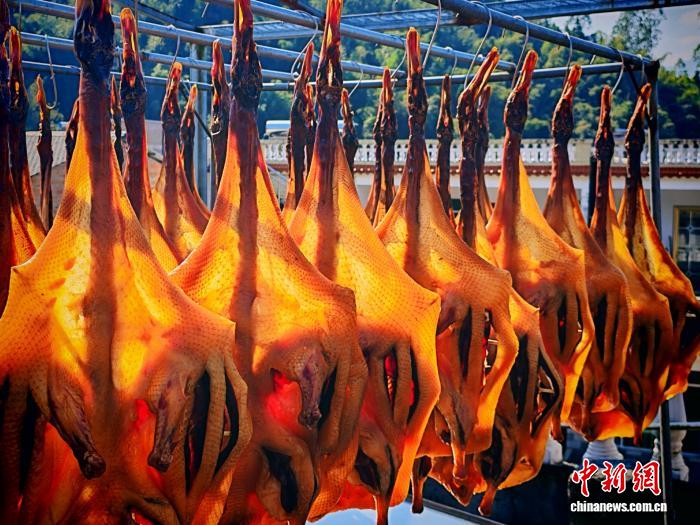
香飘全国的“致富鸭”:广西南乡镇腊鸭2025年产值破1300万元
Zhong Guo Xin Wen Wang· 2026-01-07 06:26
Core Insights - The production value of the "Wealthy Duck" from Nanshang Town, Guangxi, is expected to exceed 13 million yuan by 2025, driven by local ecological advantages and the promotion of traditional duck processing techniques [1][3]. Group 1: Industry Development - The Nanshang duck production technique was included in the Guangxi Intangible Cultural Heritage list in 2023, highlighting its cultural significance [3]. - As of mid-December 2025, the total production of Nanshang duck has surpassed 100,000 ducks, generating a total industry output value exceeding 13 million yuan and benefiting over 300 farming households and more than 1,200 individuals [3][4]. - The local government is implementing a "combination punch" strategy to support the duck industry, focusing on standardization, branding, and scaling up production [4]. Group 2: Economic Impact - The duck industry has created job opportunities, with local artisans like Qin Xigan and Pan Xianzheng employing over 50 villagers in their workshops, contributing to local economic growth [3][4]. - The return of local residents, such as Liao Si, who left jobs in Guangdong to start duck processing businesses, indicates a positive trend in local entrepreneurship and economic revitalization [4]. - The Nanshang duck has gained popularity in markets like Guangdong-Hong Kong-Macao, with high repurchase rates due to its quality, further enhancing its market presence [4].

长江经济带绿色转型实现新突破 :以三分之一能耗、碳排放贡献近一半GDP
Zhong Guo Dian Li Bao· 2026-01-07 05:44
Core Insights - The Yangtze River Economic Belt contributes nearly half of China's GDP while accounting for about one-third of the country's energy consumption and carbon emissions [1] Industry Developments - Traditional industries such as steel and petrochemicals in the Yangtze River Economic Belt are actively pursuing green transformation, establishing 24 national carbon peak pilot cities and parks, along with 14 zero-carbon parks [1] - Approximately 10,000 old operating vessels have been scrapped and updated as part of the push for clean energy and new energy ship development [1] Innovation and Industrial Upgrading - The region has cultivated 41 national-level advanced manufacturing clusters and 30 strategic emerging industry clusters, representing 51% and 45% of the national totals, respectively [1] - A regional innovation system is being enhanced, with three technology innovation centers and eight national laboratories established along the river, leading to breakthroughs in key technologies in fields such as artificial intelligence and quantum information [1] Future Directions - The Yangtze River Economic Belt will continue to focus on green, high-end, and intelligent development, fostering green low-carbon industries tailored to local conditions to achieve development while protecting the environment [1]
巴西2025年出口额达3487亿美元 创历史新高
Zhong Guo Xin Wen Wang· 2026-01-07 05:23
Core Viewpoint - Brazil's export and import figures for 2025 are projected to reach historical highs, with exports totaling $348.7 billion and imports at $280.4 billion, reflecting significant growth in trade activity [1] Group 1: Trade Performance - In 2025, Brazil's exports are expected to grow by 3.5% year-on-year, with export volume increasing by 5.7% [1] - Imports are projected to rise by 6.7% year-on-year, contributing to a total trade volume of $629.1 billion, also a historical high [1] - The trade surplus is forecasted to be $68.3 billion, indicating a strong trade balance [1] Group 2: Sector Contributions - The manufacturing sector is expected to lead export performance, with an estimated export value of $189 billion [1] - Agricultural products and mining exports are also anticipated to show growth, contributing to overall export figures [1] Group 3: Key Markets - China, the EU, and Argentina remain the primary export markets for Brazil, with exports to China increasing by 6% to surpass $100 billion, driven by products such as soybeans, beef, sugar, pulp, and pig iron [1] - Exports to the EU are projected to grow by 3.2%, focusing on coffee, beef, copper ore, corn, and aircraft [1] - Exports to Argentina are expected to surge by 31.4%, primarily due to the automotive industry [1] - Conversely, exports to the US are anticipated to decline by 6.6% due to increased tariffs [1] Group 4: Government Initiatives - The growth in exports is attributed to government policies aimed at industrial upgrading and enhancing international competitiveness, particularly through the "New Industrial Brazil" and "Brazil Sovereignty" plans [1]
城市高质量发展与国际合作大会探寻多元协同创新实践路径
Xin Lang Cai Jing· 2026-01-07 04:51
Group 1 - The conference focused on high-quality urban development and international cooperation, emphasizing the importance of innovation in urban planning and development [1] - Key themes included technological innovation, industrial upgrading, and opening up to external markets, aiming to create a platform for cross-regional and cross-sector dialogue [1] - The goal of building modern urban cities was highlighted, with innovation being placed at the forefront of urban development objectives [1] Group 2 - Guiyang and Guian New Area are recognized for their digital economy, with continuous growth leading the nation for eight consecutive years [2] - Changsha is accelerating its development as a global R&D center, boasting seven trillion-level industrial clusters and over 3,400 innovation platforms [2] - Weifang is advancing energy transition with significant projects in nuclear power and offshore wind energy, emphasizing green and low-carbon development [3] Group 3 - Ordos is enhancing its business environment through policy innovation and a focus on service quality, aiming to support healthy business growth [4] - Yibin is strengthening its industrial ecosystem by ensuring resource availability and optimizing services for enterprises [5] - Haikou is leveraging its status as a high-tech industrial zone to attract investment in biomedicine and advanced food processing, achieving nearly 20% growth in key economic indicators [6] Group 4 - The conference showcased diverse practices and innovative outcomes from various cities, illustrating multiple pathways for high-quality urban development [6] - Participants agreed that high-quality urban development encompasses not only economic growth but also social, environmental, and cultural advancements [6]
福建莆田10万吨级化工码头完工
Zhong Guo Hua Gong Bao· 2026-01-07 04:26
石门澳化工新材料产业园是莆田国家级新型功能材料千亿产业集群核心承载区。6#、9#泊位项目作为福 建省内唯一具备液氨作业资质的10万吨级化工码头,预计12月验收投运,将为莆田新型功能材料千亿产 业集群打通物流关键节点,支撑区域产业升级。该项目新建5000吨级、10万吨级液体散货泊位各1个, 年设计通过能力396万吨。其中,6#泊位专注服务小批量高附加值化学品运输,9#泊位主打大宗原料接 卸,承担了项目70%以上的吞吐量,单船卸载效率较传统模式提升3倍。 中化新网讯日前,福建湄洲湾港秀屿港区石门澳作业区6#、9#泊位码头主体、疏浚工程、导助航工程等 8个单位工程顺利通过交工验收。 ...
印度市场重启,钛白粉压力暂缓
Zhong Guo Hua Gong Bao· 2026-01-07 02:40
Core Viewpoint - The Indian government's decision to terminate anti-dumping duties on titanium dioxide (TiO2) imports from China is expected to significantly benefit the Chinese TiO2 industry, allowing it to regain market share in India, which is a crucial export destination [1][2]. Group 1: Impact on Chinese TiO2 Industry - The cancellation of anti-dumping duties will reduce export costs to India by 15% to 20%, which had previously led to a significant decline in export volumes [1]. - In 2024, China's TiO2 production is projected to be 4.7 million tons, with exports reaching 1.9 million tons, of which approximately 307,500 tons (17%) are destined for India [1]. - The geographical proximity between China and India provides a logistical advantage, enabling quicker delivery times and lower shipping costs, which will help Chinese companies regain lost market share [1]. Group 2: Long-term Benefits and Industry Dynamics - The policy change alleviates short-term pressures and addresses long-term challenges for the Chinese TiO2 industry, enhancing profit margins that were previously squeezed [2]. - Chinese TiO2 companies possess a complete supply chain and stable production capacity, which strengthens their resilience in the international market [2]. - The cancellation of duties is expected to drive industry upgrades and optimize the domestic market, allowing Chinese firms to increase the export ratio of high-end TiO2 products, thus transitioning from scale expansion to quality enhancement [2]. Group 3: Market and Economic Implications - The reopening of the Indian market provides a vital channel for capacity digestion, supporting domestic TiO2 prices and preventing a price war, which promotes overall industry health [2]. - The recovery in TiO2 export markets is likely to stimulate related industries, such as titanium ore mining and paint manufacturing, improving the supply-demand balance within the sector [2]. - The favorable environment created by the policy change is expected to facilitate the orderly release of new production capacities in 2026 [2].
印度市场重启,钛白粉压力暂缓
Zhong Guo Hua Gong Bao· 2026-01-07 02:40
Core Viewpoint - The Indian government's decision to terminate anti-dumping duties on titanium dioxide (TiO2) imports from China is expected to significantly benefit the Chinese TiO2 industry, allowing it to regain market share in India, which is a crucial export destination [1][2]. Group 1: Impact on Chinese TiO2 Industry - The cancellation of anti-dumping duties will reduce export costs to India by 15%-20%, which had previously led to a significant decline in export volumes [1]. - In 2024, China's TiO2 production is projected to be 4.7 million tons, with exports reaching 1.9 million tons, of which approximately 307,500 tons (17%) are destined for India [1]. - The geographical proximity between China and India offers logistical advantages, enabling quicker delivery times and lower shipping costs, which will help Chinese companies regain lost market share [1]. Group 2: Long-term Benefits and Industry Dynamics - The policy change alleviates short-term pressures and addresses long-term challenges for the Chinese TiO2 industry, enhancing profit margins that were previously squeezed [2]. - Chinese TiO2 companies possess a complete supply chain and stable production capacity, providing them with strong risk resilience in the international market [2]. - The cancellation of duties is expected to drive industry upgrades and optimize the domestic market, as Indian production capacity is insufficient for high-performance rutile products [2]. - Chinese firms can optimize product structures and increase the export ratio of high-end TiO2, transitioning from traditional scale expansion to quality enhancement, thereby improving global competitiveness [2]. - The reopening of the Indian market will provide a vital channel for capacity digestion in China, supporting domestic TiO2 prices and preventing low-price competition, which promotes overall industry health [2]. - The recovery in TiO2 exports is likely to stimulate related industries, such as titanium ore mining and paint manufacturing, improving the supply-demand balance and creating a favorable environment for the orderly release of new capacities in 2026 [2].