贸易保护主义

Search documents
主力出口产品承压,后续谈判仍处僵局,关税冲击令8月韩对美出口骤降12%
Huan Qiu Shi Bao· 2025-09-02 22:39
Group 1: Export Performance - In August, South Korea's exports to the US recorded the largest decline since May 2020, with a year-on-year drop of 12.0% to $8.74 billion, primarily due to high tariffs on key products like automobiles and steel [1][2] - Among the 15 main export categories to the US, 11 experienced a decline, with steel exports plummeting by 32.1%, ordinary machinery down 12.8%, and secondary batteries down 23.7% [2][3] - August marked the first time in two years that South Korea's monthly exports to the US fell below $9 billion, indicating a significant impact from the ongoing tariff situation [3] Group 2: Manufacturing Sector - The manufacturing sector in South Korea has shown continuous contraction, with the manufacturing PMI at 48.3 in August, remaining below the neutral line of 50 for seven consecutive months [4] - The uncertainty surrounding tariffs and global trade risks is contributing to a deteriorating manufacturing environment, with potential negative effects on overall economic confidence [4] Group 3: Investment Commitments - Disagreements over a $350 billion investment commitment between South Korea and the US are complicating bilateral trade relations, with the US requiring a detailed implementation plan before considering tariff reductions [5][6] - The South Korean government plans to allocate $150 billion to the shipbuilding industry and $200 billion to strategic sectors like semiconductors and batteries, but the US demands a higher proportion of direct investment [5][6] - The ongoing negotiations have led to a stalemate, with the US insisting on "discretionary funds" from South Korea, which has been met with resistance from the South Korean side [6]
美国关税手段为何失灵?专家说→
Jin Rong Shi Bao· 2025-09-02 13:37
Core Insights - The trade protectionism policies initiated by the Trump administration have not resulted in the anticipated long-term economic prosperity, instead causing structural impacts on the U.S. economy and the global trade system [1] Group 1: Short-term Gains vs Long-term Costs - The asymmetric tariff design has led to a short-term increase in manufacturing capacity in the U.S., with companies like Samsung and TSMC announcing investments in the U.S. [2] - Long-term, U.S. manufacturers relying on global supply chains face rising cost pressures, with a reported average increase of 37% in total supply chain costs for companies relocating production to Mexico and Vietnam [2] - Tariff policies have raised import prices, eroding consumer purchasing power, with Goldman Sachs indicating that the cost burden on consumers could rise from 22% to 67% if tariffs persist [2] Group 2: Shifts in Trade Relationships - The U.S. is experiencing a weakening of its central position in global trade as countries adjust their trade partnerships to reduce reliance on the U.S. market [3] - The EU has increased its trade share with China while decreasing its trade with the U.S., indicating a structural shift in global trade networks [3] - In key technology sectors, Europe is enhancing its domestic production capabilities to lessen dependence on U.S. technology, which may further diminish the U.S.'s traditional core position in global value chains [3] Group 3: Monetary Policy Challenges - The Federal Reserve faces a difficult balance between maximizing employment and stabilizing prices, with recent data showing a decline in employment indicators [4] - Inflation remains a concern, with the core consumer price index rising to 3.1%, complicating the Fed's monetary policy options [4] - Tariff policies are expected to exacerbate inflationary pressures, and premature interest rate cuts to support employment could intensify inflation risks [4] Group 4: Economic Growth Constraints - Despite short-term resilience in the U.S. economy, factors such as government debt, inflation risks, and tariff impacts are creating multiple constraints on growth [6] - The federal government debt has surpassed $37 trillion, with rising interest payments crowding out public investment and increasing market rates [6] - If tariffs are fully implemented, GDP growth could decline by an average of 0.5 percentage points annually from 2025 to 2026, with significant price increases for consumer goods [6]
美国指责印度买俄油牟利,遭印度高层怒怼,没人逼你买印度成品油
Sou Hu Cai Jing· 2025-09-02 13:10
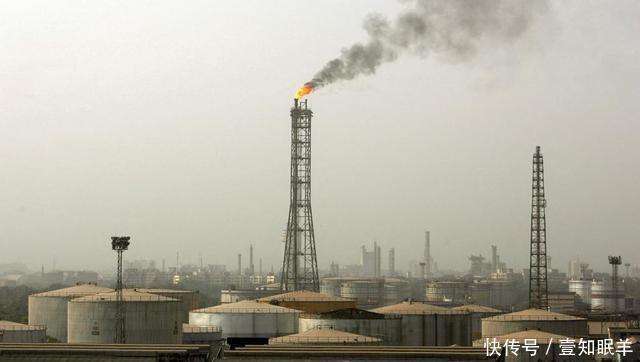
Group 1 - The trade friction between India and the United States has escalated, with the U.S. imposing tariffs of up to 50% on Indian goods, leading to strong protests from Indian officials [1] - The U.S. government's punitive tariffs are primarily a response to India's significant increase in oil imports from Russia during the Ukraine conflict, which the U.S. views as undermining sanctions against Russia [3] - India has been importing Russian oil at discounted prices, refining it, and exporting the finished products globally, including to the U.S., which accounts for 23% of India's refined product exports [3][4] Group 2 - India's government defends its actions by stating that importing Russian oil and exporting refined products has created economic benefits and helped stabilize global energy prices, contributing to alleviating inflation pressures in Western countries [4] - The U.S. initially encouraged India to increase Russian oil imports to stabilize the global energy market, but has since reversed its stance, leading to feelings of betrayal in India [4] - The U.S. domestic refining industry is facing intense competition from Indian refined products, which are produced at a cost 10-20 USD/ton lower than European counterparts, resulting in a decline in U.S. refinery utilization rates [4][6] Group 3 - The Trump administration's actions are seen as a strategy to protect U.S. domestic interests while indirectly targeting Russian energy revenues and pressuring Russia regarding the Ukraine conflict [6] - Analysts suggest that India has become a victim of the complex geopolitical dynamics, where the weaker party often bears the brunt of pressure in international relations [6]

中方给了墨西哥一个忠告,被美国当枪使的后果,说得很清楚
Sou Hu Cai Jing· 2025-09-02 02:01
Group 1 - The Mexican government is preparing to increase tariffs on Chinese goods to "protect domestic enterprises," but the deeper reason is to "appease the United States" [1] - Since Trump's return to the White House, his administration has pressured Mexico to raise tariffs on Chinese goods, citing concerns that Chinese products could enter the U.S. market through Mexico [3] - Mexico's previous plans to establish a "North American fortress" aimed at strengthening trade among the U.S., Mexico, and Canada, effectively blocking Chinese goods [3] Group 2 - China's Ministry of Foreign Affairs firmly opposes Mexico's potential tariff increases on Chinese goods under U.S. pressure, emphasizing the importance of Mexico's independence as a sovereign nation [5] - The Chinese government warns that if Mexico chooses to align with the U.S. at the expense of Chinese interests, it may face retaliatory measures from China [5] - Mexico's economy heavily relies on trade with China, which is its second-largest trading partner, with a total trade volume of $109.426 billion last year [7] Group 3 - Increasing tariffs on Chinese goods may provide short-term political benefits for Mexico but could harm its own economy due to reliance on Chinese components and equipment [7] - Mexico's exports to China, including oil and electrical equipment, may not easily find alternative markets, risking significant economic losses [7] - The concept of "independence" is highlighted as both a warning and a potential path forward for Mexico, emphasizing the need for long-term strategic thinking [7]

8月1日特讯!中美第四轮谈判结果出炉,美国再一次对华低头
Sou Hu Cai Jing· 2025-09-01 23:29
Core Insights - The trade negotiations between the U.S. and China reflect a clash of two distinct economic philosophies: Trump's profit-driven mindset versus China's robust supply chain capabilities [1] - The U.S. manufacturing sector's reliance on Chinese supply chains is highlighted by the recent tariff exemptions for critical products, indicating a significant dependency [1] - Major semiconductor companies have shifted their stance from supporting hardline policies against China to advocating for supply chain stability, revealing a pragmatic approach driven by economic interests [2] Group 1: U.S.-China Trade Dynamics - The U.S. has intensified targeted actions against China's tech sector, including export controls on AI companies and semiconductor manufacturing equipment, which may backfire by harming U.S. companies [4] - Trump's introduction of military topics into trade discussions was swiftly rejected by China, demonstrating China's control over the negotiation agenda [4] - The U.S. is caught in a dilemma, wanting to restrict China's technological advancements while simultaneously needing to maintain its own industrial operations [6] Group 2: China's Supply Chain Strength - China dominates the global rare earth industry, controlling nearly 90% of refining capabilities, which poses a significant barrier for the U.S. [5] - By 2025, China's export reliance on the U.S. is projected to decrease from 19% in 2018 to 15%, indicating a shift in trade dynamics and a diversification of trade partners [6] - High-value exports from China, such as electric vehicles and lithium batteries, are becoming increasingly important, showcasing the country's evolving export structure [6] Group 3: Future Negotiation Landscape - The U.S. has postponed decisions on tariff exemptions, reflecting a reluctant concession to the realities of the supply chain interdependence [7] - The balance of power in the U.S.-China relationship is shifting, with China gaining more leverage in negotiations due to its control over critical supply chains [9] - The next round of negotiations will see the U.S. facing a resilient Chinese economy that has adapted to pressures and found new growth drivers [12]

莫迪到访中日后,川普失去了理智,取消访印计划,欧洲也背刺美国
Sou Hu Cai Jing· 2025-09-01 07:38
Core Points - The article discusses the deterioration of US-India relations due to tariff disputes initiated by the Trump administration, leading to the cancellation of a planned visit by Trump to India [3][5]. - India has responded to US tariffs by filing a complaint with the WTO and implementing countermeasures against US agricultural products [8][9]. - Modi's diplomatic efforts include securing significant investments from Japan and strengthening ties with China, indicating a strategic balancing act in response to US pressures [13][19]. Group 1: US-India Relations - The US imposed a 25% tariff on Indian steel and aluminum, resulting in a $7.6 billion loss for India [5]. - The US further escalated the trade conflict by imposing an additional 26% tariff on Indian goods, leading to the postponement of trade negotiations [11]. - Modi's denial of Trump's claims regarding mediation in the India-Pakistan conflict has contributed to the diplomatic stalemate [11]. Group 2: Diplomatic Actions - Modi signed a $46.87 billion investment commitment with Japan, focusing on strategic sectors like semiconductors and clean energy [15]. - The collaboration aims to establish India as a significant semiconductor manufacturing hub over the next four to five years [15]. - Modi's visit to China for the Shanghai Cooperation Organization summit reflects India's intent to maintain close ties with China while balancing relations with the US and Japan [17][19]. Group 3: European Response - European nations are expressing dissatisfaction with US trade policies, particularly the Inflation Reduction Act, which they view as protectionist [21][25]. - A collective response from several EU countries indicates a growing rift between the US and its traditional allies, which may impact US strategic interests in the Indo-Pacific region [25][27]. Group 4: Strategic Implications - The cancellation of Trump's visit and the ongoing tariff disputes have introduced uncertainty into the Indo-Pacific geopolitical landscape [29]. - India's flexible strategy of engaging with both the US-Japan alliance and the Shanghai Cooperation Organization is reshaping regional power dynamics [31]. - This balancing act allows India to mitigate the impact of US sanctions while securing energy cooperation with Russia under the SCO framework [31][33].
特朗普关税给美国经济刻上“制度性疤痕”
Jin Rong Shi Bao· 2025-09-01 04:07
刘晓曙 青岛银行(002948)首席经济学家。清华大学理学博士、厦门大学经济学博士、中国人民大学 金融学博士后。2008年获"中国卓越研究奖"。 在全球经济一体化深度融合的背景下,美国作为世界第一大经济体,其政策动向始终牵动着全球市场的 神经。2017年特朗普政府上台后,将关税政策视为"让美国再次伟大"的核心工具,以"美国优先"为旗 帜,对包括中国、欧盟在内的多个贸易伙伴加征关税,掀起了一轮席卷全球的贸易保护主义浪潮。这一 政策在初期曾被认为能短期提振美国本土产业、吸引制造业回流,但随着时间的推移,其复杂后果逐渐 显现。青岛银行首席经济学家刘晓曙在接受《金融时报》记者专访时表示,种种迹象表明,特朗普的关 税政策并非一剂"强心针",而是给美国经济乃至全球贸易体系刻下了一道难以愈合的"制度性疤痕"。 关税政策的短期利好与长期隐忧 《金融时报》记者:特朗普政府的关税政策在近期进入关键阶段,对美国经济产生了多方面影响。您认 为关税政策对美国消费者、企业以及整体经济增长和就业的长期影响会是怎样的? 刘晓曙:特朗普关税政策是为了实现所谓"让美国再次伟大"的政治目标。但是从根本上,贸易保护主义 无法创造繁荣,反而会损害美国 ...
敢跟美国正面硬刚的第二个国家出现,中国苦心经营奏效
Sou Hu Cai Jing· 2025-08-30 14:40
莫迪此次访华意义重大。一方面,中国和印度作为亚洲最大的两个发展中国家,在当前全球经济复苏乏力的背景下,有着共同的发展需求和战略利益。最近 一段时间,中印关系持续回暖。双方在边界问题上取得多项进展,经贸合作也在逐步加强。另一方面,在面对美国贸易压力时,中印两国携手合作,能够形 成更强有力的应对力量,更好地维护自身利益和国际多边贸易体制。 在国际政治经济的大棋盘上,中国与印度之间的互动,正在悄然改变全球格局。最近一段时间,美国对印度不断施加关税压力,试图通过经济手段迫使印度 妥协。然而,在莫迪总理的领导下,印度展现出了前所未有的强硬态度。而在这背后,中国的支持发挥了重要作用。 自从特朗普政府上台以来,美国推行贸易保护主义的行为就越来越明显。他们不仅对中国加征关税,也对印度挥起了"关税大棒"。美方以印度进口俄罗斯石 油为由,对印度输往美国的商品蛮横加征高额惩罚性关税,妄图借此逼迫印度改变其既定的能源政策,放弃从俄罗斯进口石油,转而向美国的能源供应商靠 拢。但莫迪政府并未如美国所愿,选择妥协退让。 这段时间,中国在背后全力支持印度反抗美国的关税霸凌。中国驻印度官员明确表态,坚决反对美国强加给印度的关税,强调面对霸凌者 ...
应对美国关税!巴西启动反制相关程序
证券时报· 2025-08-30 09:28
Core Viewpoint - Brazil has initiated procedures under the Economic Equivalence Act in response to the United States imposing a 50% tariff on Brazilian exports, while expressing a preference for negotiation over retaliation [1][2]. Group 1: Brazil's Response to U.S. Tariffs - Brazil's government has formally notified the U.S. Trade Representative's Office about the initiation of procedures under the Economic Equivalence Act due to high tariffs imposed by the U.S. [2] - President Lula authorized an investigation to assess whether the U.S. unilateral tariff actions meet the conditions for invoking the Economic Equivalence Act, with a technical analysis report due within 30 days [2] - Lula emphasized the need for dialogue with the U.S. and expressed disappointment over the lack of high-level communication, stating that Brazil is willing to engage in talks but will not beg for a meeting [5][2]. Group 2: Tariff Details and Economic Impact - The U.S. currently imposes a 40% ad valorem tariff on Brazilian products, with many facing tariffs as high as 50%, including meat, coffee, and fruits, while some products like aircraft and nuts are exempt [2] - Brazil's Congress passed the Economic Equivalence Act in April, allowing the government to impose countermeasures against unilateral actions that negatively impact Brazil's international competitiveness [2]. Group 3: Legal Actions and International Relations - Brazil's Finance Minister mentioned the possibility of filing a lawsuit in U.S. courts against the high tariffs imposed by the U.S. government [3]. - Lula criticized the U.S. for a lack of seriousness in bilateral relations, indicating that Brazil would focus on expanding other markets if negotiations do not progress [5]. Group 4: Trade Relations with Mexico - Mexico is pushing for a complementary trade agreement with Brazil, with plans to sign a supplementary trade agreement by August next year [7]. - Bilateral trade between Brazil and Mexico has increased from $10 billion in 2019 to over $13.5 billion projected for 2024, marking a 35% growth, particularly in the automotive and agricultural sectors [7].

威胁中国失败后,特朗普又收到噩耗,25国忍无可忍,决定反抗美国,莫迪想明白了,必须拿下中国
Sou Hu Cai Jing· 2025-08-30 04:25
Group 1 - Trump's trade policy has faced significant backlash, with 25 countries uniting against the U.S. tariff policies, indicating a failure of his approach [1][5] - The recent threats to impose a 200% tariff on Chinese goods if they do not sell rare earth magnets to the U.S. highlight Trump's reliance on tariffs as a negotiating tool, despite the potential negative impact on U.S. industries that depend on these materials [3][6] - China's firm stance against U.S. unilateralism and its commitment to not yield under pressure signals confidence in its economic stability, which may attract more countries to engage with China rather than the U.S. [5][9] Group 2 - The implementation of a 50% tariff on Indian goods has prompted India to focus on expanding its market share in China, showcasing the shifting dynamics in global trade relationships [8] - The logistical challenges arising from the U.S. decision to tax packages under $800 have created uncertainty for postal and logistics companies, potentially disrupting U.S. supply chains [6][8] - The overall impact of Trump's tariffs has led to increased consumer prices and operational costs in the U.S., contradicting the intended goal of protecting the domestic market [6][9]