
自动驾驶

Search documents
阿里自研AI芯片“真武”亮相;北京首个人形机器人中试验证平台正式启动|数智早参
Mei Ri Jing Ji Xin Wen· 2026-01-29 23:04
丨 2026年1月30日星期五丨 NO.3 特斯拉将停产Model S/X,全力投入Optimus研发 当地时间1月28日,特斯拉首席执行官马斯克在财报会议上表示,公司将在下个季度停产Model S和 Model X车型。"现在是时候让Model S和Model X项目光荣退役了,因为我们正真正迈向以自动驾驶为 核心的未来。"马斯克表示。马斯克还透露,特斯拉正将加州弗里蒙特工厂的Model S和Model X生产线 替换为Optimus生产线,其长期目标是实现年产百万台机器人的产能。 点评:马斯克此项宣布,意味着特斯拉的战略重心正从"电动汽车制造商"转向"自动驾驶与机器人公 司"。不过,在核心汽车业务面临激烈竞争时,将资源大规模倾斜至远期且不确定的机器人项目也会带 来财务与执行风险。 (文章来源:每日经济新闻) 1月29日,阿里平头哥官网上线高端AI芯片"真武810E"产品信息,该芯片实现软硬件全自研,已在阿里 云实现多个万卡集群部署,服务了国家电网、中国科学院、小鹏汽车、新浪微博等400多家客户。这是 由通义实验室、阿里云和平头哥组成的阿里巴巴AI黄金三角"通云哥"首次浮出水面。 点评:当前,AI竞争的制高 ...


新股消息 | 伯镭科技递表港交所
Zhi Tong Cai Jing· 2026-01-29 22:53
Group 1 - The core viewpoint of the article is that Shanghai Boonray Intelligent Technology Co., Ltd. has submitted its listing application to the Hong Kong Stock Exchange, aiming to become a global leader in zero-carbon autonomous mining solutions [1] - The company is recognized as the first in the world to deploy a fleet of fully electric autonomous mining trucks in mining areas [1] - According to Zhaoshang Consulting, by 2024, the company is projected to be the largest provider of fully electric autonomous mining trucks globally in terms of shipment volume and revenue, and the second largest provider of autonomous mining solutions in China [1]

伯镭科技递表港交所
Zhi Tong Cai Jing· 2026-01-29 22:51
Group 1 - The core point of the article is that Shanghai Berai Intelligent Technology Co., Ltd. has submitted its listing application to the Hong Kong Stock Exchange, aiming to become a leading provider of zero-carbon unmanned mining solutions globally [1] - The company is the first in the world to deploy a fleet of fully electric autonomous mining trucks in mining areas [1] - According to data from Zhaoshang Consulting, by 2024, the company is projected to be the largest provider of fully electric autonomous mining trucks globally in terms of shipment volume and revenue, and the second largest provider of autonomous mining solutions in China [1]
搜索失速、大模型遇阻,李彦宏的AI生死局
Sou Hu Cai Jing· 2026-01-29 15:44
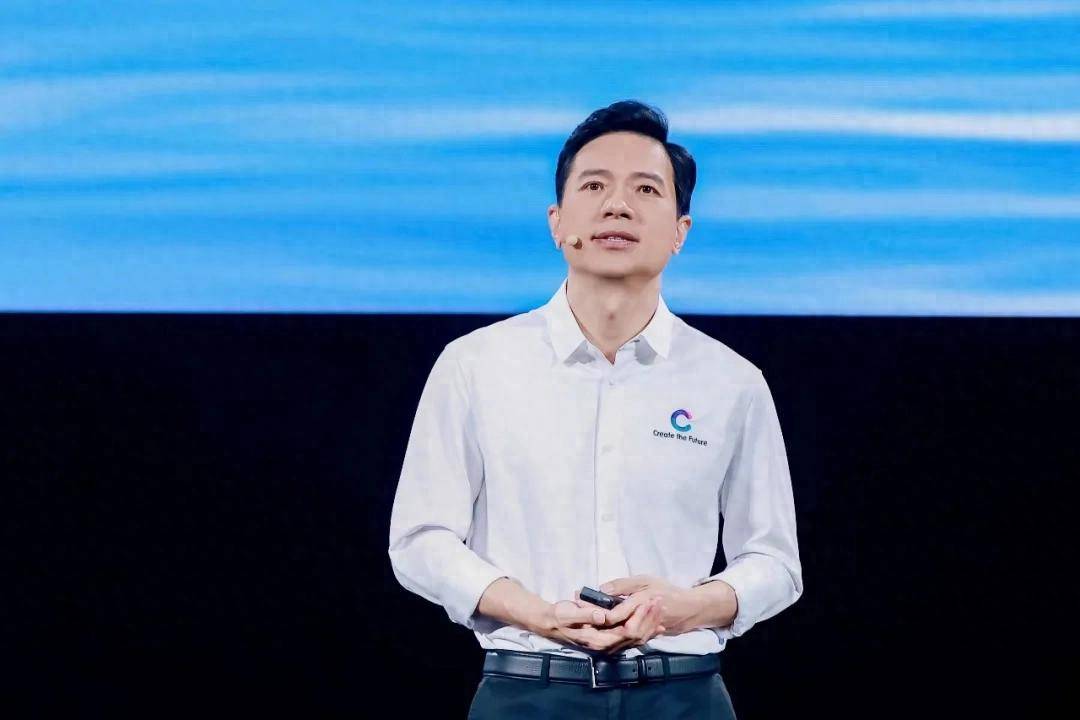
Core Viewpoint - The upcoming AI red envelope competition during the 2026 Spring Festival is expected to be a critical battle for survival among tech giants, rather than just a traffic frenzy [2] Group 1: Strategic Moves and Financial Performance - Baidu has announced significant strategic moves, including the independent listing of its AI chip subsidiary Kunlun and the restructuring of its business units to focus on AI [2][13] - In Q3 2025, Baidu reported a long-term asset impairment loss of 16.2 billion yuan, while AI cloud revenue grew by 33% year-on-year, indicating a clear path for transformation [3] - The core online marketing revenue, primarily from search ads, plummeted by 18% year-on-year to 15.3 billion yuan, highlighting a structural decline in its traditional business [5] Group 2: Challenges in Search and AI Business - The decline in search business is attributed to a shift in user attention towards platforms like Douyin and WeChat, with average daily usage of search engines dropping from 47 minutes in 2020 to just 12 minutes in 2025 [5] - Baidu's attempt to restructure its search model using AI has raised concerns about its traditional revenue model, as direct answers from AI could reduce ad clicks and revenue [6] - The competitive landscape in the AI model sector has intensified, with new entrants disrupting Baidu's previous advantages, forcing the company to adopt an open-source strategy [8][9] Group 3: Organizational Restructuring and Future Outlook - Baidu has initiated significant layoffs, with reductions of 10%-30% across various departments, focusing resources on AI development [11] - The restructuring is seen as a move to consolidate power under CEO Li Yanhong, who aims to directly oversee AI research and development [12] - The success of Kunlun's upcoming IPO is critical for Baidu, as it could alleviate cash flow pressures and enhance its position in the AI chip market [13][17] Group 4: Long-term Viability and Investment Risks - Baidu's future hinges on its ability to find sustainable profit models for its AI initiatives and the successful commercialization of its large models [17] - The company faces high execution risks in its AI transformation, with short-term performance likely to be under pressure [17] - 2026 is positioned as a pivotal year for Baidu, where the outcomes of its restructuring and market strategies will determine its survival in the AI era [16][17]

马斯克重塑特斯拉(TSLA.US)使命 聚焦AI与人形机器人 华尔街“一家欢喜一家愁”
Zhi Tong Cai Jing· 2026-01-29 15:40
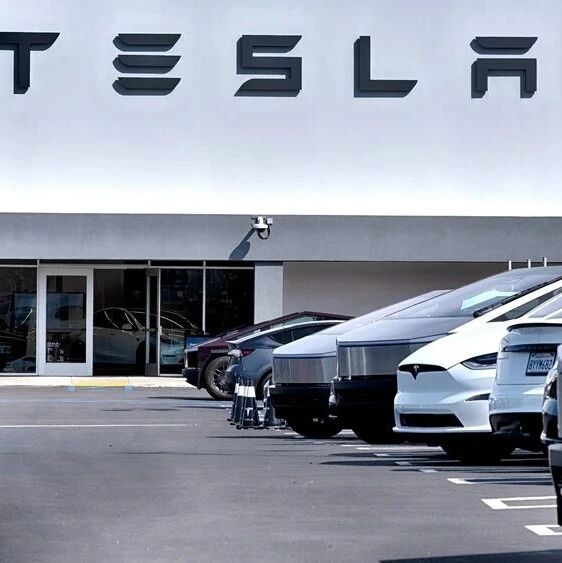
Core Viewpoint - Tesla is shifting its strategic focus from being a traditional automaker to becoming a leader in autonomous driving, robotics, and energy solutions, which has received positive short-term feedback from the market [1]. Group 1: Strategic Direction - Tesla's CEO Elon Musk stated that the company has revised its mission to achieve "extraordinary abundance," emphasizing that AI and robotics will be central to Tesla's future rather than merely increasing vehicle sales [1]. - The company plans to exceed $20 billion in capital expenditures by 2026 to support this strategic transformation [1]. - Tesla will cease production of the Model S/X and convert its Fremont factory to produce the Optimus humanoid robot, aiming for an annual production capacity of up to 1 million units, with meaningful scale expected only after late 2026 [1]. Group 2: Product Development - The upcoming Cybercab autonomous taxi will eliminate the steering wheel and is expected to begin production around April this year, with plans for a driverless ride-hailing service to launch in select cities [1]. Group 3: Financial Outlook - Morgan Stanley has lowered Tesla's target price to $415, citing significant free cash flow pressures in the coming years, with an expected cash flow consumption of $8.1 billion in 2026, narrowing to $500 million in 2027, and returning to positive in 2028 [2]. - RBC Capital maintains an optimistic stance with a "Outperform" rating and a target price of $500, believing that increased capital expenditures align with market expectations and will drive innovation [2]. - Jefferies analyst Philippe Houchois remains neutral with a "Hold" rating and a target price of $300, expressing concerns over the lack of specific data supporting future projections beyond the capital expenditure plan [3].
北汽蓝谷分析师会议-20260129
Dong Jian Yan Bao· 2026-01-29 15:18
1. Reported Industry Investment Rating - No relevant information provided 2. Core Viewpoints of the Report - The report focuses on the in - depth research of BAIC BluePark, covering aspects such as factory construction, high - end vehicle layout, and strategic cooperation [22][23][25] 3. Summary by Related Catalogs 3.1 Research Basic Situation - The research object is BAIC BluePark, which belongs to the automotive vehicle industry. The reception time was on January 29, 2026, and the listed company's reception staff included the board secretary Qiao Yuanhua and the capital market management supervisor Wang Yanan [16] 3.2 Detailed Research Institutions - The research institutions include fund management companies like E Fund, and multiple securities companies such as CITIC Securities, CITIC Construction, Founder Securities, Zhongtai Securities, Soochow Securities, Western Securities, Caitong Securities, and Guotai Haitong Securities [17] 3.3 Research Institution Proportion - No relevant information provided 3.4 Main Content Data - **Question 1**: BAIC New Energy plans to invest in the industrialization of high - end platform models and the digital and intelligent upgrade of production lines at the Xiangjie Super Factory. The production line transformation will be carried out in stages to match the launch rhythm of three new products of the Xiangjie brand. The first - stage transformation aims to ensure that two models can be launched this year [22] - **Question 2**: The company obtained the first - batch national access permit for L3 - level autonomous driving products in December 2025. It is formulating a systematic plan for in - depth L3 layout and plans to launch L3 - level high - end mass - produced models for C - end users in 2026 and 2027 [23][24] - **Question 3**: The company reached a "five - in - one" comprehensive and in - depth strategic cooperation with Pony.ai. The core highlights are the forward - looking R & D and mass production of L4 autonomous driving models and the joint development of overseas markets such as Europe and the Middle East based on the Jihu L4 model [25]
特斯拉的销量已经不重要了
虎嗅APP· 2026-01-29 14:10
Core Viewpoint - Tesla's delivery volume is no longer a key focus for the market, as confidence in the company remains high despite declining sales figures. The company reported its first annual revenue decline since its inception, with a 3% drop in revenue for both the fourth quarter and the full year of 2025 [6][11]. Financial Performance - In Q4 2025, Tesla's revenue was $24.9 billion, down 3% year-over-year, with a full-year revenue of $94.8 billion, also down 3% [6][8]. - Tesla's GAAP net profit for Q4 2025 was $840 million, a significant drop of 61% year-over-year, while the non-GAAP net profit was $1.76 billion, down 16% [6][8]. - The automotive revenue decreased by 11% year-over-year to $17.69 billion in Q4 2025, with a full-year automotive revenue of $69.5 billion, marking a 10% decline [8][11]. Delivery and Production - Tesla's total vehicle deliveries in Q4 2025 were 418,227, a 16% decrease year-over-year, with an annual total of 1.636 million vehicles delivered, down 9% [8][15]. - Production of Model 3/Y in Q4 2025 was 422,652 units, reflecting a 3% decrease year-over-year, while total production was down 5% [9][10]. Market Reaction - Despite disappointing financial results, Tesla's stock price remained resilient, closing at $430.46, only a slight drop of 0.1% [11]. - Analysts noted that Tesla is perceived more like a high-risk startup rather than a stable company, as it continues to attract investor interest despite declining revenues and profits [11][12]. Future Plans and Investments - Tesla announced a record capital expenditure plan of $20 billion for 2025, focusing on AI, autonomous driving, and robotics [11][26]. - The company plans to build six new factories, including those for lithium refining and battery production, and aims to produce 1 million units of its Optimus robot annually [26][29]. Autonomous Driving Vision - Elon Musk emphasized that Tesla's future lies in autonomous driving, with plans to produce vehicles designed solely for this purpose, such as the CyberCab [19][23]. - Tesla's Full Self-Driving (FSD) subscription model will replace the one-time purchase option, with nearly 1.1 million global paid users reported [24][23]. Competitive Landscape - Musk acknowledged that competition in the humanoid robot space is significant, particularly from Chinese companies, but asserted that Tesla's Optimus will outperform others [28][29]. - The company is also planning to establish its own semiconductor manufacturing facility to support its AI and autonomous driving initiatives, addressing potential supply chain constraints [29].
特斯拉转型阵痛:营收首降,马斯克买了张最贵AI门票
Sou Hu Cai Jing· 2026-01-29 13:55
Core Insights - Tesla is at a crossroads, transitioning from an electric vehicle manufacturer to a "physical AI" company, highlighted by a $2 billion investment in xAI [1][5][9] Financial Performance - In Q4 2025, Tesla reported total revenue of $24.901 billion, a year-over-year decline of approximately 3%, marking the first annual revenue drop in its history [1] - The automotive business revenue was $17.693 billion, down about 11% year-over-year, indicating a shrinking share of total revenue [1] - Q4 GAAP net profit fell to $840 million, a 61% drop year-over-year, while non-GAAP net profit decreased by 16% to $1.761 billion [3] - For the full year, GAAP net profit was approximately $3.8 billion, down 46% year-over-year [3] - Despite revenue pressures, Q4 GAAP gross margin improved to 20.1%, up 3.86 percentage points from the previous year, reflecting initial success in cost control [3] Sales and Deliveries - Tesla delivered 418,200 vehicles in Q4, a year-over-year decline of 15.61%, and a total of 1.636 million vehicles for the year, down 8.55% [3][4] Strategic Shift - Tesla's strategy is shifting from a hardware-centric approach to a focus on "physical AI," with 2025 identified as a critical year for this transformation [3][4] - The company will cease production of the Model S and Model X to focus on the production of Optimus robots and other future products [4] Investment in AI - The $2 billion investment in xAI is seen as a significant step towards securing a future in AI, with xAI recently completing a funding round of $20 billion [5] - Tesla's CFO indicated that capital expenditures will exceed $20 billion in 2026 to support this strategic shift [5] Cash Flow and Financial Stability - Tesla's operating cash flow for 2025 was $14.7 billion, with free cash flow at $6.2 billion, providing strong support for the transition [6] - By the end of 2025, Tesla increased its cash and investments by $7.5 billion to a total of $44.1 billion, ensuring ample liquidity for future plans [7] Future Challenges - Market analysis indicates that Tesla's pre-tax profit margin for 2025 is projected at 6%, significantly lower than Toyota's [8] - The company faces pressure on profit margins from tariffs, competition from cheaper models, and policy changes, particularly in key markets like China [8] - Despite challenges, Tesla's long-term vision includes expanding its autonomous taxi service, which could significantly alter its profit model and valuation [8][9]
马斯克:特斯拉建造巨型芯片工厂 !
国芯网· 2026-01-29 12:30
Core Viewpoint - Tesla's future growth may be constrained by chip production capacity, necessitating the construction of its own TerraFab mega fab to integrate various semiconductor manufacturing processes [2][5]. Group 1: Chip Supply Challenges - Elon Musk indicated that existing suppliers like TSMC, Samsung, and Micron are unable to meet Tesla's chip demand, which is critical for its AI, autonomous driving, and robotics projects [4][5]. - The need for Tesla to potentially produce its own chips has been emphasized, as it is seen as a major bottleneck in the competitive AI race [5]. Group 2: TerraFab Mega Fab - The proposed TerraFab will consolidate logic processes, memory semiconductors, and advanced packaging, allowing for a comprehensive chip manufacturing process [2]. - Establishing such a facility will require a significant investment, potentially amounting to hundreds of billions of dollars, and will take considerable time to become operational [5]. Group 3: Strategic Expansion - This initiative represents Tesla's expansion beyond its core electric vehicle business, highlighting its commitment to securing chip supply for future technological advancements [2].
美联储按兵不动,市场焦点转向公司业绩表现
2 1 Shi Ji Jing Ji Bao Dao· 2026-01-29 12:20
Group 1: Federal Reserve and Economic Outlook - The Federal Open Market Committee (FOMC) decided to pause interest rate cuts, citing strong economic growth and stable unemployment, with inflation remaining high [1][3] - The consensus within the FOMC is that the federal funds rate is at a "loosely neutral level," balancing inflation control and employment growth [3] - The Fed's ability to respond to employment and inflation risks has improved after three rate cuts, but future decisions will remain data-dependent [3] Group 2: Market Reactions and Performance - The stock market showed little reaction to the Fed's decision, with major indices like the Dow Jones and S&P 500 closing nearly unchanged [1] - The U.S. 10-year Treasury yield closed at 4.249%, while the 30-year yield approached 5% [2] - Gold and silver prices have risen significantly this year, with gold up 28.46% and silver up 66.77%, while the dollar index has decreased by 2.08% [2] Group 3: Corporate Earnings and Performance - Major banks like JPMorgan Chase, Wells Fargo, Citigroup, and Bank of America exceeded market expectations, with strong interest income indicating a bullish outlook for the banking sector in 2025 [4] - Microsoft reported adjusted earnings of $4.14 per share, exceeding expectations, but faced investor disappointment due to higher capital expenditures and lower cloud growth [4] - META's earnings surpassed expectations, with a reported EPS of $8.88, but its Reality Lab segment continues to incur significant losses [5] - Tesla's revenue and sales declined, but it still reported better-than-expected earnings, with a focus on future projects like Robotaxi and Optimus [6]

