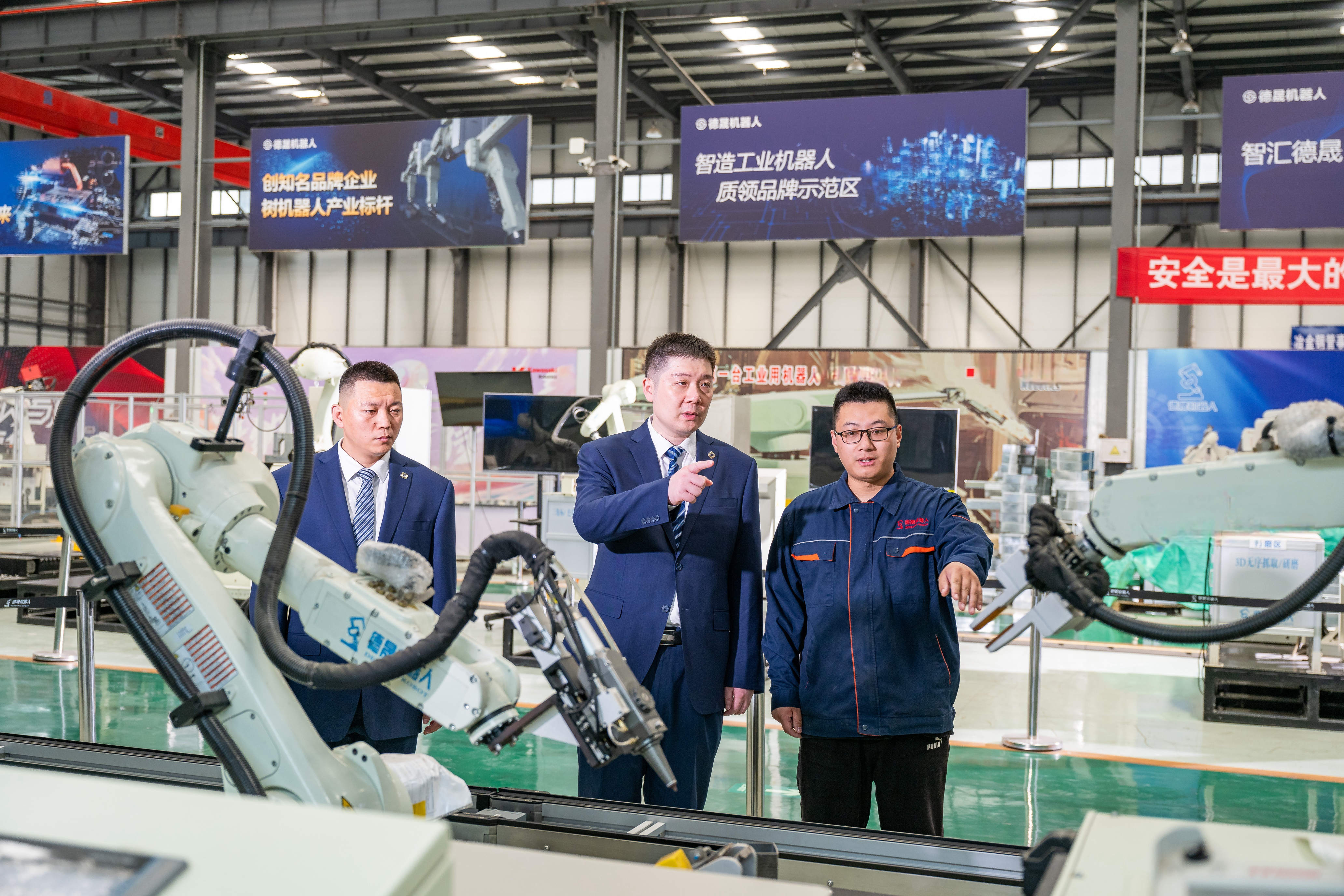
现代化产业体系

Search documents
市政府就《政府工作报告》征求市人大常委会和市政协意见建议
Chang Jiang Ri Bao· 2025-12-17 13:54
Core Points - The meeting focused on soliciting opinions and suggestions regarding the "Government Work Report (Draft)" and government work, highlighting the importance of collaboration between the government and local legislative bodies [1][2] - Key areas of discussion included the development of new productive forces, modern industrial systems, stimulating domestic demand, expanding the private economy, creating an international communication center, high-quality urban renewal, promoting the integration of the Wuhan metropolitan area, and improving people's livelihoods [1][2] Summary by Sections - **Government Work Report**: The report received positive feedback from the local legislative bodies, emphasizing its forward-looking, targeted, and actionable nature [1] - **Future Development Goals**: The year 2026 is identified as the starting point for the "15th Five-Year Plan," with a commitment to high-quality development and the establishment of "five centers" in Wuhan [2] - **Collaboration and Support**: Local legislative bodies expressed their commitment to support government work and ensure the implementation of central and local policies [2]
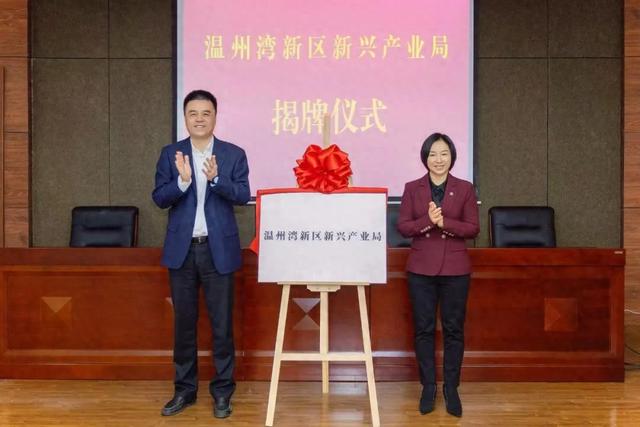
温州湾新区新兴产业局挂牌成立,为浙江首个
Xin Lang Cai Jing· 2025-12-17 13:14
2022年1月,浙江省人民政府批复设立温州湾新区。温州湾新区规划控制总面积约158.48平方公里,空 间范围包括温州高新技术产业开发区、温州经济技术开发区、空港片区、龙湾二期围垦、瓯飞一期(北 片)。 "龙湾发布"解读文章称,近年来,温州湾新区、龙湾区坚定实施创新驱动发展战略,国科温州研究院、 瓯江实验室等高能级平台蓬勃发展,中国眼谷、国际云软件谷等产业地标加速崛起,瑞浦兰钧、麦田能 源等一批新兴产业项目相继落地,为龙湾高质量发展注入了强劲动力。 此外,温州湾新区、龙湾区地区生产总值已跨越"千亿"台阶,连续三年夺得浙江省"科技创新鼎",创新 能力持续跃升。在此基础上,为了更好地落实国家新兴产业政策,推进温州湾新区新兴产业实现跨越式 发展,专门统筹新兴产业发展的新兴产业局应运而生。 "设立新兴产业局既是机构调整的内在需求,也是实现经济社会高质量发展的战略举措。"温州湾新区新 兴产业局负责人表示,当前,新一轮科技革命和产业变革深入发展,新材料、新能源、人工智能等新兴 产业已成为决定区域竞争力的关键因素。新兴产业局将全力肩负起推动全区新兴产业集聚发展的重要使 命,以科学规划和精准研究绘好产业"路线图",以链式招商和 ...

河南11月份规上工业增加值同比增长8.0%
Zhong Guo Xin Wen Wang· 2025-12-17 08:56
Group 1: Industrial Growth - In November, Henan's industrial added value for enterprises above designated size increased by 8.0% year-on-year, continuing a trend of rapid growth [1] - From January to November, the industrial added value in Henan grew by 8.4%, with November marking the second consecutive month of accelerated growth [1] - Among 41 major industrial sectors, 25 saw an increase in added value growth compared to the previous month, expanding nearly 20% [1] Group 2: Key Industry Contributions - The key industrial chains in Henan showed significant support, with their added value growing by 10.5% in November, contributing 85.0% to the province's industrial growth [1] - The electronic information industry experienced a substantial increase in added value by 24.9%, with a growth rate acceleration of 7 percentage points compared to the previous month [1] - The non-ferrous metal smelting and rolling processing industry also maintained rapid growth, with an added value increase of 11.1% [1] Group 3: Technological and Strategic Growth - The province is accelerating its industrial transformation and upgrading, with high-tech manufacturing added value increasing by 21.9% year-on-year in November [1] - Strategic emerging industries saw an added value growth of 15.9%, with the new generation information technology industry growing by 28.7% [1] Group 4: Consumer and Investment Trends - In November, the total retail sales of consumer goods in Henan reached 269.199 billion yuan, marking a year-on-year growth of 4.4% and a continuous recovery over three months [2] - Upgraded consumption categories saw accelerated growth, with retail sales of wearable smart devices, smartphones, and new energy vehicles increasing by 74.6%, 49.9%, and 16.8% respectively [2] - From January to November, fixed asset investment in Henan grew by 4.3%, with significant investments in key industrial chains such as new energy vehicles and modern pharmaceuticals increasing by 44.9% and 30.0% respectively [2]
湘财证券曹旭特:稳中提质,聚焦高质量发展主线
券商中国· 2025-12-17 06:49
Core Viewpoint - The Central Economic Work Conference has outlined the direction for economic work in 2026, emphasizing the importance of fundamental support and long-term development trends, with several sectors expected to continuously release high-quality development momentum [1] Group 1: Technological Innovation - Technological innovation is entering a new stage of deep application, with a robust support system developing in hard technology fields such as advanced manufacturing [2] - The construction of three major international technology innovation centers (Beijing-Tianjin-Hebei, Yangtze River Delta, Guangdong-Hong Kong-Macau Greater Bay Area) is fostering a collaborative environment for talent, technology, and industry [2] - The deepening expansion of "Artificial Intelligence +" will drive AI technology's penetration into various sectors, including manufacturing, healthcare, transportation, and services, enhancing the collaborative upgrade of the industrial chain [2] Group 2: Modern Industrial System - The industrial system in China is evolving towards consolidating strengths and enhancing overall competitiveness, involving the transformation of traditional industries through digital and green technologies [3] - The continuous optimization of the industrial ecosystem will highlight the advantages of industry leaders and companies with genuine technological innovation capabilities [3] Group 3: Domestic Demand Market Potential - Domestic demand, particularly consumption, plays a fundamental role in China's economic growth, with rising household income and innovative consumption scenarios creating numerous opportunities [4] - Diverse and quality consumption sectors such as the silver economy, ice and snow economy, leisure tourism, and service consumption are expected to benefit continuously [4] - Actions aimed at reducing logistics costs and promoting urban renewal will not only constitute effective investments but also enhance economic efficiency, creating opportunities in modern logistics, smart cities, and green buildings [4] Group 4: Efficiency and High-Level Opening Up - The continuous release of institutional dividends is crucial for high-quality development, with the deepening of the national unified market construction expected to eliminate regional barriers and enhance factor allocation efficiency [5] - The expansion of free trade zones, the construction of Hainan Free Trade Port, and the development of the Belt and Road Initiative will open broader market spaces for internationally competitive Chinese high-end manufacturing, cross-border e-commerce, and financial services [5] Group 5: Green Transformation - The green transformation under the "dual carbon" goals is viewed as a high-certainty long-term development track, with the construction of a new energy system and the development of a national carbon market driving growth in wind power, photovoltaics, energy storage, and carbon monitoring services [6] - Energy-saving and carbon-reduction renovations, along with comprehensive solid waste management, will create sustained demand in the environmental technology and circular economy sectors [6] - New development models in real estate and the construction of "good houses" may present new opportunities in green buildings, smart homes, and urban operation services [6] Conclusion - With the Central Economic Work Conference convened, the coordinated efforts of various policies and the deepening of reform and opening up are expected to solidify and enhance the positive trend of economic recovery, with the capital market serving as a vital platform for resource allocation and a window to observe economic structural changes [7]

为加快建设金融强国、服务中国式现代化作出贡献
Jin Rong Shi Bao· 2025-12-17 01:49
12月15日,交通银行党委召开扩大会议,传达学习中央经济工作会议精神,按照全国金融系统工作 会议要求,研究部署贯彻落实举措。交通银行党委书记、董事长任德奇主持会议并讲话。 会议要求,要全面贯彻落实明年经济工作的总体要求、政策取向和"八个坚持"重点任务,坚持稳中 求进、提质增效,当好服务实体经济的主力军和维护金融稳定的压舱石。高效服务扩大内需,积极助力 建设强大国内市场,落实坚持投资于物和投资于人紧密结合的重要要求,在金融服务中既回应百姓关 切,又助力市场主体发展。把握国际科技创新中心扩围契机,创新优化金融服务模式,加力支持因地制 宜发展新质生产力和现代化产业体系建设。高效服务稳外贸,支持上海国际金融中心建设,带动提升对 海南自由贸易港及其他自贸区的服务能级,进一步打造跨境、离岸金融特色,持续助力扩大高水平对外 开放。进一步强化底线思维、极限思维,提升"四早"能力,聚焦重点领域压实责任,压茬推进风险化 解,坚决守牢不发生系统性风险底线,实现高质量发展和高水平安全良性互动。 责任编辑:杨喜亭 会议强调,要始终坚持党中央对金融工作的集中统一领导,积极践行金融工作的政治性、人民性, 坚定不移走中国特色金融发展之路,锚 ...


投资于物和投资于人紧密结合,潜力巨大|宏观月报
2 1 Shi Ji Jing Ji Bao Dao· 2025-12-16 12:23
Group 1 - The central economic work conference emphasizes the need to stabilize investment and expand domestic demand as a priority for economic work in the coming year [1][5] - The government plans to increase the scale of central budget investment and optimize the management of local government special bonds to stimulate private investment [1][6] - The upcoming "14th Five-Year Plan" will see the acceleration of strategic emerging industries and future industry projects, supported by sufficient financial tools and special bond reserves [1][6] Group 2 - In November, the social financing scale increased by 24,885 billion yuan, exceeding market expectations, with a notable contribution from non-standard financing and corporate bond financing [2][3] - The contribution of credit to social financing decreased, with new RMB loans of 4,053 billion yuan in November, reflecting insufficient effective demand in the macro economy [2][3] - Non-standard financing increased significantly, with corporate bond financing reaching 4,169 billion yuan, indicating a shift towards direct financing [3][4] Group 3 - The industrial added value maintained steady growth, with a year-on-year increase of 4.8% in November, while fixed asset investment showed a cumulative year-on-year decrease of 2.6% [5][6] - The demand for equipment updates remains strong due to trends in digitalization and automation, with policies supporting large-scale equipment updates expected to be implemented in 2024 [6] - The central economic work conference highlights the importance of combining "investment in people" and "investment in materials" to unlock significant potential [1][6] Group 4 - In November, the total retail sales of consumer goods reached 43,898 billion yuan, growing by 1.3% year-on-year, although it showed a decline compared to October [7] - The government plans to implement actions to boost consumption and develop a plan for increasing urban and rural residents' income [7] - The overall resilience of foreign trade has supported stable economic growth, but challenges remain for the upcoming year, necessitating stable exchange rates to promote exports [7]
投资于物和投资于人紧密结合,潜力巨大
2 1 Shi Ji Jing Ji Bao Dao· 2025-12-16 12:03
Group 1 - The central economic work conference emphasizes the need to stabilize investment and expand domestic demand as a priority for the upcoming year, with a focus on combining "investment in people" and "investment in things" to unlock significant potential [1][6] - The government plans to increase the scale of central budget investments and optimize the management of local government special bonds to stimulate private investment [1][6] - The upcoming year marks the beginning of the "15th Five-Year Plan," which will accelerate the launch of various strategic emerging industries and future industry projects, supported by ample financial tools and special bond reserves [1][6] Group 2 - In November, the social financing scale increased by 24,885 billion yuan, exceeding market expectations, with a notable contribution from non-standard financing and corporate bond financing rather than traditional credit demand [2][3] - The contribution of credit to social financing decreased in November, with new RMB loans amounting to 4,053 billion yuan, reflecting insufficient effective demand in the macroeconomic environment [2][3] - Corporate loans in November totaled 6,100 billion yuan, primarily driven by an increase in bill financing, indicating a shift in financing sources as companies focus on settling accounts near year-end [3] Group 3 - Non-standard financing saw a year-on-year increase of 1,328 billion yuan in November, while corporate bond financing rose by 1,788 billion yuan, highlighting the importance of off-balance-sheet financing in the current economic context [3][4] - The M1 growth rate declined due to a high base effect, while M2 growth also decreased, influenced by the reduction in credit and its impact on derived deposits [4] - The central economic work conference has shifted its focus from social financing and M2 to economic growth and price recovery, indicating a change in policy priorities [4] Group 4 - In November, the industrial added value for large-scale enterprises grew by 4.8% year-on-year, with a cumulative growth of 6.0% from January to November, reflecting a strong performance in the supply side of the economy [5][6] - Fixed asset investment from January to November showed a year-on-year decline of 2.6%, with significant growth in equipment purchases indicating a trend towards modernization and digitalization in industrial production [5][6] - The government is expected to implement policies supporting large-scale equipment updates in 2024, with additional funding of approximately 150 billion yuan allocated for this purpose [6] Group 5 - In November, the total retail sales of consumer goods reached 43,898 billion yuan, growing by 1.3% year-on-year, although this represented a decline compared to October [7] - The central economic work conference has proposed actions to boost consumption, including plans to increase urban and rural residents' income and optimize the supply of quality goods and services [7] - The resilience of foreign trade has contributed to stable economic growth, but challenges remain for the upcoming year, necessitating measures to maintain exchange rate stability and support exports [7]
哈尔滨工业大学北京研究院在石景山区揭牌
Bei Jing Ri Bao Ke Hu Duan· 2025-12-16 07:30
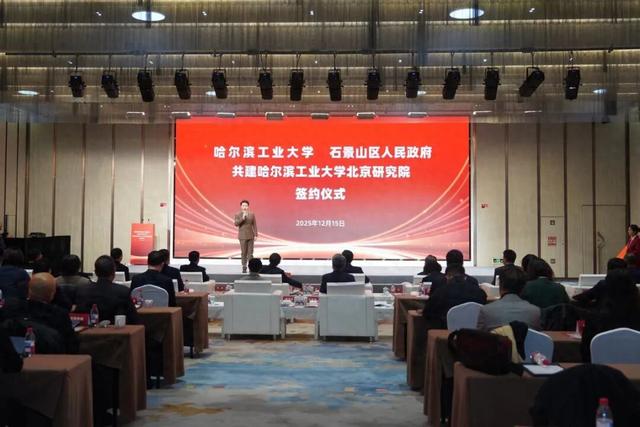
Core Viewpoint - The establishment of the Harbin Institute of Technology Beijing Research Institute represents a strategic collaboration between Harbin Institute of Technology and the Shijingshan District government, aimed at enhancing technological innovation and regional economic development [3][9]. Group 1: Collaboration and Objectives - The research institute aims to serve as a model for university-local government cooperation, focusing on strategic planning, resource investment, and efficient mechanism construction [5]. - The partnership is intended to strengthen the integration of education, technology, and talent development, positioning the institute as a hub for high-level talent cultivation and a platform for emerging industry development [5][7]. Group 2: Regional Economic Development - Shijingshan District emphasizes the role of higher education and research institutions in driving high-quality regional economic development, with a focus on technological innovation leading industrial innovation [7]. - The district has successfully transformed its industrial structure, with the ratio of secondary to tertiary industries shifting from 7:3 to 1:9, and its GDP surpassing 100 billion yuan for the first time in 2022 [10]. - By 2024, the digital economy is projected to account for 57.4% of the district's GDP, with a total GDP of 1,312.9 billion yuan, reflecting a year-on-year growth of 6.5% [10]. Group 3: Strategic Importance - The research institute's establishment is seen as a significant milestone in deepening strategic cooperation between the university and the district, contributing to national strategic needs and the capital's development [9]. - The collaboration aims to explore a model of collaborative innovation between industry and academia, enhancing the region's competitiveness and development capabilities [9][10].
“十四五”期间,长沙交出高质量发展和现代化建设的精彩答卷
Chang Sha Wan Bao· 2025-12-16 03:24
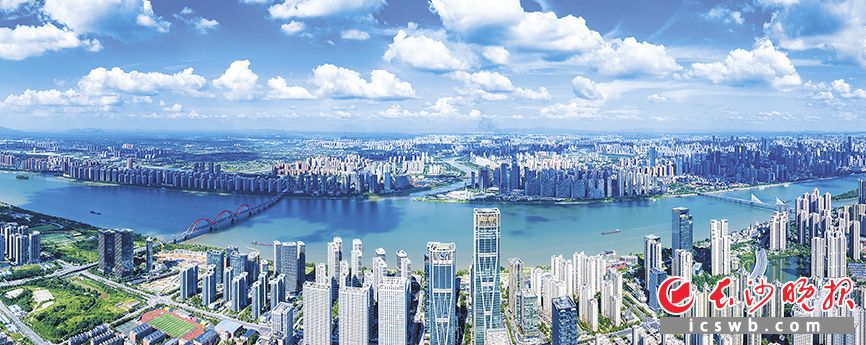
Core Viewpoint - During the "14th Five-Year Plan" period, Changsha is committed to high-quality urban development, emphasizing the "People's City" concept and showcasing its ecological advantages as a "mountain-water city" [2][28]. Economic Development - The city's GDP is projected to grow at an average annual rate of 5.4% from 2021 to 2024, entering the ranks of mega cities [11]. - Changsha has cultivated seven trillion-level industrial clusters and three national-level advanced manufacturing clusters [12]. - The total value of the digital economy has surpassed 500 billion, with the service sector's added value exceeding 900 billion, contributing 51.7% to economic growth [18]. Industrial Structure - The city has established a modern industrial system, with significant advancements in advanced manufacturing and technology innovation, ranking 5th among national advanced manufacturing cities [19]. - The number of high-tech enterprises has increased from over 4,100 to 8,600, with a local transformation rate of over 50% for research results from universities [19]. Urban Infrastructure - Changsha has made significant improvements in urban infrastructure, including the completion of 15 cross-river passages and the expansion of the metro network to cover six districts and one county [24][26]. - The city has achieved a forest coverage rate of 55%, ranking among the top three provincial capital cities in China [31]. Cultural and Tourism Development - The city has seen a robust growth in cultural enterprises, with revenues reaching 1,662 billion and an annual growth rate of around 10% [36]. - In 2024, the city is expected to receive over 200 million tourists, generating more than 200 billion in tourism revenue, marking a 10% annual growth [40]. Social Welfare - The city has prioritized employment, with an expected addition of 782,700 urban jobs, a 9.59% increase compared to the "13th Five-Year Plan" period [46]. - The number of insured individuals for various social insurances has reached 8.49 million for pension, 2.43 million for unemployment, and 3.39 million for work-related injuries [49].
纪检监察工作高质量发展·践悟丨为产业转型升级注入“廉动力”
Zhong Yang Ji Wei Guo Jia Jian Wei Wang Zhan· 2025-12-16 00:49
中央纪委国家监委网站 李张光 山东省济南市纪委监委聚焦企业所需所盼,督促职能部门精准施策,优质高效服务经营主体。图为该市纪检监察干部在企业调研了解生产经营情况与发展需 求。陈彦 摄 本期嘉宾 李汉卿 吉林省长春市委常委,市纪委书记、监委主任 杨光忠 山东省济南市委常委,市纪委书记、监委主任 王增昂 山西省阳泉市委常委,市纪委书记、监委主任 我们把护航产业转型升级作为推进政治监督具体化、精准化、常态化的有力抓手,系统梳理产业转型升级的各项重点任务,制定监督清单,细化实化监督内 容,推动各级党组织担当作为、狠抓落实。 汽车、装备制造、农产品加工是长春3个传统优势产业,我们紧盯产业转型升级各项任务举措落实情况,整合监督力量,深入一线开展调研监督,坚决纠治 有令不行、有禁不止,做选择、搞变通、打折扣,不顾大局、搞部门或地方保护主义,照搬照抄、上下一般粗等问题;紧盯服务保障产业转型的责任单位、 重要环节、关键岗位,推动破难题、疏堵点,切实打通产业转型升级的"中梗阻";紧盯重点对象,加强对"一把手"的监督,督促其在推动产业转型升级中严 于律己、严负其责、严管所辖,以"头雁效应"激发"群雁自觉";紧盯重点事,紧扣长春国际航 ...