AI Agent

Search documents
DeepSeek新模型曝光,梁文锋亲自督战,要和OpenAI硬碰硬
3 6 Ke· 2025-09-05 12:48
Core Viewpoint - DeepSeek is developing a new AI model with advanced AI Agent capabilities, aiming to compete directly with OpenAI's offerings, with a planned release in Q4 of this year [2][4]. Group 1: AI Agent Development - The new AI system will learn from past actions and improve itself, capable of completing complex tasks with minimal user input [4][7]. - AI agents are seen as the next significant development in AI, differing from traditional chatbots by having autonomous decision-making and task execution capabilities [7][10]. - The industry is recognizing 2025 as a pivotal year for AI agents, with DeepSeek's entry into this space being a strategic move [10][12]. Group 2: Market Context and Competition - DeepSeek's previous model, R1, was released nearly nine months ago, and the upcoming product is expected to revitalize the company's market presence [4][22]. - The competitive landscape includes major players like Microsoft and Google, as well as domestic giants such as Alibaba and Tencent, all of whom are investing in AI agents [10][19]. - DeepSeek's market share has significantly declined, with a reported 72.2% drop in monthly downloads from 81.1 million to 22.6 million [23][24]. Group 3: Challenges and Expectations - DeepSeek faces challenges such as slow response times, user attrition, and a need for a significant breakthrough to regain market confidence [22][26]. - The company has been criticized for not adequately addressing user needs and for its slow product rollout, leading to skepticism about its future [22][23]. - There is anticipation regarding whether DeepSeek can deliver a "big surprise" that could restore its former success in the AI market [27].



滴普科技入选IDC 2025Q3 中国AI Agent报告,三大关键领域实力登榜
Bei Jing Shang Bao· 2025-09-05 11:15
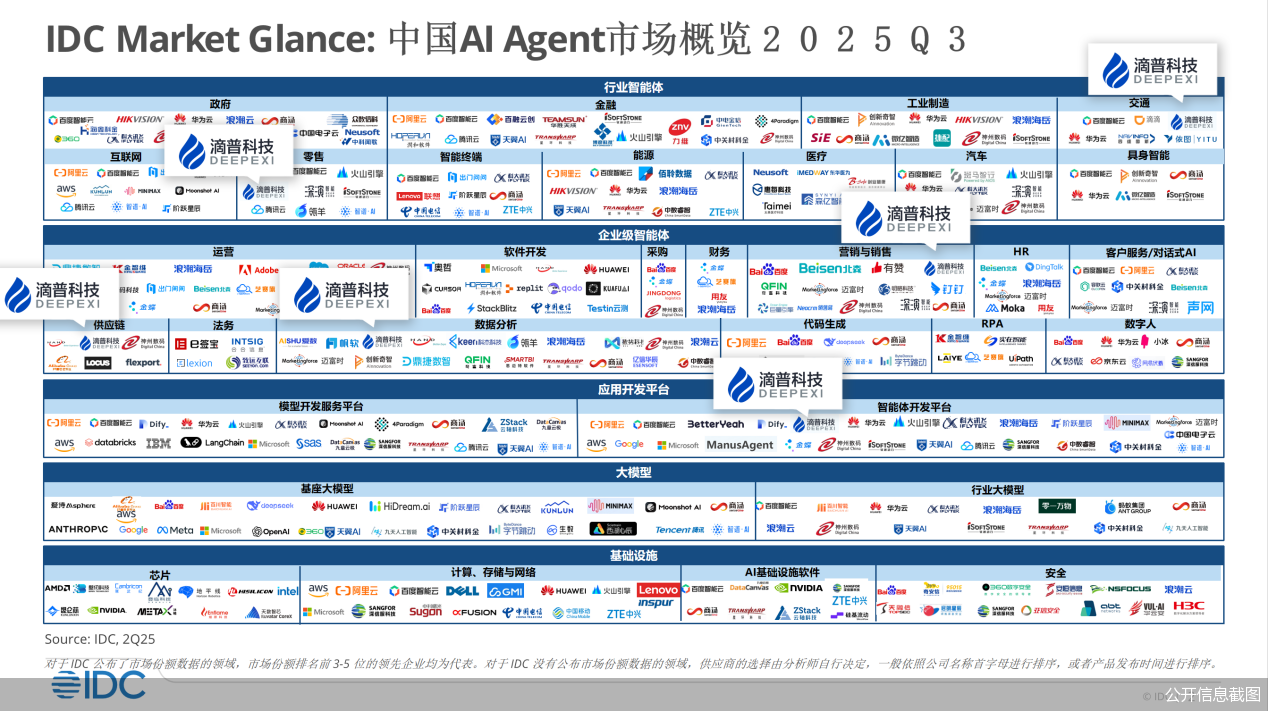
全球权威信息技术研究机构 IDC 近期重磅发布《IDC Market Glance:中国 AI Agent 市场概览 2025Q3》报告,国内企业级大模型AI应用解决方案领军者滴普 科技,凭借在AI Agent 领域的技术深耕与场景落地硬实力,成功跻身报告核心视野,被列为企业级智能体、行业智能体、智能体开发平台三大关键领域的代 表厂商。 在行业智能体层面,滴普科技已在制造、消费零售、交通等领域实现深度落地,尤其在消费零售场景成果显著。基于Deepexi企业大模型打造的Agentic AI 应用,数据驱动分析准确率超90%,精准捕捉消费需求;无效补货规避率超90%,大幅压缩库存成本;1-2分钟即可生成门店专属分析报告,让运营决策效率 翻倍,真正实现 "从数字化到智能化" 的效能跃升。 当然技术落地离不开平台支撑。滴普科技也意识到了这点。因此他们打造了FastAGI 企业级智能体平台,其是首批通过中国信通院"智能体平台能力专项测 试"的平台,完全符合《智能体平台技术要求》国家标准。其核心优势直击企业痛点:支持私有化部署,满足金融、制造等行业的数据安全需求;具备系统 级流程搭建与灵活配置能力,精准匹配复杂业务逻辑; ...
AI产业跟踪:谷歌发布新图像模型Gemini2.5FlashImage,关注多模态AI应用落地进展
Changjiang Securities· 2025-09-05 08:44
Investment Rating - The report maintains a "Positive" investment rating for the industry [7] Core Insights - On August 26, 2025, Google released the image generation and editing model Gemini 2.5 Flash Image, code-named "Nano-Banana," which supports 32k context with pricing for input/output text at $0.3/$2.5 and input/output images at $0.3/$30. The report anticipates a significant turning point in Q4 for domestic models and applications, strongly favoring the monetization, scaling, and commercialization of domestic AI applications [2][5] Summary by Sections Event Description - Google launched the Gemini 2.5 Flash Image model, which supports high-context image generation and editing, with specific pricing details provided [5] Event Commentary - The model exhibits superior capabilities in character consistency and creativity, with five core functions: text-to-image, image-to-text, multi-image generation, iterative refinement, and high-fidelity text rendering. The report suggests that the model's advancements could transition AI from a productivity tool to a creative partner, enhancing the potential for new application scenarios [10] - Key technological highlights include interleaved generation, which allows for consistent and varied image outputs based on user instructions, and pixel-perfect editing capabilities that enable users to refine outputs easily. The cost of generating a single image is approximately $0.039, significantly lower than previous models, enhancing competitive positioning [10] - The report emphasizes the strengthening of investment logic in domestic AI agents, predicting a pivotal moment for AI application monetization and commercialization in Q4. It recommends focusing on AI agent-related companies, the Chinese computing power industry chain, cloud service providers, and IDC firms collaborating with major players like Alibaba [10]

ChatGPT新功能,又干掉一批创业项目
量子位· 2025-09-05 04:28
Core Viewpoint - ChatGPT has introduced a new feature called "Conversation Branching," allowing users to engage in multiple conversation threads without cluttering the original dialogue [1][3][4]. Group 1: Conversation Branching Feature - The "Conversation Branching" feature enables users to click a button to create a new topic based on the existing conversation [4][8]. - This feature is designed to enhance user experience by allowing for separate discussions while maintaining context from the original topic [12][13]. - The implementation of this feature is seen as a response to user feedback, indicating a demand for more organized conversation management [3][13]. Group 2: Project Functionality - ChatGPT has made the previously paid "Project" feature available for free, enhancing accessibility for all users [16]. - The "Project" feature includes file upload limitations based on user subscription levels, with free users allowed to upload up to 5 files, Plus users up to 25 files, and Pro users up to 40 files [19]. - Users can customize project colors and icons, improving project differentiation and recognition efficiency [18].

新一轮AI浏览器大战,谷歌将掉队了?
Hu Xiu· 2025-09-05 02:00
Core Insights - The article discusses the emerging competition in the AI browser market, highlighting the potential disruption to traditional search engines and browsers, particularly Google Chrome [4][49][70] - It emphasizes the strategic importance of browsers in the AI era, suggesting that they will evolve into more interactive and intelligent platforms [10][21][109] Group 1: AI Browser Competition - Perplexity's ambition to acquire Google's Chrome browser for $34.5 billion signals a significant shift in the browser landscape, indicating that AI browsers are becoming a focal point for investment and innovation [24][32][38] - Anthropic's launch of Claude for Chrome adds to the competitive landscape, suggesting that AI capabilities are becoming essential for modern browsers [3][4] - The article posits that the browser market, previously stable, is now ripe for disruption due to advancements in AI technology [7][10][49] Group 2: Strategic Importance of Browsers - Browsers are increasingly seen as the primary interface for user interaction with AI, shifting the focus from traditional operating systems [9][10][21] - The article argues that the future of browsing will involve more proactive and personalized experiences, where browsers act as intelligent assistants rather than passive tools [99][100][109] - The potential for AI to redefine search and browsing interactions is highlighted, suggesting that users will rely more on AI agents for information retrieval rather than traditional search methods [73][80][81] Group 3: Market Dynamics and Future Outlook - The current browser market is characterized by Google's dominance, but there is a belief that this could change as new players emerge with innovative AI solutions [38][49][63] - The article suggests that the next decade may see a significant shift in browser usage, with a decline in Chrome's market share as new AI-driven browsers gain traction [38][42][49] - The discussion includes the potential for initial startups to disrupt the market, leveraging open-source technologies like Chromium to create competitive products [65][66][90] Group 4: Challenges and Innovations - The article outlines the need for advancements in AI agent technology to fully realize the potential of AI browsers, indicating that current capabilities are still in early stages [95][96][102] - It discusses the importance of user experience in the development of AI browsers, emphasizing the need for a balance between proactive assistance and user control [106][108] - The potential for multi-modal interactions in browsers is explored, suggesting that future browsers will need to adapt to various user preferences and contexts [120][127][130]

Perplexity对Chrome发起收购要约,深聊新一轮AI浏览器大战
3 6 Ke· 2025-09-05 01:13
Core Insights - The article discusses the emerging competition in the AI browser market, highlighting the potential disruption to traditional search and browsing paradigms, particularly focusing on Google's Chrome browser and the ambitions of startups like Perplexity and Anthropic [1][3][16]. Group 1: AI Browser Definition and Market Dynamics - An AI browser is defined as a platform that integrates AI capabilities to enhance user interaction, data collection, and automation, shifting the focus from traditional operating systems to browsers [5][8]. - The previous browser wars featured stable competitors like Firefox and Chrome, but the advent of AI has reignited interest in browser technology [6][10]. - The AI browser market is seen as a new frontier, with significant investment opportunities as companies explore innovative ways to integrate AI into browsing experiences [10][16]. Group 2: Perplexity's Ambitions and Google's Challenges - Perplexity's proposed acquisition of Google's Chrome for $34.5 billion signals its intent to dominate the AI browser space, despite the challenges of such a large-scale acquisition [16][19]. - Perplexity's AI browser, Comet, offers features like integrated AI assistance for tasks such as web searches and content summarization, showcasing the potential of AI in transforming user experiences [18][24]. - Google faces an "innovator's dilemma," as its significant revenue from Chrome limits its ability to make drastic changes, potentially jeopardizing its market dominance in the long term [24][26]. Group 3: Future of Browsing and Search - The article posits that the future of browsing will involve a shift from traditional search methods to AI-driven interactions, where users will rely on intelligent agents to fulfill their needs [45][49]. - The current search model, which relies on user-initiated queries, is expected to evolve into a system where AI anticipates user needs and provides tailored information [51][55]. - The integration of AI into browsers is anticipated to redefine user interactions, making them more proactive and personalized, ultimately transforming the browsing experience [66][70]. Group 4: Technological Challenges and Innovations - The development of AI browsers is seen as a multi-stage process, with the first stage focusing on integrating chat and search functionalities, followed by more personalized and proactive features [67][70]. - The article emphasizes the need for advancements in AI agent technology to enable browsers to perform complex tasks and enhance user experience [66][72]. - Future browsers are expected to incorporate multi-modal capabilities, allowing users to consume information in various formats, such as text, audio, and video, based on their preferences [82][87]. Group 5: Data Privacy and Security Concerns - The rise of AI browsers raises concerns about data privacy and the potential for centralized data collection, prompting discussions on governance and transparency [91].

A股盘前播报 | 国办发文推进体育产业高质量发展 央行开展1万亿买断式逆回购
智通财经网· 2025-09-05 00:37
Industry Developments - The State Council has introduced 20 measures to promote high-quality development in the sports industry, aiming for a total scale exceeding 7 trillion yuan by 2030 [1] - DeepSeek, a Chinese AI company, is reportedly developing advanced AI models to compete with OpenAI, with 2025 expected to be a pivotal year for AI Agent commercialization [3] - The U.S. job market shows signs of cooling, with August ADP employment numbers increasing by only 54,000, below the expected 65,000, which may influence Federal Reserve interest rate decisions [4] Market Trends - Huawei has launched a new foldable smartphone, reviving its Kirin chip after four years, which is expected to drive domestic substitution in key industry segments [9] - The upcoming release of the iPhone 17 has led to increased hiring among supply chain companies, with expectations for valuation recovery in the supply chain due to tariff resolutions and increased AI investments by Apple [10] - The government is guiding localities to orderly develop the photovoltaic and lithium battery industries, indicating a clear direction for industry support and potential improvements in supply-demand structures [11] Company Announcements - Junsheng Electronics has begun mass supply of customized main control boards in collaboration with leading clients [12] - Beijing Lier has signed strategic cooperation agreements with SenseTime and Xiwang Technology to explore AI computing power collaboration [12] - Ningbo Construction's subsidiary has won construction projects totaling 1.117 billion yuan [12]
中国零售消费行业生成式AI及数据应用研究报告
艾瑞咨询· 2025-09-05 00:05
Core Viewpoint - The retail industry is transitioning from high-speed growth to stock competition, necessitating the integration of generative AI and data applications to reshape the "people, goods, and scenarios" model, enhancing consumer demand insights, operational efficiency, and global market expansion [1]. Group 1: Retail Consumption Transition - The retail sector is shifting from a growth phase driven by demand to a competitive landscape focused on existing market share, requiring digital transformation to optimize sales conversion and inventory turnover [2]. - Companies must leverage digital technologies to gain precise consumer insights and expand touchpoints, which are critical for reshaping the retail model [2]. Group 2: Demand-Side Transformation - Post-pandemic, consumers are more rational, leading companies to shift focus from traffic-driven strategies to membership-based economies, emphasizing user retention and value extraction [4]. - Businesses need to utilize digital tools to create detailed user profiles and efficiently target high-intent consumers [4]. Group 3: Supply-Side Transformation - The retail market is projected to reach approximately 49 trillion yuan in retail sales by 2024, with online sales channels continuing to grow [6]. - Companies must establish efficient data processing systems to support comprehensive digital integration and leverage AI for customer acquisition and operational efficiency [6]. Group 4: Beauty Industry Insights - Domestic beauty brands have rapidly increased their market share from 43.7% in 2022 to 55.7% in 2024, utilizing KOL evaluations and UGC content to establish a marketing loop that surpasses foreign brands [9]. - Chinese beauty brands are expanding into Southeast Asia, the Middle East, and Europe, enhancing their global presence through localized marketing strategies [9]. Group 5: Footwear and Apparel Industry Insights - The footwear and apparel market is experiencing intense competition, with companies needing to build strong product development capabilities and brand recognition [11]. - Leading firms are focusing on consumer insights to develop differentiated products and enhance brand loyalty through content marketing [11]. Group 6: Home Furnishing Industry Insights - The home furnishing market is transitioning to a replacement phase, with companies seeking growth through international expansion [14]. - Firms are building omnichannel operations to enhance customer experience and are increasingly focusing on establishing their own brands overseas [14]. Group 7: Generative AI and Data Governance - The success of generative AI applications relies on high-quality, compliant data, with data governance being essential for establishing this foundation [20]. - Companies with strong data governance and generative AI capabilities can offer end-to-end solutions to enhance AI application value [20]. Group 8: Generative AI in Retail - 71% of companies plan to strengthen data-driven decision-making, with generative AI primarily being applied in marketing and customer service scenarios [23]. - The integration of generative AI in product development and supply chain management is contingent on the support of enterprise knowledge bases [23]. Group 9: Cloud Services and AI Integration - Choosing cloud service providers with comprehensive data and AI capabilities can lower the barriers to generative AI application [26]. - Public cloud services offer extensive resources and platforms, enabling companies to focus on business logic rather than infrastructure management [26]. Group 10: AI Agent Adoption - 94% of retail companies have implemented AI agents, balancing customized development with platform deployment [31]. - The penetration of AI agents is higher in user-facing scenarios, while market analysis and consumer insights require more complex data and algorithms [31]. Group 11: Marketing and User Journey - Over 90% of companies have adopted generative AI in marketing to address high costs and fragmented user demands [48]. - Generative AI significantly reduces content production costs, with 91% of companies reporting lower expenses in this area [51]. Group 12: Internal Decision-Making and Governance - 93% of companies are building knowledge bases across multiple scenarios, with generative AI enhancing data governance and decision-making efficiency [56]. - The combination of generative AI and data applications is transforming decision-making from experience-driven to data-driven processes [56]. Group 13: International Market Expansion - 93% of retail companies are pursuing overseas business, focusing on markets with high purchasing power and established channels [66]. - Generative AI aids in overcoming language and cultural barriers, facilitating localized marketing and efficient customer service [69].

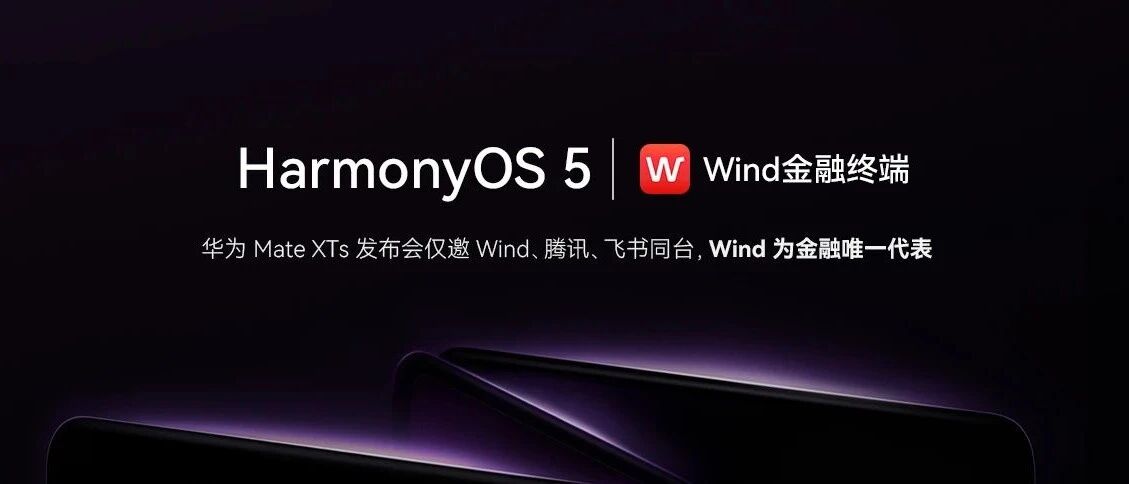
华为三折屏 Why只请了三家公司:Wind、腾讯(00700)、飞书
智通财经网· 2025-09-04 23:42
Core Viewpoint - The launch of Huawei Mate XTs "Extraordinary Master" folding phone signifies a strategic collaboration with three leading companies: Wind, Tencent, and Feishu, highlighting the development of a comprehensive smart interconnectivity ecosystem based on HarmonyOS [1][3]. Group 1: Strategic Partnerships - The inclusion of Tencent represents immersive experiences in entertainment and social interaction [3]. - Feishu symbolizes new productivity in enterprise office and collaboration [3]. - Wind opens up possibilities for professional-grade industry applications, covering the entire user journey in work, life, and investment [3]. Group 2: Wind's Role - Wind's participation is particularly notable as it compresses a complete PC-level financial terminal into a mobile device, addressing the complex needs of financial professionals [4][10]. - The Mate XTs features a 10.2-inch display that allows users to access vast amounts of global data seamlessly [6]. - Multi-tasking capabilities enable users to view financial reports on one screen while accessing databases and market sentiment on another [7]. Group 3: AI Integration - Wind is revolutionizing the work of financial professionals with AI Agents that provide 24/7 assistance [11]. - The AI Briefing Agent delivers global market updates and stock alerts every morning [11]. - The Investment Morning Report Agent monitors global markets overnight and presents results at dawn [11]. Group 4: Future Vision - The collaboration of these three companies at the launch not only supports the Mate XTs but also points towards a future of cross-industry and cross-scenario smart interconnectivity [12]. - For Huawei, this initiative represents both a product and a strategic direction, while for Wind, it is an opportunity to showcase its capabilities [12]. - Users can expect smart devices to evolve from mere tools to integral ecological partners in their daily lives [12]. Group 5: Industry Impact - The Mate XTs folding phone is perceived as a new possibility for financial professionals, investors, and office workers [13]. - Wind's technology allows financial tasks to be performed on-the-go, effectively putting a PC in the user's pocket [13]. - Tencent enhances the immersive experience for entertainment, while Feishu facilitates efficient collaboration across different scenarios [13].

华为三折屏,Why只请了三家公司:Wind、腾讯、飞书
Wind万得· 2025-09-04 22:36
Core Viewpoint - Huawei has invited three strategic partners: Wind, Tencent, and Feishu, representing finance, entertainment, and collaboration, respectively, signaling the construction of a comprehensive smart interconnection ecosystem with the HarmonyOS [1][4]. Group 1: Why These Three Companies? - Tencent's involvement signifies an immersive experience in entertainment and social interaction [4]. - Feishu represents new productivity in enterprise office and collaboration [4]. - Wind opens up possibilities for professional-grade industry applications [4]. Group 2: Wind's Role - Wind's introduction is notable as it compresses a complete PC-level financial terminal into a smartphone, utilizing Huawei's Mate XTs foldable screen [8][10]. - The device features a 10.2-inch large screen for browsing vast data and multi-tasking capabilities, allowing simultaneous viewing of financial reports and databases [9]. - Instant generation of reports and data extraction is facilitated by the Alice series functions, enabling a seamless workflow for finance professionals [10]. Group 3: The Agent Revolution - Wind is transforming the work style of finance professionals with AI Agents that provide 24/7 assistance [11]. - Various agents are designed to deliver market updates, generate reports, and analyze performance, acting as personal research assistants [12]. - The future is envisioned as an era dominated by these agents, enhancing productivity and efficiency for finance professionals [12]. Group 4: Cross-Industry Innovation - Huawei's choice of these three companies reflects their leadership in finance, entertainment, and office collaboration, supporting the application of the foldable screen [14]. - The collaboration indicates a strategic move towards creating a cross-industry, all-scenario smart interconnection ecosystem [14]. - For users, this signifies a shift from tools to smart ecological partners in their daily lives [14]. Group 5: Future Implications - The Mate XTs foldable screen is positioned as a new possibility for finance, entertainment, and office collaboration sectors [15]. - Wind enables finance professionals to carry a PC in their pocket, while Tencent enhances immersive experiences, and Feishu facilitates efficient collaboration [15]. - The foldable device and its capabilities represent a significant advancement in how professionals interact with technology [15].