经济增长

Search documents
经济地理丨湖北加速逼近河南 中部第一省或将易主
Sou Hu Cai Jing· 2025-08-01 04:34
Core Viewpoint - The economic performance of 31 provinces in China for the first half of the year shows significant competition, particularly between Hubei and Henan, with Hubei rapidly closing the economic gap [1][2]. Economic Performance - Henan's GDP reached 31,683.80 billion yuan, growing by 5.7%, while Hubei's GDP was 29,642.61 billion yuan, with a growth rate of 6.2%, indicating Hubei's faster growth compared to Henan [1][2]. - The economic gap between Hubei and Henan has significantly narrowed over the past two years, from 5,066.78 billion yuan in 2023 to 2,041.19 billion yuan in 2024 [1]. Investment and Consumption - Hubei's fixed asset investment grew by 6.5%, surpassing the national average of 3.7%, with manufacturing investment increasing by 12.5% [4]. - Hubei's retail sales reached 13,073.93 billion yuan, growing by 6.9%, which is higher than the national average [4]. Trade Performance - Hubei's total import and export volume exceeded 400 billion yuan for the first time, reaching 402.31 billion yuan, with exports growing by 38.5% [5]. - The export of mechanical and electrical products increased by 26.8%, accounting for 50.7% of total exports [5]. Henan's Economic Characteristics - Henan's economy showed "three fasts and two stability" in the first half of the year, with industrial output, fixed asset investment, and retail sales all experiencing significant growth [6][7]. - The industrial production in Henan grew by 8.4%, with nearly 80% of industries maintaining growth [6].


X @外汇交易员
外汇交易员· 2025-08-01 02:28
Policy Focus - The government will strengthen economic monitoring, forecasting, and early warning systems [1] - The government will normalize policy research and reserve measures [1] - The government aims to improve the policy toolbox for stabilizing employment and expanding domestic demand [1] - Policies will be adjusted based on actual needs, coordinating efforts between the current and next year [1] Economic Goals - The government prioritizes stabilizing employment, businesses, and market expectations [1] - The government seeks to achieve a reasonable recovery in price levels [1] - The government aims for overall stability in social employment and optimized economic growth [1]
3%?美二季度GDP被疑“虚假繁荣”
Sou Hu Cai Jing· 2025-08-01 01:35
图片说明: 美联储决定维持利率不变,但下调了对美国经济的看法。图为7月30日纽交所内,电视正在播放美联储主席鲍威尔发表讲话。(视觉中国) 本报记者 李迅典 本报特约记者 任 重 "美国经济二季度反弹掩盖了经济放缓的底层趋势",路透社7月30日以此为题报道称,美国二季度(4月至6月)经济增长数据严重夸大了经济健康状况。美 国商务部周三公布的数据显示,二季度美国国内生产总值(GDP)按年率计算增长3%,较一季度-0.5%的增速回升明显。美国总统特朗普在其社媒平台上称 赞这一经济数据,但路透社、美国有线电视新闻网(CNN)、《华尔街日报》等主要媒体纷纷表示,该数据可能并未准确反映经济实情,美国经济尚未脱 离困境,关税政策、"大而美"法案等因素仍让经济不断承压。GDP数据发布后的稍晚些时候,美联储宣布将联邦基金利率目标区间维持在4.25%至4.50%之 间不变,并表示该决定是基于美国经济前景不确定性升高。 "经济仍在挣扎" 多家媒体分析称,进口下降是GDP数据上升的主要原因。受美国关税政策影响,一些企业在一季度提前进口囤货以规避冲击,拖累了数据增长。但企业在二 季度倾向消耗现有库存而非增加进口,从而提升了GDP数据。 ...
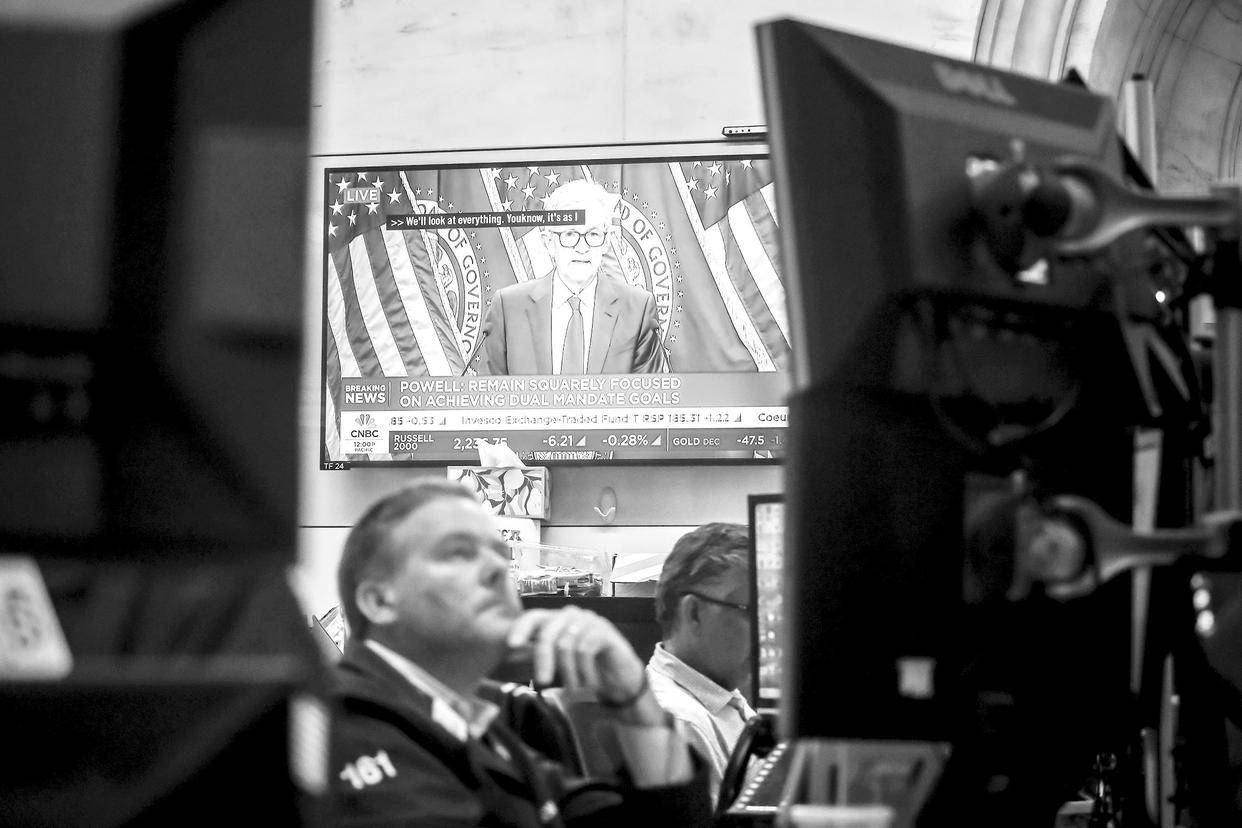
增长3%?美国二季度GDP被疑“虚假繁荣”
Huan Qiu Shi Bao· 2025-07-31 22:49
Core Viewpoint - The second quarter economic growth data in the U.S. is seen as overstated, masking underlying trends of economic slowdown, with various media outlets suggesting that the economy remains under pressure from tariffs and other policies [1][3][4]. Economic Growth Analysis - The U.S. GDP grew at an annualized rate of 3% in Q2, a significant rebound from a contraction of -0.5% in Q1 [1]. - The increase in GDP is primarily attributed to a decline in imports, as businesses opted to deplete existing inventories rather than increase imports, which positively impacted GDP calculations [3]. - The final sales to domestic purchasers, a key indicator of economic health, only grew by 1.2%, marking the weakest performance since Q4 2022 [3]. Investment and Consumer Spending - Business investment in equipment slowed from 23.7% in Q1 to 4.8% in Q2, indicating a cautious approach from companies amid economic uncertainty [3]. - Analysts suggest that the real economic growth rate for the first half of the year is only 1.25%, down from 2.3% in the same period last year, highlighting a significant slowdown [4]. Federal Reserve's Stance - The Federal Reserve maintained the federal funds rate target range at 4.25% to 4.50%, reflecting caution due to economic uncertainties stemming from government policies [5]. - The Fed's recent statements indicate a more cautious outlook on economic growth, acknowledging that recent indicators show a slowdown in economic activity [5]. Market Reactions and Future Outlook - The upcoming week is critical for the U.S. and global economy, with significant economic data releases and corporate earnings reports expected [7]. - The core issue remains the ongoing tariff negotiations, which will significantly influence global trade dynamics in the second half of the year [8].

荷兰2025年第二季度经济同比增长1.5%
Shang Wu Bu Wang Zhan· 2025-07-31 15:38
据荷兰中央统计局公布数据,2025年第二季度,荷兰国内生产总值同比增长 1.5%,环比增长0.1%,这主要得益于投资和政府消费。其中,政府消费同比增 长2.8%,居民消费增长1.0%,投资增长2.5%,出口增长2.2%,进口增幅更为 强劲,达到3.7%。 (原标题:荷兰2025年第二季度经济同比增长1.5%) ...
国际观察|欧元区经济增长乏力 欧美贸易协议干扰复苏前景
Xin Hua She· 2025-07-31 14:33
货币政策不确定性增加 欧洲央行近日宣布维持三大关键利率不变,是去年6月启动降息周期以来首次按兵不动。观察人士认 为,鉴于全球贸易局势动荡,欧洲央行将依据外部环境发展和欧美贸易协议后续进展作出调整决定。 欧洲央行在一份声明中指出,欧元区通胀率已达到2%的中期目标,同时今年前几个月的经济增长优于 预期,说明欧洲经济具有韧性,但全球贸易环境仍然呈现高度不确定性。 欧洲央行行长拉加德表示,欧元区制造业和服务业当前总体呈现温和上行趋势。劳动力市场和居民收入 数据向好对消费形成支撑,前期降息带来的融资条件逐步宽松也将促进内需增长。此外,欧盟和一些成 员国增加对国防和基础设施的公共投资,也将助力经济增长。 欧盟统计局7月30日公布的初步数据显示,受美国关税冲击影响,今年第二季度欧元区国内生产总值 (GDP)环比增长0.1%,较一季度有所放缓。分析人士指出,按照近日欧盟与美国达成的新贸易协 议,欧盟对美大部分出口将面临高关税,同时欧盟增加对美投资和能源采购,将导致自身产业竞争力削 弱和就业岗位减少,给经济增长带来制约,欧元区刚有起色的经济复苏恐难持续。 关税重压下增长乏力 欧元区经济二季度0.1%的环比增幅,创下2024年年 ...
澳门第二季GDP1003亿澳门元,恢复正增长
Nan Fang Du Shi Bao· 2025-07-31 14:09
2025年第二季澳门生产总值修订后的详细结果将于2025年8月15日公布。 采写:南都N视频记者李敏谊 7月31日,南都N视频记者从澳门统计暨普查局获悉,受惠于一系列吸引旅客的措施,今年第二季度访 澳旅客录得近两成的升幅,带动服务出口明显回升,整体服务出口按年上升5.8%,加上当地私人消费 继续保持稳定,令澳门经济恢复正增长。2025年澳门第二季生产总值的初步数值为1003.8亿澳门元,按 年实质增长5.1%,整体经济规模恢复至2019年同期的88.8%。 今年上半年本地生产总值的初步数值为2001.4亿澳门元,按年实质上升1.8%,经济总量恢复至2019年同 期的87.0%。 ...

珠海上半年GDP同比增长3.8%,外贸规模创历史同期新高
2 1 Shi Ji Jing Ji Bao Dao· 2025-07-31 13:35
Economic Overview - Zhuhai's GDP for the first half of the year reached 224.365 billion, with a year-on-year growth of 3.8% [1] - The primary industry added value was 3.004 billion, growing by 3.7%; the secondary industry decreased by 1.3% to 91.755 billion; the tertiary industry increased by 7.4% to 129.606 billion [1] Industrial Performance - The industrial output value above designated size grew by 5.5%, with an increase of 0.7 percentage points compared to the first quarter [1] - The "4+3" industries saw a value increase of 7.2%, with high-end equipment manufacturing, integrated circuits, new energy, and new generation information technology growing by 17.9%, 16.4%, 16.0%, and 15.2% respectively [1] Service Sector Growth - The service sector's added value increased by 7.4%, with information transmission software and IT services growing by 12.1% and leasing and business services by 10.7% [2] - From January to May, the revenue of the service sector above designated size reached 69.681 billion, a year-on-year increase of 10.7% [2] Consumer Market - The total retail sales of social consumer goods reached 46.946 billion, with a growth of 5.0% [2] - Retail sales of daily necessities grew by 9.3%, while the "old-for-new" consumption policy boosted home appliances and communication equipment sales by 40.9% and 131.9% respectively [2] Foreign Trade - Zhuhai's total foreign trade import and export volume reached 168.265 billion, marking an 8.9% year-on-year increase, the highest for the same period historically [2] - Exports totaled 115.417 billion, growing by 4.7%, while imports increased by 19.5% to 52.848 billion [2] Investment Trends - Fixed asset investment decreased by 38.4%, with industrial investment down by 28.0% but showing a 10.3% growth in industrial technological transformation investment [3] - Infrastructure investment fell by 40.6%, and real estate development investment decreased by 42.1% [3] Agricultural Developments - The primary industry saw a 4.9% growth, with fisheries output valued at 5.072 billion, accounting for 76.9% of the total agricultural output [3] - Notable projects include the establishment of the first modern marine ranch in the country and the launch of the world's first deep-sea aquaculture vessel [3]
美联储7月不降息,鲍威尔“鹰派”言论导致9月降息预期骤降|国际
清华金融评论· 2025-07-31 12:11
Core Viewpoint - The Federal Reserve decided to maintain the federal funds rate in the range of 4.25% to 4.5%, with a significant reduction in the market's expectation for a rate cut in September from 65% to below 50% [1][2][8]. Group 1: Federal Reserve Meeting Outcomes - The Federal Reserve's decision was supported by a 9-2 vote, with two members advocating for a 25 basis point rate cut, marking the first time since 1993 that two members opposed the chair's decision [4]. - The meeting statement included new language indicating "economic activity has slowed in the first half of the year," reflecting concerns about growth momentum [4]. - There is a shift in focus from solely inflation to also considering employment market risks, suggesting that if employment deteriorates, the Fed may prioritize action [4][8]. Group 2: Future Policy Outlook - The potential for a rate cut in September will depend on upcoming economic data, particularly regarding inflation and employment [7]. - If inflation data shows an increase due to tariffs or rising import prices, it could delay any rate cuts [7]. - The current unemployment rate is stable, but weak corporate investment and reduced immigration could lead to job market deterioration, with a threshold of 4.5% unemployment potentially triggering a rate cut [7]. Group 3: Market Impact - Following the Fed's meeting, market expectations for a September rate cut decreased significantly, with the annual expected rate cuts revised from 2.2 to 1.8 times [8]. - The risk of "moderate stagflation" in the U.S. economy is rising, with second-quarter real private consumption growth at only 1.2% and weak corporate capital expenditures [8]. - Short-term market volatility increased, with declines in U.S. stocks, rising bond yields, and a stronger dollar, reflecting the market's absorption of the Fed's hawkish signals [10]. Group 4: External Variables - Political pressure from former President Trump on Fed Chair Powell regarding rate cuts poses a challenge to the Fed's independence [10]. - Ongoing trade negotiations, particularly with China, Canada, and Mexico, could impact inflation risks if tariffs are escalated [10].