
即时零售

Search documents
即时零售让川味触手可及
Xin Lang Cai Jing· 2026-02-24 22:23
Group 1 - The core viewpoint of the articles highlights the transformation of the Sichuan cuisine industry driven by the growth of instant retail, which has shifted from simple product transactions to comprehensive life service upgrades [1][2] - The Sichuan Douban Group has adapted its product strategy to cater to different market demands, focusing on product quality and flavor upgrades rather than engaging in price wars [2][3] - The company has identified consumer preferences for more convenient products, such as the "no-chop" Douban sauce, leading to the development of customized production lines and innovative packaging designs [2][3] Group 2 - The reconstruction of consumption scenarios is emphasized as a crucial direction for upgrading the Sichuan cuisine industry, with companies like Chengdu Xiong Daye Restaurant Co., Ltd. adopting a multi-channel approach [3] - The push for instant retail not only makes Sichuan cuisine more accessible but also enhances the vitality of traditional techniques through innovation that meets modern consumer needs [3]
白酒、乳业、中式滋补的2025:崩盘、变局与增长新逻辑
Xin Lang Cai Jing· 2026-02-24 09:02
Core Viewpoint - The traditional business model of the liquor industry, particularly in the high-end white liquor segment, is failing, leading to a collapse of the pricing system and the emergence of new business models and consumer behaviors driven by the Z generation [3][4][14]. Industry Overview - In 2025, the Chinese consumer market is undergoing profound changes, with high-end liquor prices, such as those of Moutai, continuously declining, raising questions about their investment and stockpiling attributes [3][4][14]. - The Z generation (born between 1995 and 2009) has become the main consumer force, reshaping market rules and consumer preferences [3][4][14]. Pricing and Sales Performance - The prices of major white liquor products have significantly dropped, with Moutai's wholesale price falling from over 2200 yuan per bottle at the beginning of the year to below 1500 yuan by December 2025 [5][16]. - The overall performance of white liquor companies has deteriorated, with 20 A-share listed companies reporting a combined revenue of 317.78 billion yuan, a year-on-year decrease of 5.90%, and a net profit drop of 6.93% [5][17]. Corporate Strategies and Changes - Many liquor companies are experiencing frequent personnel changes, with over ten major companies, including Moutai and Yanghe, adjusting their core leadership positions in 2025 [6][18]. - Companies are exploring new business models and channels, such as switching from a "payment before delivery" to a "delivery before payment" model [8][20]. New Business Models - Moutai has announced a restructuring of its product system and pricing strategy, moving towards a direct sales model through its app, aiming to connect directly with consumers [9][20]. - The rise of "health liquor" has been notable, with a growth rate of 66%, indicating a shift in consumer preferences towards healthier options [10][21].



9天近30亿元!春节天津市场活力满满
Sou Hu Cai Jing· 2026-02-24 04:50
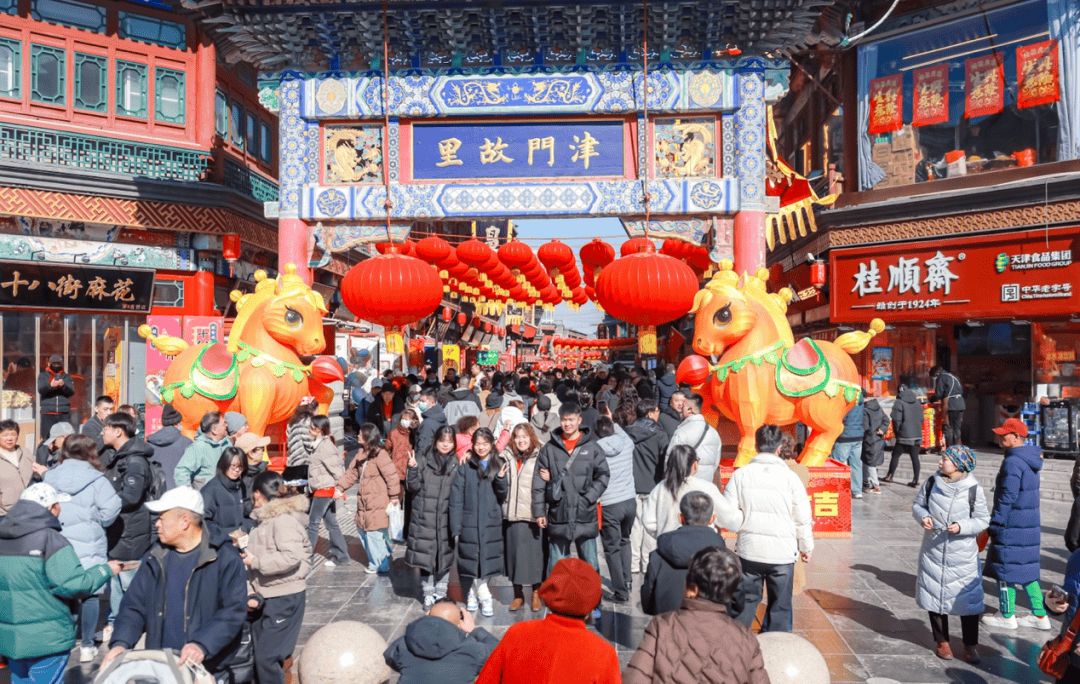
Group 1 - The core theme of the article highlights the vibrant consumer market during the Spring Festival in Tianjin, showcasing over 500 unique activities and a significant increase in sales and foot traffic [2][3][4] - The total sales revenue of 473 monitored commercial enterprises reached 2.97 billion yuan during the 9-day holiday, marking an 8.1% year-on-year increase, with foot traffic totaling 20.038 million, up 6% [2] - Major shopping centers reported a sales increase of 10% to 15.5 billion yuan, with foot traffic rising by 3.7% to 14.434 million [2] Group 2 - The integration of commerce, culture, and tourism led to a surge in consumer engagement, with shopping districts actively participating in promotional activities [2][3] - Notable commercial venues like MixC and Florence Town saw sales and foot traffic growth of 35.9% and 28.8%, and 19.4% and 40.3%, respectively, during the holiday [2] - The night economy thrived with interactive events along the Haihe River, contributing to a 22% increase in sales at venues like Jinmao Hui [2] Group 3 - The rise of national trend culture influenced consumer preferences, with traditional customs being creatively integrated into modern commercial experiences [3] - Events such as traditional folk performances and cultural exhibitions attracted significant foot traffic, with surrounding hotels seeing a 30% increase in revenue and visitors [3] - New cultural products inspired by traditional crafts gained popularity, with items like the "Horse Prosperity" clay figurines and soft magnetic New Year paintings becoming bestsellers [3] Group 4 - The retail market experienced a boost from policies like trade-in programs and government vouchers, leading to a noticeable improvement in consumer quality [4] - The "New Year Shopping" campaign initiated by the municipal commerce bureau stimulated demand for home appliances and smart products, generating 130 million yuan in sales [4] - High-end consumer goods saw a remarkable 79.7% increase in sales on New Year's Eve, driven by auspicious themes related to the Year of the Horse [4] Group 5 - The demand for diverse dining experiences during the New Year was evident, with traditional and modern dining options catering to various consumer preferences [5] - Popular restaurants reported full bookings for New Year's Eve meals, while new concepts like "private dining" and "quick meal kits" gained traction [5] - The hotel sector adapted by creating unique experiences, with monitored hotels reporting a 9.4% increase in revenue and a 7.2% increase in foot traffic during the holiday [5] Group 6 - The supply of essential goods remained stable and abundant during the holiday, with key wholesale markets achieving a transaction volume of 55,000 tons [6] - Instant retail shopping models provided convenience, with platforms like Sam's Club and Qixian facilitating quick delivery of fresh produce and holiday gifts [6] - Sales at 65 monitored chain supermarkets increased by 13.9%, with foot traffic rising by 17%, particularly during the first two days of the holiday [6]
广西消费市场“热”力十足
Sou Hu Cai Jing· 2026-02-24 00:42
Core Insights - The consumption market in Guangxi is experiencing a robust growth during the 2026 Spring Festival, driven by policy incentives and innovative consumption scenarios [1][2] Group 1: Policy and Promotions - Guangxi has implemented dual incentives of policy subsidies and holiday promotions, including trade-in programs and consumption vouchers, to stimulate consumer spending [1] - The trade-in policy covers automobiles, home appliances, and 3C digital products, with maximum subsidies of 20,000 yuan for cars, 2,000 yuan for home appliances, and 500 yuan for 3C products [1] Group 2: Sales Performance - Key enterprises in Guangxi reported a year-on-year sales increase of 32.7% for communication devices and 3.2% for automobiles during the Spring Festival [1] - The overall foot traffic in 30 monitored pedestrian streets and commercial areas increased by 37% year-on-year, with sales rising by 19% [2] Group 3: Tourism and Night Economy - The total number of tourists and consumer spending in Guangxi during the Spring Festival increased by 41.9% and 49.3% year-on-year, respectively, with nighttime consumption accounting for approximately 59.4% of total spending [2] - Nighttime consumption saw a year-on-year growth of 37.7% [2] Group 4: Digital and Instant Retail - Online retail sales in Guangxi grew by 19.6% during the Spring Festival, with flash sales transactions increasing by 72.4% and order volume rising by 88% [2] - Instant retail emerged as a new consumption highlight, with significant growth in orders for services like bike rentals and power banks, with increases of 89.8% and 72.9%, respectively [2]
春节电商消费新意浓:AI购物、县域游点亮假日经济
Bei Jing Shang Bao· 2026-02-23 14:09
Group 1 - The core viewpoint of the articles highlights the significant role of AI in transforming consumer behavior during the 2026 Spring Festival, with a shift from bulk purchasing to instant retail facilitated by AI technology [1][3] - Online consumption saw a remarkable increase, with nearly 200 million "one-sentence orders" placed, indicating that one in ten users utilized AI for their purchases [1] - Instant retail orders surged, with over 3,000 tons of eggs and more than 100 million cups of beverages ordered through AI, showcasing the efficiency and convenience brought by AI in the shopping experience [1] Group 2 - There was a notable rise in demand for green, smart, and healthy products during the Spring Festival, with user visits for robot products increasing over fourfold and AI-related product sales doubling [2] - Offline consumption also thrived, with Douyin reporting a 216% increase in group meal package orders and a 66% rise in group buying sales in third-tier cities compared to the previous year [2] - The introduction of AI services like Meituan's local life AI assistant "Wen Xiaotuan" significantly enhanced consumer planning for leisure activities, with millions of users benefiting from its services during the holiday [2]

从“提前买”到“马上要”即买即送成春节酒桌新主张
Mei Ri Jing Ji Xin Wen· 2026-02-23 11:47
Core Insights - The article highlights the increasing trend of instant retail in the white liquor market during the Chinese New Year, driven by consumer demand for immediate purchases and gifting [1][2][5] Group 1: Market Trends - Instant retail has become the new mainstream for white liquor consumption during the Spring Festival, with platforms like Meituan and Taobao promoting "春节不打烊" (Spring Festival does not close) to capture consumer attention [2][7] - There is a noticeable shift in consumer behavior from "buying in advance" to "immediate needs," indicating a growing demand for quick purchases during festive occasions [5][6] Group 2: Sales Performance - The flagship store of 1919 has experienced a slight increase in sales compared to previous years, with specific brands like Honghua Lang performing particularly well among casual customers [6][7] - Major liquor companies, including Guizhou Moutai and Shanxi Fenjiu, are actively collaborating with retail platforms to leverage the instant retail trend, which has shown significant growth in sales figures [7] Group 3: Consumer Behavior - Customers are increasingly making urgent purchases during meals, with delivery times often within 30 minutes, reflecting the demand for convenience [6] - The store's location in a commercial area has led to a higher demand for white liquor, particularly for business gatherings and gifting [6]


美团收购叮咚买菜:一场关于城市密度的并购
Jing Ji Guan Cha Wang· 2026-02-20 15:12
Core Insights - Meituan announced the acquisition of Dingdong Maicai's China business for approximately $717 million, marking a significant move in the instant retail sector [1][2] - The acquisition signals a shift in the industry towards consolidation, as various business models explored by entrepreneurs are being absorbed into platform-level infrastructure [2][13] - Instant retail is evolving from a startup-driven model to a platform-based infrastructure, focusing on time-sensitive consumer needs rather than just price and variety [2][23] Instant Retail Importance - Despite the maturity of e-commerce in China, there remains a significant portion of retail (approximately 73.9%) occurring in local offline settings, highlighting the ongoing relevance of physical retail [3][4] - Instant retail addresses the time-sensitive nature of consumer demand for everyday items, which traditional e-commerce struggles to fulfill promptly [4][5] Market Growth - The instant retail market in China is projected to reach 781 billion yuan in 2024, with a growth rate exceeding 20%, significantly outpacing traditional retail growth [5][6] - By 2026, the market is expected to surpass 1 trillion yuan, indicating a robust growth trajectory for instant retail [5] Consumer Behavior Changes - The value of consumer time is increasing, leading to a willingness to pay a premium for faster delivery, thus driving the growth of instant retail [7][8] - The evolution of consumer needs has led to a structural division in retail, with e-commerce focusing on planned purchases and instant retail catering to immediate needs [8][9] Evolution of Instant Retail - Instant retail has evolved through four stages: from the establishment of delivery networks via food delivery, to the integration of online and offline retail, followed by the rise of front warehouses, and now to a platform-based model [9][12] - The current phase emphasizes the integration of local stores and warehouses into a unified delivery system, expanding the range of products available for instant delivery [12][13] Competitive Landscape - The competition in instant retail is shifting from a focus on business models to a focus on order density within urban areas, where efficiency and speed are paramount [14][15] - Different operational models coexist, including platform connection models, self-operated front warehouse models, and hybrid models, each addressing the challenge of achieving high order density [15][16] Future Directions - The future of instant retail is likely to see a transition from traffic-based competition to density-based competition, emphasizing the importance of local network efficiency [19][20] - Instant retail may also blur the lines between e-commerce and local services, creating a unified consumption system based on time sensitivity [21][22] - Overall, the evolution of instant retail could redefine platform competition, focusing on who can effectively manage urban delivery networks rather than simply accumulating user numbers [22][24]

大涨超580%!电商消费爆发,巨头“发力”|新春e线
Xin Lang Cai Jing· 2026-02-19 09:40
Core Insights - The e-commerce consumption during the Spring Festival in 2026 shows a significant shift towards online shopping as the primary channel for purchasing New Year goods, with comprehensive e-commerce platforms like Taobao and JD.com leading the market share [1][2] - The logistics and delivery systems have been enhanced, with major platforms ensuring timely delivery even during the holiday period, reflecting a commitment to customer service [1][2] - The consumer behavior is evolving, with younger generations (post-90s and post-00s) driving a transition from traditional bulk purchasing to experience-oriented and self-indulgent consumption [2][3] E-commerce Trends - In 2026, comprehensive e-commerce platforms accounted for 45.43% of the New Year goods purchasing channels, followed by offline supermarkets at 38.96% and fresh e-commerce platforms at 34.01% [1] - The online retail sales reached 9897.3 billion yuan by February 8, 2026, with post-00s consumers contributing significantly to this growth, showing a 47% year-on-year increase in order amounts [2] Logistics and Delivery Enhancements - Taobao and JD.com have implemented measures such as "Spring Festival does not close" to ensure delivery services across 220 cities, with Taobao's delivery efficiency improving by at least half a day compared to the previous year [1][2] - The logistics network has been optimized with a "large warehouse + small warehouse" model to ensure quick response times and availability of popular products [2] Changing Consumer Preferences - There is a notable rise in demand for "emotional value" products, with nostalgic and emotional food items gaining popularity among consumers, particularly among younger demographics [3] - Alcohol consumption has seen a significant increase, with double-digit growth in sales, particularly for traditional and low-alcohol beverages [3] - Pre-prepared dishes for New Year's Eve are also trending, with sales of specific product lines like the "封神" series increasing by 116% [3] Market Outlook - The 2026 Spring Festival e-commerce consumption reflects a clear trend towards quality, personalization, and digitalization in the Chinese consumer market, indicating a robust potential for future growth in the e-commerce sector [4]
归乡记 | 小县城的残酷、温情与新生
Ge Long Hui A P P· 2026-02-16 07:52
Group 1 - The article highlights the significant changes in a small county in China, where traditional industries are declining while new industries are emerging amidst economic transformation [2][4][31] - The closure rate of traditional department stores in counties reached 37% in 2023, reflecting the struggles of small businesses against changing consumer preferences and rising operational costs [4][6] - The local fireworks industry has drastically reduced from 42 companies in 2018 to just 7 in 2024 due to stricter environmental policies and changing market demands, resulting in many workers needing to find new jobs [4][6] Group 2 - New industries are slowly developing, with the establishment of a "photovoltaic industry park" that has attracted 8 companies and created over 3,000 jobs, albeit with lower wages compared to previous employment [6][17] - Community group buying and instant retail have seen a 62% annual growth in market penetration, indicating a shift towards new business models in the county [6][31] - Young people are increasingly returning to their hometowns for employment, with a net inflow of about 1,200 individuals in 2024, marking a reversal from previous trends of out-migration [10][11] Group 3 - The education system in the county is becoming more centralized, with one school monopolizing over 85% of key university admissions, leading to a rise in the "accompanying study economy" as families rent homes in the county [19][21] - The healthcare sector shows a divide, with advanced facilities in the county hospital contrasting with outdated equipment in rural health clinics, prompting the establishment of a "county-town medical community" to improve services [25][26] - The real estate market is struggling, with new property prices dropping to less than half of their peak in 2021, affecting local finances and the viability of new industries [26][27]
美团收购叮咚买菜:即时零售的终局是“城市折叠”
Jing Ji Guan Cha Wang· 2026-02-16 07:27
Core Insights - Meituan announced the acquisition of Dingdong Maicai's China business for approximately $717 million, marking a significant move in the instant retail sector [1][2] - The acquisition signals a shift in the industry towards consolidation, as various business models explored by entrepreneurs are being absorbed into platform-level infrastructure [2][13] - Instant retail is evolving from a startup battleground to a platform-based infrastructure, focusing on time-sensitive consumer needs rather than just price and variety [2][24] Industry Overview - The instant retail market in China is projected to reach 781 billion yuan in 2024, with a growth rate exceeding 20%, significantly outpacing traditional online retail [5] - By 2026, the market size is expected to surpass 1 trillion yuan, indicating that instant retail is becoming one of the fastest-growing segments in the overall consumption landscape [5] Consumer Behavior - Despite the maturity of e-commerce, a significant portion of retail consumption (approximately 73.9%) still occurs in local offline settings, highlighting the ongoing relevance of physical retail [3][4] - Instant retail addresses the time-sensitive nature of consumer needs, particularly for everyday items that are often unplanned purchases [4][6] Competitive Landscape - The competition in instant retail is shifting from a focus on business models to a focus on order density and delivery speed, as platforms seek to optimize their logistics networks [17][20] - Different operational models coexist in the market, including platform-connected models, self-operated models, and hybrid models, each addressing the challenge of achieving high order density in urban environments [14][15] Future Trends - The future of instant retail is likely to see a transition from traffic competition to density competition, where the efficiency of order distribution within urban areas becomes the key competitive factor [20][23] - Instant retail may lead to a convergence of e-commerce and local services, blurring the lines between online and offline retail as platforms integrate both types of orders into a unified system [22][23] - The competitive landscape may evolve into a patchwork of city-level networks, where different platforms hold varying advantages in different urban areas [21][23]