并购整合

Search documents
并购效应显现 证券投资收入增140倍 !解码国联民生首份中报
2 1 Shi Ji Jing Ji Bao Dao· 2025-08-29 13:02
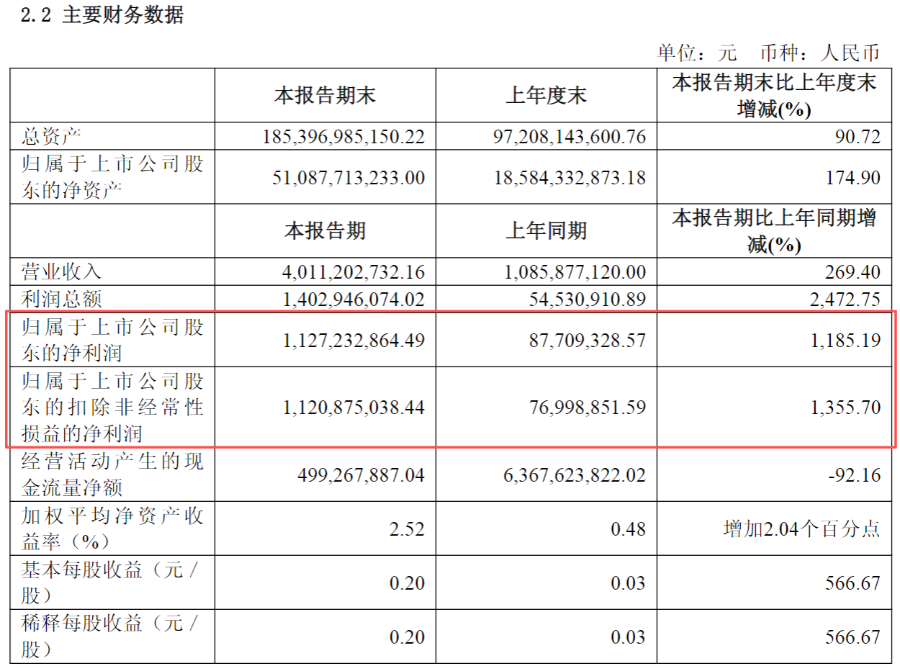
Core Viewpoint - The first half report of Guolian Minsheng after the merger shows significant performance growth, with a substantial increase in revenue and net profit compared to the previous year [1][5][22]. Financial Performance - In the first half of 2025, the company achieved an operating income of 4.01 billion yuan, a year-on-year increase of 269.40%, and a net profit attributable to shareholders of 1.13 billion yuan, up 1185% [5][6]. - Total assets reached 185.40 billion yuan, growing by 90.72% from the end of the previous year, while net assets attributable to shareholders increased by 174.90% to 51.09 billion yuan [2][5]. Business Segments - The company reported significant growth across various business segments, with brokerage and wealth management, investment banking, credit trading, and securities investment all exceeding 100% year-on-year growth, while asset management and investment business saw a decline [5][6]. - Securities investment emerged as the largest revenue contributor, generating 1.69 billion yuan, a staggering increase of 14,052.11% year-on-year, accounting for over 40% of total revenue [6][7]. Brokerage and Wealth Management - Brokerage business revenue reached 900 million yuan, up 223.8%, representing 22.6% of total revenue excluding other business income [6][7]. - The total number of clients increased by 117,600, bringing the cumulative total to 3.46 million, with financial product sales reaching 870.20 billion yuan [7][19]. Investment Banking - The investment banking segment saw a revenue increase of 214.94% to 544 million yuan, with notable performance in equity financing, completing six projects with a total underwriting amount of 2.62 billion yuan [10][11]. - The company ranked 8th in the number of equity underwriting cases and 5th in underwriting revenue within the industry [11]. Asset Management - The asset management and investment business reported a revenue decline, with income of 294 million yuan, down 8.23% year-on-year [15][16]. - The company’s asset management scale reached 2.965 trillion yuan, a year-on-year increase of 137.5% [15][18]. Private Equity Investment - The private equity investment business showed weakness, with efforts to establish new funds and complete fundraising for nine funds, totaling 26.89 billion yuan in subscribed capital [19][20]. - The establishment of the Guolian Tongzhi Fund aims to enhance the private equity business and expand management scale [20]. Strategic Integration - The merger of Guolian and Minsheng is expected to enhance overall competitiveness, with initial signs of successful integration reflected in the performance results [22]. - The company is in a strategic expansion phase, focusing on enhancing its investment banking, research, and asset management capabilities [22].


中烟香港20250826
2025-08-26 15:02
Summary of China Tobacco Hong Kong Conference Call Company Overview - **Company**: China Tobacco Hong Kong - **Industry**: Tobacco Key Financial Performance - **2024 Revenue**: HKD 131 billion, a year-on-year increase of 10.5% [4] - **Net Profit**: HKD 8.54 billion, a year-on-year increase of 42.6% [4] - **Gross Margin**: 10.5%, an increase of 1.3 percentage points year-on-year [4] - **Net Margin**: 6.9%, an increase of 1.1 percentage points year-on-year [4] - **Five-Year CAGR**: Revenue growth at 7.8% and net profit growth at 21.8% from 2019 to 2024 [2][4] Revenue Sources - **Main Revenue Source**: Leaf import business accounts for 63% of total revenue and 60% of gross profit [2][6] - **Other Revenue Contributions**: - Cigarette export: 12% of revenue, 20% of gross profit [6] - Brazilian operations: 8% of revenue, 13% of gross profit [6] - Leaf export: 16% of revenue, 6% of gross profit [6] - New tobacco products export: 1% of revenue, 0.5% of gross profit [6][7] Business Segments - **Raw Material Business**: Includes leaf imports, exports, and Brazilian operations [5] - **Finished Products Business**: Includes cigarette exports and new tobacco products exports [5] Growth Drivers - **High-End Leaf Demand**: The trend towards high-end cigarettes in China drives demand for quality overseas tobacco leaves, which is a key growth factor for the leaf import business [2][8] - **Acquisition Impact**: The acquisition of a Brazilian subsidiary has improved gross margins and allowed for market-driven operations, with over 30% of products sold internationally [2][9] Export Strategies - **Cigarette Exports**: Focused on duty-free shops with exclusive rights in several regions, optimizing channels through a new-old segmentation strategy [13] - **New Tobacco Products**: Despite low revenue contribution, there is potential for recovery through product innovation and enhanced product strength [14] Future Outlook - **2025 Earnings Projection**: Expected to be approximately HKD 950 million, with a price-to-earnings ratio of about 27 times [3][15] - **M&A Strategy**: Future acquisitions will focus on overseas assets from the parent company, other subsidiaries, and high-quality assets globally [16][17] Challenges and Risks - **Regulatory Changes**: New market regulations and geopolitical conflicts have impacted the revenue from new tobacco products [14] Conclusion - **Strategic Position**: China Tobacco Hong Kong maintains a strong strategic position with significant growth potential through existing operations and future acquisitions [3][15][17]
年内第二次并购!通策医疗加速省外扩张
IPO日报· 2025-08-25 09:24
Core Viewpoint - Tongce Medical is accelerating its business integration through capital expansion, as evidenced by its recent acquisitions, including the purchase of Shanghai Cunjing Dental Clinic for 46 million yuan, marking its second significant acquisition in 2025 [1][3]. Company Summary - The acquisition involves Tongce Medical's wholly-owned subsidiary acquiring 99% of the target company, with the total transaction amounting to 46 million yuan, fully funded by Tongce Medical's own capital [3]. - Tongce Medical has established 44 branches in Zhejiang Province under its "Dandelion Plan," covering all 11 prefecture-level cities, indicating a strong local market presence [3]. - The company is shifting its strategy for expansion outside Zhejiang Province from self-built facilities to a dual approach of "mergers and acquisitions + light asset franchising," with the recent acquisition in Shanghai being a strategic move into the high-end market [4]. Target Company Summary - Shanghai Cunjing Dental Clinic focuses on mid-to-high-end membership services, featuring three main specialties: 1. Pediatric dentistry with a premium membership price exceeding 50,000 yuan targeting high-net-worth families [5]. 2. Implant and comprehensive departments that enhance technical barriers by introducing international expert teams [5]. 3. A strategic location in the Lujiazui financial district, effectively reaching high-income demographics [5]. - This acquisition is expected to enhance Tongce Medical's brand presence in the high-end market and optimize its regional business layout and service structure [5]. Industry Summary - The dental industry is currently undergoing a significant adjustment, with the implementation of a dental implant procurement policy in 2023 leading to a price drop of over 50% for single implants, which has stimulated demand [6]. - The market concentration in the dental industry remains low, with the top five private dental groups holding only 9.6% market share, indicating substantial room for consolidation [7]. - As a leading enterprise, Tongce Medical holds approximately 2% market share in 2024, making acquisitions of regional quality targets a necessary strategy for growth [8].


交易双方、中介机构视角下的并购环节要点梳理
梧桐树下V· 2025-08-20 14:37
Core Viewpoint - The number of IPOs in A-shares in 2024 reached only 100, the lowest in a decade, leading many companies to shift towards mergers and acquisitions (M&A) as a means to enter the capital market [1]. Summary by Sections M&A Practical Manual Overview - The "M&A Practical Manual" consists of 342 pages and 173,000 words, covering 11 chapters that outline the operational key points and common issues from the perspectives of buyers, sellers, and intermediaries in M&A [4]. Chapter Highlights - **Chapter 1**: Discusses the importance of communication and understanding between buyers and sellers to avoid failures in M&A due to information asymmetry [11]. - **Chapter 3**: Focuses on the design of M&A plans, including considerations for acquisition ratios, methods, operational cycles, performance guarantees, and termination conditions [18]. - **Chapter 4**: Introduces four common pricing methods and three evaluation methods, detailing six aspects to consider when setting performance guarantees [19]. - **Chapter 5**: Explores payment methods in M&A, discussing cash payments, stock payments, and zero acquisitions, along with their advantages and disadvantages [23]. - **Chapter 6**: Emphasizes negotiation strategies in M&A, outlining necessary preparations and tactics for effective negotiation [25]. - **Chapter 9**: Provides insights into the operational logic of acquisitions and major asset restructurings, detailing various acquisition methods such as tender offers and management buyouts, supported by case studies [27][29]. - **Chapter 10**: Focuses on case studies to highlight key points in major asset restructuring, including share lock-up arrangements [10][31]. Additional Considerations - The manual also addresses the role of government subsidies in M&A, emphasizing the need for buyers to consider local government support policies and potential disputes regarding resource allocation post-acquisition [14].

华润三九(000999):高基数下有所承压 创新布局高举高打
Xin Lang Cai Jing· 2025-08-20 00:35
Core Viewpoint - The company reported a decline in net profit and net profit excluding non-recurring items for the first half of 2025, primarily due to a high base effect from the previous year, while the prescription drug business showed strong growth [1][2]. Financial Performance - For 1H25, the company achieved revenue of 148.1 billion yuan, a year-on-year increase of 5.0%, but net profit attributable to shareholders decreased by 24.3% to 18.2 billion yuan, and net profit excluding non-recurring items fell by 26.5% to 17.0 billion yuan [1]. - In 2Q25, revenue increased by 16.8% year-on-year, while net profit attributable to shareholders and net profit excluding non-recurring items saw significant declines of 47.3% and 51.1%, respectively [1]. - Excluding the consolidation of Kunming Pharmaceutical Group and Tasly Pharmaceutical, the company's organic revenue and net profit for 1H25 decreased by 32.0% and 33.9% year-on-year, with 2Q25 showing declines of 22.1% and 61.5% [1]. Business Segments - The Consumer Health Care (CHC) segment faced pressure due to a decrease in demand, with 1H25 revenue of 79.9 billion yuan, down 17.9% year-on-year, attributed to lower cold incidence rates. However, growth is expected to resume in the second half of the year as the cold medicine delivery season approaches [2]. - The prescription drug business emerged as a growth driver, with 1H25 revenue reaching 48.4 billion yuan, a 100% year-on-year increase, driven by strong performance in existing businesses and the consolidation of Tasly [2]. Innovation and R&D - The company continues to focus on innovative drug development, with R&D expenses of 4.6 billion yuan, up 40.6%. During the reporting period, it obtained 8 drug registration certificates and has 205 projects under research, covering various fields including cardiovascular, metabolic diseases, and oncology [3]. - A notable collaboration with Ai Er Pu on the HiCM-188 project aims to advance clinical trials for a groundbreaking heart failure treatment, which has received clinical approval in both China and the U.S. [3]. Mergers and Acquisitions - The acquisition of a 28% stake in Tasly, completed in March 2025, has strengthened the prescription drug business, with both companies benefiting from complementary strengths in innovation, manufacturing, and marketing [4]. - Kunming Pharmaceutical Group is undergoing a transformation focused on its "777" brand and "Kun Chinese Medicine 1381" strategy, with expectations of revenue recovery as channel reforms progress [4]. Investment Outlook - The company is positioned for long-term growth through its CHC business stabilization, prescription drug innovation, and strategic mergers and acquisitions. Short-term performance is impacted by high base effects and channel integration challenges, leading to adjusted profit expectations for 2025-2027 [4].

华润三九(000999):拓展创新合作,释放整合红利
HTSC· 2025-08-18 11:24
Investment Rating - The report maintains an "Accumulate" rating for the company [7][5]. Core Views - The company reported a revenue of 14.8 billion RMB and a net profit attributable to shareholders of 1.8 billion RMB for the first half of 2025, showing a year-on-year change of +5% and -24% respectively. The second quarter saw revenues of 8 billion RMB, with a net profit of 500 million RMB, reflecting a year-on-year change of +17% and -47% respectively. The decline in profit is attributed to high inventory levels and a high base from the first quarter [1]. - The CHC (Consumer Health Care) business is expected to show resilience due to brand and channel advantages, while the prescription drug business is anticipated to stabilize and recover after absorbing the impact of centralized procurement [1][2]. - The company plans to distribute a cash dividend of 4.5 RMB per 10 shares, which accounts for 41.39% of the net profit attributable to shareholders for the first half of 2025 [1]. Summary by Sections CHC Business - The CHC business faced short-term pressure with revenues of 8 billion RMB, down 18% year-on-year, primarily due to industry downturns and high base effects from the previous year. However, there is optimism for a recovery in the latter half of the year [2]. Prescription Drug Business - The prescription drug segment reported revenues of 4.8 billion RMB, a 100% increase year-on-year, mainly due to the consolidation of Tian Shi Li. The focus will be on enhancing the influence in chronic disease management and brand recognition for key products [2]. Innovation and Collaboration - The company is actively expanding innovative collaborations, including a joint development project with Ai Er Pu for HiCM-188, which is in Phase II clinical trials. Additionally, a partnership with Bo Rui Pharmaceutical for BGM0504 aims to leverage the company's marketing capabilities for faster product rollout [3]. Mergers and Acquisitions - The report highlights the potential for continued synergies from mergers with Kunming Pharmaceutical and Tian Shi Li, which are expected to enhance competitive advantages in the market. The integration processes are ongoing, with expectations for stability and growth in the coming years [4]. Financial Projections - The profit forecast for 2025-2027 has been adjusted downwards, with expected net profits of 3.53 billion RMB, 4.07 billion RMB, and 4.61 billion RMB respectively, reflecting a decrease of 9% for 2025 compared to previous estimates. The target price is set at 38.10 RMB, based on an 18x PE ratio [5][10].
险资再出手!垃圾焚烧成长性陆续兑现!
Sou Hu Wang· 2025-08-12 13:29
Group 1 - Insurance capital is an important source of medium to long-term funds in the capital market, with increased market entry space due to low interest rates and regulatory changes [1] - In 2023, insurance capital made 9 equity stakes in A-shares and H-shares, increasing to 20 in 2024, with 21 stakes made in the first seven months of this year [1] - Stable profit and high dividend yield assets such as banks, public utilities, and environmental protection are favored by insurance capital, with waste incineration being particularly attractive due to its demand characteristics and stable operational performance [1] Group 2 - The waste incineration industry is experiencing accelerated development in heat supply business, with leading companies improving energy efficiency and achieving high certainty in performance growth [2] - Mergers and acquisitions are speeding up, with companies leveraging financial and technical advantages for scale expansion, leading to increased industry concentration [2] - Companies like Huanlan Environment and Zhongke Environmental Protection have reported mid-term performance forecasts, confirming the trends of heat supply and mergers in the industry [2] Group 3 - Huanlan Environment expects a net profit of approximately 967 million yuan for the first half of 2025, a year-on-year increase of about 9%, driven by new consolidations and operational efficiencies [3] - Zhongke Environmental Protection reported a net profit of 196 million yuan for the first half of 2025, a year-on-year increase of 19.83%, attributed to business expansion and project capacity release [3] - Zhongke Environmental Protection is recognized as a benchmark in the waste incineration industry for its heat supply model, with a significant compound annual growth rate in net profit and cash flow [3] Group 4 - Mergers and acquisitions are crucial for Zhongke Environmental Protection's performance growth, with successful projects enhancing profitability significantly [4] - The company has completed several acquisitions in heat supply projects, demonstrating effective resource integration and operational excellence [4] - The ongoing green energy transition and merger wave are driving high-quality development in the waste incineration sector, with positive investment returns expected [4]

中信建投研报:医疗仪器行业拐点已至
仪器信息网· 2025-08-12 03:58
Core Viewpoint - The medical device sector is expected to witness a performance turning point from the second half of 2025 to 2026, driven by the continuous improvement in the technological strength and product competitiveness of domestic medical device companies, transitioning from "domestic substitution + penetration enhancement" to "international expansion + technological innovation" [2] Group 1: Policy Improvement and Industry Recovery - Historical performance shows a continuous decline in the medical device sector from 2021 to 2024, with further pressure in 2023-2024 due to upgraded medical compliance requirements and a slowdown in equipment renewal [3] - Signals of recovery are emerging, particularly in high-value consumables, where policy optimization is driving valuation recovery and there is significant room for penetration improvement [4] - In the medical equipment sector, a turning point in bidding growth is expected in Q4 2024, with leading companies' performance stabilizing and accelerating domestic substitution by Q3 2025 [5] - The in vitro diagnostics (IVD) sector is currently under policy pressure, but the chemical luminescence field may stabilize in terms of volume and price by Q4 2026, with significant potential for domestic substitution in the medium to long term [6] - For low-value consumables, attention is needed on overseas production capacity layout and progress with major customer collaborations under tariff policies [7] - The home medical device market, including respiratory machines and continuous glucose monitoring (CGM), presents vast opportunities, with a focus on consumer sentiment and international expansion [8] Group 2: Corporate Strategic Transformation - Companies are focusing on cost reduction and efficiency improvement through large-scale production, process optimization, and supply chain management to maintain profit margins [9] - Technological innovation is key, with differentiated product layouts helping to mitigate procurement risks, and healthcare insurance policies providing longer release cycles for innovative devices [10] - The transformation in consumption patterns shows that the impact of healthcare cost control is minimal, while consumption upgrades drive growth in optional medical demand, indicating a higher market ceiling [11] - International breakthroughs are being made as domestic companies leverage cost and supply chain advantages to accelerate overseas expansion [12] - Mergers and acquisitions are being utilized to break through existing market ceilings and enter emerging fields such as surgical robots and brain-computer interfaces [13] Group 3: Global Leadership in Innovative Medical Devices - Several Chinese companies have achieved technological breakthroughs, leveraging population size, clinical data accumulation, and industrial chain advantages [14] - Notable achievements include the world's first full-body PET/CT by United Imaging, leading chemical luminescence detection speeds by Mindray and New Industries, and the FDA breakthrough designation for Sino Medical's intracranial stent [15] Group 4: Growth Path of Global Medical Device Leaders - The strategy of going global is shifting from domestic substitution to global competition, with local operations and factory construction driving high growth in overseas business [16] - Technological innovation is fueled by R&D investment, with some companies accelerating internationalization through a license-out model [17] - Mergers and acquisitions are seen as a pathway for Chinese companies to release global growth potential, drawing lessons from U.S. medical device giants [18] Group 5: Investment Opportunity Analysis - In the Hong Kong stock market, attention should be paid to companies with strong innovation attributes and license-out potential, as well as undervalued companies with sufficient cash reserves that may turn profitable from 2025 to 2027 [19] - In the A-share market, companies expected to see performance turning points in Q2-Q3 2025 should be monitored, along with those benefiting from optimized procurement policies and new medical technologies [20] - The Chinese medical device industry is transitioning from a "follower" to a "leader," with technological innovation and international expansion becoming core driving forces, positioning leading companies to become world-class benchmarks [20]

国联民生人事调整:顾伟任董事长,多位民生证券背景高管履新
Zhong Guo Jing Ying Bao· 2025-08-08 15:24
Group 1 - The core point of the article is the leadership changes at Guolian Minsheng, with Guo Wei being elected as the new chairman, succeeding Ge Xiaobo, who will remain as the president and executive director [1][2][3] - The new leadership team, referred to as the "Guo-Ge Era," is expected to drive the company's growth and expansion strategies, building on Ge Xiaobo's previous experience in mergers and acquisitions at CITIC Securities [3][4] - The appointment of three new executives with backgrounds in Minsheng Securities indicates a strategic alignment and continuity in leadership, which may enhance operational stability during the transition [4][5] Group 2 - The new executive vice presidents, Wang Jinling and Xiong Leiming, both have significant experience from Minsheng Securities, which may facilitate smoother integration and decision-making processes within the company [4][5] - The article highlights the importance of managing power dynamics and interests during mergers and acquisitions, emphasizing the need for a unified vision and collaborative mechanisms among the new leadership team [5]
美的集团董事长方洪波:以丹纳赫为镜,锻造企业韧性
首席商业评论· 2025-08-08 04:10
Core Viewpoint - The article discusses the challenges faced by Chinese enterprises in a highly competitive environment characterized by homogenization, price wars, and rising costs, emphasizing the need for a systematic methodology to navigate these challenges and achieve sustainable growth [2]. Group 1: Challenges in the Business Environment - The business landscape in 2025 is marked by unprecedented restructuring, with common anxieties among enterprises regarding profit erosion and growth stagnation [2]. - Cost reduction and efficiency enhancement have shifted from strategic choices to survival necessities for companies [2]. Group 2: The Danaher Model - The book "The Danaher Model" dissects the success strategies of Danaher, known as the "king of acquisitions," highlighting the Danaher Business System (DBS) as a key driver of its success [2]. - Danaher’s approach to acquisitions has evolved from merely capturing undervalued assets to using acquisitions as a means for industrial upgrading [7]. Group 3: Midea Group's Implementation - Midea Group began learning from international advanced enterprises, specifically the Toyota Production System, but initially saw limited success [4]. - After engaging with Danaher, Midea developed its own Midea Business System (MBS), focusing on lean talent development and factory transformation [4][5]. - By 2018, Midea's domestic factories completed their lean transformation, leading to an average efficiency improvement of approximately 15% annually [5]. Group 4: Globalization and Future Strategies - Danaher’s globalization strategy combines internal and external growth, emphasizing the importance of localizing research and development [8]. - Midea has established 17 R&D centers and 22 manufacturing bases globally, aiming to create a "second home market" [8]. - The future competition will hinge on both lean management capabilities and the integration of advanced digital technologies [7]. Group 5: Lessons for Chinese Enterprises - The book serves as a high-density management tool, addressing key questions about mergers and acquisitions, the evolution of lean management, and balancing localization with integration in globalization [10]. - Danaher’s journey from a $1 million loan for its first acquisition to a market value exceeding $200 billion illustrates the importance of adhering to fundamental principles such as process reliance and efficiency [10].