
稳增长

Search documents
宏观和大类资产配置周报:本周沪深300指数下跌0.62%
Bank of China Securities· 2026-01-25 00:55
Market Performance - The Shanghai Composite Index fell by 0.62% this week, while the CSI 300 index futures decreased by 0.10%[1] - Coking coal futures dropped by 3.38%, and iron ore main contracts fell by 2.82% this week[1] - The 10-year government bond yield decreased by 1 basis point to 1.83%, with active 10-year government bond futures rising by 0.12%[1] Economic Outlook - China's GDP growth target of 5% for 2025 was achieved despite challenges from U.S. tariff policies, leading to weak domestic demand and low industrial profits[2] - In 2026, macroeconomic policies will focus on optimizing existing growth strategies and increasing institutional openness to stabilize the economy[2] - The fiscal deficit rate for 2026 is expected to be no less than 4%[2] Asset Allocation Recommendations - The recommended asset allocation order is: equities > commodities > bonds > cash[3] - Stocks are currently overweight, with a focus on the implementation of "incremental" policies[4] - Bonds are underweight due to potential short-term impacts from the stock-bond relationship, with yields expected to fluctuate around 2%[4] Key Economic Indicators - By the end of 2025, China's population was approximately 1.40489 billion, with a net decrease of 3.39 million people year-on-year[5] - The service sector's contribution to GDP increased to 57.7%, with retail sales growing by 3.7% year-on-year[24]
大行看中国:2026中国经济怎么走?
Sou Hu Cai Jing· 2026-01-23 01:07
Core Viewpoint - China's GDP for 2025 is projected to reach approximately 140.2 trillion yuan, with a growth rate of 5% compared to the previous year, despite challenges such as weak domestic consumption and a prolonged real estate crisis [2] Economic Growth Dynamics - The economic growth in 2025 is characterized by a "high in the front and low in the back" trend, with quarterly GDP growth rates of 5.4%, 5.2%, 4.8%, and 4.5%, the latter being the lowest quarterly growth in three years [2] - The growth drivers have shifted predominantly to the tertiary sector, which saw a value-added growth of 5.4%, and foreign trade exports, which increased by 6.1% year-on-year [2] Export vs. Domestic Demand - The economic landscape in 2025 shows a stark "dual-track divergence," with strong export growth (over 10% to emerging markets) contrasted by sluggish domestic demand, where retail sales growth hovered around 3% [3] - The contribution of final consumption expenditure to GDP decreased by 3.2 percentage points compared to the previous year, and fixed asset investment growth was only 2.8%, with real estate investment declining by 4.5% [3] Economic Predictions for 2026 - Predictions for China's economic growth in 2026 range between 4.5% and 5%, reflecting a consensus among over 30 global institutions [6][7] - The International Monetary Fund (IMF) forecasts a growth rate of 4.5%, citing external demand uncertainties and the lagging effects of real estate adjustments as key factors [6] Policy Measures - The 2026 economic strategy emphasizes a combination of proactive fiscal policy and accommodative monetary policy, with a focus on "stabilizing growth while preventing risks" [10] - Fiscal spending is projected to reach 29.7 trillion yuan in 2025, with an increase in the broad deficit scale anticipated for 2026 [10] Structural Adjustments - The monetary policy is expected to maintain a "moderately loose" stance, with anticipated reductions in reserve requirements and interest rates to lower financing costs [11] - Structural tools will be upgraded to support sectors like agriculture, small enterprises, and technological innovation, reflecting a targeted approach to economic support [11] Balancing Growth and Risks - The economic outlook for 2026 presents both opportunities and challenges, with a potential recovery in domestic demand driven by fiscal support and consumer incentives [14] - Risks remain in the real estate sector and local government debt, with expectations of a narrowing decline in real estate sales but ongoing vigilance required for corporate defaults [15]

有色商品日报-20260122
Guang Da Qi Huo· 2026-01-22 08:00
一、研究观点 | 品 种 | 点评 | | | | | | | | | --- | --- | --- | --- | --- | --- | --- | --- | --- | | | 隔夜内外铜价震荡偏弱,国内精炼铜现货进口持续亏损状态。宏观方面昨晚达沃斯会议 | | | | | | | | | | 上,欧美裂痕有所加大,但特朗普表示格陵兰岛是美国核心安全利益,但美不会武力夺 | | | | | | | | | | 取,寻求立即谈判。特朗普就格陵兰问题态度软化后,市场避险情绪有所下降。国内方 | | | | | | | | | | 面,1 月 20 日财政部在官网连续发布五项政策文件,涵盖四项贴息政策与一项专项担保 | | | | | | | | | 铜 | 计划,向市场传递稳增长信号。库存方面,LME 库存增加 3100 吨至 159400 | | | | | | | 吨;Comex | | | 库存增加 6599 吨至 503405 吨;SHFE 铜仓单下降 2612 吨至 145581 吨,BC 铜下降 | | | | | 501 | | | | | | 吨至 10760 吨。昨晚铜市场表现来看,虽 ...
钢铁ETF(515210)上一交易日资金净流入近1亿元,钢铁价格有望延续震荡偏强运行
Mei Ri Jing Ji Xin Wen· 2026-01-22 04:29
Group 1 - The core viewpoint is that steel prices are expected to continue a strong oscillating trend, supported by macroeconomic conditions and cost factors, with a positive outlook for the first quarter [1] - Demand for steel is anticipated to marginally improve due to the government's "stabilizing growth" policies, particularly in the real estate and infrastructure sectors [1] - On the supply side, the industry's "anti-involution" trend suggests significant improvement potential for the performance of general steel companies, with current profits per ton of steel being considerable, indicating a potential for value recovery [1] Group 2 - The Steel ETF (515210) tracks the CSI Steel Index (930606), which selects securities from the steel industry listed on the Shanghai and Shenzhen markets to reflect the overall performance of steel industry companies [1] - The index covers various segments of the steel industry, including general and special steel, and includes stocks from the raw materials sector, showcasing the overall market dynamics of the steel industry with notable cyclical characteristics [1]
光大期货:1月22日有色金属日报
Xin Lang Cai Jing· 2026-01-22 03:34
Copper - Copper prices showed a weak fluctuation overnight, with domestic refined copper imports continuing to incur losses [2][11] - LME copper inventory increased by 3,100 tons to 159,400 tons, while SHFE copper warehouse receipts decreased by 2,612 tons to 145,581 tons [2][11] - The current domestic copper demand is entering a low season, leading to a stronger accumulation of inventory compared to the past two years, indicating a need for adjustment in the industry [2][11] Nickel & Stainless Steel - LME nickel rose by 1.21% to $17,975 per ton, while SHFE nickel increased by 0.97% to 142,250 yuan per ton [3][12] - LME nickel inventory decreased by 72 tons to 284,664 tons, and SHFE warehouse receipts fell by 326 tons to 41,152 tons [3][12] - Indonesia plans to adjust its nickel quotas based on industry demand to support local mineral prices, which may provide short-term support for nickel prices [3][12][4] Aluminum & Aluminum Alloys - Aluminum oxide showed a slight increase, with AO2605 closing at 2,676 yuan per ton, up 0.26% [5][13] - SHFE aluminum fluctuated positively, with AL2603 closing at 24,100 yuan per ton, up 0.77% [5][13] - The overall inventory situation remains high, and the market is experiencing a downward pressure on prices due to accumulated stocks and limited purchasing intentions from manufacturers [5][13] Industrial Silicon & Polysilicon - Industrial silicon showed a slight increase, with the main contract closing at 8,780 yuan per ton, up 0.52% [6][14] - Polysilicon prices are under pressure due to supply-demand imbalances and regulatory scrutiny, with market trading logic shifting from speculation to fundamentals [6][14] - The cancellation of export tax rebates has led to a surge in overseas orders, alleviating pressure on component production [6][14] Lithium Carbonate - Lithium carbonate futures rose to 166,740 yuan per ton, with battery-grade lithium carbonate prices increasing by 6,000 yuan to 158,500 yuan per ton [7][15] - Weekly production increased by 115 tons to 22,535 tons, with lithium spodumene production rising by 35 tons to 13,959 tons [7][15] - Social inventory of lithium carbonate increased by 337 tons to 109,942 tons, indicating a complex supply and cost disturbance in the resource sector [7][15]

一天三场发布会 楼市迎来重要利好
2 1 Shi Ji Jing Ji Bao Dao· 2026-01-21 13:39
Core Insights - The recent press conferences indicate a significant shift towards supportive policies for the real estate market, emphasizing the importance of stabilizing the housing sector as part of broader economic strategies [2][8][10] Group 1: Economic Policy and Real Estate - The National Development and Reform Commission (NDRC) is formulating plans to enhance job stability and increase urban and rural residents' income, which are seen as beneficial for the real estate market [1][5] - The Ministry of Finance announced a continuation of a more proactive fiscal policy in 2026, which is expected to inject more funds into the real estate sector, thereby stabilizing market expectations and enhancing transaction activity [7][12] - The NDRC highlighted the need to address the imbalance between supply and demand in the economy, indicating a shift in focus from merely having housing to improving housing quality [4][10] Group 2: Urban Renewal and Housing Policies - The Ministry of Natural Resources released measures to support urban renewal, which includes specific actions aimed at optimizing land use and addressing historical issues, further benefiting the real estate sector [6][8] - Recent adjustments in tax policies, such as the reduction of the value-added tax on personal housing sales, are aimed at stimulating the housing market and improving consumer confidence [11][12] - The emphasis on urban renewal and housing quality reflects a broader strategy to integrate real estate into the framework of economic growth and consumption promotion [2][13][14] Group 3: Market Dynamics and Future Outlook - Analysts note that the recent policy changes signify a transition from short-term stimulus to a focus on establishing a sustainable real estate model that supports long-term economic stability [13][14] - The combination of fiscal support and urban renewal initiatives is expected to enhance the overall investment environment in the real estate sector, making it a critical component of economic recovery efforts [8][9]
总投资532亿元超级工程——藏粤直流工程广东段线路开工!
中国能源报· 2026-01-21 06:41
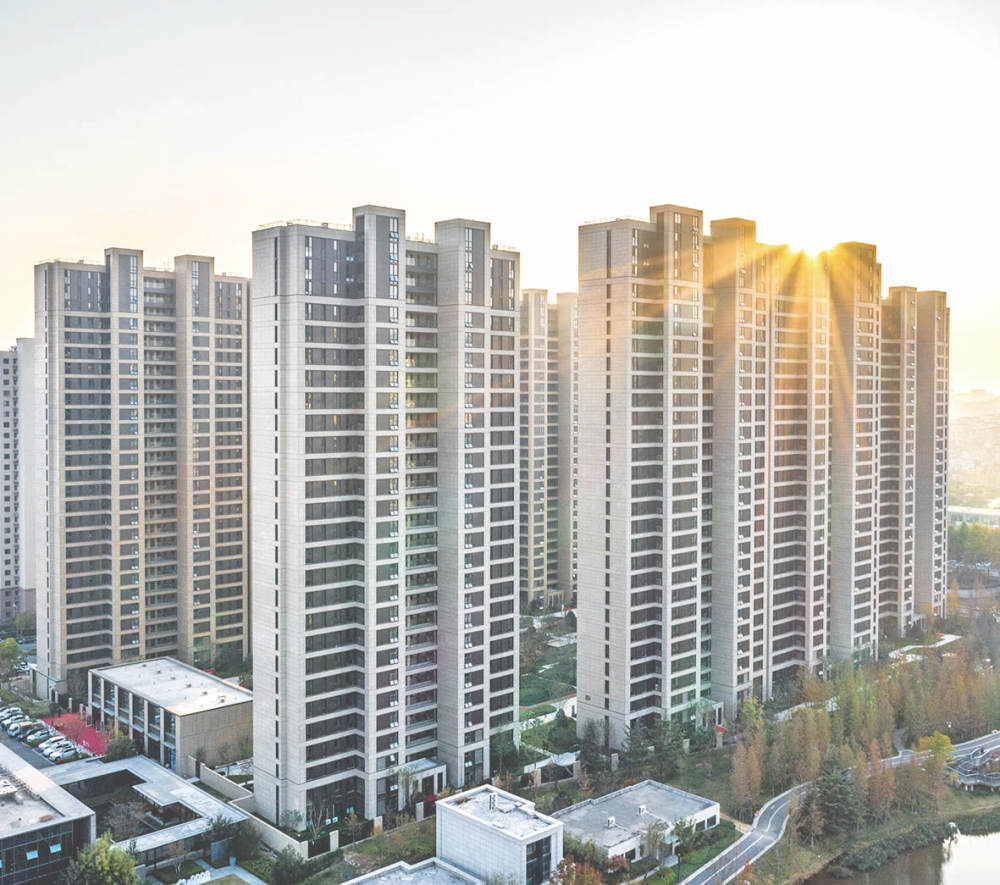
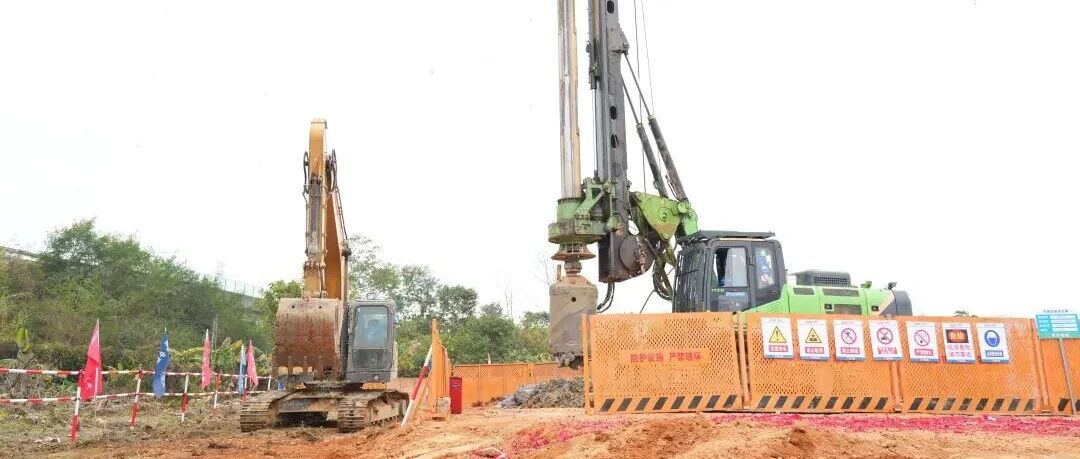
Core Viewpoint - The Zang-Yue DC project is a significant infrastructure initiative aimed at enhancing clean energy transmission from Tibet to the Guangdong-Hong Kong-Macao Greater Bay Area, marking a major step in China's energy strategy and investment growth [2][3]. Group 1: Project Overview - The Zang-Yue DC project is part of China's 14th Five-Year Plan and is the world's first four-terminal ultra-high voltage flexible DC project, with a total investment of approximately 53.2 billion yuan [3]. - The project will establish four ±800 kV converter stations in Tibet and Guangdong, with a transmission capacity of 10 million kilowatts, enabling the delivery of over 43 billion kilowatt-hours of green electricity annually to the Greater Bay Area [3][5]. Group 2: Economic Impact - The project is expected to replace approximately 12 million tons of standard coal consumption and reduce carbon dioxide emissions by about 33 million tons each year [3]. - The associated "water-wind-solar integrated" power base investment exceeds 150 billion yuan, which will significantly boost related industries such as equipment manufacturing and engineering construction, creating over 100,000 direct jobs during peak construction [3][5]. Group 3: Construction Details - The DC line spans 2,681 kilometers, traversing high-altitude regions and is recognized as the first ultra-high voltage project to cross the Tibetan Plateau, Yunnan-Guizhou Plateau, and South China hills [5]. - The construction will adhere to an "ecology-first, green construction" philosophy, focusing on innovative breakthroughs in high-power, long-distance transmission, and intelligent control technologies [5].
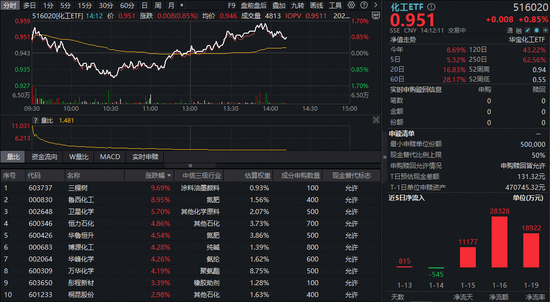
政策催化持续,化工板块迎“戴维斯双击”?化工ETF(516020)午后拉升摸高1.7%再创近3年新高!
Xin Lang Cai Jing· 2026-01-20 11:32
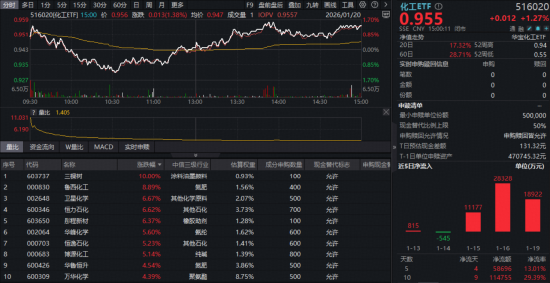
Group 1 - The chemical sector continues to show strong performance, with the chemical ETF (516020) reaching a closing price that marks a new high since August 2022, closing up 1.27% on January 20, 2026 [1][9] - Notable individual stocks within the sector include Sanhe Tree, which hit the daily limit, and Luxi Chemical, which surged by 8.89%, while Satellite Chemical, Hengli Petrochemical, and Tongcheng New Materials all rose over 6% [1][10] - Since the beginning of 2025, the chemical ETF has seen a cumulative increase of 54.34%, significantly outperforming major indices such as the Shanghai Composite Index (22.73%) and the CSI 300 Index (19.92%) [1][13] Group 2 - The chemical ETF has attracted significant capital inflow, with over 5.8 billion yuan in net subscriptions over the last five trading days and more than 11 billion yuan over the last ten trading days [4][12] - A recent policy from the Ministry of Industry and Information Technology aims to promote zero-carbon factory construction by 2030, which may lead to stricter regulations on new chemical projects and limit new capacity in the petrochemical sector [4][12] - Analysts suggest that the chemical industry is currently in a weak performance phase, but certain sub-sectors, such as lubricants, have exceeded expectations, indicating potential investment opportunities in glyphosate, fertilizers, and high-dividend assets [5][14] Group 3 - The chemical ETF (516020) tracks the CSI Sub-Industry Chemical Theme Index, with nearly 50% of its holdings concentrated in large-cap leading stocks like Wanhua Chemical and Salt Lake Industry, while the other half includes leading stocks in various sub-sectors [5][14] - The ETF provides a more efficient way to invest in the chemical sector, especially for those looking to capitalize on the sector's rebound [5][14]


化工板块午后异动拉升,三棵树狂飙9%!化工ETF(516020)上探1.7%,板块重估进行时?
Xin Lang Ji Jin· 2026-01-20 06:32
Group 1 - The chemical sector experienced a significant afternoon rally on January 20, with the chemical ETF (516020) reaching an intraday high of 1.7% before closing up 0.85% [1] - Key stocks in the sector saw substantial gains, including Sanhe Tree up over 9%, Luxi Chemical up over 8%, and Satellite Chemical up over 5% [1] - The Ministry of Industry and Information Technology, along with four other departments, issued guidelines on January 19 to promote zero-carbon factory construction, targeting the petrochemical and chemical industries [3] Group 2 - Tianfeng Securities noted that a turning point in policy and capital expenditure is expected by 2025, with the "anti-involution" concept providing a positive outlook for industry profitability and healthier long-term development [3] - The restructuring of supply and demand dynamics, along with the upgrading of industry attributes, is prompting a reevaluation of traditional chemical companies' value [3] - Despite the overall weak performance in the chemical sector, certain sub-industries, such as lubricants, have exceeded expectations, indicating potential investment opportunities in glyphosate, fertilizers, and domestic demand [3] Group 3 - The chemical ETF (516020) tracks the CSI sub-sector chemical industry theme index, with nearly 50% of its holdings concentrated in large-cap leading stocks like Wanhua Chemical and Salt Lake Co., allowing investors to capitalize on strong performers [4] - The remaining 50% of the ETF's holdings include leading stocks in niche areas such as phosphate fertilizers, fluorine chemicals, and nitrogen fertilizers, providing comprehensive exposure to investment opportunities in the chemical sector [4]
基建需求回暖,带动建材板块集体走强,建材ETF(516750)盘中涨超3%
Mei Ri Jing Ji Xin Wen· 2026-01-20 06:26
Group 1 - The core viewpoint of the article highlights the recovery in the construction materials sector driven by increased infrastructure investment and the issuance of local special bonds, leading to a positive sentiment in the market [1] Group 2 - Since the beginning of 2026, the construction materials sector has shown signs of improvement, with the construction materials ETF (516750) rising over 3% during trading on January 20, 2026, and nearly 80% of the stocks in the sector experiencing gains [1] - Research institutions indicate that the construction materials sector benefits from both policy support and marginal demand improvement, with infrastructure investment providing support for traditional materials like cement and waterproofing materials [1] - The supply-side constraints in the industry remain, allowing for potential price and profit recovery, which has attracted increased attention from funds towards cyclical sectors amid low valuation [1] - The construction materials ETF (516750) covers various sub-sectors including cement, waterproofing, glass, and pipes, focusing on leading companies in the industry, providing investors with a convenient tool to capitalize on the recovery in the construction chain [1]