
美国经济软着陆

Search documents
非农数据不及预期,如何看待当前美国经济状况?
Jing Ji Guan Cha Wang· 2025-08-04 14:23
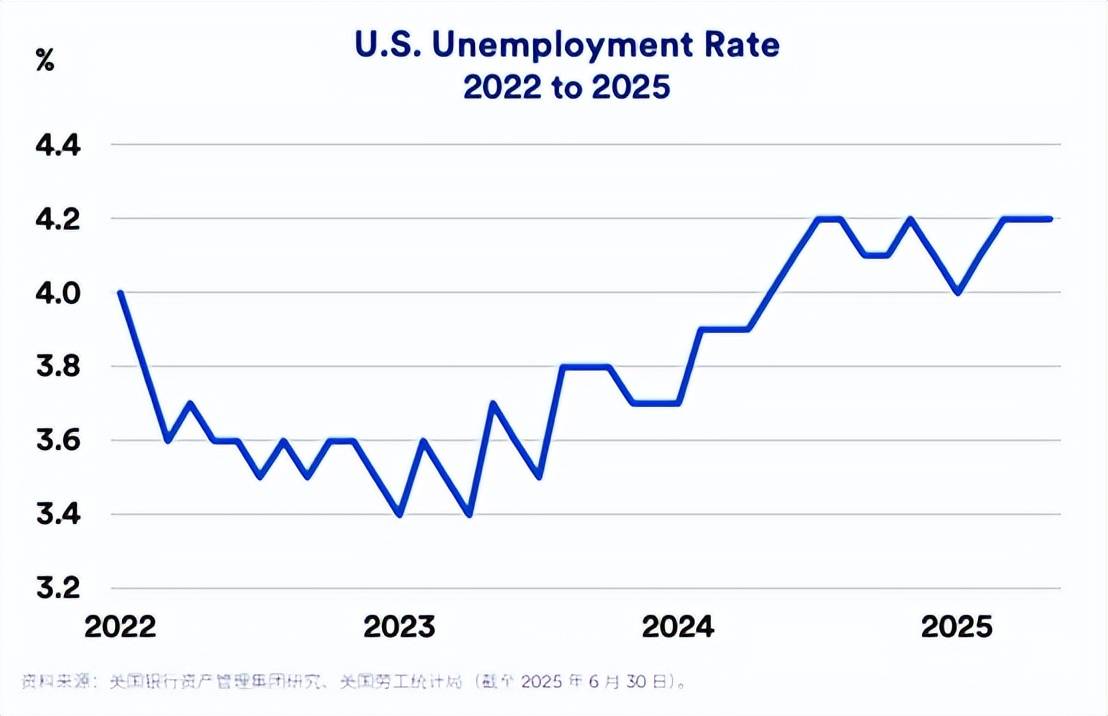
Core Viewpoint - The latest U.S. non-farm employment data for July significantly underperformed expectations and was subject to substantial revisions, raising concerns about the economy's resilience against tariff impacts [1][2] Economic Indicators - July's non-farm payrolls increased by 73,000, falling short of the expected 104,000, with prior months' data revised down by 258,000, marking the largest adjustment since June 2020 [1] - The unemployment rate rose to 4.248%, above the expected 4.2% and the previous value of 4.117%, the highest since November 2021 [1] - The ISM manufacturing PMI for July recorded at 48, down from 49.5, indicating a contraction in manufacturing activity [3] - The GDP growth for Q2 2025 is projected at an annualized rate of 3.0%, but the Private Domestic Final Purchases (PDFP) only grew by 1.2%, reflecting a decline in internal growth momentum [3] Market Reactions - Following the disappointing employment data, U.S. stock markets declined, with the S&P 500 and Nasdaq indices falling by 2.36% and 2.17%, respectively [1] - The 10-year U.S. Treasury yield decreased by 17.2 basis points to 4.216%, while the 2-year yield fell by 24.2 basis points to 3.682% [1] Monetary Policy Insights - The July FOMC meeting resulted in a 9-2 vote to maintain the policy rate at 4.25-4.5%, with dissenting votes advocating for a rate cut [4] - Fed Chair Powell indicated that while the labor market is balanced, inflation remains a concern, necessitating a restrictive policy stance [4] - The resignation of Fed Governor Kugler may provide an opportunity for President Trump to appoint a new member, potentially influencing future monetary policy [4]
芦哲:非农后,如何看待当前美国经济状况?——海外周报
Sou Hu Cai Jing· 2025-08-04 04:57
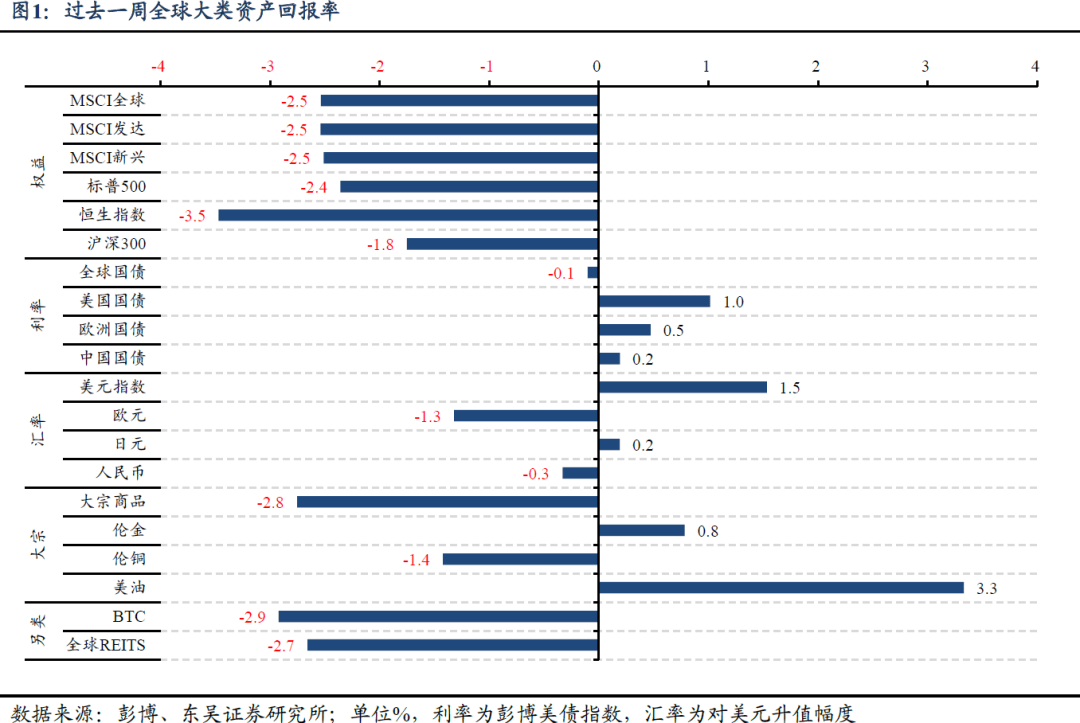
Core Viewpoint - The macroeconomic data and events this week were dense, culminating in the non-farm payroll data released on Friday, which dominated market trading. The disappointing and significantly revised non-farm employment data reignited recession concerns, leading to a sharp decline in U.S. stocks and a drop in U.S. Treasury yields. Under the baseline expectation, the U.S. economy is still in a soft landing phase, with short-term asset price volatility reflecting market concerns about the "slope" of the U.S. economic downturn [1]. Major Asset Classes - The non-farm payroll data dominated market trading, with recession concerns leading to renewed expectations for interest rate cuts, resulting in declines in U.S. stocks and Treasury yields. The disappointing new non-farm jobs and significant downward revisions to previous data reignited recession fears, causing the S&P 500 and Nasdaq indices to drop by 2.36% and 2.17%, respectively. Over the week, the 10-year Treasury yield fell by 17.2 basis points to 4.216%, while the 2-year yield dropped by 24.2 basis points to 3.682%. The dollar index rose by 1.53% to 99.14, and spot gold prices increased by 0.78% to $3363 per ounce [2]. Overseas Economy - Short-term data amplified recession concerns, but the U.S. economy remains in a soft landing phase. Key U.S. economic data this week, including GDP (core GDP excluding net exports and inventory changes), non-farm payrolls, and manufacturing PMI, were weak. The ISM manufacturing PMI for July recorded 48, significantly below the expected 49.5. The U.S. GDP for Q2 2025 grew at an annualized rate of 3.0%, better than the consensus forecast of 2.6%. However, the private domestic final purchases (PDFP) grew only by 1.2%, indicating that the GDP growth was more due to a rebound from Q1 imports rather than strong internal economic growth. The July non-farm payrolls added 73,000 jobs, significantly below the expected 104,000, with the unemployment rate rising to 4.248% [3][4]. Monetary Policy - The July FOMC meeting was hawkish, but there were internal divisions within the Federal Reserve. The decision to maintain the policy rate at 4.25-4.5% was passed with a 9-2 vote, with two members voting against it, advocating for a rate cut. Fed Chair Powell noted that while the labor market is balanced, inflation remains high, necessitating a restrictive policy rate. The resignation of Fed Governor Kugler may provide President Trump an opportunity to appoint a new member, potentially influencing monetary policy direction [4]. Overseas Politics - President Trump officially signed an executive order announcing the "Reciprocal Tariff 2.0" rates for 69 trade partners, with significant reductions compared to the previous version. The new tariffs will take effect on August 7. The announcement reflects the negotiation dynamics between the U.S. and its trade partners. The legal challenges surrounding Trump's authority to impose these tariffs may accelerate negotiations, but uncertainty remains regarding potential adjustments to tariffs in response to legal risks [5].

海外周报:非农后,如何看待当前美国经济状况?-20250803
Soochow Securities· 2025-08-03 13:20
Economic Overview - The U.S. economy is currently in a soft landing phase despite short-term recession concerns, as indicated by recent economic data[1] - The U.S. GDP growth rate for Q2 2025 is reported at +3.0%, surpassing Bloomberg's consensus estimate of +2.6%[1] - The core GDP, which excludes net exports and inventory changes, shows a growth of only +1.2%, indicating reliance on external factors rather than domestic growth[1] Labor Market Insights - In July 2025, the U.S. added 73,000 non-farm jobs, significantly below the expected 104,000, with prior months' data revised down by 258,000, marking the largest downward revision since June 2020[1] - The unemployment rate rose to 4.248%, higher than the expected 4.2% and the previous 4.117%, the highest level since November 2021[1] Market Reactions - The disappointing non-farm payroll data has reignited recession fears, leading to declines in U.S. stock markets and a drop in bond yields[1] - The 10-year U.S. Treasury yield fell by 17.2 basis points to 4.216%, while the 2-year yield decreased by 24.2 basis points to 3.682%[1] Monetary Policy Outlook - The July FOMC meeting resulted in a 9-2 vote to maintain the policy rate at 4.25-4.5%, with some members advocating for a rate cut[1] - The Federal Reserve's stance indicates a balancing act between managing inflation and supporting the labor market amid rising unemployment[1] Trade and Tariff Developments - The U.S. has introduced "Tariff 2.0," which lowers tariffs compared to the previous version, but uncertainty remains regarding potential increases in tariffs to expedite trade agreements[1] - The new tariff rates will take effect on August 7, 2025, impacting 69 trade partners, with significant rates set for the EU (15%) and Japan (15%)[1]
非农后,如何看待当前美国经济状况?
Sou Hu Cai Jing· 2025-08-03 12:23
Core Viewpoint - The macro data and events this week were dense, culminating in the non-farm payroll data released on Friday, which dominated market trading. The disappointing and significantly revised non-farm employment data reignited recession concerns, leading to a sharp decline in U.S. stocks and a drop in U.S. Treasury yields. Under baseline expectations, the U.S. economy is still in a soft landing phase, with short-term asset price volatility reflecting market concerns about the "slope" of the U.S. economic downturn [1]. Major Asset Classes - The non-farm payroll data dominated market trading, with recession concerns leading to renewed expectations for interest rate cuts, resulting in declines in both U.S. stocks and Treasury yields. The disappointing new non-farm jobs and significant downward revisions to previous data caused a drop in U.S. stocks, while expectations for rate cuts increased, leading to a decline in U.S. Treasury yields. For the week (July 28 to August 1), the 10-year Treasury yield fell by 17.2 basis points to 4.216%, and the 2-year yield dropped by 24.2 basis points to 3.682%. The U.S. dollar index rose by 1.53% to 99.14, while the S&P 500 and Nasdaq indices fell by 2.36% and 2.17%, respectively [2]. Overseas Economy - Short-term data amplified recession concerns, but the U.S. economy remains in a soft landing phase. Key U.S. economic data this week, excluding ADP private employment, showed weakness in GDP (core GDP excluding net exports and inventory changes), non-farm payrolls, and manufacturing PMI, raising recession fears. The ISM manufacturing PMI for July recorded 48, significantly below the consensus expectation of 49.5. Notably, the decline in PMI was primarily due to a substantial shortening of supplier delivery times, indicating improvements in the supply chain amid declining demand. The U.S. GDP for Q2 2025 grew at an annualized rate of +3.0%, better than the consensus expectation of +2.6% [3]. Monetary Policy - The July FOMC meeting was hawkish, but there are internal divisions within the Federal Reserve. The FOMC decided to maintain the policy rate at 4.25-4.5% with a 9-2 vote. Fed Chair Powell indicated that while the labor market is balanced, inflation remains high, necessitating a restrictive policy rate. Two dissenting votes were cast by Waller and Bowman, who argued for a rate cut in July, citing the one-time impact of tariffs on inflation and the downward risks in the labor market [4]. Overseas Politics - Trump officially signed an executive order announcing the "Reciprocal Tariff 2.0" rates for various trade partners, which may accelerate negotiations. The new tariff rates, effective August 7, show a significant reduction compared to the previous version. The announcement includes a 15% tariff for the EU and Japan, and a 10% tariff for other partners. The legal challenges surrounding Trump's authority to impose these tariffs may lead to further adjustments in tariff rates to expedite trade agreements, indicating ongoing uncertainty in trade relations [5].
超级行情周最终压轴,今晚非农会否投下深水炸弹?
Sou Hu Cai Jing· 2025-08-01 06:51
Economic Overview - Investors are closely monitoring employment data as a key economic indicator and a potential signal for the Federal Reserve to lower interest rates [2] - The U.S. economy added 147,000 jobs in June, exceeding economists' expectations, while the unemployment rate remained stable [4] - The average hourly wage growth was 3.7% over the past 12 months, slightly lower than previous levels [4] Employment Market Dynamics - Nearly 90% of new jobs in the past two and a half years have been concentrated in three sectors: government, leisure and hospitality, and private education and healthcare [7] - Job openings in June decreased to 7.437 million, below the expected 7.5 million, indicating a slowdown in labor demand [7] - The ratio of job openings to unemployed individuals remains at 1.1, consistent with pre-pandemic levels [7] Consumer Confidence and Labor Market Sentiment - Consumer confidence rose in July due to easing concerns about the overall economy and labor market [9] - The percentage of respondents perceiving job scarcity reached a four-year high of 18.9%, while the perception of abundant job opportunities increased slightly [9] - The labor participation rate continues to decline, and temporary job positions are decreasing, signaling caution in the labor market [9] Future Projections - If non-farm payrolls increase between 120,000 and 180,000 with a rising unemployment rate, it may slightly increase the likelihood of a Fed rate cut in September [11] - A significant drop in non-farm payrolls below 100,000, coupled with rising unemployment and stagnant wage growth, could confirm signals for a rate cut [11] - Gold may benefit from these conditions as a traditional safe-haven asset, potentially recovering above $3,300 [11]
熊园:美联储“内斗”上演—兼评美国Q2 GDP和7月议息会议
Sou Hu Cai Jing· 2025-07-31 03:40
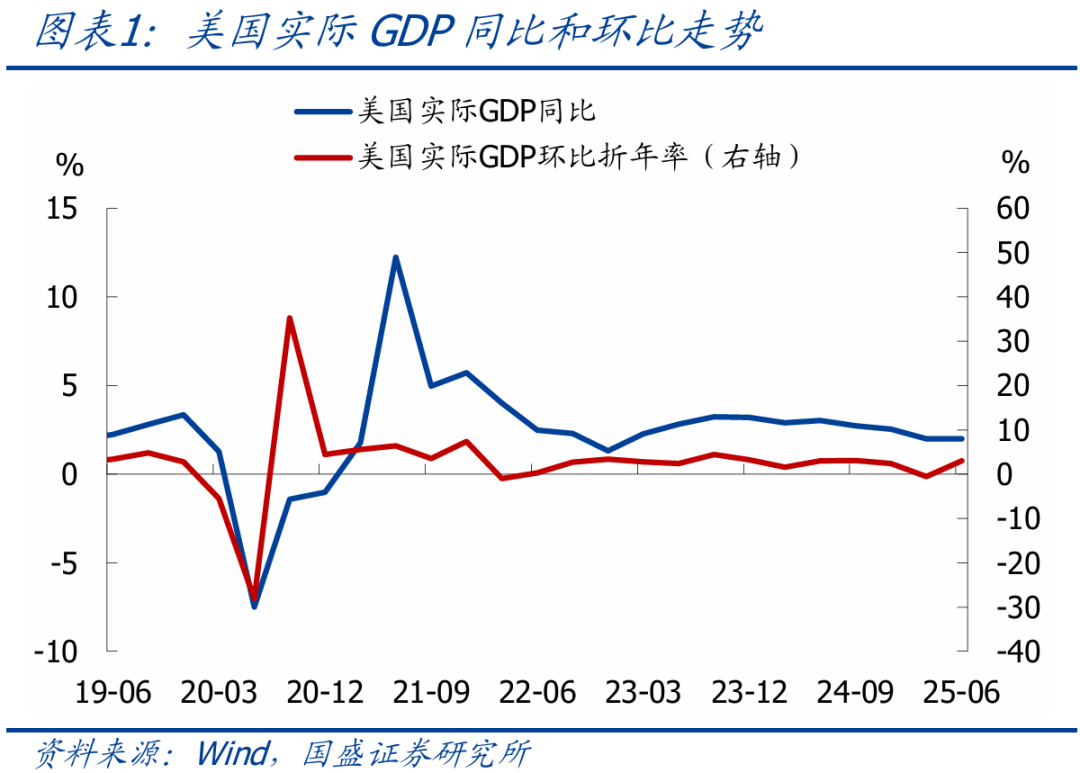
Core Viewpoint - The U.S. economy showed slight deceleration in Q2, but remains resilient, with GDP growth at an annualized rate of 3.0%, exceeding expectations. The Federal Reserve maintained interest rates, but internal divisions are growing, with a less than 50% probability of a rate cut in September [1][2][25]. Economic Performance - The U.S. Q2 actual GDP grew at an annualized rate of 3.0%, surpassing the expected 2.4% and previous -0.5%. The year-on-year GDP growth was 2.0%, consistent with prior values. PCE inflation for Q2 was 2.1%, below the expected 2.9% and previous 3.7% [1][17]. - Private consumption contributed positively to GDP, increasing from 0.3% to 1.0%, while private investment saw a decline from 3.9% to -3.1%. Net exports shifted from a negative contribution of -4.6% to a positive 5.0% [7][17]. Federal Reserve Actions - The Federal Reserve decided to keep the federal funds rate unchanged at 4.25-4.5%, aligning with market expectations. Notably, two Fed governors voted against the decision, advocating for a 25 basis point cut, marking a rare occurrence of dissent [1][17]. - Fed Chair Powell indicated that current monetary policy is moderately restrictive, with inflation remaining a concern. He noted that tariffs are beginning to affect prices and that future inflation impacts are expected [17][19]. Market Reactions - Following the Fed's decision, U.S. Treasury yields and the dollar rose, while stock markets and gold prices fell. The S&P 500 and Dow Jones indices decreased by 0.1% and 0.4%, respectively, while the 10-year Treasury yield increased by 4.6 basis points to 4.37% [19][25]. - Market expectations for a rate cut in September dropped significantly, with implied probabilities falling from 70% to 44%, and the anticipated number of cuts for the year reduced from 1.8 to 1.4 [2][25]. Economic Outlook - The U.S. economy is expected to experience a soft landing, supported by factors such as balance sheet repair, loose monetary policy, and favorable fiscal conditions. However, inflation risks remain, and the Fed is likely to prioritize inflation control over rate cuts [2][27].
兼评美国Q2GDP和7月议息会议:美联储“内斗”上演
GOLDEN SUN SECURITIES· 2025-07-31 03:09
Economic Performance - The US Q2 GDP growth rate was 3.0%, exceeding expectations of 2.4% and rebounding from a previous value of -0.5%[1] - Year-on-year GDP growth remained stable at 2.0%, consistent with the previous value[1] - PCE inflation for Q2 was 2.1%, lower than the expected 2.9% and previous 3.7%[1] Consumption and Investment - Private consumption contributed a 1.0% increase to the GDP, up from 0.3%, with durable goods and services consumption rising, while non-durable goods saw a slight decline[2] - Private investment's contribution dropped from 3.9% to -3.1%, with inventory changes negatively impacting the GDP by -3.2%[2] - Government spending's contribution improved from -0.1% to 0.1%, while net exports shifted from -4.6% to 5.0%[2] Federal Reserve Actions - The Federal Reserve maintained the federal funds rate at 4.25-4.5%, aligning with market expectations, but two board members voted against this decision advocating for a 25 basis point cut[3] - This marked the first instance in over 30 years where two board members opposed a decision, indicating potential future leadership changes within the Fed[3] Market Reactions - Following the Fed's meeting, US Treasury yields and the dollar rose, while stock markets and gold prices fell[4] - The implied probability of a rate cut in September dropped from 70% to 44%, with expectations for only one rate cut remaining in 2025[4] Economic Outlook - The US economy is likely to experience a soft landing, with inflation risks still present, suggesting caution regarding expectations for rate cuts[5] - The current economic conditions, supported by various fiscal measures, indicate that the Fed will prioritize inflation control over aggressive rate cuts in the near term[5]
美国经济软着陆+宽松预期=风格大轮换? 中小盘重回市场焦点 演绎“后巨头时代”的主升浪
智通财经网· 2025-07-28 09:16
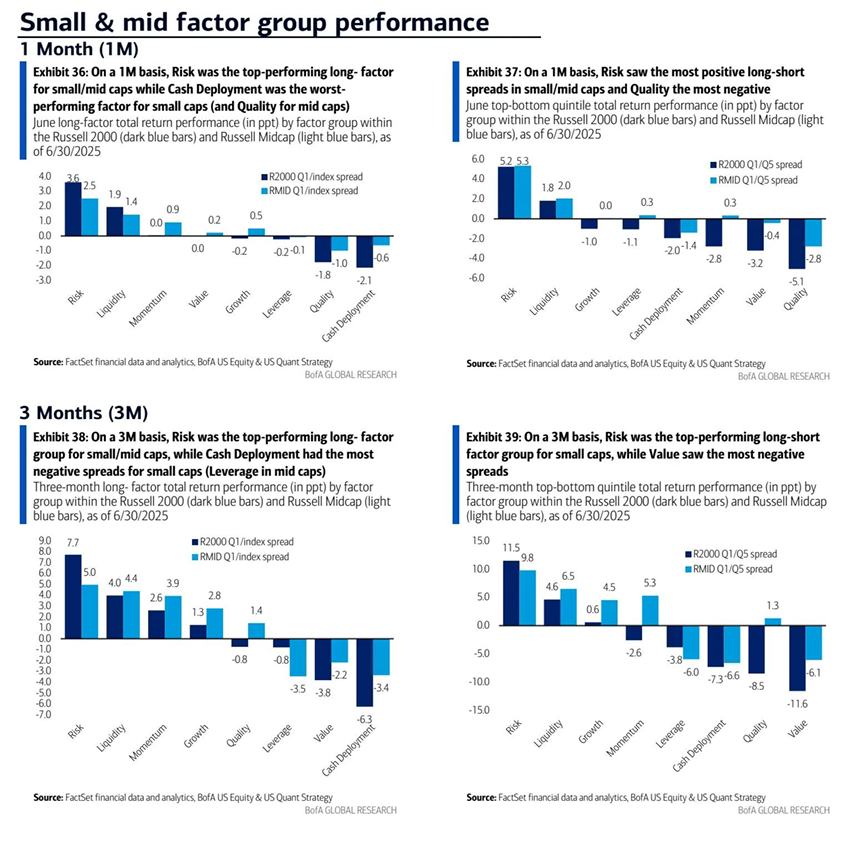
Core Viewpoint - The report from Bank of America indicates a cautious investment stance towards the historically high valuations of the "Magnificent Seven" tech giants, suggesting a structural opportunity in small-cap stocks, particularly micro-cap stocks, as the market anticipates a shift towards quality and low-risk factors to hedge against economic downturns [1][2][4]. Group 1: Market Dynamics - The "Magnificent Seven" tech giants, including Apple, Microsoft, Google, Tesla, Nvidia, Amazon, and Meta Platforms, have been the primary drivers of the S&P 500 index, but their high valuations are causing concern among investors [1][2]. - The S&P 500 index is currently near historical highs, with expectations that it may face a significant pullback, as indicated by analysts predicting a potential drop of about 15% by the end of the year [2][3]. - Small-cap stocks, particularly micro-cap stocks, have shown strong performance, with the Russell Microcap Index rising approximately 22% since the beginning of the second quarter, outperforming larger stock indices [3][4]. Group 2: Investment Strategy - Bank of America emphasizes the importance of focusing on high-quality small-cap stocks while avoiding high-leverage consumer stocks and unprofitable tech stocks [1][4]. - The report suggests that the recent rebound in riskier small-cap stocks is driven by a "low-quality stock rebound" and short-covering, but this trend may not be sustainable as the market shifts back to fundamentals [4][18]. - Analysts predict that the market will transition from a "low-quality leadership" phase to a "high-quality steady growth" phase, where financially healthy small-cap stocks will become the new momentum leaders [19][20]. Group 3: Economic Outlook - The anticipated easing of monetary policy by the Federal Reserve, with potential rate cuts starting in September, is expected to benefit small-cap stocks significantly, as they are more sensitive to interest rate changes [23]. - The current market environment, characterized by a "one versus many" dynamic, where a few tech giants dominate, is seen as unsustainable, leading to a potential breadth improvement as investors seek value in overlooked small-cap stocks [22][23]. - Bank of America forecasts that if the U.S. economy avoids recession and enters a rate-cutting cycle, small-cap stocks could experience a "Davis double play" scenario, leading to significant excess returns compared to large-cap stocks [5][20].





美股又创历史新高,华尔街多空大战鹿死谁手
2 1 Shi Ji Jing Ji Bao Dao· 2025-07-24 13:34
Group 1 - The core viewpoint of the articles highlights the recent recovery and growth of the US stock market, driven by improved corporate earnings and favorable trade agreements, particularly between the US and Japan [1][2][3] - The S&P 500 and Nasdaq indices reached new historical highs, with significant contributions from major tech companies, particularly in the AI sector [1][4] - The earnings season has shown optimistic results, with Alphabet's revenue and profit exceeding Wall Street expectations, indicating strong performance in the digital advertising market [1][5] Group 2 - The market's recent rise is attributed to multiple factors, including the belief in a "TACO trade" becoming the norm and expectations of a soft landing for the US economy, with potential interest rate cuts by the Federal Reserve [2][6] - The performance of the "seven giants" in the tech sector has shown significant divergence, with companies like Nvidia and Meta performing well, while Tesla and Apple have struggled [4][5] - The AI action plan released by the White House signals a shift in federal policy towards AI development, which may further boost the tech sector's growth [2][6] Group 3 - Analysts suggest that the ongoing earnings growth is crucial for sustaining the bullish trend in the stock market, with expectations that corporate profits will continue to exceed forecasts [6][7] - The potential for a market pullback exists, as some analysts warn of overly optimistic investor sentiment, but the overall outlook remains positive if earnings growth continues [7][9] - The impact of the "Big and Beautiful" act on corporate earnings may provide a temporary boost, but concerns about rising fiscal deficits and long-term inflation remain [8][9]
施罗德:美国经济大概率实现“软着陆”
Zhi Tong Cai Jing· 2025-07-16 06:24
Group 1 - The core view is that the US economy remains the cornerstone of the global financial market, with a "soft landing" scenario being the most likely outcome at 65% probability, indicating a moderate slowdown without entering recession [1] - Economic growth in the US is expected to continue at a steady pace, supported by strong real income growth driven by government fiscal support, despite uncertainties from government policies [2] - The labor market will be a key factor in reassessing economic outlooks, particularly with the recent rise in initial jobless claims [2] Group 2 - The European Central Bank has acknowledged that the interest rate cut cycle is nearing its end, with limited rationale for further cuts due to improving economic growth and increasing fiscal stimulus [2] - The UK economy shows signs of a slowing labor market and cooling inflationary pressures, with market expectations for the final benchmark interest rate to remain relatively high, presenting investment opportunities [2] Group 3 - The company maintains a neutral stance on overall bond duration but favors a steepening yield curve strategy, expecting shorter-term bonds to outperform longer-term bonds [3] - A downgrade has been made on the US CDX high yield index due to diminished valuation advantages, while maintaining a negative outlook on overall investment-grade bonds due to high valuations [3] - US government agency mortgage-backed securities are viewed as a preferred choice in fixed income asset allocation due to higher yields and lower volatility compared to US investment-grade corporate bonds [3]