ESG投资

Search documents
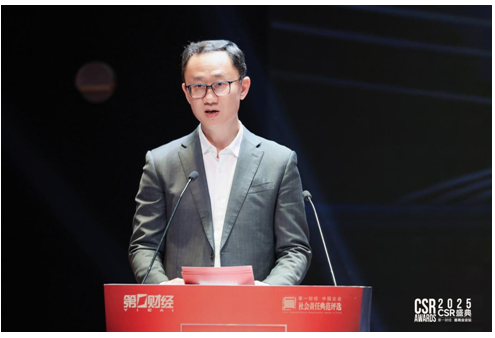
2025CSR盛典暨第一财经善商业论坛正式举行
Di Yi Cai Jing· 2025-12-11 13:29
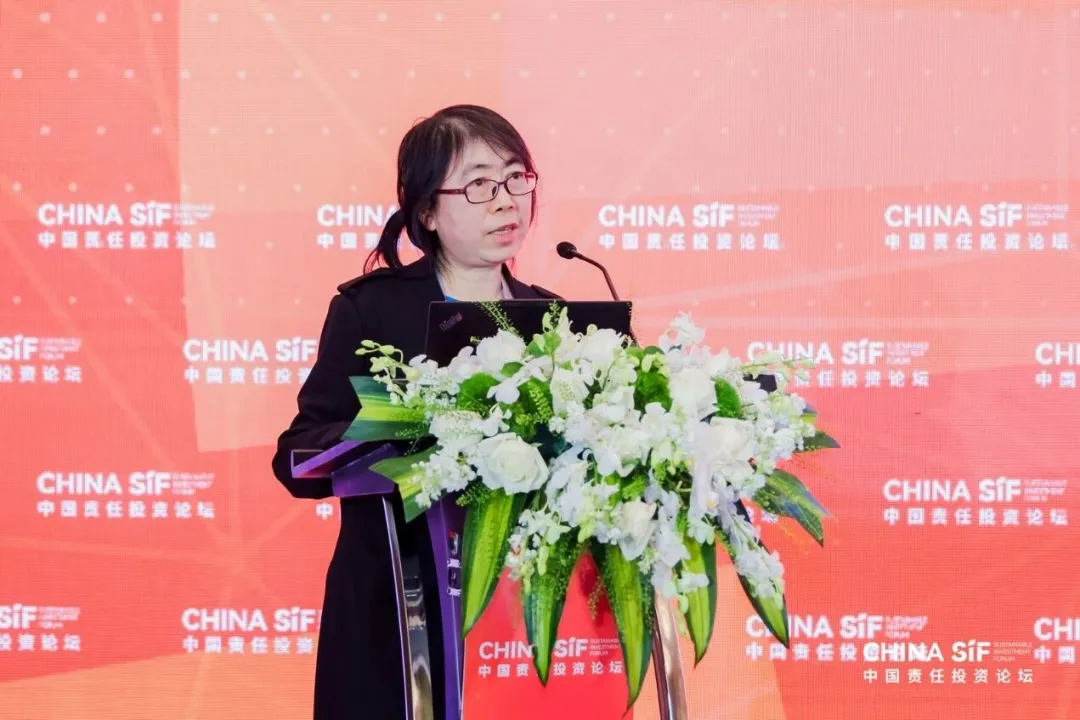
联合国可持续发展管理学院首席代表、联合国可持续发展目标全球协作项目工作委员会主任柳云虎带来 主题演讲《面向未来的可持续管理》。他介绍,多个可持续发展的趋势正在全球层面行程,包括:气候 变化驱动的政策调整、ESG投资成为主流、新兴市场绿色崛起、技术共享加速转型。在此背景下,可持 续管理具有极强的引导作用,它能降低企业风险,增强品牌声誉,并满足消费者与投资者对责任的期 待。它还推动创新,优化资源效率,助力企业适应法规变化,最终实现盈利与地球共生的双赢局面。 生态环境部环境规划院生态环境管理与政策研究所所长董战峰在主旨演讲中分享了《加快构建企业生物 多样性信息披露制度》,分析了中国生物多样性信息披露实践发展、企业生物多样性信息披露指引框架 与主要内容。对于加快推进生物多样性信息披露制度建设,他建议采取多维度措施,鼓励相关生态的商 业发展,并定期监测、评估和透明的披露对生物多样性的风险、依赖程度和影响,包括对所有大中型企 业和金融机构及其运营、供应链和价值链、投资组合的需求。 金光集团APP副总裁翟京丽带来主题分享《以生长型责任网络,"纸"引商业向善新篇章》,介绍了企业 在可持续发展业务中的实践经验。她认为,企业真正 ...

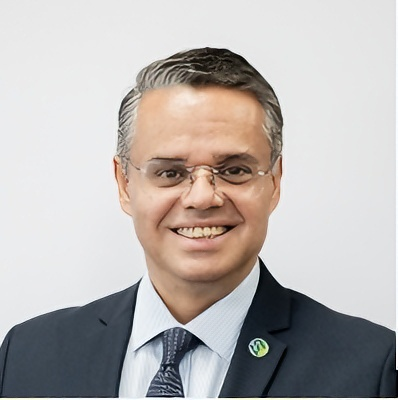
China SIF|Luisa FLOREZ:以韧性构建可持续回报的投资新范式
Xin Lang Cai Jing· 2025-12-11 10:10
Core Insights - The article discusses the evolving landscape of ESG (Environmental, Social, and Governance) investment, emphasizing the shift from passive response to proactive engagement in sustainable investment strategies [5][20]. - It highlights the increasing systemic risks posed by climate change and market volatility, which significantly impact investment returns [20]. Group 1: Global ESG Development Trends - The global ESG development is transitioning from "passive response" to "active layout," driven by multiple factors reshaping investment logic [5][20]. - Climate-related disasters are causing economic losses to rise, projected to reach $320 billion in 2024, with insurance costs at $140 billion, marking a 38% increase compared to the past decade [6][21]. - The need for a fundamental transformation in energy production and consumption to achieve net-zero emissions by 2050 is pushing capital from high-carbon sectors to green low-carbon industries [7][21]. - The globalization of ESG regulations is evident, with Europe establishing a regulatory framework centered on SFDR and CSRD, transitioning ESG from voluntary disclosure to mandatory compliance [8][22]. Group 2: Policy and Market Resonance - The integration of ESG standards into investment considerations is a result of policy guidance, market demand, and risk pressures [9][23]. - The EU's SFDR mandates financial institutions to disclose ESG-related information, directing funds towards sustainable sectors [23]. - Historical cases illustrate the financial repercussions of neglecting ESG factors, such as Volkswagen's $24.7 billion fine for the "Dieselgate" scandal [23]. Group 3: Value Creation through ESG - Ofi Invest integrates ESG factors systematically to create a closed loop of "risk prevention - opportunity capture - value creation" [24]. - The environmental dimension focuses on avoiding high-risk assets and investing in renewable energy and storage technologies [25][26]. - The social dimension emphasizes building trust among stakeholders and supporting community engagement and job creation [27]. - The governance dimension involves establishing dedicated ESG governance structures, with 97.7% of investments rated by internal ESG analysts [28]. Group 4: Ofi Invest's Path and Outlook - Ofi Invest practices sustainable investment through three pillars: developing forward-looking scenario analysis for net-zero emissions, establishing a comprehensive management loop, and building a sustainable financial ecosystem [14][28]. - The firm manages assets compliant with the EU's SFDR, totaling €123 billion, with over 70% of public funds meeting SFDR Article 8 standards [14][28]. - Ofi Invest aims to deepen ESG integration, focusing on climate transition and balancing financial returns with social and environmental value [14][28].

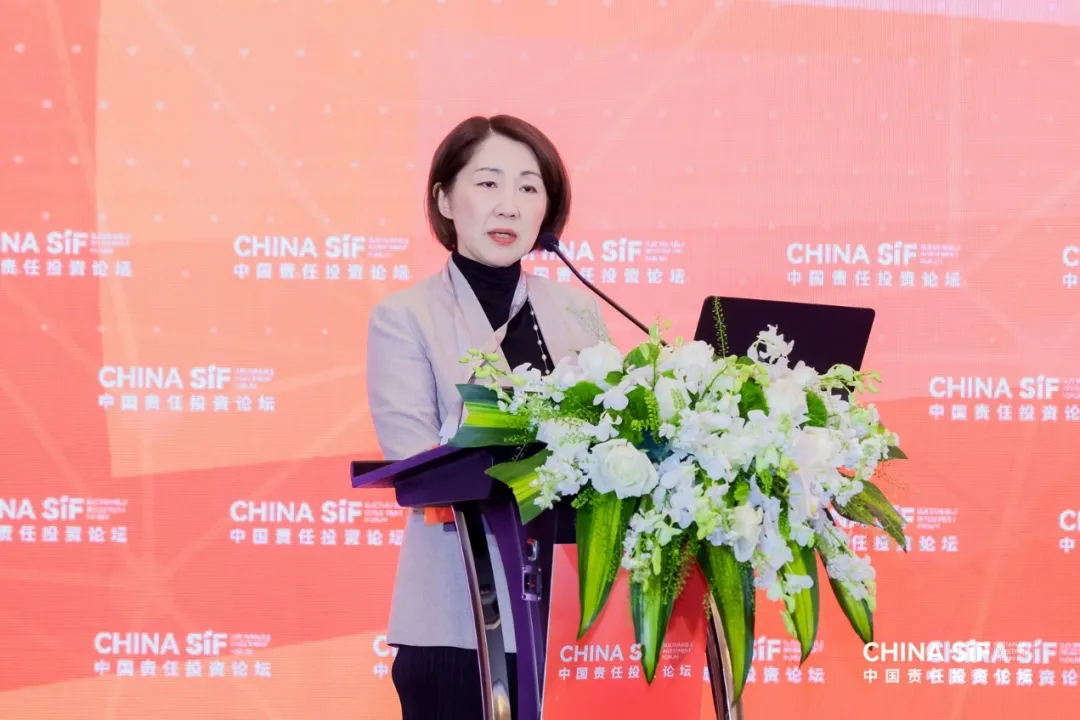
China SIF|钱谷美幸:从气候风险到韧性增长的战略转型
Xin Lang Cai Jing· 2025-12-11 09:42
Core Insights - The 13th China Responsible Investment Forum highlighted the shift of sustainable development from merely an environmental issue to a core financial, economic, and investment topic [1][21] - Climate and nature-related impacts are increasingly recognized as financial risks, necessitating a focus on adaptation and resilience as key investment themes [5][25] Group 1: Emerging Investment Frontiers - New markets are emerging in digitalization and AI monitoring, with companies like Pachama and OroraTech utilizing satellite data and AI to quantify forest carbon storage and land degradation in real-time [6][27] - Digital monitoring has become an investment theme itself, providing credible measurements and enhancing market confidence as data accumulates [7][27] Group 2: Natural and Ecosystem Markets - Financing for nature and biodiversity is becoming a new asset class, with growing investor interest in biodiversity-linked tools, ecological restoration projects, and natural capital valuation [8][29] - COP30 emphasized the rising global focus on ecosystem restoration and natural financing, particularly in Asia, where China is positioned to develop these markets more rapidly than other regions [9][29] Group 3: Infrastructure and Resilience Financing - Adaptive and resilient infrastructure represents a significant future capital demand, including water systems, resilient urban infrastructure, and disaster-resistant supply chains [10][30] - Early examples of resilience financing at the sovereign and industry levels, such as the Caribbean Disaster Risk Insurance Facility, demonstrate how parametric insurance can provide liquidity post-climate disasters [10][28] Group 4: Health Resilience as a New Financial Market - The integration of climate, nature, and health is emerging as a significant trend, with capital flowing into health security and resilience [11][29] - Initiatives like pandemic funds are financing early warning systems and health monitoring infrastructure in emerging economies, marking the emergence of a new asset class in health resilience [11][29] Group 5: Implications for Finance and Business - The financial industry must support capital allocation for adaptation, resilience building, natural financing, and health security solutions [12][30] - Asia's unique advantages, including policy frameworks and financial platforms, position it to scale investments more rapidly than other regions, with China's progress in transforming financial and market infrastructure drawing attention at COP30 [12][30] Group 6: New Strategic Directions - The shift in investment logic is moving from managing climate risks to designing for resilient growth, integrating climate, nature, health, and digital innovation to create value [13][31] - The current challenge lies in fostering collaboration across public and private sectors, financial and corporate realms, and international borders to build the next phase of sustainable and resilient growth [14][32]
广发基金获评2025第一财经中国企业社会责任典范评选“可持续责任典范”
Di Yi Cai Jing· 2025-12-11 07:30
Core Insights - The 2025 First Financial China Corporate Social Responsibility Model Selection awarded GF Fund the "Sustainable Responsibility Model" honor for its actions in green finance and inclusive finance [1][2] Group 1: Corporate Social Responsibility - The evaluation focused on "sustainable competitiveness" as a core theme, assessing how companies transform social responsibility into long-term capabilities that drive business, environmental, and social resilience [2][3] - The selection process involved authoritative representatives and experts in international ESG standards, ensuring a professional and forward-looking methodology [2][3] Group 2: ESG Investment Strategy - Since joining the UN Principles for Responsible Investment (UNPRI) in 2021, GF Fund has developed a systematic responsible investment framework, integrating ESG research into its investment decision-making process [4] - The company has established a collaborative mechanism for sustainable investment, covering ESG planning, equity research, fixed income research, and risk management [4] Group 3: Investor Education - GF Fund actively promotes investor education through various online and offline initiatives, enhancing financial literacy and risk awareness among investors [5] - The company has launched over 480 investor education pieces since 2025, attracting more than 1.75 million followers [5] Group 4: Social Welfare Initiatives - GF Fund focuses on rural revitalization, educational support, and emergency disaster relief, contributing to local economic development and improving living conditions [6] - The company supports various educational initiatives, including mobile libraries and online classrooms, and has engaged in disaster response efforts for events like the Hong Kong fire and floods in the Beijing-Tianjin-Hebei region [6]

对话联合国绿色气候基金首席投资官:破解中小企业气候融资困局,构建包容发展新生态
Xin Lang Cai Jing· 2025-12-11 02:32
登录新浪财经APP 搜索【信披】查看更多考评等级 当前,全球气候行动正从承诺向落地深化,在ESG投资理念逐步普及、各国国家自主贡献(NDCs)目 标加速推进的背景下,联合国绿色气候基金(Green Climate Fund, 简称GCF)作为全球重要的多边气候 融资机制,正通过资金催化与伙伴协作助力全球低碳转型。但当前气候融资领域仍面临诸多阻碍:ESG 被部分地区过度政治化、中小企业减碳融资门槛高、最脆弱群体及社区的气候项目易被忽视,这些问题 如何破解?绿色气候基金在撬动私营部门参与、支持发展中国家气候项目上已取得哪些切实成效?针对 气候项目中"短期成本压力"与"长期可持续影响"的核心矛盾,绿色气候基金的资助模式又具备哪些创新 优势?近日,新浪财经对话联合国绿色气候基金首席投资官亨利·冈萨雷斯(Henry Gonzalez),共同深 入探讨全球气候融资的现实瓶颈与突破路径,以及绿色气候基金如何为各国气候行动提供兼具资金支持 与系统性解决方案。 Gonzalez 联合国绿色气候基金首席投资官Henry 以下为对话实录: Q:我们了解到您在可持续发展与影响力投资领域拥有超过25年的专业经验,在ESG及影响力投资领 ...
倒计时一天丨2025CSR盛典暨第一财经·善商业论坛即将开启
Di Yi Cai Jing Zi Xun· 2025-12-10 00:19
Background - The global climate crisis, tightening regulatory policies, and the mainstreaming of ESG investment have transformed corporate sustainability from an "optional" to a "mandatory" aspect [1] - Companies face uncertainties in the external environment and need to drive internal strategic restructuring, embedding responsibility deeply into their business models [1] Challenges - Companies are experiencing a "triple dilemma": - Environmental: Tension between carbon neutrality and short-term growth [1] - Social: Difficulty in balancing the demands of multiple stakeholders [1] - Governance: Lack of unified ESG data and standards exacerbates "greenwashing" risks [1] Forum Objectives - The forum aims to redefine "sustainable competitiveness" beyond traditional CSR logic [1] - It observes that leading companies are undergoing three key transformations: - Shifting from compliance to value creation, turning ESG challenges into innovation opportunities [1] - Advancing from isolated actions to systemic change, building resilience across the entire industry chain [1] - Transitioning from external drivers to intrinsic motivation, embedding sustainability into corporate strategy [1] Collaboration - The forum will gather representatives from regulation, enterprises, academia, and the investment community to discuss how to create a resilient system that integrates "business-environment-society" [1] - The goal is to promote the co-evolution of corporate value and social value, contributing to sustainable development solutions in China [1]
MSCIESGETF(159621)涨超1.1%,估值重估预期获关注
Mei Ri Jing Ji Xin Wen· 2025-12-08 06:33
Core Viewpoint - The Chinese stock market is expected to undergo a valuation reassessment due to China's comprehensive advancements in both hard and soft power, particularly in its share of the global economy and technology system [1] Industry Insights - The technology sector will remain the core focus of the market, with an accelerated expansion in domestic computing power and storage chips, driving growth in the semiconductor industry chain [1] - Cultural consumption and cultural exports are anticipated to create new growth momentum as part of China's soft power initiatives [1] - Sectors benefiting from the reversal of internal competition and the recovery from deflation are also seen as having potential for turnaround [1] ESG Investment Focus - MSCIESGETF (159621) tracks the MSCI China A-Share ESG Universal Index, which selects listed companies in the Chinese A-share market that meet high standards for environmental, social, and governance criteria [1] - The index employs positive screening and dynamic weighting methods, focusing on companies with robust ESG performance and potential for continuous improvement [1] - The industry distribution of the index is balanced, with a style leaning towards core asset allocation, aiming to reflect the overall performance of high-quality Chinese A-share companies under the ESG investment philosophy [1]
China SIF|安国俊:建资管机构责任投资能力评估体系 完善国内ESG生态体系建设
Xin Lang Cai Jing· 2025-12-05 06:36
Core Viewpoint - The 13th China Responsible Investment Forum highlighted the rapid development of responsible investment in China, driven by dual carbon goals and green finance policies, while emphasizing the need for a comprehensive evaluation system for asset management institutions' responsible investment capabilities [1][3][4]. Group 1: Responsible Investment Capability Assessment - The updated Responsible Investment Capability Evaluation System (RICE) was introduced to assess asset management institutions across six dimensions: strategy, management, products, climate, disclosure, and advocacy [3][8]. - Evaluation results indicate a disparity in responsible investment capabilities among public fund companies, with significant room for development; insurance asset management shows continuous improvement; and bank wealth management subsidiaries are in a steady transformation phase, needing to enhance the diversity and maturity of ESG products [3][8]. Group 2: Recommendations for Improvement - The evaluation system proposes differentiated enhancement paths for various types of asset management institutions: public funds should balance short-term market performance with long-term sustainability, improve investor education and product design, and enhance the market appeal of ESG products; insurance asset management should leverage long-term funding advantages and integrate ESG factors into asset allocation; bank wealth management should design low-volatility ESG products to meet stable return demands [3][8][9]. Group 3: Future Outlook - There is a call for further improvement in responsible investment capability assessments, innovation in green asset management products, and collaboration across financial sectors to promote long-term capital market entry, support technological innovation, and aid the development of green low-carbon industries [4][9]. - The expectation is that research in green finance, responsible investment, ESG investment, impact investing, blended finance, and charitable finance will effectively support the real economy, guide capital towards social responsibility, and promote sustainable development [4][9]. Group 4: ESG Rating Center Overview - The Sina Finance ESG Rating Center is the first Chinese platform for ESG professional information and ratings, dedicated to promoting sustainable development and responsible investment, and advancing the establishment of ESG evaluation standards in China [5][10]. - The center has launched multiple ESG innovation indices to provide investors with more options regarding corporate ESG performance and has established the China ESG Leaders Organization Forum to collaborate with leading ESG companies and partners [5][10].
报名丨2025CSR盛典暨第一财经·善商业论坛即将开启
第一财经· 2025-12-04 06:50
Background - The global climate crisis, tightening regulations, and the mainstreaming of ESG investments have transformed corporate sustainability from an "optional" to a "mandatory" aspect [1] - Companies face external uncertainties and must drive internal strategic restructuring, embedding responsibility into their business models [1] - The practice is currently facing a "triple dilemma": environmental tensions between carbon neutrality and short-term growth, balancing diverse stakeholder demands on the social front, and the risk of "greenwashing" due to inconsistent ESG data and standards [1] Forum Objectives - The forum aims to redefine "sustainable competitiveness" beyond traditional CSR logic [1] - Observations indicate that leading companies are undergoing three key transformations: shifting from compliance to value creation, moving from isolated actions to systemic change, and evolving from external drivers to intrinsic motivation for sustainability [1] - The event will gather representatives from regulation, business, academia, and investment sectors to discuss building a resilient system that integrates business, environment, and society, promoting the co-evolution of corporate and social value [1]

凝聚资本之力,照亮未来之路
Sou Hu Cai Jing· 2025-12-03 13:05
Core Insights - The article emphasizes the transformative power of funds, viewing them not merely as financial instruments but as carriers of historical wisdom, institutional trust, and future vision, providing a profound perspective on the modern financial ecosystem [1] Historical Context - The evolution of funds is traced from the establishment of the world's first contractual fund in 1868 to the development of the U.S. venture capital landscape over the past seventy years, and the rise of China's fund industry from "Zhu Xin Fund" to a significant player in the global capital market [3] - The Suzhou Fund Museum is highlighted as a key institution preserving and narrating this history, utilizing various multimedia methods to make abstract financial concepts tangible for the public [4] Conceptual Framework - The article presents deep insights from prominent figures in finance, emphasizing that the core of funds lies in the integration of trust, wealth management, and values, which elevates the discussion from a technical to a value-based perspective [6] - The discourse includes critiques of the current financial market's short-term profit focus and underscores the importance of long-termism in fostering new productive forces [6][7] Patience Capital - "Patience capital" is identified as a strategic pillar for China's capital market, characterized by long-term orientation, stability, and a higher risk tolerance, which is essential for supporting the development of new industries [8] - As of June 2024, China has 24,344 active venture capital funds with a total scale of 3.3 trillion, providing robust support for technology innovation [9] Fund Safety - The safety of funds is a critical concern, with China having over 20,000 GP management teams and more than 60,000 funds, raising questions about the reliability of these investments [12] - The article reflects on the rapid growth of the fund industry in China compared to the U.S., highlighting the need for safety and trust in this expanding market [12] Practical Narratives - The article employs case studies to illustrate the journey of IDG Capital from replicating Silicon Valley models to leading China's internet sector, showcasing the growth trajectory of domestic venture capital institutions [26] - It also addresses the lessons learned from early market imperfections and discusses current trends in ESG investment and smart finance [26] Future Outlook - The article captures the evolving role of funds in shaping the future, with AI and algorithms transforming investment decisions and ESG becoming a core metric for investment value [17] - Funds are positioned as not only wealth amplifiers but also as strategic forces in driving national core industry development and addressing significant social needs [17][18]