K型经济

Search documents
列国鉴丨记者观察:圣诞灯光下的美国“K型”经济裂痕
Xin Lang Cai Jing· 2025-12-30 18:07
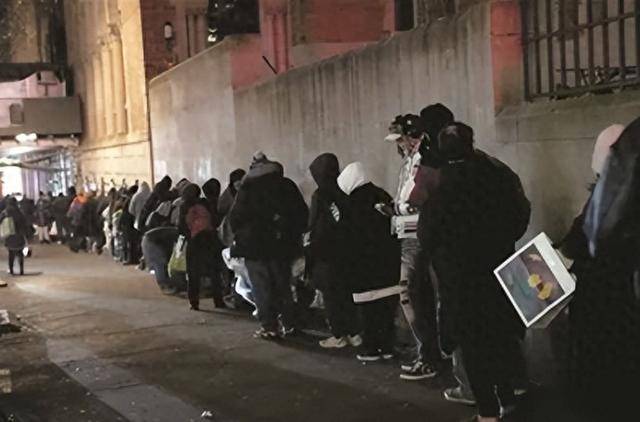
Core Viewpoint - The article highlights the "K-shaped" economic recovery in the U.S., where high-income consumers continue to spend while middle and low-income consumers are forced to cut back on expenditures due to rising living costs [1][2]. Group 1: Consumer Behavior - During the holiday season, 62% of American consumers reported experiencing additional financial pressure due to holiday spending, with 87% planning to shop primarily at discount stores [2]. - Interviews reveal that many consumers are significantly reducing their holiday budgets, with individuals like James Figaro estimating a spending of $1,200, which is much lower than previous years [4]. - The chairman of Kroger noted that middle and low-income consumers are increasingly focused on the actual value of products, using coupons more frequently, and opting for store brands while cutting back on non-essential services [4]. Group 2: Economic Inequality - The Gini coefficient, a measure of income inequality, is at its second-highest historical level in the U.S., indicating a significant and persistent issue of income inequality [5]. - Economic changes since the 1980s, including globalization and tax policies favoring capital over labor, have contributed to the current distribution of wealth, leading to a decline in the purchasing power of middle-income families [5]. Group 3: Broader Economic Context - The U.S. economy shows growth primarily in sectors like finance, healthcare, and technology, but this growth is not reflective of the overall economic health, as manufacturing is contracting and unemployment is rising [8]. - A study indicates that if specific technology infrastructure investments are excluded, the actual GDP growth rate for the first half of 2025 could be as low as 0.1%, significantly below official figures [9]. Group 4: Political Implications - Economic anxiety is reshaping the political landscape, with rising living costs becoming a central issue for voters, influencing recent election outcomes [10]. - A poll indicated that 20% of self-identified Republicans believe the government is responsible for the current economic situation, highlighting a bipartisan concern over living costs [10]. Group 5: Social Issues - The article illustrates the stark contrast between the affluent and those struggling, with reports of long lines for free meals in New York, indicating that many working individuals are still unable to make ends meet [12][13]. - Data from the New York City homeless coalition shows that over 102,000 people are using shelters each night, with millions relying on food assistance programs, underscoring the severity of the economic divide [12].


【环球财经】圣诞灯光下的美国“K型”经济裂痕
Xin Lang Cai Jing· 2025-12-30 12:58
转自:新华社 新华财经纽约12月30日电(记者杨士龙)圣诞节期间,纽约街头流光溢彩、人流如织,但在热闹节日表象下,却难掩这样一个现实:越来越多的美国普通消 费者不得不更谨慎地规划支出。 美国经济"K型"分化的现实,正在街头显现:高收入群体仍像往常一样消费,而中低收入消费者因生活成本显著提升而削减开支。 12月22日,游客在美国纽约时报广场2026年数字牌前留影。新华社记者张凤国摄 "头重脚轻的积木塔" "K型"分化原指在经济复苏中,不同社会阶层、行业或群体的经济状况呈现明显背离趋势。一些群体经济状况快速改善,而另一些群体则持续恶化,形成类 似字母"K"的走势。 "K型"经济概念的推广者、威廉与玛丽学院经济学者彼得·阿特沃特将当前美国经济状况比喻为"头重脚轻的积木塔":"顶端(富裕阶层的消费和资产价值) 不断加高,而基础(普通家庭的购买力和经济安全感)却日益脆弱。整个结构虽然表面壮观,但稳定性正持续下降。" 美国银行11月发布的2025年假日消费调查报告显示,在当前经济环境下,62%的美国消费者会因假日消费而承受额外财务压力;高达87%的人计划主要在折 扣店等优惠渠道完成节日购物。 12月18日,一名男子在美国 ...

Don’t Pick a Fight With the Fed, Unless You’re Willing to Win: 3 Ways to Benefit From More Rate Cuts in 2026
Yahoo Finance· 2025-12-29 18:38
Economic Growth and AI - The AI trade is a significant driver of GDP growth in recent quarters, and this trend is expected to continue, particularly benefiting the top 10% of wage earners, which may lead to a "K-shaped" economy narrative in 2026 [2] Interest Rates and Investment Strategies - Interest rates are anticipated to decrease more rapidly than many economists predict, which will be a crucial factor for investors to monitor [3] - As interest rates decline, bond prices are expected to rise due to their inverse correlation, making bonds an attractive investment option [8][9] Bonds as a Safe Investment - Bonds, particularly Treasury-focused ETFs, offer diversification and lower risk, making them suitable for investors looking to protect their portfolios amid potential economic downturns [5][6] - Investing in a diversified portfolio of bonds can yield significant returns in a down or sideways market, especially as rates decrease [8][9]
【世界说】美媒:必需品通胀吞噬购买力,美国消费者感受到寒意
Xin Lang Cai Jing· 2025-12-29 09:58
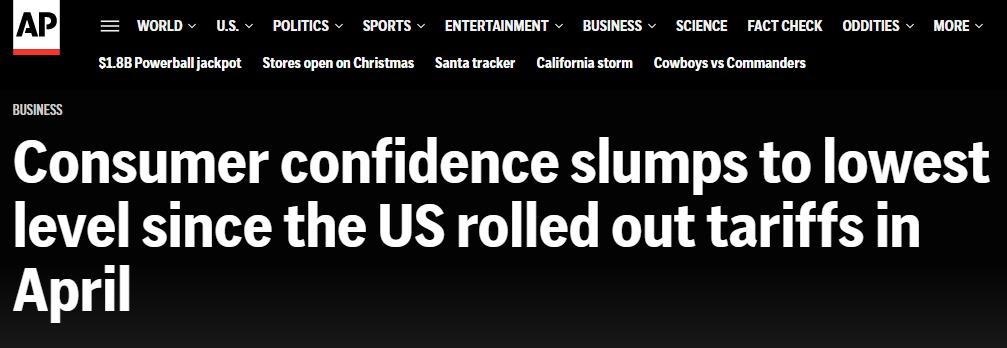
Group 1 - The core viewpoint of the article highlights a decline in consumer confidence in the U.S. due to rising prices and the impact of comprehensive tariff policies, with the consumer confidence index dropping 3.8 points to 89.1, marking the fifth consecutive month of decline [1][2] - The index measuring Americans' short-term expectations regarding income, business conditions, and the job market remains stable at 70.7 but is significantly below the 80 threshold that indicates recession risk, marking the 11th consecutive month below this level [2] - Concerns over inflation and tariffs are the primary worries for consumers, despite government claims that inflation is a hoax, with current economic assessments plummeting 9.5 points to 116.8 [2][3] Group 2 - The article discusses the disconnect between economic growth and consumer sentiment, attributing it to tariffs and inflation, with consumers spending most of their money on necessities rather than discretionary items [3] - The combination of tariffs and inflation has exacerbated financial burdens, with inflation having surged to a 40-year high, and tariffs further increasing prices, leading to renewed consumer anxiety [3] - The article notes that tariffs not only raise costs for businesses but also create economic uncertainty that dampens hiring intentions, contributing to a significant decline in new job creation and a rise in the unemployment rate to a four-year high [3][4] Group 3 - The pressure on low-income households is particularly severe, as they are often the most affected by persistent inflation and insufficient employment opportunities, highlighting the widening wealth gap in the U.S. economy [3][4] - Analysts indicate that individuals are seeking ways to save money and adopt more frugal lifestyles, especially among middle and low-income groups facing significant pressure on basic needs [4]
【UNforex财经事件】圣诞行情托底 美股高位震荡中提前定价2026年政策变量
Sou Hu Cai Jing· 2025-12-29 04:00
UNforex 12月29日讯 在年末假期效应与"圣诞老人行情"共同作用下,全球金融市场继续在高位区间内 运行。随着交易日数量减少、流动性阶段性回落,市场在震荡中逐步消化政策预期与宏观基本面变化。 上周,美股在连续走强后涨势有所放缓,但整体结构并未出现明显松动,主要股指仍稳守历史高位附 近,风险偏好保持相对积极。 从具体表现来看,截至上周五收盘,标普500指数与道琼斯工业平均指数仍接近此前平安夜创下的纪录 区间。尽管假期因素限制了成交活跃度,但周度层面,美股整体表现依然稳健:标普500指数全周累计 上涨约2.3%,道指与纳斯达克综合指数分别录得约1.6%和2.5%的升幅,显示资金在年末阶段仍倾向于 维持既有配置结构。 进入缩短的假日交易周后,市场关注重点开始从年度表现切换至对中长期政策路径的评估。本周三即将 公布的ADP就业报告以及美联储12月FOMC会议纪要,被普遍视为观察政策取向的重要窗口。相关信息 将为市场判断2026年货币政策节奏提供更多线索。 与此同时,美联储主席继任问题逐渐进入讨论区间。多家媒体指出,美国总统特朗普可能在明年1月初 公布下一任美联储主席人选。当前被市场提及的潜在候选人包括白宫经济顾 ...
美联储的两大误判(国金宏观钟天)
Xin Lang Cai Jing· 2025-12-29 03:11
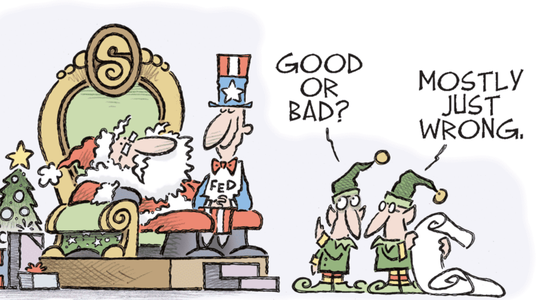
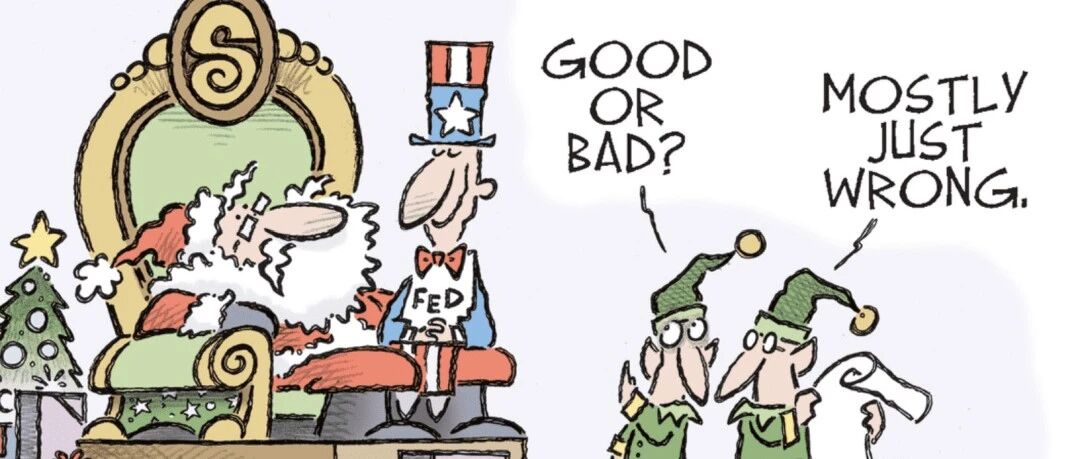
Group 1 - The Federal Reserve's two major misjudgments this year are overestimating the weakening of labor supply and the inflation level transmitted by tariffs, reflecting a lack of clarity regarding the "K-shaped economy" and the impact of AI [3][34] - The economic landscape shows a coexistence of "summer growth" and "winter employment," with increasing pressure on small and medium-sized enterprises and a growing consumption divide among different income levels [3][38] - The Fed's decisions have been influenced by a "data dependency syndrome," where both the Fed and the market rely heavily on upcoming data releases to adjust their views, indicating a diminishing effectiveness of experiential knowledge [3][34] Group 2 - The labor supply issue was first mentioned by Powell on June 18, 2025, attributing the decline to a significant drop in immigration numbers [7][39] - The perception that labor supply began to weaken only after Trump's presidency is a misconception, as the Biden administration had already tightened illegal immigration by May 2024 [9][39] - Despite expectations of a labor supply decrease due to reduced illegal immigration, the unemployment rate has continued to rise, indicating that labor supply has not significantly decreased compared to the previous two years [11][41] Group 3 - The Fed's misjudgment regarding labor supply is attributed to three objective factors: cautious evaluation of immigration policies, the ineffectiveness of Trump's policies in significantly altering labor supply, and a weakening of domestic demand [16][47] - The current decline in illegal immigration numbers makes it difficult to see new marginal changes in labor supply in the short term, suggesting a need to refocus on demand-side stimulus rather than supply-side measures [18][49] Group 4 - The overestimation of tariff-induced inflation is another misjudgment by the Fed, linked to the further weakening of the U.S. real economy [18][49] - As of November, the U.S. has collected an additional $164 billion in tariffs compared to the previous year, but many exemptions and "import rushes" mean that these tariffs are not entirely borne by U.S. importers [18][49] - The weak U.S. economy is reflected in various sectors, with hotel occupancy rates and restaurant profits showing declines, indicating that tariff-sensitive industries are absorbing some of the tariff increases [19][50][54] Group 5 - The burden of tariffs varies significantly across different categories of goods, and this could amplify economic fluctuations in 2026, with potential increases in layoffs if the economy weakens further [25][56] - As of the end of 2025, the focus has shifted from tariff inflation to the overall weakness of the real economy, raising concerns about potential misjudgments by the Fed in 2026 amid new variables like midterm elections and AI industry trends [29][60]
美联储的两大误判(国金宏观钟天)
雪涛宏观笔记· 2025-12-29 03:05
Core Viewpoint - The Federal Reserve's two major misjudgments in 2025 were overestimating the weakening of labor supply and the inflation level transmitted by tariffs, reflecting a lack of clarity regarding the "K-shaped economy" in the U.S. and the impact of AI [4][8]. Group 1: Labor Supply Weakness - The Federal Open Market Committee (FOMC) first addressed labor supply issues in June 2025, attributing the decline in labor supply to significantly lower immigration numbers [11]. - There is a widespread misconception that anti-immigration policies began with Trump's administration; in reality, the Biden administration had already tightened illegal immigration by mid-2024 [11]. - Despite expectations, the U.S. unemployment rate began to rise again in June 2025, even as labor supply did not show significant reduction compared to previous trends [12]. - The anticipated reduction in labor supply due to immigration policies was only partially realized in swing states, with actual labor supply contraction occurring much later [14]. - Current non-farm employment growth is below 50,000 per month, indicating a significant decline in the "equilibrium employment level" [16]. - The Fed's misjudgment regarding labor supply is influenced by three objective factors: cautious evaluation of anti-immigration policies, the limited impact of these policies on domestic labor supply, and a weakening of real demand [19][20]. Group 2: Tariff-Induced Inflation - The Fed's overestimation of tariff-induced inflation is linked to the further weakening of the U.S. real economy, with Powell indicating a shift in perspective to view tariff impacts as a "one-time shock" [23]. - As of November, the U.S. had collected $164 billion in tariffs compared to the previous year, but many exemptions and "import rushes" mean that not all tariffs are borne by U.S. importers [23]. - The U.S. hotel industry has seen occupancy rates below 2024 levels for nine consecutive months, indicating a broader trend of weak consumer spending [24]. - Tariff-sensitive sectors have absorbed some of the tariff increases, leading to a decline in pre-tax profits for non-financial companies in the first quarter [27]. - Many U.S. companies are now viewing layoffs as a cost-control measure to offset tariff pressures, which could exacerbate economic downturns if the economy weakens further [30]. - The burden of tariffs varies significantly across different product categories, and this could amplify economic fluctuations in 2026, depending on the economic recovery or further downturns [33][36].
美国斩杀线有多狠!45万年薪精英半年破产,37%成年人逃不出400块
Sou Hu Cai Jing· 2025-12-28 12:41
Core Viewpoint - The concept of the "American Kill Line" reflects a deep-seated survival crisis in American society, where individuals and families fall into poverty due to unexpected events, revealing systemic issues within the socio-economic framework [1][3][4]. Group 1: Financial Vulnerability - 37% of Americans cannot afford an emergency expense of $400, indicating widespread financial instability [3]. - The "Kill Line" represents a threshold where financial conditions deteriorate, leading to a lack of support from social systems, pushing individuals into homelessness [4][6]. - Many individuals, including seemingly successful professionals, have experienced rapid declines in their living conditions due to unforeseen circumstances, such as illness or job loss [6][8]. Group 2: Systemic Issues - The American safety net for vulnerable populations has weakened, with reduced funding and coverage, exacerbating the struggles of those in need [10]. - Political parties exploit social issues for electoral gain rather than addressing them, resulting in a continuous decline of the "Kill Line" and increasing numbers of affected individuals [15][17]. - The disparity in wealth distribution is stark, with the top 10% holding 87.2% of stock wealth, while the bottom 50% possess only 1.1%, further squeezing the financial space for lower-income families [19][21]. Group 3: Social Dynamics - Social divisions have intensified, with a "survival of the fittest" mentality prevailing, leading to increased risks for vulnerable groups [23][25]. - The harsh realities of American life, including the high costs of housing and healthcare, create a cycle of poverty that is difficult to escape [30][34]. - The capitalist system prioritizes capital over human dignity, resulting in a society where a significant portion of the population is at risk of falling into despair [34][36].

美国圣诞暴露致命裂痕,消费数据暴涨,底层濒临绝境
Sou Hu Cai Jing· 2025-12-27 12:16
Group 1 - The holiday retail sales in the U.S. are projected to grow by 3.7%-4.2% during November-December 2025, with online sales on Black Friday increasing by 10.4% [1][3] - High-income households are driving holiday spending due to stock appreciation and real estate gains, while middle and low-income families are tightening their budgets [3][6] - The average price of popular holiday gifts has risen by 26%, significantly outpacing the overall inflation rate of 2.7% in July, leading to 40% of consumers buying fewer gifts [6][8] Group 2 - The poverty rate in New York City has surged to 25%, more than double the national supplemental poverty rate of 12%, highlighting the economic divide [8][10] - Tax and welfare policies under the Trump administration have disproportionately benefited the wealthy, with the top 1% receiving $975 billion in tax cuts [10][12] - The U.S. economy has shifted towards financial and entertainment sectors, leaving ordinary workers in low-paying jobs, exacerbating income inequality [12][14] Group 3 - Market concentration has increased, with 75% of industries becoming more concentrated since the 1990s, negatively impacting small businesses [14][16] - The disparity in holiday experiences reflects a K-shaped economic recovery, where the wealthy enjoy luxury while lower-income individuals struggle for basic needs [16]
“斩杀线”下的美国:年薪百万的中产,也怕一次意外
创业邦· 2025-12-27 10:33
Core Viewpoint - The concept of "killing line" has emerged in discussions about the precarious financial situation of many Americans, particularly the middle class, who face severe economic pressures that can lead to financial ruin and homelessness [5][8][30]. Group 1: Economic Conditions - The poverty line for a family of four in the U.S. is set at an annual income of $32,150, but a more realistic figure to maintain basic living standards is approximately $136,500, or about 960,000 RMB [11][12]. - A quarter of American households are living paycheck to paycheck, spending nearly all their income on essential expenses [14]. - 37% of Americans cannot cover an unexpected expense of $400, indicating widespread financial vulnerability [15]. Group 2: Homelessness Crisis - The total number of homeless individuals in the U.S. surged by 18% in 2024 compared to the previous year [19]. - Young people under 25 accounted for 27% of the homeless population, with their numbers increasing by 29% [20]. - The number of homeless children rose by 33%, with at least 148,000 minors living in shelters or on the streets [21]. Group 3: K-shaped Economic Recovery - The U.S. economy is experiencing a "K-shaped" recovery, where the wealthy benefit disproportionately from economic growth, primarily driven by technology and capital returns, while the lower-income groups face stagnation [30][33]. - The contribution of AI-related investments to GDP growth reached 1.57 percentage points in the first half of 2025, surpassing that of private consumption [31]. - The manufacturing sector's value added fell below 10% for the first time in 2024, highlighting a shift away from traditional economic drivers [32]. Group 4: Structural Issues - The labor market is characterized by a "double weakness" in supply and demand, with rising unemployment and job instability for low-income workers due to technological advancements [35]. - The average commercial electricity price in the U.S. has increased by about 30% since 2019, contributing to higher living costs for families [36]. - Economic policies have disproportionately benefited the wealthiest, with the lowest income households potentially losing around $1,600 annually due to tax reforms [38]. Group 5: Policy Challenges - Policymakers face the challenge of balancing capital market prosperity with rising living costs for voters, which could lead to significant economic risks if not managed properly [39]. - The ongoing low-interest-rate environment primarily benefits asset markets, offering limited relief to ordinary families struggling with debt [39]. - The structural imbalance in the economy has led to a situation where a single financial shock can trigger a cascade of negative outcomes for vulnerable households [40].