人工智能(AI)

Search documents
制度韌性的增長與轉型-中國香港經濟2025年回顧及2026年展望
Sou Hu Cai Jing· 2026-01-05 18:59
Group 1 - Hong Kong's economy is expected to grow by 3.2% in 2025, marking the third consecutive year of growth and returning to pre-pandemic levels, driven primarily by strong performance in logistics and financial flows [1][9][11] - The GDP growth in the first three quarters of 2025 was 3.3%, indicating an accelerating upward trend, with contributions of approximately 1.2 percentage points from financial flows and 1.1 percentage points from logistics [1][10][11] - Visitor numbers to Hong Kong are projected to increase by about 12% in 2025, with retail sales recovering positive growth since May, and import/export values rising by 13.8% and 13.6% respectively [1][18][25] Group 2 - For 2026, a more optimistic scenario suggests a GDP growth of 3.0%, with logistics and financial flows remaining key drivers, while the contribution from human flows is expected to remain stable [2][7][14] - Factors supporting this growth include reduced uncertainty around tariffs, liquidity released from Federal Reserve rate cuts, and improved fiscal conditions for the Hong Kong government [2][7][17] - The logistics sector is anticipated to benefit from resilient mainland exports and strong demand for AI-related products, with expectations of steady growth in re-export trade [2][22][26] Group 3 - The financial sector is projected to continue its positive trajectory, supported by an active capital market and favorable policies, while the real estate sector is expected to enter a recovery phase [2][29][31] - The Hang Seng Index saw a cumulative increase of 28.9% in 2025, with Hong Kong regaining its position as the top global IPO market [1][31][33] - The banking and insurance sectors are experiencing improved conditions, with a notable increase in market activity and a rise in the issuance of Chinese dollar bonds [31][34][35]


桥水创始人达利欧:AI热潮正处于泡沫初期阶段,美联储会进一步吹大泡沫
Hua Er Jie Jian Wen· 2026-01-05 17:10
对冲基金经理雷伊・达利欧发文警告,曾推动华尔街科技股走高的人工智能(AI)热潮目前已进入泡 沫初期阶段。他指出,2025年美国股市表现显著落后于非美股市及黄金资产。"显然,相较于美国股 票,投资者更愿意配置非美股票;同理,他们也更倾向于持有非美债券,而非美国债券与美元现 金。""当然,未来美联储的政策走向以及生产力增速,都存在巨大的不确定性。" 达利欧表示。"种种 迹象表明,新任美联储主席及联邦公开市场委员会,大概率会倾向于压低名义利率与实际利率。这一举 措虽会对资产价格形成支撑,但也会进一步吹大泡沫。" 市场有风险,投资需谨慎。本文不构成个人投资建议,也未考虑到个别用户特殊的投资目标、财务状况或需要。用户应考虑本文中的任何 意见、观点或结论是否符合其特定状况。据此投资,责任自负。 风险提示及免责条款 ...
丘成桐:未来5到10年中国将成为数学强国
第一财经· 2026-01-05 11:27
Core Viewpoint - The article discusses the optimistic outlook for China's future in mathematics, predicting that it will become a mathematical powerhouse within the next 5 to 10 years, as stated by the first Chinese Fields Medalist, Shing-Tung Yau, during the 10th International Conference of Chinese Mathematicians (ICCM) held in Shanghai [3][4]. Group 1: Talent Development - Yau emphasizes the importance of nurturing mathematical talent, noting that Chinese students around the age of 12 exhibit exceptional creativity and intuition comparable to their peers globally [7]. - He expresses concern that the current educational focus on standardized testing and rote learning ("刷题") stifles innovation and critical thinking among students as they progress into high school [6][8]. - The goal of specialized programs is not only to produce mathematicians but to provide a solid mathematical foundation for various scientific disciplines, allowing students to pursue their interests later on [7]. Group 2: AI and Mathematics - Yau argues that while AI enhances research efficiency, it does not revolutionize scientific paradigms, and breakthroughs in AI will ultimately require a return to mathematical fundamentals [6][10]. - He refutes the notion that AI will replace mathematicians, asserting that significant mathematical problems require years of deep contemplation and cannot be solved merely by searching existing knowledge [10]. - Yau highlights that the current reliance of AI on vast computational power reflects a lag in foundational mathematical theories, suggesting that advancements in AI will necessitate a deeper mathematical understanding [10].

丘成桐:AI的突破仍需回归数学,未来5到10年中国将成为数学强国
Di Yi Cai Jing· 2026-01-05 09:53
"ICCM二十八年前大会刚创办时,中国数学家涉猎的领域还很狭窄。如今,数论、代数、几何等各个方 向都已呈现出多姿多彩的局面。"会议期间,菲尔兹奖首位华人得主、大会主席丘成桐接受第一财经在 内的媒体采访时给出一个判断:未来5到10年,中国将成为数学强国。 未来AI若想突破能耗与算力的天花板,必须回归数学。 距离2026年菲尔兹奖公布时间还有一个多月时间,为期5天的第十届世界华人数学家大会(ICCM)3日 在上海开幕。 除了乐观的判断,丘成桐对于数学人才的培养和人工智能(AI)的发展也有冷静的思考。 在他看来,AI改变的仅仅是科研效率,而非范式革命,AI的突破仍需要回归数学。而在人才培养方 面,不能在标准化的"刷题"与功利化的KPI中让年轻一代失去创新能力。在第十届世界华人数学家大会 "这个群体数量巨大,如果其中有三分之一能最终成才,就是国家了不起的财富。"丘成桐说,少年班的 核心目标并非只培养数学家,而是为理科学习打好数学基础,后续他们可根据兴趣选择不同学术方向。 然而,这个群体12岁之后的成长期,特别是一旦进入高中阶段,一些原本敢想敢问的学生开始变得不敢 提出试卷以外的问题,思维逐渐趋同。这种对不确定性的规避 ...

日经平均股指开门红,大涨3%
日经中文网· 2026-01-05 07:51
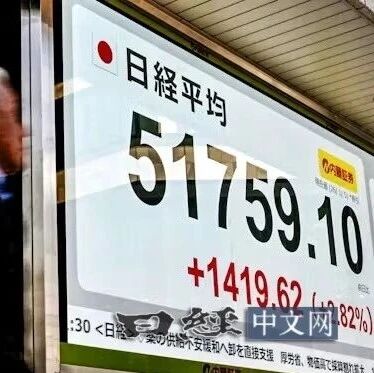
Group 1 - The Nikkei average index broke through the 51,000-point mark, which was previously seen as a resistance level, closing at 51,832 points on January 5, 2026, with an increase of 1,493 points (3%) from the previous trading day [2][4] - The market sentiment is optimistic for the 2026 stock market, driven by strong demand for semiconductors, particularly in AI-related stocks, with SoftBank Group (SBG) seeing a peak increase of 7% during the trading session [4] - Tokyo Electric Power Holdings surged by 9% due to plans for large-scale investments to meet the rising electricity demand driven by AI proliferation, enhancing its presence as an AI-related stock [4] Group 2 - The semiconductor sector is experiencing increased buying interest, with companies like Advantest, Tokyo Electron, and Lasertec seeing significant demand [4] - Analysts suggest that overseas capital inflows are contributing to the rise in semiconductor stocks, indicating a broader trend of investment in this sector [4]
2026年AI狂欢下的隐忧:通胀“回马枪”或将刺破美股泡沫
Jin Shi Shu Ju· 2026-01-05 07:44
Group 1: Market Overview - The global stock market is experiencing a surge driven by artificial intelligence (AI) enthusiasm, but inflation risks may threaten this growth [1] - Major tech companies contributed to half of the gains in the US stock market last year, with significant increases in stock indices due to AI and monetary easing expectations [1] - Wall Street anticipates that government stimulus and AI prosperity will inject new growth into the global economy in 2026 [1] Group 2: Inflation Concerns - Fund managers are preparing for a potential resurgence of inflation, as economic growth from AI may lead central banks to end the interest rate cut cycle [1][2] - Tightening monetary policy could reduce investor interest in speculative tech stocks, increase financing costs for AI projects, and cut into tech companies' profits and stock prices [2] - Analysts predict that inflation rates will remain above the Federal Reserve's 2% target due to substantial corporate investments in AI [2] Group 3: Cost Pressures - Rising costs associated with chip and energy consumption are expected to contribute to inflation, as major tech firms invest heavily in new data centers [2][6] - Oracle's stock dropped due to rising expenditure, while Broadcom warned of profit margin pressures, indicating early signs of market tension regarding cost increases [4] - HP anticipates experiencing price and profit pressures in the latter half of 2026 due to increased demand for storage chips driven by data center needs [4] Group 4: Investment Strategies - Investment firms are increasingly concerned about inflation risks, prompting some to shift towards inflation-protected bonds [5] - The potential for rising interest rates may lead to a decrease in the price-to-earnings ratios for large AI stocks [5] - Deutsche Bank forecasts that capital expenditures for AI data centers could reach $4 trillion by 2030, raising concerns about supply bottlenecks and spiraling investment costs [6]
存储芯片板块多股涨停!三星联席CEO警告:内存芯片短缺前所未有
2 1 Shi Ji Jing Ji Bao Dao· 2026-01-05 05:14
Group 1 - The A-share market experienced a strong start in 2026, with the Shanghai Composite Index returning to 4000 points, driven by a significant surge in the storage chip sector [1] - Notable stocks such as Yunhan Chip City and LeiKe Defense reached their daily limit up, while others like Jiangbolong and Shannon Chip Innovation saw increases exceeding 10% [1] - Samsung's co-CEO warned of an unprecedented and severe shortage of memory chips, which is expected to have an unavoidable impact on the prices of end products like smartphones [1] Group 2 - The AI boom continues to drive demand, with a forecast that the total investment in AI infrastructure by major North American cloud providers will reach a historical high of $600 billion in 2026 [2] - The global storage chip market is expected to remain in a supply-demand imbalance, with DRAM supply growth projected at 15% to 20% and demand growth at 20% to 25%, supporting price increases [2] - The supply tightness is anticipated to last until at least the end of 2026, with NAND prices expected to remain high due to increased requirements for enterprise SSDs driven by AI model training and inference [2] Group 3 - China's storage industry is making significant strides, exemplified by Changxin Technology's IPO application, which aims to raise up to 29.5 billion yuan [2] - Huawei has initiated the sixth "Olympus Award" with a prize pool of 3 million yuan to encourage research addressing fundamental challenges in data storage in the AI era [3] - Micron's recent financial results exceeded expectations, indicating that storage chip supply shortages will persist into 2026, benefiting companies like Micron [3] - The domestic storage equipment sector is positioned for growth, with increasing orders and a rising domestic production rate, particularly benefiting companies with strong market positions [3]
日经指数上涨3% 受AI股票走高和日元走软提振
Xin Lang Cai Jing· 2026-01-05 04:49
MACD金叉信号形成,这些股涨势不错! MACD金叉信号形成,这些股涨势不错! 受人工智能AI相关公司股价上涨和日元走软的提振,日本股市日经225指数在今年首个交易日上涨3%。 周一东证指数上涨2.1%。日元兑美元汇率下跌0.3%,至157.24。 责任编辑:王永生 受人工智能AI相关公司股价上涨和日元走软的提振,日本股市日经225指数在今年首个交易日上涨3%。 周一东证指数上涨2.1%。日元兑美元汇率下跌0.3%,至157.24。 责任编辑:王永生 ...
巴菲特退休留下3800亿美元“巨款”,伯克希尔下一步棋备受关注
Feng Huang Wang· 2026-01-05 03:36
Core Insights - The transition of leadership from Warren Buffett to Greg Abel marks the end of an era for Berkshire Hathaway, with Buffett having generated approximately 6,100,000% total return for shareholders since 1965 and leaving behind a record cash reserve of $380 billion [1] Group 1: Leadership Transition - Greg Abel is set to take over Berkshire Hathaway as Warren Buffett steps back from frontline management, raising questions about how the company will manage its substantial cash reserves in the context of the AI boom [1] - Analysts suggest that Abel's biggest challenge will be to find a wise method to allocate Berkshire's growing cash reserves, with potential strategies including stock buybacks, acquisitions, or special dividends [2][3] Group 2: Cash Management Strategies - There is a growing sentiment among shareholders that Berkshire's cash holdings are excessive, with calls for a shift from a focus on stock selection to dividend payments now that Buffett has retired [2] - Analysts from Glenview Trust and Boyar Research emphasize the need for Berkshire to invest its cash effectively or face pressure to start issuing dividends [2] Group 3: Operational Changes - Abel, who has extensive experience in energy and industrial operations, is expected to leverage his background to enhance Berkshire's business segments, particularly in light of emerging demands driven by AI [3] - There is speculation that Abel may adopt a more direct management approach, potentially streamlining operations and improving profitability by reducing redundancies and merging departments [3] Group 4: Lasting Influence of Buffett - Despite Buffett's retirement, his influence on Berkshire's operational philosophy and investment strategies is expected to persist, as his insights continue to resonate with investors [4]
2026世界经济展望 | 全球经济复苏在关键路口徘徊
Sou Hu Cai Jing· 2026-01-05 02:54
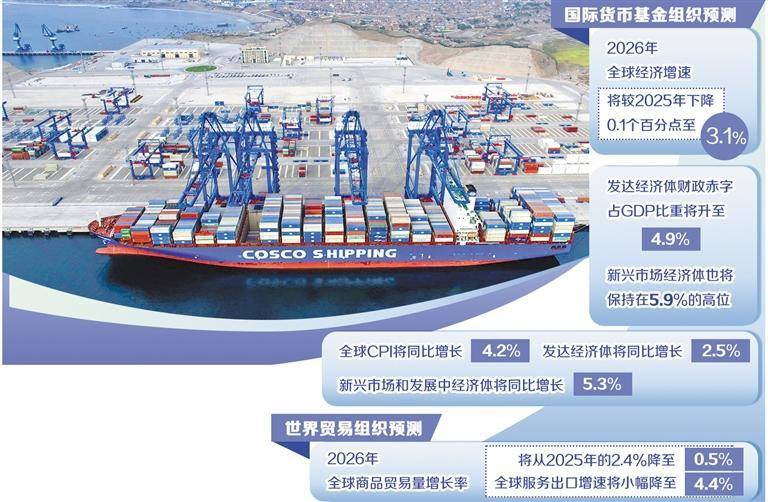
Global Economic Outlook - The global economy is at a critical crossroads, with a potential slowdown in recovery expected by 2026, characterized by weakened momentum, increased risks, and intertwined challenges [4] - The International Monetary Fund (IMF) predicts a decrease in global economic growth rate to 3.1% in 2026, down by 0.1 percentage points from 2025, with developed economies expected to grow at 1.6% and emerging markets at 4.0% [5][6] Trade and Financial Stability - Global trade faces severe challenges, with the World Trade Organization (WTO) forecasting a drop in global merchandise trade growth rate from 2.4% in 2025 to 0.5% in 2026, nearly stagnating [5][6] - The contraction in global demand and the rise of trade protectionism are significant factors contributing to the slowdown in international trade [6] Fiscal Policy Trends - Global fiscal policies are expected to continue expanding, with IMF projecting that fiscal deficits in developed economies will rise to 4.9% of GDP and 5.9% in emerging markets by 2026 [7] - Governments face challenges in fiscal consolidation due to weak economic growth and political pressures, leading to a gradual adjustment strategy [7] Monetary Policy Divergence - Central banks are entering a phase of highly differentiated and uncertain monetary policy paths, with the European Central Bank and Bank of Japan taking cautious approaches, while the Federal Reserve's policy direction remains a core source of global uncertainty [8] Financial Risks - The overall risk in international financial markets is rising, with interconnectedness increasing the likelihood of a "butterfly effect" in risk transmission [9] - The credit foundation of the US dollar and US Treasury bonds is under continuous erosion, raising concerns about global financial stability [9] Inflation Outlook - Despite a downward trend in global inflation in 2025, uncertainties regarding inflation prospects will increase in 2026, with CPI growth rates projected at 4.2% globally, 2.5% in developed economies, and 5.3% in emerging markets [9][10] - Major economies like the US face potential inflation rebound risks due to previous unilateral tariff policies and political pressures on monetary policy independence [10] China's Economic Role - In 2026, China is expected to contribute approximately 30% to global economic growth, maintaining its role as a stabilizing force in the global economy [10]