
PPI

Search documents
5月通胀数据点评:PPI同比下行压力加大
Changjiang Securities· 2025-06-09 12:44
Inflation Data Summary - In May, the Consumer Price Index (CPI) decreased by 0.1% year-on-year and 0.2% month-on-month, marking the fourth consecutive month of negative year-on-year CPI[7] - The core CPI increased by 0.6% year-on-year, reflecting a 0.1 percentage point expansion in the growth rate[10] - Food prices fell by 0.4% year-on-year, while non-food prices remained stable at 0.0%[10] PPI Trends - The Producer Price Index (PPI) decreased by 3.3% year-on-year and 0.4% month-on-month, with the year-on-year decline expanding by 0.6 percentage points[7] - The decline in production material PPI was 4%, with mining, raw materials, and processing prices dropping by 11.9%, 5.4%, and 2.8% respectively[10] - The PPI for living materials saw a smaller decline of 1.4% year-on-year, narrowing by 0.2 percentage points[10] Key Influences - Major contributors to the CPI decline included a 12.9% drop in transportation fuel prices and a significant decrease in fresh vegetable prices, which fell by 8.3% year-on-year[10] - The PPI was primarily pressured by international input factors, weak domestic demand, and excess capacity in certain industries[10] - The outlook for PPI remains cautious, with potential further pressure expected due to weakening export effects[10] Policy Implications - The report emphasizes the need for policies to boost consumer demand, as the recovery in resident consumption is crucial for CPI stabilization[10] - Strengthening social security and increasing residents' income are highlighted as key measures to enhance consumption[10] - The report warns of risks including slower-than-expected consumption recovery, escalating geopolitical conflicts, and uncertainties surrounding tariff policies[31]
假日消费带动,5月核心CPI温和回升
2 1 Shi Ji Jing Ji Bao Dao· 2025-06-09 12:43
Group 1: CPI and PPI Overview - In May, the national CPI decreased by 0.1% year-on-year and 0.2% month-on-month, while the PPI fell by 3.3% year-on-year and 0.4% month-on-month [1][2] - The core CPI, excluding food and energy, increased by 0.6% year-on-year, indicating a slight improvement in domestic economic resilience [1][4] - The decline in CPI was influenced by seasonal factors and falling oil prices, while the core CPI's increase reflects a recovery in consumer demand [2][3] Group 2: Sector-Specific Price Changes - In May, food prices decreased by 0.4%, while non-food prices remained stable; consumer goods prices fell by 0.5%, and service prices rose by 0.5% [2][4] - The industrial producer prices showed a year-on-year decline of 3.3%, with significant contributions from the petroleum and coal industries, which saw price drops of 5.6% and 3% respectively [5][6] - The prices of durable consumer goods, such as gold jewelry and home textiles, increased by 40.1% and 1.9%, respectively, indicating a shift in consumer spending patterns [3][4] Group 3: Economic Outlook and Policy Recommendations - Future policies should focus on boosting consumption through active fiscal measures to stimulate domestic demand and support price recovery [2][4] - Analysts expect a moderate recovery in prices throughout the year, driven by macroeconomic policies and improvements in supply structure [6]
5月CPI环比由正转负,PPI同比降幅扩大
Cai Jing Wang· 2025-06-09 11:30
Group 1: CPI Analysis - In May, the Consumer Price Index (CPI) decreased by 0.1% year-on-year, marking three consecutive months of decline [1] - The month-on-month CPI turned negative, dropping by 0.2%, influenced primarily by a 1.7% decrease in energy prices, which accounted for approximately 70% of the total CPI decline [3][7] - Food prices fell by 0.2%, with seasonal vegetables seeing a 5.9% price drop, while some fresh fruits and fish experienced price increases due to supply constraints [7] Group 2: PPI Analysis - The Producer Price Index (PPI) saw a year-on-year decline of 3.3%, the largest drop since August 2023, with a month-on-month decrease of 0.4% [3] - The PPI decline was attributed to international input factors and domestic energy and raw material price decreases, with coal and steel industries facing overcapacity and intense competition [5][6] - The PPI's year-on-year decline was exacerbated by a high comparison base from the previous year, leading to a 0.6 percentage point increase in the decline rate [5] Group 3: Market Insights - The overall consumer market remains weak, with durable goods facing intense competition and limited price increases, while service consumption is recovering slowly [6] - Despite the challenges, there are signs of recovery in certain sectors, with core CPI rising by 0.6% year-on-year, driven by increased demand for specific consumer goods [8] - Future CPI trends are expected to stabilize and gradually rise, supported by seasonal agricultural production and ongoing government policies aimed at boosting consumption [8][9] Group 4: Policy Recommendations - To promote reasonable price recovery, it is essential to implement comprehensive measures, including enhancing consumer policies and improving social security systems [9] - The focus should be on stimulating demand in durable goods and service sectors, while also addressing income levels through industrial upgrades and job creation [9] Group 5: Future Outlook - The PPI may experience a slow recovery, influenced by global economic uncertainties and domestic structural adjustments, with high-end manufacturing and new energy sectors driving demand [12] - The resolution of overcapacity issues will take time, and the pace of PPI recovery may be gradual, affected by various external and internal factors [12]

物价降了!衣食住行,谁涨谁跌
Jin Rong Shi Bao· 2025-06-09 11:05
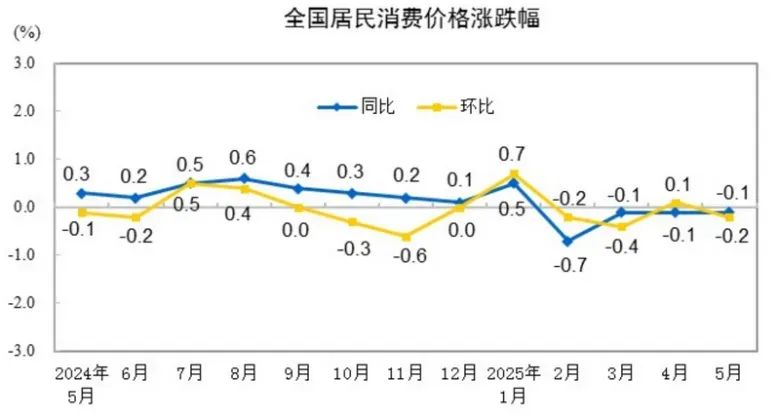
Group 1: CPI Analysis - In May, the Consumer Price Index (CPI) decreased by 0.2% month-on-month and 0.1% year-on-year, with core CPI (excluding food and energy) increasing by 0.6% year-on-year, indicating a slight acceleration from the previous month [1][2] - Energy prices significantly impacted the CPI decline, with energy prices dropping by 1.7% month-on-month, contributing approximately 0.13 percentage points to the overall CPI decrease [2] - The CPI has maintained a year-on-year decline of -0.1% for three consecutive months, reflecting weak overall price levels, while core CPI remains above 0.5%, suggesting a gradual recovery in domestic demand driven by macroeconomic policies [1][3] Group 2: PPI Analysis - The Producer Price Index (PPI) fell by 0.4% month-on-month and 3.3% year-on-year, with the year-on-year decline expanding by 0.6 percentage points compared to the previous month [1][4] - The decline in PPI is primarily attributed to international factors, such as falling crude oil prices, which have led to price decreases in related domestic industries, including a 5.6% drop in oil and gas extraction prices [4][5] - Despite the overall decline, some sectors are showing marginal improvements, with prices for consumer goods and high-end manufacturing products experiencing upward trends, indicating a potential for gradual recovery in certain industries [5][6]
通胀数据点评:核心CPI企稳的三个特征?
Shenwan Hongyuan Securities· 2025-06-09 10:13
Group 1: Inflation Data Overview - In May, the CPI decreased by 0.1% year-on-year, matching the previous value and slightly better than the expected decrease of 0.2%[1] - The PPI fell by 3.3% year-on-year, a decline from the previous value of 2.7% and worse than the expected 3.2%[1] Group 2: Core CPI Stabilization Features - Core commodity PPI rebounded by 0.3 percentage points to -1.4%, driven by improved demand and a moderation in tariff impacts[2] - The core commodity CPI increased by 0.1 percentage points to 0.2%, supported by consumption policies and rising gold prices, which boosted jewelry prices by 40.1%[3] - Service CPI rose by 0.2 percentage points to 0.5%, aided by increased holiday days in May, enhancing service demand[4] Group 3: Future Outlook - Continued policy support and recovery in domestic demand are expected to alleviate inflationary pressures, but supply-side constraints remain a concern[5] - The ongoing "trade-in" policy may provide significant support to core commodity CPI and PPI, while abundant supply of bulk commodities and food could exert downward pressure on prices[5]
5月国内核心CPI同比涨幅扩大,政策仍需加码推动物价水平合理
Bei Ke Cai Jing· 2025-06-09 10:09
6月9日,国家统计局公布数据显示,5月份,居民消费价格指数(CPI)环比下降0.2%,同比下降 0.1%,扣除食品和能源价格的核心CPI同比上涨0.6%,涨幅比上月扩大0.1个百分点。工业生产者出厂价 格指数(PPI)环比下降0.4%,降幅与上月相同,同比下降3.3%,降幅比上月扩大0.6个百分点。 整 体来看,目前国内价格数据维持在低位运行,下半年需出台更多增量政策提振内需,其中财政扩张 支持内需仍然是提振物价的关键。 此外,近期央行发布的《2024年第四季度中国货币政策执行报告》中明确提出,把促进物价合理回升作 为把握货币政 策 的重要考量,这一表述释放出清晰的政策信号,即未来一段时间,推动物价温和上涨 将成为货币政策的重要着力点。 CPI略有下降,核心CPI同比涨幅扩大 5月份CPI数据呈现"食 品 、能源弱、核心稳"的格局。从环比看,5月能源价格环比下降1.7%,影响CPI 环比下降约0.13个百分点,占CPI总降幅近七成。CPI环比由涨转降主要受能源价格下降影响。从同比 看,5月CPI同比略有下降, 降幅与上月相同 。其中,能源价格同比下降6.1%,降幅比上月扩大1.3个百 分点,影响CPI同比下降 ...
5月核心CPI同比上涨0.6% 温彬:假日因素和需求回暖是主要支撑
Sou Hu Cai Jing· 2025-06-09 10:00
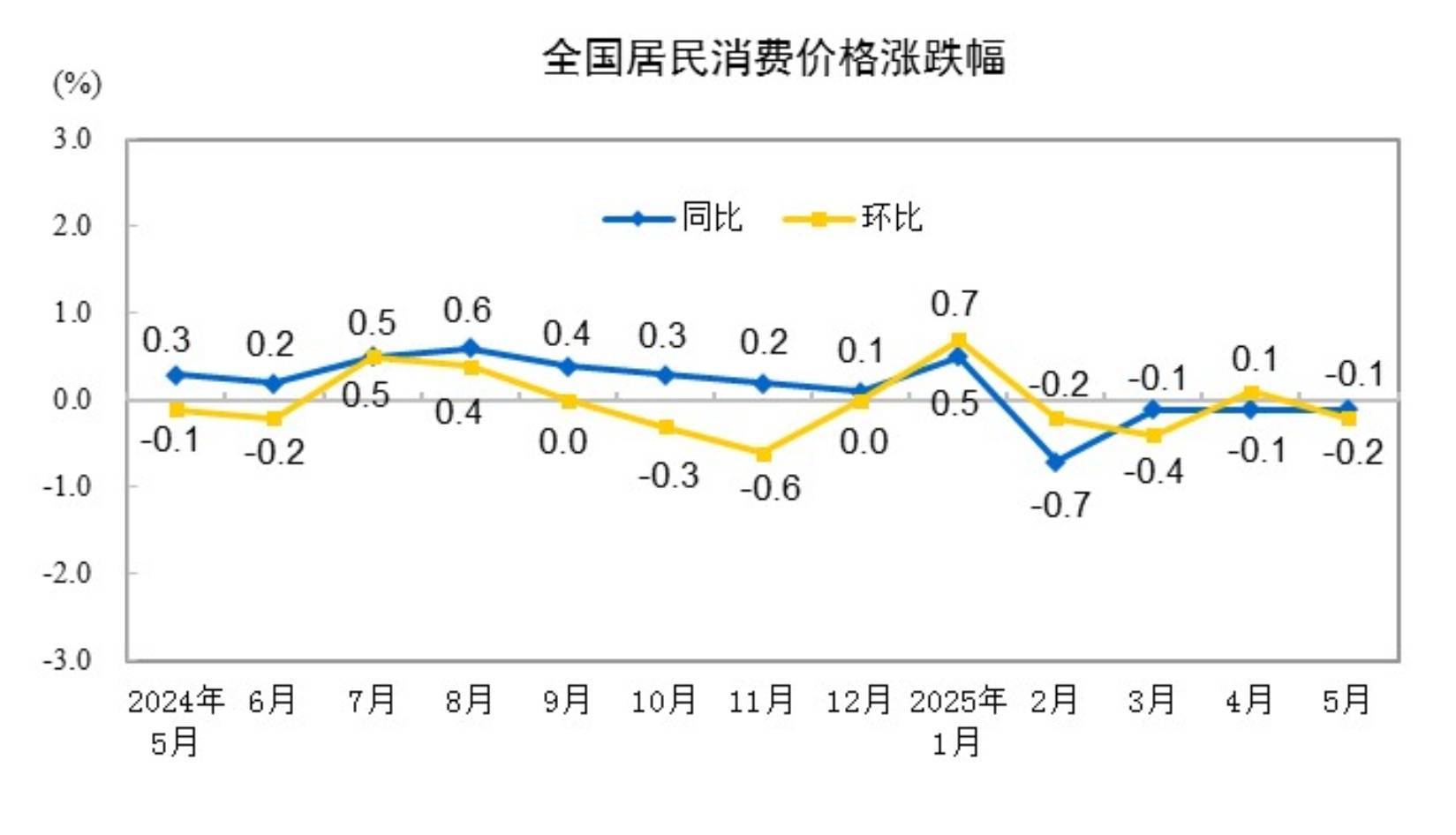
6月9日,国家统计局公布5月份居民消费价格指数(CPI)和工业生产者出厂价格指数(PPI)。 5月,CPI环比下降0.2%,同比下降0.1%,扣除食品和能源价格的核心CPI同比上涨0.6%,涨幅比上月扩大0.1个百分点。PPI环比下降0.4%,降幅与上月相 同,同比下降3.3%,降幅比上月扩大0.6个百分点。 东方金诚研究发展部总监冯琳在接受《每日经济新闻》记者(以下简称每经记者)微信采访时认为,5月CPI同比下降0.1%,略高于市场预期。主要原因是 当月工业消费品价格和服务价格同比涨幅扩大,抵消了国际原油价格下跌向国内能源价格传导以及食品价格同比降幅扩大的影响,带动整体CPI同比保持稳 定。 国家统计局城市司首席统计师董莉娟认为,影响本月PPI环比下降的主要原因,一是国际输入性因素影响国内相关行业价格下降,二是国内部分能源和原材 料价格阶段性下行。 5月份,全国居民消费价格同比下降0.1% 图片来源:国家统计局 核心CPI同比上涨0.6% 5月,CPI同比下降0.1%,降幅与上月相同。扣除食品和能源价格的核心CPI同比上涨0.6%,涨幅比上月扩大0.1个百分点。 冯琳分析,5月应季蔬菜上市量增加,加之上年同 ...
新华财经晚报:5月份CPI环比下降0.2% PPI环比下降0.4%
Xin Hua Cai Jing· 2025-06-09 09:57
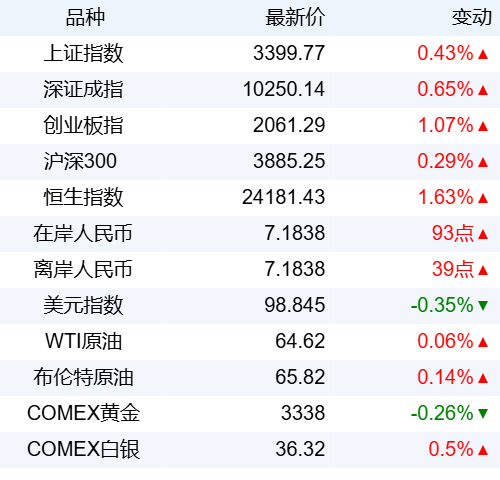
Domestic News - The Central Committee and the State Council issued opinions to enhance social security fairness, improve public service equity, expand basic livelihood services, and increase accessibility to diverse social services, including measures such as removing household registration restrictions for social insurance participation and increasing minimum wage standards [1][2] - In May, the Consumer Price Index (CPI) decreased by 0.2% month-on-month and 0.1% year-on-year, while the core CPI, excluding food and energy, rose by 0.6% year-on-year, an increase of 0.1 percentage points from the previous month. The decline in CPI was mainly influenced by a 1.7% drop in energy prices, which accounted for nearly 70% of the total decline [1][2] - The Producer Price Index (PPI) fell by 0.4% month-on-month and 3.3% year-on-year, with the year-on-year decline widening by 0.6 percentage points. The decrease was attributed to international input factors and a temporary decline in domestic energy and raw material prices [2] - In the first five months, China's total goods trade value reached 17.94 trillion yuan, a year-on-year increase of 2.5%, with exports growing by 7.2% and imports declining by 3.8%. ASEAN, the EU, and the US were the top three trading partners [2] - The Ministry of Industry and Information Technology and the Ministry of Civil Affairs announced a pilot program for smart elderly care service robots, requiring application verification in various settings, including homes and communities, with a minimum deployment of 200 units [2] Market Overview - As of June 9, the Shanghai Composite Index rose by 0.43% to 3399.77, the Shenzhen Component Index increased by 0.65% to 10250.14, and the ChiNext Index climbed by 1.07% to 2061.29. The Hang Seng Index also saw a rise of 1.63% to 24181.43 [7] - The onshore and offshore RMB both appreciated against the US dollar, with the onshore rate at 7.1838, up 93 points, and the offshore rate also at 7.1838, up 39 points [7] - The WTI crude oil price was at $64.62, up 0.06%, while Brent crude oil was at $65.82, showing no significant change [7]
国内观察:2025年5月通胀数据:价格压力持续,亟待政策破局
Donghai Securities· 2025-06-09 09:16
Inflation Data Summary - In May 2025, the CPI year-on-year was -0.1%, unchanged from the previous month, while the month-on-month change was -0.2%, down from 0.1%[3] - The PPI year-on-year decreased to -3.3% from -2.7%, with a month-on-month change of -0.4%, consistent with the previous month[3] CPI Analysis - The CPI month-on-month decline of -0.2% aligns with the seasonal average over the past four years[3] - Food prices showed resilience with a month-on-month change of -0.2%, better than the four-year average of -0.9%, while non-food prices also fell by -0.2%, below the average of 0.0%[3] - Pork prices have remained stable, contributing less to CPI changes, with fresh vegetables and fruits showing stronger seasonal performance[3] PPI Insights - The PPI has broken below the previous range of -2.0% to -3.0%, indicating a significant downward trend[3] - Production materials have seen a month-on-month decline for five consecutive months, with a year-on-year drop of -4.0%[3] - Energy prices fell by 1.7% month-on-month, contributing approximately 0.13 percentage points to the CPI decline, accounting for nearly 70% of the total decrease[3] Economic Outlook - Actual GDP is expected to remain resilient in Q2, but nominal GDP may face pressure, impacting equity market potential[3] - The report highlights the need for increased policy measures to stimulate demand and address supply-side competition issues[3] Risk Factors - Potential risks include slower-than-expected domestic policy implementation, unexpected declines in real estate investment, and inflationary pressures from the U.S.[3]
5月通胀点评:内需依然疲弱,但部分产品价格有向好趋势
Bank of China Securities· 2025-06-09 09:16
Inflation Overview - May CPI year-on-year growth slightly exceeded consensus expectations, while PPI year-on-year growth was slightly below expectations[1] - May CPI decreased by 0.1% year-on-year, primarily driven by a 6.1% year-on-year decline in energy prices, which contributed approximately 0.47 percentage points to the CPI decline[2] - May PPI decreased by 3.3% year-on-year, with production materials down 4.0% and living materials down 1.4%[20] Price Trends - Energy prices fell 1.7% month-on-month, accounting for nearly 70% of the CPI's month-on-month decline[6] - Food prices decreased by 0.2% month-on-month, which was less than the seasonal decline of 1.1 percentage points, impacting CPI by approximately 0.04 percentage points[5] - Core CPI rose by 0.6% year-on-year, with service prices increasing by 0.5%[4] Sector Performance - High-end equipment manufacturing prices showed an upward trend, contrasting with the overall weakness in energy and raw material prices[1] - The decline in CPI reflects a mixed performance across sectors, with food prices showing a potential upward trend and strong service consumption demand[7] - International factors continue to influence CPI growth, highlighting the need to monitor durable goods price changes[7] Risks and Outlook - Risks include the potential for global inflation to rise again, a rapid slowdown in the European and American economies, and increasing complexity in international situations[24]