
端侧AI

Search documents
苹果“AI雄心壮志”再遭重锤! AI大模型掌舵者被Meta斥巨资挖走
智通财经网· 2025-07-08 00:08
Core Insights - Meta Platforms has successfully recruited Ruoming Pang, Apple's top AI model developer, which poses a significant setback for Apple in its AI ambitions and the development of its Siri AI voice assistant [1][2][7] - Meta's aggressive hiring strategy includes offering multi-million dollar compensation packages to attract top AI talent from competitors, including Apple and OpenAI [3][4] - The departure of key personnel from Apple's AI team, particularly in light of internal management changes and the exploration of third-party AI solutions, raises concerns about the future of Apple's AI initiatives [7][9] Group 1: Meta's AI Strategy - Meta has prioritized AI technology development, with CEO Mark Zuckerberg personally involved in recruiting top talent and restructuring the AI team towards "superintelligence" [4][5] - The company plans to invest hundreds of billions in AI-related infrastructure, including data centers and AI chip acquisitions, to enhance its competitive edge [4][5] - Meta's acquisition of a significant stake in Scale AI is expected to bolster its capabilities in data annotation and model evaluation, crucial for developing "killer" AI applications [5][6] Group 2: Apple's AI Challenges - Ruoming Pang's exit is part of a broader trend of talent loss within Apple's AI division, which has seen several key figures leave recently [1][9] - Apple's AI strategy is currently overseen by Craig Federighi and Mike Rockwell, with ongoing challenges in delivering new AI features and functionalities [10] - Internal morale within Apple's AI team has reportedly declined due to management changes and the potential shift towards third-party AI solutions for Siri [7][9]


昨晚都是好消息……
是说芯语· 2025-07-07 15:17
Core Viewpoint - The article highlights significant positive developments in the semiconductor sector, particularly focusing on companies like 瑞芯微 (Rockchip), 工业富联 (Industrial Fulian), and 长鑫存储 (Changxin Storage), indicating strong growth potential and upcoming IPOs that could enhance market sentiment and investment opportunities in the tech industry [2][16]. Group 1: Company Performance - 瑞芯微 (Rockchip) expects a net profit increase of 185-195%, with a median net profit of 530 million, reflecting a market capitalization of 641 billion [2][4]. - 乐鑫科技 (Espressif) anticipates a net profit growth of 65.0%-78.0%, with a projected net profit of 260 million, corresponding to a market cap of 214 billion [3][4]. - 工业富联 (Industrial Fulian) forecasts a net profit increase of 36.84-39.12%, estimating around 12 billion in net profit, driven by a 60% year-on-year growth in AI server demand [8][9]. Group 2: Market Trends and Expectations - The semiconductor sector is experiencing a robust growth phase, particularly in the端侧 SoC (System on Chip) market, driven by the increasing demand for AI applications [6][16]. - The overall market sentiment is expected to improve, with a potential upward adjustment in valuations across the semiconductor supply chain due to strong performance indicators from key players [10][11][16]. Group 3: IPO Developments - 长鑫存储 (Changxin Storage) has initiated IPO counseling, with expectations to complete the IPO within a year, potentially raising around 26 billion, which could significantly impact the semiconductor equipment and materials sectors [12][14]. - The anticipated production of HBM (High Bandwidth Memory) by mid-next year is expected to create substantial market excitement and growth opportunities [14][15].





新股前瞻|围绕“1+2+X”战略书写增长故事,冲刺港交所上市能助龙旗科技(603341.SH)进化吗?
智通财经网· 2025-07-06 06:28
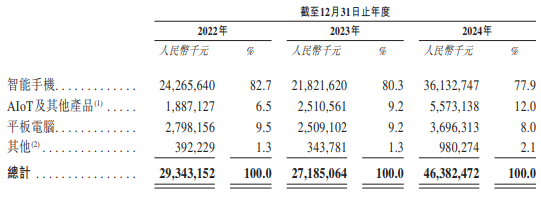
Core Viewpoint - Longqi Technology, a leading ODM manufacturer in smart hardware, has submitted its listing application to the Hong Kong Stock Exchange after just over a year on the Shanghai Stock Exchange, aiming to leverage its strong market position and diverse product offerings in the consumer electronics sector [1][2]. Group 1: Business Model and Market Position - Longqi Technology provides comprehensive ODM services, integrating hardware design, software development, testing, and supply chain management, with a diverse product range including smartphones, AI PCs, automotive electronics, tablets, smartwatches, and smart glasses [1]. - The company is the second-largest consumer electronics ODM globally and ranks first in smartphone ODM shipments as of 2024 [1]. - Major clients include leading brands such as Xiaomi, Samsung, Lenovo, Honor, OPPO, and vivo [1]. Group 2: Financial Performance - Revenue figures for Longqi Technology from 2022 to 2024 are as follows: 29.343 billion RMB, 27.185 billion RMB, and 46.382 billion RMB, while net profits were 562 million RMB, 603 million RMB, and 493 million RMB respectively [1][4]. - The company's gross profit increased over the same period, but the gross margin showed a decline, with figures of 8.1%, 9.5%, and 5.8% for the respective years [4][5]. - In Q1 2025, the company reported a revenue of 9.378 billion RMB, a year-on-year decrease of 9.27%, but net profit increased by 20.33% to 154 million RMB, indicating a recovery in profitability [4]. Group 3: Strategic Growth Initiatives - Longqi Technology has adopted a "1+2+X" strategy to align with new market demands and technological innovations, focusing on smartphones as the core, with personal computing and automotive electronics as key growth areas, and expanding into emerging consumer electronics [2]. - The AIoT and other product segments have shown continuous revenue growth, with figures of 1.887 billion RMB, 2.511 billion RMB, and 5.573 billion RMB from 2022 to 2024, increasing their revenue share from 6.5% to 12% [3][4]. Group 4: Industry Trends and Future Outlook - The rise of AI technology is expected to create significant growth opportunities for Longqi Technology, particularly in the smartphone and PC markets, where AI penetration rates are projected to reach 18% and 32% respectively in 2024 [6]. - Longqi Technology has been proactive in developing AIoT products, launching over 10 million smartwatches in 2023 and achieving significant sales in smart glasses and VR products since 2015 [6][7]. - The company is well-positioned to benefit from the anticipated growth in AI hardware products, which could enhance its performance and appeal to growth-oriented investors in the Hong Kong capital market [8].
电子行业2025年度中期策略:端侧AI继续升级,ASIC需求景气高企
Xiangcai Securities· 2025-07-04 13:52
Group 1 - The report highlights that large model technology continues to iterate, leading to an innovation wave in consumer electronics driven by AI integration [5][21][30] - Traditional consumer electronics have entered a phase of slow growth, with smartphones and PCs stabilizing in sales, while TWS devices are also experiencing low growth [15][19] - The development of model compression technology lays the foundation for deploying large models on edge devices, which offer low cost, high performance, and privacy advantages [6][30] Group 2 - The penetration rate of AI terminals is expected to rise rapidly as major companies like Google and Huawei launch AI-enabled devices, enhancing user experience [6][34] - The report predicts a compound annual growth rate of approximately 115% for high-end AI PCs and 32% for AI smartphones from 2023 to 2027 [6][52] - The introduction of system-level AI capabilities in smartphones and PCs is anticipated to set new standards in the industry, prompting other manufacturers to follow suit [36][40] Group 3 - The demand for ASICs is strong, driven by their cost-effectiveness compared to GPUs, leading many tech companies to develop their own ASICs [7][75] - The global market for ASICs is projected to grow from $6.6 billion in 2023 to $55 billion by 2028, with a compound annual growth rate of 53% [7][76] - OpenAI's recent decision to rent Google TPU for its products marks a significant milestone for ASICs, indicating their acceptance by leading AI firms [7][76] Group 4 - The report suggests focusing on companies within the edge AI and ASIC supply chains, maintaining an "overweight" rating for the electronics sector [8][9] - Specific companies to watch in the edge AI sector include Rockchip, Hengxuan Technology, and Espressif Technology, while those in the ASIC space include Chipone and Aojie Technology [8][9]
从三大“孤岛”到三大“协同” 荣耀打造端侧AI智能终端
Xin Hua Cai Jing· 2025-07-03 08:00
全栈式个人知识库、多智能体协同、全品牌互联互通三大AI闭环核心技术都在荣耀Magic V5落地应 用。在该款机型上,用户可以实现"一语PPT、一语编程、一语搜索、一语传送、一语打车、一语识 物、一语看屏、一语记忆"8大一语AI应用,实现从被动响应到主动服务的转变,打破应用与场景的限 制,为用户开启高效便捷的智慧生活办公新体验。 新推出的荣耀Magic V5厚度8.8毫米、重量217克,6100毫安的青海湖刀片电池能量密度达901瓦时/ 升。 "荣耀Magic V5可释放个人电脑PC级生产力。"李健说,人工智能的下一个竞争焦点,不再只是发生在 算力中心、数据中心,以及某个大模型,而是发生在用户的口袋、桌面与生活场景中,进入可以为用户 带来价值、解决问题的层面。让AI走进生活,才能真正释放AI的潜力。 荣耀终端股份有限公司2日晚在深圳发布了轻薄折叠旗舰新机型荣耀Magic V5,这是荣耀转型AI终端生 态公司的首款旗舰产品。该公司CEO李健在接受新华财经采访时说,荣耀在人工智能时代将试图打通设 备孤岛、数据孤岛、服务孤岛,通过端侧AI模型实现端云协同、软硬协同、算网协同。 (文章来源:新华财经) "荣耀Magic ...
甬矽电子(688362):头部客户赋能拓宽成长空间 募资提升多维异构封装产能
Xin Lang Cai Jing· 2025-07-02 06:40
Core Viewpoint - Yongxi Electronics focuses on mid-to-high-end advanced packaging and testing business, enhancing its one-stop delivery capability of "Bumping+CP+FC+FT" and successfully breaking into major clients like MediaTek and Realtek, with fundraising aimed at increasing heterogeneous packaging capacity [1][5] Group 1: Financial Performance and Projections - The company plans to issue convertible bonds to raise up to 1.165 billion yuan, with 900 million yuan allocated for R&D and industrialization of advanced heterogeneous packaging technology [1] - The company expects to achieve revenue of 1.239 billion yuan and a net profit of 396 million yuan after the project reaches full production [1] - For the first half of 2025, the company anticipates revenue between 1.9 billion and 2.1 billion yuan, representing a year-on-year growth of 16.60% to 28.88% [3] - In Q2 2025, the expected revenue is between 955 million and 1.155 billion yuan, with a year-on-year growth of 0.96% to 22.11% [3] Group 2: Client Relationships and Market Position - The company has established a core customer base primarily consisting of well-known chip design companies, including partnerships with companies like Hengxuan Technology, Amlogic, and MediaTek [2] - Realtek and MediaTek are projected to be among the top five customers in 2024, with sales amounts of 231 million yuan and 225 million yuan, respectively [2] Group 3: Product Offerings and Technological Advancements - The company's packaging products include five major categories: FC products, SiP, WLP, QFN/DFN, and MEMS, with over 2,100 product varieties [2] - The company has achieved mass production of advanced system-level packaging products that can simultaneously package multiple chips and components, showcasing significant technological capabilities [4] - The company has reached industry-leading specifications in advanced wafer-level packaging, with minimum pitch and diameter of micro bumps at 45μm and 30μm, respectively [4]

公募“中考”揭榜|汇添富旗下产品居首!前十榜单中重仓港股医药基金占七席
Sou Hu Cai Jing· 2025-07-01 13:47
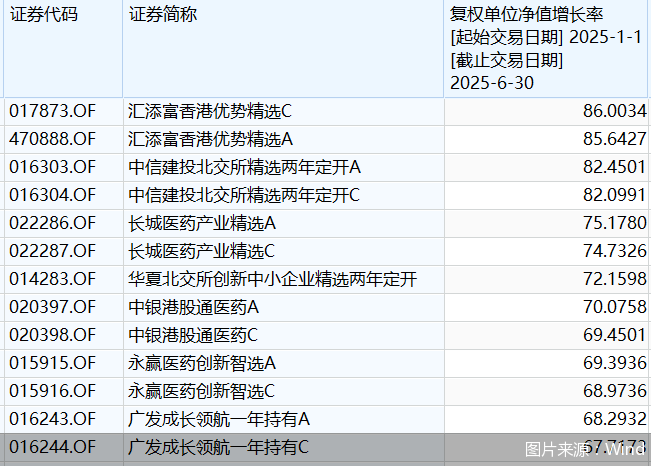
Core Viewpoint - The performance of funds in the first half of the year has been significantly influenced by the strong rally in Hong Kong's innovative pharmaceutical sector, with the top-performing fund, Huatai-PineBridge Hong Kong Advantage Selection, achieving over 85% returns [1][3]. Fund Performance - As of June 30, 2023, the top-performing fund, Huatai-PineBridge Hong Kong Advantage Selection, recorded a return of 86.00% [2][3]. - Other notable funds include CITIC Construction Investment North Exchange Selection and Great Wall Pharmaceutical Industry Selection, with returns of 82.45% and 75.18% respectively [6]. - The overall performance of the Hong Kong stock market, particularly in the innovative pharmaceutical sector, has been robust, with the Hang Seng Index and Hang Seng Technology Index rising by 20% and 18.68% respectively [3]. Market Trends - The innovative pharmaceutical sector in Hong Kong has been a key driver of fund performance, with many funds heavily invested in this area [4][6]. - The Hang Seng Hong Kong Innovative Pharmaceutical Selection Index has seen a year-to-date increase of 58.95%, indicating strong market interest and growth potential [6][7]. - Analysts predict that the innovative pharmaceutical sector will continue to benefit from policy support and market dynamics, suggesting a favorable outlook for the second half of the year [7][8]. Investment Insights - Fund managers believe that the pharmaceutical industry will experience a recovery in growth due to normalized regulations and increasing domestic medical demand [3][4]. - The current market environment is characterized by a combination of policy benefits, global liquidity, and positive market sentiment, which are expected to sustain the growth of innovative pharmaceutical companies [7][8]. - The disparity in fund performance highlights the importance of strategic investment choices, with some funds underperforming despite being in popular sectors [9].
电子行业周报:小米发布首款AI眼镜,端侧AI创新热潮持续-20250630
Donghai Securities· 2025-06-30 11:08
Investment Rating - The report suggests a standard investment rating for the electronic industry, indicating a moderate recovery in demand and price stabilization [7]. Core Insights - The electronic industry is experiencing a mild recovery, with a focus on AI-driven innovations and wearable technology, particularly in the context of Xiaomi's recent product launches [6][12]. - Xiaomi's AI glasses have competitive advantages over Meta's offerings, including lighter weight and longer battery life, which may strengthen its market position [6][12]. - The report highlights four main investment themes: AIOT, AI-driven innovations, materials for devices, and consumer electronics [6]. Summary by Sections Industry News - Xiaomi launched its first AI glasses, which sold out within 30 minutes, positioning them against Meta's Ray-Ban [12]. - The Xiaomi YU7 SUV was introduced, featuring advanced driving assistance systems and a starting price of 253,500 RMB [12]. - The report notes the global smart glasses market is expected to reach 12.8 million units in 2025, with a 26% year-on-year growth [6]. Market Performance - The report indicates that the electronic industry outperformed the broader market, with the Shenwan Electronics Index rising by 4.61% compared to a 1.95% increase in the CSI 300 Index [19][21]. - Various sub-sectors within the electronics industry showed positive performance, with semiconductor and electronic components leading the gains [21]. Investment Recommendations - The report recommends focusing on companies benefiting from strong domestic and international demand in the AIOT sector, such as Lexin Technology and Rockchip [8]. - It also suggests investing in AI innovation-driven sectors, particularly in computing chips and optical devices [8]. - The report emphasizes the importance of domestic supply chain replacements in semiconductor equipment and materials [8].
电子行业点评:谷歌端侧大模型迭代,泰凌微借势高增乘红利
Minsheng Securities· 2025-06-30 08:16
Investment Rating - The investment rating for the company TaiLing Microelectronics is "Recommended" [3]. Core Viewpoints - The release of Google's new multimodal large model Gemma 3n has significantly boosted the demand for edge AI chips, with TaiLing Microelectronics positioned to benefit from this trend [1][2]. - TaiLing Microelectronics has reported a substantial revenue increase of 37% year-on-year for the first half of 2025, with expected revenue of 503 million yuan and a net profit increase of 267% [2]. - The company is experiencing growth in new product lines and customer expansion, with significant sales in edge AI chips and a strong presence in the overseas smart home market [3]. Summary by Sections Industry Investment Rating - The report maintains a "Recommended" rating for TaiLing Microelectronics, indicating a positive outlook for the company's stock performance relative to the market [3]. Performance and Financials - TaiLing Microelectronics anticipates a revenue of 503 million yuan for 25H1, reflecting a year-on-year growth of 37%, and a net profit of 99 million yuan, marking a 267% increase [2]. - The company's Q2 revenue is projected to reach 273 million yuan, with a year-on-year growth of 34% and a quarter-on-quarter growth of 19% [2]. - The gross margin for 25H1 is expected to rise to 50.7%, an increase of 4.52 percentage points year-on-year, while the net margin is projected to reach 19.7% [2]. Product Development and Market Position - TaiLing Microelectronics is launching new edge AI chips that are entering mass production, with sales in Q2 reaching millions [3]. - The company has successfully expanded its customer base, with significant sales growth in audio products and a rising share of overseas revenue [3]. - The report emphasizes the strong certainty of the edge AI trend, positioning TaiLing Microelectronics to capitalize on this growth through its low-power wireless IoT chip development [3].

华安研究:华安研究2025年7月金股组合
Huaan Securities· 2025-06-29 14:36
Group 1: Financial Performance - 阳光诺和预计2025年营业收入将较2024年增长不低于10%[1] - 九号公司2025年营业收入预计为2509百万,较2024年增长40%[1] - 牧原股份2025年预计销量高速增长,2025年净利润增速为26%[1] Group 2: Market Trends and Risks - STC007新药研发进展领先,市场空间较大,潜在BD预期将增厚利润[1] - 美团外卖在补贴力度升级下可能受到影响,但长期看具备运营效率优势[1] - 华友钴业受益于刚果金延长出口禁令,钴价有望上涨[1] Group 3: Strategic Developments - 精智达预计2025年半导体设备收入将达到5亿,是2024年的两倍[1] - 阳光电源在全球储能市场具备竞争优势,预计2025年净利润具备高增潜力[1] - 广和通布局具身智能机器人,供货全球头部机器人公司[1]



