云计算

Search documents
通信行业周报:旭创发布业绩快报,关注3月GTC大会
SINOLINK SECURITIES· 2026-03-01 10:45
Investment Rating - The report indicates a positive outlook for the industry, suggesting a "Buy" rating based on expected growth exceeding the market by over 15% in the next 3-6 months [63]. Core Insights - NVIDIA reported a strong Q4 2025 performance with earnings per share of $1.62, surpassing analyst expectations by 5.81%, and revenue of $68.127 billion, exceeding forecasts by 3.22% [2]. - AMD has made significant strides in AI chip competition, signing a multi-year agreement with Meta to provide up to 6GW of AI computing power, potentially worth over $60 billion [2][60]. - OpenRouter data shows that during the week of February 9-15, 2026, the token usage of Chinese models surpassed that of U.S. models for the first time, indicating a growing demand for domestic AI capabilities [3][52]. Summary by Sections Company Performance - NVIDIA's Q4 2025 revenue was $68.127 billion, a year-on-year increase of 73.21%, with a guidance of $78 billion for Q1 2026, exceeding analyst expectations [2]. - Xuchuang reported a full-year revenue of 38.24 billion yuan for 2025, with a Q4 revenue of 13.235 billion yuan, reflecting a robust year-on-year growth of 102% [2][10]. Market Trends - The server index increased by 3.65% this week, driven by AMD's agreement with Meta, highlighting the rising global demand for AI computing power [3][7]. - The optical module index rose by 4.84% this week, with NVIDIA's performance and guidance contributing to positive market sentiment despite concerns over competition [3][10]. Industry Developments - The IDC index increased by 2.41% this week, with significant growth in AI model usage in China, indicating a shift in the global AI landscape [3][13]. - The telecommunications sector saw a cumulative revenue of 1.75 trillion yuan in 2025, with a year-on-year growth of 0.7%, reflecting steady demand in the industry [4][16]. Future Outlook - The upcoming NVIDIA GTC conference is expected to unveil the next-generation Feynman chip, which will utilize a groundbreaking 1.6nm process technology, potentially catalyzing advancements in optical communication [2][10]. - The report suggests that 2026 may be a pivotal year for domestic AI capabilities, with local chip manufacturers aiming to significantly increase production using advanced technology [3][50].




Paylocity Holding Corporation (PCTY): A Bull Case Theory
Yahoo Finance· 2026-02-28 19:50
Core Thesis - Paylocity Holding Corporation (PCTY) is viewed positively due to its strong financial profile, strategic expansions, and potential as a takeout target, making it an attractive investment opportunity [1][6]. Financial Profile - PCTY has a market capitalization under $10 billion and a strong recurring revenue base, along with a net cash position, indicating financial stability and growth potential [2][6]. - As of February 23rd, PCTY's share price was $101.95, with trailing and forward P/E ratios of 38.56 and 25.51 respectively, suggesting a favorable valuation [1]. Strategic Expansion - The company has expanded its offerings beyond traditional payroll and human capital management by acquiring Airbase, a spend management software provider, and moving into information technology management [4]. - This strategic move positions PCTY to provide a unified platform for small and mid-sized businesses across various functions, enhancing its service offerings [4]. Growth Drivers - PCTY effectively leverages partnerships with third-party providers, generating referrals that accounted for approximately 25% of new business sales in the most recent fiscal year, which enhances client retention and growth [5]. - The combination of a strong recurring revenue base, net cash balance, and marketplace-driven growth underscores PCTY's operational resilience and financial upside [6]. Historical Context - Previous analyses highlighted PCTY's long-term performance and revenue growth, although the stock price has depreciated by 44.58% since earlier coverage [7].

智研咨询发布:集成电路封测分析报告(附市场现状、运行态势、竞争格局及前景分析)
Sou Hu Cai Jing· 2026-02-28 04:11
Core Insights - The integrated circuit packaging and testing industry is a critical process in the semiconductor supply chain, ensuring chip usability and quality certainty, and is supported by various national policies in China [4][6][9] - The global packaging and testing market is experiencing fluctuating expansion, with a significant shift of capacity towards emerging Asian markets, particularly Taiwan, mainland China, and the USA [4][7][11] - The advanced packaging sector is identified as a key growth driver in the post-Moore's Law era, with the flip chip technology being the largest segment and multi-chip integration packaging growing the fastest [4][8][10] Industry Overview - Integrated circuit packaging and testing connects wafer manufacturing with end applications, providing essential functions such as physical protection and thermal management [6] - The industry has received continuous support from national policies aimed at promoting technological breakthroughs and market expansion [6][9] Global Market Trends - The global integrated circuit packaging and testing market is projected to reach $117.85 billion by 2026, with advanced packaging expected to grow at a compound annual growth rate (CAGR) of 13.2% from 2024 to 2026, significantly outpacing traditional packaging's 3.9% CAGR [7][8] - The market is currently in a downturn due to weak demand in consumer electronics and inventory adjustments, but recovery is anticipated in 2024 as demand stabilizes [7] Advanced Packaging Market - The advanced packaging market is driven by the demand for smaller, integrated, and high-performance mobile devices, with flip chip technology leading the market [8] - The global market for multi-chip integration packaging is expected to grow from $2.83 billion in 2020 to $14.44 billion by 2026, reflecting a CAGR of 32.04% [8][10] China Market Dynamics - The mainland China integrated circuit packaging and testing market is expected to grow from ¥250.95 billion in 2020 to ¥353.39 billion by 2025, with a CAGR of 7.09% [9][10] - Advanced packaging is projected to account for approximately 20.86% of the market by 2025, with significant growth potential driven by domestic demand and technological advancements [9][10] Competitive Landscape - The global packaging and testing industry is dominated by a few key players, with the top three companies holding about 50% of the market share [11] - Mainland China and Taiwan are positioned as leaders in the market, with several companies from these regions ranked among the top ten globally [11] Future Development Trends - The Chinese integrated circuit packaging and testing industry is expected to evolve towards high-end, collaborative, and differentiated development, focusing on advanced packaging technology and enhancing the domestic supply chain [12] - The industry will increasingly align with high-end application demands, particularly in artificial intelligence and data centers, leading to a more concentrated regional development pattern [12]

华丰科技发布2025年业绩快报:实现归母净利润3.6亿元 同比扭亏为盈
Zheng Quan Ri Bao Wang· 2026-02-28 03:24
Core Viewpoint - Sichuan Huafeng Technology Co., Ltd. reported a significant increase in revenue and profit for the year 2025, indicating a strong performance driven by advancements in technology and market demand [1][2]. Company Performance - In 2025, the company achieved total operating revenue of approximately 2.495 billion yuan, representing a year-on-year growth of 128.47% [1]. - The net profit attributable to the parent company was around 360 million yuan, with a net profit excluding non-recurring gains and losses of approximately 323 million yuan, marking a turnaround from losses to profits for both metrics [1]. - The company has established itself as a core enterprise in the research and production of electrical connectors, focusing on defense, communications, and industrial connection products [1]. Market Dynamics - The company capitalized on the industrial transformation, particularly in the server field with breakthroughs in high-speed line modules, leading to an expansion in revenue [2]. - There is a growing demand for communication-related connection products driven by advancements in artificial intelligence, cloud computing, and big data technologies, which has further boosted the company's revenue in this segment [2]. - The global connector market is experiencing steady growth, with China's connector market becoming the largest in the world, benefiting from expanding demand in automotive, computing, and consumer electronics sectors [2]. Industry Trends - The connector industry is currently in a phase of technological iteration and market expansion, characterized by accelerated domestic high-end replacements and explosive demand in emerging scenarios [3]. - High reliability and high-speed connectors are increasingly in demand in defense, communications, and new energy sectors, with local companies like Huafeng Technology leveraging their technological advantages to break overseas monopolies [3].
未知机构:上午盘面结构综述一盘面最强主线国产链有色二连板结构梳理-20260228
未知机构· 2026-02-28 02:40
Summary of Conference Call Notes Industry Overview - The strongest market themes identified are **domestic supply chains** and **non-ferrous metals** [1] Key Market Structures - **Continuous Board Structures**: - **Power Generation and Fuel Cells**: - Longyuan Donggu, Shunhua Power, Beijing Keri, Huayin Power (2 boards) - Yunnan Energy Holdings (7 boards), Gan Energy (2 boards) [1] - **Computing Power**: - Yunnan Energy Holdings (7 boards) [1] - **Non-ferrous Metals**: - Zhangyuan Tungsten (3 boards) [1] Thematic Sector Analysis 1. **Domestic Computing Power**: - Key players include: - TaiJia Co., Huasen Technology, TuoWei Information, Zhongcheng Technology, Shengke Communication, High-tech Development [1] 2. **Cloud Computing**: - Notable companies: - Yunnan Energy Holdings, Capital Online, Hangang Co., Shunwang Technology, Qingyun Technology, Yunsai Zhili, Chengdi Xiangjiang, Litong Electronics, Wangsu Technology [1] 3. **Aerospace**: - Key companies: - Mingzhi Technology, Feiwo Technology, Guanglian Aviation, Hailanxin, Electric Science and Technology Blue Sky [1] - **Space Photovoltaics**: - Key players include: - Aggregated Materials, Junda Co., Shuangliang Energy Saving, Yijing Photovoltaics [1] 4. **Electric Power**: - Key companies: - Yunnan Energy Holdings, Gan Energy, Huayin Power, Jinkai New Energy, Jiawei New Energy, Fuling Power [1] 5. **AI Programming**: - Companies involved in this sector were mentioned but not specified in detail [1] Additional Insights - The conference call highlighted a strong focus on domestic supply chains and the non-ferrous metals sector, indicating potential investment opportunities in these areas [1] - The continuous board structures suggest a robust market interest in power generation and computing technologies, which may present further investment avenues [1]


宁波江丰电子材料股份有限公司 2025年度业绩快报
Xin Lang Cai Jing· 2026-02-27 23:26
Core Viewpoint - The company reported significant growth in its financial performance for the year 2025, driven by increased demand in various sectors such as artificial intelligence, 5G communication, and cloud computing, alongside successful expansion in semiconductor precision components [1][2]. Financial Performance - The company achieved an operating revenue of 460,538.32 million yuan, representing a year-on-year increase of 27.75% [1]. - Operating profit reached 54,113.00 million yuan, up 41.13% compared to the previous year [1]. - Total profit amounted to 53,776.56 million yuan, reflecting a growth of 40.87% year-on-year [1]. - The net profit attributable to shareholders was 48,127.62 million yuan, marking a 20.15% increase from the prior year [1]. - Basic earnings per share were reported at 1.81 yuan, a rise of 19.87% year-on-year [1]. - The weighted average return on equity was 10.18%, an increase of 0.94 percentage points compared to the previous year [1]. Financial Condition - As of the end of the reporting period, total assets were 1,056,870.31 million yuan, a growth of 21.63% from the beginning of the period [3]. - The company's equity attributable to shareholders was 494,540.38 million yuan, which increased by 9.85% [3]. - The net asset value per share was 18.64 yuan, reflecting a growth of 9.84% [3]. Reasons for Performance Changes - The growth in revenue was attributed to the rising demand in downstream sectors and the successful production ramp-up of semiconductor precision components [2]. - The company has increased its R&D investment and improved manufacturing processes, which contributed to enhanced product quality and market share [2]. - Non-operating income amounted to 12,647.45 million yuan, influenced by fair value changes of strategic investments and government subsidies [2]. Performance Forecast Consistency - The reported performance aligns with the company's previous earnings forecast disclosed on January 30, 2026, indicating no significant discrepancies [4].

宁波江丰电子材料股份有限公司2025年度业绩快报
Shang Hai Zheng Quan Bao· 2026-02-27 21:16
Financial Performance - In 2025, the company achieved operating revenue of 460,538.32 million yuan, a year-on-year increase of 27.75% [4] - Operating profit reached 54,113.00 million yuan, up 41.13% compared to the previous year [4] - Total profit amounted to 53,776.56 million yuan, reflecting a growth of 40.87% year-on-year [4] - Net profit attributable to shareholders was 48,127.62 million yuan, representing a 20.15% increase from the previous year [4] - Basic earnings per share were 1.81 yuan, an increase of 19.87% year-on-year [4] - The weighted average return on equity was 10.18%, up by 0.94 percentage points from the previous year [4] Business Drivers - The growth in revenue was driven by increased demand in sectors such as artificial intelligence, 5G communication, cloud computing, robotics, and transportation, leading to higher global wafer and chip production [5] - The company has expanded its semiconductor precision components product line and benefited from the acceleration of supply chain localization [5] - Continuous investment in research and development has improved manufacturing processes and product quality, enhancing global market share [5] Financial Position - As of the end of the reporting period, total assets were 1,056,870.31 million yuan, a 21.63% increase from the beginning of the period [7] - Shareholder equity attributable to the company was 494,540.38 million yuan, up 9.85% from the start of the period [7] - The net asset value per share was 18.64 yuan, reflecting a 9.84% increase [7] Non-Recurring Gains - The company reported non-recurring gains of 12,647.45 million yuan, primarily from fair value changes of strategic investments and government subsidies [5] Shareholder Meeting - The company held its first extraordinary general meeting of 2026 on February 27, 2026, with 663 shareholders present, representing 42.24% of the voting shares [18] - Key resolutions included the approval of a proposal to jointly acquire control of Beijing Kaide Quartz Co., Ltd. and the expected daily related transactions for 2026 [20][21] - The meeting also approved amendments to the company's articles of association and various management systems [23][24][25][27][28]
优刻得(688158.SH)2025年度归母净亏损7668.32万元
智通财经网· 2026-02-27 16:24
Core Viewpoint - The company reported a revenue of 1.7 billion yuan for the fiscal year 2025, marking a year-on-year increase of 13.11% and a significant reduction in net loss to 76.68 million yuan, a decrease in loss of 68.19% compared to the previous year [1] Group 1 - The company's operating revenue increased by 13.11% year-on-year [1] - The gross profit margin improved from 18.86% in the previous year to 25.83% [1] - Investment income from associated enterprises saw a significant increase [1]

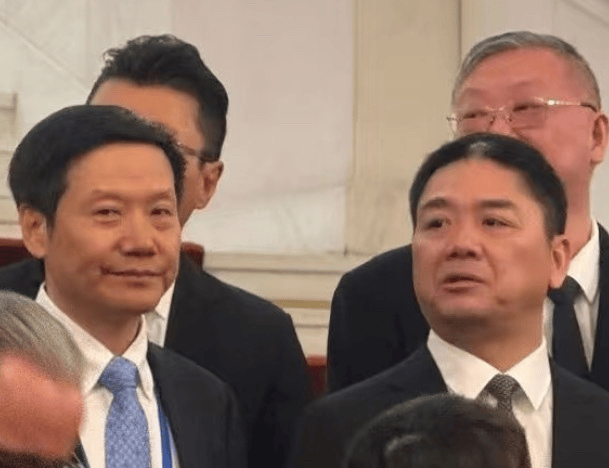
刘强东雷军同框C位!中德交流排面拉满,宇树王兴兴携机器人出圈
Sou Hu Cai Jing· 2026-02-27 15:35
Group 1 - Liu Qiangdong and Lei Jun were seen together at the Sino-German Economic Advisory Committee meeting, highlighting their prominent positions alongside other industry leaders [2][5] - The German delegation's visit included a tour of Yushutech, where they showcased robotic performances, indicating a push for collaboration in the intelligent robotics industry [5][4] - Lei Jun announced plans to open 150 offline stores in the UK within four years, which is expected to create numerous job opportunities [9][11] Group 2 - Liu Qiangdong's recent investment of 5 billion in the yacht industry reflects his strategy to expand into new business areas, contrasting with Lei Jun's focus on electric vehicles [14][16] - Both leaders are recognized for their down-to-earth personas and have a history of collaboration, such as Xiaomi's entry into the automotive market through JD.com [14][16] - The upcoming Mobile World Congress (MWC) will showcase advancements in AI, IoT, and other technologies, indicating a significant focus on innovation in the tech industry [18][19]



华盛昌拟4.6亿元收购伽蓝特100%股权
Zhong Guo Ji Jin Bao· 2026-02-27 14:02
Group 1 - The core point of the article is that Shenzhen Huashengchang Technology Industrial Co., Ltd. plans to acquire 100% equity of Shenzhen Jialante Technology Co., Ltd. for a cash consideration, with the target company's overall valuation set at 460 million yuan [1] - The acquisition aims to extend the company's industrial layout horizontally and explore new growth points in the optical communication testing segment, which is a mature field for Jialante [1] - Huashengchang's main business includes various types of measuring instruments, which are widely used in sectors such as electric power, 5G infrastructure, and artificial intelligence, with a projected net profit of 138 million yuan in 2024, representing a year-on-year growth of 29.21% [1] Group 2 - The optical communication industry is experiencing growth due to the increasing demand from sectors like 5G and cloud computing, indicating a broad growth space for Jialante's niche market [2] - The acquisition is expected to provide Huashengchang with a new profit growth driver, although the transaction is subject to relevant review procedures [2]