
价值重估

Search documents
全球金融巨头,把脉2026
中国基金报· 2025-11-30 06:25
Group 1: Outlook on Chinese Stock Market - Multiple multinational giants express optimism about the Chinese stock market, particularly in the technology sector and AI development, with a focus on consumer recovery [4][5] - UBS forecasts significant breakthroughs in China's AI industry by 2025, with local AI models showing technological leadership and supportive policies enhancing industry resilience [4] - JPMorgan projects a target of 5200 points for the CSI 300 index by the end of 2026, corresponding to a price-to-earnings ratio of 15.9 times, based on an expected earnings per share of 328 yuan, reflecting a 15% year-on-year growth [6] Group 2: Factors Supporting Chinese Stock Market - High liquidity, increasing retail participation, and limited alternative investment options are identified as key supports for the Chinese stock market [5][6] - Government stimulus measures, including direct consumption subsidies and indirect support for the real estate and employment markets, are aimed at boosting consumption [6] - The execution of "anti-involution" policies and the growth of AI infrastructure are highlighted as significant investment themes for 2026 [6][7] Group 3: Outlook on US Stock Market - Financial giants are generally optimistic about the US stock market's performance in 2026, with expectations of continued growth driven by resilient consumer spending and significant investments in AI infrastructure [9][10] - Bank of America highlights six factors supporting the rise of US stocks, including robust consumer spending and anticipated Federal Reserve interest rate cuts [9] - Goldman Sachs notes that the largest US companies, particularly in technology, dominate the market, contributing significantly to capital expenditures and overall market performance [11] Group 4: AI Development Challenges and Opportunities - The rapid investment in AI by tech giants raises questions about the sustainability of AI capital expenditures, while also creating new investment opportunities [13][14] - Fidelity emphasizes the importance of maintaining high valuations across the AI industry, with a focus on core segments such as cloud service providers and chip manufacturers [14] - Goldman Sachs identifies two key factors driving differentiation among major tech companies in AI investments: the pursuit of new markets versus strengthening existing market positions [15][16]


前瞻布局ETF 对权益市场充满信心
Zhong Guo Zheng Quan Bao· 2025-11-28 20:25
Core Insights - The Chinese ETF market has rapidly surpassed 5 trillion yuan, indicating significant growth potential compared to overseas markets [1] - The long-term outlook for the Chinese stock market is optimistic, with a recommendation for a "core-satellite" asset allocation strategy to manage market volatility and achieve wealth growth [1] ETF Market Potential - ETFs have become a crucial tool for asset allocation, covering a wide range of indices and sectors, including A-shares, semiconductors, and international markets [1] - The company focuses on two main ETF strategies: global macro quantitative ETF rotation and ETF arbitrage, aiming to provide stable returns while managing risks [1] - The investment philosophy emphasizes proactive strategy design, incorporating risk management mechanisms from the outset to enhance adaptability to market fluctuations [1] Outlook on the Chinese Stock Market - The Chinese stock market is seen as increasingly important for wealth accumulation, especially as the real estate market stabilizes [1] - The ongoing reforms and increasing institutional investor participation are leading to a profound revaluation of market assets, favoring those with core competitiveness and growth potential [1] - Investors are encouraged to adopt a layered allocation strategy, balancing low-volatility ETF arbitrage with long-term growth strategies to achieve stable asset growth [2]
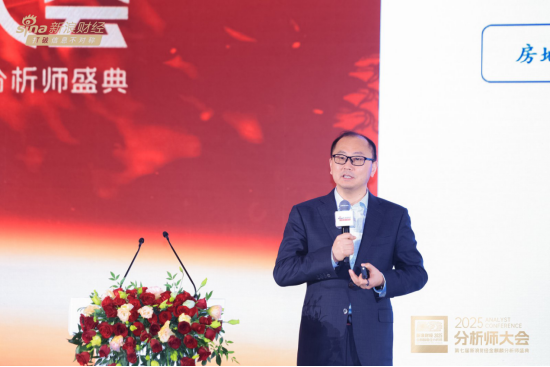
重阳投资王庆:中国资本市场进入“业绩驱动”下半场,结构性慢牛仍然可期
Xin Lang Zheng Quan· 2025-11-28 09:34
Core Viewpoint - The Chinese stock market is transitioning from a "value re-evaluation" phase to an "earnings-driven" phase, indicating a potential structural slow bull market ahead [3][4]. Group 1: Market Transition - The market logic has positively changed over the past year, moving from a low-risk appetite phase to a focus on earnings growth [3]. - The adjustment in the real estate cycle has significantly impacted the understanding of the Chinese economy and capital markets, leading to an "asset shortage" that drives funds towards the stock market [3]. Group 2: Policy Impact - A series of policies since the "924" event, including loose monetary policy and active fiscal policy, have effectively boosted market confidence and addressed economic circulation blockages [3]. - The government's support in helping local governments manage debt has been crucial in this context [3]. Group 3: Future Market Outlook - The stock market is expected to show a yield advantage over other asset classes due to the ongoing asset shortage [4]. - Future investment opportunities will be more focused on individual stocks and sectors, driven by earnings growth, leading to a phase of structural market trends that will contribute to a slow bull market [4].
【申万宏源脱水研报】年度策略精粹
申万宏源研究· 2025-11-28 03:01
Group 1: High-end Manufacturing and Security - The defense industry is entering a new cycle driven by both domestic demand and external potential, focusing on information technology, intelligent equipment, and emerging fields like military trade and deep space economy [2] - The machinery sector is expected to undergo a value reassessment and technological empowerment, with a focus on robotics and autonomous driving, alongside a push for core technology breakthroughs [2] - The electric power and new energy sectors are witnessing a new growth cycle, with lithium battery storage demand surging and the photovoltaic market stabilizing [2] - The home appliance industry is focusing on policy subsidies, technological transformation, and overseas expansion, particularly in Southeast Asia and Latin America [2] - The automotive sector is experiencing rapid technological advancements in smart driving and hybrid technologies, with a focus on export opportunities and collaboration with tech companies [2] Group 2: Real Estate and Banking - The real estate market is stabilizing, with key cities expected to see price stabilization driven by household balance sheet recovery and supportive policies [3] - The banking sector is entering a new profit cycle, with stable interest margins supporting long-term profitability, and a focus on undervalued shares and quality city commercial banks [4] Group 3: Securities and Insurance - The securities industry is benefiting from wealth management trends, with a focus on stable earnings and international expansion as a long-term narrative [5] - The insurance sector is characterized by high elasticity, with investment-driven profit growth and a focus on regulatory compliance and risk management [6] Group 4: Construction and Chemicals - The construction industry is expected to stabilize with government debt management and new infrastructure projects, focusing on regional coordination and green development [10] - The chemical sector is entering a recovery phase, with a focus on high-quality enterprises and strategic investments in various chains [10][12] Group 5: Utilities and Environmental Protection - The utilities sector is seeing steady growth in electricity demand, with a focus on high-dividend investments in water and coal power [13] - The environmental protection sector is benefiting from policy adjustments and technological advancements, with a focus on improving profitability in water and waste management [16] Group 6: Capital Markets and Financial Innovation - The capital market is exploring new paths for empowering inclusive finance, focusing on small and micro-enterprise support and rural revitalization [21] - The green certificate market is expected to grow significantly, driven by policy support and increasing demand for renewable energy [22] Group 7: E-commerce and Retail - The retail sector is experiencing structural changes driven by AI, with a focus on rational competition and the globalization of Chinese brands [23] Group 8: Bonds and Financial Engineering - The convertible bond market is expected to see continued growth, driven by demand for fixed income and equity market expectations [25] - The quantitative investment sector is gaining traction, with a focus on unique strategies and the development of fixed income products [27]

2026年境外债投资策略:寻找双向开放与价值重估的交集
Shenwan Hongyuan Securities· 2025-11-27 13:12
Group 1 - The report highlights a significant transformation in the supply structure of the primary market for offshore bonds, with a notable shift from traditional city investment bonds to industry bonds, government bonds, and TMT bonds as the new mainstays [3][10] - The offshore bond market has seen a continuous expansion, with a total issuance of 1.24 trillion yuan in the first ten months of 2025, although net financing from city investment bonds has sharply declined to only 422 million yuan [3][10] - The secondary market has experienced a decline in yields, with the 3-year offshore bond yield dropping approximately 40 basis points, outperforming domestic bonds [3][17] Group 2 - The report anticipates that the offshore bond market will continue to thrive in 2026, driven by two major changes: narrowing interest rate spreads and a shift in supply dynamics, necessitating more refined selection criteria for bonds [3][4] - The narrowing of the offshore-onshore interest rate spread has reached historical lows, with sovereign bonds at 10-25 basis points and credit bonds at 40-65 basis points, making it challenging to find excess returns [3][4] - The report emphasizes the need to explore investment opportunities in foreign government bonds and Hong Kong government bonds due to limited yield spread in domestic government bonds [3][48] Group 3 - The macroeconomic environment is favorable for Chinese dollar bonds, with expectations of 2-3 interest rate cuts by the Federal Reserve in 2026, targeting a rate of 2.75-3.00% [5][6] - The report suggests focusing on investment-grade dollar bonds and short-term securities to capture certainty in returns, as the credit risk has eased but remains present [5][6] - The investment strategy for 2026 includes a focus on high-grade offshore bonds, with an emphasis on long-duration bonds for insurance companies and high-grade foreign financial bonds for public funds [5][6] Group 4 - The report outlines the expansion of the "Southbound Bond Connect" program, which has significantly enhanced market liquidity and investor participation [29][33] - The trading volume of RMB debt instruments has reached 2.13 trillion yuan by October 2025, accounting for over 90% of the total volume in 2024, indicating a robust market activity [29][33] - The report notes that the expansion of the "Southbound Bond Connect" has opened new channels for domestic investors to diversify their asset allocation [29][33]
管涛:“十五五”时期资本市场将迎来四大机遇 资管配置能力重要性进一步提升
Sou Hu Cai Jing· 2025-11-27 03:49
Group 1 - The core viewpoint is that the "14th Five-Year Plan" period presents four significant opportunities for China's capital market, including policy dividends from deepened reforms, new momentum from economic transformation, improved institutional foundations, and value reassessment to invigorate market vitality [1][2][3] Group 2 - The first opportunity is the comprehensive deepening of reforms that will release policy dividends, with structural issues needing resolution through high-level opening and reform, which is expected to return economic growth to a reasonable range [2][3] - The second opportunity involves economic transformation that will foster new momentum, with emerging industries and the upgrading of traditional industries expected to create a market space of approximately 10 trillion yuan over the next five years [2][3] Group 3 - The third opportunity is the improvement of capital market systems, emphasizing "investor first" principles and promoting coordinated reforms in investment and financing, which will solidify the foundation for healthy market development [3][4] - The fourth opportunity is the value reassessment that will stimulate market vitality, driven by domestic economic transformation, diversification of resident assets, and global asset rebalancing [3][4] Group 4 - Wealth management institutions are expected to play a larger role in asset allocation, particularly in a low-interest and high-volatility environment, with a focus on four key areas for equity asset allocation over the next five years [4] - Gold is highlighted as having continued allocation value, with its share in private investment potentially increasing from just over 2% to 4-5% due to ongoing economic uncertainties [4] Group 5 - The future investment opportunities arising from transformation and upgrading will require enhanced asset allocation capabilities from wealth management institutions to navigate through economic cycles [4][5]
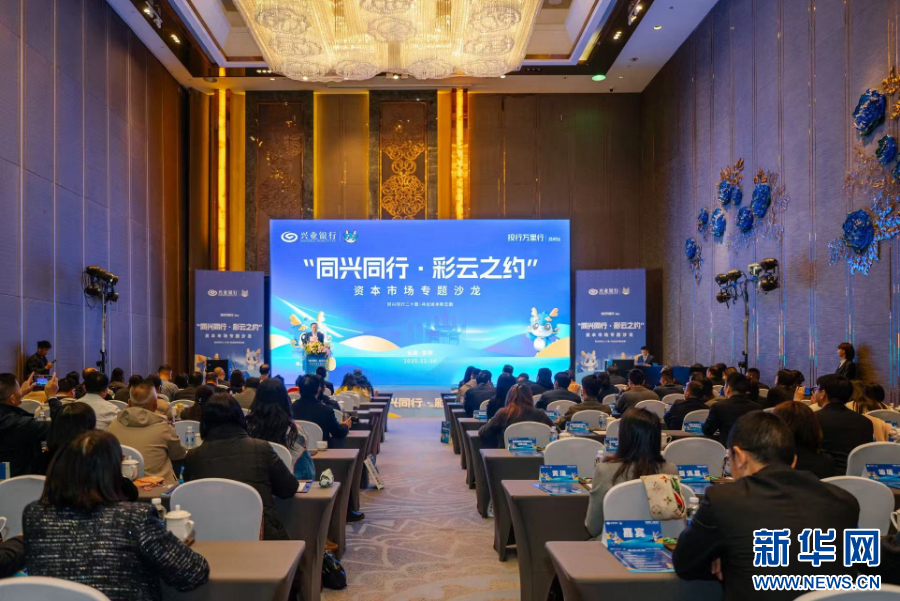
兴业银行“投行万里行”昆明站资本市场专题沙龙举行
Xin Hua Wang· 2025-11-22 02:09
Core Insights - The event "Investment Banking Journey" held by Industrial Bank in Kunming focused on capital market discussions, bringing together government representatives, entrepreneurs, and individual wealth clients [1] Group 1: Company Strategy and Achievements - Industrial Bank's Kunming branch has implemented a "commercial bank + investment bank" strategy over the past 20 years, successfully launching innovative products such as "two new" bonds in Yunnan and technology innovation bonds using a "parent-child" model [2] - The bank's investment banking department, led by General Manager Hu Bin, highlighted its ability to provide comprehensive financial services supported by diverse licensing resources and professional research institutions [2] Group 2: Key Themes and Expert Insights - Lu Zhengwei, Chief Economist and Chairman of the Academic Review Committee of Industrial Bank, presented on "Strengthening Financial Support for Innovation," offering deep macroeconomic analysis and forward-looking policy insights [2] - Wang Qing, Chairman of Shanghai Chongyang Investment Management Co., analyzed current opportunities for value reassessment in China's capital markets, providing strategic insights [2] - Experts from the investment banking department shared professional insights on exploring merger and acquisition pathways and comprehensive financial service solutions for capital markets [2]

“深圳楼市抹去10年内所有涨幅”
Sou Hu Cai Jing· 2025-11-20 13:39
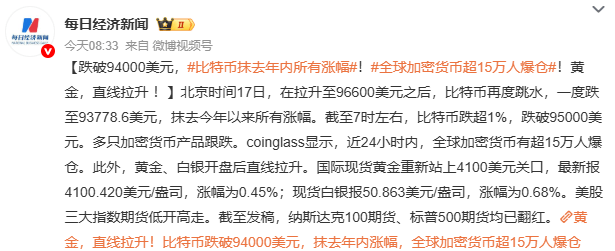
Core Viewpoint - The cryptocurrency market, particularly Bitcoin, has experienced a significant downturn, erasing all gains made in 2023, while the Shenzhen real estate market has also seen a substantial decline, reverting to levels not seen since 2016 [1][5]. Group 1: Cryptocurrency Market - Bitcoin has fallen below $94,000 in November, resulting in the liquidation of over 150,000 traders globally within a 24-hour period [1]. Group 2: Shenzhen Real Estate Market - The Shenzhen real estate market has erased all gains from the past decade, with prices returning to levels seen in early 2016 [5]. - In 2015, the average price of new homes in Shenzhen reached 33,426 yuan per square meter, a year-on-year increase of 39.4%, with transaction volumes and values significantly higher than in subsequent years [3]. - By 2025, some neighborhoods have seen price declines of 50% to 60% compared to peak levels [5]. - The overall housing price in Shenzhen has reverted to levels from February to March 2016, effectively negating the price increases from 2015 [5]. Group 3: Regional Performance in Shenzhen - Nanshan District has shown the strongest resilience, maintaining prices at mid-2018 levels [6]. - Longhua District has seen prices drop back to levels from March to May 2016 [7]. - Bao'an District's prices are stable, reflecting levels from 2017 to 2018 [8]. - Longgang District has been the most affected, with prices returning to levels from July to September 2015, although certain core areas show resilience [10]. - Luohu District's prices have fallen to levels seen in July 2015 [12]. Group 4: Market Characteristics - Three notable characteristics of the Shenzhen market include: 1. Areas supported by industry and education show the strongest price resilience [14]. 2. The quality of the property and its age are significant factors influencing prices [14]. 3. A profound value reassessment is occurring, widening the wealth gap between early and new homebuyers [14]. Group 5: Market Trends - The market is stabilizing, with many sellers adopting a wait-and-see approach [15]. - In November, 50.6% of second-hand listings in Shenzhen saw price declines, while 25.9% experienced price increases [16].
光大环境(0257.HK):回A开始启动 价值重估持续
Ge Long Hui· 2025-11-18 05:33
Group 1 - The board has approved a preliminary proposal to issue RMB shares for listing on the Shenzhen Stock Exchange, with the funds aimed at developing the main business and supplementing general working capital, reinforcing the company's absolute leading position in the industry [1] - The company maintains a "buy" rating, with projected net profits for 2025-2027 at 4.048, 4.182, and 4.288 billion HKD, corresponding to EPS of 0.66, 0.68, and 0.70 HKD [1] - The total share capital is 6.143 billion shares, with a proposed issuance of no more than 800 million shares, accounting for 11.52% of the post-issue share capital, and an overallotment option of up to 15% of the proposed issuance [1] Group 2 - The company received 2.064 billion RMB in national subsidies from July 1 to August 31, 2025, exceeding expectations and significantly improving operating cash flow [2] - The company’s DPS for the first half of 2025 is 0.15 HKD, a year-on-year increase of 7%, with a dividend payout ratio of 41.76%, up from 35% in the first half of 2024 [2] - The improvement in free cash flow and the initiation of the A-share listing are optimistic signals for accelerating value reassessment in the future [2]
招商证券:维持光大环境(00257)“增持”评级 拟回A上市 助力环保龙头的价值重估
智通财经网· 2025-11-18 03:17
Core Viewpoint - The company plans to list on the A-share market to expand its business and optimize its capital structure, with significant cash flow improvement expected starting in 2024 due to accelerated subsidy recovery and cost reduction measures [1][2]. Group 1: A-Share Listing and Fundraising - The company intends to issue up to 800 million shares, representing no more than 11.52% of the post-issue share capital, and list on the Shenzhen Stock Exchange. The raised funds will be used for business development and general working capital [1]. Group 2: Cash Flow Improvement - The company is projected to achieve a free cash flow of approximately 4 billion yuan in 2024, marking its first positive cash flow since 2003. By the first half of 2025, operational and financial income is expected to account for 87% of main revenue, a 10 percentage point increase year-on-year [2]. Group 3: Cost Reduction and Profitability - The environmental energy segment is expected to contribute 2.567 billion HKD (+12%) to group profit in the first half of 2025, driven by cost reduction measures and improved core operational metrics. The water segment is projected to contribute 409 million HKD (-4%), while the green environmental segment is expected to see a significant profit increase of 30% [3]. Group 4: Profit Forecast and Valuation - The company maintains profit forecasts of 3.337 billion, 3.564 billion, and 3.831 billion HKD for 2025-2027, with year-on-year growth rates of -1%, 7%, and 7% respectively. The current stock price corresponds to P/E ratios of 9.1x, 8.5x, and 7.9x, with a maintained "buy" rating [4].
