
全球资产配置

Search documents
纵论财富管理机构转型方向,助力居民财富保值增值!2025财富配置与资产管理大会、银行业高质量发展大会举行
Zhong Guo Zheng Quan Bao· 2025-12-19 15:54
Group 1 - The 2025 Wealth Allocation and Asset Management Conference and the 2025 Banking Industry High-Quality Development Conference were held in Shenzhen, focusing on how wealth management institutions can enhance services to help residents preserve and increase wealth [1] - Zhang Bohui from the Chinese University of Hong Kong (Shenzhen) noted a steady recovery in the wealth management market, with a notable performance in equity-linked products, indicating a rising demand for equity asset allocation [1] - Qi Jiankong from CCB Wealth Management highlighted unprecedented challenges and greater opportunities in the banking wealth management sector, emphasizing a shift in operational philosophy to prioritize investor interests [1] Group 2 - Gao Xiangyang from ICBC Wealth Management stated the company aims to become a fully functional wealth management firm, responding to new challenges in the asset management industry by exploring beneficial practices [2] - The growing demand for diversified asset allocation among residents is driving the expansion of the wealth management market and prompting profound structural changes, with various financial institutions accelerating their entry into the market [2] - Tan Xiaogang from Dacheng Fund emphasized that the high-quality development of banking wealth management is a key driver for the overall high-quality development of the banking sector, with ongoing collaboration between public funds and banks being crucial [2] Group 3 - Securities firms are increasingly playing a vital role in helping residents preserve and increase wealth, with initiatives like transitioning to a buy-side advisory model [3] - Li Haichao from Shanghai Securities discussed the company's focus on a unique asset allocation system to drive business transformation and enhance professional capabilities [3] - Wang Qian from Huihua Wealth Management highlighted the need for the asset management industry to focus on alternative asset opportunities and global asset allocation in the low-interest-rate environment [3] Group 4 - Despite existing challenges, the long-term positive fundamentals of China's economy remain unchanged, according to Bi Jiyao, former deputy director of the China Macro Economic Research Institute [4] - Guo Lei, chief economist at GF Securities, identified five potential areas for economic activation, including normalizing local investments and expanding new consumer groups [4] Group 5 - Industry experts shared insights on investment opportunities for 2026, indicating that Chinese assets still hold strong appeal, particularly in sectors like new energy, new materials, chips, and health consumption [5]
21专访|瑞士百达曾劭科:国际资管机构如何借互通机制布局内地
2 1 Shi Ji Jing Ji Bao Dao· 2025-12-17 10:31
Core Viewpoint - The Greater Bay Area has become a rapidly growing wealth center, with international asset management firms focusing on expanding their presence through various cross-border investment channels like QDII, WMC, and MRF [3][5]. Group 1: Cross-Border Investment Mechanisms - The cross-border investment mechanisms have seen two significant adjustments: the expansion of cross-border wealth management (WMC) to include securities firms and the increase of the Hong Kong mutual fund sales ratio from 50% to 80% [1][8]. - Different frameworks and sales channels cater to diverse customer groups, necessitating international asset management firms to explore suitable product matrices for mainland residents [1][6]. Group 2: Product and Market Insights - The company has two products under the cross-border wealth management scheme, with banks and securities firms each accounting for half of the distribution channels, complementing each other [2][8]. - A mutual fund under the company attracted 1.3 billion HKD in net inflows in November, leading the market, with 11 asset management firms in Hong Kong having launched mutual funds [2][3]. Group 3: Asset Allocation Trends - There is a clear trend of asset rotation from fixed deposits to bonds, then to multi-asset and stock markets, with a shift from technology sectors to energy [13][15]. - The company anticipates continued demand for global allocation strategies, particularly in a low-interest-rate environment, as investors seek to diversify risks [7][14]. Group 4: Future Product Development - The company plans to increase its mutual fund offerings to three, pending regulatory approval, with a focus on global equity strategies that capture opportunities in energy and infrastructure [10][11]. - The company has established a product matrix that includes global multi-asset, Asian bonds, and global equities, aiming to provide diverse investment options for mainland investors [11][12].


国联民生:顾伟当选董事长,葛小波任总裁;年内138家公募机构积极自购传递信心 | 券商基金早参
Mei Ri Jing Ji Xin Wen· 2025-12-16 01:43
Group 1 - Guolian Minsheng has appointed Gu Wei as Chairman and Ge Xiaobo as President, indicating an optimization of the company's governance structure and potential strengthening of strategic execution [1] - The new management team includes five non-independent directors and three independent directors, with a focus on enhancing business adjustment expectations in the brokerage sector [1] - The changes in the financial sector's senior management are seen as positive signals, increasing market expectations for deeper financial reforms and highlighting structural investment opportunities [1] Group 2 - Dongfang Caifu has completed a management restructuring aimed at creating a flatter organizational structure, enhancing operational efficiency and market responsiveness [2] - Huang Jianhai, the new General Manager, is expected to strengthen the company's risk control and resource allocation capabilities due to his financial background [2] - The restructuring is likely to invigorate the internet brokerage sector and may lead to a reassessment of strategic transformation potential in financial technology firms [2] Group 3 - Over 60% of QDII funds are currently under purchase restrictions or have suspended subscriptions, reflecting a sustained high demand for overseas asset allocation [3] - The total scale of restricted funds amounts to 507.997 billion yuan, indicating a structural imbalance in global asset allocation [3] - This situation may lead to increased price volatility in the secondary market for certain products and could affect cross-border investment sentiment [3] Group 4 - A total of 138 public fund institutions have actively engaged in self-purchase, with a net subscription amount reaching 255.087 billion yuan, marking a significant increase compared to the previous year [4] - The surge in self-purchase activity, exceeding 17 times the previous year's figures, demonstrates institutions' confidence in the long-term value of the market [4] - This behavior is expected to boost market attention on related fund products and support equity assets, potentially leading to a valuation recovery in the broader financial sector [4]

摩根士丹利基金李圣谣:2026年美股关注盈利兑现,A股处“双修复”早中期|2025华夏机构投资者年会
Hua Xia Shi Bao· 2025-12-15 03:28
Core Viewpoint - The 19th Huaxia Institutional Investor Annual Conference highlighted the themes of "vitality and resilience, innovation and empowerment," focusing on future development paths in response to current economic challenges [2]. Group 1: U.S. Market Outlook - Morgan Stanley's Li Shengyao expressed a cautiously optimistic view for the U.S. stock market in 2026, noting that further increases in stock prices will depend more on earnings realization rather than valuation expansion [3][4]. - The U.S. economy is experiencing a "moderate slowdown," with inflation showing signs of decline, and the market has priced in expectations for one to two interest rate cuts by the Federal Reserve in 2026 [3][4]. Group 2: A-Share Market Insights - Li believes that the A-share market is currently in the early to mid-stage of a "dual recovery," with improved performance and potential for higher elasticity [3][4]. - Industrial profits are beginning to recover, driven by new productive forces in AI hardware, high-end equipment, and innovative pharmaceuticals, which may enhance profit margins [3][4]. Group 3: Asset Allocation Strategy for 2026 - The proposed global asset allocation strategy for 2026 includes a foundation in global fixed income, selective investments in A-shares and Hong Kong stocks, and allocations in overseas equities and commodities [5]. - The strategy emphasizes finding opportunities in global fixed income markets, particularly as domestic interest rates rebound and major overseas economies enter a gradual rate-cutting phase [5]. - Li highlighted the potential for excess returns from mid-to-high-end manufacturing, AI hardware, and industrial automation within the Chinese market, supported by supply chain autonomy and market depth [5].

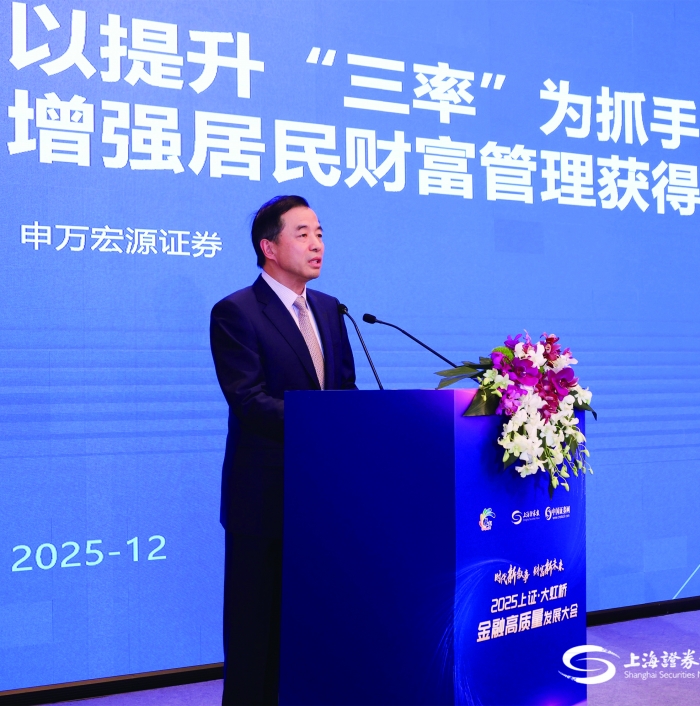
申万宏源监事会主席方荣义:以提升“三率”增强居民财富管理获得感
Shang Hai Zheng Quan Bao· 2025-12-14 19:43
方荣义 方荣义表示,近年来我国居民财富管理呈现三大趋势性新变化:一是居民理财投资者的队伍日渐壮大, 据贝恩咨询数据,中国全市场持有理财产品的投资者数量达1.39亿人;二是居民对权益投资的配置比重 有所提升,当前居民家庭资产配置中股票、基金等权益类资产占金融资产的比例已提升至15%左右;三 是居民理财需求综合化,居民对财富管理的诉求已经从单一的储蓄理财向多元资产配置转变。 尽管当前财富管理市场逐渐庞大,但在方荣义看来,金融体系在服务居民财富管理上还面临两大短板瓶 颈:一方面,财富管理产品的深度广度不足。目前市场上的理财产品多集中在高波动、中低收益区间, 且不同类型投资产品之间的风险关联度很高,低贝塔、低波动、稳定收益的产品供给严重不足,这在很 大程度上制约了居民中长期储蓄向金融投资的转化。另一方面,投资者信任与陪伴不足,尚未形成真正 的买方投顾服务体系。 基于上述判断,方荣义认为证券公司未来要以提升"三率"为抓手,助力居民提升金融投资收益:一是要 着力提升居民投资的含"权"率,为投资者提供更多元的具有中长期稳定收益的权益产品,并加大创设 ETF、指数基金等被动管理产品以降低投资门槛;二是要着力提升居民全球资产配 ...

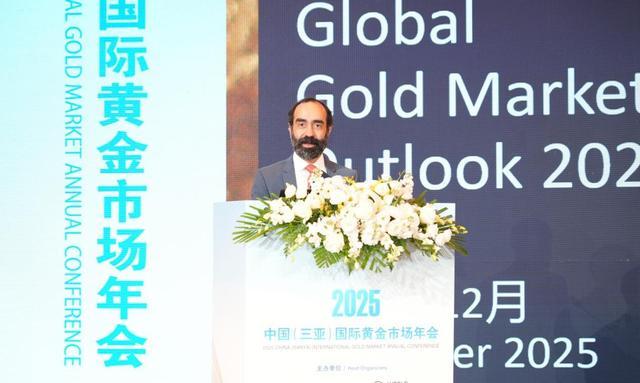
世界黄金协会美洲CEO安凯展望2026黄金市场趋势
Huan Qiu Wang Zi Xun· 2025-12-14 14:59
来源:环球网 【环球网消费报道 记者 刘晓旭】南海之滨,思想的浪潮与金色的光芒交相辉映。2025年12月12日,在 全球黄金行业聚焦的"2025中国(三亚)国际黄金市场年会"上,世界黄金协会美洲CEO兼全球研究负责 人安凯(Juan Carlos Artigas)受邀出席由中国黄金协会和世界黄金协会共同主办的2025中国(三亚)国 际黄金市场年会,并在大会期间发表题为《全球经济形势及黄金市场展望》的主旨演讲,深入剖析了全 球宏观经济环境变化下黄金市场的最新趋势与未来展望。 图片为世界黄金协会美洲CEO兼全球研究负责人 安凯(Juan Carlos Artigas) 2025年黄金市场表现突出,全球资产配置价值凸显 "2025年,是黄金市场载入史册的一年。"安凯以一句掷地有声的判断,开启了他的深度解读。安凯指 出,2025年黄金市场表现尤为突出。全年金价累计涨幅超过60%,年内创下逾50次历史新高,成为全球 主要资产类别中表现最为强劲的资产之一。推动这一轮黄金强势上涨的核心因素包括经济扩张、风险与 不确定性、机会成本以及趋势动能,这四大变量共同作用,塑造了黄金在全球资产配置中的独特地位。 中国作为全球最大的黄金 ...
周期洞察与战略布局 - 2026年全球资产配置展望
2025-12-12 02:19
Summary of Key Points from Conference Call Records Industry Overview - The global economic and political landscape is becoming fragmented, with a focus on technology-driven assets and safe-haven assets due to increasing geopolitical risks. [1][3] - Demand for safe-haven assets, particularly precious metals like gold, has risen significantly, driven by heightened risk aversion. [1][3] Core Insights and Arguments - Since 2022, central banks globally have shown a marked increase in their willingness to allocate more to gold, with the percentage of central banks planning to increase gold holdings rising from 46% to 69% between 2022 and 2024. Conversely, the willingness to hold dollar-denominated assets has decreased from 28% to 20%. This reflects a growing distrust in the dollar credit system. [5] - The current environment suggests a focus on two types of assets: technology-driven capital expenditure assets that are less affected by economic slowdowns, and physical assets represented by precious metals. High-tech innovation stocks and precious metals, especially gold, should be prioritized for investment. [6] - The Federal Reserve's recent interest rate cuts have been perceived as politically pressured, undermining trust in the dollar and the Fed itself. This has implications for the dollar's credibility and market confidence. [7] - Historical patterns indicate that gold price re-evaluations typically occur during severe shocks to dollar credibility, suggesting that gold remains an attractive safe-haven asset in the current fragmented global landscape. [8][9] Additional Important Insights - The aging population is leading to structural changes in the labor market and declining investment returns, with the 10-year U.S. Treasury yield dropping from over 10% in the 1980s to around 4% currently. [2] - The shift in the A-share market from relying on valuation increases to stable profit dividends is a significant development, driven by improved corporate governance and regulatory guidance. [2][11] - The anticipated influx of capital in 2026 is expected to come from the relocation of household deposits and foreign capital, with a focus on higher returns in a low-interest-rate environment. [12][13] - The performance of the A-share market is expected to benefit from the ongoing trend of household deposit migration, as stock valuations remain moderate and attractive compared to real estate. [13] - In terms of global asset allocation, emerging markets like India are recommended for investment, particularly during a rate-cutting cycle, while developed markets are viewed with caution. [18][22] Conclusion - The current investment landscape is characterized by a shift towards safe-haven assets and technology-driven investments, with significant implications for global asset allocation strategies. Investors are advised to remain vigilant about geopolitical risks and the evolving economic environment. [1][6][22]
建设“全球资产精选超市”!广发证券“出海”成果丰硕
Sou Hu Cai Jing· 2025-12-12 00:50
Core Viewpoint - The article highlights the significant progress of Chinese securities firms, particularly Guangfa Securities, in expanding their international business and establishing a comprehensive cross-border service network, reflecting the evolving needs of Chinese enterprises going global [1][3]. Group 1: International Business Performance - Guangfa Securities reported a remarkable increase in international business revenue, doubling to 1.35 billion yuan in 2024, leading the growth among major securities firms [1]. - The firm has established a three-region linkage involving Hong Kong, London, and Singapore, enhancing its cross-border wealth management, investment banking, and derivatives services [1][3]. Group 2: Global Service Network - The company employs an "internal growth + external expansion" strategy to create a cross-border service network that connects Hong Kong, Southeast Asia, and Europe [3]. - Guangfa Securities has positioned Hong Kong as a strategic hub, with its paid-in capital reaching 10.337 billion HKD by early 2025, making it the second-largest among Chinese securities firms [3]. Group 3: Wealth Management Solutions - To address the rising demand for global asset allocation, Guangfa Securities is building a "global asset selection supermarket," leveraging its research capabilities and various interconnectivity mechanisms [4]. - The firm has established a specialized asset allocation research team of over 50 professionals to identify investment opportunities across major global markets [4]. Group 4: Institutional Services - As one of the first primary dealers in the domestic OTC derivatives market, Guangfa Securities enhances its product creation and trading capabilities to offer global asset allocation and risk management solutions to institutional investors [5]. Group 5: Support for Enterprises Going Global - Guangfa Securities has developed a comprehensive cross-border service system to support Chinese enterprises in their global expansion, focusing on cross-border financing, financial advisory, and risk management [6]. - In 2024, the firm completed 14 overseas equity financing projects, raising a total of 9.3 billion USD, ranking fourth among Chinese securities firms in Hong Kong's equity financing market [6]. Group 6: Challenges in Globalization - The article notes that regulatory differences, collaboration efficiency, and talent shortages are common challenges faced by Chinese securities firms in their globalization efforts [7]. Group 7: Strategies to Overcome Challenges - Guangfa Securities has implemented innovative mechanisms and resource investments to build core capabilities that meet global demands, including establishing a dual communication mechanism for compliance and risk management [8]. - The firm promotes an "One Guangfa" strategy to enhance collaboration between domestic and international teams, leveraging local advantages and industry knowledge [8]. - To address talent shortages, Guangfa Securities combines internal training with external recruitment to create a diverse and skilled cross-border team [8].


毫秒决胜华尔街:新浪财经App让美股投资零延迟
Xin Lang Cai Jing· 2025-12-10 07:31
Core Viewpoint - The introduction of Sina Finance App addresses the information gap faced by Chinese investors in the US stock market, providing free real-time market data and comprehensive support to enhance investment opportunities [1][2][4]. Group 1: Real-Time Market Data - The primary pain point for US stock investors is delayed market data, where a 0.5-second information lag can significantly impact profits and losses [2][7]. - Sina Finance App offers free access to Level-1 real-time market data, achieving a refresh rate of 0.03 seconds, allowing ordinary investors to access the same market dynamics as Wall Street traders [2][7]. - This service does not require paid membership or mandatory account opening, making it a truly inclusive professional service compared to competitors that charge hundreds of yuan for similar data [2][7]. Group 2: Comprehensive Coverage - The app provides complete coverage of pre-market and after-hours trading, crucial for capturing price movements during these high-activity periods [3][8]. - Users can set personalized alerts for significant market events, ensuring they do not miss critical signals even during off-hours [3][8]. - The app's real-time updates during key events, such as earnings reports and economic data releases, allow users to seize opportunities rather than react to market movements [2][8]. Group 3: Information and Tools - Sina Finance App integrates a full ecosystem of "market data + news + tools," featuring a global editorial team that provides 24/7 Chinese news updates and insights on US market dynamics [3][8][9]. - The built-in "Xina AI Assistant" can summarize lengthy financial reports in 30 seconds, highlighting key metrics and risk warnings, thus overcoming language barriers for users [3][8]. - The app supports various analytical tools, including K-line charts and technical indicators, catering to both short-term and long-term investors [3][8]. Group 4: Competitive Advantage - Unlike broker platforms like Futu and Tiger, Sina Finance App does not require account binding, maintaining analytical neutrality [4][9]. - Compared to community platforms like Xueqiu, the app focuses on professional PGC content, minimizing noise and distractions [4][9]. - The app's targeted and in-depth US stock services make it a preferred choice for over 21 million cross-border investors, reflecting its comprehensive capabilities in the global asset allocation landscape [4][9].
跟着巨头抄作业:新浪财经 App 解锁美股持仓的财富密码
Xin Lang Cai Jing· 2025-12-10 07:31
Core Viewpoint - The Sina Finance App provides a solution for Chinese investors to track major U.S. institutional holdings through its "U.S. Giant Holdings" feature, offering authoritative data, Chinese visualization, and free access, thus breaking down barriers to information access [1][2][6]. Group 1: Information Accessibility - The app addresses the challenge of understanding SEC's 13F reports, which are lengthy and filled with jargon, by structuring the data and presenting it in an easily digestible format [2][9]. - Users can access data on major institutions like Berkshire Hathaway, Bridgewater, BlackRock, and ARK Invest without any subscription fees, making professional resources more accessible [2][12]. Group 2: Timeliness of Data - The app updates its data within 24 hours of the release of 13F reports, ensuring users receive timely notifications about significant changes in institutional holdings [3][10]. - Users have reported improved investment outcomes by acting on timely information, allowing them to follow institutional trends more closely [3][10]. Group 3: Comprehensive Analysis - The app combines holdings data with market trends and expert analysis, helping users understand not just what institutions are buying, but also the rationale behind those decisions [4][11]. - The inclusion of an AI assistant allows users to quickly extract key insights from reports, making it easier for those who may not be proficient in English to grasp institutional strategies [4][11]. Group 4: Tool Adaptability - The app offers features tailored to different types of investors, such as alerts for significant changes in holdings for short-term traders and historical data for long-term investors [5][12]. - Compared to other platforms, the app maintains neutrality by not requiring users to link trading accounts, thus providing unbiased analysis [5][13]. Group 5: Global Investment Landscape - The app's comprehensive coverage includes not only U.S. institutions but also top asset management firms from Europe and Asia, providing a global perspective on holdings [6][13]. - In the context of global asset allocation, the app emphasizes the importance of information efficiency in investment decisions, enabling Chinese investors to compete effectively in the U.S. market [6][13].
