关税威胁

Search documents
芦哲:如何看待本轮特朗普的关税威胁?
Sou Hu Cai Jing· 2025-10-13 04:06
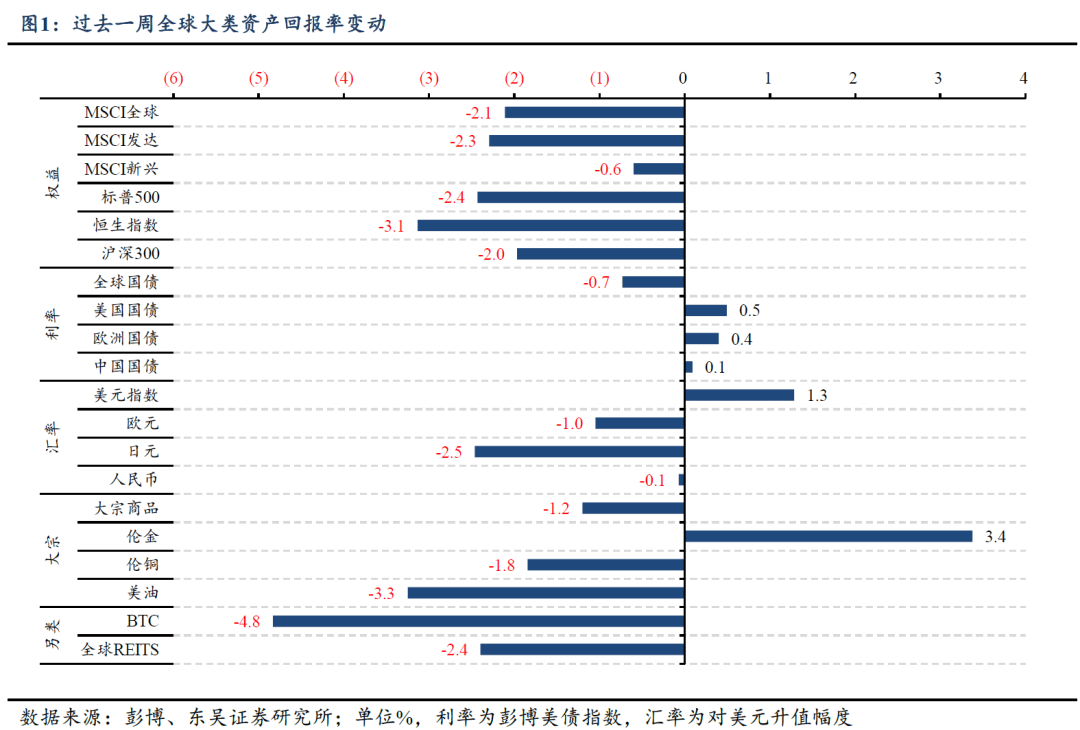
Core Viewpoint - Trump's renewed threat to impose tariffs on China has triggered risk-off trading in the market, leading to declines in U.S. stocks, copper, oil, bond yields, and the dollar index, while gold prices have fluctuated upwards. The impact of this tariff threat on the U.S. economy and markets is expected to be limited compared to the tariff shocks experienced in April, but it may increase inflationary pressures, complicating future interest rate cuts by the Federal Reserve. Attention should be paid to potential retaliatory measures and the escalation of trade conflicts into other critical areas such as rare earths and chips, as well as the progress of high-level meetings at APEC. In terms of trading strategy, risk assets like U.S. stocks may face accelerated adjustment risks due to the renewed tariff conflict, and if this leads to liquidity risks similar to those in April, gold and other safe-haven assets could be prioritized for investment. Once the new tariff conflict stabilizes, a gradual allocation to risk assets may be considered, with a focus on trading volumes in the CSI 300 ETF and U.S. stock index options [1][4]. Major Asset Classes - The renewed tariff threat from Trump has reignited risk-off trading, resulting in declines in U.S. stocks and bond yields, while gold prices have risen. At the beginning of the week, AMD and OpenAI's collaboration on AI chips boosted market sentiment, leading to new historical highs for U.S. stocks. However, following Trump's announcement of additional tariffs on China, U.S. stocks fell sharply. For the week of October 6 to October 10, the 10-year U.S. Treasury yield decreased by 8.70 basis points to 4.032%, and the 2-year yield fell by 7.43 basis points to 3.501%. The dollar index rose by 1.28% to 98.98, while the S&P 500 and Nasdaq indices dropped by 2.43% and 2.53%, respectively. Spot gold prices increased by 3.38% to $4017 per ounce [2][4]. Overseas Economy - The September FOMC minutes indicate internal divisions within the Federal Reserve regarding future interest rate paths. The preliminary consumer confidence index for October from the University of Michigan is 55, with expectations at 54 and a previous value of 55.1. Inflation expectations for the next year recorded by the New York Fed in September are 3.38%, up from 3.2%, while the Michigan index for October is 4.6%, with expectations at 4.7% and a previous value of 4.7%. The FOMC minutes reveal that concerns over recent employment growth slowing outweighed worries about persistent inflation, leading to the decision to initiate rate cuts in September. Most officials believe further monetary easing is appropriate for the remainder of the year, but there are still concerns about the risks of rising inflation, with some members suggesting that progress towards the 2% target has stalled, indicating ongoing divisions regarding future rate paths. As of October 7, the Atlanta Fed's GDPNow model predicts a 3.8% growth for Q3 2025, while the New York Fed's Nowcast model estimates a 2.34% growth for the same period [3][4]. Overseas Politics - Trump's renewed threat to impose tariffs on China has led to a resurgence of risk-off trading. On October 10, Trump announced that due to dissatisfaction with rare earth regulations, the U.S. will impose an additional 100% tariff on China starting November 1 and will implement export controls on key software. This escalation is influenced by external pressures easing, such as the recent ceasefire agreement between Israel and Palestine, allowing Trump to focus on U.S.-China trade relations. Additionally, the ongoing government shutdown in the U.S. necessitates a diversion of internal conflicts to external issues. The economic impact of the new tariffs is expected to be limited due to prior tariff threats and the seasonal nature of U.S.-China trade. However, the renewed tariff threat may reignite inflation risks in the U.S., particularly concerning imports from China. The market has become accustomed to Trump's unpredictable tariff policies, and the upcoming APEC meeting may provide an opportunity for high-level discussions between the two nations. Long-term, the experience from the 2018-19 trade conflicts suggests that tariff threats will persist and remain volatile, especially with the upcoming change in Federal Reserve leadership in May 2026, which may lead to a more dovish monetary policy [4].

中辉有色观点-20251013
Zhong Hui Qi Huo· 2025-10-13 03:19
Report Industry Investment Ratings - Gold: Buy and hold [2] - Silver: Buy on dips [2] - Copper: High-level pullback [2] - Zinc: Rebound under pressure [2] - Lead: Rebound under pressure [2] - Tin: Rise and then fall [2] - Aluminum: Rebound under pressure [2] - Nickel: Rebound under pressure [2] - Industrial silicon: Under pressure [2] - Polysilicon: Pullback [2] - Lithium carbonate: Wide-range oscillation, buy on dips [2] Core Views - The unexpected cooling of G2 relations, the chaotic situation in Japan, and potential obstacles to the ceasefire in the Middle East have led to a resurgence of short - term risk - aversion sentiment. Gold can be bought both in the short and long term, and its strategic allocation value remains unchanged. Silver has short - term fluctuations but long - term upward potential. Copper has short - term pullback pressure but its long - term trend remains intact. Zinc is under short - term pressure and is a short - side allocation in the medium - to - long term. Other metals also have their own short - and long - term trends and investment suggestions based on various factors such as supply, demand, and geopolitical situations [2] Summary by Related Catalogs Gold and Silver Market Review - Changes in Sino - US relations and the chaotic situation in Japan have led to an increase in risk - aversion sentiment, making the prices of gold and silver firm [3] Basic Logic - Trump's tariff threat and China's response, along with the political changes in Japan, have increased market uncertainty. In the long run, gold will benefit from global monetary easing, the decline of the US dollar's credit, and the reconstruction of the geopolitical pattern [4] Strategy Recommendation - For gold, the support at 900 is obvious, and a long - position approach can be adopted both in the short and long term. For silver, pay attention to the 10800 support level, and it may be a more prudent strategy to buy on dips. Long - term positions can be held continuously [5] Copper Market Review - Trump's tariff threat has led to a sharp decline in the prices of Shanghai copper and London copper, with prices falling from high levels [7] Industry Logic - Supply concerns have deepened due to the accident at the Grasberg copper mine in Indonesia and the slowdown in supply from Chile. The output of domestic electrolytic copper has declined, and the long - term premium for electrolytic copper in Europe has reached a record high. Demand from the new energy and high - tech industries remains resilient, but downstream demand is affected by high prices [7] Strategy Recommendation - In the short term, copper prices are under pullback pressure. Pay attention to the support at the 80,000 - yuan mark. In the long term, copper is still promising as a strategic resource and an alternative to precious metals. The recommended trading ranges are [79,000, 84,000] yuan/ton for Shanghai copper and [9900, 10500] US dollars/ton for London copper [8] Zinc Market Review - Zinc prices have fallen under pressure, and London zinc has broken through the 3000 - dollar mark [10] Industry Logic - The domestic and overseas zinc markets show different trends. Domestic zinc concentrate supply is abundant, and the output of zinc ingots is expected to increase. However, demand from the real estate and infrastructure sectors is weak, and export may relieve the shortage of overseas zinc inventory [10] Strategy Recommendation - In the short term, Shanghai zinc is under pressure to fall. It is recommended to conduct sell - hedging at high levels. In the medium - to - long term, zinc is a short - side allocation. The recommended trading ranges are [21,800, 22,400] yuan/ton for Shanghai zinc and [2950, 3050] US dollars/ton for London zinc [11] Aluminum Market Review - Aluminum prices are under pressure to rebound, and the price of alumina continues to be weak [13] Industry Logic - For electrolytic aluminum, there is an expectation of interest - rate cuts overseas. The inventory of domestic electrolytic aluminum and aluminum rods has increased, but downstream demand has shown some improvement. For alumina, the rainy season in Guinea may affect the arrival volume, and the market is in an oversupply situation [14] Strategy Recommendation - It is recommended to take profit and wait and see in the short term for Shanghai aluminum. Pay attention to the changes in the operating rate of downstream processing enterprises. The main operating range is [20,500 - 21,500] [15] Nickel Market Review - Nickel prices are under pressure to rebound, and stainless steel prices are falling [17] Industry Logic - There is an expectation of interest - rate cuts overseas. The supply of nickel ore is relatively sufficient, and domestic pure - nickel inventory has increased significantly. The inventory of stainless steel has also increased, and the traditional consumption peak season is yet to be verified [18] Strategy Recommendation - It is recommended to wait and see for nickel and stainless steel. Pay attention to the improvement of downstream consumption. The main operating range for nickel is [121,000 - 125,000] [19] Lithium Carbonate Market Review - The main contract LC2511 has risen and then fallen, with the late - session gains narrowing [21] Industry Logic - The government has put forward requirements for battery capacity, and the export of lithium batteries is regulated. The weekly output of lithium carbonate has reached a new high this year, and the arrival volume of overseas lithium ore is expected to increase. The production of lithium batteries and cathode materials has remained stable, which will support the price of lithium carbonate [22] Strategy Recommendation - It is recommended to buy on dips in the range of [72,800 - 74,500] [23]
果然不出所料,几小时后特朗普改口:还想见面,没必要打贸易战
Sou Hu Cai Jing· 2025-10-13 03:16
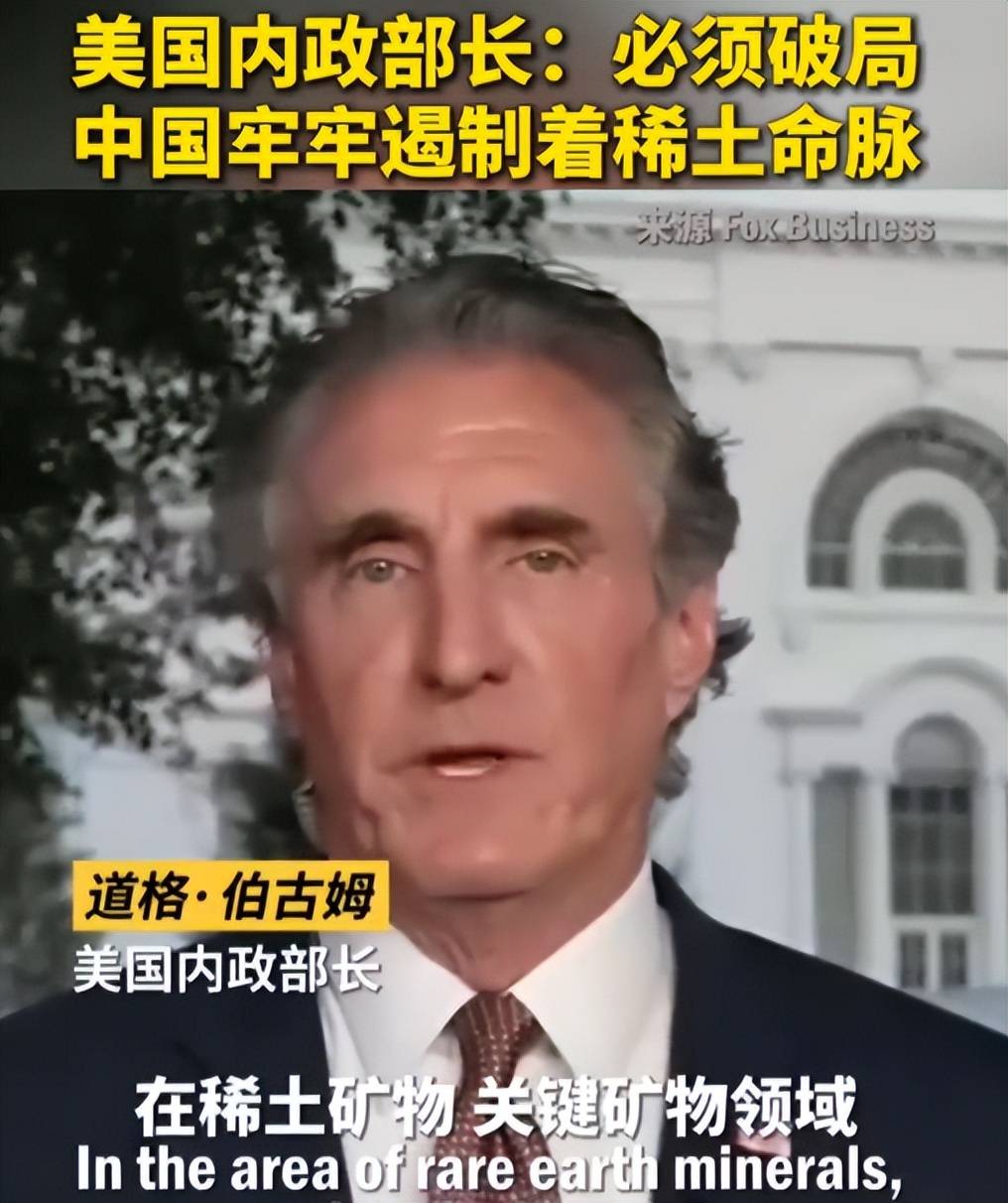
Group 1 - The core issue revolves around Trump's threat to impose a 100% tariff on China, which was quickly followed by a softening of stance, indicating a desire to avoid a trade war [1][6] - The U.S. heavily relies on China for rare earth elements, with 85% to 100% of critical rare earth refining capacity controlled by China, impacting high-tech and military industries [3][8] - Trump's initial plan to raise tariffs to 130% could backfire, as U.S. companies have limited inventory and could face production halts, particularly in the semiconductor sector [3][8] Group 2 - Following the tariff threat, the White House quickly adjusted its position, with Trade Secretary Gril stating there was no intention to engage in a trade war, reflecting economic pressures in the U.S. [7][11] - The stock market reacted negatively, with a loss of over $700 billion, indicating that investors recognized the potential harm of a 100% tariff on the U.S. economy [7][8] - Previous lessons from the trade war, such as losses in agriculture and manufacturing sectors, highlight the risks of further tariffs, which could also impact Trump's voter base [8][11] Group 3 - Gril's statements represent a tactical retreat for the Trump administration, as the U.S. seeks to balance the need to protect its high-tech industries while managing the implications of China's export controls [10][11] - The tightening of China's export controls on rare earths limits the U.S.'s ability to find alternative sources or production methods, creating a challenging situation for American industries [10][13] - The overall situation underscores the U.S.'s vulnerability in the rare earth sector, with Trump's aggressive tariff strategy potentially leading to self-inflicted damage [13]
美股一夜蒸发800点,A股下周能否扛住?3大关键性因素说明一切
Sou Hu Cai Jing· 2025-10-12 23:54
Core Points - The Dow Jones index experienced a significant drop of over 800 points, marking the largest single-day decline since April 7 [1] - The Nasdaq China Golden Dragon Index fell by 6% during the session, while the FTSE A50 futures dropped by 4.26% [1] Market Reaction - Unlike the "epic crash" on April 7, the A-share market had already adjusted in advance, with the main index falling below 3900 points and the ChiNext index dropping by 4.55% [3] - This preemptive decline has created mixed sentiments regarding the opening on the following Monday, with some investors fearing a repeat of history while others believe the internal and external environments for A-shares have changed significantly [3] External Factors - The ongoing U.S. government shutdown, now in its ninth day, has delayed the release of key economic data, such as the non-farm payroll report, leading to a loss of market judgment [3] - The recent high valuations of technology stocks in A-shares have also contributed to this sentiment, with many tech stocks doubling in value since September and major shareholders cashing out [3] Historical Context - Historically, A-shares have shown a tendency to "follow down but not follow up" in response to U.S. market movements, as seen in March 2025 when both A-shares and Hong Kong stocks opened lower following a U.S. market adjustment [3] Key Factors for A-shares - Three critical factors may disrupt the usual correlation between A-shares and U.S. markets: 1. The normalization of policy support mechanisms [5] 2. The valuation advantage of A-shares, with the CSI 300 index trading at a price-to-earnings ratio of approximately 11 times, less than one-third of the Nasdaq technology sector [5] 3. Continuous inflow of northbound capital, with over 50 billion yuan net inflow since October, focusing on growth sectors like AI and new energy [5] Sector Performance - In the face of external volatility, internal structural differentiation within A-shares is expected, with export-dependent technology stocks (e.g., consumer electronics, photovoltaics) likely to face pressure, while domestic demand sectors such as liquor, infrastructure, and counter-cyclical themes like rare earths and gold may become safe havens for capital [5] - The Shenzhen Development and Reform Commission announced that local semiconductor company Xinkailai will participate in the Bay Chip Exhibition, promising "surprises," which may help mitigate negative sentiment in the tech sector [5] Market Outlook - The performance of the 30-day moving average around 3847 points will be crucial for the market on the following Monday. If this level is maintained, a rotation to new leading sectors may occur post-adjustment in technology stocks; if it is lost, the market may enter a phase of volatility and bottom-seeking [5] - Some institutions have already begun to exit high-valuation sectors (e.g., CPO, Cambrian) in favor of low-valuation financial stocks, indicating the initiation of an internal hedging mechanism [5] - Current market sentiment resembles that of early 2020 during the pandemic, characterized by excess fear but no liquidity crisis, with the tech sector having already released some risk [5]
万斯称“特朗普愿意与中国进行理性谈判”!“TACO”交易再次上演
Zhong Guo Ji Jin Bao· 2025-10-12 22:46
Group 1 - The core message indicates that Vice President Vance has signaled a willingness for rational negotiations between Trump and China, leading to a positive reaction in the cryptocurrency market [2][3] - Vance mentioned that Trump values his friendship with China and hopes not to use the leverage they possess, suggesting a potential easing of tensions [2] - The Chinese Ministry of Commerce responded to Trump's threats, emphasizing that high tariffs are not the correct approach and urging the U.S. to correct its actions to maintain stable economic relations [2] Group 2 - The "TACO" strategy, which stands for "Trump Always Chickens Out," reflects a common investment approach on Wall Street, where Trump's tough negotiating tactics often lead to eventual concessions [4] - Historical data shows that Trump's threats of tariffs have previously resulted in market pullbacks that provide buying opportunities, indicating a pattern of behavior that investors may anticipate [4] - Compared to earlier instances, the market's reaction to Trump's tariff threats appears to be less severe, suggesting that investors have become somewhat immune to such announcements [4]
特朗普发出关税威胁,英伟达等美科技巨头市值蒸发超5万亿
Feng Huang Wang· 2025-10-11 01:26
Core Viewpoint - The market capitalization of major U.S. tech companies dropped by a total of $770 billion (approximately 5.5 trillion RMB) following tariff threats from Trump, significantly impacting major indices like NASDAQ and S&P 500 [1] Group 1: Market Impact - The stock prices of Amazon, Nvidia, and Tesla each fell by approximately 5% [1] - The NASDAQ Composite Index declined by 3.6%, while the S&P 500 Index fell by 2.7%, marking the largest single-day drop since April of this year [1] Group 2: Company-Specific Losses - Nvidia's market capitalization decreased by nearly $229 billion, despite being the first company to reach a market cap of $4.5 trillion [1] - Tesla's market value evaporated by $71 billion, while Amazon lost $121 billion in market capitalization [1] - Microsoft's market cap decreased by $85 billion, and Alphabet and Meta saw their stock prices drop by 2% and nearly 4%, respectively [1] Group 3: After-Hours Trading - In after-hours trading, Amazon, Nvidia, and Tesla experienced an additional decline of about 2% [1]




Review & Preview: Tariff Tumble
Barrons· 2025-10-10 22:21
Core Viewpoint - Stocks experienced their worst day since April due to new tariff threats and trade talks, reviving market concerns related to trade issues from earlier in the year [1] Group 1 - The market's decline was significantly influenced by renewed fears surrounding trade negotiations and tariff implementations [1] - This downturn reflects the ongoing volatility in the market related to trade policies, which has been a recurring theme throughout the year [1] - Investors are reminded of the potential impacts of trade tensions on stock performance, highlighting the sensitivity of the market to such developments [1]

美股异动|辉瑞股价飙升6.79%协议利好引领医药股集体欢腾
Xin Lang Cai Jing· 2025-10-01 22:48
Group 1 - Pfizer's stock has increased by 6.79% this week, marking a total rise of 15.30% over four consecutive days, reaching a new high since January 2025 [1] - The rise in Pfizer's stock price has positively impacted other pharmaceutical companies, including AstraZeneca, Sanofi, GlaxoSmithKline, Eli Lilly, Boehringer Ingelheim, and Merck [1] - Pfizer has entered a three-year drug tariff exemption agreement with the U.S. government, allowing the company to avoid tariffs previously proposed by former President Trump [1] Group 2 - The agreement includes a commitment from Pfizer to offer discounts of up to 85% on various medications for common conditions, ensuring patients can access drugs at lower prices [1] - This strategic move reflects Pfizer's flexibility in pricing to secure political stability amid macroeconomic pressures in the pharmaceutical industry [2] - Analysts view the agreement as a positive signal for Pfizer and the pharmaceutical sector, potentially increasing market confidence and serving as a model for other companies [2] Group 3 - Pfizer's commitment to invest in research and development and plans to relocate some production facilities back to the U.S. indicate a long-term strategy to address government pressures on trade and pricing policies [3] - The company's actions provide a more stable foundation for future planning in a volatile market environment, while investors are advised to maintain a cautiously optimistic approach [3]

【comex黄金库存】9月18日COMEX黄金库较上一交易日增加1.52吨
Jin Tou Wang· 2025-09-19 05:30
Group 1 - COMEX gold inventory recorded at 1220.24 tons on September 18, an increase of 1.52 tons from the previous trading day [1][2] - COMEX gold price closed at $3678.20 per ounce on September 18, down 0.44%, with an intraday high of $3707.30 and a low of $3660.50 [1][2] Group 2 - Canadian and Mexican leaders committed to closely coordinate before high-risk trade agreement reviews with the U.S. next year, amid U.S. President Trump's tariff threats [2] - The meeting in Mexico City marked a strengthening of Canada-Mexico relations, with both leaders seeking to persuade Trump to lower import tariffs on steel, automobiles, and agricultural products [2]
200%关税换稀土?特朗普威胁不了中国,美国确实无牌可打了
Sou Hu Cai Jing· 2025-09-01 03:01
Group 1 - Trump's recent claim of imposing a 200% tariff on China for magnetic materials is seen as a performative threat rather than a feasible policy [1][3] - The exaggerated tariff figures, such as 500% on Russian oil and gas purchases, indicate a lack of actionable policy and are more about gaining attention [3][4] - China's export regulations on rare earth materials are focused on compliance and traceability rather than outright restrictions, aimed at preventing military misuse [3][4] Group 2 - China's Ministry of Foreign Affairs has firmly stated that Trump's threats do not alter China's established principles regarding trade [4][6] - The ongoing trade war has not led to the anticipated economic collapse of China, which has shown resilience, while the U.S. faces rising inflation and debt [6][8] - The rhetoric from U.S. leaders, including extreme tariff claims, is increasingly viewed as empty threats, diminishing America's credibility on the global stage [6][8]