反垄断

Search documents
工业硅、多晶硅日报(2026年2月3日)-20260203
Guang Da Qi Huo· 2026-02-03 03:16
工业硅日报 工业硅&多晶硅日报(2026 年 2 月 3 日) 一、研究观点 点评 2 日工业硅震荡偏弱,主力 2605 收于 8795/吨,日内跌幅 1.18%,持仓减 仓 314 手至 23.6 万手。百川工业硅现货参考价 9628 元/吨,较上一交易 日持稳。最低交割品价格持稳在 8850 元/吨,现货升水扩至 55 元/吨。 多晶硅震荡偏弱,主力 2605 收于 47050 元/吨,日内跌幅 1.66%,持仓减 仓 2235 手至 40278 手;百川多晶硅 N 型复投硅料价格跌至 52500 元/ 吨,最低交割品硅料价格 52500 元/吨,现货升水扩至 4250 元/吨。硅石 企业正式进入冬修期,矿石供应量整体呈收缩。下游受春节假期影响同 步进入全面检修,工业硅供给双减博弈下,重心有成本支撑、但能否有 向上驱动取决于大厂是否超预期减产。工信部召开会议再度提及反垄断 相关话题,硅片企业新单签订基本处于停摆状态,晶硅市场悲观预期延 续,硅料仍有跌价压力。重点关注行业库存能否减压以及硅料厂是否有 扩大减产应对计划。 请务必阅读正文之后的免责条款部分 EVERBRIGHT FUTURES 1 工业硅日报 ...
未知机构:浙商社服独家深度从Booking看国内OTA告别价格平价巨头如-20260203
未知机构· 2026-02-03 01:50
Summary of Conference Call Notes Industry Overview - The focus is on the Online Travel Agency (OTA) industry in China, particularly in relation to Booking's strategies and market positioning amid antitrust investigations [1] Core Insights and Arguments - The market has shown divergence regarding domestic OTAs due to the investigation initiated on January 14, which has raised concerns about regulatory impacts [1] - Despite the antitrust scrutiny, Booking has managed to increase its market share and maintain stable commission rates, indicating a robust business model [1] - Booking is shifting from an agency model to a merchant model, allowing it to control cash flow and pricing by requiring prepayments, thus avoiding direct legal challenges related to price parity clauses [1] Additional Important Content - Booking utilizes significant Google advertising investments to secure public traffic and employs membership programs like Genius and Preferred Partner to transfer costs to hotels, creating a blurred comparison system [2] - The strategy includes cross-selling "flight + hotel" packages, which conceals room rates within bundled pricing [2] - Domestic OTAs still hold a leading advantage in mobile platforms and the Asia-Pacific supply chain [2] - The report serves as a comprehensive record of Booking's decade-long antitrust defense and is a valuable reference for understanding the current state of domestic OTAs [2] - Risk factors include potential overreach in EU antitrust regulations, rising costs of traffic acquisition, and excessive reliance on Google advertising [2]

浙商证券浙商早知道-20260202
ZHESHANG SECURITIES· 2026-02-02 11:31
Market Overview - On February 2, 2026, the Shanghai Composite Index fell by 2.48%, with the CSI 300 down by 2.13%, the STAR Market 50 down by 3.88%, the CSI 1000 down by 3.39%, the ChiNext Index down by 2.46%, and the Hang Seng Index down by 2.23% [5][4] - The best-performing sectors on February 2 were food and beverage (+1.11%) and banking (+0.17%), while the worst-performing sectors included non-ferrous metals (-7.62%), steel (-5.93%), basic chemicals (-5.69%), coal (-5.64%), and oil and petrochemicals (-5.51%) [5][4] - The total trading volume for the A-share market on February 2 was 26,066 billion yuan, with net inflow of southbound funds amounting to 1.907 billion HKD [5][4] Important Recommendations - The report highlights Dongpeng Beverage (605499) as a leading player in the energy drink sector, with clear growth drivers for 2026, including stable growth in specialty drinks, new product launches, and channel deepening [6][6] - The company is expected to achieve a revenue growth rate of 15%-20% in 2026, driven by its core specialty drink products and strong brand positioning [6][7] - Revenue projections for Dongpeng Beverage are estimated at 20,948.13 million yuan for 2025, 26,103.01 million yuan for 2026, and 31,763.13 million yuan for 2027, with corresponding net profit estimates of 4,509.80 million yuan, 5,750.23 million yuan, and 7,141.71 million yuan [6][7] Important Insights - The report discusses the implications of the EU's antitrust actions against Booking, which has seen its market share increase from approximately 60% in 2013 to over 71% in 2023, despite regulatory changes [9][10] - Investment opportunities are identified in Booking's strong market position and its shift towards a merchant model, while competitors like Expedia and Airbnb are adapting their strategies to maintain market relevance [10][10] - Catalysts for growth include the transition to a merchant model, leveraging Google advertising for traffic acquisition, and utilizing membership programs to enhance customer engagement [10][10]

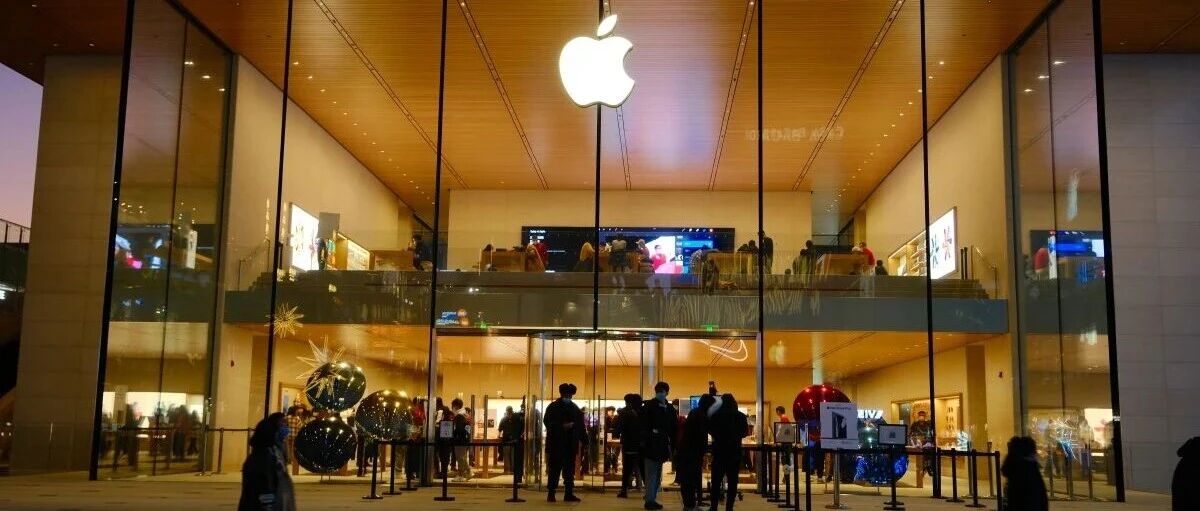
一边赚钱一边收割,苹果如何能在中国“两头通吃”?
商业洞察· 2026-02-02 09:38
Core Viewpoint - The article discusses Apple's financial performance and the ongoing controversy surrounding its "Apple Tax," highlighting the company's strong revenue growth, particularly in the Greater China region, and the implications of its service revenue model [4][5][9]. Financial Performance - Apple reported its first-quarter financial results for fiscal year 2026, achieving record highs in several key financial metrics, driven by strong demand for the iPhone 17 and a service revenue that surpassed $30 billion for the first time, reaching $30.01 billion, a year-on-year increase of approximately 14% [5][6]. - In the first quarter of fiscal year 2026, revenue from the Greater China region reached $25.53 billion, boosted by a 38% increase in iPhone 17 demand, contributing 17.7% to Apple's total revenue growth [5][9]. Service Revenue Insights - The service segment's gross margin is approximately 77%, significantly higher than Apple's overall gross margin of 46%, indicating a highly profitable business model [9]. - The service revenue growth is closely tied to Apple's large active device base, which exceeds 2.5 billion units, creating a network effect that enhances revenue from the App Store, paid subscriptions, and other services [9]. "Apple Tax" Analysis - The "Apple Tax" in the Greater China region accounts for about 10% of total revenue, compared to 8.8% in the U.S. and 4.6% in Europe, indicating a higher burden on Chinese consumers [12]. - Estimates suggest that the revenue from the "Apple Tax" in Greater China could reach approximately 50 billion RMB in 2025, with a gross profit of around 38.5 billion RMB, highlighting its profitability [12]. Regulatory Environment - Despite rising global scrutiny and regulatory changes in other regions, the "Apple Tax" remains unchanged in China, reflecting Apple's strong market position and its dual strategy of hardware sales and service revenue generation [13][16]. - The article notes that various global jurisdictions are pushing back against Apple's commission structure, yet China has not seen similar regulatory movements, maintaining the highest commission rates globally [20][21]. Consumer Awareness and Legal Actions - There is a growing awareness among Chinese consumers regarding the fairness of Apple's pricing policies, leading to formal complaints against the company for its market dominance and high fees [23][24]. - The complaints include demands for the opening of third-party payment channels and a reduction in the commission rates, indicating a shift from passive acceptance to active advocacy for consumer rights [25][26]. Future Implications - The article suggests that the ongoing regulatory and consumer pressures could reshape the digital market landscape in China, potentially leading to a more equitable distribution of profits and enhanced competition [27][28]. - A more transparent and fair market environment is seen as essential for the long-term competitiveness of China's digital economy on a global scale [30][31].


下游需求提振一般 多晶硅期货行情延续震荡下行
Jin Tou Wang· 2026-01-30 06:13
Core Viewpoint - The main focus of the news is the significant decline in polysilicon futures, with the primary contract dropping to a low of 47,005 yuan and closing at 47,910 yuan, reflecting a decrease of 4.65% [1]. Group 1: Market Analysis - The sentiment in the polysilicon futures market is weak, with prices falling below the 50,000 yuan per ton mark. Despite some major producers reducing output, downstream demand remains tepid, influenced by rising silver prices and cautious production increases in battery cells [2]. - High inventory levels of silicon materials are leading to price pressure, with manufacturers receiving fewer new orders and traders selling at lower prices. The market is characterized by inventory reduction and a wait-and-see approach [3]. - The current trading environment is dominated by weak supply and demand realities, with expectations of continued downward price movement. The main contract is projected to trade within a range of 48,000 to 55,000 yuan per ton [3]. Group 2: Price Projections - Major manufacturers are expected to reduce production, with the complete cost for mainstream manufacturers estimated between 46,000 and 48,000 yuan per ton, providing some support for prices. However, potential policy disruptions could affect market dynamics [3]. - There are no new drivers expected for polysilicon prices in the near term, leading to an anticipated price stabilization within the range of 48,500 to 52,000 yuan per ton [3].
银浆价格突然暴涨光伏企业承压,高盛研判:行业短期成本压力陡增
Zhi Tong Cai Jing· 2026-01-29 12:28
Core Viewpoint - The silver price surge is significantly impacting the production costs of the photovoltaic (PV) industry, leading to a restructured cost structure and increased pressure on profitability, with a consensus emerging around the need for silver alternatives in the industry [1]. Group 1: Price Dynamics - The price of silver paste has become the largest variable, with significant increases in January, leading to a rise in the unit production cost of battery cells and modules by 0.03 yuan per watt [2]. - The cost of silver now accounts for 20% of the total production cost of modules, a substantial increase from 7% in Q3 2025 and 11% in Q4 2025, making it the core cost component [2]. Group 2: Impact of Silver Price Surge - The rise in silver prices has redefined the cost structure of the PV industry, with silver paste now constituting over 20% of component costs, compared to less than 10% previously, leading to severe profit compression for companies [3]. - Major companies are expected to report significant losses in 2025, with Tongwei Co. projected to lose 9-10 billion yuan and Trina Solar expected to lose 6.5-7.5 billion yuan, resulting in an overall industry gross margin drop from 15% in 2024 to below 5% [3]. Group 3: Challenges in Price Transmission - Companies are attempting to raise prices in response to cost pressures, but face limitations due to market conditions, with only short-term relief available through export tax rebates [4]. - The market for PV components is characterized by oversupply, limiting the ability of companies to pass on costs to downstream project developers, which may lead to loss of market share if prices are raised individually [6]. Group 4: Technological Evolution and Industry Outlook - The surge in silver prices is accelerating technological innovation in the PV industry, with a focus on reducing silver dependency, which is expected to lead to a market reshuffle [7]. - By 2026, the PV industry is anticipated to operate under increased antitrust regulations and efforts to combat internal competition, with pricing closely following the cost reduction progress of leading companies [7]. Group 5: Investment Strategies - Investment focus is shifting towards companies with high efficiency and low costs, emphasizing the importance of capacity utilization rates and cost reduction progress in improving profitability [7]. - Specific investment directions include short-term solutions like silver-coated copper paste, mid-term solutions such as copper plating, and long-term exploration of pure copper paste [9].
最高法发布知产报告:防治行业“内卷式”竞争,引导良性竞争
Nan Fang Du Shi Bao· 2026-01-28 05:46
Core Insights - The Supreme People's Court released the "Intellectual Property Court Annual Report (2025)", focusing on preventing "involution" competition in industries and regulating monopolistic behaviors in essential sectors like pharmaceuticals and construction materials [1][2] - The report emphasizes the importance of fair competition and the need for judicial efficiency in antitrust cases, highlighting the court's role in fostering a healthy industrial environment [1][2] Group 1: Involution Competition - The court aims to combat "involution" competition by aligning with national interests and promoting fair competition, thereby creating conditions for orderly industrial development [1] - The report mentions successful resolution of patent disputes in the optical lens sector, encouraging companies to focus on innovation and healthy competition [1] Group 2: Antitrust Enforcement - Since its establishment, the court has accepted 347 antitrust cases, concluding 292, with 66 cases recognized as monopolistic [2] - In 2025, 49 cases were concluded, with 15 identified as monopolistic, indicating ongoing judicial efforts to enhance antitrust effectiveness [2] Group 3: Regulation of Key Sectors - The report highlights the regulation of monopolistic behaviors in essential sectors, including a case involving a horizontal monopoly agreement among raw material pharmaceutical companies, which aims to lower production costs for finished drugs [2] - The court has also addressed horizontal monopoly agreements in the cement industry, supporting administrative penalties to maintain fair competition [2] Group 4: Platform Regulation - The report discusses the regulation of large platforms abusing market dominance, particularly in mobile payment services, to protect consumer rights and promote interconnectivity [2] - The court's actions in the "shared electric bike" case marked a significant step in breaking down administrative monopolies, promoting a unified national market [2]
Senate Hearing On Netflix-Warner Bros. Transaction Set For Feb. 3; Co-CEO Ted Sarandos To Testify
Deadline· 2026-01-26 17:28
Group 1 - The Senate Judiciary antitrust subcommittee will hold a hearing on the proposed Netflix acquisition of Warner Bros. on February 3, with co-CEO Ted Sarandos set to testify [1] - The acquisition involves Netflix acquiring studio and streaming assets, including HBO and HBO Max, while Warner Bros. Discovery's cable channels will be spun off into a separate company [2] - Concerns have been raised regarding potential antitrust issues related to the Netflix-Warner Bros. merger, with specific mention of the misuse of competitively sensitive information during the merger review process [3]



市场监管总局首次对公用事业领域 企业并购亮红牌
Yang Shi Wang· 2026-01-26 06:53
Core Viewpoint - The State Administration for Market Regulation (SAMR) has prohibited the establishment of a joint venture between several gas companies in Foshan, marking the first ban on concentration in the public utility sector since the implementation of the Anti-Monopoly Law in China, aimed at maintaining competition in the bottled liquefied petroleum gas market and protecting consumer interests [1] Group 1 - On January 21, SAMR banned the joint venture proposal involving Bluebird Gas Co., Ltd. and Nanguan Gas Co., Ltd. in Foshan, Guangdong Province [1] - The proposed joint venture aimed to invest in, construct, and operate a liquefied petroleum gas storage and distribution station [1] - The concentration did not meet the reporting standards set by the State Council, but the parties voluntarily submitted the proposal for review [1] Group 2 - SAMR conducted multiple consultations with relevant government departments and industry associations, and engaged an independent third-party organization for economic analysis [1] - The assessment indicated that the concentration would lead to a dominant market position for the joint venture in the bottled liquefied petroleum gas market in Foshan, facilitating potential collusion with other market participants to raise prices [1] - The decision to prohibit the joint venture was made in accordance with the Anti-Monopoly Law and related regulations to protect fair competition and consumer interests [1]
去年刑事案件为本世纪以来最低 上月各线城市商品房售价总体下降
Xin Lang Cai Jing· 2026-01-26 06:30
Group 1: Criminal Justice and Public Safety - The number of criminal cases nationwide decreased by 12.8% year-on-year, marking the lowest level since the beginning of the century [1] - The national sense of security among the public is projected to reach 98.23% by 2025, maintaining above 98% for six consecutive years [1] - Significant achievements in combating telecom and internet fraud, with 57,000 criminals repatriated and the head of a gambling fraud group apprehended [1] - Drug-related crimes saw a historic decline, with the number of drug users down by 63% since the end of 2020 [1] Group 2: Judicial System and Credit Repair - In 2025, over 37 million judicial execution cases were accepted, with a year-on-year increase of over 10% [1] - The number of criminal cases and defendants in first-instance criminal cases decreased, while civil and commercial cases increased by over 11% [1] - The number of credit repairs exceeded the number of new entries into the dishonesty list for seven consecutive quarters, aiding many businesses in resuming normal operations [1] Group 3: Environmental and Industrial Policy - Five departments issued guidelines for the construction of zero-carbon factories, emphasizing technological innovation and management optimization to reduce CO2 emissions [4] - The initiative will prioritize industries with urgent decarbonization needs and gradually expand to sectors with higher carbon intensity by 2030 [4] Group 4: Economic Indicators - In 2025, China's GDP reached 14,018.79 billion yuan, growing by 5.0% year-on-year [8] - The first, second, and third industries saw respective growth rates of 3.9%, 4.5%, and 5.4% [8] - The per capita disposable income for residents was 43,377 yuan, also reflecting a nominal growth of 5.0% [8] Group 5: Real Estate Market - In December 2025, new residential sales prices in first-tier cities fell by 0.3% month-on-month, while second and third-tier cities saw declines of 0.4% [8] - Year-on-year, new residential prices in first-tier cities decreased by 1.7%, with second and third-tier cities experiencing declines of 2.5% and 3.7% respectively [8] - Second-hand residential prices in first-tier cities dropped by 7.0% year-on-year, with notable declines in major cities like Beijing and Shanghai [8]