
数字化管理

Search documents
皖仪科技董事长臧牧:战略跃迁,开启智能化研发新阶段
Zhong Guo Zheng Quan Bao· 2025-10-27 08:25
Core Insights - The inauguration of the new headquarters on October 28 marks a strategic leap for Wanyi Technology, transitioning from a mere building completion to a significant milestone in the company's development history [2] - Wanyi Technology aims to become a global leader in precision scientific instruments, with a clear strategic layout that includes a focus on industrial detection and online monitoring as foundational business areas [2][4] - The company reported impressive financial results for the first three quarters of 2025, with revenue reaching 519 million yuan, a year-on-year increase of 13.84%, and a net profit of 25.76 million yuan, marking a significant turnaround [4][5] New Headquarters and Strategic Goals - The new headquarters symbolizes Wanyi's entry into a phase characterized by "intelligent R&D, digital management, and global layout," enhancing its capabilities in core areas such as chromatography and mass spectrometry [3] - The company is committed to a dual strategy of maintaining a solid foundation while exploring new growth drivers, particularly in laboratory analysis instruments and the emerging medical and life sciences sectors [2][4] R&D Investment and Technological Advancements - Wanyi Technology has maintained a high R&D investment ratio, with 2024 expenditures reaching 147 million yuan, accounting for 19.82% of revenue, sustaining around 20% for four consecutive years [5] - The company has developed a proprietary technology system, achieving performance metrics comparable to imported instruments, which has been a key driver of revenue growth [4][5] Ecosystem and Long-term Vision - Wanyi Technology emphasizes building a "reliable and long-term" ecosystem that fosters strong relationships with customers, investors, suppliers, and employees, aiming for mutual growth [7] - The company is focused on digital transformation through its "5+1 plan," which encompasses intelligent R&D, manufacturing, operations, marketing, services, and products, enhancing decision-making and operational efficiency [7] Transition to Solution Provider - The future direction for Wanyi Technology involves transitioning from a mere instrument manufacturer to a comprehensive solution provider, addressing customer pain points across various sectors such as new energy, industrial applications, and pharmaceuticals [8] - The company is committed to sustainable development, integrating low-carbon and environmental considerations into all operational aspects, and plans to increase environmental investments in 2024 [8]

开启智能化研发新阶段 战略跃迁剑指百亿目标
Zhong Guo Zheng Quan Bao· 2025-10-26 23:21
Core Insights - The inauguration of the new headquarters on October 28, 2025, marks a strategic leap for Wanyi Technology, transitioning from a mere building completion to a significant milestone in the company's development history [3] - Wanyi Technology aims to become a global leader in precision scientific instruments, with a clear strategic layout that includes a focus on industrial detection and online monitoring as foundational business areas [3][4] - The company reported a revenue of 519 million yuan for the first three quarters of 2025, reflecting a year-on-year growth of 13.84%, with a remarkable net profit increase of 1033.18% in the third quarter [5][6] Business Strategy - The new headquarters will support the company's mission of "intelligent R&D, digital management, and global layout," enhancing its capabilities in core areas such as chromatography and spectroscopy [4] - Wanyi Technology's strategy emphasizes a dual approach of maintaining a stable foundation while seeking new growth drivers, particularly through its laboratory analysis instruments and emerging medical and life sciences sectors [3][5] R&D and Innovation - The company has maintained a high R&D investment, with 147 million yuan allocated in 2024, representing 19.82% of its revenue, sustaining a consistent R&D investment ratio of around 20% over the past four years [6][7] - The development of the LCMS-TQ9200 liquid chromatography-tandem mass spectrometry system exemplifies the company's commitment to technological innovation, achieving performance metrics comparable to imported instruments [6] Ecosystem and Stakeholder Engagement - Wanyi Technology's brand philosophy focuses on building reliable long-term relationships with stakeholders, including customers, investors, suppliers, and employees, to foster sustainable growth [7][8] - The company is implementing a "5+1 plan" to enhance its digital transformation across various operational areas, aiming to improve decision-making and service delivery [8] Future Outlook - The company is transitioning from being a mere instrument manufacturer to a comprehensive solution provider, addressing customer pain points across various sectors such as new energy, industrial applications, and pharmaceuticals [9] - Wanyi Technology is committed to green development, integrating environmental considerations into its operations and increasing investments in sustainability initiatives [9]

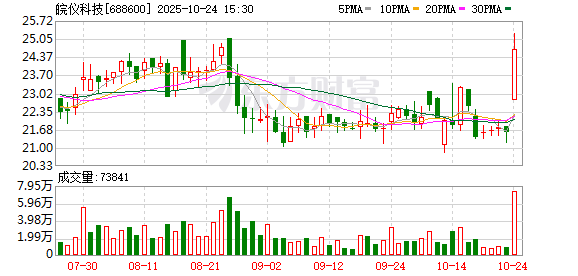
皖仪科技董事长臧牧: 开启智能化研发新阶段 战略跃迁剑指百亿目标
Zhong Guo Zheng Quan Bao· 2025-10-26 21:10
Core Insights - The inauguration of the new headquarters on October 28, 2025, marks a strategic leap for Wanyi Technology, transitioning from a mere building completion to a significant milestone in the company's development history [2][3] - Wanyi Technology aims to become a global leader in precision scientific instruments, with a clear strategic layout that includes a focus on industrial detection and online monitoring as foundational business areas [2][4] - The company reported a revenue of 519 million yuan for the first three quarters of 2025, reflecting a year-on-year growth of 13.84%, with a remarkable net profit increase of 1033.18% in the third quarter [4][5] New Headquarters and Strategic Goals - The new headquarters will support Wanyi's mission of "intelligent R&D, digital management, and global layout," enhancing its capabilities in core areas such as chromatography and mass spectrometry [3][4] - The company has set a target of achieving "100 billion Wanyi," emphasizing a dual strategy of maintaining a solid foundation while exploring new growth drivers [2][4] R&D Investment and Technological Advancements - Wanyi Technology's R&D investment reached 147 million yuan in 2024, accounting for 19.82% of its revenue, maintaining a consistent investment ratio of around 20% over the past four years [5][6] - The company has developed a proprietary technology system, enabling it to design and manufacture core instruments and components independently, achieving performance metrics comparable to imported instruments [5][7] Ecosystem and Long-term Vision - Wanyi Technology emphasizes building reliable relationships with stakeholders, including customers, investors, suppliers, and employees, to foster long-term development [7][8] - The company is committed to a digital transformation strategy, focusing on six key areas: intelligent R&D, manufacturing, operations, marketing, services, and products, to enhance decision-making and operational efficiency [8][9] Transition to Solution Provider - Wanyi Technology is transitioning from being a mere instrument manufacturer to an overall solution provider, addressing customer pain points across various sectors such as new energy, industrial applications, and pharmaceuticals [9] - The company prioritizes low-carbon and environmentally friendly practices in its operations, planning to increase investments in environmental protection and optimize processes for sustainable production [9]
开启智能化研发新阶段战略跃迁剑指百亿目标
Zhong Guo Zheng Quan Bao· 2025-10-26 21:06
Core Insights - The opening of the new headquarters for Wanyi Technology on October 28, 2025, marks a significant strategic leap for the company, transitioning from a manufacturer to a comprehensive solution provider in the precision scientific instrument sector [1][2][5] - Wanyi Technology aims to achieve its "100 billion Wanyi" goal, focusing on becoming a global leader in precision scientific instruments, supported by a clear strategic layout [2][3] - The company reported a revenue of 519 million yuan for the first three quarters of 2025, a year-on-year increase of 13.84%, with a remarkable net profit growth of 1033.18% in the third quarter [2][3] New Headquarters and Strategic Transition - The new headquarters will support the company's mission of "intelligent R&D, digital management, and global layout," facilitating a shift from being an instrument manufacturer to an industry solution provider [1][2] - The new facility will enhance R&D capabilities, optimize digital management processes, and improve global market reach [2][5] Financial Performance and R&D Investment - Wanyi Technology's strong financial performance is attributed to core technology breakthroughs and a deep response to market demands, with a focus on product leadership through continuous innovation [3][4] - The company invested 147 million yuan in R&D in 2024, accounting for 19.82% of its revenue, maintaining a consistent R&D investment ratio of around 20% over the past four years [3][4] Ecosystem and Brand Philosophy - The brand philosophy of "more reliable, long-term" emphasizes building reliable relationships with stakeholders, including customers, investors, suppliers, and employees [4][5] - The company is committed to digital transformation across six key areas, enhancing decision-making, operations, management, and technology analysis [5] Future Direction and Social Responsibility - Wanyi Technology plans to transition to an "overall solution provider," focusing on various sectors such as new energy, industrial applications, and pharmaceuticals, to address customer pain points comprehensively [5] - The company prioritizes low-carbon and environmentally friendly practices in its operations, aiming to enhance green production and ensure employee safety [5]
海信拥抱AI变革激发管理新动能
Zhong Guo Zhi Liang Xin Wen Wang· 2025-10-23 07:50
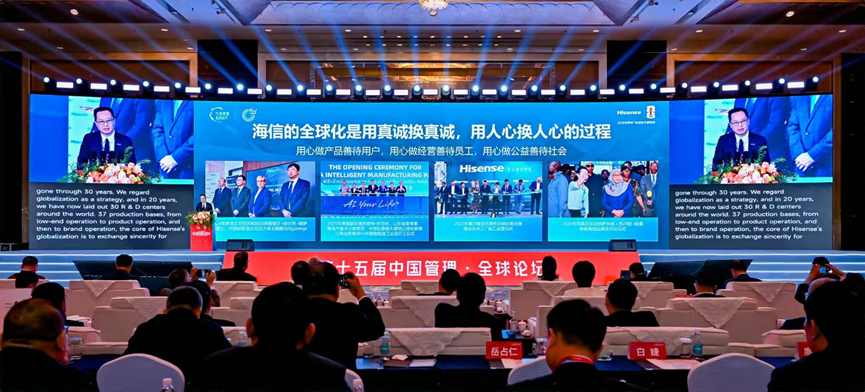
Core Insights - The forum emphasized the transformative impact of AI on enterprise management, with a focus on how companies can adapt to this change to enhance their operational capabilities [1][2] Group 1: AI and Management Transformation - The chairman of Hisense highlighted the need for companies to embrace AI-driven changes in management practices, marking the beginning of a "digital management era" in China [1] - Hisense is implementing digital transformation across various functions, including R&D, manufacturing, marketing, and services, viewing it as a key strategic initiative for future growth [1][2] Group 2: Organizational Change and Strategy - Hisense is pursuing a deep organizational transformation, adopting a "small headquarters, large industry" model to create a more efficient and market-responsive structure [2] - The company emphasizes the importance of speed in decision-making and action, advocating for a proactive approach even in uncertain situations [1][2] Group 3: Collaboration and Knowledge Sharing - The establishment of the China Management Talent Development Research Institute aims to create a platform for learning and exchanging management wisdom, bridging the gap between academia and industry [3] - Hisense's case study on penetrating the global high-end market was recognized as one of the top ten best practices, showcasing successful strategies for international expansion [3]

用好“一企一档”提升监管精准化水平
Zhong Guo Huan Jing Bao· 2025-10-22 05:47
Group 1 - The core viewpoint emphasizes the transition of ecological environment regulation from a "manpower-based" approach to a "data-driven" model, with "one enterprise, one file" as a foundational tool for managing fixed pollution sources [1] - In practice, there are challenges such as lagging infrastructure and slow digitalization, which hinder the precision and intelligence of ecological environment regulation [1] - In Fengqing County, Yunnan Province, only over 200 out of nearly 3000 enterprises that conducted environmental assessments since 2016 have established proper archives, indicating a significant regulatory blind spot [1] Group 2 - To address these challenges, a "three-in-one" reform is proposed, focusing on building standardized archive infrastructure with independent storage facilities and smart environmental control systems [2] - The development of a digital management platform is essential, integrating IoT, big data, and AI technologies to create a comprehensive management system with features like automatic archiving and risk dynamic warning [2] - The implementation of an archive lifecycle traceability mechanism is recommended to ensure the integrity and traceability of regulatory clues [2] Group 3 - A robust institutional guarantee system is necessary, including quantifiable assessment standards for archive completeness, accuracy, and timeliness, with a strict 48-hour deadline for archiving environmental administrative documents [3] - The establishment of a verification team composed of professionals from various fields is crucial for cross-checking the authenticity of archives and creating a blacklist for false materials [3] - Upgrading archive images to high definition and utilizing advanced scanning technology will support structured data for environmental risk assessment models, facilitating a shift from experience-based to data-driven regulatory decision-making [3]
科技赋能让千年工程焕发“青春” 多维度解码中国水利“含金量”
Yang Shi Wang· 2025-10-19 08:40
Core Insights - The article highlights the significant advancements in water management and irrigation systems in China during the "14th Five-Year Plan" period, emphasizing the restoration of river and lake ecosystems and the modernization of irrigation infrastructure [1][39]. Group 1: Water Management and Infrastructure Development - The "14th Five-Year Plan" has led to the reconnection of many rivers and lakes, with notable examples including the Beijing-Hangzhou Grand Canal and the Yongding River, which have resumed full flow after years of disconnection [1]. - The Doujiangyan Irrigation District, one of the largest in China, has seen its irrigated area expand from approximately 2.82 million mu in 1949 to 11.65 million mu by October 2025 [7]. - The Doujiangyan Irrigation District has increased its irrigated area by 740,000 mu during the "13th Five-Year Plan" period, driven by innovative management mechanisms and digital management methods [10]. Group 2: Technological Integration in Water Management - The integration of IoT and big data has enhanced the precision of irrigation management, allowing for real-time monitoring of water flow, weather conditions, and gate operations [15]. - The establishment of the Doujiangyan Irrigation Command Center has improved the management of water resources and flood control during the summer flood season [12][16]. Group 3: Historical Context and Cultural Significance - The article reflects on the historical significance of water management in Chinese civilization, tracing back to ancient practices that emphasized harmony with nature and efficient water use [20][24]. - The wisdom accumulated over thousands of years in water management continues to influence modern engineering practices, highlighting the importance of water resources for national stability and economic development [38][39]. Group 4: Achievements in Water Infrastructure - Over the past five years, China has made remarkable progress in water infrastructure, with investments in water projects exceeding 1 trillion yuan in 2022, marking a historical milestone [39]. - China has built 95,000 reservoirs with a total capacity exceeding 1 trillion cubic meters, making it the world leader in reservoir construction [41].

推动中国企业管理经验全球崛起,海信联合发起成立中国管理人才发展研究院
Zheng Quan Shi Bao Wang· 2025-10-18 07:33
Core Insights - The forum emphasized the transformative impact of AI on enterprise management, highlighting the need for companies to adapt quickly while maintaining a steady approach to business quality and strategy [1][3][4] Group 1: AI and Management Transformation - The theme of the forum was "AI + Management: Creating New Productive Forces," focusing on the integration of AI in management practices [4] - Companies are encouraged to embrace rapid changes in strategy while ensuring a stable mindset towards business operations [3][4] Group 2: Organizational Changes and Strategies - Hisense is implementing a significant organizational transformation, promoting a "small headquarters, large industry" model to enhance market responsiveness and operational efficiency [3][4] - The company is committed to digital transformation across various functions, including R&D, manufacturing, marketing, and services [3] Group 3: Recognition and Best Practices - Hisense's case study, "Breaking into Europe: Raising the Flag of Chinese Manufacturing in the Global High-End Market," was recognized as one of the top ten best practice cases at the forum [6] - The forum also saw the establishment of the China Management Talent Development Research Institute, aimed at fostering management wisdom and bridging academia and industry [4][6]
雀巢做起“加减法”:拟优化1.6万人,每年省10亿瑞郎投入高增长领域
3 6 Ke· 2025-10-17 00:48
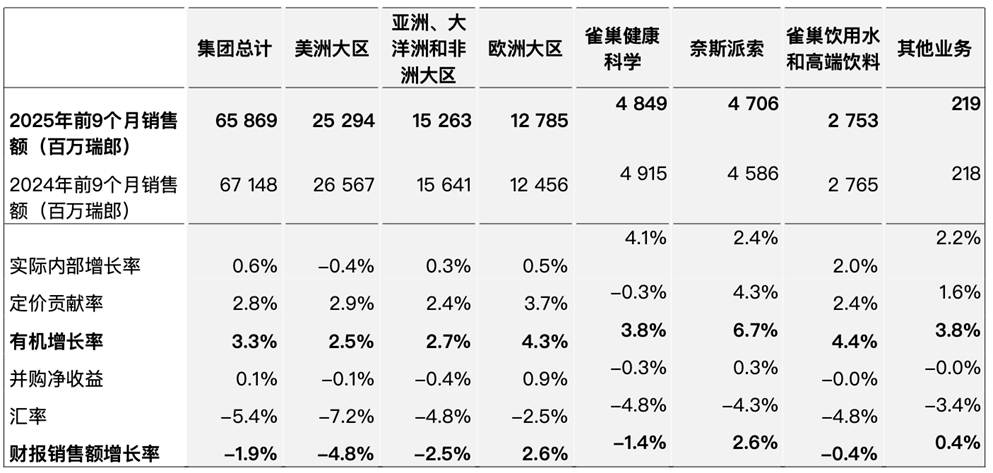
Core Insights - Nestlé's transformation strategy is showing early signs of success, with a focus on internal growth rates driving performance [1][2] - The company reported total sales of 65.9 billion Swiss francs for the first nine months of 2025, a slight decline of 1.9% year-on-year, but an organic growth rate of 3.3%, up from 2.0% in the same period of 2024 [1][2] - The third quarter saw an organic growth rate rise to 4.3%, indicating strong internal growth resilience despite currency fluctuations impacting sales [1][2] Financial Performance - The organic growth of 3.3% in the first three quarters included a 100 basis point contribution from high-growth investments and efficiency improvements [2] - Breakdown of the organic growth rate shows a pricing contribution of 2.8% and an internal growth rate of 0.6%, reflecting a trend in the global consumer goods industry where price increases are the main driver, but sales volumes are beginning to recover [2][4] - The third quarter's performance was particularly strong, with organic growth rising from 2.9% in the first half to 4.3%, and the internal growth rate rebounding to 1.5% [3][4] Regional Performance - All regions contributed positively to organic growth, with Europe showing the strongest performance at a sales growth of 2.6% and an organic growth rate of 4.3% [8][9] - Emerging markets outperformed developed markets, with an organic growth rate of 5.2%, driven primarily by pricing strategies [8][9] Strategic Initiatives - Nestlé has increased its cost-saving target from 2.5 billion to 3 billion Swiss francs, aiming to achieve this by the end of 2027 through optimizing 16,000 positions [7] - The company is focusing on high-potential areas and has launched six major innovation projects in functional foods and smart packaging [7][10] - E-commerce channels showed a robust organic growth rate of 13.2%, indicating successful digital transformation efforts [6][10] Market Outlook - Nestlé maintains its outlook for 2025, expecting organic sales growth to improve compared to 2024, with a basic trading operating profit margin reaching or exceeding 16% [9][10] - The company aims for a free cash flow target exceeding 8 billion Swiss francs by 2025, with growth rates expected to surpass dividend growth from 2026 onwards [10] Stock Market Reaction - Following better-than-expected performance and confidence in the new CEO's organizational changes, Nestlé's stock price surged by 8.2% on October 16, marking the largest single-day increase since 2008 [11]

从“黑金”到“绿能”,新疆煤炭产业向“新”而行
Zhong Guo Huan Jing Bao· 2025-10-17 00:26
Core Insights - Xinjiang is a significant energy strategic base in China, with coal resources estimated at approximately 22 trillion tons, accounting for over 40% of the national total, and an annual production exceeding 400 million tons [1] - The coal industry in Xinjiang is rapidly developing under national energy security and western development strategies, focusing on large-scale, base-oriented, and green development [1] - The region faces challenges such as water resource shortages, ecological fragility, and carbon emission constraints, necessitating a transition to green, clean, and efficient development [1] Environmental Protection and Clean Production - Xinjiang is implementing strict environmental protection indicators to eliminate outdated production capacity and enhance clean production levels [2] - Projects like the New Tian Coal Chemical project in Ili are converting coal into clean natural gas, while carbon capture initiatives are being explored [2] - The region has achieved over 75% comprehensive utilization of coal waste in the Qun Dong area, moving towards near-zero emissions for wastewater and greenhouse gases [2] Technological Innovation and Resource Efficiency - Technological innovation is driving the green transformation of the entire coal industry chain in Xinjiang [3] - Smart mining initiatives are being promoted to reduce surface subsidence and water resource damage, while low-grade coal is being utilized more effectively [3] - The region is developing a green technology system with over 20 core technologies, three of which are internationally leading [4] Industrial Coupling and Circular Economy - Xinjiang is integrating coal with renewable energy sources, creating a multi-energy complementary system [5][6] - Projects in Hami and Changji are implementing integrated wind-solar-fire storage systems to support renewable energy consumption [6] - The region is also exploring hydrogen energy applications to reduce carbon emissions in coal chemical processes, forming a complete industrial chain from coal mining to hydrogen application [7]