新兴产业

Search documents
金属涨跌互现 伦锡碳酸锂跌逾5% 纽金破5100 贵金属新高刷不停
Sou Hu Cai Jing· 2026-01-26 08:33
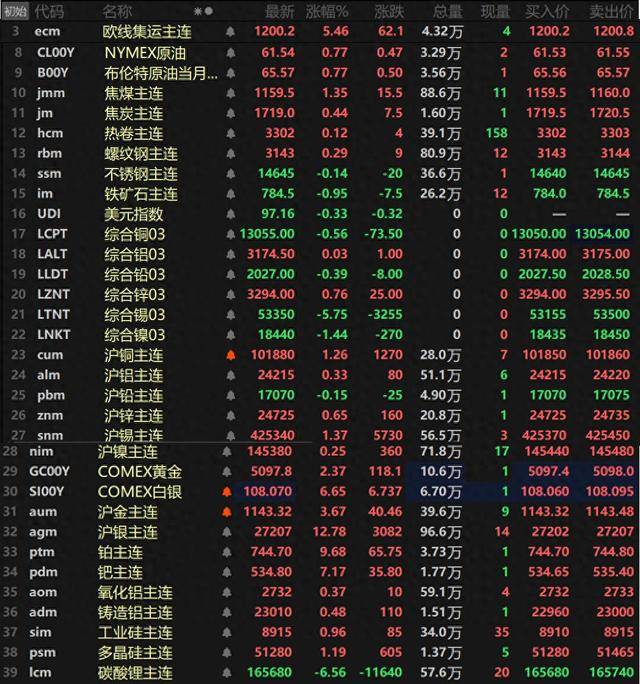
来源:上海有色网 金属市场: 截至日间收盘,内盘基本金属普涨,仅沪铅唯一下跌,跌幅达0.15%。沪铜、沪锡涨逾1%,沪铜涨 1.26%,沪锡涨1.37%,其余金属涨幅均在1%以内。氧化铝主连涨0.37%,铸造铝主连涨0.48%。 此外,碳酸锂主连跌6.56%,早间开盘曾一度冲至189440元/吨,刷新2023年9月以来的新高之后回落。 多晶硅涨1.19%,工业硅涨0.96%。欧线集运涨5.46%报1200.2。 黑色系方面涨跌互现,铁矿跌0.95%,不锈钢跌0.14%,其余金属均上涨,但涨幅波动均不大。双焦方 面,焦煤涨1.35%,焦炭涨0.44%。 【2025年我国消费呈现新亮点 家电、手机等消费热度上升】国家税务总局利用税收大数据对消费情况 进行跟踪分析显示,2025年我国消费市场呈现多方面新亮点,家电、手机、新能源汽车等消费需求有力 释放。发票数据显示,2025年,家电消费呈增长态势,冰箱等日用家电零售业、燃气灶等厨具卫具零售 业、手机等通信设备零售业销售收入同比分别增长17.4%、12.9%和18.6%。新能源汽车消费热度持续上 升,机动车销售统一发票数据显示,2025年,新能源乘用车销量、销售收入同 ...

20cm速递|关注科创创业ETF(588360)投资机会,紧扣“十五五”规划方向,重点布局科技创新领域
Mei Ri Jing Ji Xin Wen· 2026-01-26 07:42
相关机构表示,当前市场运行面临多重因素的博弈与对冲:一方面,中高估值水位、监管降温信号及海 外地缘风险共同抑制市场过热倾向;另一方面,科技创新与内需扩张的双轮驱动正在强化,政策端持续 发力催生结构性投资机遇。战略层面应紧扣"十五五"规划方向,重点布局包括新兴产业(新能源、新材 料、低空经济、航空航天)和未来产业(量子科技、脑机接口、具身智能)在内的科技创新领域。投资 策略上,坚持"科技创新+红利资产"的哑铃型配置,并以ETF工具平滑曲线、优化风险收益比。 (文章来源:每日经济新闻) 科创创业ETF(588360)跟踪的是科创创业50指数(931643),单日涨跌幅限制达20%,该指数从科创 板与创业板中选取市值较大、科技属性显著的50只新兴产业上市公司证券,重点覆盖电子、电力设备、 通信、医药生物等行业,以反映这些市场中代表性新兴产业公司的整体表现。 ...

上市公司积极参设基金 加速布局新技术、新产业
Zheng Quan Ri Bao· 2026-01-25 16:45
Core Viewpoint - The trend of listed companies participating in fund establishment reflects their strategic need for transformation and expansion, showcasing long-term strategic vision [1] Group 1: Fund Establishment Trends - Nearly 60 listed companies have announced their participation in fund establishment or disclosed project progress this year [1] - Collaborating with professional institutions for joint investments is the mainstream approach for listed companies in fund establishment [2] - Companies like Tianjin Pengling Group and Ningbo Deye Technology have initiated funds with significant capital contributions, indicating a strong commitment to this trend [2] Group 2: Investment Strategies - Subscription to fund shares is also a significant method for listed companies to engage in fund investments [3] - Companies are leveraging partnerships with professional investment institutions to enhance resource allocation efficiency and capture market opportunities in new technologies and industries [3] - The involvement of professional institutions provides management experience and risk control capabilities, strengthening companies' resilience [3] Group 3: Focus on Emerging Industries - The robotics industry chain is becoming a popular investment area for listed companies establishing funds, with a focus on key components and various types of robots [4] - Other emerging industries such as new energy, new materials, semiconductors, and artificial intelligence are also core investment directions due to their growth potential [5] - Companies are strategically positioning themselves to secure core technologies and supply chains, thereby building a solid industrial moat [5] Group 4: Strategic Considerations - Listed companies need to balance strategic alignment with risk management when establishing funds, ensuring that investments align with long-term strategies [5] - The improvement of regulatory policies is expected to enhance the standardization of fund establishment by listed companies, optimizing the role of capital in empowering industries [5]
2026广东两会•会客厅(1)交通筑脉 创新聚能 开放出海
Xin Lang Cai Jing· 2026-01-25 03:48
2026年,是"十五五"规划的开局之年,省委经济工作会议为传统产业、新兴产业、未来产业齐头并进这 一明确目标划上重点,锚定重要航向。站在新起点,广东究竟如何走在前、作示范、挑大梁?让我们一 同聚焦广东两会,见证委员们的实干担当。 本期节目嘉宾:广东省政协委员、中铁南方投资集团有限公司党委书记、董事长 李仲峰;广东省政协 委员、世界数字科学院国际首席人工智能官 杜兰;广东省政协委员、安永中国主席 陈凯。让我们一起 带着对广东发展的深切期许,聆听委员们的"铿锵之声"! 新岁启航,携手奋进,开局定向,蓝图铺就! 这里是《观点财经》广东两会特别节目——《走在前 作示范 挑大梁 2026广东两会•会客厅》! ...
大连跻身东北首个万亿之城,为东北振兴注入动能
Zhong Guo Xin Wen Wang· 2026-01-23 15:10
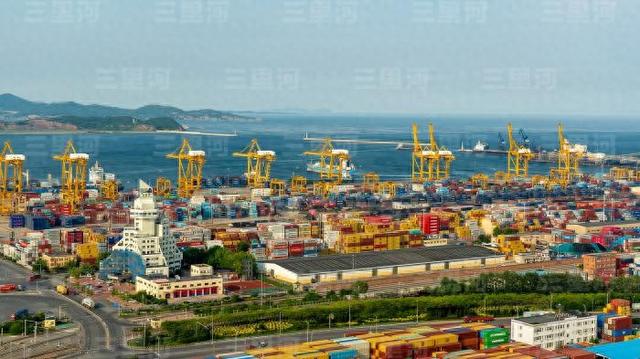
Core Insights - Dalian has become the first city in Northeast China to achieve a GDP exceeding 1 trillion yuan, reaching 10,002.1 billion yuan in 2025, with a year-on-year growth of 5.7% at constant prices [1][3]. Economic Contributions - The industrial economy and port economy are significant contributors to Dalian's growth, with the industrial sector accounting for 60% of GDP growth in 2023 [4]. - Dalian's petrochemical industry is a key player, projected to reach a production value of 425.6 billion yuan in 2024, ranking first in Northeast China and fourth nationally [4]. - The port economy is vital, with Dalian Port ranking fourth globally in the Container Port Performance Index for 2020-2024 [5][7]. Emerging Industries - Dalian is fostering new economic drivers, with a new generation information technology industry forming a 200 billion yuan cluster and advancements in the new energy sector [8]. - Strategic emerging industries now account for 15% of GDP, indicating a shift towards innovation and modernization [8]. Regional Impact - Dalian's success is seen as a potential catalyst for the revitalization of Northeast China, with expectations to attract more investment and talent [9]. - The city aims to serve as a model for other cities in the region, demonstrating a pathway from traditional industry to emerging sectors [9]. Future Goals - Dalian's government has set a target for GDP growth of over 5% in the upcoming years, indicating a commitment to sustained economic development [10].
中国贸促会:新兴产业催生会展新机遇
Xin Hua Wang· 2026-01-22 14:29
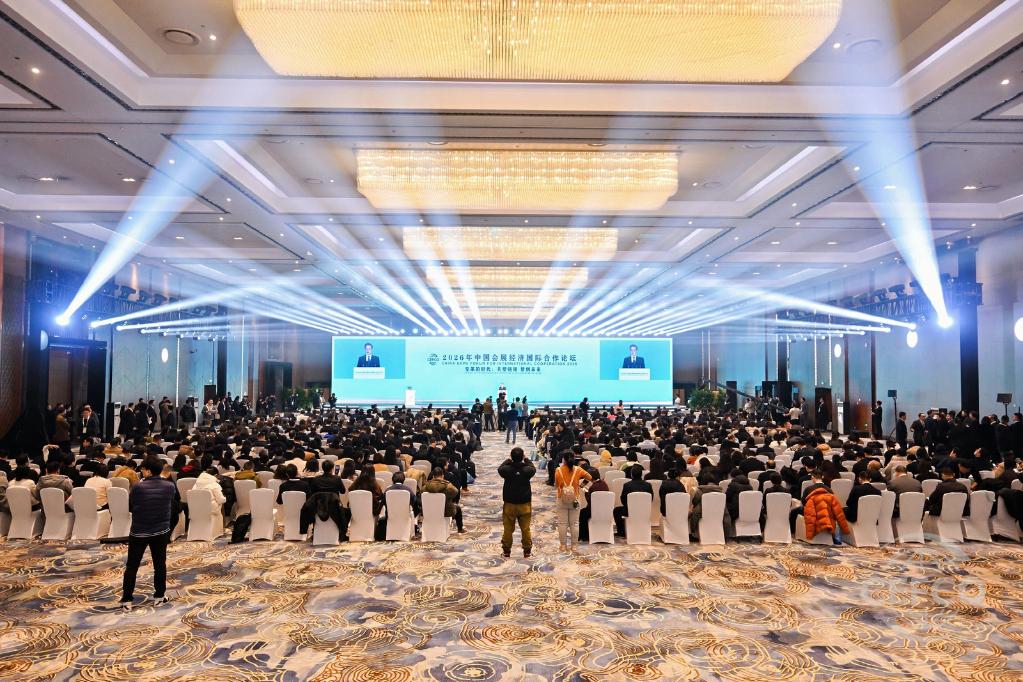
Group 1 - The 2026 China Exhibition Economy International Cooperation Forum highlights the rapid development of emerging industries such as new energy, new materials, and artificial intelligence, presenting new opportunities for the global exhibition industry [1][3] - The forum, held in Wuhan, attracted representatives from over 20 countries and regions, emphasizing the theme "Transformative Era: Co-creating Links to Innovate the Future" [1][4] - The exhibition economy is described as a "barometer" of economic development and a "booster" for industrial upgrading, with a research finding that the industry has a multiplier effect of approximately 1:9, meaning every unit of exhibition revenue can drive nine units of related industry revenue [3] Group 2 - Digital and green transformations are identified as key engines for the high-quality development of the exhibition industry, with China possessing the most complete industrial and innovation systems globally, providing vast market space for deepening cooperation in the exhibition sector [3] - The integration of emerging industries and the exhibition sector is entering a golden period, supported by ongoing policy incentives, the growth of industrial clusters, and deepening international cooperation [3] - During the forum, the China Council for the Promotion of International Trade signed cooperation agreements with four international exhibition organizations and the Singapore Tourism Board, along with successful contracts for ten international exhibition projects [3][4]
北京助力中小企业部署应用大模型,单个企业最高补贴20万元
Xin Lang Cai Jing· 2026-01-22 13:00
依托人工智能伙伴计划,2026年还将征集一批"干得好、用得上"的人工智能赋能中小企业创新发展的典 型案例,让中小企业"看样学样"。为帮助中小企业以较低成本引入AI技术,市经信局还将遴选一批人工 智能领域优质服务商和服务产品,对中小企业部署、调用、精调大模型以及数据治理等需求服务给予补 贴,单个中小企业最高可补贴20万元。 服务保障方面,市经信局将整合各方资源,为中小企业打造专属"集成服务包",提供针对性帮扶和系统 性减负。例如发挥市清欠专班作用,防范化解拖欠中小企业账款工作;综合运用多元调解机制,支持中 小企业依法依规理性维权;推动各项惠企减负政策落地见效,切实解决好企业的急难愁盼问题。 来源:北京日报客户端 "中小企业贡献了全市在营企业超五成的授权专利数,超八成的就业吸纳数和超五成的纳税额。"市经信 局中小企业处处长王媛表示,"十五五"期间,伴随新技术的爆发式迭代和Z世代创业浪潮的蓬勃兴起, 中小企业发展迎来新机遇,有望成为新兴产业、未来产业发展的主力军。 2025年,市经信局组织开展了6期专精特新企业家赋能特训营活动,帮助企业家拓展视野、提升能力、 链接资源,破解难题。2026年计划再举办10期,覆盖10 ...
城市24小时 | 又一个3万亿城市,要来了
Mei Ri Jing Ji Xin Wen· 2026-01-22 03:12
每经记者|刘艳美 每经编辑|杨欢 1月21日,杭州市十四届人大六次会议开幕。大会听取和审议了杭州市人民政府工作报告。报告提出"十五五"杭州发展主要目 标: 基本建成世界一流的社会主义现代化国际大都市取得决定性进展,在全省高质量发展建设共同富裕示范区中发挥龙头领跑示范 带动作用。 到2030年,地区生产总值力争迈上3万亿元新台阶,人均地区生产总值突破3万美元,达到发达经济体水平。 #动向 解读:GDP是衡量城市经济规模、发展水平和综合实力的核心指标。目前,我国已有上海、北京、深圳、重庆、广州5座城市 GDP突破3万亿元,苏州、成都、杭州和武汉则均处在2万亿量级,2024年GDP分别为2.67万亿元、2.35万亿元、2.19万亿元及 2.11万亿元。 包括杭州在内,四座城市均已显示出冲击"3万亿俱乐部"的雄心。 早在2024年初,苏州就提出用3年左右时间,推动GDP迈上3万亿台阶,意味着"冲线"时间大概率在2026年。 不久前召开的武汉市委经济工作会议提出,奋力实现2030年经济总量突破3万亿元;成都"十五五"规划建议则提出,到2030年 GDP超过3.2万亿元。 放眼全球,一座城市的GDP突破3万亿元,其经济总 ...
2025年中国工业经济顶压前行、向新向优
Ke Ji Ri Bao· 2026-01-22 01:55
Core Viewpoint - The industrial economy in China is expected to achieve effective qualitative improvements and reasonable quantitative growth by 2025, with major goals successfully completed [1] Group 1: Industrial Growth and Achievements - The added value of industrial enterprises above designated size is projected to grow by 5.9% year-on-year, with the manufacturing sector likely to maintain its position as the world's largest for 16 consecutive years [1] - The added value of equipment manufacturing and high-tech manufacturing industries increased by 9.2% and 9.4% year-on-year, respectively [1] - 5G and gigabit optical networks have been integrated into 91 out of 97 categories of the national economy, with industrial internet achieving full coverage across 41 industrial categories [1] - Over 140,000 specialized and innovative small and medium-sized enterprises have been cultivated, with 504,000 high-tech enterprises currently valid [1] Group 2: Economic Contribution and Development Strategies - The industrial and information sectors contribute over 40% to economic growth, acting as a stabilizing force [2] - The development of intelligent, green, and integrated manufacturing has led to the establishment of over 35,000 basic-level and 8,200 advanced-level smart factories, along with 500 excellent-level smart factories [2] - Significant advancements in technology and industry innovation have been made, with the added value of integrated circuits and electronic materials growing by 26.7% and 23.9% year-on-year, respectively [2] - The production of industrial robots increased by 28% year-on-year, and new energy vehicle sales rose by 28.2% [2] Group 3: Artificial Intelligence Industry Development - The artificial intelligence industry is expected to thrive in 2025, with over 6,000 AI companies projected and the core industry scale anticipated to exceed 1.2 trillion yuan [3] - The smart computing power scale reached 1,590 EFLOPS, and the market for AI glasses saw shipments exceeding 1.78 million units in the first three quarters of 2025 [3] - The establishment of a national AI industry investment fund with a scale of 60 billion yuan is underway [3] Group 4: Emerging and Future Industries - The cultivation of emerging and future industries has accelerated, with innovations like brain-computer interface technology expanding into various fields [4] - The government plans to implement actions to develop and strengthen emerging industries, including the creation of national demonstration bases for emerging industry development [4][5] - There will be a focus on supporting local governments to establish future industry pilot zones and increasing government investment fund allocations [5]
工信部回应如何平衡AI带来的就业挑战
Xin Lang Cai Jing· 2026-01-21 22:38
Core Insights - The State Council's press conference highlighted that by 2025, the industrial and information sectors will contribute over 40% to economic growth, acting as a stabilizing force for the economy [1] - The Ministry of Industry and Information Technology (MIIT) has outlined new strategies for the development of emerging and future industries, emphasizing the transformation of innovative ideas into market-ready products [1][2] Group 1: Emerging Industries - A number of high-innovation products are emerging, including advanced technologies in perovskite materials, permanent magnets, and power batteries, which are at the international advanced level [1] - New products with promising applications, such as intelligent robots and biomanufacturing products, are rapidly entering the market, supported by new scenarios like "5G+", "Industrial Internet+", and "Beidou+" [1][2] - The MIIT aims to foster a competitive environment for future industries by supporting local governments in establishing pilot zones and increasing government investment funds [2] Group 2: AI and Employment - By 2025, the number of domestic complete machine enterprises is expected to exceed 140, with over 330 humanoid robot products released, marking 2025 as the year of mass production for humanoid robots [3] - The MIIT acknowledges the employment challenges posed by AI development but emphasizes that technological progress will lead to job restructuring rather than job loss, advocating for the enhancement of AI literacy among workers [3] Group 3: Information Communication Services - The MIIT has launched ten initiatives to improve information communication services, resulting in more convenient telecom services and better protection of user rights [4] - Future efforts will focus on enhancing digital service offerings, promoting user-friendly digital products for the elderly and disabled, and improving personal information protection mechanisms [4]