量子计算

Search documents
英伟达10亿美元入股诺基亚
第一财经· 2025-10-29 00:51
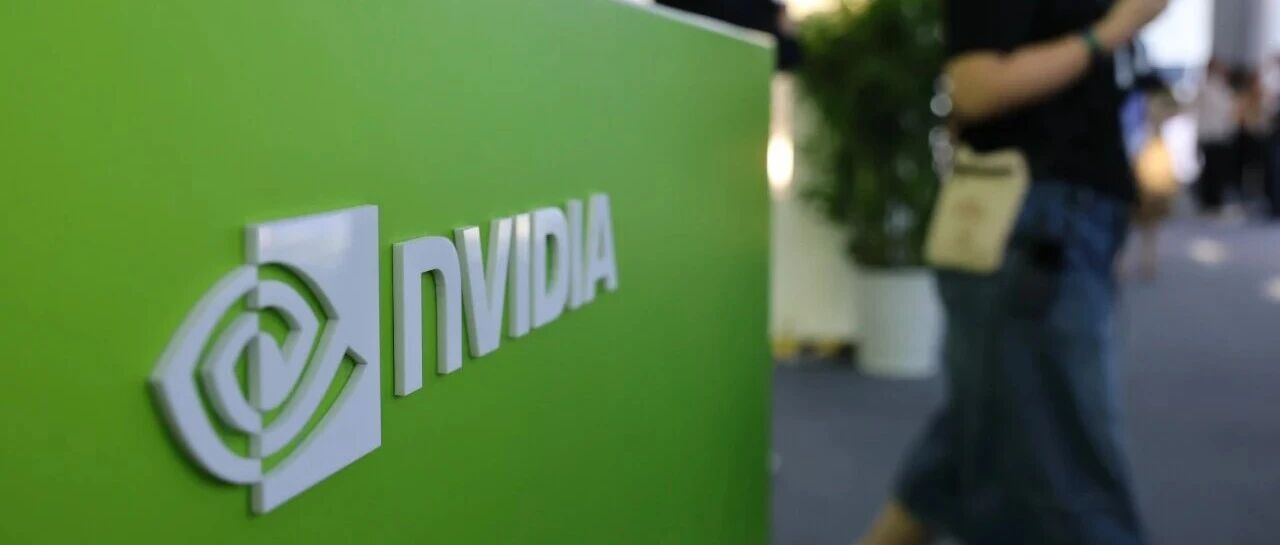
Core Viewpoint - Nvidia has announced a significant investment in Nokia, acquiring a 2.9% stake for $1 billion, aiming to penetrate the telecommunications sector and enhance its product offerings in the 6G space [3][6][8]. Investment and Partnership - Nvidia's investment in Nokia is part of a broader strategy to enter the telecom industry, with the introduction of the Arc Aerial RAN Computer to support 6G technology [6][8]. - Nokia's board has approved the issuance of 166,389,351 new shares at a subscription price of $6.01 per share for Nvidia's investment [6][8]. - The collaboration will focus on adapting Nokia's 5G and 6G software to run on Nvidia's chips, while Nvidia will explore the integration of Nokia's data center technology into its AI infrastructure [6][8]. Market Reaction - Following the announcement, Nokia's stock surged over 26%, while Nvidia's shares increased by more than 5%, reaching a market capitalization of $4.92 trillion [8]. Product Development - Nvidia's CEO highlighted the launch of the Arc Aerial RAN Computer, which will be utilized in upgrading millions of base stations globally with AI technology [7][8]. - The partnership with Nokia and T-Mobile U.S. aims to test AI-RAN technology, with trials set to commence in 2026 [7][8]. Financial Projections - Nvidia's Blackwell and Rubin chip architectures are projected to generate over $500 billion in revenue from 20 million GPUs, significantly surpassing the revenue from previous architectures [10][12]. Quantum Computing and AI - Nvidia introduced NVQLink to support quantum computing, allowing for hybrid simulations between quantum processing units (QPU) and GPUs, with 17 quantum computing companies already on board [12][13]. - The company is addressing the increasing computational demands driven by AI, emphasizing the need for a new architecture that integrates AI capabilities across various platforms [14]. Future Outlook - Nvidia is focusing on reducing AI computing costs through collaborative design, which is essential for maintaining a sustainable growth cycle in the AI industry [14]. - The company is also advancing its autonomous driving platform, DRIVE Hyperion, in partnership with Uber, aiming to connect vehicles to a global network [14].

黄仁勋凌晨炸场:6G、量子计算、物理AI、机器人、自动驾驶全来了!AI芯片营收已达3.5万亿|2025GTC超全指南
AI前线· 2025-10-29 00:40
Core Insights - The article discusses the significant announcements made by NVIDIA during the GPU Technology Conference (GTC), highlighting the company's ambitious plans in AI and telecommunications, particularly its collaboration with Nokia to build a 6G AI platform [2][3][10]. Group 1: NVIDIA's AI and Telecommunications Strategy - NVIDIA announced a partnership with Nokia to enhance wireless communication speeds using AI, aiming to create an AI-native mobile network and a 6G AI platform, with a $1 billion investment from NVIDIA [3][10]. - The collaboration focuses on integrating NVIDIA's Aerial RAN Computer Pro into Nokia's AirScale wireless communication system, facilitating the transition to AI-native 5G and 6G networks [10][14]. - NVIDIA's AI chip orders have reached $500 billion, showcasing the strong demand for its technology [8]. Group 2: Broader Technological Innovations - NVIDIA's CEO Huang emphasized that AI is evolving from being a user of networks to becoming the "intelligent hub" of networks [5]. - The company is also venturing into quantum computing with the development of NVQLink, which connects traditional GPUs with quantum processors, indicating a significant step in quantum technology [20]. - NVIDIA is investing in AI-driven robotics and physical AI, establishing a "three-computer" system for model training, simulation, and execution [23][24]. Group 3: AI's Expanding Role - AI is being applied beyond chatbots, with significant uses in fields like healthcare, genomics, and enterprise computing, transforming into a "digital employee" [29]. - Huang clarified that AI represents a new computing paradigm, where machines learn from data rather than following pre-written rules, marking a shift in how computing is approached [32][33]. - The concept of an "AI factory" is introduced, where AI systems are designed to produce tokens, representing a new infrastructure for modern economies [40][56]. Group 4: Future of AI and Computing - Huang discussed the exponential growth of AI's intelligence and its energy consumption, highlighting the need for extreme co-design across various technological layers to sustain this growth [46][50]. - The future of computing is envisioned as a shift from traditional command execution to enabling machines to learn and think independently, fundamentally changing productivity dynamics [58].

早报 (10.29)| 黄仁勋深夜炸场!英伟达市值逼近5万亿美元;OpenAI、微软再签2500亿美元大单;日本对美投资计划清单曝光!
Ge Long Hui· 2025-10-29 00:30
Group 1 - The US and Japan signed a new alliance agreement, including a $550 billion investment from Japan to the US and a framework for securing key minerals and rare earth supplies [2] - Nvidia's CEO outlined a comprehensive AI strategy at the GTC conference, revealing $500 billion in chip orders by the end of fiscal 2026, leading to a surge in Nvidia's stock price [2][3] - Nvidia announced a $1 billion investment in Nokia, acquiring a 2.9% stake to develop AI-RAN products, significantly boosting Nokia's stock by over 20% [8] Group 2 - Tesla's EU registrations fell by 19% in September, with a cumulative decline of 38.7% for the year, while BYD's registrations surged by 272% [10] - Westinghouse Electric secured an $80 billion contract with the US government to deploy AP1000 nuclear reactors, creating 45,000 jobs and marking a significant step in US nuclear expansion [11] - Samsung announced a 30% price reduction for its HBM3E chips to regain market share after delays in certification, which may increase pricing pressure in the industry [14] Group 3 - OpenAI completed a capital restructuring, with Microsoft holding a 27% stake and committing to $250 billion in Azure services, while OpenAI has no plans for an IPO [9] - The 2025 Hurun Rich List revealed that Zhong Shanshan became China's richest person for the fourth time, with a wealth increase of 190 billion yuan due to the performance of Nongfu Spring [17] - The 2025 Global Brand Value Top 25 list ranked Apple first, followed by Microsoft and Google, with Nvidia entering the top ten due to its AI hardware advantages [18]

A股盘前播报 | 黄仁勋勾勒AI宏伟蓝图!英伟达涨近5%再创新高
智通财经网· 2025-10-29 00:29
Company - Nvidia's CEO Jensen Huang outlined an ambitious AI roadmap, including 6G, quantum computing, robotics, and autonomous driving, with chip orders reaching $500 billion by the end of fiscal 2026 [1] - Nvidia's stock price rose by 4.98%, bringing the company's total market capitalization close to $4.9 trillion [1] - Nvidia announced a $1 billion investment in Nokia to accelerate AI-RAN and 6G development, indicating a competitive landscape in the technology sector [12] Industry - The "14th Five-Year Plan" emphasizes high-quality development and aims to enhance the inclusiveness and adaptability of capital market systems, promoting a strong domestic market and sustainable fiscal policies [2] - The central bank aims to maintain systemic financial risk at bay while consolidating the positive momentum in capital markets through appropriate monetary policies and regulatory measures [3] - The digital RMB ecosystem has begun to take shape, with a cumulative transaction amount of 14.2 trillion yuan, which is expected to boost the internationalization of the RMB and benefit cross-border payment enterprises [11]
量子计算、机器人……黄仁勋勾勒AI宏伟蓝图
财联社· 2025-10-29 00:20
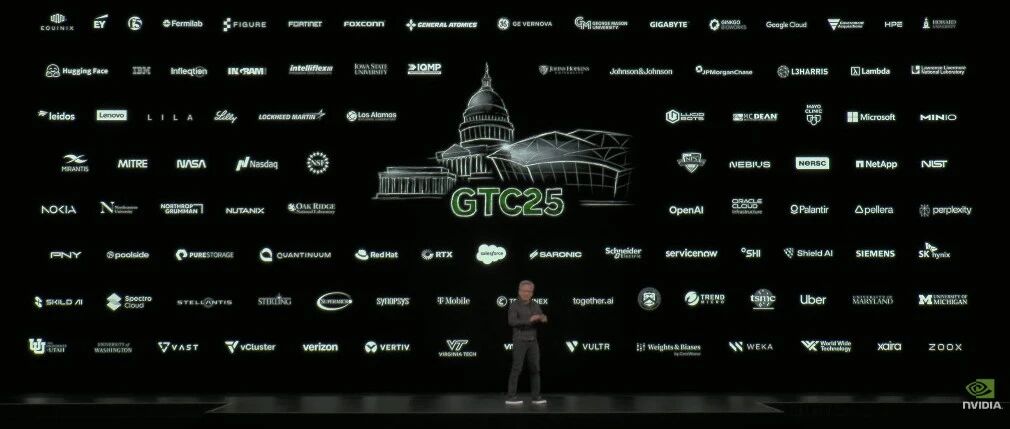
Core Viewpoint - NVIDIA's GTC conference highlighted its expansive vision for AI and related technologies, showcasing partnerships and innovations that position the company at the forefront of the AI and telecommunications sectors [2][4]. Group 1: NVIDIA's Technological Advancements - NVIDIA's CEO Jensen Huang presented a roadmap extending to 2028, revealing that the company has accumulated $500 billion in orders for its Blackwell and Rubin chips by the end of the 2026 fiscal year [4][19]. - The introduction of the NVIDIA ARC (Aerial RAN Computer) aims to capture opportunities in the AI-RAN market, in collaboration with Nokia, which includes a $1 billion equity investment [6]. - NVIDIA's new BlueField-4 data processing chip is designed to accelerate AI infrastructure, supporting throughput of 800 Gb/s and high-performance inference processing [17]. Group 2: Partnerships and Collaborations - NVIDIA announced partnerships with T-Mobile and Cisco to develop the first AI-native wireless stack for 6G in the U.S. [9]. - A collaboration with the U.S. Department of Energy will see the construction of seven supercomputers, including the Solstice system, which will be the largest AI supercomputer for scientific discovery [11]. Group 3: AI Applications and Innovations - The AI traffic is experiencing explosive growth, with ChatGPT having 800 million active users, nearly half of whom access it via mobile devices [8]. - NVIDIA's Omniverse digital twin technology is being utilized to build modern factories and train robots, with a partnership with the startup Figure to accelerate humanoid robot development [26]. - The introduction of the IGX Thor edge AI platform offers 8 times the AI computing power compared to its predecessor, enabling seamless operation of large language models at the edge [29]. Group 4: Automotive and Autonomous Driving - The launch of the NVIDIA DRIVE AGX Hyperion 10 platform is aimed at L4-level autonomous driving, featuring a comprehensive sensor architecture [31]. - A partnership with Uber will allow vehicles using this platform to connect to the Uber network [33].
8点1氪:钟睒睒以5300亿元第四次成为中国首富;00后用家用打印机造出250多万假币;英伟达将向诺基亚进行10亿美元股权投资
36氪· 2025-10-29 00:16
Group 1 - Zhong Shanshan tops the 2025 Hurun Rich List with a net worth of 530 billion yuan, marking his fourth consecutive year as China's richest person [4] - Zhang Yiming, Ma Huateng, Zeng Yuqun, and Lei Jun follow Zhong in the rankings, with significant wealth increases noted [4] - Wang Ning from Pop Mart saw his wealth surge by over 150 billion yuan, placing him in the top 20 of the list and among the top three wealth gainers this year [4] Group 2 - Nvidia's total market value approaches 5 trillion dollars, reflecting strong performance in the tech sector [5] - Xiaomi undergoes a management reshuffle, with Wang Xiaoyan stepping down as general manager of Xiaomi Home, replaced by Chen Kai [6] - The copper market experiences a surge, with prices reaching historical highs, indicating strong demand and investment interest [9] Group 3 - DJI leads the global market for action cameras, capturing 66% of the market share by Q3 2025, and also holds a significant share in the panoramic camera segment [7] - Tesla's chairman warns that if Elon Musk's 1 trillion dollar compensation plan is rejected, he may leave the company, highlighting governance concerns [8][9] - The global market for AI applications sees significant growth, with Ant Group's AI health application AQ ranking 7th in China and leading in growth rate [26]



天风证券晨会集萃-20251029
Tianfeng Securities· 2025-10-29 00:14
Group 1 - The report highlights a significant increase in A-share indices, with the ChiNext Index rising over 8% and the CSI 100 increasing by 3.57% in the last week [2] - The People's Bank of China (PBOC) injected a total of 198.1 billion yuan into the market, maintaining liquidity stability with the DR007 rate around 1.43% [2] - The report anticipates a stable and flexible policy environment in the second half of the year, focusing on achieving economic and social development goals amidst geopolitical uncertainties [2][24] Group 2 - Shanghai Jahwa's revenue for the first three quarters of 2025 reached 4.961 billion yuan, a year-on-year increase of 10.83%, with a net profit of 405 million yuan, up 149.12% [10] - The company has successfully upgraded its brand and product lines, leading to significant sales growth in its beauty and personal care segments [10] - The forecast for Shanghai Jahwa's revenue for 2025-2027 is adjusted to 6.316 billion, 7.010 billion, and 7.753 billion yuan, with net profits of 420 million, 560 million, and 690 million yuan respectively [10] Group 3 - Hengli Petrochemical reported a revenue of 157.384 billion yuan for the first three quarters of 2025, a decrease of 11.46% year-on-year, but a net profit of 5.023 billion yuan, showing a slight decline of 1.61% [11] - The company is expected to benefit from the recovery in the PTA market, with a projected net profit of 7 billion, 10.1 billion, and 13 billion yuan for 2025, 2026, and 2027 respectively [11][17] - The report emphasizes the potential for industry improvement as PTA production capacity stabilizes and demand continues to grow [11][17] Group 4 - The global sovereign debt market reached a total outstanding amount of 78.97 trillion USD as of October 16, 2025, with the US, Japan, and China accounting for nearly 60% of the market [9][38] - The issuance of sovereign debt has seen significant growth, particularly after the COVID-19 pandemic, with emerging markets like Argentina becoming key issuers [9][39] - The average turnover rate for sovereign debt remains between 1.00% and 2.50%, indicating a stable trading environment [9][39]
一文看清英伟达GTC黄仁勋演讲要点:Rubin首秀,推出NVQLink,6G等重磅合作,驳AI泡沫
Xuan Gu Bao· 2025-10-29 00:05
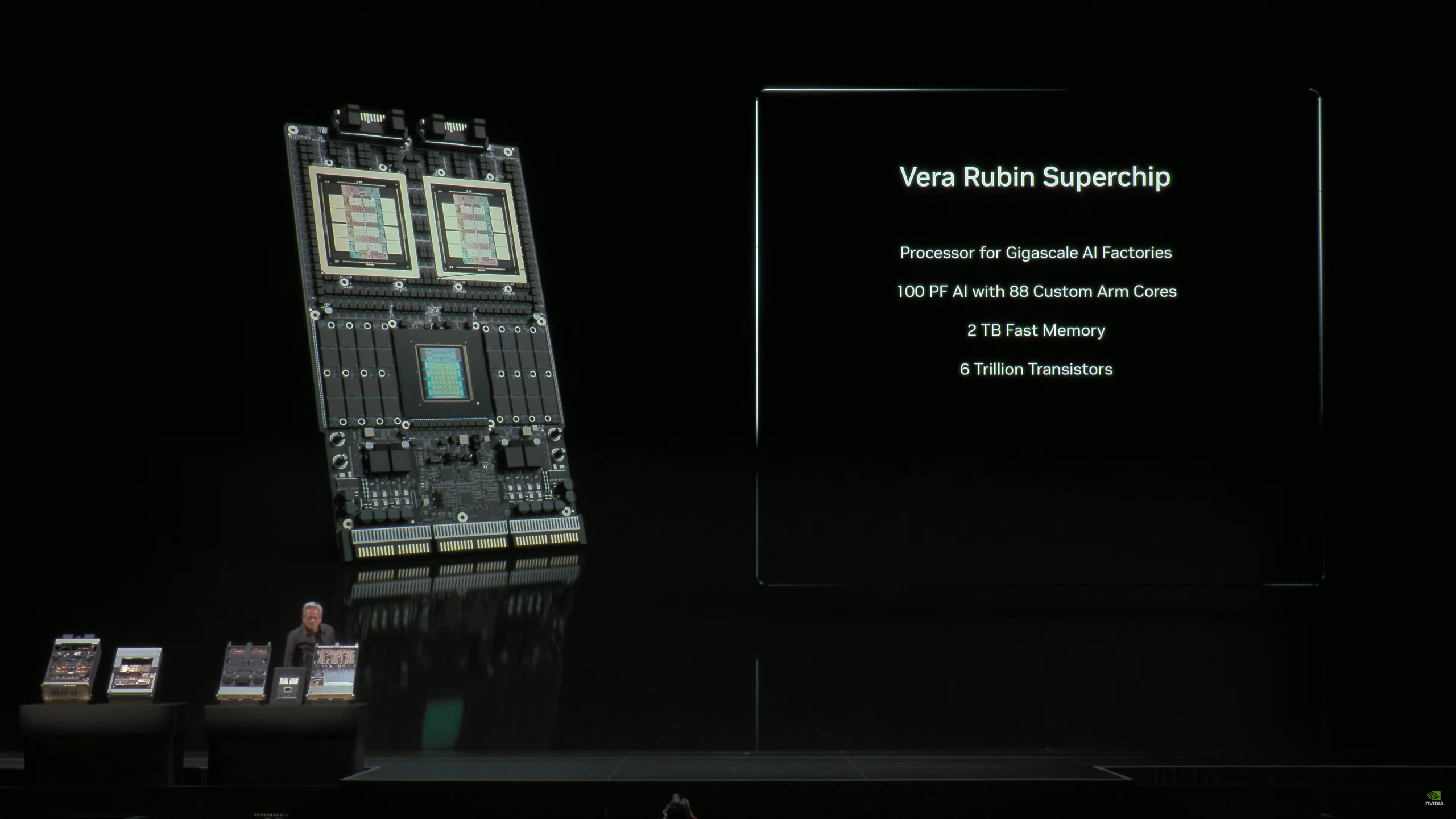
Core Insights - Nvidia's CEO Jensen Huang emphasized the importance of accelerated computing and GPU technology as key drivers of technological advancement, especially in the context of the failure of Moore's Law [1][3] - Nvidia announced a strategic partnership with Nokia to invest $1 billion in Nokia shares to advance AI-native 6G network platforms [1][10] - The company introduced NVQLink technology, which integrates AI supercomputing with quantum computing, gaining support from 17 quantum computing companies [1][14] - Nvidia's collaboration with Uber and Stellantis aims to deploy 100,000 Robotaxi vehicles based on Nvidia technology starting in 2027 [1][28] Group 1: AI and Quantum Computing - Nvidia's NVQLink technology connects quantum processors with GPU supercomputers, enhancing quantum computing capabilities and error correction [14][16] - The company is collaborating with the U.S. Department of Energy to build the largest AI supercomputer, named Solstice, equipped with 100,000 Blackwell GPUs [18][19] - Nvidia's next-generation Vera Rubin super GPU, capable of 100 Petaflops, is expected to enter mass production next year [2][4] Group 2: Strategic Partnerships - Nvidia partnered with Palantir to integrate GPU computing capabilities into enterprise data platforms, accelerating AI commercialization in complex industries [2][32] - The collaboration with Eli Lilly aims to build a supercomputer powered by over 1,000 Blackwell Ultra GPUs for drug discovery and development [35][36] - T-Mobile will work with Nokia and Nvidia to test and develop AI-RAN technology for 6G networks, with trials expected to start in 2026 [13] Group 3: Product Innovations - The BlueField-4 processor, designed for AI factory operations, supports 800 Gb/s throughput and is expected to triple the scale of AI factories compared to its predecessor [20][21] - Nvidia's DRIVE AGX Hyperion 10 platform will enable the development of L4-level autonomous vehicles, with Uber planning to expand its Robotaxi fleet significantly [26][30] - The upcoming Rubin Ultra platform will achieve 15 Exaflops of FP4 inference performance, significantly enhancing AI processing capabilities [8][9]
英伟达市值逼近5万亿美元,黄仁勋发声
第一财经· 2025-10-29 00:00
Core Insights - Nvidia's stock surged by 4.9% to reach a market capitalization of $4.89 trillion, marking a nearly 50% increase year-to-date, driven by strong performance since July [3][12] - The GTC conference served as a catalyst for Nvidia's stock rise, where CEO Jensen Huang announced significant technological innovations and industry collaborations across various sectors, indicating a shift from an "AI chip manufacturer" to a "computing ecosystem platform" [3][12] Collaboration in Pharmaceuticals - Nvidia partnered with Eli Lilly to build a powerful supercomputer aimed at supporting molecular modeling and drug development, positioning AI as a core driver of pharmaceutical innovation [5] Advancements in Communication - A strategic agreement with Nokia was established to develop a 6G AI platform, with Nvidia investing $1 billion for approximately 2.9% equity. T-Mobile plans to initiate 6G trials in 2026, supported by Dell Technologies [6] - Nvidia also announced a collaboration with Uber to create a Robotaxis autonomous driving network, showcasing its ambition to expand into new computing platforms [6] Quantum Computing and AI Supercomputing - The NVQLink interconnect system was unveiled, enabling high-speed communication between quantum processors and AI supercomputers, which is crucial for commercializing quantum computing [8] - Nvidia will collaborate with the U.S. Department of Energy to build seven next-generation AI supercomputers, with significant GPU resources allocated for advanced computational tasks [8] AI Infrastructure Development - An AI Factory research center will be deployed in Virginia, serving as a key node for Nvidia's Omniverse DSX multi-generational AI architecture, providing computational power and development support to research institutions and enterprise clients [9] AI Industry Maturity - Jensen Huang emphasized that the AI industry is transitioning from experimentation to maturity, with clients willing to pay for models, indicating a positive cycle for the sector [10] - Nvidia anticipates that its Blackwell chips and Rubin models will generate approximately $500 billion in revenue over the next five quarters, highlighting the growing importance of computational power across various industries [10] Market Position and Future Outlook - The GTC conference underscored Nvidia's central role in the AI ecosystem, with a comprehensive approach spanning hardware, computing platforms, software, and network architecture [12] - Nvidia's expansion into quantum computing, communication networks, and autonomous driving is expected to broaden its market boundaries, reinforcing its dominance in high-performance computing as global tech companies increase AI investments [12]
美股再创新高,英伟达狂飙近5%,黄金一度跌破3900美元
2 1 Shi Ji Jing Ji Bao Dao· 2025-10-29 00:00
Market Performance - Major US stock indices reached new historical highs, with the Dow Jones up 0.34%, S&P 500 up 0.23%, and Nasdaq up 0.8% on October 28 [1][2] - Nvidia led the gains in the Dow, rising nearly 5%, with a market capitalization approaching $5 trillion [2] - Broad gains were observed in large tech stocks, including Broadcom up over 3% and Microsoft up nearly 2%, with Microsoft's market cap surpassing $4 trillion [3] Notable Stock Movements - Nokia's stock surged nearly 23%, marking its largest single-day gain since January 2021, following Nvidia's announcement of a $1 billion equity investment in Nokia [3] - Chinese concept stocks mostly declined, with the Nasdaq Golden Dragon China Index down 1.23% and notable declines in stocks like Qifu Technology and Xinyi Technology [4] Commodity Prices - Gold prices fell, with spot gold dropping to $3,943.248 per ounce, a decrease of 0.22% [5][6] - Oil prices continued to decline, with WTI crude oil futures down 1.89% to $60.15 per barrel and Brent crude down 1.65% to $63.83 per barrel [5][6] Federal Reserve Expectations - The Federal Reserve began a two-day meeting on October 28, with a 99.5% probability of a 25 basis point rate cut expected during this meeting [6][7] - Market participants are looking for signals from Chairman Powell regarding a potential rate cut in December, amid concerns about a weakening labor market [7]