贸易保护主义

Search documents
欧盟难以为继,要求中国不再禁止稀土出口,中方专机敲定欧洲行程
Sou Hu Cai Jing· 2025-07-31 03:52
Core Viewpoint - The article discusses the strained relations between China and Europe following China's restrictions on rare earth exports, highlighting Europe's plea for understanding from China amidst its economic challenges and geopolitical tensions with the U.S. [1][3] Group 1: China's Position - China has responded to Europe's requests with a firm stance, indicating that the EU's demands violate its principles and bottom lines [5] - The Chinese Ministry of Commerce has criticized the EU for its unilateral actions and protectionist measures that harm Chinese enterprises and disrupt fair competition [5] Group 2: Europe's Challenges - Europe is facing significant difficulties due to the ongoing Russia-Ukraine conflict, energy crises, and increased defense spending, which are exacerbating its economic situation [7] - The EU's dependence on Chinese rare earths has created a dilemma, as European companies fear repercussions if they sell products made with Chinese materials to the U.S. [3] Group 3: Diplomatic Engagement - Chinese Foreign Minister Wang Yi's upcoming visit to Europe aims to establish a strategic dialogue and address practical issues, with a focus on sectors like electric vehicles and rare earth resources [9] - The timing of this visit is seen as a strategic move to clarify expectations and realities for European politicians who may have unrealistic hopes regarding negotiations with China [9]


协议难揽人心,5500亿美元投资恐成空头支票,只有1-2%是投资?
Sou Hu Cai Jing· 2025-07-31 03:25
你敢信吗?两个发达国家签了个号称"史上最大"的贸易协议,结果连份正经的书面文件都没有。更离谱 的是,协议里最核心的5500亿美元投资,美国人说这钱全算日本给的,利润九成交美国;日本人转头就 说,这钱是企业自愿投,赚多少钱得看大家实际付出多少。这哪是国际协议啊,简直像俩菜市场小贩在 讨价还价,喊价震天响,转头就不认账。 赤泽亮正(资料图) 一、仓促上桌的"天价协议",背后全是算计 今年7月,日美总算结束了八轮拉锯战,宣布达成关税协议。美国人称日本以后可享受15%的关税优惠 (此前为25%),作为交换,日本需投入5500亿美元,用于美国能源、半导体等产业。 但这协议透着古怪。据相关报道,整个协议由日本谈判代表与特朗普在70分钟内敲定,当时日本执政党 刚在参议院选举中失利,首相石破茂的政治话语权大幅削弱。美国智库专家直言:"这协议没什么能让 人放心的内容,两边都在说些没法保证兑现的漂亮话。" 特朗普(资料图) 日方却不认账。谈判代表赤泽亮正表示,5500亿是"最多可能到这么多",包含投资、贷款及担保,并非 固定目标。日本政府文件明确,资金主体为民营企业,投不投、投多少由企业自主决定。赤泽亮正表 示,投资预计将占总金 ...

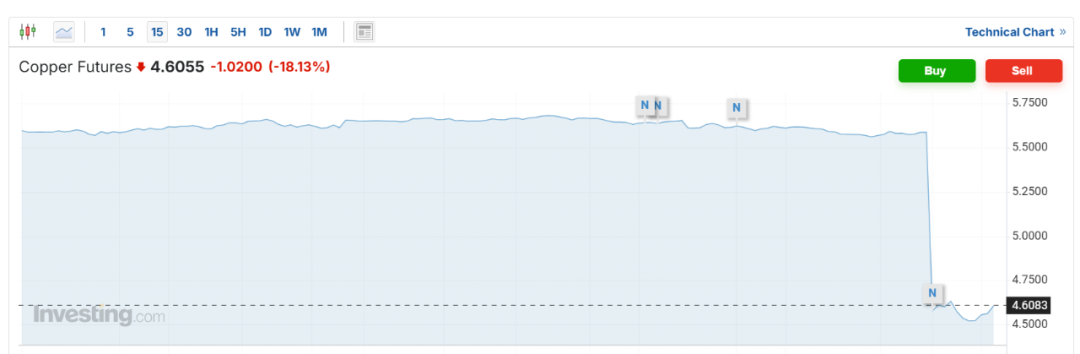
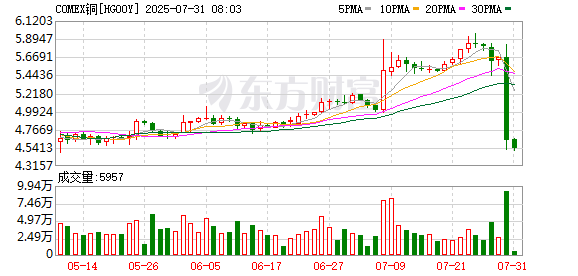
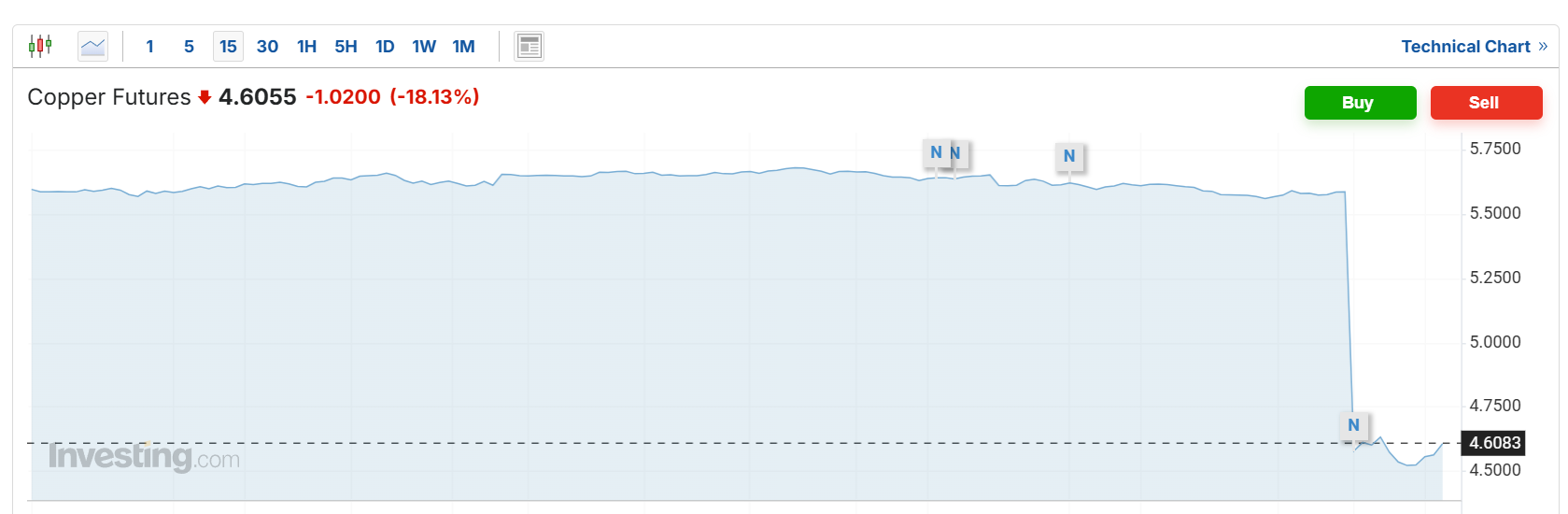
特朗普宣布:50%关税,就在明天!一波多头被打爆:价格应声暴跌超18%
Mei Ri Jing Ji Xin Wen· 2025-07-31 03:13
Group 1 - The U.S. government announced a 50% tariff on certain imported copper products, effective August 1, which includes semi-finished copper products and copper-intensive derivatives [1][3] - The announcement led to a significant drop in copper prices, with New York copper prices falling over 18% to $4.60 per pound, and major copper producers Freeport-McMoRan and Southern Copper saw declines of approximately 10% and 6% respectively [1][3] - The new regulations are expected to disrupt global copper trade flows, as refined copper (electrolytic copper) is excluded from the tariff list, which may lead to a re-export of large quantities of copper previously shipped to the U.S. [4][5] Group 2 - Copper is the third most consumed metal globally, following iron and aluminum, with about half of the copper used in the U.S. being imported, primarily from Chile [5]


美国宣布对巴西征收50%关税 巴西:美方毫无正当性可言
news flash· 2025-07-31 00:56
当地时间7月30日晚,巴西总统府官网发表题为《巴西是一个主权和民主国家》的声明。声明提到,巴 西政府认为,美国政府针对巴西出口产品所宣布的贸易措施,是以政治为理由的行为,毫无正当性可 言。近年来,巴西与美国在商品与服务贸易上始终维持显著逆差。美国针对巴西的措施是出于政治动机 的,是对巴西主权的侵犯,也损害了两国之间一贯的历史关系。当地时间7月30日,美国白宫表示,美 国总统特朗普签署行政命令,对巴西加征40%关税,使总关税额达到50%。(央视新闻) ...
突然暴跌!特朗普宣布:50%关税!
Zheng Quan Shi Bao· 2025-07-31 00:13
Group 1 - The U.S. government announced a 50% tariff on imported semi-finished copper products and copper-intensive derivatives, effective from August 1 [2][3] - The new tariffs are part of a broader strategy to boost domestic industries and address trade imbalances, following previous tariffs on steel and aluminum [3] - Copper raw materials and scrap are exempt from the new tariffs, and the tariffs will not be combined with additional tariffs on automobile imports [3] Group 2 - Following the announcement, copper prices in New York plummeted over 18% within minutes [3] - The U.S. government has invoked the Trade Expansion Act of 1962, specifically Section 232, allowing tariffs for national security reasons [3] - The White House has mandated that 25% of high-quality copper scrap and raw copper products must be sold domestically, although this is not expected to have immediate significant impact [3]
欧盟想拉美国建“金属联盟”,专家:具有保护主义和歧视性
Huan Qiu Shi Bao· 2025-07-30 22:52
Group 1 - The core point of the news is the announcement of a trade agreement between the US and EU, which includes a framework for a quota system for steel and aluminum, referred to as the "Metal Alliance" [1][2] - The agreement aims to address the shared challenges faced by the steel industries in both the US and EU, particularly in relation to subsidized Chinese production affecting the global market [1][2] - The EU's proposal for a quota system is seen as a protectionist measure that may not effectively resolve structural issues within the US and EU industries [2][3] Group 2 - The trade dispute over steel and aluminum products between the US and EU has a long history, with the US imposing tariffs of 25% and later increasing them to 50% during Trump's presidency [2] - The EU's attempt to form a "Metal Alliance" is perceived as a strategy to protect its own industries while unfairly labeling China's industrial practices as "illegal subsidies" [2] - The success of the EU's proposal will depend on whether the US perceives tangible benefits from the alliance, indicating that further negotiations on steel and aluminum tariffs are likely [3]
特朗普:对印度商品征收25%关税
智通财经网· 2025-07-30 22:48
印度商务和工业部表示,政府正在评估特朗普此番关税宣布的影响。 该部在一份声明中称:"近几个月来,印度与美国一直在就达成一个公平、平衡且互利的双边贸易协议 进行谈判。我们仍然致力于实现这一目标。" 特朗普设定的贸易谈判最后期限正是8月1日,他周三再次强调,这一期限不会延长。 特朗普还暗示,数十个国家将面临高达20%的基准关税水平,高于他在4月所宣布的10%。 据央视新闻,当地时间7月30日,美国总统特朗普在其社交平台"真实社交"上发文称,自8月1日起,美 国将对来自印度的商品征收25%的关税,并"因其不当行为"加收额外惩罚性费用。 25%的税率比特朗普在4月"解放日"威胁对印度加征的26%关税稍低,但仍明显高于现有水平。 美国近年来对印度商品的平均进口关税仅为2.4%。去年美国自印度进口商品总额接近900亿美元。美国 从印度进口的主要商品包括:智能手机、化学品、塑料制品、皮革制品、农产品和金属制品等。 2022年,印度对美国产品征收的平均有效关税为5.2%。印度自美国进口的主要商品包括石油、机械、 水泥、玻璃与石材等。 特朗普周三在其自创社交媒体平台Truth Social上发文称,印度的关税"过高", 并称其 ...
纽铜暴跌18%,特朗普对进口半成品铜等征50%关税
Hua Er Jie Jian Wen· 2025-07-30 22:13
Group 1: Market Reaction - Following President Trump's exclusion of refined copper from the tariff plan, New York copper prices plummeted over 18% within minutes, marking the largest single-day drop in history [1][2] - Freeport-McMoRan Inc. saw its stock price decline by approximately 10%, while Southern Copper's stock fell over 6% due to the announcement weakening the premium on U.S. copper prices [2] - The decision is viewed positively by Codelco, the Chilean state-owned copper company, as it benefits their exports to the U.S. market [2] Group 2: Tariff Details - Starting August 1, a 50% tariff will be imposed on various imported copper products, including semi-finished copper products and copper-intensive derivatives [3][5] - Copper input materials and scrap copper will not be subject to the tariffs, which is a significant distinction in the policy [3][6] - The tariffs are part of a broader strategy to boost U.S. domestic industries and address trade imbalances, following previous tariffs on steel and aluminum [5][6] Group 3: Industry Implications - The exclusion of refined copper from tariffs is expected to disrupt global copper trade flows, as refined copper is crucial for various applications, including electrical wiring [7][8] - Analysts suggest that the removal of refined copper from the tariff list eliminates arbitrage opportunities, leading to a convergence in market prices [9] - The U.S. relies heavily on copper imports, with about half of its copper needs being met through imports, primarily from Chile [10]
欧美新关税协议能兑现吗?
Guo Ji Jin Rong Bao· 2025-07-30 11:31
Group 1 - The agreement between the US and EU involves a 15% tariff on most EU exports to the US, a reduction from the previously threatened 30% [1][3] - The EU is expected to invest $600 billion in the US and purchase $750 billion worth of energy products, which has sparked criticism within the EU [1][3][11] - The agreement is seen as a political victory for Trump, as it reflects a shift in US trade policy and a compromise from the EU under pressure [3][4][7] Group 2 - The 15% tariff is viewed as a challenge for some, but it retains access for the EU to the US market, which is crucial for European economies [4][5] - The impact of the tariff is asymmetric; while it may significantly affect export-oriented industries like the German automotive sector, the overall economic impact on the EU is considered manageable [5] - There are significant internal divisions within the EU regarding the agreement, with some member states expressing dissatisfaction and others accepting it more readily [8][9] Group 3 - The $750 billion energy purchase plan is controversial, as it requires the EU to double its energy imports from the US compared to previous years, raising questions about feasibility [11][12][13] - The energy procurement is complicated by the fact that most energy purchases are handled by private companies, which are driven by market conditions rather than EU directives [13] - Some analysts suggest that the energy procurement could be spread over a longer period, potentially aligning with market realities and easing the burden on EU companies [14]
耶鲁大学研究揭示关税政策或致美国物价短期飙升,家庭年均损失达2400美元
Sou Hu Cai Jing· 2025-07-30 07:57
Core Insights - The current U.S. tariff policy is projected to increase domestic prices by 1.8% in the short term, resulting in an average additional annual expenditure of $2,400 per American household [1][2] - This price increase is expected to push inflation levels close to double the Federal Reserve's target of 2%, significantly impacting consumer purchasing power, especially for low-income families [2][3] - The indirect effects of the tariff policy may persist for several years, potentially leading to delayed price adjustments and long-term economic consequences, such as reduced investment and job cuts in manufacturing [3][4] Economic Impact - The tariff policy is seen as a double-edged sword, providing short-term protection for certain domestic industries while increasing consumer costs and risking retaliatory measures from trade partners [4] - If the tariff policy continues until 2025, the average annual loss for American households could further escalate, prompting calls for policymakers to reassess the net benefits of tariffs [4] - Rising inflation pressures may compel the Federal Reserve to adopt a more aggressive stance on interest rates, which could hinder corporate investment and job market recovery, exacerbating the risk of economic stagnation [4]