
人工智能

Search documents
Reddit CEO:将大量招聘应届毕业生,因为他们是“AI原生一代”
Sou Hu Cai Jing· 2026-03-22 09:36
Core Viewpoint - The advancement of artificial intelligence (AI) is perceived by some as a threat to entry-level jobs, but Reddit's CEO Steve Huffman believes the opposite, stating that the company will actively recruit recent graduates who are adept at using AI [1][3]. Group 1: Recruitment Trends - Huffman emphasizes that recent graduates are leveraging AI to enhance their programming skills, making them highly valuable in the job market [3]. - The competition for hiring top graduates is expected to intensify, as those who are exceptionally skilled may not remain available for long [3]. - Despite the optimistic outlook from Huffman, the current job market is challenging for recent graduates, with a higher number of bachelor's degree holders and a slowdown in hiring due to AI [3][4]. Group 2: Employment Statistics - According to the U.S. Bureau of Labor Statistics, the unemployment rate in February was 4.4%, with 7.6 million unemployed individuals, an increase from 4.1% and 7.1 million a year earlier [3]. Group 3: Company Hiring Strategy - Reddit plans to continue hiring recent graduates, particularly for engineering roles, as the company is focused on growth and innovation [4]. - The company has established a talent team dedicated to recruiting young professionals and is currently hiring for various full-time positions, including engineering, sales, and product roles, as well as internships in machine learning [4].



风险释放之后的反弹主线
ZHONGTAI SECURITIES· 2026-03-22 09:28
1. Report Industry Investment Rating - The industry rating is "Overweight", indicating an expected increase of over 10% in the industry index relative to the benchmark index in the next 6 - 12 months [24] 2. Core Viewpoints of the Report - The current market is at a moment of heavy divergence. The ChiNext Index has rebounded and hit a new high this week, while overseas liquidity shocks are accelerating. The A - share market is also discussing issues such as "who is the marginal seller" and the potential "redemption - selling - redemption" negative feedback [1][4] - Seasonal effects are not the reason for the decline but help clear risks. The pressure on the liability side from the liquidity shock has been gradually digested in the past two weeks and may be nearing the end [1][5] - Sentiment indicators show that the market is close to the "extreme panic" level, and the smooth passing of the "end - of - the - world options" day implies a high probability of a market reversal [1][6] - Chinese assets have shown strong resilience. A - shares and Hong Kong stocks have smaller declines compared to global markets, and foreign capital is actively increasing its positions in A - shares [1][8] - After the liquidity shock eases, the leading sectors in the A - share market are divided into two categories: hot sectors supported by industrial trends or policy benefits, and liquidity - sensitive elastic sectors [1][14] - The current is a window period for bottom confirmation, and the main lines of the rebound after the shock are becoming clear, including "wrongly - killed" elastic sectors, energy - substitution sectors, and sectors benefiting from rising oil prices [1][22] 3. Summary According to the Table of Contents Introduction: Believe in the Long - Term or Worry about the Short - Term - This week, the market was volatile. The ChiNext Index rose 1.3% and the Shanghai Composite Index fell 3.4%. Globally, except for oil, risk and safe - haven assets declined. The A - share market discussed issues like "who is the marginal seller" and the "redemption - selling - redemption" negative feedback [4] - The seasonal effect promotes risk clearance. The pressure on the liability side from the liquidity shock has been digested, and the yields of various funds this year are better than those in 2025 [5] - Sentiment indicators show that the market is in an "extreme panic" state [6] I. Value the Resilience of Chinese Assets under Liquidity Shocks - Since the Iran - US conflict, global assets have declined, but Chinese assets have advantages. A - shares and Hong Kong stocks have smaller declines, and Hong Kong stocks rebounded first on March 6, followed by the ChiNext Index [8] - Northbound funds are flowing into A - shares. Their trading volume ratio has increased, and they have become an important marginal pricing force. Northbound heavy - position stocks and the 20 most actively traded stocks have shown significant excess returns [9][11] III. "End - of - the - World Options" Usually Accompany Excessive Emotional Release, with a High Probability of Subsequent Reversal - The options expiration day is an important time for emotional release. After the stock index futures and options expiration day, the probability of a market reversal is high, with a trend reversal probability of over 71% [13] IV. Learn from History: Which Sectors Have the Strongest Recovery Ability after the Shock Eases - After the shocks in March 2020 and April 2025, the leading sectors in the A - share market can be divided into two categories: hot sectors with industrial trends or policy support, and liquidity - sensitive elastic sectors [14] - In March 2020, the main line of the A - share rebound was the consumer sector and cyclical + technology elastic sectors [14] - In April 2025, after the "reciprocal tariff" shock, the leading sectors included electronics, computer, communication, and other sectors, and the rebound amplitude of other sectors was positively correlated with valuation elasticity and previous declines [16] V. Main Lines after Risk Release: Who is "Wrongly - Killed" and Who is "Benefiting" - During this round of liquidity shock, the decline of A - share sectors is negatively correlated with valuation elasticity [18] - The AI hardware industry chain has been "wrongly - killed" and has strong support. If oil prices remain high, energy - substitution sectors such as coal, coal chemical industry, and power will benefit. However, new - energy vehicles and electrolytic aluminum have weak performance, possibly due to deflation concerns [20] - The industry layout ideas are: "wrongly - killed" elastic sectors such as the AI hardware industry chain; energy - substitution sectors such as power, wind power, energy storage, and electrolytic aluminum if oil prices fluctuate at a high level; and coal and coal chemical industries if oil prices rise further [22]
一瓶饮料的用水账怎么算?行业水效率“指示灯”来了
第一财经· 2026-03-22 09:09
Core Viewpoint - The article emphasizes the importance of water resource efficiency as a critical management tool for industries facing water scarcity, highlighting the launch of the Water Use Efficiency Index (WUEI) by Ecolab and CDP to provide measurable benchmarks for companies to improve their water performance [1][4]. Group 1: Water Resource Challenges - Water scarcity is rapidly becoming one of the most significant economic and ecological challenges of the 2020s, with global freshwater demand expected to exceed supply by approximately 40% by 2030 [4]. - About 60% of global GDP relies on stable water supply, with agriculture accounting for around 70% of global water withdrawals [4]. - The food, beverage, and agriculture (FBA) sectors are under particular pressure due to their reliance on water as a key resource in production processes [4][5]. Group 2: Water Use Efficiency Index (WUEI) - The WUEI provides quantifiable benchmarks for water efficiency across 40 industries and 170 countries, enabling companies to identify their water performance and improvement paths [1][2]. - The WUEI has been initially applied in the beverage and beer industries, with plans to expand to other high-water-use sectors [2]. Group 3: Financial Implications of Water Risks - In 2025, 521 FBA companies are expected to disclose water-related information, with 55% identifying operational and supply chain water risks, amounting to a total financial risk of $87.5 billion [5]. - Despite 78% of companies elevating water issues to board-level governance, 11% have not set any water targets and have no plans to do so in the next two years [5]. Group 4: Improving Water Efficiency in Beverage and Beer Industries - The benchmark water efficiency for carbonated soft drinks is 1.2-1.4 liters of water per liter of product, while for brewing, it is 1.4-2 tons of water per ton of product [7]. - Companies often face challenges in improving water efficiency beyond certain thresholds, necessitating a shift from linear to circular water use [8]. Group 5: Strategies for Water Efficiency Improvement - Companies should identify their main water usage areas, such as cleaning systems, which are significant non-formula water sources [9]. - A practical implementation path from reduction to reuse and then to recycling is essential, including optimizing systems before major capital investments [10]. - Visualization and monitoring of water flows are crucial for continuous efficiency improvement, as well as the impact of chemical solutions on wastewater management [10]. Group 6: Investment Opportunities in Water Management - Water risk is framed as a high-return management opportunity rather than merely a cost issue, with the potential for significant financial benefits from proactive water management [10]. - Ecolab aims to help industries save 300 billion gallons of water annually by 2030, which is equivalent to the annual drinking water needs of 1 billion people [12]. Group 7: Broader Implications of Water Leadership - Sustainable water use should encompass not only operational performance but also the management of global supply chain impacts and dependencies [15]. - True water leadership involves not just using less water but ensuring fair and sustainable water practices across operations [16].


雀巢CEO费耐睿:AI数字化加速发展,全方位激活全渠道零售巨大潜力
Xin Lang Cai Jing· 2026-03-22 08:43
Core Insights - Nestlé's CEO highlighted the company's long-term confidence in China's economic growth and its commitment to the local market, having invested over 5 billion RMB since 2020, primarily in high-potential categories like pet food and infant nutrition [3][7]. Group 1: Market Presence and Investment - Nestlé entered the Chinese market in the 1980s and is one of the first multinational companies to invest in the region [3][7]. - Currently, nearly 90% of Nestlé's procurement in China comes from local sources, and over 90% of products sold in the market are locally produced [3][7]. - The company views the vibrant Chinese consumer market as a significant opportunity for growth [3][7]. Group 2: Industry Trends and Consumer Behavior - Three core forces are reshaping the industry landscape: 1. Technological innovation, particularly artificial intelligence, is redefining how consumers discover, choose, and experience products, enhancing personalized recommendations and digital interactions [3][7]. 2. There is a strong trend towards health and nutrition upgrades, with consumers prioritizing high-quality, personalized products across various sectors [3][7]. 3. Emotional connection, self-expression, and personalized experiences are increasingly driving consumer choices, with brands that resonate emotionally likely to lead the next wave of consumption growth [4][9]. Group 3: Strategic Outlook - The necessity for transformation is particularly urgent in China, where digital applications and consumer innovations are advancing rapidly [4][9]. - The latest government report emphasizes expanding domestic demand as a top economic priority, presenting significant opportunities for companies like Nestlé [4][9]. - Nestlé aims to deepen its engagement in this dynamic market, focusing on long-term growth and contributing to China's high-quality development [5][9].

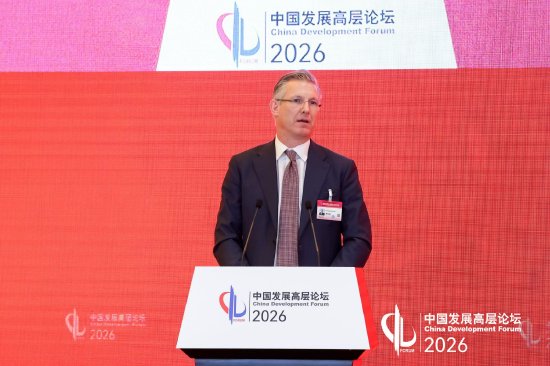
库克:迫不及待想看中国AI下一步发展!苹果CEO在中国发展高层论坛2026年年会上发声
新浪财经· 2026-03-22 08:41
Group 1 - The core viewpoint emphasizes the innovative capabilities of China's developer community, which is driving growth and prosperity through technology and new productivity models [2] - Tim Cook highlighted the transformation in China's manufacturing sector, noting the shift from labor-intensive processes to advanced manufacturing, particularly in automation and smart manufacturing [2] Group 2 - Cook expressed admiration for the impressive development of China's robotics industry and showed enthusiasm for the future of AI during the "14th Five-Year Plan" period [5] - The company reported that over 90% of its products in China are powered by clean energy, with more than 90 suppliers committing to 100% renewable energy for Apple product manufacturing by 2030 [5]


韩文秀:保持经济向新向优向好发展,为动荡不安的世界注入更多稳定性、确定性
券商中国· 2026-03-22 08:18
Core Viewpoint - The "14th Five-Year Plan" emphasizes high-quality development and aims for significant progress towards socialist modernization by 2035, with a focus on enhancing both hard and soft national strengths [2][10]. Group 1: Innovation and Economic Vitality - The plan prioritizes innovation as the primary driving force for development, with strategic tasks including building a modern industrial system and accelerating high-level technological self-reliance [3]. - China aims to maintain a reasonable proportion of manufacturing and deepen supply-side structural reforms to optimize traditional industries and cultivate emerging sectors [3]. Group 2: Digital and Intelligent Economy - The plan promotes comprehensive digital development and the creation of a new intelligent economy, leveraging artificial intelligence across various sectors [4]. - There is an emphasis on increasing the proportion of basic research and accelerating the application of major technological achievements to foster new productive forces [4]. Group 3: Coordinated Development - The plan addresses the unbalanced and insufficient development across urban and rural areas, advocating for tailored policies to leverage regional advantages [5]. - It aims to enhance consumer contribution to economic growth and expand consumption, particularly in services, through urban renewal and infrastructure upgrades [5]. Group 4: Green Development - The plan outlines a commitment to green development, aiming for a peak in carbon emissions by 2030 and a significant increase in the share of non-fossil energy consumption to 25% [6]. - China plans to accelerate the transition to a new energy system and promote the development of low-carbon technologies and industries [6]. Group 5: Open Development - The plan reaffirms China's commitment to opening up its economy, eliminating foreign investment restrictions in manufacturing, and expanding access in service sectors [7]. - China aims to balance trade and actively promote high-quality imports while enhancing its international investment footprint [7]. Group 6: Shared Development - The plan focuses on improving people's livelihoods, with numerous indicators related to welfare, employment, education, and healthcare [8]. - It emphasizes the importance of equitable income distribution and social security to enhance the overall well-being of the population [8]. Group 7: Development and Security - The plan highlights the need to strengthen domestic circulation and ensure the security of food, energy, and critical supply chains amid global uncertainties [9]. - It aims to stabilize the real estate market and manage local government debt risks to prevent systemic financial risks [9].
主动量化周报:油价逼近临界点:月底或为极佳买点
ZHESHANG SECURITIES· 2026-03-22 08:00
- The report does not contain any specific quantitative models or factors for analysis, construction, or testing results[1][2][3][4][5][6][7][8][9][10][11][12][13][14][15][16][17][18][19][20][21][22][23][24][25][26][27][28][29][30][31]

金融法草案向社会公开征求意见,北证50下跌1.01%
Soochow Securities· 2026-03-22 07:50
Market Performance - On March 20, 2026, the Beijiao 50 index decreased by 1.01%[1] - The average market capitalization of Beijiao stocks is 2.799 billion yuan, with a trading volume of 16.230 billion yuan, down by 0.273 billion yuan from the previous trading day[1] - The ChiNext index rose by 1.30%, while the A-share index and the Shanghai Composite Index both fell by 1.24%[1] Capital Market News - The draft of the Financial Law was publicly solicited for opinions, aiming to enhance financial regulation and risk prevention[6] - Significant breakthroughs in mineral exploration were reported in Sichuan, including rare earths and fluorite[7] Company Announcements - Copper Crown Mining announced the resignation of a board member effective March 20, 2026, with no adverse impact on operations[21] - Yishin Precision proposed a stock incentive plan involving 3 million restricted shares, representing 2.59% of the total share capital[19] Risk Factors - Potential risks include individual stock earnings falling short of expectations, intensified industry competition, and worsening trade frictions[23]
电力设备及新能源周报20260322:1月全球动力电池装机量同比增10.7%,特斯拉拟采购中国光伏设备
Guolian Minsheng Securities· 2026-03-22 07:45
Investment Rating - The report maintains a "Recommended" rating for key companies in the industry, including Ningde Times, Keda Li, and others [6][7]. Core Insights - In January 2026, global installed capacity of electric vehicle batteries reached approximately 71.9 GWh, marking a year-on-year increase of 10.7%. Chinese companies' market share expanded to 73.3%, with Ningde Times leading at 32.5 GWh and a 45.2% market share [2][18]. - Tesla plans to procure approximately $2.9 billion worth of solar equipment from Chinese manufacturers to support its 100 GW solar manufacturing capacity in the U.S., highlighting the ongoing reliance on Chinese trade despite efforts to boost domestic manufacturing [3][32]. - Total electricity consumption in China for January and February 2026 was 16,546 billion kWh, a 6.1% year-on-year increase, with significant growth in the high-tech and equipment manufacturing sectors [4][45]. Summary by Sections 1. Power Batteries - The global installed capacity of electric vehicle batteries in January 2026 was about 71.9 GWh, up 10.7% year-on-year, despite a slight decline in global electric vehicle deliveries [15]. - Chinese companies dominate the market, with six firms in the global top ten, collectively holding a 73.3% market share, up from 68.3% the previous year [18][20]. - Ningde Times remains the leader with a 45.2% market share, while BYD ranks second with a 13.8% share, showing strong growth in overseas markets [19][20]. 2. New Energy Generation - Tesla's procurement plan for solar equipment from China, valued at $2.9 billion, aims to establish a significant solar manufacturing capacity in the U.S. [3][32]. - The U.S. solar market faces challenges due to high tariffs on imports, yet exemptions for manufacturing equipment have been granted to support domestic production [32]. 3. Power Equipment and Industrial Control - The total electricity consumption in China for January and February 2026 was 16,546 billion kWh, reflecting a 6.1% increase year-on-year, with notable growth in the industrial and service sectors [4][45]. - The first industry saw a 7.4% increase in electricity consumption, while the second industry grew by 6.3%, particularly in high-tech and equipment manufacturing, which grew by 10.6% [45].

北交所定期报告20260321:市场波动加剧,聚焦低估值优质个股
Soochow Securities· 2026-03-22 07:45
Market Performance - As of March 20, 2026, the North Exchange 50 Index fell by 5.76% compared to the previous week, while the Shanghai and Shenzhen 300 Index decreased by 2.19%[18] - The average market capitalization of North Exchange A-share component stocks is 2.799 billion yuan, with a daily average trading volume of approximately 15.907 billion yuan, down 19.37% from the previous week[18] - The turnover rate for North Exchange A-shares is 3.97%, a decrease of 0.2 percentage points from the previous week, indicating better liquidity compared to other major markets[18] Investment Recommendations - The price-to-earnings (PE) ratios for North Exchange A-shares, ChiNext, Shanghai Main Board, Shenzhen Main Board, and Sci-Tech Innovation Board are 51.51, 71.44, 13.87, 41.19, and 216.33 respectively as of March 20, 2026[28] - Investors are advised to focus on stocks with better-than-expected performance and those with significant technological barriers and alignment with industrial policies in innovative growth sectors[28] Economic Insights - The National Bureau of Statistics reported a 14.2% year-on-year increase in the value added of the computer, communication, and other electronic equipment manufacturing industries for January and February 2026[10] - The Ministry of Industry and Information Technology aims for the number of fuel cell vehicles in China to reach 100,000 by 2030, with hydrogen prices targeted to drop below 25 yuan per kilogram[11] New Listings - Zuxing New Materials (stock code: 920078.BJ) was listed on March 18, 2026, focusing on aluminum pigments and fine spherical aluminum powder[25] - Xinhengtai (stock code: 920028.BJ) was listed on March 20, 2026, specializing in functional polymer foaming materials[26]