中证A500

Search documents
小白初上路:一个真实的攻守平衡案例
雪球· 2026-03-14 04:46
Core Viewpoint - The article discusses a case study of a novice investor's portfolio, highlighting the importance of systematic asset allocation in the current low-interest-rate environment, where index investing has become a common choice [4]. Defensive Players - The investor selected the CSI Dividend Index as a defensive player, which is a stable single-factor index focusing on dividends, despite lacking more attractive factors [7]. - Other defensive strategies include dividend, low volatility, value, fundamental, and cash flow strategies, with various indices available for selection [9]. - It is emphasized that defensive indices cannot replace the role of bonds or money market funds in a multi-asset allocation [10]. Midfield Players - The investor chose the CSI A500 as a core broad-based index, which offers a more balanced distribution across industries, sizes, and styles compared to the CSI 300 [11]. - The CSI 500 was also included to enhance the allocation of mid-cap companies, providing further style rebalancing [12]. - A diverse selection of core broad-based indices is suggested, including the CSI 50, CSI 100, CSI 800, and global indices like the Hang Seng Index and S&P 500, to improve overall portfolio diversification [12][13]. Offensive Players - The investor opted for the ChiNext 50, which represents leading companies in China's technology innovation sector, providing a balanced exposure to both the ChiNext and Sci-Tech boards [14]. - For those looking to expand their offensive strategy, options include the Nasdaq 100, Hang Seng Tech, and various thematic or sector indices [15][16]. Conclusion - The portfolio represents a well-structured approach for novice investors, combining simplicity and effectiveness, demonstrating that a straightforward strategy can be beneficial for long-term investment [17]. - Additionally, the inclusion of a small allocation to oil indices lays the groundwork for future multi-asset diversification [18].


春季躁动下的核心底仓选择
Xin Lang Cai Jing· 2026-02-02 04:19
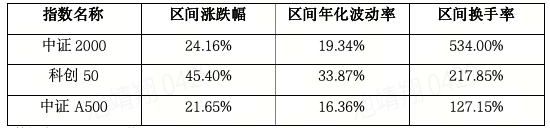
Core Viewpoint - The current capital market is vibrant, presenting a choice between small-cap stocks and the future potential of the Sci-Tech Innovation Board. Investors are encouraged to establish a stable core investment, represented by the CSI A500 index, before diversifying into various styles for a balanced portfolio [1][9]. Performance Comparison - Over the past six months, the CSI A500 index achieved a return of 21.65% with a volatility of 16.36%, providing a more stable holding experience compared to the CSI 2000 and Sci-Tech 50 indices, which had returns of 24.16% and 45.40% respectively, but with higher volatilities of 19.34% and 33.87% [2][10][12]. - The turnover rate for the CSI A500 was 127.15%, which is moderate compared to the higher turnover rates of the CSI 2000 (534.00%) and Sci-Tech 50 (217.85%), making it more suitable for ordinary investors [12][10]. Dividend and Valuation - The CSI A500 index offers a significantly higher dividend yield compared to the Sci-Tech 50 and CSI 2000, providing a layer of safety and predictable cash flow for investors [3][11]. - In terms of valuation, the rolling P/E ratio for the CSI A500 is 17.38, with a percentile rank of 76.47%, indicating a more reasonable valuation compared to the CSI 2000 and Sci-Tech 50, which have P/E ratios of 168.51 and 177.24, respectively, and are in the higher historical percentile ranks [6][16]. Strategic Recommendations - In the current market environment, the CSI A500 is recommended as a core holding due to its balance of returns and volatility. Investors may consider a "core-satellite" strategy, anchoring the majority of their portfolio in the A500 ETF while allocating a smaller portion to high-potential sectors like semiconductor design and equipment [8][17].
2026年,要想清楚该如何面对牛市
雪球· 2026-01-17 03:46
Group 1 - The article discusses the potential bullish trend in the A-share market by 2026, supported by factors such as low interest rates and the attractiveness of stock dividends compared to government bonds [5][6][10] - It highlights the concept of "asset scarcity," where capital is expected to flow into higher-yielding investments as traditional options like real estate and bank deposits lose their appeal [7][8] - The article emphasizes the importance of strategic focus on stimulating consumption and internal demand through asset appreciation rather than direct cash distribution [9][10] Group 2 - The article outlines four key investment strategies for navigating a bull market, applicable to both institutional and retail investors [11] - The first strategy is to embrace index ETFs, particularly the CSI 500, which represents a diversified selection of leading companies [12][13] - The second strategy stresses the importance of balanced asset allocation to mitigate risks associated with heavy concentration in specific stocks or sectors [14] - The third strategy advises investors to adopt a long-term perspective and avoid short-term trading, as retail investors typically lack advantages in quick market movements [15][16] - The fourth strategy suggests waiting for price corrections to find good entry points for investments, emphasizing the need for a positive mindset [17][19] Group 3 - The article identifies three key criteria for selecting high-quality companies in the high-end manufacturing sector: price increases, overseas expansion, and innovation [22][23] - It discusses the importance of evaluating both relative and absolute price metrics, including PE/PB ratios and historical performance, to determine good pricing [25][26] - The article categorizes leading manufacturing companies into five groups based on their fundamentals and valuation metrics, providing a framework for investment decisions [28]

做好三件事,投资其实不难!
雪球· 2026-01-10 05:21
Core Viewpoint - Investment success hinges on three key factors: buying price, portfolio structure, and patience [4][5]. Group 1: Buying Price - It is crucial to avoid purchasing assets at inflated prices; even a good company can lead to poor returns if bought at a high price [6][7]. - Valuation metrics, such as the price-to-earnings (P/E) ratio, serve as a straightforward measure to assess whether an asset is overvalued or undervalued [8][10]. - Historical comparisons of valuation can provide context; for instance, the average P/E ratio of the CSI 300 index over the past decade is approximately 12 times, and deviations from this average can signal potential risks or opportunities [10][11]. Group 2: Portfolio Structure - Diversification is essential as it acknowledges the unpredictability of market movements; overconfidence in one's judgment can lead to significant losses [13][14][15]. - Relying solely on one stock or sector increases risk, as market conditions can change unexpectedly, leading to potential capital loss [17][18]. - Embracing broad market indices, such as the CSI 300 or Hang Seng Index, allows investors to capture growth across various sectors, reducing the risk associated with individual stocks [19][20]. Group 3: Patience - The stock market is volatile in the short term but tends to stabilize over the long term; thus, long-term investment strategies are more likely to yield positive returns [21][22]. - Historical data indicates that holding investments for longer periods significantly increases the probability of achieving positive returns, with a 60% chance of profit after one year and over 80% after three years [24]. - Long-term investments should be made with funds that are not needed in the near future, as this reduces anxiety during market fluctuations and helps avoid panic selling [26][27].

中美股票市场差异,真有那么大?
雪球· 2025-12-15 13:01
Group 1 - The core viewpoint of the article discusses the performance comparison between A-shares and U.S. stocks, indicating that A-shares may not underperform U.S. stocks as commonly perceived [4][6]. - From 2005 to December 5, 2025, the S&P 500 and CSI 300 indices increased by 748.25% and 574.74% respectively, translating to annualized returns of 10.72% and 9.52%, showing that the performance gap is not as significant as believed [7][9]. - The overall growth rate of A-share listed companies from 2005 to present is higher than that of U.S. stocks when excluding valuation changes [11]. Group 2 - The industry distribution of listed companies in both markets is gradually converging, with A-shares showing increasing exposure to technology sectors [12][18]. - The combined weight of Information Technology and Communication Services in the CSI 300 is 22%, while in the broader Chinese equity market, it reaches 30.2%, indicating a shift towards technology [16][18]. - The industry distribution in the Chinese market has evolved significantly since 2011, reflecting the rapid transformation of the Chinese economy [18]. Group 3 - The volatility of A-shares is notably higher than that of U.S. stocks, which affects investor behavior and overall investment experience [21][22]. - To improve the investment experience in A-shares, reducing market volatility is deemed essential, rather than solely focusing on enhancing the fundamentals of listed companies [23][24]. - Recent regulatory measures aim to lower the volatility of A-shares, indicating a potential for improved investor experience in the future [25]. Group 4 - Overall, the long-term performance of A-shares is not significantly inferior to that of U.S. stocks, but the volatility in A-shares has historically led to varied investor experiences [27]. - The trend towards decreasing volatility in A-shares is expected to continue, potentially leading to better investment outcomes for broad market indices [27].

从“博格的故事”,到中证A500的深入人心
聪明投资者· 2025-12-15 07:53
Core Viewpoint - The article emphasizes the significance of index investing, highlighting the success of the China Securities A500 Index (中证 A500) as a representative tool for long-term investment in the A-share market, paralleling the historical success of index funds initiated by John Bogle [2][19]. Group 1: Historical Context and Development - John Bogle, known as the "father of index funds," launched the first index fund, the Vanguard 500 Index Fund, in 1975, believing that most active funds could not outperform market indices due to high management fees [2]. - The S&P 500 Index has shown remarkable performance, increasing by 131.2 times since its inception in 1957, with an annualized return of 10.26% [2]. Group 2: A500 Index Overview - The China Securities A500 Index, launched in September 2024, includes 500 leading companies across various industries, reflecting the overall performance of the most representative listed companies in China [6]. - The index employs an industry-balanced sampling method, ensuring a comprehensive representation of the market while focusing on leading companies in emerging sectors and incorporating ESG and connectivity screening standards [6]. Group 3: Performance Comparison - The A500 Index has achieved an 18.05% return year-to-date, outperforming the CSI 300's 15.15% and the Shanghai Composite Index's 15.70% [10]. - The A500 Index has gained popularity as a more optimized long-term investment tool compared to the CSI 300, aligning better with the evolving economic structure of China [10]. Group 4: Market Dynamics and Investor Sentiment - The A500 Index has demonstrated adaptability, capturing rapid shifts in industry trends, with significant gains in the telecommunications and electronics sectors, which rose approximately 68% and 40% respectively [13]. - The A500 ETF has attracted a substantial number of individual investors, with 105,975 holders, reflecting a growing preference for broad-based investment strategies among retail investors [16]. Group 5: Fund Performance and Investor Benefits - The A500 ETF has generated a profit of 462 million yuan for investors in the first half of 2025, ranking first among its peers [16]. - The ETF's strong daily average scale and active trading status provide investors with advantages such as quick entry and exit without significant impact on net value, enhancing overall investment experience [15].

[11月18日]指数估值数据(大盘下跌回到4.2星级;螺丝钉定投实盘第390期发车;养老指数估值表更新)
银行螺丝钉· 2025-11-18 13:39
Market Overview - The A-share market experienced a decline, with the CSI All Share Index dropping by approximately 1% [1] - Global stock markets have shown significant volatility, with Japanese and Korean stocks falling over 3% [3][4] - Various asset classes, including gold and cryptocurrencies, also exhibited considerable fluctuations, often linked to liquidity crises [5][6] Federal Reserve Impact - Concerns are rising regarding the Federal Reserve's potential pause on interest rate cuts from December to the first half of next year, which may tighten global market liquidity in the short term [7] - Historically, such liquidity tightening has typically had a short-term impact on markets [8] - The Federal Reserve is expected to enter a phase of interest rate cuts eventually, as the current dollar interest rates remain relatively high, leading to significant interest payment pressures on U.S. Treasury bonds [9][10] A-share Market Dynamics - Large-cap stocks in the A-share market experienced a smaller decline compared to mid and small-cap stocks, which saw more significant drops [11] - Value style stocks exhibited greater volatility today [12] - The low volatility dividend and free cash flow indices in the Shanghai-Hong Kong-Shenzhen market have returned to undervaluation after a decline [13] Investment Strategies - The dividend and free cash flow indices saw a surge in October and November, reaching historical highs, with many stocks moving from undervaluation to normal valuation [14][15] - Currently, these indices are fluctuating around undervaluation and normal valuation levels [16] - The upcoming December index rebalancing will involve selecting a basket of stocks with low valuations, which may lead to a further decrease in valuations [17][18][19] Hong Kong Market Insights - The Hong Kong stock market also faced declines, with greater volatility than the A-share market [20] - Funds containing Hong Kong stocks experienced significant fluctuations today [21] - Technology stocks in Hong Kong fell over 2%, currently positioned at normal to low valuation levels, suggesting a need for patience [22] Investment Recommendations - The index enhancement investment strategy has returned to normal valuation, prompting a pause in dollar-cost averaging while maintaining positions [24] - The actively selected investment strategy continues normal dollar-cost averaging, though it is nearing normal valuation [24] - The monthly salary investment strategy, which consists of 40% stocks and 60% bonds, is recommended for stable market participation with low risk [24] Pension Fund Insights - The pension index fund investment strategy has been ongoing, with a focus on combinations like the CSI A500 and CSI Dividend indices, representing growth and value strategies respectively [40][41] - Both categories have shown strong performance phases this year, with the CSI A500 yielding approximately 22% and the CSI Dividend around 10% [44] - The strategy emphasizes patience for future undervaluation opportunities, reinforcing the notion that long-term investment success relies on capital availability rather than a lack of opportunities [49]

企业各个生命阶段,都有哪些代表指数基金和主动基金呢?|投资小知识
银行螺丝钉· 2025-11-02 13:59
Group 1 - The article discusses various investment styles, particularly focusing on "deep growth" stocks, which are less common in funds but prevalent in new stocks on the Sci-Tech Innovation Board and the ChiNext Board [4] - "Growth" style stocks are characterized by high revenue and profit growth, often trading at significantly higher valuations than the market average, with typical price-to-earnings ratios ranging from 40 to 50 times [6][7] - "Growth value" style stocks are in a mature phase with slowing revenue growth but can maintain profitability through cost control, often represented by high ROE stocks in sectors like consumer goods, pharmaceuticals, and technology [8][10] Group 2 - "Deep value" style stocks show stable dividends and high dividend yields, with performance expected to be strong from 2022 to 2024, reflecting a trend of style rotation in the A-share market [11][12] - The article highlights a historical performance pattern where growth styles dominated from 2019 to 2021, while value styles are expected to be strong from 2022 to 2024, with a potential shift back to growth styles in 2025 [12][13] - Understanding the characteristics of different styles allows for strategic adjustments in portfolio allocation based on valuation opportunities [12]

面对波动,怎么缓解焦虑情绪?
天天基金网· 2025-09-05 11:11
Core Viewpoint - The article discusses the recent fluctuations in the Shanghai Composite Index, emphasizing the importance of maintaining investment discipline and focusing on long-term value rather than short-term market volatility [3][6][10]. Market Analysis - The Shanghai Composite Index has experienced increased volatility as it surpasses key levels such as 3500, 3600, 3700, and 3800 points, with average daily fluctuations rising significantly [4][5]. - Historical data shows that market corrections often occur around these integer levels, driven by profit-taking behaviors from investors [5][10]. Long-term Investment Perspective - Over the past 20 years, the Wind All A Index has shown a cumulative increase of 807.99% with an annualized return of 12.01%, outperforming other asset classes like gold and bonds [8][9]. - The sustained growth of quality listed companies in China is a key driver behind these returns, highlighting the importance of long-term holding strategies [10]. Investment Strategy - The article advocates for a core-satellite investment strategy, which combines stable broad-based indices with high-potential assets to capture structural opportunities while managing overall portfolio volatility [11][12]. - Investors are encouraged to focus on asset allocation that reflects their risk tolerance, including exposure to broad indices like CSI A500 and Shanghai-Shenzhen 300 [12].

[9月2日]指数估值数据(螺丝钉定投实盘第380期发车;养老指数估值表更新;月薪宝体验官福利来了)
银行螺丝钉· 2025-09-02 13:18
Market Overview - The market experienced a pullback today, with the CSI All Share Index down by 1.74%, returning to a rating of 4.3 stars [1] - Large-cap stocks saw slight declines, while small-cap stocks experienced more significant drops [2] - Recent market trends indicate rapid style rotation [3][8] Style Rotation - The previously underperforming value style saw gains today, while the growth style, which had performed well yesterday, faced declines [4][6] - Value and dividend indices showed slight increases, with the banking index rising significantly [5] - The ChiNext and STAR Market experienced notable declines [7] Growth and Value Dynamics - The growth and value styles frequently switch, with a notable speed of change [9] - This year, growth styles have led the market, with some STAR Market indices reaching overvalued levels [10] - The ChiNext has seen less growth compared to the STAR Market but has still achieved a relatively high valuation [11] Volatility and Valuation - Following the increase in valuations, the volatility of growth styles is expected to be higher than last year's undervalued state [12] - Investors should prepare psychologically for market fluctuations [13] Hong Kong Market - The Hong Kong stock market also experienced an overall decline, but the drop was less severe compared to the A-share market [14] - The Hang Seng Index showed slight declines but remained relatively resilient [15] Investment Strategies - The article discusses various investment strategies, including a pause in regular investments for certain indices that have returned to normal valuations, with a focus on maintaining positions until undervalued opportunities arise [17][25] - The "Monthly Salary Treasure" investment strategy, which consists of 40% stocks and 60% bonds, is highlighted as a stable market participation method [45][46] Pension Fund Insights - The article provides insights into personal pension fund investments, emphasizing the importance of patience and the potential for future undervalued opportunities [39][40] - The performance of selected pension index funds, such as the CSI A500 and CSI Dividend, is noted, with the former showing a 19% profit and the latter around 6% [38]