
微盘股

Search documents
热点跟不上?6 位大咖2026年配置思路大起底!
天天基金网· 2026-01-19 08:32
Core Insights - The article provides insights from various fund managers regarding investment opportunities and strategies for 2026, focusing on sectors like commercial aerospace, innovative pharmaceuticals, AI applications, and humanoid robotics [1][2]. Group 1: Commercial Aerospace - The commercial aerospace industry has transitioned from a conceptual phase to one focused on capacity and delivery, with predictions of China's operational satellites increasing from 100 to 10,000 [3]. - The industry is expected to experience rapid growth and volatility, similar to the telecommunications sector, with cost reduction being a reasonable strategy at this stage [3]. Group 2: Innovative Pharmaceuticals in Hong Kong - The innovative pharmaceutical sector in Hong Kong is anticipated to show significant changes starting in the second half of 2024, with an increase in licensing agreements and expectations of profitability for leading companies within 2-3 years [4]. - Institutional investments are expected to surge in 2025, with the current stock prices of Hong Kong-listed innovative pharmaceutical companies showing a notable discount compared to their A-share counterparts, indicating long-term investment potential [4]. Group 3: AI Applications - The AI application sector is moving into a "third phase," shifting from speculative hype to a focus on genuine profitability, emphasizing the importance of cost control for scalable AI solutions [5][6]. - Companies demonstrating clear profit release in their financial reports and those capable of effectively reducing costs are seen as key players in this sector [5]. Group 4: Technology in Hong Kong - Despite the competitive edge of Hong Kong tech giants like Alibaba and Tencent, their valuations remain significantly lower than global AI leaders, with the Hang Seng Tech Index trading at a P/E ratio of 24 compared to 36 for the Nasdaq 100 [7]. - Market optimism regarding the earnings outlook for these companies in 2026 supports the potential for valuation recovery [7]. Group 5: Humanoid Robotics - The humanoid robotics sector is characterized as a "long slope with thick snow," indicating steady growth opportunities both now and in the future [8]. - Key developments are expected in Q1 2026, including product launches and mass production from major players like Tesla, which may catalyze market activity [8]. Group 6: Asset Allocation Strategies for 2026 - The focus for 2026 should remain on technology investments while also considering consumer sectors driven by policy support for domestic demand [10]. - A "dumbbell" strategy combining technology and consumer sectors is recommended to balance portfolios and reduce volatility, with a focus on broad market indices and targeted investments in technology and consumer stocks [10]. Group 7: Micro-Cap Stocks and Quantitative Strategies - There are misconceptions about micro-cap stocks, particularly regarding their performance in low liquidity conditions, which do not always correlate with market indicators [11]. - A quantitative strategy that combines value investing with active quant methods aims to capture market opportunities quickly, especially in a volatile environment [12].


“胆肥了 ” | 谈股论金
Xin Lang Cai Jing· 2025-12-23 12:09
Core Viewpoint - The Shanghai Composite Index achieved a five-day winning streak, with a slight increase of 1 point, indicating a potential double bottom breakout pattern in the K-line formation, raising questions for retail investors on whether to follow the trend or remain cautious [1][3]. Market Performance - The three major indices closed slightly higher, but there was significant divergence in individual stock performance, with only about 1,500 stocks rising while over 3,650 fell, resulting in a median decline of 0.78% [1][3]. - Trading volume increased to approximately 1.9 trillion, but there was a notable net outflow of 54.9 billion from major funds, indicating a concerning trend [1][3]. Sector Analysis - In the Shanghai market, the large financial sector (including securities, insurance, and banking) and the "Ji Lian Hai" sector led the gains, while the AI budget increase by ByteDance positively impacted the computing power-related sectors [1][3]. - The Shenzhen market was driven by CATL, with the lithium battery sector (including energy metals and electronics) also performing well, creating a leadership dynamic with "Han Wang" in Shanghai and "Ning Wang" in Shenzhen [1][3]. Stock Movements - There was a noticeable decline in individual stocks during the day, particularly in two sectors: micro-cap stocks, which dropped by about 1.5%, and the commercial aerospace sector, which faced significant sell-offs due to previous excessive speculation and lack of solid fundamental support [2][4][5]. - Three newly listed stocks experienced temporary suspensions during trading, indicating signs of speculative trading, contrasting sharply with the performance of four newly listed stocks in Hong Kong that all fell below their issue prices, with some dropping over 45% [2][5].
“胆肥了 ” | 谈股论金
水皮More· 2025-12-23 09:59
Market Overview - The A-share market saw all three major indices close in the green, with the Shanghai Composite Index rising by 0.07% to 3919.98 points, the Shenzhen Component Index increasing by 0.27% to 13368.99 points, and the ChiNext Index up by 0.41% to 3205.01 points [3] - The total trading volume in the Shanghai and Shenzhen markets reached 1.8998 trillion, a slight increase of 37.9 billion compared to the previous day [3] Technical Analysis - The Shanghai Composite Index achieved a five-day winning streak, with a key objective to break through the previous resistance level of 3936 points, aiming to form a double bottom breakout pattern [4] - Despite the overall index closing slightly higher, there was significant divergence in individual stock performance, with only around 1500 stocks rising while over 3650 stocks fell, resulting in a median decline of 0.78% [4] Sector Performance - The financial sector (including securities, insurance, and banking) led the gains in the Shanghai market, while the AI-related sectors saw positive performance due to ByteDance's increased budget for AI [4] - In the Shenzhen market, the lithium battery sector, driven by Ningde Times, also performed strongly, indicating a leadership pattern with "Han Wang" in Shanghai and "Ning Wang" in Shenzhen [4] Market Sentiment - There was a notable retreat in individual stocks during the day, particularly in the micro-cap stocks, which saw a drop of approximately 1.5% [5] - The commercial aerospace sector experienced a significant decline in the afternoon, attributed to excessive prior speculation and a lack of solid fundamental support [6] New Listings - Three newly listed stocks experienced temporary suspensions during trading, indicating signs of speculative trading, contrasting sharply with four new stocks listed on the Hong Kong market that all fell below their issue prices, with some dropping by over 45% [6]

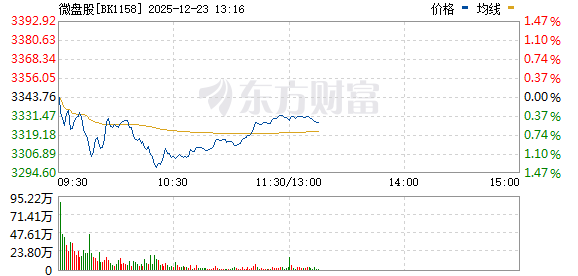
三大变数来袭!微盘股刚刚直线跳水!商业航天板块跳水
Zheng Quan Shi Bao Wang· 2025-12-23 05:15
Core Viewpoint - The micro-cap stocks are experiencing significant volatility, with a notable decline following a previous drop, indicating a market focus on large-cap stocks instead [2][3]. Group 1: Market Performance - On December 23, the micro-cap stock index dropped nearly 1.5%, with the number of rising stocks in the market falling below 1,500 [7]. - The commercial aerospace sector saw a sharp decline of nearly 2.5%, affecting overall market sentiment [5]. Group 2: Factors Influencing Market Trends - Historically, micro-cap stocks tend to underperform at the end of the year or the beginning of the new year, which may be linked to liquidity structure changes [3][8]. - A significant investment of $23 billion by ByteDance in artificial intelligence is expected to boost related sectors, potentially shifting market focus back to large technology stocks [4][8]. Group 3: Liquidity and Market Dynamics - The market liquidity is increasingly concentrating on high-quality assets, as indicated by the substantial trading volumes in major stocks, with 19 stocks exceeding a trading volume of 1 trillion yuan this year [8]. - Analysts suggest that the current market is in a consolidation phase with weak trading volumes, and a trend reversal will require a combination of increased volume and improved market sentiment [9].
微盘股指数周报:微盘股继续领涨市场,扩散指数已达较高区间-20251118
China Post Securities· 2025-11-18 12:21
Quantitative Models and Construction Methods 1. Model Name: Diffusion Index Model - **Model Construction Idea**: The diffusion index is used to monitor the market's risk threshold and predict potential market movements based on historical and current data[5][17][40] - **Model Construction Process**: - The diffusion index is calculated based on the relative performance of micro-cap stocks over a specific time window. - The model uses three trading strategies: 1. **Left-Side Threshold Method**: Triggered an opening signal on September 23, 2025, when the index reached 0.0575[42] 2. **Right-Side Threshold Method**: Triggered an opening signal on September 25, 2025, when the index reached 0.1825[47] 3. **Dual Moving Average Method**: Gave a bullish signal on October 13, 2025[48] - The diffusion index's current value is 0.93, indicating a high level, with potential for high volatility in the coming week[39][40] - **Model Evaluation**: The model effectively identifies market risk thresholds and provides actionable trading signals based on historical data[5][17][40] 2. Model Name: Small-Cap Low-Volatility 50 Strategy - **Model Construction Idea**: Selects 50 stocks with small market capitalization and low volatility from micro-cap stock components to optimize returns[7][35] - **Model Construction Process**: - Stocks are selected based on their market capitalization and volatility metrics. - The portfolio is rebalanced bi-weekly. - The benchmark is the Wind Micro-Cap Stock Index (8841431.WI), with a transaction fee of 0.3% on both sides[7][35] - **Model Evaluation**: The strategy demonstrates strong performance in 2025, with a year-to-date (YTD) return of 81.53%, though it underperformed the benchmark by 1.01% this week[7][35] --- Model Backtesting Results 1. Diffusion Index Model - **Risk Threshold**: Triggered at 0.9, indicating a high-risk zone[5][17][40] - **Left-Side Threshold Method**: Opening signal at 0.0575 on September 23, 2025[42] - **Right-Side Threshold Method**: Opening signal at 0.1825 on September 25, 2025[47] - **Dual Moving Average Method**: Bullish signal on October 13, 2025[48] 2. Small-Cap Low-Volatility 50 Strategy - **2024 Return**: 7.07%, underperforming the benchmark by 2.93%[7][35] - **2025 YTD Return**: 81.53%, underperforming the benchmark by 1.01% this week[7][35] --- Quantitative Factors and Construction Methods 1. Factor Name: Leverage Factor - **Construction Idea**: Measures the financial leverage of a company to assess its risk and return potential[4][16][33] - **Construction Process**: Calculated as the ratio of total debt to equity. - **Factor Evaluation**: Ranked first in weekly rank IC with a value of 0.182, significantly outperforming its historical average of -0.005[4][16][33] 2. Factor Name: Free Float Ratio Factor - **Construction Idea**: Evaluates the proportion of freely tradable shares to total shares to gauge liquidity[4][16][33] - **Construction Process**: Calculated as the ratio of free float shares to total shares outstanding. - **Factor Evaluation**: Ranked second in weekly rank IC with a value of 0.138, outperforming its historical average of -0.012[4][16][33] 3. Factor Name: Turnover Factor - **Construction Idea**: Assesses trading activity by measuring the turnover of shares[4][16][33] - **Construction Process**: Calculated as the ratio of trading volume to total shares outstanding over a specific period. - **Factor Evaluation**: Ranked third in weekly rank IC with a value of 0.116, outperforming its historical average of -0.081[4][16][33] 4. Factor Name: Liquidity Factor - **Construction Idea**: Measures the ease of trading a stock without significantly impacting its price[4][16][33] - **Construction Process**: Calculated using bid-ask spreads and trading volume data. - **Factor Evaluation**: Ranked fourth in weekly rank IC with a value of 0.075, outperforming its historical average of -0.041[4][16][33] 5. Factor Name: Dividend Yield Factor - **Construction Idea**: Evaluates the dividend income relative to the stock price to assess income potential[4][16][33] - **Construction Process**: Calculated as the annual dividend per share divided by the stock price. - **Factor Evaluation**: Ranked fifth in weekly rank IC with a value of 0.064, outperforming its historical average of 0.022[4][16][33] --- Factor Backtesting Results Weekly Rank IC Values 1. **Leverage Factor**: 0.182 (historical average: -0.005)[4][16][33] 2. **Free Float Ratio Factor**: 0.138 (historical average: -0.012)[4][16][33] 3. **Turnover Factor**: 0.116 (historical average: -0.081)[4][16][33] 4. **Liquidity Factor**: 0.075 (historical average: -0.041)[4][16][33] 5. **Dividend Yield Factor**: 0.064 (historical average: 0.022)[4][16][33]
沪指突破去年高点,史上最慢牛市来了?
Sou Hu Cai Jing· 2025-08-13 12:53
Market Overview - The Chinese stock market continues its slow bull trend, with the A-share and Hong Kong markets showing strength, as evidenced by the Shanghai Composite Index reaching a nearly four-year high of 3683.46 points on August 13 [2][3] - The A-share market saw a total trading volume of 2.16 trillion yuan, an increase of 269.4 billion yuan from the previous trading day, with over 2730 stocks rising [2] Performance of Indices - The micro-cap stock index has led the gains this year, rising nearly 60%, while the STAR 200 and North China 50 indices have increased by around 40% [3] - The Hang Seng Index and Hang Seng Technology Index have both risen over 20%, with the Hang Seng Biotechnology Index seeing an impressive 86% increase [3] Investor Activity - The number of new A-share accounts opened this year has reached 14.56 million, a year-on-year increase of 36.9%, with July alone seeing 1.96 million new accounts, up 71% year-on-year [4] - The market's financing balance has also grown, reaching its highest level since 2016, indicating a steady influx of new capital [4] Sector Performance - The micro-cap sector's performance is primarily driven by liquidity rather than earnings growth, with significant contributions from quantitative private equity and retail investors [5] - The healthcare sector, particularly medical devices, is gaining attention due to positive changes in the industry, with expectations for continued growth supported by policy and market conditions [7] Future Outlook - Analysts suggest that the Chinese stock market still has considerable room for expansion compared to overseas markets, particularly in technology growth, manufacturing, and new consumption sectors [7] - The current liquidity environment, bolstered by central bank operations, is expected to support the market's upward trend, despite potential short-term volatility [10]

读研报 | 当杠铃两端同时出现了缩圈
中泰证券资管· 2025-06-24 10:46
Core Viewpoint - The article discusses the phenomenon of "contraction" in both ends of the barbell strategy, highlighting the extreme situation of dividend assets and the implications for investment strategies in the current market environment [4][8]. Group 1: Barbell Strategy and Market Trends - The barbell strategy has gained popularity recently, but research indicates that both ends of the strategy are experiencing a contraction [4]. - A report from Guolian Minsheng Securities notes that the contraction of high-dividend assets has reached a historical extreme, suggesting that focusing solely on high-dividend bank stocks may yield the highest returns among various dividend asset allocations [4]. - Huabao Securities reports that micro-cap stocks are experiencing "three highs," including a record high index, increased trading volume, and a sustained high annualized discount rate [4]. Group 2: Indicators and Risks - The "contraction indicators" for both dividend and micro-cap stocks have reached historical highs, indicating an extreme level of contraction in both ends of the barbell strategy [4][6]. - When the "micro-cap contraction indicator" is high, trading volume for micro-cap stocks tends to increase, suggesting a peak in trading sentiment that requires liquidity support to maintain momentum [6]. - Historical data shows that after reaching "three highs," micro-cap stocks have faced significant drawdowns, with maximum declines of 22.94% and 23.47% in previous instances [6]. Group 3: Implications for Dividend Assets - For bank stocks, the main concern affecting their allocation value is the reduction in cost-effectiveness rather than liquidity or sentiment [8]. - Historical trends indicate that when the price of bank stocks rises and the yield spread narrows to around 2.5%, it often triggers significant market corrections [8]. - The article suggests that the current contraction can be interpreted as a form of "herding," where investors seek certainty in uncertain times, reinforcing similar trading behaviors [8].

【公募基金】地缘波折暂未停息,银行微盘走势分化——公募基金权益指数跟踪周报(2025.06.16-2025.06.20)
华宝财富魔方· 2025-06-23 09:59
Group 1 - The geopolitical situation in the Middle East has negatively impacted risk appetite, leading to a narrow range of market fluctuations and a decrease in trading volume to around one trillion [2][16] - The banking index has risen significantly, with multiple bank stocks reaching historical highs, while sectors like stablecoins and oil and gas have performed well [2][16] - The AI and robotics sectors, which had previously experienced declines, showed slight rebounds, while the innovative pharmaceuticals and new consumption sectors faced significant adjustments [2][16] Group 2 - There is a divergence in the performance of banks and micro-cap stocks, with banks continuing to rise while micro-cap stocks have adjusted downwards due to various factors, including stable policy expectations and upcoming mid-year earnings reports [17] - The AH share premium rate has rebounded to 130 points, correlating with the US dollar index, indicating international capital flows favoring Hong Kong stocks [18] - The sentiment in the liquor sector has improved due to policy guidance, although long-term challenges such as demographic changes and evolving consumer preferences remain [19] Group 3 - The China Securities Regulatory Commission announced that the Sci-Tech Innovation Board ETF will be included in the fund advisory configuration range, aiming to enhance the board's demonstration effect and promote broader institutional breakthroughs [20] - The active equity fund indices showed varied performance, with the active stock fund index down 1.63% last week but achieving a cumulative excess return of 12.23% since inception [5][21] - The healthcare sector index experienced a significant decline of 6.82% last week, but it has recorded a cumulative excess return of 19.96% since inception [9][21]

“申”度解盘 | 市场波动显著放大,后续更应关注仓位控制
申万宏源证券上海北京西路营业部· 2025-06-23 02:20
Market Review - The market showed a downward trend this week, with the Shanghai Composite Index struggling to maintain the psychological level of 3400 points, indicating potential difficulty in sustaining this level without significant trading volume [2] - The micro-cap stock index formed a high-level doji, suggesting caution towards small micro-cap stocks [2] - The Hong Kong stock market formed a long upper shadow on the weekly chart, with the A/H premium reaching a new low, indicating a higher probability of a pullback in Hong Kong stocks or an increase in A-shares to return to a normal range [2] - A short-term head has formed, necessitating vigilance and partial position control, with the 20-week moving average serving as a key support level [2] Sector Analysis - There has been a noticeable acceleration in sector rotation, with over half of the sectors showing movement recently, including anti-tariff, military, innovative pharmaceuticals, new consumption, gaming media, CPO, oil and gas, and precious metals [3] - The trend is weak when sectors retreat, emphasizing the need for quick entry and exit strategies and active sector switching when trends reverse [3] Future Focus - Among various broad indices, the STAR Market has performed the weakest, particularly in sectors like semiconductors, computing power, and robotics, which have been in a weak adjustment trend since March [4] - Financial policies, such as the introduction of growth tiers in the STAR Market and the upcoming listing of new stocks with STAR attributes, may boost interest in semiconductor and technology stocks, although this may take time and requires accompanying trading volume [4] - A defensive approach is recommended before taking offensive positions [4]

策略周报:稳中求进,静待成长良机-20250608
HWABAO SECURITIES· 2025-06-08 05:11
Group 1 - The report emphasizes a cautious approach in the current market environment, suggesting a focus on defensive sectors such as banking due to ongoing tariff negotiations and economic pressures [3][10][12] - It highlights the potential for bond yields to reach new lows, recommending patience in positioning for left-side opportunities, particularly when the 10-year government bond yield approaches 1.7% after a 10 basis point rate cut [3][12] - The report notes a significant recovery in the domestic stock market, driven by short-term high-elasticity targets, with small-cap stocks becoming the core focus for capital [10][12] Group 2 - The report outlines key events impacting the market, including the U.S. tariff increase on steel and aluminum, and the People's Bank of China's liquidity support measures [9][10] - It tracks market performance indicators, noting a rise in average daily trading volume to 12,088.54 billion yuan, indicating increased trading activity and investor interest [22] - The report anticipates continued recovery in U.S. markets, driven by stable earnings from tech giants and a favorable environment during the tariff policy window [13]