
气象

Search documents
【汉中】协同推进气象法治宣传教育
Shan Xi Ri Bao· 2026-02-11 00:38
《通知》要求,要健全"三单两书"制度,完善考核评价和保障机制。市、县两级气象、司法部门将 加强协同联动,形成工作合力,共同推动气象法律法规有效实施,为汉中高质量发展提供有力法治保 障。 汉中市气象局副局长陈杰表示,随着气象法治宣传教育的不断深入,将有效提升气象干部职工的法 治素养,增强全社会气象法治意识和灾害风险防范能力。(记者:许奥博 通讯员:苏倩) 近日,汉中市气象局与市司法局联合印发《关于加强气象法治宣传教育工作的通知》,共同部署推 进全市气象法治宣传教育工作,着力提升气象治理法治化水平,筑牢气象防灾减灾第一道防线。 《通知》聚焦三大重点,推动气象普法工作提质增效。将气象相关法律法规纳入领导干部应知应会 清单,强化领导干部学法用法;严格落实"谁执法谁普法"责任制,推动执法与普法深度融合;依托气象 科普基地、法治文化广场等实体阵地布设宣传设施,广泛使用新媒体平台制作生动易懂的普法产品,结 合世界气象日、防灾减灾日等节点开展主题普法宣传;对企业开展"防控式"普法,为学校提供"浸润 式"教育,提升气象法治宣传教育针对性。 ...
桐庐:返乡路上的“撑伞人”
Hang Zhou Ri Bao· 2026-02-10 03:36
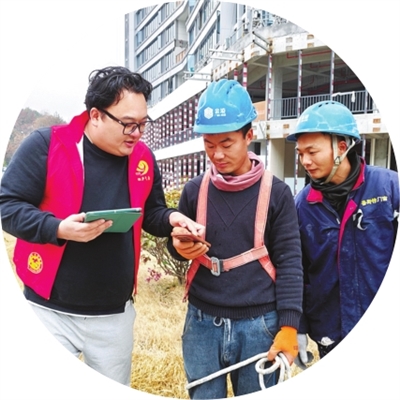
Core Viewpoint - The article highlights the collaborative efforts of the Tonglu County Meteorological Bureau and the Human Resources Bureau to provide essential weather services and humanistic care to migrant workers during the Spring Festival travel rush, ensuring their safe return home [1][2]. Group 1: Service Initiatives - The "Warm Service Team" was formed to deliver personalized meteorological services and support directly to construction sites, marking the first such initiative [1]. - The service activities included visits to five key engineering projects, such as the Yanshi International Youth Talent Apartment and the High-tech Industry Incubation Park, starting from January 28 [1]. Group 2: Weather Preparedness - Meteorological staff educated workers on coping strategies for adverse weather conditions expected during the Spring Festival, including cold temperatures, rain, snow, ice, and fog [2]. - Specific safety measures for self-driving and cycling workers were emphasized, including tips on staying warm, preventing slips, and ensuring safe driving [2]. Group 3: Communication and Support - The Tonglu Meteorological Bureau expanded its service reach by adding "Tonglu Spring Festival Weather" and "National Spring Festival Weather" sections to its WeChat public account, allowing workers to easily access real-time weather information for their travel destinations [2]. - Human resources volunteers provided policy consultations and travel planning services, complementing the meteorological services to create a comprehensive support system [2].

十部门发文推动低空经济标准体系建设聚焦气象等领域推动低空技术规范化应用规模化发展
Xin Lang Cai Jing· 2026-02-04 03:04
当前,我国低空经济已进入产业化加速期,形成贯穿技术研发、装备制造、运营服务、基础设施的全链 条生态体系。《指南》重点围绕低空航空器、低空基础设施、低空空中交通管理、安全监管和应用场景 五大核心领域,建立技术标准与管理规范融合、国内标准与国际规则融合、强制性标准与推荐性标准融 合、基础标准与场景标准融合的"四维融合"标准供给体系,为低空经济安全健康发展提供有力支撑。 近日,国家市场监督管理总局会同中央空管办、国家发展改革委、中国气象局等十部门联合发布《低空 经济标准体系建设指南(2025年版)》(以下简称《指南》)。 《指南》明确,到2027年,低空经济标准体系基本建立,基本满足低空经济安全健康发展需求。到2030 年,低空经济领域标准超过300项,结构优化、先进合理、国际兼容的低空经济标准体系基本形成,为 低空经济安全健康发展提供有力支撑。 "十五五"时期,中国气象局将实施低空经济气象保障行动,融入国家和地方低空经济治理体系,加强低 空经济气象保障顶层设计,因地制宜推动试点先行。加快完善气象保障标准体系,科学规划气象基础设 施,开展低空气象站网布局设计和装备技术研发,面向低空生产作业、公共服务、新兴市场业态等 ...
兴山:联合推进综合防灾减灾指挥调度平台建设
Xin Lang Cai Jing· 2026-01-30 09:20
1月29日,为推进湖北省宜昌市综合防灾减灾指挥调度平台(以下简称"平台")在兴山县落地对接与协 同应用,省气象局气候中心、宜昌市气象局与兴山县气象局、应急管理局、大数据局、水利局、交通局 等单位围绕平台建设目标、实施路径与数据共享机制,组织开展专题研讨。 通过研讨,各单位明确了平台在兴山县本地化的建设总体目标、主要任务、实施步骤及数据对接要求, 推动实现市县防汛"统一指挥、智能预警、快速响应、协同联动"的工作目标,全面提升综合防灾减灾调 度能力。 各单位将按照数据清单,落实数据提供任务,明确数据源、更新频率及网络对接环境,建立常态化协调 机制。 (作者:王镱霖 责任编辑:颜昕) ...
新年伊始 这些小变化传递积极信号
Ren Min Ri Bao· 2026-01-08 01:34
Group 1: Consumer Policies - A new round of "national subsidies" has been launched, covering a range of products including smart glasses, home appliances, and vehicle updates, with subsidies up to 15% for digital and home appliances [2] - The Hainan duty-free policy has been adjusted, expanding the number of duty-free items from 45 to 47 and allowing residents with departure records to purchase certain items multiple times within a year, leading to a significant increase in shopping activity [2] Group 2: Transportation and Services - The introduction of a new railway tourism ticket in Northeast China allows travelers to visit multiple destinations with a single ticket, enhancing convenience for tourists [3] - New regulations promoting green consumption have been implemented, aiming to facilitate the transition to a low-carbon economy across various sectors [3] Group 3: Housing Market - The VAT rate for individuals selling homes purchased for less than two years has been reduced from 5% to 3%, significantly lowering transaction costs and stimulating the real estate market [7] Group 4: Credit Repair - A one-time credit repair policy has been implemented, allowing individuals to remove certain overdue records from their credit reports if debts are repaid by March 31, 2026, reflecting a shift towards a more supportive credit management approach [8] Group 5: Taxation and Business Environment - The new VAT law has come into effect, providing clearer legal guidelines for businesses and enhancing the certainty of tax policies, which is expected to invigorate business operations [10]
长江北斗低空气象协同创新中心正式启动
Jing Ji Guan Cha Wang· 2025-12-11 15:38
经济观察网12月11日,经济观察网从湖北省北斗产业联盟成立大会暨首届生态大会现场获悉,长江北斗 低空气象协同创新中心正式启动,该中心由湖北省内北斗、低空、气象领域的龙头企业、顶尖科研机构 及高校共同发起设立,旨在通过跨领域协同,破解低空经济发展中的导航与气象核心难题,着力打造前 沿技术策源地、创新应用示范区和开放共赢的产业生态圈。 ...
摩洛哥2026财年加大水资源领域投资
Shang Wu Bu Wang Zhan· 2025-11-25 07:05
Core Insights - Morocco's Ministry of Equipment and Water Resources plans to implement large-scale investments in the fiscal year 2026 to address challenges posed by climate change [1] - The total investment scale is projected to reach $5.87 billion, including $4.05 billion in committed funds and $1.83 billion in disbursed funds [1] Investment Allocation - Water resources are prioritized, with $1.1 billion in disbursed funds and $1.71 billion in committed funds, highlighting water security as a core national strategy [2] - The road program has the highest committed funds at $1.62 billion, with $390 million in disbursed funds, aimed at ensuring continuity in structural road projects and network expansion [2] - The port program allocates $290 million in disbursed funds and $690 million in committed funds, focusing on major port projects along the Atlantic and Mediterranean coasts [2] - The meteorological program has $5.1 million in disbursed funds and $6.3 million in committed funds, aimed at modernizing forecasting and warning systems [2]
强化黄海中南部(海州湾片区)应急保障能力苏鲁六方共建海事气象合作示范区
Xin Hua Ri Bao· 2025-11-24 23:10
Core Viewpoint - The signing of a framework agreement by six parties marks a new phase in the construction of a maritime safety assurance system in the central and southern Yellow Sea, focusing on collaboration across departments, regions, and institutions [1] Group 1: Collaboration Framework - The cooperation is based on the principles of "comprehensive cooperation, complementary advantages, resource sharing, and common development" [1] - The agreement aims to enhance the capacity for responding to severe weather and emergency situations at sea [1] Group 2: Weather Monitoring and Emergency Response - The collaboration includes optimizing early warning and prevention mechanisms for severe weather such as strong winds and fog [1] - The parties will strengthen emergency response capabilities for adverse weather and establish a short-term meteorological monitoring system [1] - Integration of meteorological data with maritime systems like AIS and VTS will be promoted to enhance warning information analysis [1] Group 3: Customized Meteorological Services - The initiative will focus on high-quality development of the shipping economy, providing customized meteorological support for key marine projects, search and rescue operations, and oil spill response [1] - Joint laboratories for maritime meteorological early warning and prevention will be established at China Ocean University and Jiangsu Ocean University [1] Group 4: Public Awareness and Training - The six parties will conduct public education and training activities on maritime safety and disaster reduction to improve safety awareness and self-rescue capabilities among port enterprises, crew members, and the public [1]
大力推进气候适应型社会建设
2 1 Shi Ji Jing Ji Bao Dao· 2025-10-22 22:45
Group 1 - The World Meteorological Organization reported that the rate of carbon dioxide growth has tripled since the 1960s, reaching the highest concentration in at least 800,000 years, leading to a long-term warming trajectory towards a potential increase of 3 degrees Celsius [1] - China has made significant efforts to combat climate change, aiming to peak carbon emissions before 2030 and achieve carbon neutrality by 2060, as outlined in the 20th National Congress [1] - Over the past five years, China has built the world's largest and fastest-growing renewable energy system, contributing to a quarter of the global increase in green areas, with significant progress in reducing carbon intensity and increasing non-fossil energy consumption [1] Group 2 - China actively participates in global climate governance, establishing multilateral consultation mechanisms and contributing to the implementation of the Paris Agreement, while being the largest exporter and investor in clean technology [2] - A new round of Nationally Determined Contributions (NDC) targets was announced, aiming for a 7%-10% reduction in greenhouse gas emissions by 2035, with non-fossil energy consumption exceeding 30% of total energy consumption and significant increases in renewable energy capacity [2] Group 3 - The National Climate Change Adaptation Strategy 2035 emphasizes the severe impacts of climate change on China's natural ecosystems and the economy, predicting an increase in extreme weather events [3] - Recent abnormal weather patterns have significantly affected production and living conditions, with a notable shift in rainfall patterns and challenges to agricultural productivity [3][4] Group 4 - During the 14th Five-Year Plan period, China should promote the construction of a climate-adaptive society, enhancing the resilience of agriculture, urban areas, and infrastructure to extreme weather events [4] - Key initiatives include improving disaster warning capabilities, strengthening infrastructure resilience, and developing agricultural disaster response systems [4]
全球首个生物多样性国际标准发布|ESG热搜榜
2 1 Shi Ji Jing Ji Bao Dao· 2025-10-14 05:47
Group 1: Global Biodiversity Standards - The International Organization for Standardization (ISO) has released the world's first international standard on biodiversity, ISO 17298, which provides a practical and scalable framework for organizations to assess and manage their biodiversity impacts, dependencies, risks, and opportunities [1] Group 2: Carbon Emission Trading and Management - The Ministry of Ecology and Environment of China has published a draft for public consultation regarding the allocation of carbon emission allowances for the steel, cement, and aluminum smelting industries for 2024 and 2025 [2][3] - The allocation method for the 2024 and 2025 carbon allowances will be free distribution based on carbon emissions per unit of output, promoting a fair and competitive market environment [3] Group 3: Nitrous Oxide Emission Reduction in Fertilizer Industry - A report by the Environmental Defense Fund, in collaboration with Chinese agricultural institutions, highlights significant potential for reducing nitrous oxide emissions in China's fertilizer industry, which is heavily reliant on fossil fuels [4][5] - The report suggests optimizing energy structures and upgrading processes, particularly through the adoption of "green ammonia" technology, as key pathways for emission reduction [5] Group 4: Transitioning from Coal to Tourism in Shanxi - A seminar in Shanxi discussed the transition from coal to tourism, emphasizing the importance of scientific planning and government support for the healthy development of the tourism industry as a means to facilitate economic and employment transitions [6][7] - The research indicates that the tourism sector can provide diversified investment opportunities for coal capital and play a crucial role in promoting employment and regional just transitions [7] Group 5: Microsoft's Carbon Neutrality Goals - Microsoft has acknowledged that its overall impact on global warming has increased by 23% compared to 2020, primarily due to the expansion of high-emission data centers, while still aiming for carbon neutrality by 2030 [8] Group 6: EU Legal Actions on Climate Plans - The European Commission has initiated legal action against Poland for failing to submit an updated national energy and climate plan, which is required to outline specific pathways to meet EU climate goals [9] Group 7: EU Environmental Report - An EU environmental report warns that climate change and environmental degradation threaten the economy and quality of life in Europe, emphasizing the need to maintain the green agenda despite challenges [10]
