钴矿开采

Search documents
生意社:供给减少 节后钴价震荡上涨
Xin Lang Cai Jing· 2026-02-26 10:21
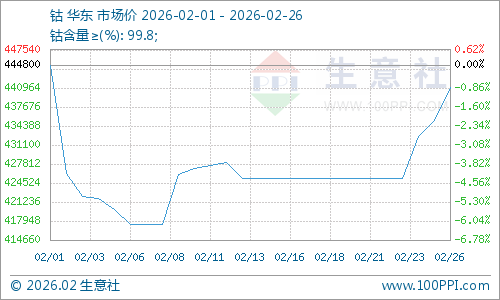
生意社02月26日讯 节后钴价震荡上涨 据生意社商品钴行情分析系统:2月26日钴价440100元/吨,较2月14日钴价425300元/吨震荡上涨,涨幅 3.48%;较2月1日钴价444800元/吨先跌后涨,跌幅1.06%。春节过后,新能源汽车销量恢复,钴市需求 上涨,加之钴市供给减少,节后钴价震荡上涨。 生意社数据分析师认为,新能源汽车产销量增长缓慢,钴市需求预期下滑,马达加斯加钴矿停产,钴市 供给减少,加之春节后国内下游客户库存补库,钴市需求短暂上涨。综合来说,需求支撑加之供给减 少,后市钴价震荡上涨。 相关的上市公司:华友钴业(603799)、寒锐钴业(300618)、洛阳钼业(603993)。 【大宗商品公式定价原理】 生意社基准价是基于价格大数据与生意社价格模型产生的交易指导价,又称生意社价格。可用于确定以 下两种需求的交易结算价: 1、指定日期的结算价 2、指定周期的平均结算价 定价公式:结算价 = 生意社基准价×K+C K:调整系数,包括账期成本等因素。 钴市供给行情 日本住友公司2月18日表示,其位于马达加斯加的安巴托维镍钴项目因热带气旋盖扎尼上周袭击该岛, 造成设施损坏而关闭。安巴托维由住友拥 ...




腾远钴业:刚果腾远在刚果(金)已取得两项探矿权和一项采矿权
Mei Ri Jing Ji Xin Wen· 2026-01-12 01:40
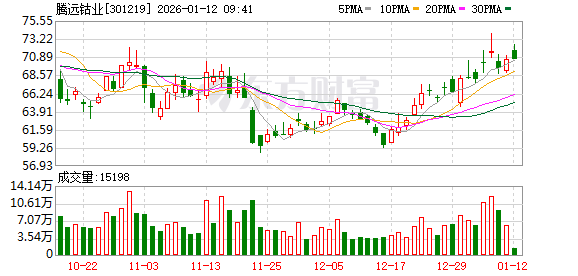
Group 1 - The company has obtained two exploration rights and one mining right in the Democratic Republic of the Congo (DRC) [2] - The company is engaged in joint development and exploration cooperation with other holders of quality mining rights in the region [2]
国家统计局:整治“内卷式”竞争成效显现;云天化:拟收购天耀化工100%股权 | 新能源早参
Mei Ri Jing Ji Xin Wen· 2025-12-10 23:22
Group 1 - The National Bureau of Statistics reported that the effects of rectifying "involutionary" competition are becoming evident, with price declines in industries such as coal mining, photovoltaic equipment manufacturing, and lithium-ion battery manufacturing narrowing year-on-year [1] - The price decline for new energy vehicle manufacturing also narrowed by 0.6 percentage points compared to the previous month, indicating a gradual improvement in the supply-demand dynamics of the new energy industry chain [1] - This stabilization in prices is expected to enhance corporate profitability, with leading companies benefiting first due to their cost and technological advantages [1] Group 2 - Glencore has not commented on reports suggesting it may become the first cobalt exporter under the new quota system in the Democratic Republic of Congo, which could strengthen supply constraints and improve the long-term supply-demand dynamics of the cobalt industry [2] - If confirmed, this development may boost cobalt prices and market sentiment in the short term, with leading companies benefiting from resource and channel advantages [2] - The stabilization of cobalt prices in the medium to long term is anticipated to enhance the performance of mining companies, necessitating close monitoring of export dynamics and inventory changes [2] Group 3 - Yuntianhua announced plans to acquire 100% of Tianyao Chemical for 36.8858 million yuan, which will enhance its market position in the high-end phosphorus product sector [3] - The acquisition will allow Yuntianhua to create a complete industrial chain from yellow phosphorus to phosphorus-based flame retardants, significantly improving resource utilization efficiency and industry synergy [3] - This strategic move is expected to bolster the company's performance and solidify its leading position in the market [3]

钴市迎 “强震”!刚果(金)新规再添变数
Xin Lang Cai Jing· 2025-12-09 01:13
Core Viewpoint - The new cobalt export regulations from the Democratic Republic of Congo (DRC), the world's largest cobalt supplier, are causing widespread concern in the global mining and lithium battery industries due to increased uncertainty in the already strained cobalt supply chain [1][2]. Group 1: Regulatory Changes - The DRC has replaced its export ban with a quota system since October, introducing a temporary 10% royalty fee on exports, which has added complexity to the export process [1]. - There is confusion among industry players regarding the calculation basis for the pre-paid 10% royalty fee, particularly whether it will be deducted from the last export transaction amount before the February export ban [1][2]. Group 2: Market Impact - The frequent adjustments to export rules in the DRC have created significant uncertainty, which is viewed as a major risk factor for the market [2]. - Cobalt prices have shown a dramatic increase, rising from a low of $10 per pound in February to $24 per pound (approximately $52,910 per ton) by December 8, marking a 140% increase over six months [2]. Group 3: Supply Chain Concerns - The DRC accounts for 76% of global cobalt production, with an expected output of 220,000 tons in 2024, meaning any fluctuations in its export processes will directly impact the global market [2]. - The ongoing supply uncertainty may suppress demand as battery manufacturers may accelerate the development of low-cobalt or cobalt-free technologies, potentially eroding traditional cobalt demand in the long term [3]. Group 4: Industry Response - Global mining companies are closely monitoring the DRC's regulatory interpretations, with some halting new order negotiations [3]. - If policy details remain unclear in the short term, cobalt prices may continue to fluctuate at high levels, prompting lithium battery supply chain companies to diversify their supply sources to mitigate risks associated with reliance on a single supplier [3].

钴供应危机持续,价格有望再上新台阶 | 投研报告
Zhong Guo Neng Yuan Wang· 2025-12-02 03:06
Group 1 - The core viewpoint of the report indicates that the new quota management system in the Democratic Republic of Congo (DRC) will significantly restrict global cobalt supply, leading to a projected supply decrease to 200,000 tons by 2025, with further increases to 214,000 tons in 2026 and 216,000 tons in 2027 [1][2] - Global cobalt consumption is expected to maintain a steady growth rate, with projections of 221,000 tons in 2026 and 231,000 tons in 2027, indicating a rigid supply shortage for cobalt [1][2] - The DRC's new quota system has replaced the previous export ban, with annual export volumes expected to be less than 100,000 tons, including a base quota of 87,000 tons and a strategic quota of 9,600 tons [2] Group 2 - The inventory of cobalt products is continuously being consumed across the entire supply chain, with significant reductions in cobalt intermediate stocks in China, dropping from 45,000 tons in May to 17,000 tons currently, resulting in a total reduction of 32,000 tons over five months [2] - Cobalt product prices have experienced a significant increase, with the average CIF price for cobalt intermediates in China rising from $5.95 per pound to $24.15 per pound, marking a 306% increase [3] - The U.S. Department of Defense is set to restart a $500 million cobalt procurement tender, marking the first large-scale cobalt purchase by the U.S. since the end of the Cold War, with the announcement expected in early February 2026 [3]
刚果金政府宣布延长3个月钴临时禁令
Jin Rong Jie· 2025-11-10 08:55
Core Viewpoint - The Democratic Republic of Congo (DRC) has announced an extension of the temporary ban on cobalt exports due to high inventory levels in the market, effective from June 21, 2025 [1] Group 1: Regulatory Measures - The Strategic Mineral Market Regulatory Authority (ARECOMS) has decided to extend the temporary ban on cobalt exports for an additional three months [1] - This ban applies to all cobalt sourced from mining activities in the DRC, including industrial, semi-industrial, small-scale, and artisanal mining [1] Group 2: Background Information - The initial suspension of cobalt exports was enacted on February 22, 2025, under decision number 001/ARECOMS/2025 [1]
钴:刚果(金)发布钴配额,战略重估正当时
2025-10-15 14:57
Summary of Key Points from the Conference Call Industry Overview - The conference call discusses the cobalt industry, specifically focusing on the recent cobalt export quota policy implemented by the Democratic Republic of the Congo (DRC) [1][3][8]. Core Insights and Arguments - **Cobalt Export Quota**: The DRC has established a cobalt export quota system, with a remaining quota of 18,100 tons for 2025 and a total quota of 96,600 tons for 2026 and 2027, which represents only 44% of the DRC's estimated cobalt production for 2024 [1][3]. - **Impact on Global Supply**: The quota is expected to significantly reduce global cobalt supply by over 40%, which will likely support an increase in cobalt prices [3][11]. - **Price Increases**: Since February 24, cobalt intermediate prices have surged by 185%, with overseas MB cobalt metal and domestic metal cobalt prices increasing by 107% and 123%, respectively [1][6]. - **Market Dynamics**: The market is expected to be dominated by a few platforms, including Glencore, the DRC government, and Eurasian Resources, which may lead to increased price volatility and elasticity [1][7]. - **Strategic Intent**: The DRC aims to enhance its international bargaining power and ensure long-term high cobalt prices through quantity control measures [8]. Additional Important Content - **Recent Import Trends**: In August, China's imports of wet-process intermediate products from the DRC fell by 91% year-on-year and 64% month-on-month, marking the third consecutive month of significant decline [2][13]. - **Domestic Production and Demand**: Domestic metal cobalt production in China decreased by 36% year-on-year in August, while the production of cobalt sulfate and cobalt oxide increased by 6% and 38%, respectively [14]. - **Company Focus**: Companies to watch include Huayou Cobalt and Liqin Resources, which have wet-process nickel-cobalt refining capacity in Indonesia, and DRC-based companies like Luoyang Molybdenum and Shengton Mining that have received quotas [15][16]. - **Future Price Expectations**: The market anticipates that cobalt prices will stabilize around 400,000 yuan per ton, which is crucial for long-term valuation models and profit forecasts for companies in the industry [12][11]. Conclusion - The DRC's new cobalt export quota policy is poised to reshape the global cobalt supply landscape, leading to significant price increases and altering market dynamics. Companies with strategic positions in this evolving market are likely to benefit from the anticipated price elasticity and reduced supply.
钴 | 行业动态:刚果(金)发布钴配额,战略重估正当时
中金有色研究· 2025-10-15 06:55
Industry Overview - On October 11, the Strategic Mineral Market Regulatory Bureau of the Democratic Republic of the Congo (ARECOMS) announced details of cobalt export quotas, effective from October 16, 2023, calculated based on mining companies' export situations until the end of 2024 [1]. Commentary - The export quotas are primarily allocated to mining companies and the Congolese government platform, with no quotas for smelters. For the remainder of this year, the cobalt export quota is set at 18,100 tons; for 2026/27, the total export is 96,600 tons, of which 87,000 tons are basic quotas and 9,600 tons are strategic quotas from ARECOMS. Major companies like Luoyang Molybdenum, Glencore, and Eurasian Resources have received significant quotas, accounting for 62% of the total [2]. - The tightening supply is expected to drive up cobalt prices, with a strategic re-evaluation of cobalt's value occurring at this time. The total export quota for 2026/27 represents only 44% of the DRC's cobalt production in 2024, with the basic quota accounting for just 40%. The demand for cobalt is anticipated to increase due to the advantages of ternary batteries in high-end, long-lasting markets and the advancement of solid-state battery technology [2]. - The DRC's export ban aims to boost cobalt prices and prevent the low-cost outflow of strategic resources while enhancing international influence through resource control [2]. Supply Dynamics - A significant reduction in supply is expected to lead to larger price increases for raw materials. The DRC's cobalt production is projected to account for 76% of global supply in 2024, with a reduction of over 50% impacting global availability. As of October 11, cobalt intermediate products, MB cobalt, and metal cobalt prices have increased by 185%, 107%, and 123% respectively since February 24 [3]. - The pricing of cobalt products may be dominated by platforms that control spot cobalt raw materials, with a few platforms holding pricing power, potentially increasing price volatility. Glencore, the DRC government platform, and Eurasian Resources hold quotas of 20%, 17%, and 11% respectively [3]. Company Quotas - The following companies have been allocated export quotas for October to December 2025, with their respective basic quota shares and estimated quotas for 2026: - Luoyang Molybdenum: 1,300 tons in October, 2,600 tons in November, 2,600 tons in December, with a 35.9% share [5]. - Glencore: 785 tons in October, 1,570 tons in November, 1,570 tons in December, with a 21.7% share [5]. - Eurasian Resources: 425 tons in October, 850 tons in November, 850 tons in December, with an 11.7% share [5]. - The total quotas for all listed companies sum up to 18,125 tons for Q4 2025, with an estimated total of 87,000 tons for 2026 [6].

刚果钴分配配额落地对钴产业链的影响
2025-10-13 14:56
Summary of Key Points from the Conference Call Industry Overview - The conference call discusses the impact of the Democratic Republic of the Congo (DRC) government's new cobalt resource management policies on the cobalt industry, particularly affecting Chinese enterprises and the global cobalt supply chain [1][10]. Core Insights and Arguments - **New Cobalt Policies**: The DRC has implemented a quota system and export licensing to enhance tax revenue, prevent smuggling, and promote local industry development. This has temporarily restricted raw material imports for Chinese companies, affecting their strategic reserves and smelting operations [1][10]. - **Export License Requirements**: Companies must pay mining privilege fees and meet several conditions, including prepayment, quota verification, product traceability, and compliance with ESG standards to activate export licenses [1][5]. - **Impact on Chinese Companies**: Companies without their own mines, such as Hanrui and Tengyuan Cobalt, have struggled to obtain quotas due to regulatory non-compliance. However, EDC and STL are allowed to process artisanal mining products [1][8][10]. - **Hanrui's Production Capacity**: Hanrui has a cobalt production capacity of 5,000 tons in the DRC and is seeking to export independently of the strategic quota to alleviate supply shortages. The future of Hanrui's production depends on pricing and export licensing [1][9]. - **Global Cobalt Market Dynamics**: Major suppliers like Glencore, Exxon, and Eurasian Resources dominate the market, holding at least 70% market share. China may increasingly rely on Indonesian production to meet demand, but a supply gap is expected by 2026 [1][11]. - **Supply Shortages**: A projected cobalt supply gap of approximately 20,000 tons is anticipated in 2026, potentially widening in 2027. The demand from 3C products is expected to be more resilient to price increases compared to electric vehicle batteries [2][17]. - **Cobalt Pricing and Demand Elasticity**: The price sensitivity of 3C products is higher, with procurement continuing at prices between 450,000 to 500,000 CNY per ton. In contrast, electric vehicle manufacturers may reduce purchases if prices exceed 450,000 CNY per ton [18]. Additional Important Insights - **Inventory Management**: Chinese companies have begun to deplete cobalt inventories since June, with expectations to consume existing stocks by the end of 2025. The current inventory levels are around 70,000 to 80,000 tons [12][23]. - **Safety Stock Levels**: Historically, companies maintained about three months of safety stock, but due to current supply constraints, many have reduced this to around one month [24]. - **Potential for Future Policy Changes**: The DRC government is unlikely to relax mineral quotas in the near term, as they are focused on strict enforcement of the new policies to avoid triggering excessive taxation [19]. This summary encapsulates the critical aspects of the conference call, highlighting the implications of the DRC's new cobalt policies on the industry and the challenges faced by companies, particularly those in China.

刚果(金)钴出口禁令将解除
财联社· 2025-10-12 01:00
Core Viewpoint - The Democratic Republic of Congo (DRC) will lift an 8-month cobalt export ban on October 16, 2023, due to rising cobalt prices, which have more than doubled since the ban was implemented [1][2]. Group 1: Export Regulations - The DRC's mining regulatory authority, ARECOMS, will implement a quota system for cobalt exports, allowing only slightly over 18,000 tons for the remainder of this year, with a maximum annual export of 96,600 tons for the next two years, which is less than half of last year's production [1][2]. - Companies must pay a royalty fee of 10% of the sales value before shipping cobalt, and failure to comply with export quotas or regulations may result in the revocation of export rights [2][3]. Group 2: Strategic Quotas - A 10% "strategic quota" will be established, which will be allocated at the discretion of ARECOMS [3]. - Export quotas for major mining companies have been disclosed, with the top two producers receiving approvals for 6,500 tons and 3,925 tons, respectively, by the end of this year [4]. Group 3: Compliance and Future Quotas - For compliant operators, the quotas approved for December 2025 will automatically convert into monthly quotas for 2026 [5].