
农产品种植

Search documents
看到加拿大总理访华大获成功,特朗普的心里很不是滋味?
Sou Hu Cai Jing· 2026-01-22 10:08
Group 1 - The core of the agreement between Canada and China is a mutual exchange, involving the import of electric vehicles and canola seeds [1][3] - Canada has set an annual import quota of 49,000 electric vehicles for China, with a most-favored-nation tax rate of 6.1%, which is significant for Chinese electric vehicle manufacturers [3] - China has agreed to reduce the import tariff on Canadian canola seeds from 85% to approximately 15%, a reduction of 70 percentage points, which is a positive development for Canadian canola farmers [5] Group 2 - The agreement also includes tariff reductions on other agricultural products such as canola meal, lobster, crab, and peas, indicating Canada's strong commitment to the Chinese market [7] - The deal involves large-scale joint ventures over the next three years, with Canada planning to build complete vehicle factories and related projects, expanding the electric vehicle supply chain into the North American market [9] - Canadian Prime Minister Carney's statement reflects a shift in perception, as Canada views China as more stable and predictable compared to the fluctuating policies of the United States [11] Group 3 - The situation is part of a broader trend, with European countries also engaging in electric vehicle trade negotiations with China, highlighting a shift in global alliances [13][18] - Recent polling indicates that nearly 60% of Canadians view the U.S. as a primary threat, while only 17% have a negative view of China, marking a significant change in public sentiment [20] - The collective shift of U.S. allies towards China is driven by the desire for stability and predictability in an uncertain world, with China's long-standing commitment to open cooperation being particularly attractive [23][25]

2025年柬埔寨出口超110吨贡布胡椒
Shang Wu Bu Wang Zhan· 2026-01-21 15:42
Core Insights - The report from the Kampot Pepper Promotion Association (KPPA) indicates that Cambodia exported 112 tons of Kampot pepper in 2025 [1] - Kampot pepper is renowned for its delicate aroma and rich spiciness, being the first pepper in the world to receive EU Protected Geographical Indication (PGI) status [1] - The report highlights that the prices of Kampot pepper in 2025 are higher than previous years, with black pepper priced at $17 per kilogram, red pepper at $27 per kilogram, white pepper at $30 per kilogram, and green pepper at $10 per kilogram [1] Production and Export - Kampot pepper is primarily cultivated in two coastal provinces of Cambodia: Kampot and Kep, with approximately 85% of the production exported to international markets, particularly to France, Germany, South Korea, Russia, the United States, Czech Republic, and Singapore [1] - About 15% of the Kampot pepper is supplied for domestic consumption [1] - 81% of Cambodia's pepper production comes from three provinces bordering Vietnam, with the highest production in Tbong Khmum Province at 45%, Mondulkiri Province at 21%, and Ratanakiri Province at 15% [1]
【冠通期货研究报告】养殖产业链日报:近月宽松明显-20260121
Guan Tong Qi Huo· 2026-01-21 11:58
Report Summary 1. Report Industry Investment Rating No investment rating provided in the report. 2. Core Views - The domestic soybean market shows a mixed and overall stable pattern, with the market expected to continue its oscillatory trend [1]. - The corn market will maintain a high - level and strong operation in the short term, and it is recommended to view it as a wide - range oscillation before the Spring Festival, and consider buying on dips if there is a significant decline [2]. - The egg price has soared, and the egg - laying chicken farming industry is in a profit - repair stage. It is not recommended to be overly bearish due to a marginal improvement in inventory [2]. - The pig supply is in a stage of capacity optimization and regional restructuring. The supply pattern is expected to gradually re - balance in 2026 [3][4]. 3. Summary by Related Catalogs Soybean - The domestic soybean spot market is mixed with overall stability. The producing area prices fluctuate slightly, and the selling area prices decline slightly. The trading volume of domestic soybeans today is 66,116 tons, indicating some market demand support [1]. Corn - The reduction and suspension of imported corn's directional invitation - bidding supply and the increase in the scale of regular rotation corn auction in major producing areas have increased the uncertainty of policy supply. The corn market will maintain a high - level and strong operation in the short term, with the pre - Spring Festival stocking rhythm as the core driving factor. It is recommended to view it as a wide - range oscillation before the Spring Festival and consider buying on dips if there is a significant decline [2]. Egg - The egg price has soared, and the egg - laying chicken farming industry is moving out of the trough and entering a profit - repair stage. The current market is in a state of balance between new chicken addition and old chicken delay in culling, with a slight decline after the price increase. It is not recommended to be overly bearish due to a marginal improvement in inventory [2]. Pig - In 2025, the inventory of breeding sows decreased by 2.9% to 39.61 million heads, the national pig slaughter increased by 2.4% to 719.73 million heads, and the year - end inventory increased by 0.5% to 429.67 million heads. The pig supply is in a stage of capacity optimization and regional restructuring, and the supply pattern is expected to gradually re - balance in 2026 [3][4].
苏垦农发:2025年度净利润同比下降24.17%
Ge Long Hui· 2026-01-21 08:43
Core Viewpoint - Suqian Agricultural Development (601952.SH) reported a decline in both revenue and net profit for the fiscal year 2025, primarily due to low agricultural product prices and adverse weather conditions affecting crop yields and costs [1] Financial Performance - The company's total revenue for 2025 was 10.186 billion yuan, a decrease of 732 million yuan, representing a decline of 6.70% compared to the previous year [1] - The net profit attributable to shareholders was 554 million yuan, down by 176 million yuan, which is a decrease of 24.17% year-on-year [1] Contributing Factors - The decline in performance was mainly attributed to the prolonged low prices of agricultural products during the reporting period [1] - Extreme weather conditions led to reduced yields of major crops and increased unit costs, which narrowed the gross profit margin [1]

苏垦农发(601952.SH):2025年度净利润同比下降24.17%
Ge Long Hui A P P· 2026-01-21 08:34
Core Viewpoint - Suqian Agricultural Development (601952.SH) reported a decline in both revenue and net profit for the fiscal year 2025, primarily due to low agricultural product prices and adverse weather conditions affecting crop yields and costs [1] Financial Performance - The company's total revenue for 2025 was 10.186 billion yuan, a decrease of 732 million yuan, representing a decline of 6.70% compared to the previous year [1] - The net profit attributable to shareholders was 554 million yuan, down by 176 million yuan, which is a decrease of 24.17% year-on-year [1] Contributing Factors - The decline in performance was mainly attributed to the sustained low prices of agricultural products during the reporting period [1] - Extreme weather conditions led to reduced yields of major crops and increased unit costs, which narrowed the gross profit margin [1]
河南方城:电商为帆 促农文旅融合
Zhong Guo Jing Ji Wang· 2026-01-20 11:41
Core Insights - The article highlights the successful integration of rural e-commerce in revitalizing the local economy, exemplified by the live-streaming efforts of a village leader promoting local agricultural products [1][2] - The approach combines storytelling with product marketing, emphasizing cultural and emotional connections to enhance consumer engagement [1] Group 1: E-commerce and Economic Impact - The village of Sihou has seen significant economic benefits from e-commerce, with 120,000 tourists visiting during the last National Day holiday, generating over 500,000 yuan in sales for local agritourism and products [2] - The model of "short video traffic + live streaming conversion + community repurchase" has created a complete sales chain, effectively linking online and offline sales [1] Group 2: Brand Development and Community Involvement - The establishment of a physical store, "Yunong Liangpin Fangcheng Specialty Products," serves as a showcase for standardized agricultural products, ensuring quality consistency and allowing local farmers to share in brand profits [1] - The "big household leading small households" model has doubled the income of local farmers, demonstrating the effectiveness of collaborative branding and marketing strategies [1]
以点串片聚合力,乡村振兴的“济宁实践”
Qi Lu Wan Bao· 2026-01-20 02:59
Group 1 - The core viewpoint emphasizes the importance of comprehensive rural revitalization as a key focus for the Jining government, aiming to build a modern agricultural strong city by enhancing agricultural efficiency, rural vitality, and farmers' income [1][2] - Jining's rural revitalization strategy is characterized by systematic engineering, promoting coordinated development across regions rather than isolated efforts, with plans to upgrade rural infrastructure and improve living conditions [2][4] - The agricultural modernization transformation is crucial, focusing on enhancing the entire value chain from production to sales, exemplified by the garlic industry in Cuikou Village, which has successfully integrated technology and collective efforts [3][4] Group 2 - The implementation of the "Million Project" experience is highlighted as a successful model for rural revitalization, transforming previously overlooked rural areas into vibrant cultural and tourism hubs, attracting significant visitor numbers and generating substantial economic benefits [1][3] - Jining plans to cultivate 11 characteristic industrial chains and launch over 20 food processing projects worth over 100 million yuan, aiming to enhance agricultural productivity and promote the integration of agriculture with other sectors [3][4] - The overall goal for Jining's rural revitalization by 2026 includes optimizing regional layouts, strengthening industrial dynamics, beautifying rural landscapes, and improving the quality of life for residents [4]
加拿大热议中加共识是“良药”:农业部门欢呼“好日子”,电动汽车将迎新合作
Huan Qiu Shi Bao· 2026-01-18 23:04
Group 1 - Canada and China announced specific arrangements to address trade issues in electric vehicles, steel, aluminum, canola, and agricultural products during Prime Minister Carney's visit, which was widely welcomed by Canadian public opinion [1] - The new trade agreement opens a market worth over $7 billion for Canadian workers and businesses, with Canada eliminating a 100% additional tax on Chinese electric vehicles and providing an annual quota of 49,000 vehicles at a 6.1% most-favored-nation tariff rate [1] - The agreement is seen as a significant positive factor for the Canadian economy, providing opportunities for discussions on long-term development prospects [1] Group 2 - The new agreement brings hope to Canadian farmers, particularly canola growers, who faced a $1 billion loss last year, allowing them to adjust their spring planting plans and improve cash flow [3] - Analysts believe that concerns about the agreement offending the U.S. are unfounded, as the U.S. has excluded itself from the electric vehicle sector and does not prioritize agricultural products [3] - A senior Canadian official indicated that Canada aims to engage in joint ventures and investment projects with Chinese companies over the next three years to develop domestic electric vehicles, positioning Canada as the first North American country to independently develop electric vehicles [4] Group 3 - The agreement is not viewed as a one-sided concession to Beijing but rather a strategic move by Canada to secure its own interests, with a return to 2023 policy levels for electric vehicles and a reopening of markets for agriculture [4] - The partnership extends to important cooperation in public safety and visa-free entry for Canadian citizens to China [4] - Carney emphasized the need to change the historically strained relationship between Canada and China, aiming to establish a new strategic partnership that benefits both nations [4]
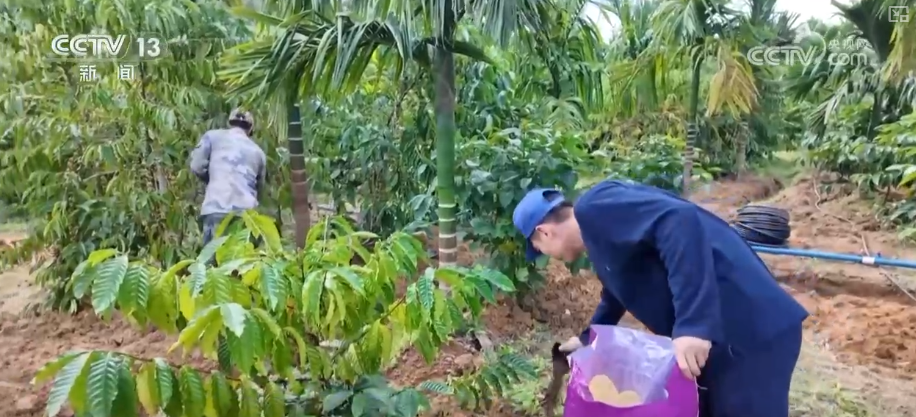
企业与老客户谈起“新生意” 海南封关政策利好催生新机遇带“火”自产货物
Yang Shi Wang· 2026-01-18 07:06
Group 1 - The core policy of Hainan Free Trade Port allows local products to be included in the processing value-added tax exemption, creating new development opportunities for local agricultural producers and processing enterprises [1][14] - The "two ends outside" model, which involves importing raw materials for local processing and then exporting, has gained traction, with companies successfully engaging in coffee import-export trade [7][10] - The first month of operation has seen nearly 30 enterprises utilizing the tax exemption policy, with products such as pharmaceuticals, food, and medical devices being exported [14] Group 2 - Local coffee producers are increasingly attracting clients for collaboration, as the new policy has led to a rise in interest and business opportunities [4] - The processing value-added requirement of over 30% has encouraged local coffee companies to incorporate Hainan's agricultural products into their offerings, enhancing their market differentiation [10] - The application of local products, such as Hainan sea salt in nut processing and coconut in beauty products, has begun to materialize, benefiting various enterprises and individuals [14]
联农带农兴业 稳收增收富民
Xin Lang Cai Jing· 2026-01-17 20:47
Core Viewpoint - The article highlights the transformation of farmers in Yunnan from traditional roles to essential partners in the modern agricultural industry, driven by innovative benefit-sharing mechanisms and institutional reforms [1][2]. Group 1: Benefit-Linked Mechanisms - Yunnan has implemented the "Double Binding" mechanism, which connects leading enterprises with cooperatives and cooperatives with farmers, ensuring stable income for farmers as the industry grows [1][2]. - The "3582" benefit-sharing model allows farmers to receive 80% of profits, while cooperatives and village collectives receive 3% and 5% respectively, significantly improving village income and community development [2]. Group 2: Agricultural Development and Financial Support - By the third quarter of 2025, Yunnan had 9,716 agricultural leading enterprises and 67,000 farmer cooperatives, with a total investment of 258 billion yuan in agricultural support, providing a solid financial foundation for farmers [2]. - The province's financial products for poverty alleviation rank among the best in the country, facilitating farmers' integration into the agricultural value chain [2]. Group 3: Diverse Development Strategies - Yunnan's regions are adopting tailored strategies for different industries, ensuring farmers can find stable income sources across various agricultural sectors [3]. - The "622" model in Honghe has transformed former transport workers into blueberry growers, doubling their income and creating local employment opportunities [3]. Group 4: Multi-Source Income Models - The "Agricultural-Photovoltaic Complementation" model in Chuxiong allows farmers to earn income from land rent, labor, and additional economic benefits, promoting sustainable agricultural practices [4]. - The "721" benefit-sharing mechanism in Zhaotong has integrated over 5,200 households into the industry, generating significant employment and income growth [4]. Group 5: Value Chain Enhancement - The growth of the agricultural processing industry in Yunnan has increased the ratio of agricultural processing value to total agricultural output to 2.5:1, allowing farmers to share in the profits from value-added processing [5]. - The establishment of a cold chain logistics system has reduced post-harvest losses, further increasing farmers' incomes, while brand development has enhanced product value, benefiting farmers directly [5].