
黑色金属冶炼和压延加工业

Search documents
成材:基本面短期转暖,钢价小幅反弹
Hua Bao Qi Huo· 2025-10-28 02:50
Group 1: Report Industry Investment Rating - Not provided Group 2: Core View of the Report - The industry is operating at a low level with a short - term rebound potential [3] Group 3: Summary of Relevant Information Macro - economic Data - From January to September 2025, the total profit of industrial enterprises above designated size in China was 5373.2 billion yuan, a year - on - year increase of 3.2%. The ferrous metal smelting and rolling processing industry turned from loss to profit, with a profit of 973.4 billion yuan [2] Downstream Construction Projects - A survey of 36 downstream construction units showed that only 38.89% of enterprises have new projects in Q4 2025, and new projects will be concentrated in Q1 2026. Most enterprises' existing project scales are stable, but they face significant financial pressure and are cautious in procurement, keeping raw material inventory low [2] Market Performance -成材 rebounded yesterday, with a morning decline and an afternoon rally. After Sino - US consultations, a preliminary consensus was reached, improving the macro - level and boosting risk sentiment. Since Monday, some areas in Hebei have implemented a weather level - II emergency response, supporting the price of 成材 [2] Later Concerns - Macro policies and downstream demand conditions should be focused on [3]
黑色金属冶炼和压延加工业前三季度盈利近千亿元
Zhong Guo Jing Ying Bao· 2025-10-27 13:57
Core Viewpoint - The black metal smelting and rolling industry in China has shown signs of recovery in profitability despite a decline in revenue, with a total profit of 97.34 billion yuan in the first nine months of 2025, marking a turnaround from losses in the previous year [1][2]. Group 1: Revenue and Profit Trends - In the first nine months of 2025, the industry achieved operating revenue of 575.99 billion yuan, a year-on-year decrease of 3.8% [1]. - The cumulative profit for the same period reached 97.34 billion yuan, indicating a successful transition from losses to profits [1]. - The operating costs for the industry were 544.57 billion yuan, reflecting a year-on-year decline of 6.1%, which was significantly higher than the revenue decline, thus creating conditions for profit recovery [1]. Group 2: Quarterly Profit Recovery - The profitability recovery has accelerated throughout the year, with profits of 7.51 billion yuan in Q1, 38.77 billion yuan in Q2 (an increase of 17.72 billion yuan year-on-year), and 51.06 billion yuan in Q3, also showing a turnaround from losses [2]. - Monthly profit data shows a consistent increase since March, with profits reaching 90.6 billion yuan in March, peaking at 193.4 billion yuan in August, before a decline to 136.4 billion yuan in September [2]. Group 3: Market Conditions and Demand - The steel market has transitioned from peak season to traditional off-season, with actual demand not meeting market expectations despite increased funding for major projects [3]. - The construction steel demand recovery is slow due to the ongoing impact of the real estate sector, while stable demand from the manufacturing sector provides some support to the market [3].
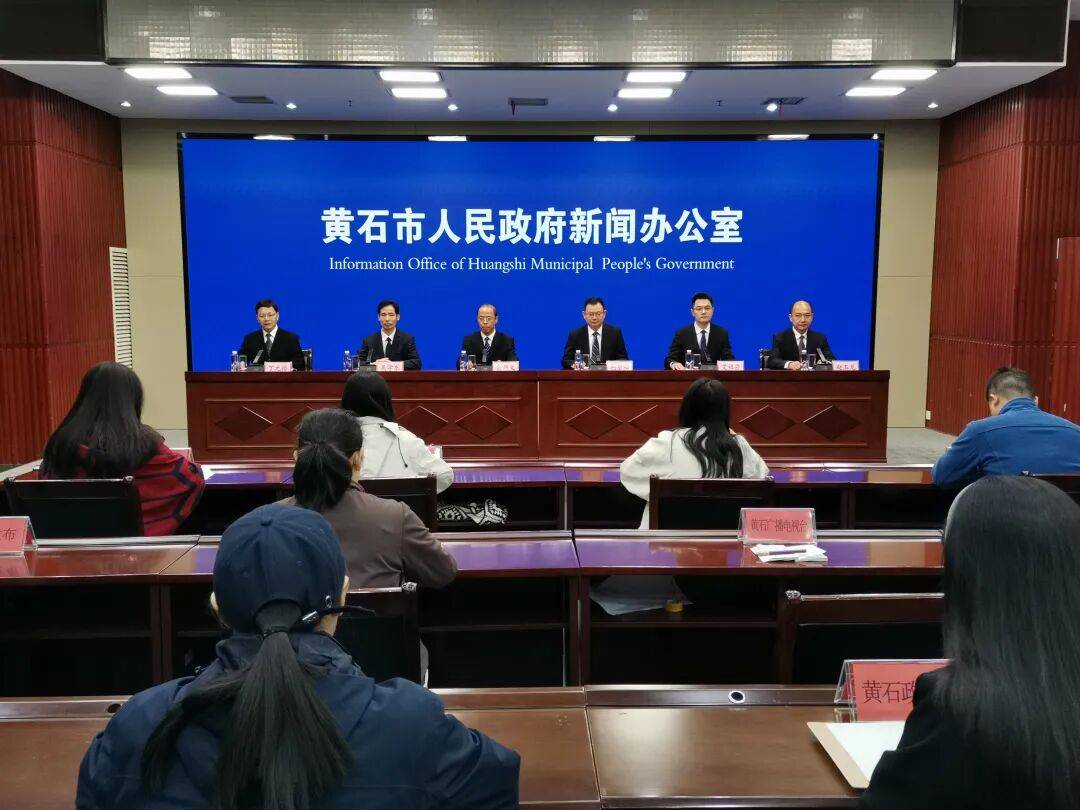
刚刚通报,黄石民企“家底”……
Sou Hu Cai Jing· 2025-10-27 09:07
Core Viewpoint - The Yellow Stone City government has released the "2025 Yellow Stone City Top 100 Private Enterprises" list, highlighting the growth and contributions of private enterprises in the region, in line with national policies to promote the development of the private economy [4][5]. Group 1: Overview of the Top 100 Private Enterprises - A total of 140 private enterprises with revenues exceeding 100 million yuan participated in the survey, with the top 100 selected based on revenue [4]. - The total revenue of the top 100 private enterprises reached 125.6 billion yuan, with 57 enterprises showing positive growth, and 22 of them achieving growth rates exceeding 10% [5]. - The total assets of these enterprises amounted to 216.5 billion yuan, with 64 enterprises reporting asset growth, and 35 of them exceeding 10% growth [5]. - The net profit of the top 100 enterprises totaled 8.9 billion yuan, reflecting a year-on-year increase of 26%, with 64 enterprises achieving positive profit growth [5]. Group 2: Industry and Regional Distribution - Among the top 100 enterprises, 68 belong to the secondary industry, generating 105.6 billion yuan, accounting for 84.1% of total revenue, while 32 are in the tertiary industry, contributing 19.9 billion yuan, or 15.9% [6]. - The top five industries represented include black metal smelting, general equipment manufacturing, non-metallic mineral products, and pharmaceutical manufacturing, with 40 enterprises generating 74.6 billion yuan, or 59.4% of total revenue [6]. - The distribution of enterprises by region shows that Daye City has 40 enterprises, followed by Kaite District with 20, and Yangxin County with 16 [6]. Group 3: Technological Innovation and Development - A total of 47 enterprises are recognized as national high-tech enterprises, with 12 classified as "little giant" enterprises, and 46 as provincial specialized and innovative enterprises [6]. - Research and development (R&D) expenditures for the top 100 enterprises reached 2.5 billion yuan, an increase of 300 million yuan from the previous year, with 44 enterprises reporting growth in R&D spending [6]. - The number of R&D personnel in these enterprises totals 6,398, accounting for 8.7% of the total workforce, with 56 enterprises having over 10% of their workforce in R&D [6]. Group 4: Social Responsibility - Among the top 100 enterprises, 82 have an A-level tax rating, and 16 have a B-level rating [7]. - These enterprises provided 74,000 jobs, with 11 enterprises employing over 1,000 people, totaling 48,000 [7]. - A total of 48 enterprises participated in social welfare activities, contributing 570 million yuan in donations [7]. Group 5: Business Environment and Support Measures - The Yellow Stone City government has implemented the "Yellow Stone City Continuous Improvement of Business Environment Action Plan," which includes 31 specific measures to enhance the business environment [8]. - The number of key reform pilot projects increased from 21 in 2022 to 66 in 2025, with significant improvements in service efficiency and satisfaction among businesses [8][9]. - Tax reductions and refunds reached 429 million yuan by the end of September, with various financial support measures leading to a 19.9% increase in private investment [9][10]. Group 6: Employment and Recruitment Initiatives - The city has utilized online and offline recruitment methods, successfully assisting 52,200 job seekers and attracting 21,500 new graduates to work in the area [14][15]. - Employment service stations and flexible job opportunities have been established, providing over 68,300 flexible job positions [16]. - Collaborative efforts with vocational schools and enterprises have been initiated to ensure a stable supply of skilled labor for key industries [17].

国家统计局:1-9月汽车制造业利润同比增长3.4%
Guo Jia Tong Ji Ju· 2025-10-27 01:36
Core Insights - The profit growth of major industries in China from January to September shows a positive trend, with significant increases in several sectors [1] Industry Performance Summary - The electricity and heat production and supply industry experienced a profit increase of 14.4% year-on-year [1] - The non-ferrous metal smelting and rolling processing industry saw a profit growth of 14.0% [1] - The agricultural and sideline food processing industry reported a profit increase of 12.5% [1] - The computer, communication, and other electronic equipment manufacturing industry grew by 12.0% [1] - The electrical machinery and equipment manufacturing industry experienced an 11.3% profit increase [1] - The general equipment manufacturing industry saw an 8.4% growth in profits [1] - The special equipment manufacturing industry reported a profit increase of 6.8% [1] - The non-metallic mineral products industry experienced a profit growth of 5.1% [1] - The automobile manufacturing industry reported a profit increase of 3.4% [1] - The black metal smelting and rolling processing industry turned from loss to profit [1] - The petroleum, coal, and other fuel processing industry reduced its losses year-on-year [1] - The chemical raw materials and chemical products manufacturing industry saw a decline of 4.4% [1] - The textile industry reported a decline of 5.9% [1] - The oil and gas extraction industry experienced a decline of 13.3% [1] - The coal mining and washing industry faced a significant decline of 51.1% [1]
2025年1-8月黑色金属冶炼和压延加工业企业有6272个,同比增长0.84%
Chan Ye Xin Xi Wang· 2025-10-23 02:52
Group 1 - The core viewpoint of the article highlights the growth in the number of enterprises in the black metal smelting and rolling processing industry in China, with a total of 6,272 enterprises reported from January to August 2025, an increase of 52 enterprises compared to the same period last year, representing a year-on-year growth of 0.84% [1] - The black metal smelting and rolling processing industry accounts for 1.2% of the total industrial enterprises in China [1] - The data presented is sourced from the National Bureau of Statistics and organized by Zhiyan Consulting, a leading industry consulting firm in China [1] Group 2 - The report referenced is titled "2026-2032 China Black Metal Mining and Selection Industry Market Panorama Survey and Investment Prospect Forecast Report" published by Zhiyan Consulting [1] - The article provides insights into the scale of the black metal industry and its potential for investment opportunities in the coming years [1] - Zhiyan Consulting has over a decade of experience in industry research, offering comprehensive industry research reports, business plans, feasibility studies, and customized services [1]

9月经济数据点评:基数上升拖累GDP同比,4季度仍有政策支撑
Western Securities· 2025-10-21 02:30
Economic Growth - Q3 GDP growth slowed to 4.8% YoY, down from 5.2% in Q2, impacted by a high base effect from last year[1] - Nominal GDP growth in Q3 was 3.7%, further declining from 3.9% in Q2, marking a new low for 2023[1] - Q3 GDP deflator decreased by 1%, a smaller decline compared to the 0.2 percentage points drop in Q2[1] Industrial Production - In September, industrial value-added increased by 6.5% YoY, significantly up from 5.2% in August[2] - Seasonally adjusted MoM growth in industrial production reached 0.64%, the highest since March[2] - Automotive manufacturing value-added surged by 16% YoY, improving by 7.6 percentage points from August[2] Retail and Consumption - Retail sales growth fell to 3% YoY in September, down from 3.4% in August[2] - Consumer confidence index rose to 89.2, continuing an upward trend since Q4 of last year[3] - Per capita disposable income grew by 4.5% YoY, while per capita consumption expenditure increased by 3.4%, both lower than Q2 growth rates[3] Investment Trends - Fixed asset investment declined by 7.1% YoY in September, consistent with August's decline[3] - Infrastructure investment dropped by 8%, while real estate development investment fell by 21.3%, widening the decline from the previous month[3] - Cumulative fixed asset investment for the first three quarters showed a 0.5% YoY decrease, indicating negative growth[3] Real Estate Market - In September, the sales area of commercial housing decreased by 10.5% YoY, close to August's decline[3] - New residential prices in 70 large and medium cities fell by 0.4% MoM, a larger drop than in August[3] - Overall, real estate demand remains weak, with sales revenue down by 11.8% YoY[3]
2025年三季度全国煤炭开采和洗选业产能利用率为68.9%
Guo Jia Tong Ji Ju· 2025-10-21 02:20
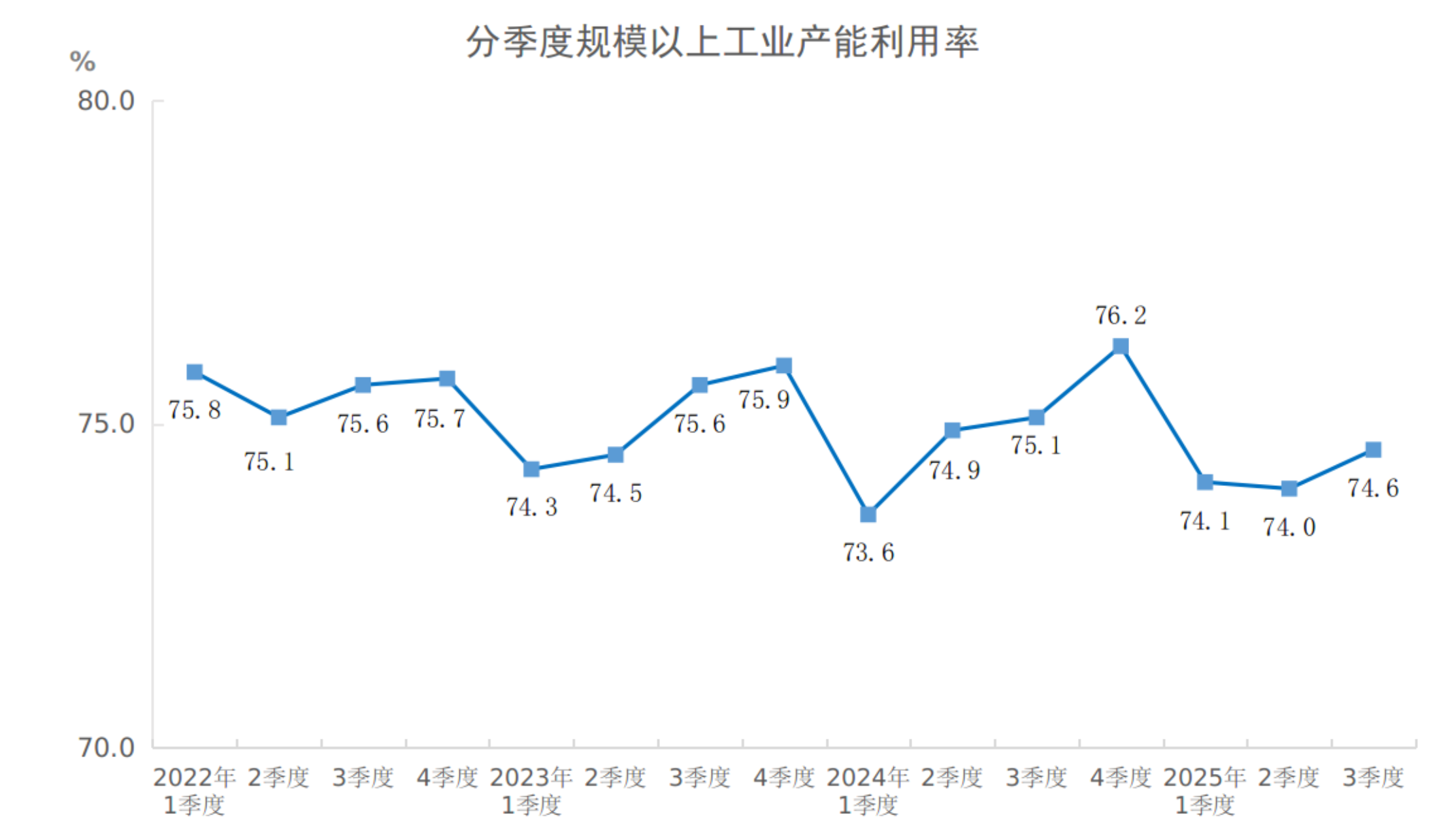
Core Insights - The overall industrial capacity utilization rate for Q3 2025 is reported at 74.6%, showing a decrease of 0.5 percentage points compared to the same period last year [2] - The mining industry has a capacity utilization rate of 72.5%, down by 2.1 percentage points year-on-year [2] - The manufacturing sector's capacity utilization rate stands at 74.8%, reflecting a decline of 0.4 percentage points from the previous year [3] Industry Breakdown - Mining Industry: Capacity utilization at 72.5%, down 2.1 percentage points from last year [2] - Manufacturing Sector: Capacity utilization at 74.8%, down 0.4 percentage points year-on-year [3] - Electricity, Heat, Gas, and Water Production and Supply: Capacity utilization at 74.3%, unchanged from the previous year [3] Specific Industries - Coal Mining and Washing: 68.9%, down 3.8 percentage points [3] - Food Manufacturing: 70.1%, down 0.6 percentage points [3] - Textile Industry: 77.2%, down 0.7 percentage points [3] - Chemical Raw Materials and Products: 72.5%, down 3.5 percentage points [3] - Non-Metallic Mineral Products: 62.0%, up 0.3 percentage points [3] - Black Metal Smelting and Rolling: 80.1%, up 2.7 percentage points [3] - Non-Ferrous Metal Smelting and Rolling: 77.8%, down 0.6 percentage points [3] - General Equipment Manufacturing: 78.9%, up 0.2 percentage points [3] - Specialized Equipment Manufacturing: 75.5%, down 0.3 percentage points [3] - Automobile Manufacturing: 73.3%, up 0.1 percentage points [3] - Electrical Machinery and Equipment Manufacturing: 74.9%, down 0.7 percentage points [3] - Computer, Communication, and Other Electronic Equipment Manufacturing: 79.0%, up 1.1 percentage points [3]
前三季度核心CPI持续回升,PPI降幅有所收窄
Guo Jia Tong Ji Ju· 2025-10-20 02:18
Group 1: Consumer Price Trends - Consumer prices remained stable in the first three quarters, with CPI decreasing by 0.1% year-on-year, consistent with the first half and the first quarter [2] - Core CPI, excluding food and energy, has shown a continuous recovery since March, rising to 1% in September, the highest in nearly 19 months [4] - Food prices saw a year-on-year decline of 1.8%, with fresh vegetable prices averaging a drop of 7.9% and pork prices shifting from an increase of 3.8% in the first half to a decrease of 2.9% in the first three quarters [2] Group 2: Energy Price Trends - Energy prices decreased by 3.3% year-on-year in the first three quarters, with gasoline prices dropping by 7.3% due to international oil price fluctuations [3] Group 3: Producer Price Trends - PPI decreased by 2.8% year-on-year in the first three quarters, with a narrowing decline of 0.3 percentage points in the third quarter compared to the second quarter [5] - The domestic market's competitive order has improved, leading to a recovery in prices for certain industries, such as coal processing and black metal smelting, which saw a reduction in year-on-year price declines [5] Group 4: External Influences on Prices - International oil prices have generally trended downward, impacting domestic oil-related industry prices, with a 9.9% decline in the oil and gas extraction industry [6] - Conversely, international non-ferrous metal prices have risen, leading to a 5.6% year-on-year increase in domestic non-ferrous metal smelting and rolling industries [6] Group 5: High-Tech Industry Developments - The development of high-tech industries and effective macro policies have driven price increases in certain sectors, such as integrated circuit packaging and testing, which rose by 3.0% year-on-year [7] - Upgraded consumer demand has also contributed to price increases in sectors like arts and crafts manufacturing, which saw a 12.7% rise [7]
国家统计局:三季度,全国规模以上工业产能利用率为74.6%
Guo Jia Tong Ji Ju· 2025-10-20 02:12
Core Insights - The national industrial capacity utilization rate for large-scale industries in Q3 2025 is 74.6%, an increase of 0.6 percentage points from Q2, but a decrease of 0.5 percentage points compared to the same period last year [1] Group 1: Overall Capacity Utilization - The capacity utilization rate in the mining industry is 72.5% [1] - The manufacturing industry has a capacity utilization rate of 74.8% [1] - The electricity, heat, gas, and water production and supply industry shows a capacity utilization rate of 74.3% [1] Group 2: Industry-Specific Capacity Utilization - The coal mining and washing industry has a capacity utilization rate of 68.9% [1] - The food manufacturing industry reports a capacity utilization rate of 70.1% [1] - The textile industry has a capacity utilization rate of 77.2% [1] - The chemical raw materials and chemical products manufacturing industry shows a capacity utilization rate of 72.5% [1] - The non-metallic mineral products industry has a capacity utilization rate of 62.0% [1] - The black metal smelting and rolling processing industry reports a capacity utilization rate of 80.1% [1] - The non-ferrous metal smelting and rolling processing industry has a capacity utilization rate of 77.8% [1] - The general equipment manufacturing industry shows a capacity utilization rate of 78.9% [1] - The special equipment manufacturing industry reports a capacity utilization rate of 75.5% [1] - The automobile manufacturing industry has a capacity utilization rate of 73.3% [1] - The electrical machinery and equipment manufacturing industry shows a capacity utilization rate of 74.9% [1] - The computer, communication, and other electronic equipment manufacturing industry reports a capacity utilization rate of 79.0% [1]
辽宁经济呈现三个持续发展态势
Liao Ning Ri Bao· 2025-10-19 00:24
Group 1: Economic Performance - In the first three quarters, the province's consumption (excluding housing) invoice amount increased by 4.5 percentage points compared to the first half of the year, indicating a strong economic performance with sustained consumption heat and innovation momentum [1] - The province's retail sales of consumer goods grew by 3.6% year-on-year, with tourism consumption invoice amount increasing by 4.6%, contributing to a 0.2 percentage point growth in overall invoice amounts [1][2] - Since August, housing consumption has shown signs of recovery, with the monthly invoice amount growth rate turning positive and expanding month by month [1] Group 2: Industry Transformation and New Economy - The province's "new economy" industries accounted for 28.7% of the invoice amount in the first three quarters, with the digital economy core industries growing by 0.9% year-on-year [2] - Equipment procurement accounted for 3% of total procurement, with significant growth in sectors such as electrical machinery (37%), non-ferrous metal smelting (30.3%), and specialized equipment manufacturing (10.9%) [2] - High-tech industries saw a year-on-year invoice amount growth of 1.9%, with high-tech service industries growing by 8.9% [2] Group 3: Green Development - Clean energy generation invoice amounts increased by 3.5% year-on-year, accounting for 42.5% of the electricity production sector, with a 2.8 percentage point increase from the first half of the year [3] - Investment in green transformation is rising, with pollution control equipment and environmental monitoring instruments seeing year-on-year growth of 7.6% and 3.7%, respectively [3] - Sales of new energy vehicles increased by 30% year-on-year, representing 42.6% of total vehicle sales, reflecting a 1.9 percentage point increase from the first half of the year [3]