
奢侈品

Search documents
奢侈品为什么卖不动了?十年购买力下降超30%,中产被挤出局!
Hua Er Jie Jian Wen· 2025-06-04 12:41
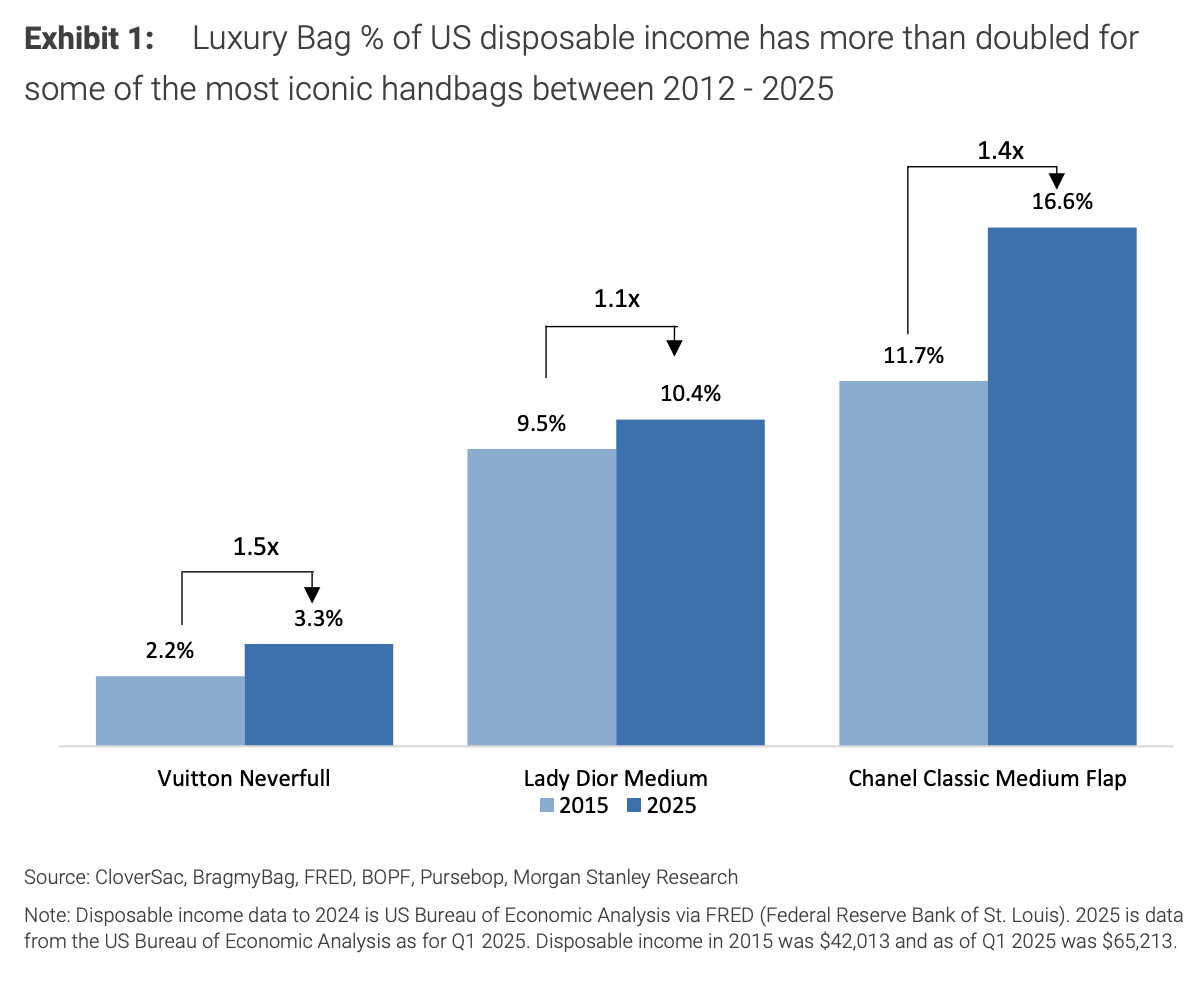
Core Insights - The luxury goods sector is experiencing a significant decline in sales, primarily due to the increasing unaffordability of iconic handbags, which have seen a 10%-33% decrease in affordability over the past decade [1][2] - Middle-income consumers are being priced out of the luxury market, leading to a shift towards more affordable brands like Coach, which reported a 15% same-store sales growth in the first quarter [1][5] - Major luxury brands are facing a growth bottleneck, with simultaneous declines in demand from consumers in China, Europe, and the U.S. for the first time in over 30 years [1][6] Affordability Trends - The price of luxury handbags has risen significantly compared to disposable income growth in the U.S. For instance, the Louis Vuitton Neverfull bag has seen an 8.5% annual compound growth rate in price, while disposable income has only increased by 4.5% [2][4] - Specific examples include: - Louis Vuitton Neverfull: Price increased 1.5 times relative to average disposable income over the past decade [4] - Dior Lady Dior: Price increased 1.1 times [4] - Chanel Classic Flap: Price increased 1.4 times [4] Market Dynamics - The shift in consumer purchasing power is creating opportunities for more price-competitive brands, as evidenced by the strong growth of brands like Coach [5] - The traditional growth model for luxury brands is under pressure, as relying solely on high-net-worth individuals is insufficient to sustain historical growth rates [6] - The luxury sector's strategy of raising prices during economic downturns, which previously worked, is no longer effective in the current market environment [6] Recovery Outlook - The recovery of affordability for luxury handbags is projected to take several years. For example, if prices grow at an average of 2% annually and disposable income continues to grow at 4.5%, it will take approximately 5 years for Dior and Louis Vuitton handbags to return to 2015 affordability levels, and 8 years for Chanel [7]


奢侈品大牌最新座次:前十法国占了六家,LV居首但销售首度下滑,爱马仕势头强劲
Hua Er Jie Jian Wen· 2025-06-04 03:38
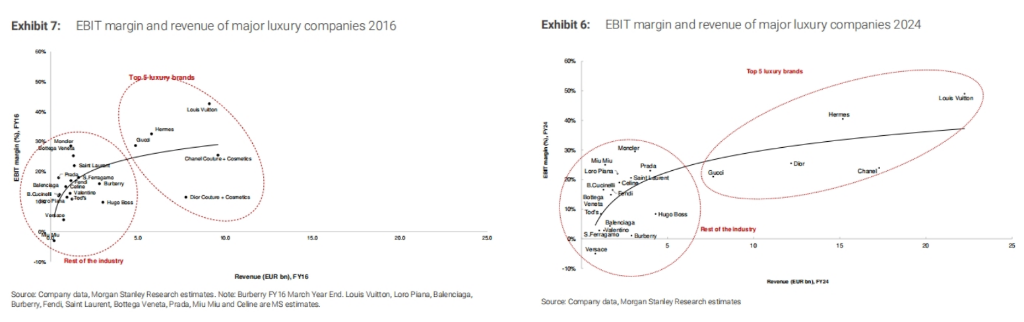
Core Insights - The luxury goods industry is experiencing a significant turning point in 2024, with a notable shift in market dynamics and brand performance [1][3] - The top ten luxury brands are predominantly French, with six brands from France, highlighting the country's dominance in the luxury sector [1] Industry Overview - The luxury goods market has seen a concentration of market share among major brands over the past two decades, with the top five brands (Louis Vuitton, Chanel, Hermès, Dior, and Gucci) accounting for approximately 72% of industry growth and 82% of profit growth from 2016 to 2024 [1][3] - However, in 2024, this trend of concentration is reversing, with top brands losing market share and the industry entering a phase of differentiation [3] Brand Performance - Louis Vuitton remains the largest and most profitable luxury brand, with 2024 sales of €22.2 billion and an operating profit of €10.9 billion, representing a profit margin of 49% [5] - For the first time, Louis Vuitton's sales are projected to decline by approximately 1.5% in 2024, marking a historic shift in its growth trajectory [7] - Chanel, the second-largest brand, is facing challenges with a projected sales decline of 5% to €16.8 billion in 2024, with significant drops expected in its leather goods category [9] - Hermès stands out with a robust performance, achieving a 13% growth in 2024, reaching €14.8 billion in sales, and is expected to continue strong growth into 2025 [11][12] Additional Brand Insights - Dior's sales are projected to decline by 10.1% in 2024, reaching €12.2 billion, despite a consistent growth rate over the past decade [13] - Rolex's sales are estimated at approximately €11.1 billion, with a 5% growth, although it experienced a 2% decline in volume for the first time since 2009 [13] - Cartier's revenue surpassed €10.9 billion, growing by 3.3% [13] - Gucci faced the largest decline among the top brands, with a 22.5% drop in sales to €7.7 billion [14] - Tiffany's sales decreased by 2% to €5.1 billion, while Prada saw a 2.2% increase to €3.9 billion [15] - Van Cleef & Arpels entered the top ten for the first time, with sales of approximately €3.9 billion, marking an 8% growth [15]
2025 奢侈品营销大变局:国潮崛起、直播破圈,谁在领跑中国市场?
Sou Hu Cai Jing· 2025-06-04 02:25
Group 1: Industry Trends - The Chinese luxury goods market is rapidly evolving, projected to account for 25% of the global market by 2030, driven by a shift towards emotional and cultural consumption among younger consumers [2][4] - The rise of "new national tide luxury goods" reflects a strong revival of local culture, with products that blend traditional craftsmanship and modern design gaining popularity [4] - Over 90% of consumers are open to purchasing luxury items made from sustainable materials, indicating a shift towards rational and personalized consumption [4] Group 2: Advertising Investment - The luxury goods sector saw a 1.2% year-on-year increase in online advertising investment in early 2025, reaching a record high of 335 million [5][8] - Brands are increasingly focusing on "node-based integrated marketing," leveraging key shopping periods for maximum exposure and conversion [8] Group 3: Media Transformation - The media landscape is shifting, with mobile advertising still dominant at 64.4%, but OTT (big screen) advertising growing significantly from 12.5% to 28% [9] - Video platforms account for 67.7% of advertising investment, making them the primary medium for luxury brands to enhance brand influence and purchase appeal [9] Group 4: Creative Innovation - Luxury brand advertising is increasingly localized and scenario-based, utilizing local celebrities to connect with Generation Z consumers [10][14] - Seasonal gift marketing strategies are being employed to enhance brand image and sales during peak gifting periods [14] Group 5: User Segmentation - The luxury consumer base is diversifying, categorized into four segments: heavy, moderate, light, and potential consumers, each requiring tailored marketing strategies [15][19] - Heavy consumers seek exclusivity and personalized services, while moderate consumers value membership benefits and brand affinity [15][16] Group 6: Omnichannel Integration - Luxury brands are transitioning from single-point marketing to a full-chain closed-loop approach, utilizing both online and offline strategies to enhance consumer experience [20] - Brands like Rolex and MiuMiu are effectively integrating social responsibility and cultural engagement into their marketing strategies to resonate with younger consumers [20] Conclusion - The Chinese luxury market is entering a "new luxuryism" era, where brands must focus on quality, cultural engagement, and interactive marketing to appeal to discerning consumers [21]
持续关注全球关税谈判
SINOLINK SECURITIES· 2025-06-03 07:50
Investment Rating - The report maintains a positive outlook on the Hong Kong stock market, particularly in the areas of virtual assets and Web3.0 development, suggesting a strong investment opportunity in these sectors [2][9]. Core Insights - The report emphasizes the importance of monitoring global tariff negotiations, particularly the recent developments in U.S.-China trade relations and their potential impact on market dynamics [9]. - There is a notable increase in the quality and risk appetite of Hong Kong assets, with a focus on asset trading platforms as valuable investment opportunities [9]. - The report highlights the active performance of virtual asset-related stocks in Hong Kong, driven by stablecoin policies, and anticipates further regulatory developments in this area [2][9]. Summary by Sections 1. Industry Situation Tracking 1.1 Education - The K12 education sector shows strong growth, with leading institutions reporting over 20% revenue growth for winter training sessions [4]. - Recent product launches in AI education indicate ongoing innovation in the sector [4][17]. 1.2 Luxury Goods - The luxury goods sector is experiencing disruptions due to U.S.-EU tariff policies, with cautious price increases observed among brands [4][19]. - LVMH expresses confidence in the Chinese market despite recent consumption declines, indicating a long-term positive outlook [21]. 1.3 Coffee and Beverage Chains - Coffee and tea remain key categories for delivery platforms, with recent subsidies from platforms like JD.com [4]. - Coffee futures have seen a significant decline, which may alleviate cost pressures for companies like Luckin Coffee [4][27]. 1.4 E-commerce - Major players like Alibaba and JD.com continue to compete aggressively in the delivery and retail sectors, impacting short-term profitability [4]. - The report notes strong performance in the "618" shopping festival, with significant growth in various product categories [32]. 2. Platform & Technology 2.1 Streaming Platforms - The streaming sector shows resilience, with Tencent Music and other platforms benefiting from scale effects [4][33]. - Recent transactions, such as HYBE's sale of SM Entertainment shares to Tencent Music, highlight strategic movements within the industry [34]. 2.2 Virtual Assets & Internet Brokers - The global cryptocurrency market capitalization is reported at $337.44 billion, reflecting a 4% decline [38]. - The introduction of the Stablecoin Regulation in Hong Kong marks a significant step in regulating digital asset activities [41].


大摩宏观闭门会议:东稳西荡新阶段?-纪要
2025-06-02 15:44
Summary of Key Points from Conference Call Industry and Company Overview - The conference call discusses the macroeconomic landscape, focusing on the U.S. and China, highlighting the challenges and opportunities in various sectors, including luxury goods and technology. Core Insights and Arguments 1. **U.S.-China Tariff Levels**: The average tariff between the U.S. and China is expected to remain between 30% and 40%, with limited potential for significant reductions in the short term due to various administrative measures [2][6][3]. 2. **U.S. Fiscal Deficit and Debt**: The U.S. fiscal deficit is projected to increase by approximately $300 billion annually, raising concerns about long-term debt sustainability and its impact on the dollar's status as a safe-haven asset [7][9]. 3. **China's Economic Challenges**: China is facing deflationary pressures and difficulties in achieving rebalancing and reflation, with a negative GDP deflator expected this year [8][12]. 4. **Emergence of Local Luxury Brands**: A local gold brand in China is projected to surpass Cartier in sales within the Greater China region by 2025, indicating a shift towards domestic brands in the luxury market [2][18]. 5. **AI Technology Growth**: China's AI ecosystem is expected to achieve an 82% self-sufficiency rate by 2027, showcasing the competitive edge of local products despite international barriers [2][19]. 6. **Impact of Dollar Weakness**: A weaker dollar is anticipated to benefit emerging markets, with recommendations to overweight investments in India, Singapore, and the UAE while being cautious with sectors linked to macroeconomic deflation in China [2][27]. Additional Important Content 1. **Uncertainties in Global Economy**: Key uncertainties include tariff policies, non-tariff barriers, talent and immigration policies, and the transparency of macroeconomic data, which could affect investment strategies [3][4][5]. 2. **China's Structural Reforms**: The need for structural reforms in China is emphasized, particularly in addressing supply-demand imbalances and enhancing social security to stimulate consumption [15][17][26]. 3. **Automotive Industry Price Wars**: The automotive sector in China is experiencing intense price competition, driven by the need for sales volume and inventory clearance, which is impacting profit margins across the supply chain [37][38]. 4. **Local Government's Role**: Local governments are incentivized to focus on production rather than consumption due to their performance evaluations being tied to GDP growth, which complicates efforts to stimulate consumer spending [24][16]. 5. **Investment Outlook**: Despite the challenges, there are structural investment opportunities in technology and quality large-cap stocks in China, with a cautious approach recommended for sectors affected by deflation [40][30]. This summary encapsulates the critical insights from the conference call, providing a comprehensive overview of the current economic landscape and its implications for investment strategies.
瑞郎——全球最强势货币,没有之一
Hua Er Jie Jian Wen· 2025-06-02 13:52
Core Insights - The article reveals that the Swiss Franc has consistently outperformed other currencies over the past 50 years, challenging the notion that a strong currency undermines a country's manufacturing competitiveness [1][2]. Group 1: Currency Performance - The Swiss Franc has maintained the best currency performance over various time frames, including 50, 25, 10, and 5 years [1]. - Despite discussions around the devaluation of the US dollar to boost manufacturing, the Swiss Franc remains a strong currency with a robust manufacturing base [1]. Group 2: Manufacturing Strength - Manufacturing constitutes 18% of Switzerland's GDP, which is one of the highest proportions among developed economies [2]. - Over half of Switzerland's exports are high-tech products, more than double the proportion of the United States [2]. - Switzerland has maintained a current account surplus averaging over 4% of GDP since the early 1980s, aided by high-value exports [2]. Group 3: Innovation and Economic Performance - Switzerland has ranked as the most innovative economy according to the United Nations for over a decade, driven by investment in education and R&D [3]. - The country generates over $100 of GDP per hour worked, the highest productivity among the 20 largest economies [3]. - A decentralized political and economic system fosters the growth of small businesses, which make up over 99% of Swiss companies [3]. Group 4: Economic Stability - The Swiss economy exhibits "all-weather" stability, with the Swiss Franc appreciating regardless of global economic conditions [5]. - In 2015, Swiss manufacturers adapted to a significant appreciation of the Swiss Franc by shifting focus to precision exports less sensitive to currency fluctuations [5]. Group 5: Lessons for Other Economies - Switzerland's experience suggests that cheap currency is not a panacea for reviving manufacturing sectors in developed economies like the US [6]. - True competitiveness stems from innovation, product quality, technological sophistication, and brand value, rather than relying on currency devaluation [6].
二姨看时尚|开云、韩国新世界出手收购;阿迪达斯爆用户数据泄露;爱马仕也做耳机了
2 1 Shi Ji Jing Ji Bao Dao· 2025-06-02 00:06
Group 1: Industry Developments - Kering Group has acquired Giambattista Valli, increasing its stake to full ownership, becoming the main investor and strategic decision-maker [11] - South Korean retail giant Shinsegae Group plans to acquire a controlling stake in C&C International, a color cosmetics ODM manufacturer, valued at 285 billion KRW (approximately 14.94 billion RMB) [6] - La Perla, a high-end lingerie brand, has been sold to an investment entity, which will retain the brand's existing factories and employees [5] Group 2: Company Performance - Gap Inc. reported a 2.2% increase in net sales to $3.463 billion for Q1, with net profit rising 22% to $193 million, driven by strong performance from Old Navy [2] - Capri Holdings reported a 15.4% decline in revenue to $1.035 billion for Q4 FY2025, with a net loss of $645 million, reflecting struggles across its main brands [3] Group 3: Mergers and Acquisitions - Elf Beauty has acquired Hailey Bieber's skincare brand Rhode for $1 billion, consisting of $600 million in cash and $200 million in newly issued common stock, with potential additional payments based on future growth [4] - Fountain Capital is seeking to raise up to $1.32 billion by selling approximately half of its stake in Amer Sports Inc., a manufacturer of sports equipment [4] Group 4: Brand Value Rankings - Chanel has surpassed Louis Vuitton to become the second most valuable luxury brand globally, according to Brand Finance's 2025 rankings, with Porsche retaining the top position [7] Group 5: Retail Expansion - Balenciaga has opened its largest flagship store globally in Beijing, covering 1,204 square meters, emphasizing its commitment to the Chinese market [8] Group 6: Data Security Issues - Adidas has reported a data breach involving customer data theft from a service provider, although payment information and passwords were not compromised [12]




日本如何保护实体经济?
Hu Xiu· 2025-06-01 23:39
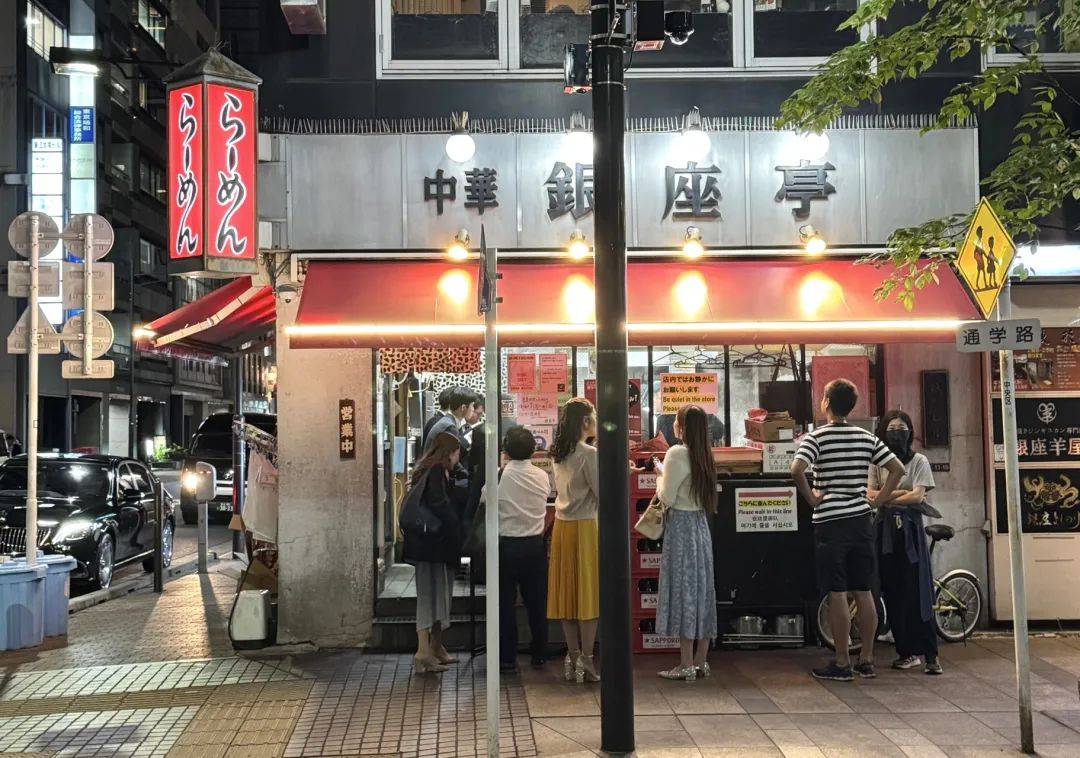
Core Points - The article discusses the challenges faced by small business owners in China, particularly in Shenzhen, regarding rental agreements and landlord practices [1] - It contrasts this with the more protective rental laws and practices in Japan, particularly in Tokyo's Ginza district, which allow small businesses to thrive [3][4] Group 1: Rental Challenges in China - A small noodle shop in Shenzhen faces a 10% rent increase and a non-refundable "tea fee" of 100,000 yuan, highlighting exploitative landlord practices [1] - The shop owner eventually moved to a larger location with a 50% reduction in rent due to the pandemic, illustrating the volatility of the rental market in Shenzhen [1] Group 2: Rental Practices in Japan - In Tokyo's Ginza, rental prices for prime locations have reached historical highs, with monthly rents ranging from 3485 to 5855 yuan per square meter [3] - Japanese rental contracts are detailed and provide clear responsibilities for both landlords and tenants, reducing disputes [8][10] - Landlords in Japan cannot arbitrarily increase rent or evict tenants without just cause, ensuring stability for small businesses [11][12] - The Japanese legal framework includes strong tenant protections, such as requiring legitimate reasons for lease termination and compensation for early termination [12][13] Group 3: Economic Sustainability - The article suggests that the protective measures in Japan contribute to the longevity of small businesses, allowing them to operate for decades without fear of eviction [18] - The presence of long-standing businesses in Japan, such as a 75-year-old beef rice shop, exemplifies the stability provided by these regulations [17][18]
中信证券:海外奢侈品行业低迷持续 聚焦内生增长
智通财经网· 2025-05-31 09:50
智通财经APP获悉,中信证券发布研报称,在经历了2024年年末的复苏曙光后,全球奢侈品行业 2025Q1再度承压。在消费者愈发理性、讲究"质价比"的背景下,行业大幅提价与创意提升并不匹配, 叠加当前宏观环境的不确定因素,该行认为行业短期压力将持续。在无增量利空因素的假设下,该行预 计中国内地奢侈品消费市场或将温和复苏。整体而言,该行预计2025年上半年行业利润率将持续承压, 当前板块缺乏估值修复的明确催化,短期仍对全球奢侈品行业及相关标的保持谨慎态度。 中信证券主要观点如下: Q1行业增速放缓 LVMH/爱马仕/开云/历峰/Prada /Moncler /Tapestry /Ralph Lauren 25Q1在固定汇率下收入增速分别为同 比-3%/ +7%/ -14%/ +7%/ +13%/ +2%/ +8%/ +8%(注:历峰、Ralph Lauren为FY25Q4,Tapestry为 FY25Q3)。在该行的统计列表中,行业平均增速同比持平(vs.24Q4增速为+3%,24Q3增速为-4%)。从地 区结构看,随着中国市场与海外市场价差收窄及潜在的经济政策预期的推动,中国内地本土奢侈品整体 趋稳,但短期依旧 ...

关税战40天:美国经济的极限压力测试
虎嗅APP· 2025-05-29 13:20
Core Viewpoint - Trump's tariff policies aim to reshape global trade order and promote U.S. re-industrialization, with a focus on generating new revenue sources through tariffs [1][2]. Group 1: Tariff Implementation and Impact - Trump imposed high tariffs on nearly all U.S. trading partners within 40 days, with China facing the highest tariffs, reaching 145% on certain goods [4][6]. - The uncertainty surrounding U.S. trade policies has reached historical highs, significantly impacting market confidence and leading to increased concerns among businesses [2][6]. - A temporary suspension of tariffs was announced for 90 days, reducing tariffs from 49% to 10% for certain countries, but China remained unaffected [4][7]. Group 2: Business Challenges - U.S. businesses, particularly small companies reliant on Chinese imports, faced severe challenges due to rising costs and declining sales, leading to cash flow issues [9][10]. - Major retailers like Walmart indicated they could not fully absorb tariff costs, leading to price increases for consumers [11][12]. - The toy industry, represented by companies like Mattel, anticipated price hikes due to tariffs, with significant portions of their products manufactured in China [12][13]. Group 3: Agricultural Sector Impact - U.S. farmers have suffered significant losses due to trade wars, with agricultural exports dropping by over $27 billion during Trump's first term [15][18]. - California pistachio growers, heavily reliant on the Chinese market, faced potential devastating losses due to tariffs [16][17]. - The soybean export market has seen a drastic decline, with exports to China dropping by 75% since the onset of the trade war [18]. Group 4: Consumer Confidence - Consumer confidence in the U.S. has been negatively affected by tariff policies, with a reported decline in consumer sentiment index [20][21]. - The uncertainty and rising costs associated with tariffs have led to a significant reduction in imports at major California ports, indicating broader economic impacts [22]. - The recent agreement to reduce tariffs between the U.S. and China has provided some clarity, but economists warn of potential economic slowdowns in the coming quarters [23][24].

