医药

Search documents
一文读懂创业板指数
雪球· 2025-12-02 08:58
Core Viewpoint - The article discusses the investment opportunities and strategies within the ChiNext (创业板) series of indices, emphasizing the importance of understanding different index types and their performance metrics for potential investors [4][5]. Group 1: ChiNext Series Indices - The ChiNext series indices focus on growth and innovation-oriented companies, established in 2010, with a strategic positioning defined in 2020 as "three innovations and four new" [4]. - The main indices include the ChiNext Index, ChiNext 50, ChiNext Comprehensive, ChiNext 200, ChiNext 300, and ChiNext Large Cap, with the ChiNext Index being the most recognized, tracking 104 funds with a total scale of 145.35 billion [8][9]. - The ChiNext Comprehensive Index is notable for including all constituent stocks and being the only index to reach a new high in 2021, making it suitable for index enhancement strategies [10][11]. Group 2: Investment Value and Strategy - The ChiNext Index is currently at a median valuation, indicating it may not be suitable for long-term holding but rather for trading opportunities [14][16]. - The article highlights that the investment return is significantly influenced by the initial valuation at the time of purchase, warning against the potential for long-term losses if bought at high valuations [18][17]. - The strategy indices, such as "Chuang Growth" and "Chuang Technology," focus on growth and momentum factors, with the former having a higher performance historically compared to the latter [22][31]. Group 3: Industry Indices - The industry indices include ChiNext Artificial Intelligence, Innovative Energy, Chuang Technology, Chuang Medicine, and ChiNext Software, with the ChiNext Artificial Intelligence index showing the highest annual return of 83.27% [38][40]. - The ChiNext Technology index, focusing on R&D investment and revenue growth rates, has a return of 55% but a smaller tracking scale of 2.52 billion, indicating lower investor attention [46]. - The article notes that the healthcare sector, particularly the Chuang Medicine index, has underperformed with a return of only 7.16%, highlighting the need for careful analysis in industry-specific investments [52].


退市的*ST苏吴:败走童颜针后,又现财务造假与信披违规
Bei Jing Shang Bao· 2025-12-02 08:32
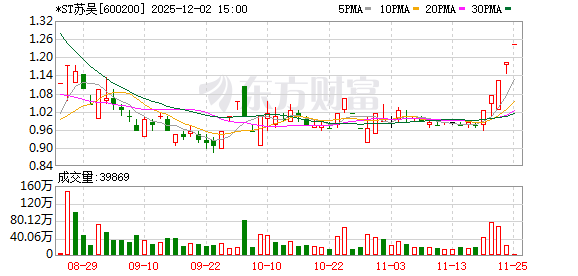
Core Viewpoint - *ST Suwu has been delisted due to long-term financial fraud and information disclosure violations, with significant implications for its future operations and market presence [2][6]. Financial Misconduct - Since 2018, *ST Suwu has concealed its actual controlling shareholder and inflated its revenue by over 1.77 billion yuan through related party transactions [2][6]. - Approximately 1.69 billion yuan of funds have been non-operationally occupied by related parties, nearly depleting the company's core assets [2][6]. - The company has been fined 10 million yuan, and its actual controller has been fined 15 million yuan and banned from the securities market for 10 years [6]. Business Performance - The company's revenue has significantly declined, with a year-on-year drop of 38.85% in the first three quarters of 2025, resulting in a net loss of 87.468 million yuan [2][8]. - The traditional pharmaceutical sector has also suffered, with a 55.79% decline in revenue during the same period [8]. Legal and Regulatory Issues - In February 2023, *ST Suwu received a notice from the China Securities Regulatory Commission (CSRC) regarding suspected violations of information disclosure laws [5]. - The company faced a series of regulatory actions, including warnings and administrative penalties, culminating in its delisting [5][6]. Product and Market Challenges - The "Tongyan Needle" (AestheFill) has become a critical growth point for *ST Suwu, contributing 35.55% of its revenue in Q1 2025 [7][8]. - A dispute over the agency rights for AestheFill has emerged, with the company facing a potential loss of this key product due to a contract termination by a partner [7][8]. Future Outlook - With the delisting, *ST Suwu faces severe challenges in liquidity and creditworthiness, as it loses access to capital markets [9][10]. - The company must find new revenue sources quickly to survive, as its current financial situation is precarious, with only about 49.19 million yuan in cash remaining [9][10].
A股医美龙头财务造假退市,市值蒸发9成,停牌前连续5天涨停
21世纪经济报道· 2025-12-02 07:50
Core Viewpoint - The article discusses the forced delisting of *ST Suwu (Jiangsu Wuzhong) from the A-share market due to serious financial fraud, highlighting the company's significant stock price decline and the implications for the medical beauty industry [1][3]. Summary by Sections Company Delisting - *ST Suwu has been mandated to delist from the Shanghai Stock Exchange, with the last trading date expected to be December 29, 2025, following a decision by the exchange due to major legal violations [3]. - The company’s stock price plummeted from over 9 yuan at the beginning of the year to below 1 yuan, marking a decline of over 90% [1][3]. Financial Misconduct - The China Securities Regulatory Commission (CSRC) identified that *ST Suwu's annual reports from 2020 to 2023 contained false information, leading to the delisting decision [3]. - The company was found to have inflated revenue and profits through non-commercial transactions with related parties, resulting in significant discrepancies in reported financials [7]. - Specific figures include inflated revenues of 4.95 billion yuan, 4.69 billion yuan, 4.31 billion yuan, and 3.77 billion yuan for the years 2020 to 2023, respectively, along with inflated profits totaling 145.83 million yuan over the same period [7]. Corporate Governance Issues - The company concealed changes in its actual controlling shareholder, which was a significant violation impacting market transparency [6]. - The actual controller changed in February 2018, but the company continued to report the previous controller in its annual reports until 2023 [6]. Regulatory Actions - The CSRC imposed a fine of 10 million yuan on *ST Suwu and additional penalties on its actual controllers, including a 10-year ban from the securities market for the main controller [8]. - The exchange publicly reprimanded the company and its responsible individuals, emphasizing the importance of compliance and truthful financial reporting in the capital market [5][8]. Business Challenges - Prior to the delisting, *ST Suwu faced multiple operational challenges, including a significant drop in stock price and ongoing disputes regarding exclusive sales rights for a key product, AestheFill [10][11]. - The company reported a 63.93% decline in revenue in the third quarter of 2025, reflecting the adverse impact of these challenges on its financial performance [12]. Industry Implications - The case of *ST Suwu serves as a warning to the medical beauty industry regarding the risks associated with financial misconduct and the importance of maintaining transparent corporate governance [5][12].


收评:沪指跌0.42%,有色、医药等板块走低,零售等板块拉升
Zheng Quan Shi Bao Wang· 2025-12-02 07:42
Market Performance - Major stock indices in the two markets experienced fluctuations, with the Shenzhen Component Index and the ChiNext Index dropping over 1% at one point, and more than 3700 stocks declining [1] - As of the market close, the Shanghai Composite Index fell by 0.42% to 3897.71 points, the Shenzhen Component Index decreased by 0.68%, the ChiNext Index dropped by 0.69%, and the STAR 50 Index declined by 1.24% [1] - The total trading volume in the Shanghai and Shenzhen markets reached 1.6073 trillion yuan [1] Sector Performance - Sectors such as non-ferrous metals, media, pharmaceuticals, semiconductors, brokerages, automobiles, and liquor saw declines, while retail, coal, insurance, and real estate sectors experienced gains [1] - Concepts related to cross-strait integration and Hainan Free Trade Zone were active [1] Investment Outlook - According to Industrial Securities, the easing of overseas disturbances, rising expectations for global liquidity, and improved risk appetite have laid a solid foundation for the current year-end market trend [1] - Following previous fluctuations and digestion, clearer economic and industrial development plans from year-end meetings are expected to further consolidate market consensus and guide mainline directions [1] - A bullish mindset is recommended, with continued investment in the recovery of Chinese assets [1] - Focus should be on sectors with policy support and positive economic outlook for next year, including "anti-involution" and price-increasing resource products (chemicals, building materials, steel, energy metals, precious metals), agriculture, and new consumption & service consumption (leisure food, education, travel chain, etc.) [1] - Technology growth is anticipated to be a key driver in breaking through the current market volatility [1]
6家AH股“倒挂”背后:流通股比例小,外资更爱行业龙头
Di Yi Cai Jing· 2025-12-02 06:25
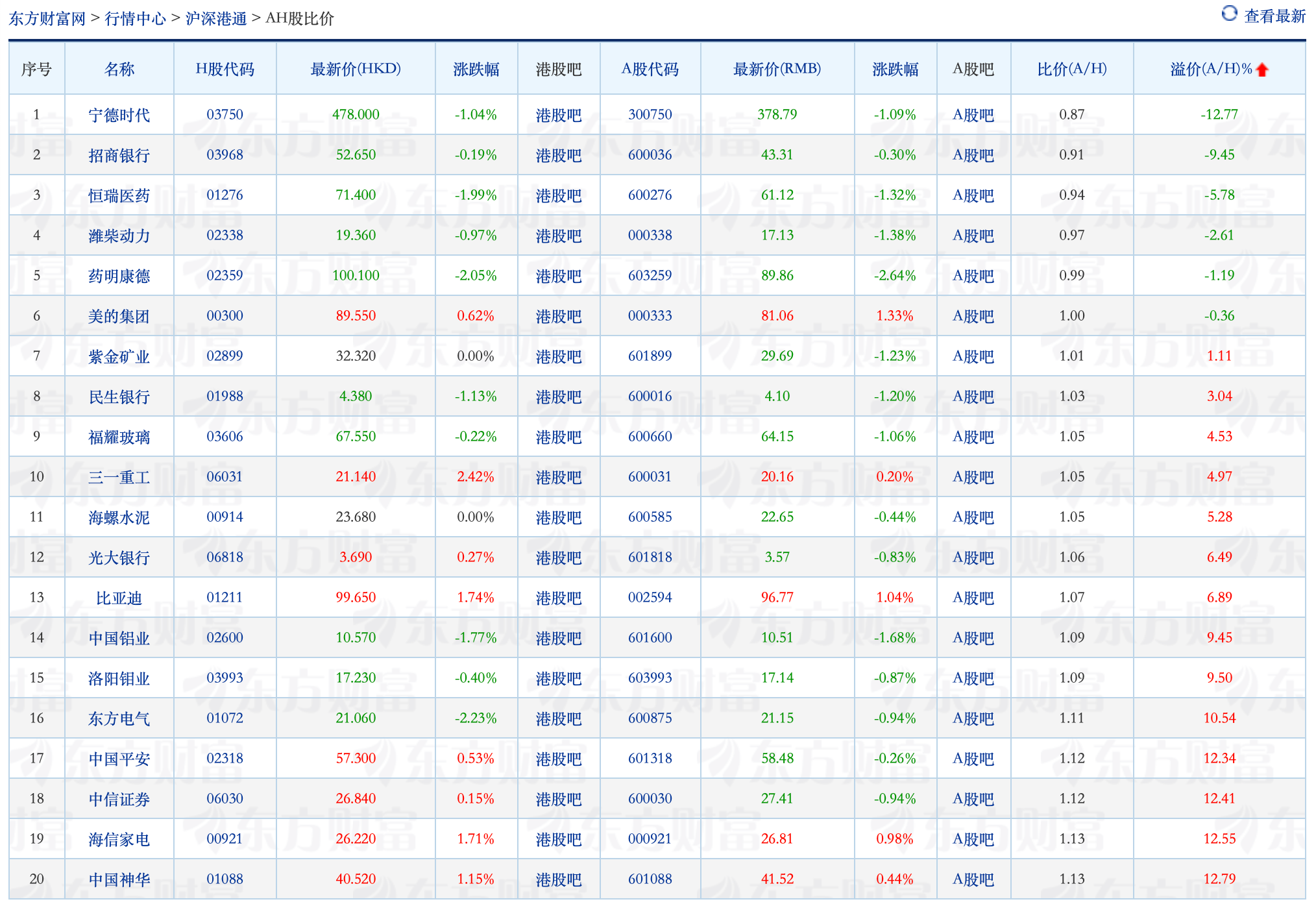
Core Viewpoint - The phenomenon of "AH share premium inversion" is observed in six companies, where H-shares are priced higher than A-shares, attributed to low liquidity and foreign investors' preference for industry leaders [1][2]. Group 1: Market Dynamics - The Heng Seng AH Share Premium Index (HSAHP) remains above 120, indicating a 20% premium of A-shares over H-shares [1]. - The six companies experiencing this inversion include CATL, China Merchants Bank, Hengrui Medicine, Weichai Power, WuXi AppTec, and Midea Group [2]. - The market sees a preference for newly listed stocks in the H-share market, which have lower liquidity, leading to higher valuations [2]. Group 2: Liquidity and New Listings - The "inversion" stocks are characterized by a high proportion of newly listed shares, with three of the six companies listed for less than a year [2]. - The market capitalization of H-shares is often significantly smaller than that of A-shares, contributing to the liquidity scarcity and price inversion [2]. - As institutional investors gradually exit their IPO allocations, the liquidity in the H-share market is expected to increase, potentially narrowing the premium [2]. Group 3: Foreign Investment Preferences - Foreign investors show a strong preference for industry leaders that have established market positions and stable financials [3][4]. - These companies typically operate in traditional sectors such as finance, energy, and infrastructure, which have predictable profit models [3]. - The preference for H-shares is also driven by the perception of higher growth potential and better governance structures in these companies [4]. Group 4: Examples of Inversion - BYD and China Merchants Bank are highlighted as typical examples of companies where H-shares occasionally exhibit a premium over A-shares [5]. - The presence of monopolistic characteristics in H-shares can attract foreign investment, as these companies are often seen as irreplaceable in the global market [5].



流感概念反复活跃,医疗创新ETF(516820.SH)过去20日净流入近1亿
Xin Lang Cai Jing· 2025-12-02 05:23
Core Viewpoint - The flu epidemic level in China is rising, leading to increased activity in the anti-flu concept stocks, with Haiwang Biological hitting the daily limit up [1] Group 1: Market Activity - The Medical Innovation ETF (516820.SH) is down 0.81%, with mixed performance among constituent stocks; Dong'e Ejiao (000423) leads with a 0.91% increase, while Kanghong Pharmaceutical (002773) falls by 2.43% [1] - The latest data from the Chinese Center for Disease Control and Prevention shows that the flu positivity rate among outpatient and emergency cases is close to 45%, indicating a medium epidemic level, with some provinces reaching a high epidemic level [1] - The Medical Innovation ETF has seen a net outflow of 2.582 million yuan recently, but over the past 20 trading days, there have been 14 days of net inflow totaling 99.49 million yuan [1] Group 2: Investment Insights - Guosen Securities notes that the current valuations in the medical device and pharmacy sectors already reflect risks from domestic and international policies, suggesting a focus on undervalued stocks with potential highlights or marginal changes [1] - The Medical Innovation ETF selects 30 pharmaceutical blue-chip stocks, covering key sectors such as innovative drugs (34%), CXO (17%), medical devices (13%), and consumer healthcare (11%), indicating a potential for short-term gains in lower-valued medical core assets [1] - The pharmaceutical sector is experiencing significant differentiation, with innovative drug valuations being high (historically at the 88th percentile), while CXO, medical devices, and consumer healthcare sectors show potential for rebound [1]
当代集团,被立案!
Zhong Guo Ji Jin Bao· 2025-12-02 04:37
登录新浪财经APP 搜索【信披】查看更多考评等级 【导读】涉嫌信披违法违规、违规融资等,当代集团被立案 中国基金报记者 晨曦 当代集团,被立案! 当代集团称,在立案调查期间,公司将积极配合中国证监会的调查工作,同时严格按照监管要求及相关规则,及时履行后续进展情况的信息披露义务。 公开信息显示,当代集团成立于1988年7月,是注册在武汉东湖新技术开发区内的一家民营高新技术集团公司,注册资本为55亿元;集团创始人为艾路 明。发展三十多年,"当代系"逐渐拓展至医药、消费、文化等各产业领域,曾控股人福医药、三特索道等多家上市公司。 2022年4月,当代集团首只债券发生违约事件,随后多只债券陆续发生违约。2023年8月,人福医药、三特索道等公司公告称,艾路明因涉嫌信息披露违法 违规被中国证监会立案。 12月2日,武汉当代科技产业集团股份有限公司发布公告称,其于11月28日收到中国证监会《立案告知书》。因涉嫌信息披露违法违规、违规融资等,中 国证监会决定对其立案。 2024年9月,债权人以当代集团不能清偿到期债务且明显缺乏清偿能力,向武汉中院提交重整申请。 此外,由于未在法定期限内披露定期报告,当代集团及艾路明在2025 ...

午评:沪指跌0.55%,有色、半导体等板块走低,福建板块活跃
Sou Hu Cai Jing· 2025-12-02 04:21
盘面上看,有色、传媒、半导体、券商、医药、汽车等板块走低,零售、煤炭、保险板块上扬,福建本 地股、海南自贸概念等活跃。 华西证券指出,展望12月,A股市场将步入国内外重要政策观察窗口,市场风险偏好或逐渐抬升,跨年 行情迎来布局期。海外方面,美联储降息概率较大,美元流动性担忧缓解和人民币汇率偏强运行,有利 于外资增配中国资产;国内方面,12月中上旬将召开中央政治局会议和中央经济工作会议,确定2026年 经济发展目标和宏观政策基调,反内卷、促消费、新质生产力等有望受益政策催化。行业配置上,建议 关注:产业趋势聚焦"十五五"相关主题投资,如商业航天、AI应用、储能、军工、创新药等;受益海外 流动性改善的有色金属等;前期调整幅度居前的港股科技等。 2日早盘,两市主要股指盘中震荡下探,科创50指数跌超1%,场内近4000股飘绿。 截至午间收盘,沪指跌0.55%报3892.55点,深证成指跌0.77%,创业板指跌0.88%,科创50指数跌 1.18%,沪深北三市合计成交10562亿元。 ...
年末市场波动加剧,自带杠铃策略的上证180ETF指数基金(530280)备受关注
Xin Lang Cai Jing· 2025-12-02 02:31
Group 1 - The Shanghai 180 Index (000010) shows mixed performance among its constituent stocks, with Transsion Holdings (688036) leading the gain at 4.86% and GAC Group (601238) up by 3.78% [1] - The market is experiencing increased volatility as the year-end approaches, and CICC suggests maintaining a "barbell" strategy (dividend + technology internet) for portfolio allocation [1] - The management fee for the Shanghai 180 ETF Index Fund (530280) is 0.15%, and the custody fee is 0.05% [1] Group 2 - As of November 28, 2025, the top ten weighted stocks in the Shanghai 180 Index include Kweichow Moutai (600519) and Zijin Mining (601899), collectively accounting for 26.13% of the index [2] - The Shanghai 180 ETF Index Fund has several off-market connection options, including Ping An's various linked funds [2]




【广发宏观王丹】从11月PMI的行业结构看目前资产定价特征
郭磊宏观茶座· 2025-12-02 01:50
Core Viewpoint - The article highlights the divergence in industrial prosperity in November, with manufacturing and construction PMIs rising while the service sector PMI fell below 50 for the first time this year, dragging the composite PMI down to its lowest point of the year [5][6]. Manufacturing Sector - The manufacturing PMI in November was reported at 49.2, a slight increase of 0.2 points month-on-month, while the construction PMI rose by 0.5 points to 49.6 [5][19]. - Emerging manufacturing sectors showed significant activity, with electrical machinery, specialized equipment, and pharmaceuticals experiencing month-on-month increases of 6.7, 1.0, and 2.7 points respectively, driven by demand in power batteries and energy storage [10][11]. - Commodity price fluctuations impacted the sector, with the non-ferrous smelting industry PMI rising by 4.1 points, while the petroleum refining sector saw a significant decline of 20.2 points [10][11]. - The chemical industry PMI increased by 2.0 points, reflecting demand from new energy and AI sectors, alongside price stabilization measures in certain products [10][11]. - Policy-driven financial tools contributed to a 5.1 point increase in the non-metallic industry PMI, with signs of price stabilization in cement observed in late November [10][11]. Absolute Prosperity Levels - The automotive industry recorded the highest prosperity level, exceeding 60, despite a year-on-year decline in passenger car sales due to high base effects; however, cumulative growth for the year remains strong [14]. - The pharmaceutical and non-metallic mineral sectors maintained prosperity levels above 55, correlating with the flu season and stabilized cement prices [14]. - The computer communication electronics and non-ferrous sectors are in the expansion zone, with prosperity levels above 60%, influenced by the AI industry chain [14]. High-Tech Industries - High-tech manufacturing continues to lead, with PMIs for high-tech manufacturing, equipment manufacturing, consumer goods manufacturing, and high-energy-consuming industries reported at 50.1, 49.8, 49.4, and 48.4 respectively [17]. - The high-tech manufacturing PMI has remained above 50 for ten consecutive months, although the ratio of high-tech manufacturing to high-energy-consuming industries has shown a marginal decline over the past two months [17]. Emerging Industries - The new energy vehicle sector has the highest prosperity level, while the new generation information technology and biotechnology sectors also maintain leading positions, with the former staying above 55 for three consecutive months [18]. - Compared to September, both the biotechnology and new energy vehicle sectors saw significant improvements, exceeding 5 points [18]. Real Estate and Infrastructure - The real estate and infrastructure sectors continue to show divergence, with infrastructure seeing improvements in new orders, while the real estate sector remains weak, with declining activity indices [18][23]. - The construction industry is expected to reach its peak in the first quarter of 2026, with business activity expectations showing significant upward trends [18][21]. Service Sector - The service sector PMI fell to 49.5, marking a decline of 0.7 points, with significant drops in travel-related services and the impact of the "Double Eleven" e-commerce promotions fading [24][23]. - Despite the overall contraction, emerging service industries such as internet and software information, telecommunications, and financial services continue to show signs of expansion [24][23].