
家电

Search documents
日本企业陷入破产“寒潮”(环球热点)
Ren Min Ri Bao Hai Wai Ban· 2026-01-22 05:35
据日本《读卖新闻》报道,东京商工调查公司近日发布的统计数据显示,2025年日本企业破产数量达到 10261家,同比增长2.9%,自2022年起连续4年增加。这也是日本企业破产数量连续第二年超过1万家, 达到自2013年以来最高水平。 日本企业为何陷入破产"寒潮"?本报对话外交学院国际关系研究所教授周永生、中国社会科学院日本研 究所研究员李清如,进行评析。 企业面临内外压力 【观察】 据日媒报道,东京商工调查公司统计的是负债1000万日元以上的破产案例。2025年,日本破产企业的负 债总额为1.5921万亿日元,其中负债额低于1亿日元的7892家小规模破产企业占总数的约八成,为过去 30年最高。 从破产原因看,劳动力短缺导致的企业破产案例比上一年增长36%至397起,创历史新高;物价高企导 致的破产案例达767起,连续3年增加。按行业划分,"服务业及相关行业"破产企业数量最多,达3478 家,同比增长4.4%,创下历史新高;建筑业、制造业排第二、三。 【点评】 李清如:日本企业生存困境加剧是内外部因素叠加的结果,其中抗风险能力薄弱的中小企业成为受冲击 最严重的群体。一方面,外部环境不确定性持续攀升。美国关税政策 ...
数据显示,日本企业破产数量连续4年增加——日本企业陷入破产“寒潮”(环球热点)
Sou Hu Cai Jing· 2026-01-22 02:54
Group 1 - In 2025, the number of bankruptcies among Japanese companies is projected to reach 10,261, marking a 2.9% increase year-on-year and the highest level since 2013, with the figure exceeding 10,000 for the second consecutive year [1][2] - The total debt of bankrupt companies in Japan for 2025 is estimated at 15.921 trillion yen, with small-scale bankruptcies (companies with debts below 100 million yen) accounting for approximately 80% of the total, the highest in the past 30 years [2] - The service industry has the highest number of bankruptcies, totaling 3,478, which is a 4.4% increase year-on-year, also a historical high [2] Group 2 - Labor shortages have led to a 36% increase in bankruptcy cases, reaching a record high of 397, while bankruptcies due to high prices have also risen for three consecutive years, totaling 767 cases [2] - The Japanese economy is facing structural contradictions, including labor shortages due to an aging population, weakened economic vitality, and low domestic demand, which are exacerbated by high government debt and limited policy space [5][6] - The Japanese government has implemented a 21.3 trillion yen economic stimulus plan to address the economic challenges, but this may conflict with the Bank of Japan's tightening monetary policy, increasing borrowing costs for companies [6][7] Group 3 - The deterioration of Japan-China relations due to political statements has raised concerns in the Japanese business community, with a significant drop in Chinese tourists to Japan, which directly impacts the service sector [8][9] - The tightening of export controls on dual-use items by China is expected to disrupt production for Japanese companies, particularly in the automotive and electronics sectors, leading to a decline in stock prices for related industries [8][9] - The overall economic confidence in Japan is weakened by the strained bilateral relations, which may suppress consumer spending and corporate investment, further diminishing economic growth momentum [10]
北京GDP总量突破5万亿,TCL拟控股索尼电视业务 | 财经日日评
吴晓波频道· 2026-01-22 00:29
Group 1: Beijing Economic Performance - In 2025, Beijing's GDP reached 52,073.4 billion yuan, growing by 5.4% year-on-year, surpassing the national average of 5% and marking it as the second city in China to exceed 50 trillion yuan in GDP after Shanghai [2] - The per capita disposable income in Beijing was 89,090 yuan, a year-on-year increase of 4.3%, with urban residents earning 96,292 yuan and rural residents 42,012 yuan, reflecting a narrowing income gap [3] - The growth in Beijing's economy is supported by a high proportion of the tertiary sector and strong performance in high-energy industries, despite a slowdown in operating income growth and stagnant property net income [3] Group 2: 6G Technology Development - China has completed the first phase of 6G technology trials and is now entering the second phase, focusing on typical application scenarios and verifying technical feasibility [4] - The integration of air, land, sea, and space in 6G technology is expected to create revolutionary applications and drive upgrades in related industries such as chips and smart terminals [5] Group 3: TCL and Sony Joint Venture - TCL is set to acquire a controlling stake in Sony's television and audio business, forming a joint venture with 51% ownership by TCL and 49% by Sony, expected to start operations in April 2027 [6] - TCL's television shipment is projected to reach 30.41 million units in 2025, with a market share increase to 13.8%, narrowing the gap with the leading brand Samsung [6] Group 4: Vanke Bond Repurchase Plan - Vanke A's bondholders approved a plan to adjust the repayment arrangement for its bonds, allowing for a fixed repayment of 100,000 yuan and 40% principal repayment, providing some relief from potential default [7] - The company faces significant cash flow challenges, with a total debt of approximately 6.5 billion yuan maturing in the second quarter, raising concerns about its ability to avoid substantial defaults [8] Group 5: Douyin's New App Development - Douyin is developing an app called "Dou Sheng Sheng," aimed at enhancing offline consumption through group buying, with a focus on providing value and convenience [9] - Douyin's local life services are showing significant growth, with a total transaction volume increase of over 59% in 2025, indicating a successful expansion into the local service market [10] Group 6: Yonghui Supermarket's Financial Struggles - Yonghui Supermarket expects a net loss of 2.14 billion yuan in 2025, a 45.6% increase in losses compared to the previous year, primarily due to strategic adjustments and store closures [11] - The company's restructuring efforts, while necessary, have led to significant short-term losses, raising questions about its long-term viability in a changing retail landscape [11] Group 7: Netflix's Acquisition Strategy - Netflix reported a fourth-quarter revenue of $12.05 billion, exceeding expectations, and announced a shift to an all-cash acquisition of Warner Bros. for $72 billion [12][13] - The acquisition aims to bolster Netflix's content library with top-tier IPs, although it raises concerns about increased debt and financial risk as the company transitions from rapid growth to a more mature phase [13]




二〇二五年社会消费品零售总额突破五十万亿元
Ren Min Ri Bao· 2026-01-21 23:25
Group 1 - The total retail sales of consumer goods in China is projected to exceed 50.1 trillion yuan by 2025, with a growth rate of 3.7% [2] - Retail sales of goods are expected to grow by 3.8%, while catering revenue is anticipated to increase by 3.2% [2] - Final consumption expenditure is expected to contribute 52% to economic growth, continuing to serve as a primary engine for economic development [2] Group 2 - The "old-for-new" policy has significantly boosted retail sales, with home appliances and communication equipment retail sales both surpassing 1 trillion yuan in 2025, marking a historical high [2] - In 2025, over 129 million units of 12 categories of home appliances are expected to be replaced, and more than 91 million digital products are projected to be purchased [2] - Retail sales of household appliances and audio-visual equipment, as well as communication equipment, are expected to grow by 11% and 20.9%, respectively [2] Group 3 - The trend of consumption upgrading is evident, with sales of smart glasses, smartwatches, and smart bands increasing by over 40% [2] - The release of new products in fields such as smart connected vehicles and smartphones is accelerating, with domestic and international brands rapidly establishing flagship stores [2] - The "IP + consumption" trend is thriving, with sales of movie derivatives during the summer season in 2025 expected to double year-on-year [2] Group 4 - The "old-for-new" policy is facilitating industrial transformation and upgrading, effectively promoting the development of new productive forces [3] - Sales of first-level energy-efficient or water-efficient products among the 12 categories of home appliances account for over 90% [3] - The number of new types of home appliances is increasing, with 17.78 million new products expected in 2025, representing a year-on-year growth of 28.89% [3] - Home appliance companies are utilizing "5G + industrial internet" technology to significantly shorten order cycles, while smartphone companies are innovating in imaging, battery life, and AI technologies to enhance product value [3]

日本企业陷入破产“寒潮”(环球热点)
Ren Min Ri Bao· 2026-01-21 20:22
Core Insights - The number of bankruptcies among Japanese companies is projected to reach 10,261 in 2025, marking a 2.9% increase year-on-year and the highest level since 2013, with the figure exceeding 10,000 for the second consecutive year [1][2]. Group 1: Bankruptcy Statistics - The total debt of bankrupt companies in Japan for 2025 is estimated at 15.921 trillion yen, with small-scale bankruptcies (debt under 100 million yen) accounting for approximately 80% of the total [2]. - The number of bankruptcies due to labor shortages has increased by 36% year-on-year, reaching a record high of 397 cases, while bankruptcies caused by high prices have also risen for three consecutive years, totaling 767 cases [2]. Group 2: Industry Impact - The service sector has the highest number of bankruptcies, totaling 3,478, which is a 4.4% increase year-on-year and a historical high, followed by the construction and manufacturing sectors [2]. - The ongoing labor shortage and rising costs due to inflation are significantly impacting small and medium-sized enterprises (SMEs), which are the most vulnerable to these pressures [5][6]. Group 3: Economic Challenges - Japan's economic challenges are compounded by external factors such as U.S. tariff policies and fluctuations in the yen, which have severely impacted SMEs' profit margins [5][6]. - The government has implemented emergency measures and a 21.3 trillion yen economic stimulus plan to address these issues, but the effectiveness of these measures is questioned due to potential contradictions with monetary tightening policies [4][6]. Group 4: Structural Issues - The lack of core competitiveness in traditional industries, such as automotive and electronics, is a fundamental challenge for Japanese companies, with a noted decline in competitiveness in sectors like electric vehicles and artificial intelligence [3][7]. - Structural issues such as an aging population, low economic vitality, and high government debt are contributing to a prolonged economic downturn, affecting employment and consumer spending [5][6]. Group 5: International Relations and Market Sentiment - Tensions in Japan-China relations, exacerbated by recent political statements, have led to a significant drop in Chinese tourists to Japan, impacting sectors like hospitality and retail [8][9]. - The deterioration of trade relations with China is expected to further strain Japanese companies, particularly in terms of supply chain stability and market expansion opportunities [9][10].
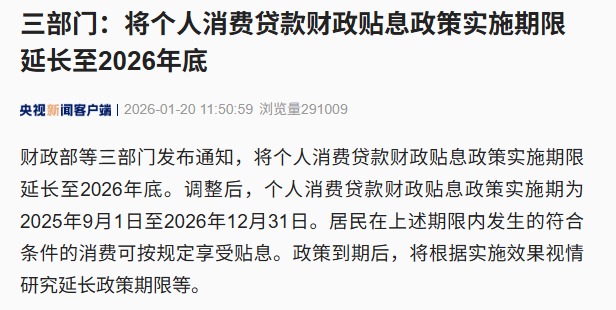
信用卡账单分期纳入贴息!个人消费贷款贴息延长至2026年底!
Sou Hu Cai Jing· 2026-01-21 14:45
Core Points - The personal consumption loan interest subsidy policy has been extended until the end of 2026, providing longer-term credit support for residents [2][3] - The scope of support has been expanded to include credit card bill installment services, with an annual interest subsidy rate of 1% [4] - The subsidy standards have been optimized by removing the previous limits on single and cumulative subsidy amounts [5] Group 1: Policy Extension - The implementation period of the personal consumption loan subsidy has been extended from September 1, 2025, to December 31, 2026, allowing for broader coverage [3] - The policy aims to provide residents with longer-term credit support [3] Group 2: Expanded Support Scope - Credit card bill installment services are now included in the subsidy program, reducing the cost for cardholders [4] - The subsidy can be applied to various compliant consumption areas such as tourism, dining, education, and healthcare [4] Group 3: Subsidy Standards Optimization - The previous cap on single subsidy amounts of 500 yuan has been removed, as well as the cumulative subsidy limit of 1,000 yuan for each borrower at one institution [5] - The annual cumulative subsidy limit of 3,000 yuan per borrower at one institution remains unchanged [5] Group 4: Expansion of Financial Institutions - The policy now allows provincial financial departments to include city commercial banks, rural cooperative financial institutions, foreign banks, and consumer finance companies as eligible institutions for the subsidy [7] - This expansion aims to enhance the accessibility of subsidized loans for residents [7]
美的集团(00300):CSIWM个股点评2026年1月21日
citic securities· 2026-01-21 14:20
Investment Rating - The report aligns with the views of CITIC Lyon Research, indicating a positive outlook for Midea Group, with expectations of recovery in 2026 after a challenging 2025 [5]. Core Insights - Midea's dealers have reported continuous increases in factory prices, suggesting a potential rise in the industry average selling price (ASP) [5]. - The historical data on the relationship between volume and price is deemed less relevant, and rising copper prices pose a concern, although the situation in 2026 may differ from previous years [5][7]. - Midea's overseas OEM orders are expected to outperform ODM business, with higher margins and potential for market share growth [8]. - The company is focusing on increasing market share rather than solely on pricing strategies, with limited room for further volume expansion due to the early release of demand from the trade-in policy [6]. Summary by Sections Company Overview - Midea Group, founded in 1968, has evolved into a global technology group encompassing smart home, new energy and industrial technology, smart building technology, robotics, and automation [12]. Revenue Breakdown - Revenue by Product: - Smart Home: 81.0% - New Energy and Industrial Technology: 11.1% - Smart Building Technology: 7.9% [13] - Revenue by Region: - Asia: 66.8% - Americas: 17.3% - Europe: 12.0% - Middle East and Africa: 3.8% [13] Market Performance - As of January 20, 2026, Midea's stock price is 87.1 HKD, with a market capitalization of 86.75 billion USD and a consensus target price of 101.48 HKD [15].
格力电器:公司旗下拥有格力、TOSOT、晶弘三大消费品牌及凌达、凯邦、新元等工业品牌
Zheng Quan Ri Bao Zhi Sheng· 2026-01-21 14:13
Core Viewpoint - Gree Electric Appliances has a diverse portfolio of brands and products, covering both consumer goods and industrial equipment sectors, with a focus on unique technological advantages in the lithium titanate field [1] Group 1: Brand and Product Portfolio - The company owns three major consumer brands: Gree, TOSOT, and Jinghong, along with industrial brands such as Lenda, Kaibang, and Xinyuan [1] - The product range includes home consumer goods and industrial equipment, indicating a broad market presence [1] Group 2: Industrial Sector and Technological Edge - In the industrial sector, Gree Electric Appliances is involved in energy storage business [1] - The subsidiary Gree Titanium New Energy focuses on electric vehicles, energy storage, and power batteries, showcasing the company's commitment to innovation [1] - Gree Electric Appliances possesses unique technological advantages in the lithium titanate field, which may enhance its competitive position in the market [1]

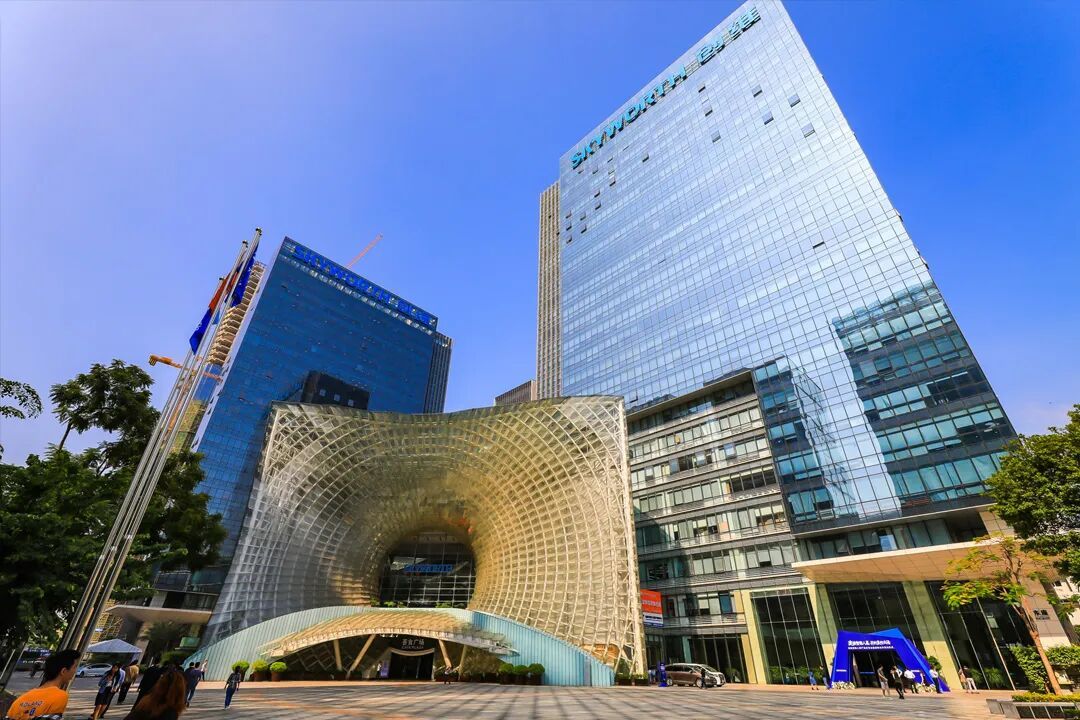
黄宏生家族,330亿家电生意退市
Xin Lang Cai Jing· 2026-01-21 13:49
Core Viewpoint - The Huang Hongsheng family, controlling Skyworth Group, announced plans for privatization and the spin-off of its solar business for independent listing, leading to a significant stock price increase of 37% on the announcement day, with a market capitalization reaching HKD 13.5 billion [2][25]. Group 1: Privatization and Spin-off Details - Skyworth Group will offer shareholders two options: a share swap for Skyworth Solar or a cash payout of HKD 4.03 per share, with the latter representing a 96% premium over the previous closing price [7][31]. - The estimated valuation of Skyworth Solar is approximately RMB 10 billion, and the Huang family will retain a 46.52% stake post-transaction [4][26]. - The privatization process requires the repurchase of 635 million shares from other shareholders, as the Huang family currently holds about 66.46% of Skyworth Group [5][27]. Group 2: Financial Performance and Business Transition - For the first half of 2025, Skyworth Group reported revenues of RMB 36.26 billion, with the solar business contributing RMB 13.84 billion, a 53.5% year-on-year increase, accounting for nearly 40% of total revenue [12][34]. - The traditional smart appliance segment is experiencing slower growth due to market saturation and increased competition, making the solar business a key growth driver [13][36]. - The company aims to split into multiple listed entities, with a target of ten companies, each aiming for a valuation of RMB 10 billion [10][32]. Group 3: Market Strategy and Future Outlook - Skyworth's solar business focuses on distributed solar energy solutions, including customized products for residential and industrial applications [10][32]. - The company has built over 800,000 solar power stations, generating more than 41 billion kilowatt-hours of electricity, with operational capacity exceeding 27 gigawatts [12][34]. - Skyworth plans to leverage its extensive distribution network from its home appliance business to promote and install solar panels, enhancing its market presence [18][40]. Group 4: International Expansion and Competitive Position - The company is targeting international markets for solar expansion, with significant price differentials between domestic and European electricity rates, presenting growth opportunities [21][42]. - Skyworth has secured contracts for solar projects in Italy and France, and is expanding its footprint in Southeast Asia and Africa [45].
海尔智家(06690.HK)1月21日耗资883.8万元回购34万股A股
Ge Long Hui· 2026-01-21 11:14
格隆汇1月16日丨海尔智家(06690.HK)公告,1月21日耗资883.8万元回购34万股A股。 ...
