
教育

Search documents
法国逾50万人罢工反对政府财政紧缩方案
Yang Shi Xin Wen· 2025-09-18 22:44
Core Points - A large-scale strike and protest occurred in France on September 18, with over 500,000 participants nationwide, including approximately 55,000 in Paris, in response to government austerity measures [1] - The protests involved workers from various sectors, including transportation, education, electricity, and healthcare, calling for a "fairer" fiscal plan [1] - Violence and property damage were reported during demonstrations in cities like Paris, Lyon, and Rennes, leading to over 300 arrests [1] Government Response - Paris police expressed concerns about potential violence during the protests and advised local businesses to close [1] - French Prime Minister Le Cornu stated he would continue discussions with unions and protesters regarding their demands while condemning the violence [1] Background Context - The protests were triggered by a budget proposal introduced in July by former Prime Minister Bérurier, which included measures such as converting two public holidays into workdays and cutting healthcare spending to alleviate public debt [1] - The proposal faced significant opposition from the National Assembly and the public, leading to Bérurier's resignation after a failed confidence vote on September 8 [1]
【砥砺奋进七十载 天山南北谱华章】援疆路上绽繁花
Yang Shi Wang· 2025-09-18 12:43
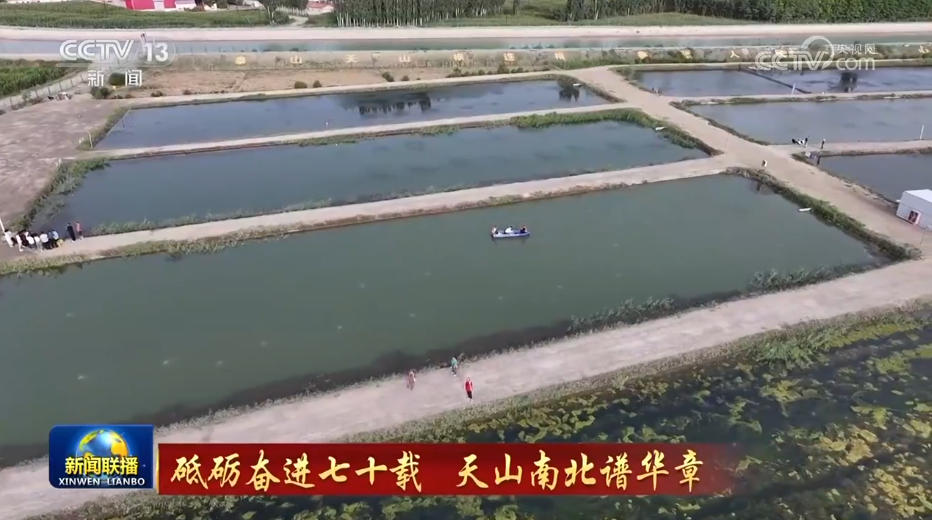
Group 1 - The central government and 19 provinces have invested in Xinjiang, enhancing local industries and improving public welfare through various projects [1][10] - The introduction of new aquaculture techniques has significantly increased the survival rate of shrimp, expanding the farming area to 160 acres and involving over 100 local residents [5][3] - Employment opportunities have been created through the establishment of industry clusters, with over 11,000 jobs generated in the data industry in Hotan [6][10] Group 2 - Medical and educational support initiatives have been implemented, including training programs for teachers and emergency medical services, significantly improving local healthcare and education [8][10] - The total investment from the 19 provinces in Xinjiang has exceeded 200 billion, with 80% allocated to public welfare and grassroots projects [10]

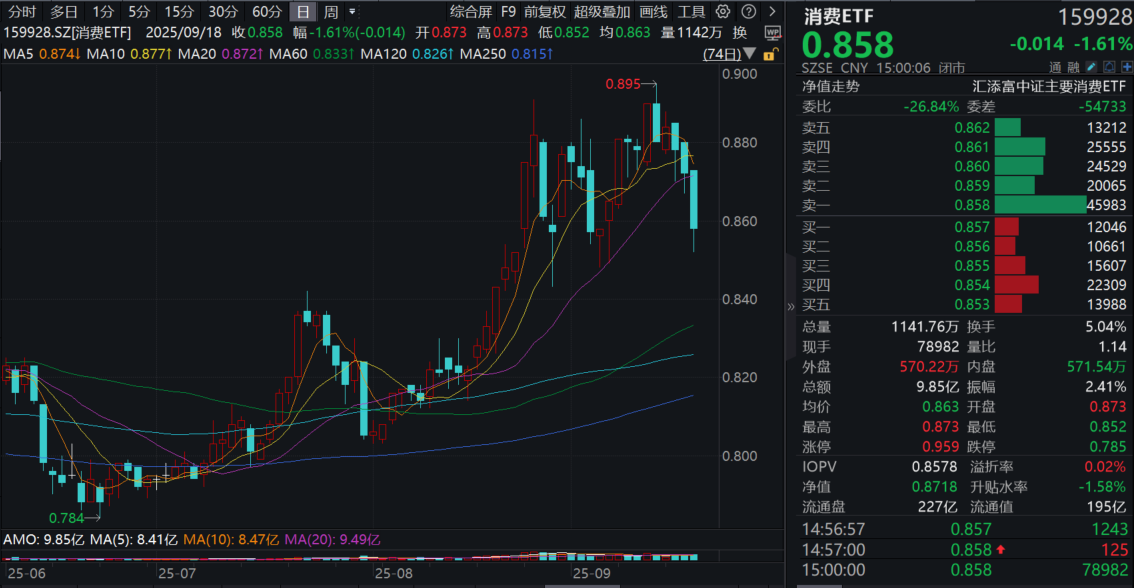
服务消费迎政策助力,多措并举扩大内需!市场午后“变脸”,消费ETF(159928)回调1.61%弱势三连阴,近2天疯狂吸金近8亿元!
Xin Lang Cai Jing· 2025-09-18 10:16
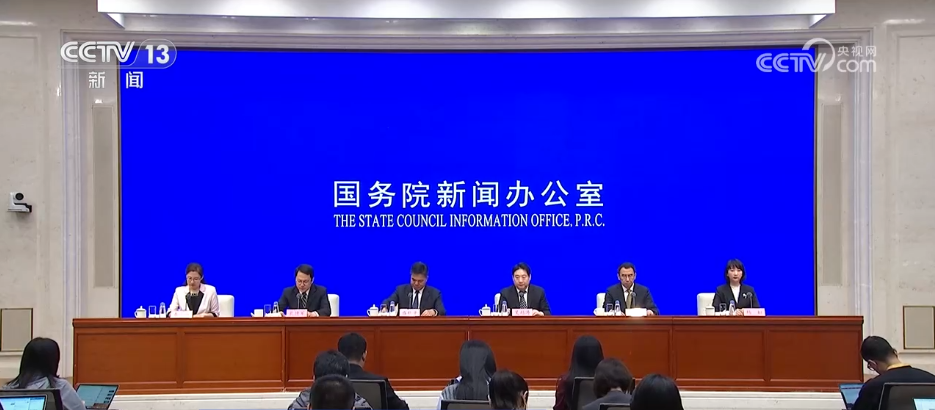
Market Overview - The market experienced a high of 3899 points before a decline, with all three major indices dropping over 1% [1] - The Consumption ETF (159928) fell by 1.61%, marking a three-day downward trend, with a total trading volume of 1 billion yuan, slightly higher than the previous day [1] - The Consumption ETF (159928) attracted nearly 800 million yuan in two days, with a total size exceeding 19.7 billion yuan, leading its peers [1] Hong Kong Market - The Hong Kong Consumption 50 ETF (159268) also saw a decline of 1.43%, with a trading volume exceeding 33 million yuan [3] - Over the past five days, there were net inflows on four days, accumulating over 32 million yuan [3] - Notable stocks included Pop Mart rising over 4% and China Duty Free increasing over 2%, while stocks like Anta Sports and Midea Group fell over 2% [3] Policy Measures - The State Council introduced policies to expand service consumption, selecting around 50 pilot cities for new consumption models [5] - A series of policy documents will be released to promote high-quality development in the accommodation industry and integrate railways with tourism [5] - The government plans to conduct over 25,000 cultural and tourism consumption activities during the consumption month, distributing over 330 million yuan in consumption subsidies [5] Service Consumption Policies - The recent policies are seen as a refinement of the 2024 guidelines for promoting high-quality service consumption, emphasizing cross-department collaboration [6][7] - The measures cover 19 specific actions across key service sectors, including culture, tourism, sports, education, and health, aiming to enhance service consumption from multiple dimensions [7] - The policies focus on practical execution and operational feasibility, introducing innovative and implementable measures [7] Key Highlights of the Measures - The policies include initiatives for service consumption seasons, targeting areas with high demand potential [8] - Supply-side measures aim to expand openness and reduce restrictions in various sectors, enhancing service product offerings [8] - Demand-side strategies focus on attracting inbound consumption and exploring new consumption forms through AI and digital services [8] - Financial support will be provided through various tools to inject liquidity into the service consumption market [8] Industry Insights - The policies are expected to boost sectors like IP economy, maternal and infant care, and AI-driven consumption [9][10] - The IP economy is encouraged to innovate and create new consumption scenarios, with strong growth in domestic IP industries [9] - Maternal and infant care will benefit from supportive policies, reducing costs and stimulating demand in related industries [9] - AI technology is anticipated to enhance consumer experiences and create new products and scenarios in the market [10] Consumption ETF Insights - The Consumption ETF (159928) is characterized by its resilience across economic cycles, with top ten holdings accounting for over 68% of its weight [11] - Key holdings include leading liquor brands and major players in the agricultural sector, indicating a strong focus on essential consumer goods [11] - The Hong Kong Consumption 50 ETF (159268) is positioned as an efficient choice for investing in the Hong Kong consumption sector, supporting T+0 trading and not occupying QDII quotas [12]
社会服务行业快评报告:服务消费迎政策助力,多措并举扩大内需
Wanlian Securities· 2025-09-18 07:36
Investment Rating - The industry investment rating is "Outperform the Market," indicating an expected relative increase of over 10% in the industry index compared to the broader market within the next six months [10]. Core Insights - The report highlights that service consumption in China is set to rebound, with service consumption expenditure expected to reach 46% of total consumption in 2024, returning to pre-pandemic levels and approaching the critical 50% mark [2][4]. - The joint policy measures introduced by nine government departments aim to enhance service consumption, showcasing a strong commitment from the government to boost service consumption quality and quantity [2][3]. Summary by Sections Policy Measures - The new policy measures include 19 specific actions across various sectors such as culture, tourism, sports, education, and health, focusing on enhancing service consumption through platform construction, supply-side improvements, demand-side stimulation, and financial support [2][3]. - Key highlights include the launch of "Service Consumption Seasons" to promote activities in high-demand service areas, and measures to expand supply by relaxing restrictions and attracting external capital [3]. Investment Recommendations - The report suggests focusing on specific sectors that will benefit from the policy measures, including: - **Cultural Tourism**: Emphasizing inbound tourism and youth travel, with recommendations to monitor leading travel agencies and scenic spots [4][9]. - **Trendy Toys**: Noting the rapid growth of the trendy toy market, with a focus on companies with strong IP resources and broad channel layouts [9]. - **Sports**: Highlighting the significant potential in event-driven consumption, recommending attention to companies involved in event operations and related services [9]. - **Education**: Encouraging investment in non-academic training and vocational education sectors, particularly those positioned to benefit from supportive policies [9].
服务消费如何实现“好上加好”?向“新”、向“优”、向“活”成为关键词
Yang Shi Wang· 2025-09-18 04:41
Core Viewpoint - The recent release of policies aimed at expanding service consumption is crucial for improving people's livelihoods and driving the transformation and upgrading of consumption in China [1] Group 1: Policy Measures - The government is accelerating the construction of a long-term care insurance system and increasing the supply of quality resources in cultural tourism, sports, and other sectors [3] - Approximately 50 cities will be selected for pilot projects focusing on "new formats, new models, and new scenarios" to enhance consumption vitality [4][6] Group 2: Support for Key Sectors - There will be increased support for the construction of service facilities in areas such as elderly care, childcare, cultural tourism, and sports, which are currently in high demand [8] - The government aims to promote innovation in enterprises, improve service levels in key sectors, and create a fair market environment for small and medium-sized service enterprises [8] Group 3: Enhancing Inbound Consumption - Inbound consumption is identified as a significant area for growth, with plans to optimize visa policies and enhance the convenience of travel, medical care, and study for foreign visitors [11] - The Ministry of Commerce plans to organize events like "Shopping in China" and "Service Consumption Season" to encourage diverse consumption experiences for foreign visitors [13] Group 4: Cultural and Tourism Initiatives - A national cultural and tourism consumption month will be launched, featuring over 25,000 events to promote local tourism and cultural experiences [16] - A three-year action plan for cultural and tourism consumption will be initiated, with over 330 million yuan in consumption subsidies to be distributed during the consumption month [18]
摩根大通:“十五五”带来哪些潜在A股上行机会?
Hua Er Jie Jian Wen· 2025-09-18 02:36
Group 1: Core Opportunities from the 14th Five-Year Plan - Morgan Stanley identifies two main upward opportunities for the A-share market from the upcoming 14th Five-Year Plan: the anti-involution theme and the structural growth opportunities from service consumption [1][2] - The anti-involution measures are expected to be a major focus of the 14th Five-Year Plan, aiming to reduce capacity and promote price recovery, which will help various industries achieve cyclical improvement [1][2] - The service consumption sector is projected to benefit from the government's goal of increasing residents' income during the new five-year plan, with significant growth potential in healthcare, financial services, and cultural entertainment [1][3] Group 2: Anti-Involution Theme - The anti-involution theme is anticipated to create an investment opportunity lasting 18-24 months, aiming to normalize prices and investment returns across affected industries [2] - The "local government corporatization" mechanism has led to severe overcapacity and low investment returns, which may face stricter limitations during the 14th Five-Year Plan period (2026-2030), potentially leading to mergers and acquisitions [2] - Key sectors identified for the anti-involution measures include automotive, batteries, lithium, photovoltaics, cement, chemicals, coal, steel, dairy, pork, liquor, and logistics, with notable companies like BYD, CATL, and Kweichow Moutai highlighted [2] Group 3: Service Consumption Growth Potential - Compared to developed markets, China's service consumption has significant growth potential, with current per capita income and service consumption share resembling the U.S. levels in the early 1970s [3] - By 2035, with a projected compound annual growth rate of about 5%, China's per capita income is expected to reach $7,655, and the service consumption share could rise to 51% [3] - Specific sectors such as healthcare, finance, and cultural entertainment show considerable room for growth, with selected stocks in these areas including Aier Eye Hospital, Tongce Medical, and Light Media [3] Group 4: Market Outlook - The overall outlook for the A-share market remains optimistic in the medium term, supported by a shift in residents' asset allocation towards the stock market [4][5] - However, the short-term market may experience fluctuations due to the current high price-to-earnings ratio of the CSI 300 index, which stands at 14.4 times, exceeding the median since 2016 [5] - Effective implementation of anti-involution measures and moderate fiscal support are expected to sustain market expectations for earnings growth in the coming year [5]
“十五五”带来哪些潜在A股上行机会?
Hua Er Jie Jian Wen· 2025-09-18 02:09
Core Viewpoint - Morgan Stanley believes that the "14th Five-Year Plan" will bring two main upward opportunities for the A-share market: the cyclical recovery driven by anti-involution and structural growth opportunities from service consumption upgrades [1][2]. Group 1: Anti-Involution Theme - The anti-involution measures are expected to be a major focus of the "14th Five-Year Plan," potentially leading to an 18-24 month investment theme aimed at normalizing prices and investment returns across various industries [2][3]. - The "local government corporatization" mechanism established since the late 1970s has led to severe overcapacity and low investment returns, which may face stricter limitations during the "14th Five-Year Plan" period (2026-2030), prompting mergers and consolidations [3]. - Key sectors identified for anti-involution measures include automotive, batteries, lithium, photovoltaics, cement, chemicals, coal, steel, dairy, pork, liquor, and logistics, with leading companies like BYD, CATL, and Kweichow Moutai highlighted [3]. Group 2: Service Consumption Growth - Compared to developed markets, China's service consumption still has significant growth potential [4]. - Current per capita income in China is projected to reach $5,660 by the end of 2024, with service consumption accounting for approximately 46%, similar to the U.S. levels in 1973 [5]. - By 2035, the compound annual growth rate for per capita income is expected to be around 5%, with projections indicating that per capita income will reach $7,655 and service consumption share may rise to 51% [6]. - Specific sectors with investment opportunities in service consumption include healthcare, financial services, and cultural entertainment, with selected stocks such as Aier Eye Hospital, Tongce Medical, and Light Media identified as potential growth investments [6]. Group 3: Market Outlook - Morgan Stanley maintains a mid-term optimistic outlook for the A-share market, suggesting that the shift in residents' asset allocation towards the stock market will support a rebound [7]. - The projected price-to-earnings ratio for the CSI 300 index over the next 12 months is 14.4 times, indicating a potential short-term consolidation due to its high valuation compared to historical medians [7]. - Earnings per share for the CSI 300 index is expected to grow by 5.9% year-on-year in the first half of 2025, with a more substantial increase of 14.1% anticipated for the entire year [7].
9点15到9点25挂单能成交吗?集合竞价规则深度解析
Sou Hu Cai Jing· 2025-09-18 01:57
Core Insights - The article highlights the complexities of the opening auction process in the stock market, emphasizing the strategic maneuvers of institutional investors versus retail investors during the critical 10-minute period from 9:15 to 9:25 AM [1][2]. Group 1: Auction Phases - The auction period is divided into two phases: from 9:15 to 9:20 AM, where orders can be canceled, and from 9:20 to 9:25 AM, where orders become irrevocable [1][2]. - During the first phase, a high cancellation rate of 40% is noted, indicating potential manipulation by institutional investors who may place large orders to create false price movements [1][2]. - The second phase requires that all buy orders at or above the determined opening price and sell orders at or below that price are executed, with a focus on maximizing transaction volume [2][4]. Group 2: Case Studies - A case study of Ning Shui Group illustrates how institutional investors can manipulate prices by placing large orders and then retracting them, leading to retail investors being trapped at inflated prices [5]. - Another example involves Fengxing Co., where continuous selling created panic, resulting in a higher actual transaction price than displayed, demonstrating psychological tactics in trading [5]. - The case of Huayu Mining shows how sudden large orders can signal strong institutional control, leading to significant price increases [6]. Group 3: Trading Strategies and Indicators - The article discusses the importance of observing order cancellations before 9:20 AM as a signal of potential price movements, while after 9:20 AM, the focus should shift to the changes in unmatched buy and sell orders [10]. - A 5% rule is introduced, where if the auction volume exceeds 5% of the previous day's volume, it indicates institutional involvement, while lower percentages may suggest less credible movements [9]. - The article advises caution against aggressive pricing strategies, as orders that exceed the price limits are deemed invalid, and emphasizes the need for calm decision-making during the auction phase to avoid emotional trading [12][14].
权威发布丨扩大服务消费从供需两端发力
Ren Min Ri Bao· 2025-09-18 01:27
Core Viewpoint - The Chinese government has introduced a series of policy measures aimed at expanding service consumption, which is seen as a crucial driver for economic growth and improving living standards [1][2][3]. Group 1: Policy Measures - The policy measures focus on addressing bottlenecks in service consumption development, emphasizing the combination of improving people's livelihoods and promoting consumption [1]. - Initiatives include creating high-profile sports events, expanding long-term care insurance, and supporting early childhood education to enhance service consumption [1]. - The measures aim to optimize supply and stimulate demand by promoting new consumption models and increasing quality service resources in sectors like culture and tourism [2]. Group 2: Market Dynamics - In the first half of the year, over 19 million foreign visitors entered China, marking a 30% year-on-year increase, with visa-free entries rising by 54% [3]. - The number of duty-free shops has tripled compared to the end of 2024, with a 248% increase in the number of people benefiting from duty-free refunds [3]. - The Ministry of Commerce is working to enhance high-quality consumption supply and create diverse consumption scenarios to boost inbound consumption [3]. Group 3: Service Quality Improvement - The government plans to enhance service supply quality by promoting innovation in service sectors through initiatives like "Artificial Intelligence+" [4]. - There is a focus on improving service levels in key areas such as childcare, elderly care, and tourism by increasing skilled labor supply and implementing credit systems [4][5]. - The establishment of a unified market environment is being prioritized to facilitate fair market access, especially for small and medium-sized enterprises [5]. Group 4: Financial Support - The People's Bank of China has allocated 500 billion yuan for service consumption and elderly care refinancing, encouraging financial institutions to increase lending in key service sectors [5]. - As of July, the loan balance in key service consumption areas reached 2.79 trillion yuan, reflecting a year-on-year growth of 5.3% [5].
中国山东—新加坡经贸合作交流会暨2025新加坡山东周开幕式举行
Da Zhong Ri Bao· 2025-09-18 00:57
Core Viewpoint - The Shandong-Singapore Economic and Trade Cooperation Exchange Conference and the 2025 Shandong Week in Singapore opened on September 17, focusing on enhancing cooperation and mutual understanding between Shandong and Singapore for high-quality development [1] Group 1: Event Overview - The event was themed "Moving Forward Together, Creating the Future" and aimed to discuss new measures and visions for cooperation between Shandong and Singapore [1] - Key representatives from Shandong's provincial departments, cities, and Singaporean government and business sectors participated in the event [1] Group 2: Focus Areas - The conference highlighted several key areas including green low-carbon development, artificial intelligence, future industrial cities, shipping and trade cooperation, and clean energy [1] - Specialized presentations were made on these topics by various provincial and municipal representatives [1] Group 3: Project Signings - A total of 18 key cooperation projects were signed during the event, with a total investment amounting to approximately $820 million, covering sectors such as new energy, cultural tourism, modern finance, education, healthcare, high-end equipment, and new materials [1]