
低空经济

Search documents
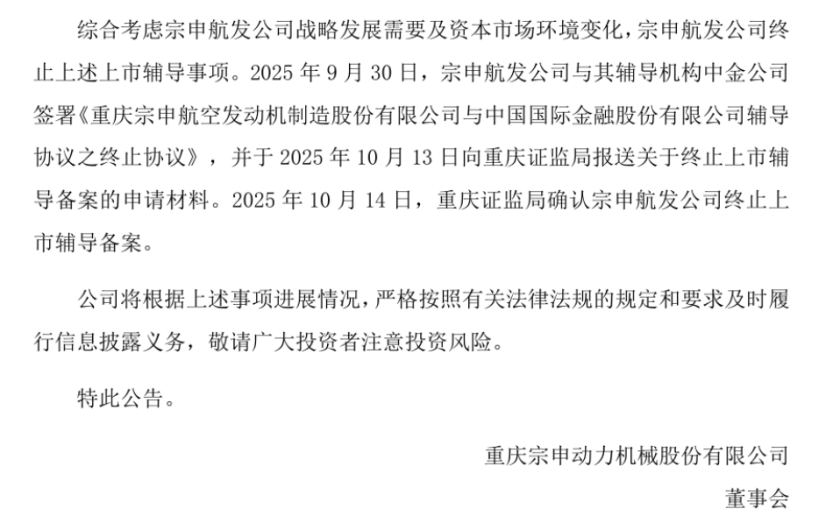
宗申航发IPO折戟,低空融资开始降温?
Sou Hu Cai Jing· 2025-10-22 17:03
Core Viewpoint - The termination of the IPO process for Zongshen Aviation Power signals a shift in the low-altitude economy, indicating a cooling trend in investment and a need for companies to become self-sustaining after a period of rapid growth and speculation [3][5]. Company Summary - Zongshen Aviation Power, established in 2016, focuses on lightweight piston aircraft engines for various types of aircraft, including drones and rotorcraft [3]. - The company underwent five rounds of financing from August 2020 to May 2023, raising its valuation from 623 million to 2.2 billion yuan, involving 22 industry capital investors [3][4]. - The company faced significant operational challenges, with a reported revenue of 70.34 million yuan in mid-2025, a year-on-year decline of 29.71%, and a net loss of 37 million yuan, a substantial drop of 316.3% [4]. - Zongshen Aviation Power has been on a losing streak for three consecutive years, with net losses of 9.38 million yuan, 43.22 million yuan, and 3.62 million yuan from 2022 to 2024 [4]. - The company was added to the U.S. Treasury's OFAC SDN list in May 2024, complicating its path to IPO [4]. Industry Summary - The overall financing landscape for the low-altitude economy is contracting, with only 15 disclosed financing events in the eVTOL sector in the first half of 2025, compared to 16 events in the second half of 2024 [5]. - The trend shows a shift towards earlier investment rounds, with angel rounds making up 40.4% of financing, indicating a preference for smaller, earlier-stage investments [5]. - Investment institutions are increasingly cautious, focusing on the research capabilities and policy safety of low-altitude economy enterprises [6][8]. - The lack of a commercial closed loop in the low-altitude economy is a significant barrier, with many companies, including leading firms, reporting substantial losses [10]. - Despite the cooling investment climate, there has been a surge in orders for eVTOLs, with over 100 billion yuan in orders reported in the first half of 2025, driven by international demand and financial leasing models [11][13][14]. - The supply chain for low-altitude economy is rapidly developing, with numerous battery manufacturers entering the aviation battery market and companies from the electric vehicle sector expanding into electric control and motor production [16][18].


宏观经济专题研究:“十五五”的三条经济线索
Guoxin Securities· 2025-10-22 13:37
Group 1: Economic Transition - The "14th Five-Year Plan" achieved a compound annual growth rate of 5.4%, easing the pressure for growth in the "15th Five-Year Plan" period[1] - The transition from "quantity increase" to "quality change" is crucial for the "15th Five-Year Plan" as it aims to reach the goal of becoming a "moderately developed country" by 2035[1] - The future growth model will shift from a single GDP-driven approach to a three-pronged approach of "real GDP + inflation + exchange rate"[1] Group 2: New Quality Productivity - Cultivating new quality productivity will be the central goal of the "15th Five-Year Plan," focusing on upgrading traditional industries and developing emerging sectors[2] - The strategy includes a gradient structure of "traditional upgrades, emerging growth, and future cultivation," emphasizing the importance of new service industries[2] - The service sector is seen as a key area for the implementation of new quality productivity, with a shift from "investment in things" to "investment in people" expected[2] Group 3: Supply and Demand Balance - There are signs of structural and local imbalances in supply and demand, necessitating "anti-involution" policies to address these issues[3] - Short-term interventions may include production limits in key industries, while long-term solutions require systemic reforms to reshape local government incentives[3] - The "15th Five-Year Plan" provides a critical opportunity for reform to address these imbalances[3] Group 4: Factor Market Reform - Market-oriented reforms aim to establish an "effective market" to enhance resource allocation efficiency, which is fundamental for cultivating new quality productivity and addressing "anti-involution" issues[4] - Current challenges include a "dual-track" system in factor markets, which hinders pricing and circulation[4] - The urbanization of agricultural migrant workers is expected to be a foundational logic for the next growth phase, with approximately 250 million people still needing urban household registration[4]
今年前8个月虹桥国际中央商务区实到外商投资额高位增长
Zhong Guo Xin Wen Wang· 2025-10-22 10:54
Core Insights - The Hongqiao International Central Business District (CBD) has experienced significant growth in foreign investment, with a year-on-year increase of 71.9% in the first eight months of this year [1] - The total import and export volume in the CBD has averaged a growth rate of 37.3% annually over the past four years [1] - The GDP of the CBD is projected to reach 200.243 billion yuan in 2024, marking a 67.4% increase compared to the end of the 13th Five-Year Plan [1] Investment and Economic Performance - In the first nine months of this year, the retail sales of consumer goods reached 47.01 billion yuan, reflecting an 18.1% year-on-year growth [1] - The total foreign trade import and export volume was 73.63 billion yuan, with a year-on-year increase of 15.6% [1] - The total industrial output value of designated large-scale enterprises was 51.65 billion yuan, showing a year-on-year growth of 19% [1] - A total of 616 key projects with investments totaling 34.6 billion yuan were introduced, alongside the establishment of 7,137 new legal entities, which is an 18.4% increase year-on-year [1] Headquarters and Industry Development - The CBD has introduced and nurtured 56 city-level recognized headquarters enterprises in the past year, with an annual revenue scale exceeding 280 billion yuan [2] - The number of city-level headquarters enterprises in the CBD has increased to 283, up by 210 since 2020 [2] - Eight new industrial park projects have been announced, focusing on emerging sectors such as health, biomedicine, artificial intelligence, and low-altitude economy [2] - The CBD has gathered over 700 specialized and innovative enterprises and more than 1,300 high-tech companies, indicating a robust development in industries like photovoltaic energy storage, biomedicine, and new energy vehicles [2]
“新基建”增长强劲释放数智新活力 多重利好为投资提供可预期未来
Yang Shi Wang· 2025-10-22 03:11
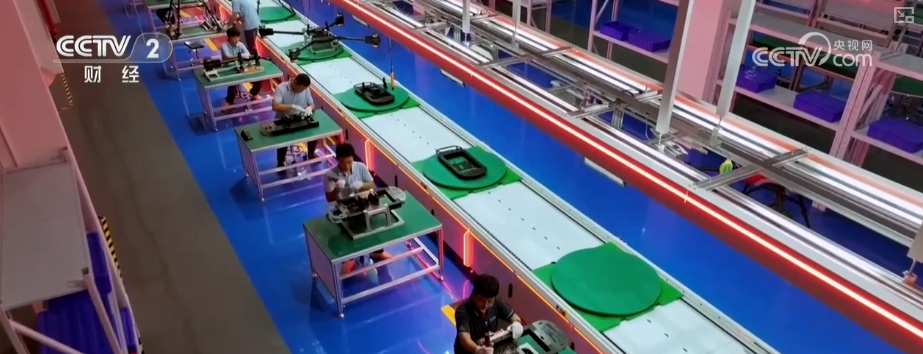
Core Insights - The construction and renovation of traditional infrastructure can release long-term economic and social benefits, while new infrastructure is a key pillar for the rapid growth of new technologies, industries, business formats, and models [1] Group 1: New Infrastructure Investment - Since 2025, investments in new infrastructure such as low-altitude economy, computing power, and electric power infrastructure have shown strong growth [1] - In Hubei Yichang, a low-altitude economy equipment production line has started operations in Q3, with an annual production capacity of 2,000 firefighting drones and associated automated airports [3] - The market revenue for the drone business is expected to be three to five times that of 2024, with significant expansion planned in the firefighting sector by 2026 [5] Group 2: Technological Advancements - In Tianjin, the North Chen low-altitude airspace Internet of Things project has been launched, establishing a three-dimensional airspace grid and management systems for low-altitude flights [7] - A professor from Peking University is developing a low-altitude intelligent network system that integrates aerial vehicles into a communication-based network, indicating a pre-explosion phase for the industry [9] Group 3: Computing Power Infrastructure - In Jiangsu Yangzhou, the construction of a green computing power base is progressing, with total investment exceeding 10 billion yuan, aiming to become a significant computing power hub in the Yangtze River Delta [11] - The overall electricity demand in the park is projected to reach 360 megawatts by 2026, supporting the deployment of at least 15,000 high-power cabinets [13] Group 4: Investment Opportunities - TCL Huaxing has commenced construction of the world's first 8.6-generation printed OLED production line in Guangzhou, with an investment of approximately 29.5 billion yuan, expected to be completed by Q4 2027 [15] - China possesses a large-scale market, a complete industrial system, an optimized business environment, and stable macro policies, providing predictable future investment opportunities [17] Group 5: Key Performance Indicators - As of mid-2025, investments in new infrastructure such as computing networks and mobile communications are rapidly increasing, with over 40 billion yuan invested in 5G networks by the three major telecom operators [19] - China has built over 4.6 million 5G base stations, leading globally in technology and user numbers, with over 20,000 "5G + industrial internet" construction projects [21] - By September 2025, the number of electric vehicle charging infrastructure units reached 18.063 million, a year-on-year increase of 54.5% [22]
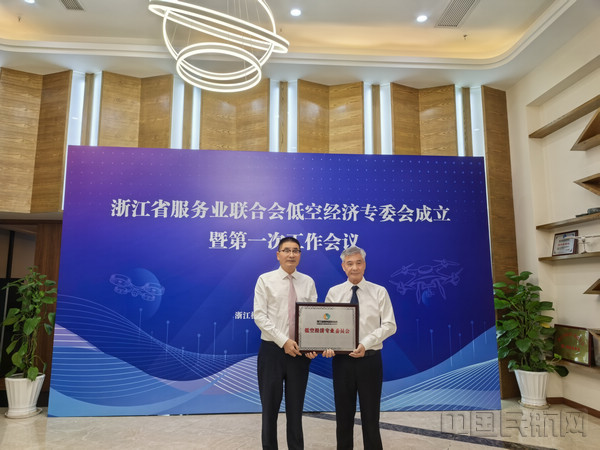
浙江省服务业联合会低空经济专委会成立
Zhong Guo Min Hang Wang· 2025-10-22 02:26
浙江省服务业联合会会长、著名学者郑吉昌说,低空经济专委会成立后将聚集四方面工作:一是构建高 效协同的服务平台。依托联合会跨行业资源优势,整合"先飞区"试点经验,建立覆盖全省的低空服务网 络;二是完善规范有序的标准体系。联合省市场监管局、省交通运输厅等部门,以《浙江省低空经济标 准体系建设指南》为基础,重点推进运营、安全、服务三个领域标准化;三是推动场景应用的规模化落 地。打造民生、文旅、空游三类示范场景;四是要强化人才支撑,围绕低空产业人才需求,开展针对性 培训与无人机研学赛事活动,培育高素质产业人才队伍,培养低空产业、低空服务的人才。 (编辑: 张薇,校对:张彤,审核:程凌) 浙江省服务业联合会低空经济专委会主任汪齐梁说,专委会肩负着三大核心使命:一是搭建政企协同 的"连心桥",精准传递政策导向,如实反映企业诉求;二是打造行业发展的"助推器",破解发展瓶颈, 加速产业成熟;三是争当创新实践的"排头兵",探索服务模式,培育增长动能。 当前,低空经济已从"空中飞"走向"落地用",成为现代服务业融合创新的新蓝海。国家将低空经济纳入 新质生产力发展重点,浙江更是早布局、早行动,已与广东、江苏等省市同列全国低空经济发 ...
“十四五”期间 闵行积极构建现代化产业体系 推动开放与发展双向赋能 基础更厚实 优势更巩固 后劲更充沛
Jie Fang Ri Bao· 2025-10-22 01:40
Core Insights - The Shanghai Minhang District has achieved significant economic growth during the "14th Five-Year Plan" period, with a GDP surpassing 400 billion yuan and fiscal revenue exceeding 90 billion yuan, ranking second in the city [1][2] - Minhang is focusing on industrial upgrades and modernization, with a projected GDP of 411.9 billion yuan in 2024, reflecting a 60.6% increase from the end of the "13th Five-Year Plan" [2] - The district is establishing itself as a hub for strategic emerging industries, with a notable 52.6% of industrial output coming from these sectors, outperforming the city average by 9 percentage points [2] Economic Development - Minhang's GDP reached over 400 billion yuan, with fiscal revenue exceeding 90 billion yuan, both ranking second in Shanghai [1] - The district's R&D expenditure accounts for approximately 8% of its GDP, maintaining the highest ratio in the city [1] - By 2024, the GDP is expected to reach 411.9 billion yuan, with the tertiary sector's contribution increasing to 73.5% [2] Industrial Upgrades - Minhang is actively promoting industrial upgrades, focusing on three major trillion-yuan industry clusters: advanced energy equipment, aerospace, and biomedicine [2] - The advanced energy equipment industry has developed a complete ecosystem from R&D to application [2] - The district is also investing in future-oriented industries such as fusion energy and low-altitude economy [2] Innovation and Technology - Minhang has established itself as a key area for technological innovation, with nearly 28,000 enterprises, including 275 headquarters [3] - The district has received 13 national science and technology awards and 210 municipal awards since the beginning of the "14th Five-Year Plan" [3] - Significant technology transfer achievements include Shanghai Jiao Tong University generating 1.719 billion yuan in technology transfer revenue in 2024, the highest in the country [3] Urban Development and Public Services - Minhang has accelerated urban renewal projects, completing 550,000 square meters of housing renovations and 2.4 million square meters of beautification projects [5] - The district has built 17,552 elderly care beds and established 110 community service centers for the elderly [6] - Minhang has also added 121 parks and 488 hectares of green space, promoting a lifestyle where residents can easily access nature [6]
常州财政以人才为钥 促科技创新与产业创新“破壁融合”
Xin Hua Ri Bao· 2025-10-21 23:15
Core Insights - Changzhou has been recognized as one of the top 50 "Talent-Friendly Cities" in China for 2025, showcasing its continuous advantages and strong vitality in talent work [1] - The integration of technological and industrial innovation is crucial for high-quality economic development, with talent being the core engine to break down barriers between these two areas [1] - The local government is focusing on aligning talent supply with industrial demand, ensuring that the right talents are attracted to support key industries [2] Group 1: Talent Development Strategies - A multi-layered approach is being implemented to address talent structure gaps, including significant financial support for high-level talents and skill training subsidies for critical skill sets [3][4] - The city has introduced a "dual-post mutual hiring" model to enhance collaboration between enterprises, universities, and research institutions, facilitating talent mobility and knowledge transfer [6][7] Group 2: Financial Support and Investment - The establishment of a comprehensive financial support system aims to alleviate funding shortages for innovative projects, with significant investments made in key industries such as new energy and intelligent manufacturing [7][8] - The "Talent Loan" program has provided substantial financial assistance to talent-driven enterprises, promoting the integration of talent, industry, and innovation [7] Group 3: Ecosystem and Policy Enhancements - The focus is shifting from merely attracting talent to creating a sustainable talent ecosystem, emphasizing the importance of a supportive urban environment for talent retention [8] - Various policies have been introduced to enhance living conditions and provide financial incentives for graduates, fostering a conducive environment for talent to thrive in Changzhou [9]
热点思考 |“四中”前瞻:新“五年”的新期待(申万宏观·赵伟团队)
赵伟宏观探索· 2025-10-21 16:03
Core Viewpoint - The article discusses the signals and implications from the recent Central Political Bureau meeting regarding the upcoming "15th Five-Year Plan," emphasizing themes such as fairness, localized development, high-level openness, and the integration of effective markets with proactive government roles [3][10]. Group 1: Signals from the September Central Political Bureau Meeting - The meeting highlighted the importance of "people" and "fairness," as well as the need for localized development and high-level openness [3][10]. - It emphasized the combination of effective markets and proactive government roles, indicating a shift in how these elements will be addressed in the "15th Five-Year Plan" [11]. - The meeting also reinforced the concept of "bottom-line thinking," stressing the importance of security in economic and social development [11][12]. Group 2: Main Lines of the "15th Five-Year Plan" - The "15th Five-Year Plan" is expected to focus on high-quality development, institutional reform, and industrial upgrading as its three main lines [5][18]. - It serves as a critical phase in the continuous process towards achieving the 2035 modernization goals, acting as both a deepening of the "14th Five-Year Plan" and a mid-term evaluation of the 2035 objectives [5][18]. - To meet the 2035 goals, the economy may need to maintain an average growth rate of around 4.4% during the "15th" and "16th" phases [21][26]. Group 3: Key Reform Tasks and Directions - The 20th Central Committee's third plenary session outlined over 300 reform tasks to be completed by 2029, indicating that the next five years will be crucial for comprehensive reforms [29]. - Key reform areas include market-oriented reforms, the cultivation of new productive forces, green low-carbon transitions, and improvements in social welfare systems [29][30]. - The focus on industrial transformation and upgrading is seen as a key means to achieve the core objectives of the five-year plan [31]. Group 4: Potential Industry Focus Areas - The "15th Five-Year Plan" is likely to prioritize the cultivation of "new productive forces," continuing the framework established in the "14th Five-Year Plan" [7][33]. - Emerging pillar industries such as artificial intelligence, marine economy, and low-altitude economy are expected to be highlighted in the plan [8][38]. - The plan may also address the integration of the digital economy with the real economy, emphasizing the need for a robust industrial structure [35][38].

首个低空飞行营地落户大学城,暗藏广州布局万亿产业三大野心
Nan Fang Du Shi Bao· 2025-10-21 05:22
Core Insights - The first low-altitude flight camp in Guangzhou has been launched, aiming to create a comprehensive service platform for low-altitude flight that includes application demonstration, test flights, verification, talent cultivation, sales delivery, popular science education, and management [2] - The low-altitude economy in China is projected to exceed 1.5 trillion yuan by 2025, with Guangzhou having a solid foundation and significant potential, but facing common industry challenges such as insufficient support, scalability, and commercialization [2] - The establishment of the low-altitude flight camp in the university town reflects Guangzhou's ambition to develop a trillion-yuan low-altitude economy [2] Group 1: Innovation and Technology Development - The low-altitude economy is recognized as a strategic emerging industry, yet it still relies on imported key components and has not yet achieved breakthroughs in core technologies like high-energy-density aviation batteries [3] - The primary task for low-altitude economic development is to advance forward-looking technology research to ensure flight safety and stability, while also building an intelligent design platform to accelerate product iteration and optimization [3] - The low-altitude flight camp will collaborate with national platforms to tackle core technology challenges and improve public support services for low-altitude flight [5] Group 2: Infrastructure and Service Development - A complete public support service system and infrastructure network are essential for transforming research results into marketable products [7] - The low-altitude flight camp has already completed the construction of five takeoff and landing points and plans to establish a training center that integrates industry and education [7] - The camp aims to provide a matrix of "infrastructure + demonstration scenarios" to facilitate the transformation of academic research into practical applications [7] Group 3: Market Applications and Industry Integration - The low-altitude flight camp has released a comprehensive list of over 100 application scenarios across ten core areas, including production operations, cultural tourism, logistics, and emergency rescue [14] - The camp will serve as a one-stop trading service platform for low-altitude products, linking upstream and downstream enterprises to create a supply chain system [17] - Future plans include the establishment of a low-altitude cultural dissemination platform to enhance public understanding and engagement with low-altitude technologies [17]
八大券商聚焦“十五五”规划前瞻:特殊历史节点的传承与超越
Xin Lang Zheng Quan· 2025-10-20 23:22
Core Insights - The "15th Five-Year Plan" (2026-2030) is expected to focus on economic, technological, reform, and livelihood aspects, emphasizing green low-carbon development and addressing "involution" governance [1][8][11] - The upcoming plan will likely support strategic emerging industries such as AI, quantum technology, and renewable energy, aiming to enhance China's global competitiveness [2][3][8] - The plan is anticipated to address the modernization of the industrial system and improve the efficiency of the economy, with a potential GDP growth target of 4.5%-5% [7][11] Industry Opportunities - The wind power sector is projected to add no less than 120 million kilowatts of new installed capacity during the "15th Five-Year Plan" period [1] - The AI industry is expected to see significant investment and development support, driven by the rapid growth of global AI demand [2][3] - Emerging industries such as low-altitude economy, commercial aerospace, and advanced manufacturing are likely to receive policy backing, leading to mass production of related products [3][8] Market Dynamics - The upcoming Fourth Plenary Session of the 20th Central Committee is expected to influence market sentiment positively, with a focus on the "15th Five-Year Plan" [4][7] - Short-term market fluctuations may present investment opportunities, particularly in sectors with strong policy support and earnings certainty [4][6] - The restructuring of economic drivers is anticipated to place future industry development in a more prominent strategic position [10]