石油

Search documents
A spike in energy prices should really prompt the Fed to cut rates, says Ironsides' Barry Knapp
Youtube· 2026-03-03 15:07
Group 1 - The current economic situation is characterized by a K-shaped recovery, where small banks and businesses face tighter monetary conditions while long-term fixed-rate borrowers benefit from looser conditions [6][7] - The correlation between the dollar and oil prices has flipped, with both rising simultaneously, which exacerbates the energy cost problem for major oil importers like Japan and Korea [4][5] - A significant increase in energy prices is viewed more as a disinflationary shock rather than an inflationary one, indicating a potential slowdown in consumption and economic growth [8][9] Group 2 - The Federal Reserve's current policy is seen as too tight for small businesses and households, suggesting that a rate cut could be a more appropriate response to rising energy prices [6][7] - There is resistance within the Federal Reserve to implement necessary changes, such as cutting rates and deregulating banks, which could stimulate lending and economic activity [10][11][12] - Global capital flows are expected to be impacted by changes in trade dynamics, which could affect demand for U.S. treasuries and overall economic conditions [19]


伊朗,大刀向霍尔木兹的头上砍去
36氪· 2026-03-03 14:08
Core Viewpoint - Iran's announcement to close the Strait of Hormuz represents a significant escalation in geopolitical tensions, impacting global oil supply and prices, particularly affecting major oil-importing countries in Asia [5][6][12]. Group 1: Impact on Oil Supply - The Strait of Hormuz is a critical passage for global oil trade, with approximately 20% of the world's oil, equating to about 20 million barrels per day, passing through it [9][11]. - Iran's actions could lead to a substantial reduction in oil supply, causing prices to spike, as seen with Brent crude oil futures rising by 13% following the announcement [26][53]. - The closure of the Strait would severely limit the ability of Gulf countries to export oil, as alternative pipelines have insufficient capacity to compensate for the loss [28][32]. Group 2: Historical Context and Military Capability - Historically, the threat to close the Strait has been made but never executed until now, marking a unique moment in Middle Eastern geopolitics [14][16]. - Iran possesses advanced missile and drone technology, enabling it to threaten vessels in the Strait, which could create panic and effectively achieve a blockade without a formal closure [17][23]. Group 3: Regional Reactions and Future Outlook - Gulf countries, including Saudi Arabia and the UAE, have expressed confidence in maintaining oil production, planning to increase output by 206,000 barrels per day in April [38]. - Iran's Foreign Minister stated that the country does not intend to permanently close the Strait, suggesting that the current situation may be a tactical maneuver rather than a long-term strategy [35][37]. - The geopolitical landscape remains volatile, with potential for prolonged conflict, which could lead to extended disruptions in oil supply [49][52]. Group 4: China's Oil Strategy - China has strategically built up its oil reserves, increasing its stock to 1.202 billion barrels, which equates to approximately 74 days of usage, providing a buffer against supply disruptions [61]. - The country is diversifying its oil import sources, with a notable increase in imports from South America and North America, reducing reliance on Middle Eastern oil [64][67]. - The ongoing geopolitical tensions highlight the need for China to continue developing renewable energy sources to mitigate dependence on oil [69][70].
当现代战争的导弹落在平民头上:美好的世界全乱了
凤凰网财经· 2026-03-03 14:07
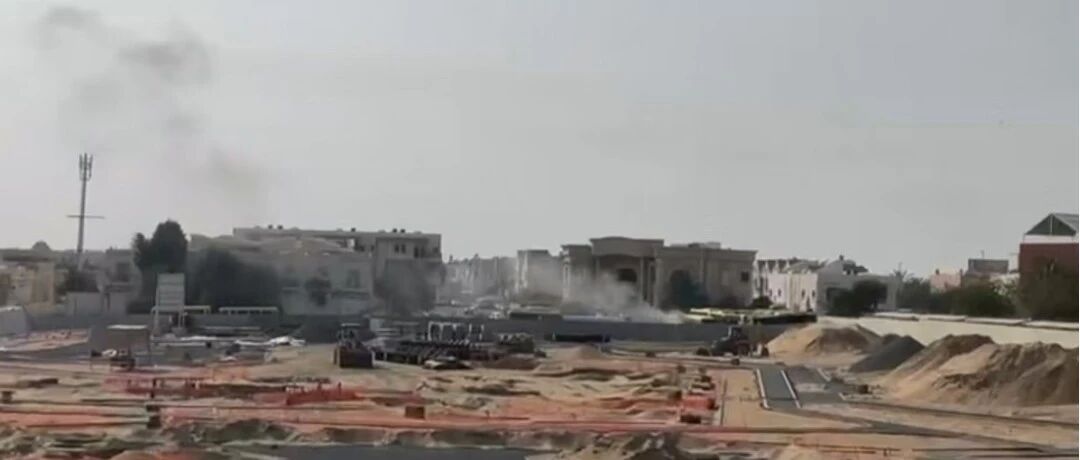
Core Viewpoint - The article highlights the unexpected escalation of conflict in the Middle East, particularly focusing on the impact of missile attacks in the UAE, which were previously considered a safe haven. The narrative captures the experiences of Chinese students living in Dubai amidst the chaos, illustrating the stark contrast between their daily lives and the sudden onset of war [1][31]. Group 1: Impact of Conflict - Multiple countries in the Middle East, including the UAE, have been affected by missile attacks, with at least nine nations involved in the conflict as of March 2 [35]. - The UAE's defense forces reported the destruction of 161 ballistic missiles, 8 cruise missiles, and 645 drones, with 44 missiles landing within the country, resulting in three fatalities [35]. - The conflict has led to significant economic disruptions, including the temporary shutdown of operations at Saudi Aramco's Ras Tanura refinery and Qatar Energy's facilities due to drone attacks [35]. Group 2: Personal Experiences of Students - Chinese students in Dubai, such as Lisa and Su Yuan, recount their experiences of witnessing missile attacks, initially mistaking them for fireworks, and later grappling with the reality of living in a war zone [2][8]. - The students expressed feelings of fear and confusion, with some resorting to humor to cope with the situation, while others began to prepare for potential evacuation [19][20]. - The article emphasizes the psychological toll of the conflict, as students navigate their daily lives amidst the sounds of war, with some adapting to the situation by focusing on work and maintaining a semblance of normalcy [22][30]. Group 3: Broader Implications - The article reflects on the broader implications of the conflict, noting that even regions previously deemed safe are now vulnerable to violence, challenging the perception of security in the Middle East [31][32]. - The narrative suggests a shift in the understanding of modern warfare, where high-tech military operations can still result in civilian casualties, raising ethical concerns about the use of advanced technology in conflict [13][15]. - The experiences shared by the students serve as a reminder of the fragility of peace and the unpredictable nature of geopolitical tensions, prompting reflections on the impact of war on ordinary lives [38][39].
霍尔木兹海峡封锁,日本直面“存亡危机”?
凤凰网财经· 2026-03-03 14:07
Core Viewpoint - The article discusses Japan's strategic response to the potential blockade of the Strait of Hormuz by Iran, emphasizing the importance of this waterway for Japan's energy imports and the implications for Japan's collective self-defense policy [1][3]. Group 1: Strategic Importance of the Strait of Hormuz - The Strait of Hormuz is critical for Japan, with over 90% of its crude oil imports coming from the Middle East, and approximately 80% of oil tankers passing through this strait [1]. - The Japanese government has previously considered a blockade of the strait as a scenario that could trigger the exercise of collective self-defense under its security laws [1]. Group 2: Government's Cautious Stance - The current Japanese administration, led by Prime Minister Kishi Nobuo, is taking a cautious approach, stating that it is still gathering information and has not yet classified the situation as a significant security threat [3]. - Historically, Japan has never activated collective self-defense in response to threats to resources from the Strait of Hormuz, indicating a high threshold for such a decision [3][4]. Group 3: Potential Future Developments - If the situation escalates to a blockade involving mines, the U.S. may seek Japan's assistance for mine-clearing operations, presenting a significant test for the current administration's security policy since the enactment of the security laws [4].

地缘战火“点燃”油价
Guo Tou Qi Huo· 2026-03-03 13:39
Report Industry Investment Rating - Not provided Core Viewpoint - The core logic of the crude oil market revolves around the supply hard gap caused by the transportation bottleneck triggered by the geopolitical situation. Geopolitical risks will continuously support crude oil prices until the military confrontation between the US, Israel and Iran ends and the Strait of Hormuz resumes normal navigation [7]. Summary by Relevant Catalogs Oil Price Surge and Geopolitical Trigger - On Monday, oil futures opened higher. The Brent crude oil price soared nearly 13% to $82 per barrel and then had an 8% increase. The domestic SC crude oil futures closed at the daily limit. The direct cause was the military conflict between the US, Israel and Iran over the weekend after the Israel - Iran conflict in June 2025 [3]. Impact of Strait of Hormuz Closure - Iran's announcement to ban ships from passing through the Strait of Hormuz has led to a sharp rise in market panic about the interruption of crude oil supply from Middle - Eastern oil - producing countries. The Strait of Hormuz, which accounts for over a quarter of the world's seaborne oil trade, has seen shipping come to a halt, with about 2000000 barrels per day of crude oil and condensate passing through it in 2025 [4]. Supply Dilemma - Iran has rich oil and gas resources. In 2025, its crude oil production was about 3300000 barrels per day, accounting for 3% of global supply, and exports were 1500000 - 1800000 barrels per day, accounting for 1.4% - 1.6%. Although Iran's export share is not high, its ability to block the Strait of Hormuz is crucial. OPEC +'s planned production increase and OPEC's idle capacity are ineffective due to the blocked transportation channels [5]. Future Oil Price Trends - If the Strait of Hormuz is only "temporarily interrupted" (a few days to a week), the Brent oil price will fluctuate in the range of $76 - $82 per barrel. If the blockade is extended, the market logic will shift from "actual interruption" to "deteriorating expectations", and the Brent oil price may break through $90 per barrel or higher [7].
美股盘前要闻一览:国际金银短线跳水;市场对美联储降息预期明显降温;英伟达即将重返消费级SoC市场
Sou Hu Cai Jing· 2026-03-03 13:17
Group 1 - The three major U.S. stock index futures are collectively down, with Dow Jones futures falling by 1.45%, S&P 500 futures down by 1.49%, and Nasdaq 100 futures decreasing by 1.90% [1] - WTI crude oil increased by 6.37% to $75.768 per barrel, while Brent crude oil rose by 6.53% to $82.820 per barrel [1] - International gold and silver prices experienced a sharp decline, with spot gold dropping by 2.69% to $5178.95 per ounce and spot silver falling by 7.78% to $82.36 per ounce [1] - European natural gas prices surged by 40% to €62.5 per megawatt-hour due to ongoing disruptions in Qatari gas supplies, with a cumulative increase of over 100% in the past two days [1] - Major European stock indices continued to decline, with the UK FTSE 100 down by 2.59%, France's CAC 40 down by 2.78%, and Germany's DAX 30 down by 3.57% [1] Group 2 - Saudi Aramco is exploring options to export oil via the Red Sea to avoid transportation risks in the Strait of Hormuz [1] - Market expectations for a second 25 basis point rate cut by the Federal Reserve this year have decreased to 50%, while there is a 50% probability that the European Central Bank will raise rates this year [1] - Jefferies indicated that metal and mining stocks may continue to "outperform" due to the impact of the U.S.-Iran conflict [1] Group 3 - Nvidia is set to return to the consumer-grade SoC market with the launch of the N1/N1X Arm architecture system-on-chip, developed in collaboration with MediaTek, expected in the first half of this year [1] - Apple is negotiating with Google to host and operate a server cluster specifically supporting Siri's backend operations in Google's data centers, with Apple already relying on Google Cloud for online storage and internal AI model training [1] - MongoDB, an AI application stock, saw its pre-market share price drop by over 25% due to first-quarter profit outlooks falling below market expectations, leading several brokerages to lower their target prices [1] - The open-source intelligent agent project OpenClaw has officially topped the GitHub stars chart with over 248,000 stars, surpassing Linux to become the most popular open-source project on the GitHub platform [1]

Stock markets slump amid Iran war as gas prices jump 30% to three-year high
Yahoo Finance· 2026-03-03 12:57
Dealers work in front of monitors at the Hana Bank in Seoul. South Korea’s Kospi index fell on Tuesday.Photograph: Jeon Heon-Kyun/EPA · Photograph: Jeon Heon-Kyun/EPA The war in the Middle East has plunged financial markets around the world into turmoil for a second day, with oil and gas prices surging and share indices plummeting days after the US-Israel attack on Iran. After a calm Monday, US stocks fell sharply after trading opened on Tuesday, with the Dow dropping more than 2% before paring back those ...
原油日报-20260303
Yin He Qi Huo· 2026-03-03 12:55
原油日报 2026 年 3 月 3 日 原油现货市场日报 赵若晨 期货从业证号: F03151390 投资咨询从业证号: Z0023496 : zhaoruochen_qh @chinastock.com.cn | | 据彭博社看到的客户通知, 印尼钱德拉阿斯里太平洋公司 (PT Chandra | | | | --- | --- | --- | --- | | 贸易物流 | Asri Pacific 已宣布遭遇不可抗力, 理由是通过霍尔木兹海峡的原料供 应中断。 | Tbk) | | | | | | 由于担忧旷日持久的冲突可能掐断来自这个能源富集区的中东供应, 石油和 | | | 天然气贸易商连日来争相寻求中东以外的、 通往亚洲的替代供应来源。 | | | | | 据联合海上信息中心通告, 自周末战争爆发以来已有四艘船只遇袭, 其中包 | | | | | 括一艘美国籍油轮, 并造成两人死亡。 | | | | | 日本一家船东互保协会警告称, 波斯湾内的所有船只须立即驶往中立水域避 | | | | | 险, 而计划驶往该区域的船只则应避开霍尔木兹海峡。 | | | | 油田管道 | 阿联酋富查伊拉酋长国媒体办 ...
Stock Volatility Surges as U.S.-Iran Conflict Stokes Oil Price Shock Fears
Barrons· 2026-03-03 12:34
Core Viewpoint - Wall Street's recent rally has been overshadowed by rising concerns regarding the potential impact of U.S. military actions against Iran on global energy markets [1] Group 1: Market Reactions - The rally observed on Wall Street has been interrupted by fears related to geopolitical tensions [1] - Investors are increasingly wary of how U.S. attacks on Iran could disrupt energy supply chains [1] Group 2: Energy Market Implications - The potential for increased volatility in global energy prices is a significant concern among market analysts [1] - Analysts are monitoring the situation closely, as any escalation could lead to substantial shifts in oil and gas prices [1]

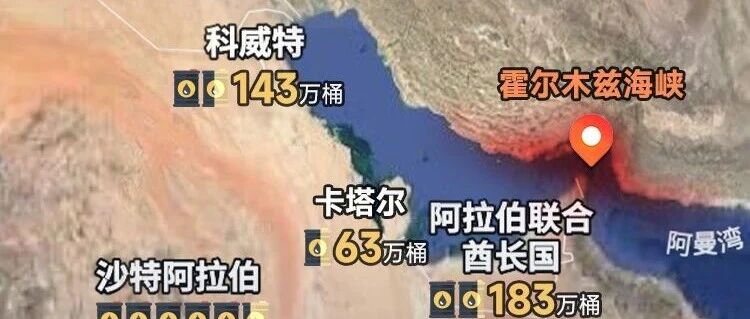
霍尔木兹海峡,紧扼着哪些产油国的“咽喉”?
财联社· 2026-03-03 11:58
Core Insights - The article highlights the strategic importance of the Strait of Hormuz, which is crucial for oil transportation, with an estimated daily transport volume of around 20 million barrels by Q1 2025, accounting for over 25% of global maritime oil trade [1] - The daily transport volume of crude oil and condensate is projected to exceed 14 million barrels, representing nearly one-third of global maritime crude oil exports, primarily sourced from six countries: Saudi Arabia, Iraq, UAE, Kuwait, Iran, and Qatar [1] Group 1 - The closure of the Strait of Hormuz for more than 25 days could lead to a complete shutdown of production in major Middle Eastern oil-producing countries, as stated by the commander of the Iranian Revolutionary Guard Corps [3] - The majority of oil transported through the Strait is directed towards Asia, with 12.66 million barrels, while 1.55 million barrels are sent to Europe and other economies [4]