
证券业

Search documents
沪深北交易所就可持续发展报告编制指南公开征求意见 上市公司编制ESG报告将有更多“教材”
Shang Hai Zheng Quan Bao· 2025-09-05 20:26
Core Viewpoint - The revised "Guidelines for the Preparation of Sustainable Development Reports by Listed Companies" aims to enhance the environmental practices of listed companies in China, focusing on pollution emissions, energy utilization, and water resource management [1][2]. Group 1: New Guidelines - Three new specific guidelines have been added: "Pollutant Emissions," "Energy Utilization," and "Water Resource Utilization," providing a structured approach for companies to identify risks and opportunities, accounting processes, and disclosure points [2]. - The new guidelines detail common risks such as production capacity limitations due to pollutant emission controls and opportunities like cost reductions through new pollution prevention technologies [2]. - The guidelines do not impose additional mandatory disclosure requirements but emphasize key workflows and examples to improve the quality of sustainability reporting [2][3]. Group 2: ESG Reporting Trends - As of June 2025, 1,869 listed companies have disclosed sustainability reports, achieving an overall disclosure rate of 34.72%, a 10 percentage point increase from the previous two years [4]. - Over 2,200 companies are expected to disclose sustainability or social responsibility reports for 2023, with an annual growth rate of 20% in disclosures over the past three years [4]. - More than 1,000 companies have reported carbon emissions, with a 50% annual growth in the number of companies disclosing such information [4]. Group 3: Governance and Management - 67.27% of companies have established governance structures, and 63.93% have disclosed strategic information related to sustainability [5]. - 78.07% of companies conduct materiality assessments to identify key issues, while 93.32% disclose information on stakeholder communications [5]. - The guidelines are facilitating a shift from mere disclosure to precise governance, with over 70% of companies establishing dedicated ESG management bodies [5]. Group 4: ESG Ratings Improvement - The ESG ratings of listed companies have significantly improved, with the proportion of companies rated AAA or AA increasing from less than 3.2% at the end of 2023 to 7.2% by the end of 2024 [6]. - Companies like Guizhou Moutai and Sungrow Power have seen their ESG ratings improve, leading to increased foreign investment and recognition in international capital markets [6][7]. - The ongoing development of additional guidelines is expected to further systematize sustainability disclosures, enhancing the capital market's ability to differentiate pricing based on ESG performance [7].
壹快评|“最快女护士”的眼泪,流给为“加班文化”所累的职场人
Di Yi Cai Jing· 2025-09-04 17:52
Group 1 - The article highlights the issue of "overtime culture" in various industries, particularly in healthcare, where nurses like Zhang Shuihua face significant challenges in balancing work and personal interests [4][5][6] - It discusses the collective dilemma faced by nurses, who typically only get four days off per month, with a high percentage working over 8 hours daily, indicating a systemic problem in labor rights and work-life balance [4][6] - The article emphasizes the need for improved labor laws and the effective implementation of paid annual leave to protect workers' rights and enhance their well-being [5][6] Group 2 - The prevalence of "overtime culture" is attributed to low base salaries, forcing workers to rely on overtime for additional income, and outdated management practices that shift costs onto employees [6] - The article suggests that addressing "overtime culture" requires a multi-faceted approach, including increasing income through productivity improvements rather than longer hours, and promoting a healthier work culture [6] - It calls for a collaborative effort from employers, society, and the government to create a sustainable work environment that values both productivity and personal fulfillment [6]
华泰证券与渣打银行签署战略合作备忘录
Xin Lang Cai Jing· 2025-09-04 10:16
Core Insights - The parties announced a collaboration in multiple core business areas including wealth management, capital markets, and sustainable finance [1]

欧洲市场不确定性加剧,剧烈调整后预期逐渐企稳
Xin Hua Cai Jing· 2025-09-04 01:52
Group 1 - European financial markets are expected to enter a cautious stabilization phase after significant declines, influenced by inflation expectations, central bank policies, fiscal pressures, and political uncertainties [1] - Eurozone member states plan to issue over €100 billion in new bonds in September, raising concerns about supply excess and higher required yields from investors [1][2] - Political risks in specific countries, such as France's government facing a confidence vote, have exacerbated fiscal concerns and widened the yield spread between French and German bonds [1][2] Group 2 - The European bond market experienced significant turbulence, with the 30-year German bond yield rising to 3.41%, the highest since 2011, and the 30-year French bond yield reaching 4.52%, the highest since 2009 [2] - Rising government bond yields are seen as a warning signal for financial markets, indicating concerns over current policy paths and leading to higher term premiums [2] - The DAX index fell by 2.29%, and major U.S. stock indices also faced pressure, reflecting the impact of rising bond yields on equity markets [2] Group 3 - U.S.-EU trade tensions have escalated, with the Trump administration imposing higher tariffs on EU steel and aluminum products, potentially leading to a trade conflict [3] - The inflation data released for the Eurozone showed a 2.1% year-on-year increase in consumer prices for August, indicating persistent inflationary pressures [3][4] Group 4 - European Central Bank (ECB) Executive Isabel Schnabel reinforced hawkish expectations, suggesting current rates should remain unchanged and warning of potential inflation risks from tariffs and fiscal expansion [4] - Market expectations indicate that the ECB is unlikely to take further action this year, contributing to rising long-term bond yields [4] Group 5 - The market anticipates an 85% probability of a 25 basis point rate cut by the Federal Reserve on September 17, with internal divisions within the Fed regarding the timing of such cuts [5] - Upcoming economic data, particularly related to the U.S. labor market, is expected to significantly impact market conditions and Fed decision-making [5][6] Group 6 - The focus of the market has shifted from "whether to cut rates" to "the pace and frequency of rate cuts," with any comments from ECB President Lagarde potentially influencing the Eurozone bond market [6] - Investor sentiment remains fragile, with concerns that buying on dips may be replaced by selling on highs, leading to negative market effects [6]
熊猫债发行主体不断丰富凸显我国债市强大“磁吸力”
Zheng Quan Ri Bao· 2025-09-03 16:26
Group 1 - The issuance of Panda bonds by the New Development Bank, amounting to 7 billion yuan, highlights the growing role of emerging economies in the global financial system [1] - The total issuance of Panda bonds in the interbank market has reached 111.2 billion yuan this year, with foreign government institutions, international development organizations, and multinational corporations accounting for 50% of the issuance, an increase of 27 percentage points compared to the entire year of 2024 [1][2] - The diversification of issuers in China's bond market indicates a significant enhancement in its internationalization level, attracting global capital participation [2][3] Group 2 - Panda bonds are becoming an important RMB financing channel for foreign institutions, with various international development organizations and multinational companies participating in the market [3] - The Chinese bond market offers a comparative advantage in financing costs, with relatively low interest rates and significant market stability, making it attractive for global quality issuers [3][4] - The robust growth of the Chinese economy provides a solid foundation for the bond market, offering issuers stable expectations [4]



【财经分析】欧洲市场不确定性加剧 剧烈调整后预期逐渐企稳
Xin Hua Cai Jing· 2025-09-03 14:38
Group 1 - European financial markets are expected to enter a cautious stabilization phase after significant declines, influenced by inflation expectations, central bank policies, fiscal pressures, and political uncertainties [1] - Eurozone member countries plan to issue over €100 billion in new debt in September, raising concerns about short-term "oversupply" in the market, leading investors to demand higher yields [1][2] - Political risks in specific countries, such as France facing a confidence vote due to budget cuts, have widened the yield spread between French and German bonds, reflecting market risk aversion towards economies with poor fiscal discipline [1][2] Group 2 - The European bond market experienced significant turbulence, with the 30-year German bond yield rising to 3.41%, the highest since 2011, and the 30-year French bond yield reaching 4.52%, the highest since 2009 [2] - Rising government bond yields are seen as a warning signal for financial markets, indicating concerns over current policy paths, which could lead to higher term premiums [2] - The DAX index fell by 2.29%, and major U.S. stock indices also faced pressure, with the Dow Jones down 0.55% and the Nasdaq 100 down 0.79% [2] Group 3 - U.S.-EU trade tensions have escalated, with the Trump administration imposing higher tariffs on EU steel and aluminum products, potentially leading to a trade conflict and affecting market confidence [3] - Eurozone inflation data for August showed a 2.1% year-on-year increase, slightly above previous values and market expectations, indicating persistent inflationary pressures [3][4] Group 4 - European Central Bank (ECB) Executive Isabel Schnabel reinforced hawkish expectations, suggesting current rates should remain unchanged and warning that tariffs and fiscal expansion could increase future inflation risks [4] - Market expectations for the ECB to refrain from further rate cuts this year have led to rising long-term bond yields [4] Group 5 - The market anticipates an 85% probability of a 25 basis point rate cut by the Federal Reserve on September 17, with internal divisions within the Fed regarding the timing of such cuts [5] - Upcoming economic data, particularly U.S. labor market reports, are expected to significantly impact market conditions and Fed decision-making [5][6] Group 6 - The focus of the market has shifted from "whether to cut rates" to "the pace and frequency of rate cuts," with any comments from ECB President Lagarde potentially influencing the Eurozone bond market [6] - Investor sentiment remains fragile, with concerns that buying on dips could be replaced by selling on highs, leading to negative market effects [6]
美股多头神经紧绷!全球长债抛售潮加剧,30年期美债收益率逼近5%
智通财经网· 2025-09-03 12:04
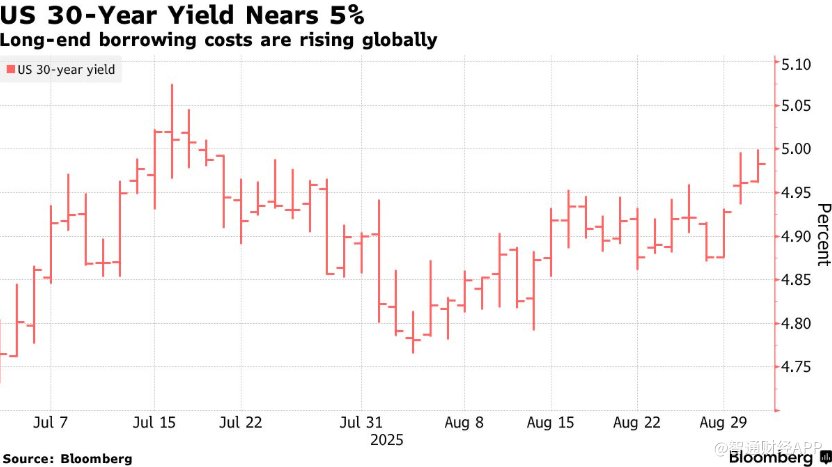
Group 1 - The U.S. 30-year Treasury yield is approaching 5% for the first time since July, reflecting concerns over budget deficits and increased bond issuance [1][5] - The spread between long-term and two-year Treasury yields has widened to 133 basis points, the largest gap since 2021, as the market anticipates a 25 basis point rate cut by the Federal Reserve [4] - Global long-term bond yields are rising, with the U.K. 30-year yield reaching its highest level since 1998 at 5.752%, indicating ongoing concerns about fiscal conditions in major economies [5] Group 2 - The upcoming U.S. job vacancy data is expected to provide insights into the potential extent of Federal Reserve rate cuts, with economists predicting a drop to 7.382 million vacancies in July [1] - Investor sentiment is cautious ahead of the U.S. employment data release, which could significantly alter interest rate expectations [7] - The recent rise in long-term Treasury yields is causing volatility in the U.S. stock market, as higher rates lead to a reassessment of growth stock valuations [8][9] Group 3 - The U.K. Chancellor of the Exchequer is expected to announce new tax measures in the upcoming budget on November 26, which may further impact market sentiment [6] - In France, the Prime Minister is facing a confidence vote regarding a debt reduction plan, which is causing investor unease [7] - The overall market has shown signs of stabilization after significant sell-offs, with yields on eurozone bonds decreasing [7]

重要的问题是欧洲,当然也有可能是美国
3 6 Ke· 2025-09-03 08:50
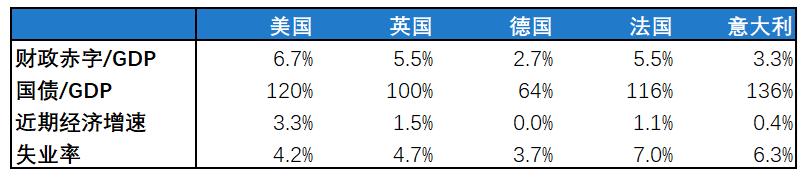
Core Viewpoint - The recent decline in global capital markets, particularly in the US, can be attributed to severe fiscal issues in the UK, which reflect broader fiscal challenges across Europe [1] Group 1: Fiscal Conditions in Europe - The fiscal deficit as a percentage of GDP for the UK and France has surged to over 5%, while the national debt for the UK, France, and Italy has exceeded 100% of GDP [2] - The UK’s 30-year government bond yield has risen to 5.7%, and the 10-year yield has reached 4.8%, indicating significant market concerns [1] - Germany is the only major European country maintaining strong fiscal discipline, which is crucial for the stability of the Eurozone economy [1][2] Group 2: Comparison with the US - The US has a fiscal deficit of 6.7% of GDP and a national debt of 120% of GDP, yet concerns about US fiscal stability are less pronounced compared to Europe [2][3] - The US economy has shown a recent growth rate of 3.3%, significantly outpacing European nations, which have struggled with low or zero growth [2][3] - The perception of the US dollar as a reserve currency and the belief in the Federal Reserve's ability to manage interest rates contribute to a more favorable view of US fiscal health [3] Group 3: Defense Spending and Economic Growth - European countries are under pressure to increase defense spending to meet NATO requirements, which could exacerbate their fiscal deficits [6][8] - The lack of long-term economic growth drivers in Europe, coupled with declining populations and insufficient technological advancement, poses a significant risk to their fiscal stability [8][9] - The US's military protection of Europe has allowed European nations to maintain lower defense spending, but this reliance may lead to fiscal crises if the US reduces its support [7][9] Group 4: Future Outlook - The current fiscal challenges in Europe may lead to increased scrutiny of US fiscal policies, especially if European issues worsen [4][10] - The belief that the US can sustain its fiscal situation despite rising debt levels is based on historical precedents of economic growth offsetting deficits [10] - The potential for a global crisis could impact the US, but the long-term consequences are expected to be less severe than those faced by European nations [10]
亚洲股市下挫,美日长债收益率飙升,日元承压,现货黄金持稳
Hua Er Jie Jian Wen· 2025-09-03 06:28
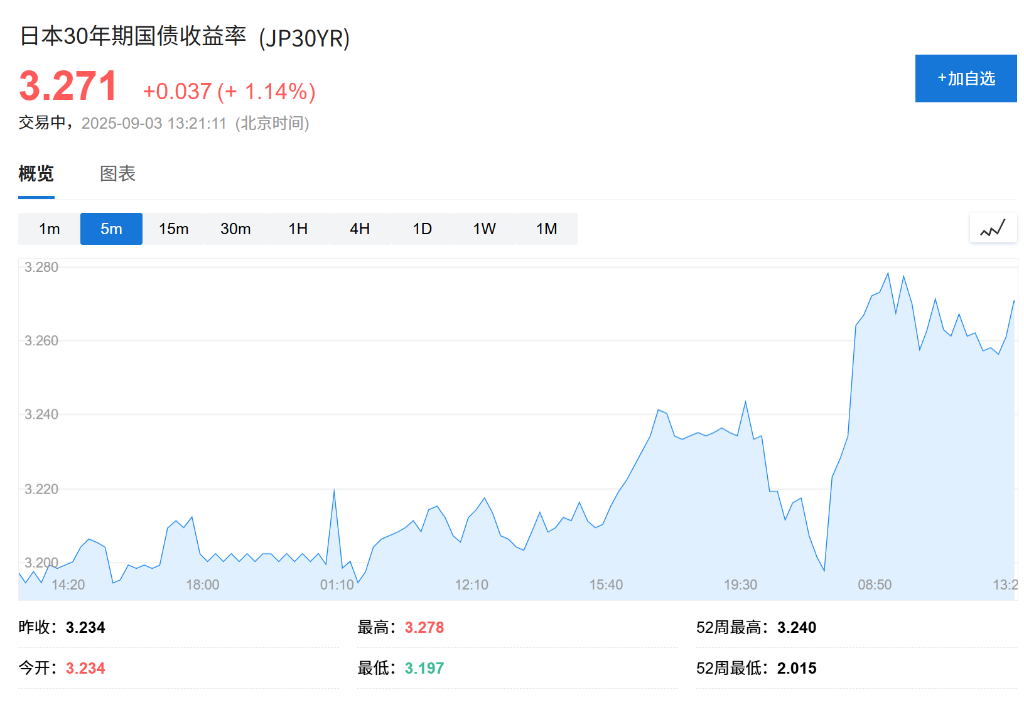
Group 1 - A global bond sell-off is intensifying due to a surge in corporate debt issuance and concerns over fiscal conditions in developed countries, affecting U.S. Treasuries, European bonds, and spreading to Japan [1][2] - The record corporate bond issuance, with at least $90 billion in investment-grade debt issued globally, has made this week one of the busiest in the credit market this year, with European issuance reaching a record €49.6 billion in a single day [2][3] - The rise in bond yields is diminishing the attractiveness of stocks, leading to pressure on Asian equity markets, while the Japanese yen weakens amid domestic political uncertainty [1][2] Group 2 - In Japan, local political uncertainties are exacerbating bond market pressures, with concerns over the potential resignation of a key ally of Prime Minister Shigeru Ishiba, increasing political volatility [3] - The upcoming 30-year government bond auction is causing cautious sentiment among investors, contributing to selling pressure on long-term bonds, with the 30-year yield reaching 3.28%, the highest on record [3] - The U.S. yield curve is under pressure to steepen, with analysts noting that the long-term yields are rising faster than short-term yields, influenced by various factors including upcoming employment data [7][8]
债市分析框架之资金面
Tai Ping Yang Zheng Quan· 2025-09-02 13:07
1. Report Industry Investment Rating - There is no information provided regarding the report industry investment rating. 2. Core Viewpoints of the Report - The capital market is a crucial hub in the macro - economy, connecting monetary policy, financial markets, and the real economy. Analyzing the capital market helps reflect the financing environment, assist in pricing regulation, and provide early - warning of risks [4]. - The capital market is a key driver of the bond market's trend. Its tightness, structural changes, and related policies affect the bond market from aspects such as supply - demand, yield, and investor expectations. Different capital environments require corresponding adjustments to bond market investment strategies [5]. - This year, China's economy has shown a moderate recovery. Monetary policy has maintained a moderately loose tone but with dynamic adjustments. The bond market has shown high volatility along with the capital market and multiple factors. In the future, official statements indicate a caring attitude towards the capital market, and liquidity is expected to remain reasonably abundant to support the bond market, but the scope for further loosening may be limited [5]. 3. Summary According to the Table of Contents 3.1 What is the Capital Market? - The capital market is a key link in the macro - economic system, comprehensively reflecting the total supply - demand relationship of funds. It can be understood from narrow and broad perspectives, and the two are linked through the "finance - real economy" cycle [10]. - The capital market reflects the transmission effect of monetary policy from the financial system to the real economy, forms the pricing basis for assets, is an important indicator for observing the real - economy financing environment, and affects market risk preference and systemic risks [14][15]. 3.2 Capital Market Analysis Framework 3.2.1 Supply and Demand Perspective - Supply involves policy - driven liquidity injection and credit creation. The central bank injects base money into the banking system through policy tools, and the banking system creates broad money through credit creation [19][20][23]. - Demand is related to various economic entities. The financing activities of the private sector, financial markets, and the government jointly determine the total scale and structural characteristics of capital demand [24]. 3.2.2 Policy Perspective - Monetary policy is the core driver of capital supply and demand. Its goals determine the direction of capital market changes, and a variety of policy tools precisely regulate the total amount and structure of capital to achieve dynamic balance [26]. - The transmission effect of monetary policy on the capital market can be understood from the supply and demand sides. On the supply side, it affects the total amount of bank - system funds and credit creation; on the demand side, it affects the real - economy's financing demand and expectations [31]. 3.2.3 Tracking Indicators - Quantity indicators focus on the total amount of circulating funds in the market, including base money scale, broad money supply, social financing scale, and bank - system liquidity level [32]. - Price indicators reflect changes in capital supply - demand and costs, mainly tracking different interest rates. The differences between different interest rates can also convey structural signals [41][42]. - Quantity and price indicators are inter - related, and special time points, affected by seasonal and policy factors, are also important dimensions for analyzing capital supply - demand changes [48][49]. 3.3 Capital Market and Bond Market 3.3.1 How the Capital Market Affects the Bond Market - The tightness of the capital market directly affects the supply - demand and pricing of the bond market; structural changes in the capital market cause differentiation within the bond market; and related regulatory policies affect market expectations of the bond market [54]. - Historically, the cyclical fluctuations of the bond market have been closely related to changes in the capital market. For example, in 2013, a tightened capital market triggered bond - market risks; in 2016, financial de - leveraging led to a downward adjustment in the bond market [55]. 3.3.2 Bond Market Strategies Adjusted According to Capital Tightness - In a loose capital environment, long - term interest - rate bonds and high - grade credit bonds can be increased, and leverage can be moderately added; in a tight capital environment, the duration should be shortened, and leverage should be reduced [57]. 3.4 Summary and Outlook 3.4.1 Fluctuations in the Bond Market and Capital Market Due to Multiple Factors - The capital market has evolved from a tight - balance to a moderately loose state. The bond market has shown high volatility this year, with downward adjustments in the early stage, a shock - recovery in the middle, and increased fluctuations in the policy observation period [64][72][73]. 3.4.2 Expected Reasonable and Abundant Liquidity - Official statements indicate a caring attitude towards the capital market, and liquidity is expected to remain reasonably abundant to support the bond market. However, the scope for further loosening of the capital market may be limited [77].