
信托

Search documents
中金:维持中信股份(00267)跑赢行业评级 上调目标价至13.5港元
智通财经网· 2025-09-01 02:35
Core Viewpoint - The report from CICC maintains the profit forecast for CITIC Limited (00267) for 2025 and 2026, with a target price increase of 17.4% to HKD 13.5, reflecting a market sentiment improvement [1] Group 1: Financial Performance - In 1H25, CITIC Limited reported revenue of CNY 368.8 billion, with a net profit increase of 6% year-on-year to CNY 59.8 billion, and a parent net profit of CNY 31.2 billion, showing a core operating profit growth of 0.4% after adjusting for last year's dilution effects [2] - The company declared an interim dividend of CNY 0.2 per share, with a year-on-year increase of 5.3% in half-year DPS, resulting in a dividend payout ratio increase of 1.4% to 18.6% [2] Group 2: Financial Sector Growth - The comprehensive financial sector's external revenue increased by 2% year-on-year to CNY 139.8 billion, contributing 38% to the total, with a parent net profit growth of 2% to CNY 28.4 billion, contributing 91% [3] - CITIC Bank's parent net profit rose by 3% to CNY 36.5 billion, driven by reduced operational and risk costs [3] - CITIC Securities experienced a revenue and parent net profit increase of 20% and 30% respectively, benefiting from an active capital market [3] - CITIC Trust's revenue and parent net profit grew by 4% and 13% respectively, with trust asset scale increasing by 13% since the beginning of the year [3] - CITIC Prudential's original premium income and parent net profit increased by 11% and 5% respectively, ranking among the top in foreign-funded life insurance companies [3] Group 3: Challenges in Advanced Materials and New Urbanization - The advanced materials sector reported external revenue and parent net profit of CNY 163.7 billion and CNY 5.2 billion respectively, with notable profit increases from CITIC Special Steel, Nanjing Steel, and CITIC Metal at 3%, 19%, and 31% respectively [4] - The advanced manufacturing sector's external revenue grew by 7% year-on-year to CNY 27.3 billion [4] - The new consumption sector saw a parent net profit increase of 353%, with CITIC Publishing's profit rising by 30% [4] - The new urbanization sector reported external revenue and parent net profit of CNY 14.4 billion and CNY 1.9 billion respectively, with significant sales growth in the real estate business, achieving a year-on-year increase of 60% to CNY 8 billion [4]

人民币兑美元突破7.12元,全球主权财富基金抢滩A股 | 财经日日评
吴晓波频道· 2025-08-30 00:29
Group 1: Urban Development and Real Estate - The central government has released a roadmap for promoting high-quality urban development, emphasizing the transformation of urban development methods and addressing issues such as the renovation of old housing and urban safety management [2][3] - The focus will shift from large-scale expansion to meticulous cultivation in urban construction and the real estate sector, as local governments balance various demands to implement urban renewal [3] Group 2: Artificial Intelligence Development - The National Development and Reform Commission (NDRC) emphasizes the need to avoid disorderly competition in the development of "Artificial Intelligence+" and to tailor development strategies based on local characteristics [4][5] - By 2027, the goal is to achieve widespread integration of AI across six key sectors, with a target application penetration rate exceeding 70% for new intelligent terminals and agents [4] Group 3: Currency Exchange and Economic Indicators - The offshore RMB/USD exchange rate has surpassed 7.12, with the People's Bank of China indicating that the recent appreciation is primarily due to domestic factors rather than solely external pressures [6][7] - The U.S. second-quarter GDP growth was revised to 3.3%, driven by strong business investment and consumer spending, with net exports contributing significantly to GDP growth [8][9] Group 4: Sovereign Wealth Funds and A-shares - Sovereign wealth funds are increasingly investing in A-shares, with significant holdings reported by entities such as the Abu Dhabi Investment Authority, indicating a growing interest in the Chinese market [10][11] - The allocation of sovereign wealth funds in A-shares remains relatively low, suggesting a need for the A-share market to enhance its appeal to foreign investors [11] Group 5: Trust Companies' Performance - Trust companies are experiencing significant performance divergence, with an overall net profit decline of 2.83% among 53 companies reporting, highlighting the challenges faced by the industry [12][13] - The shift from non-standard to standardized business models is impacting profitability, with some companies showing resilience while others struggle [13] Group 6: Semiconductor Industry - SMIC reported a 22% year-on-year revenue increase in the first half of 2025, driven by strong demand in the consumer electronics sector and a rise in the share of 12-inch wafer revenue [14][15] - Despite strong performance, challenges such as reduced demand for pre-stocked products and slow recovery in domestic consumption may impact future earnings [15] Group 7: Stock Market Trends - The A-share market has shown a strong upward trend, with significant gains in the ChiNext index and overall market activity, indicating a shift in investor sentiment [16][17] - The market is experiencing volatility as it approaches the end of the month, with a focus on whether it can successfully transition between different investment themes [17]



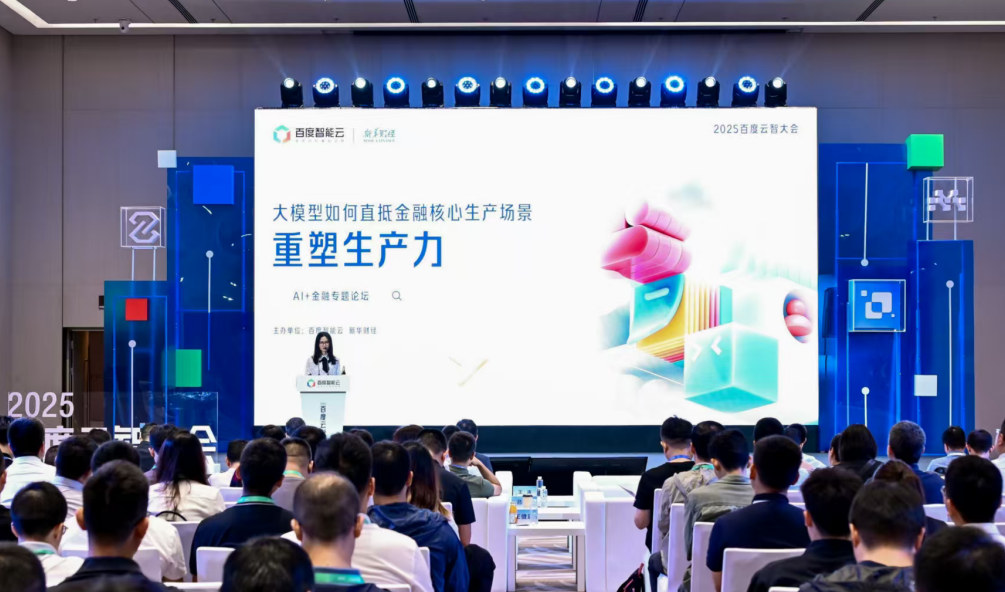
大模型驶入金融“深水区” 业内共商AI落地新路径
Zhong Guo Jin Rong Xin Xi Wang· 2025-08-29 13:29
Core Insights - The integration of AI technology in the financial sector is entering a new phase, driven by the national "Artificial Intelligence+" action plan, which is expected to inject new momentum into the high-quality development of the financial industry [1][3] Group 1: AI Applications in Finance - Experts at the forum discussed the current state, challenges, and prospects of large model technology applications in finance, highlighting the need for AI to evolve from being a "talented generalist" to a "business partner" that meets safety and compliance requirements while creating real commercial value [3] - AI is reshaping three core areas in finance: user experience, business processes, and employee roles, marking the financial sector's transition into the fourth technological revolution characterized by intelligence [3] Group 2: Implementation Strategies - China Construction Bank is advancing AI systematically, focusing on customer management and high-quality management, with applications like intelligent approval reducing report generation time from days to 15 minutes, achieving a monthly growth rate of 20% [4] - Baidu Intelligent Cloud emphasizes the transition from technical potential to business momentum, advocating for a multi-faceted support system for the rapid implementation of large models in finance, with Baidu leading in market share and bidding numbers in the past year [4] Group 3: Case Studies and Innovations - China Foreign Trade Trust has implemented a "digital employee" system that includes digital traders and financial advisors, significantly enhancing transaction processing efficiency and reducing information omission risks through intelligent assistants [5] - In agricultural finance, the company has developed a digital operations platform that improves efficiency and quality in financial services for rural areas, addressing challenges like fragmented credit systems [5] Group 4: AI Strategy and Infrastructure - Industrial and Commercial Bank of China is making comprehensive adjustments in organizational structure and collaboration mechanisms to support the development of smart banking, driven by breakthroughs in model capabilities, intelligent agents, and computing power [6]

陕国投A:公司结合行业特点及自身经营情况,不断优化员工薪酬体系
Zheng Quan Ri Bao Wang· 2025-08-29 11:45
Group 1 - The company is focusing on innovation and transformation in its trust business by optimizing its employee compensation system [1] - The company is increasing the proportion of risk reserves and deferred payments to enhance its operational stability [1] - The company aims to promote high-quality development and improve its core competitiveness to ensure the preservation and appreciation of state-owned financial assets [1]

新黄浦: 新黄浦2025年半年度报告
Zheng Quan Zhi Xing· 2025-08-29 08:25
Core Viewpoint - Shanghai New Huangpu Industrial Group Co., Ltd. reported significant growth in revenue and profit for the first half of 2025, driven by strategic initiatives in real estate and financial services [1][2]. Company Overview and Key Financial Indicators - The company achieved operating revenue of approximately 388.80 million RMB, a 9.16% increase from the previous year [2][5]. - Total profit reached approximately 114.69 million RMB, marking a substantial increase of 330.81% year-on-year [2][5]. - Net profit attributable to shareholders was approximately 101.63 million RMB, up 368.46% compared to the same period last year [2][5]. - The company's total assets increased by 4.61% to approximately 20.04 billion RMB [2][5]. Business Performance Analysis - The real estate sector showed signs of recovery, with improved sales performance in core areas and a focus on rental housing projects [3][5]. - The financial services segment demonstrated steady growth, with a complete range of licenses in futures, trusts, and funds, contributing to overall profitability [3][5]. - The company maintained a strong cash flow, with net cash flow from operating activities increasing by 788.91% to approximately 1.32 billion RMB [2][5]. Competitive Advantages - The company benefits from early involvement in the rental housing market, leveraging its experience to enhance project efficiency and profitability [5]. - The "Technology Capital" brand, recognized as a high-tech entrepreneurial park, provides a competitive edge in attracting businesses and investments [5]. - A robust financial services cluster supports the company's dual-driven strategy in real estate and finance, enhancing operational synergies [5]. Future Outlook - The company plans to continue focusing on the Yangtze River Delta region, capitalizing on local market trends and demographic shifts to drive growth [5]. - Ongoing investments in technology and innovation are expected to further enhance operational efficiency and market competitiveness [5].

拟分红超58亿元,详解中信股份中期业绩:发展韧性底气十足,风险指标持续优化
Zhong Guo Zheng Quan Bao - Zhong Zheng Wang· 2025-08-29 05:29
Core Viewpoint - CITIC Limited reported a strong performance in the first half of 2025, with operating revenue of 368.8 billion RMB and net profit of 59.8 billion RMB, indicating robust growth across its financial subsidiaries and core industrial businesses [1][3][5] Financial Performance - All financial subsidiaries of CITIC Limited achieved profit growth in the first half of the year, with significant increases in securities business revenue and profits, leading the industry in domestic equity and bond underwriting [3][4] - The company’s overseas income reached 65.8 billion RMB, a 15% year-on-year increase, accounting for 17.9% of total revenue, up 2.6 percentage points from the previous year [4] Dividend Policy - The board proposed an interim dividend of 0.20 RMB per share, a 5.3% increase from the previous year, with a total dividend payout of 5.818 billion RMB, reflecting a steady increase in shareholder returns [1][13] Strategic Outlook - CITIC Limited aims to maintain strategic focus and leverage development opportunities while enhancing resilience and certainty in growth, with plans to further integrate financial and industrial strengths [1][6] - The company is actively pursuing industrial mergers and acquisitions in emerging sectors such as digital technology and low-altitude economy [4][10] Business Segments - The financial segment will focus on enhancing revenue-generating capabilities, while the industrial segment aims to improve profitability through operational efficiency and product innovation [10][11] - CITIC's traditional industries are concentrating on key areas such as integrated die-casting and special robots, with significant sales growth in aluminum products [3][12] Market Position and Valuation - CITIC Limited's market capitalization has increased by over 170 billion HKD since the beginning of the "14th Five-Year Plan," with a price-to-book ratio rising from 0.25 to over 0.4, indicating a recovery in asset valuation [13][14] - The company’s current price-to-book ratio is still below 1, suggesting potential for further market capitalization recovery as valuations normalize [14]
中信股份发布中期业绩,归母净利润312.28亿元 同比减少2.8%
Zhi Tong Cai Jing· 2025-08-29 04:17
Financial Performance - The company reported a revenue of 368.76 billion yuan for the six months ending June 30, 2025, a decrease of 1.6% year-on-year [1] - Net profit attributable to ordinary shareholders was 31.228 billion yuan, down 2.8% year-on-year, with basic earnings per share at 1.07 yuan [1] - The financial sector subsidiaries showed overall profit improvement, while major industrial subsidiaries performed well [1] Capital Market Performance - The company's stock price closed at 10.78 HKD per share as of June 30, 2025, with a total market capitalization of 313.6 billion HKD, reflecting a 21% increase since the beginning of the year, outperforming the Hang Seng Index [1] - The company maintained its highest credit rating since 2016, indicating strong financial health [1] Dividend Distribution - The board proposed an interim dividend of 0.2 yuan per share, an increase of 0.01 yuan from the previous year, totaling 5.818 billion yuan in dividends [1] Strategic Initiatives - The company is focusing on a comprehensive reform strategy aimed at high-quality development across multiple sectors, aligning with national strategies [1] Financial Sector Developments - The company is enhancing its comprehensive financial system, focusing on serving the real economy and innovating financial models, particularly in technology and green finance [2] - The company has successfully sponsored the largest IPO globally in three years for Ningde Times and launched the first tokenized fund denominated in RMB in Asia [2] Industrial Sector Developments - The company is advancing its "Star Chain" initiative, focusing on traditional industries and new production capabilities, achieving record sales in automotive parts [3] - The company is actively pursuing mergers and acquisitions and has made significant strides in the low-altitude economy and AI applications in steel production [3] International Expansion - The company is committed to internationalization, hosting events to facilitate business connections and achieving significant growth in overseas investment banking profits [4] - New landmark projects have been signed in the UAE and Uzbekistan, contributing to the Belt and Road Initiative [4]
8月15家信托公司高管获批变更,密集流动背后传递哪些信息
Bei Jing Shang Bao· 2025-08-28 18:12
Core Insights - The trust industry is experiencing significant executive turnover, with 15 companies reporting 20 changes in senior management positions since August, indicating a period of transformation and adjustment within the sector [1][2][6] - The frequent changes in leadership are seen as a necessary response to strategic upgrades and risk management needs as the industry evolves [1][6] Management Changes - Notably, Wanxiang Trust has seen the highest number of executive changes, with four approvals for new leadership roles in August, including a new chairman and three directors [2][5] - Other companies, such as Shanxi Trust and CITIC Trust, have also undergone management changes, with Shanxi Trust's chairman being proposed for a new position and CITIC Trust appointing a new director [2][3] Reasons for Changes - Analysts attribute the high turnover to pressures from strategic transformation and regulatory demands, as companies shift from traditional business models to standardized products and services [3][4] - The need for experienced professionals to drive business focus and restructure profit models is emphasized, especially for firms that have accumulated risks from aggressive expansion [3][4][6] Industry Trends - The trend of frequent executive changes has been ongoing since 2025, with at least eight companies experiencing changes in key management positions [4][6] - The introduction of new regulations aimed at transitioning the industry from non-standard financing to standardized investment products is influencing these changes [4][6] Company Performance - Wanxiang Trust reported a significant decline in revenue, with a 40% drop from 2.9 billion yuan in 2023 to 1.8 billion yuan in 2024, alongside a net loss of 474.4 million yuan [5] - The company’s trust asset scale also decreased from 83.1 billion yuan at the end of 2023 to 63.9 billion yuan by the end of 2024, indicating financial challenges that may have prompted leadership changes [5]
山东国信:上半年营业总收入达到6.34亿元 同比上升7.8%
Xin Lang Cai Jing· 2025-08-28 14:17
Core Insights - Shandong Trust reported a total revenue of 634 million yuan for the first half of 2025, representing a year-on-year increase of 7.8%, while net profit decreased by 1.8% to 167 million yuan [2] - The trust business revenue accounted for 35.9% of total revenue, amounting to 228 million yuan, while proprietary business revenue reached 406 million yuan, a year-on-year increase of 28%, making up 64.1% of total revenue [2] - The performance changes were attributed to a decrease in net commission income, an increase in credit impairment losses, offset by gains from fair value changes and increased investment income [2] Company Overview - Shandong Trust was established in March 1987 and is a non-bank financial institution approved by the People's Bank of China and the Shandong Provincial Government [3] - It is a member of the China Trust Industry Association and is controlled by the Lushun Group [3] - The company was listed on the Hong Kong Stock Exchange in December 2017, becoming the first trust company from mainland China to enter the international capital market [3]
山东国信上半年营收超6亿元 绿色信托存续规模同比增超20%
Zhong Zheng Wang· 2025-08-28 13:32
Core Insights - Shandong Guoxin reported a total revenue of 634 million yuan for the first half of 2025, representing a year-on-year growth of 7.8%, with a net profit of 167 million yuan [1] - The company is focused on reforming risk management and business transformation, aiming to enhance its trust services and governance, achieving stable and positive overall development [1] Financial Performance - Total revenue for H1 2025: 634 million yuan, up 7.8% year-on-year [1] - Net profit for H1 2025: 167 million yuan [1] Business Development - Green trust assets reached 4.229 billion yuan by the end of June 2025, an increase of 22.4% [1] - Family trust assets amounted to 61.927 billion yuan, growing by 19.3% since the beginning of the year [1] - The company launched its first special needs service trust in Shandong province and expanded into innovative trust structures such as FGT and FNGT [1] - Cumulative charitable trust payments reached 18.9 million yuan, reflecting a growth of 16.7% [1] Strategic Focus - The company emphasizes localized advantages to enhance service quality for the economic development of Shandong province [2] - It maintains a strong risk management framework and optimizes its management system to ensure sustainable development [2]