
云计算

Search documents
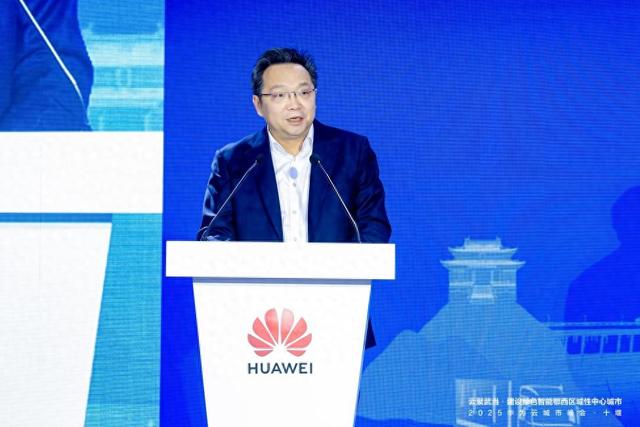
华为云城市峰会走进十堰,绿色算力赋能鄂西数字经济发展新篇章
Xin Lang Cai Jing· 2025-12-25 13:18
Core Viewpoint - The Huawei Cloud City Summit held in Shiyan, Hubei, focuses on the development of the digital economy and the establishment of a green computing power industry, highlighting the city's commitment to digital transformation and industrial upgrading [1][9]. Group 1: Digital Economy Development - Shiyan has identified digital economy as a key area for development, aiming to cultivate it as one of the ten trillion-level industrial clusters [1]. - The city has been selected as one of the first pilot cities for small and medium-sized enterprises' digital transformation in Hubei Province [1]. Group 2: Green Computing Power - Shiyan possesses natural advantages for developing green computing power, including an average annual temperature of 10 to 15°C and abundant cold water resources, which create a "natural cooling system" [5]. - The city has established five differentiated data center clusters, with total computing power exceeding 10,000 PetaFLOPS, expected to reach 50,000 PetaFLOPS within two years [5]. - The Wudang Cloud Valley data center has a Power Usage Effectiveness (PUE) value as low as 1.12, making it one of the largest and most efficient green data centers in Central China [5]. Group 3: Infrastructure and Data Management - Shiyan has built a low-latency computing power network with a coverage of 5 milliseconds within the province and 15 milliseconds nationwide, supporting smart city initiatives [8]. - The city has created an urban information model platform that aggregates over 10 billion data points, aiding in urban governance and water resource management [8]. Group 4: Strategic Partnerships - The Shiyan government signed a new strategic cooperation agreement with Huawei, focusing on smart city development, industrial digitalization, computing power ecosystem construction, and talent cultivation [9]. - Since 2021, Huawei has assisted Shiyan in creating the first full-stack autonomous innovation cloud platform in Central China, named "Wudang Cloud" [9]. Group 5: Policy Support and Industry Activation - To reduce costs for enterprises, Shiyan plans to issue "computing power vouchers" and "data vouchers," along with establishing a digital industry fund [10]. - The city is forming a computing power industry ecosystem with participation from universities and leading enterprises like Huawei [10]. Group 6: Future Outlook - Shiyan aims to deepen cooperation with leading companies like Huawei, focusing on upgrading smart cities, empowering key industries, co-building computing power ecosystems, and developing digital talent [12]. - The city is set to explore innovative models such as "green data centers" and "zero-carbon parks," positioning itself as a digital economy development hub in Western Hubei [12].

AI豪赌进入深水区:扎克伯格一边砸钱,一边开始勒紧Meta的钱袋子
Xin Lang Cai Jing· 2025-12-25 12:40
Core Insights - Mark Zuckerberg is making significant investments in artificial intelligence (AI) for 2025, but may tighten Meta's budget as costs for data centers and top AI researchers rise [1][5] - Meta raised $27 billion through the largest private credit deal in Wall Street history to fund its Hyperion supercomputer, but investor sentiment has soured as Meta's stock price has dropped 15.8% from its record high [1][5] - Analysts express concerns over Meta's reliance on advertising revenue compared to other tech giants like Alphabet and Amazon, which have cloud computing businesses [2][5] Financial Performance - Meta's spending growth in Q3 outpaced revenue growth, raising concerns about future profitability as depreciation costs from data centers begin to impact the income statement [1][5] - The Reality Labs division, which includes the metaverse, reported a loss of $4.4 billion last quarter, prompting significant budget cuts and a shift in focus towards more profitable projects [2][6] Strategic Shifts - Meta is reallocating investments from the metaverse to AI glasses and wearable devices, reflecting a strategic pivot in its Reality Labs portfolio [3][6] - The company aims to explore new AI revenue models through its Meta AI assistant and Messenger Bots, with over 1 billion monthly active users reported [6][7] Future Developments - Meta's Superintelligence Labs, led by Alexandr Wang, is under pressure as the latest Llama 4 model has not met user expectations, with new models like Mango and Avocado expected to launch in spring [7] - Analysts suggest that Meta could distribute its AI models through cloud service providers like Amazon and Microsoft, potentially creating a new revenue stream [4][7]
上海仪电毛辰董事长一行调研云赛智联旗下信诺时代
Xin Lang Cai Jing· 2025-12-25 12:40
Core Viewpoint - The visit by Shanghai Yidian's leadership to Beijing Xinnuo Times Technology Development Co., Ltd. emphasizes the importance of strategic transformation and the integration of AI and data services in the company's future development [1][5]. Group 1: Company Development and Strategy - The leadership acknowledged the efforts made by Xinnuo Times in management implementation, customer strategy execution, and supporting the group's transformation [2][6]. - Four key requirements for the company's transformation were outlined: 1. Maintain an agile transformation approach and deepen business focus amidst a complex market environment [2][6]. 2. Leverage internal management and core technology advantages to adapt to the rapid development of AI and increasing market competition [2][6]. 3. Adhere to risk management principles and clarify core strategies for cloud business to enhance service capabilities [2][6]. 4. Focus on the AI business sector and explore growth paths through the selection of quality projects [2][6]. Group 2: Leadership and Team Involvement - The visit included key figures from Shanghai Yidian and YunSai Zhilian, indicating a collaborative effort in overseeing the company's strategic direction [4][7].


算力的尽头,是“星辰大海”吗?
经济观察报· 2025-12-25 11:49
Core Viewpoint - The article discusses the emerging field of space computing, highlighting its potential advantages, current developments, and the challenges it faces in becoming a viable alternative to traditional computing methods [3][5][6]. Group 1: Definition and Importance of Space Computing - Space computing refers to the deployment of computational resources in space, allowing for data processing and AI model training in a unique environment [8][10]. - The recent successful training of AI models in space by Starcloud marks a significant milestone, indicating the beginning of serious competition in the space computing sector [4][5]. - Major tech companies and countries are investing in space computing, with initiatives from SpaceX, Blue Origin, and Google, reflecting a growing interest in this area [5][6]. Group 2: Advantages of Space Computing - Space computing can overcome three major bottlenecks faced by traditional computing: energy consumption, water resource limitations, and spatial constraints [15][18]. - The abundance of solar energy in space can significantly reduce energy limitations for AI computations [15]. - The vacuum of space allows for efficient heat dissipation, eliminating the need for extensive cooling systems that consume water [16]. - Space offers virtually unlimited room for data centers, avoiding the social resistance faced by ground-based facilities [17]. Group 3: Engineering Forms and Business Models - Three potential engineering forms for space computing are identified: orbital computing nodes, modular computing clusters, and hybrid space-ground computing systems [19][20]. - Modular computing clusters could serve large-scale, low-latency tasks, appealing to sectors like astrophysics and materials science that require extensive computational resources [22]. - The hybrid model integrates space computing with existing cloud services, allowing for a division of labor where energy-intensive tasks are offloaded to space [24]. Group 4: Challenges Facing Space Computing - Technical challenges include the harsh conditions of space, such as radiation and temperature extremes, which complicate the reliability of computing systems [27]. - Economic uncertainties arise from the high initial investment and long return periods associated with space computing infrastructure [28]. - The potential for resource congestion in space could lead to increased risks of collisions and environmental instability in orbit [29]. - Regulatory issues regarding governance and accountability for space-based computing systems remain unresolved [30]. Group 5: Conclusion and Future Outlook - The future of space computing is uncertain, but its development could parallel historical advancements like the railway system, potentially transforming the AI landscape [33].



2026年美股还值得买吗?
Guo Ji Jin Rong Bao· 2025-12-25 11:44
Core Viewpoint - The U.S. stock market is at a threshold where it is no longer solely driven by "rate cut narratives," facing a complex combination of variables as it approaches 2026 [1] Group 1: Market Performance and Trends - In 2025, the S&P 500 index experienced significant volatility, initially dropping near bear market territory due to tariff threats but rebounding due to policy concessions and AI momentum, resulting in a year-to-date total return of approximately 18%-19% by year-end [2] - The S&P 500 index reached its 38th historical high on December 23, reflecting market confidence in the resilience of the U.S. economy and corporate earnings [3] - The VIX index, a measure of market volatility, closed at 14 points on December 23, the lowest since December 2024, indicating reduced market tension [3] Group 2: Economic Outlook and Influencing Factors - Analysts are focused on whether the U.S. stock market will continue its bull run or face systemic risks in 2026, with key determinants being economic stability, Federal Reserve policy direction, and whether current stock prices are supported by economic fundamentals [4] - The U.S. economy showed no signs of significant recession in 2025, with GDP expanding at its fastest pace in two years, reinforcing expectations of a "soft landing" [4] - The OBBBA tax cut legislation is expected to boost economic growth starting in 2026, alongside a gradual decline in inflation, contributing to a favorable macroeconomic environment [5] Group 3: Federal Reserve and Interest Rates - If inflation continues to cool, the Federal Reserve may begin to lower interest rates in 2026, which could help maintain high stock prices despite elevated valuations [6] - Current market sentiment indicates a 19.9% probability of a 25 basis point rate cut in January 2026, with a 47.1% chance of maintaining current rates [6] Group 4: Sector Performance and Investment Focus - Wall Street strategists expect 2026 to be a strong year for the U.S. stock market, with optimistic projections for the S&P 500 index reaching between 7,000 and 8,100 points by year-end [8] - Investment focus is shifting from technology stocks to cyclical stocks, which are closely tied to economic cycles, with notable performance improvements in sectors like real estate, steel, and automotive [9] - Cyclical stocks have outperformed defensive stocks, with a 9.3% increase in a recent month, indicating a growing investor interest in sectors benefiting from economic recovery [9]

森远股份:签署2678.39万元算力集群集成建设合同
Zheng Quan Shi Bao Wang· 2025-12-25 11:32
人民财讯12月25日电,森远股份(300210)12月25日公告,公司与北京中科信控创新创业科技发展有限 公司签署《算力集群集成建设合同》,合同总价款2678.39万元,项目内容为中科(济南)超级云计算中心 项目建设中GPU高性能计算集群及其配套设施采购工作及售后服务。 ...

黄金白银飙出历史新高!快手突发故障,万科债务危机解没解?
Sou Hu Cai Jing· 2025-12-25 09:47
Group 1 - The major incident involving Kuaishou has caused significant disruptions in its cloud computing services, which are provided by Tencent Cloud, leading to a decline in Kuaishou's stock price by nearly 6% and a market value loss of 16.4 billion yuan [2][4] - The technology sector, particularly Chinese concept stocks and the Hang Seng Technology Index, experienced a collective downturn following the Kuaishou incident, indicating a broader market impact [4] - The metal market has shown strong performance, with gold, silver, and copper reaching record highs for the first time since 1980, highlighting a trend where precious metals are leading while industrial metals show mixed results [4] Group 2 - The non-ferrous metal sector in the A-share market has outperformed with over 70% gains, leading the market, while gold and silver have seen year-to-date increases of over 60% and 100%, respectively [7] - Vanke's debt issue remains unconfirmed, with no authoritative news on the status of its debt extension plan, emphasizing the need for caution regarding unofficial information [7] - The recent surge in silver prices has attracted many investors, but caution is advised regarding high-premium products like the Guotou Silver LOF, which has shown a premium exceeding 60% [14][16] Group 3 - The actual controller of Xiangyuan Cultural Tourism has been subjected to criminal coercive measures, which may introduce uncertainties in corporate governance and operations [10] - Investment strategies should prioritize risk awareness and avoid following market trends blindly, especially in volatile sectors like precious metals [12][18] - The importance of long-term investment strategies over chasing short-term market trends is emphasized, as many investors face losses by buying at market peaks [18]


国泰海通:首予七牛智能“增持”评级 目标价1.1港元
Zhi Tong Cai Jing· 2025-12-25 09:05
Core Viewpoint - Cathay Securities has initiated coverage on Qiniu Intelligent (02567) with a "Buy" rating, projecting revenues of 1.69 billion, 2.03 billion, and 2.46 billion RMB for 2025-2027, respectively, and assigning a 1.0x PS valuation for 2026, leading to a target market value of 2.03 billion RMB and a target price of 1.1 HKD [1] Group 1 - Qiniu Intelligent has a solid foundation in digital intelligence with diverse business operations [2] - Established in 2011, Qiniu Intelligent is a leading audio and video cloud service provider in China, with core businesses including MPaaS (Media Platform as a Service) and APaaS (Application Platform as a Service) [2] - In 2023, Qiniu Intelligent ranked as the third-largest audio and video PaaS provider and the second-largest APaaS supplier in China, benefiting from AI technology advancements to offer more intelligent features and scenario-based solutions [2] Group 2 - Qiniu Intelligent's AI business is showing strong growth, with AI-related revenue accounting for 22.2% in the first half of 2025, supported by its strategic partnership with Alibaba [3] - The company is actively developing edge applications through its low-code APaaS platform, which lowers development barriers and enables clients to quickly deploy intelligent audio and video solutions [3] - Alibaba's investment (approximately 16.27% stake) enhances Qiniu Intelligent's competitive edge in the cloud computing market by providing ecosystem resources [3] Group 3 - Qiniu Intelligent is transitioning from a technology tool provider to an ecosystem platform, showcasing its strategic ambition through its "Lingxi AI" natural interaction platform [4] - The company integrates natural language understanding and contextual responses in smart home and service robot scenarios, positioning itself uniquely in the emerging embodied intelligence wave [4] - The launch of the "Wisdom Open Object" general embodied intelligence platform signifies a pivotal moment in the robotics industry, as Qiniu Intelligent aims to capture system-level benefits during this transition from "feature phones" to "smartphones" in robotics [4]

申万宏源证券晨会报告-20251225
Shenwan Hongyuan Securities· 2025-12-25 08:08
Group 1: Gold Market Outlook - The long-term price of gold is expected to rise due to persistent high U.S. fiscal deficits and ongoing de-dollarization trends, supported by global central bank purchases of gold [9][10] - Tactical timing for gold investments in 2026 should focus on U.S. Treasury yield trends and volatility, as changes in the U.S. interest rate cycle may increase gold price volatility [9][10] - The demand for gold has significantly increased since 2022, primarily driven by central bank purchases, with expectations for a rebound in ETF demand in 2025 [9][10] Group 2: Alibaba's Cloud Business - Alibaba is positioned as a leading cloud provider in China, with a comprehensive self-developed technology stack that includes chips, servers, and cloud computing operating systems [10][13] - The growth of AI cloud services is expected to continue, driven by easing upstream chip pressures and increasing AI penetration in the market [10][13] - Alibaba's revenue projections for FY2026-FY2028 are estimated at 1,038.6 billion, 1,143.4 billion, and 1,250.6 billion RMB, with adjusted net profits of 101.9 billion, 145.5 billion, and 183.6 billion RMB respectively [10][13] Group 3: Jiangzhong Pharmaceutical - Jiangzhong Pharmaceutical has diversified its business into OTC, prescription drugs, and health consumer products, enhancing its market presence [21] - The company is focusing on expanding its OTC market with strong brand products, aiming for stable growth in its gastrointestinal health segment [21] - Future revenue projections for Jiangzhong Pharmaceutical are 854 million, 939 million, and 1,051 million RMB for 2025-2027, with a target valuation indicating a 36% growth potential [21] Group 4: AI-Driven E-commerce Operations - The e-commerce operation sector is experiencing a resurgence due to increased demand for brand agency services on platforms like Tmall, aided by AI technologies [16][17] - The company is leveraging AI to enhance operational efficiency and expand its client base, which is expected to drive revenue growth [16][17] - Future profit projections for the company are 111 million, 146 million, and 181 million RMB for 2025-2027, with a focus on maintaining a competitive edge in the market [16][17] Group 5: Honor Technology - Honor Technology is strategically positioned in the smart glasses and solid-state battery sectors, with significant growth potential in AI visual inspection technology [14][15] - The company has established partnerships with major clients like Apple and Meta, enhancing its market position in the consumer electronics sector [14][15] - Future growth in the solid-state battery market is anticipated, with the company actively developing inspection equipment for this emerging technology [14][15]
20cm速递|科创板100ETF(588120)涨超1.7%,科技巨头资本开支稳健性受关注
Mei Ri Jing Ji Xin Wen· 2025-12-25 06:19
Group 1 - The current AI market differs fundamentally from the 2000 internet bubble, with solid profitability among tech giants, matched capital expenditure and cash flow, and controllable debt leverage [1] - The demand for computing power is real and faces hard constraints from energy, with capital expenditure taking on a more defensive strategic character [1] - Despite short-term volatility and valuation constraints, the long-term potential of AI as a general-purpose technological revolution should not be overlooked, indicating a complex interplay of industrial trend investments and cyclical opportunities [1] Group 2 - The computational demand for training the latest large language models (LLMs) is growing at an annual rate of 4 to 7 times, while hardware efficiency improvements are lagging behind [1] - The electricity demand for training cutting-edge LLMs is expected to increase at an annual rate of 2.2 to 2.9 times, highlighting energy bottlenecks as a hard constraint [1] - The capital expenditure of major tech companies reflects financial restraint, with the R&D and capital expenditure of the three major cloud providers converging in proportion to total revenue, indicating a steady investment pace [1] Group 3 - The Science and Technology Innovation Board 100 ETF (588120) tracks the Science and Technology Innovation 100 Index (000698), which has a daily price fluctuation limit of 20% [1] - The index selects 100 securities with larger market capitalization and better liquidity from the Science and Technology Innovation Board, covering high-tech fields such as new-generation information technology, biomedicine, and new materials [1] - The index aims to reflect the overall performance and development trends of China's technology innovation enterprises [1]