
高技术制造业

Search documents
经济社会向好向新 全国累计新增减税降费预计超10万亿
Bei Jing Shang Bao· 2025-07-28 09:56
Core Insights - The "14th Five-Year Plan" period has seen significant tax reforms and reductions aimed at supporting technological innovation and manufacturing, with a cumulative tax reduction of 9.9 trillion yuan from 2021 to mid-2025, expected to reach 10.5 trillion yuan by the end of 2025, averaging over 2 trillion yuan annually [1][3] Tax Reduction and Beneficiaries - 72.9% of the beneficiaries of the tax reductions are private economy taxpayers, with a total of 7.2 trillion yuan in tax reductions benefiting them [3] - Among various enterprise sizes, small and medium-sized enterprises received 6.3 trillion yuan in tax reductions, accounting for 64% of the total [3] Economic Development and Manufacturing - The manufacturing sector has shown stable growth, with its sales revenue maintaining a 29% share of total enterprise revenue from 2021 to 2024, significantly supporting economic growth [4] - High-tech manufacturing and equipment manufacturing sales revenue grew annually by 9.6% and 10.4%, respectively, with new energy vehicles, photovoltaic equipment, and lithium batteries seeing an impressive annual growth of 37.6% [4] Innovation and R&D Support - The R&D expense deduction policy has been crucial for promoting technological innovation, with 3.32 trillion yuan in deductions enjoyed by 615,000 enterprises in 2024, marking a 25.5% and 16.7% increase from 2021 [4] Private Economy Growth - The share of private economy sales revenue in the national total increased from 68.9% in 2020 to 71.7% in mid-2025, indicating robust growth in this sector [4] Tax Compliance and Personal Income Tax - The personal income tax system has improved, with 1.19 billion individuals benefiting from special deductions, leading to a 156.5% increase in tax reduction amounts from 1,160 billion yuan in 2020 to nearly 3,000 billion yuan [6][7] - The tax compliance awareness has been enhanced through the new personal income tax system, with over 1 billion taxpayers applying for refunds totaling over 130 billion yuan [8]


“十四五”税费收入或超155万亿元!国家税务总局,最新发声→
Zheng Quan Shi Bao Wang· 2025-07-28 08:30
Core Insights - The tax revenue during the "14th Five-Year Plan" period is expected to exceed 155 trillion yuan, accounting for approximately 80% of total fiscal revenue [1][3] - The structure of the tax system is continuously optimized, with direct taxes surpassing 40% of total tax revenue, reflecting an enhancement in the tax distribution function [3] - The manufacturing sector contributes about 30% to tax revenue, indicating its crucial role in the economy, while high-tech industries are growing at an annual rate of 13.9% [4][6] Tax Revenue and Economic Growth - Tax revenue is expected to match GDP growth, with tax revenue (excluding export tax rebates) projected to exceed 85 trillion yuan [3] - The tax structure shows a steady increase in direct taxes, which rose by 1 percentage point compared to the "13th Five-Year Plan" period [3] - The modern service industry, particularly information software and technology services, is experiencing the fastest growth in tax contributions [3] Economic Development and Tax Policy - The cumulative new tax reductions and exemptions during the "14th Five-Year Plan" are expected to reach 10.5 trillion yuan, significantly supporting economic growth [5] - The sales revenue from the manufacturing sector remains stable at around 29%, while high-tech manufacturing's share has increased from 15.3% in 2020 to 16.9% in the first half of this year [4] - The contribution of private enterprises to tax revenue has increased, with their sales revenue rising from 68.9% in 2020 to 71.7% in the first half of this year [6] Personal Income Tax and Income Distribution - The personal income tax system has shown a significant effect on income distribution, with the top 10% of earners contributing about 90% of total personal income tax [2][7] - Individuals with an annual income below 120,000 yuan generally do not pay personal income tax after deductions [2] - The high deduction standards in the personal income tax system, such as the 60,000 yuan threshold, cover a large portion of the population, particularly benefiting middle-income earners [8]

国家税务总局答每经问:截至今年上半年全国累计新增减税降费9.9万亿元,中小微企业享受的占比达64%
Mei Ri Jing Ji Xin Wen· 2025-07-28 07:06
Core Viewpoint - The Chinese government has implemented significant tax reduction and fee exemption policies during the "14th Five-Year Plan" period, contributing positively to economic growth and supporting the development of the private sector and innovation-driven industries [1][5]. Tax Reduction and Fee Exemption - From 2021 to mid-2023, the cumulative tax reductions and fee exemptions reached 9.9 trillion yuan, expected to reach 10.5 trillion yuan by the end of the year, averaging over 2 trillion yuan annually [1]. - Policies focused on supporting technological innovation and advanced manufacturing accounted for 3.6 trillion yuan, representing 36.7% of the total reductions [1]. - The private economy benefited significantly, with tax reductions totaling 7.2 trillion yuan, making up 72.9% of the total [1]. Manufacturing Sector Performance - The manufacturing sector's sales revenue has remained around 29% of total enterprise revenue from 2021 to 2024, indicating stable growth [3]. - High-end and intelligent manufacturing sectors, such as equipment manufacturing and high-tech manufacturing, saw annual sales revenue growth of 9.6% and 10.4%, respectively, with year-on-year growth of 8.9% and 11.9% in the first half of this year [3]. Innovation and R&D Support - The R&D expense deduction policy has been optimized, with 3.32 trillion yuan in deductions expected for 2024, benefiting 615,000 enterprises, marking increases of 25.5% and 16.7% from 2021 [5]. - The private economy's sales revenue share increased from 68.9% in 2020 to 71.7% in mid-2023, with significant growth in sectors like industrial robots and new energy vehicles [5]. Personal Income Tax Reforms - The new personal income tax law has improved tax equity, with the top 10% of earners contributing about 90% of total personal income tax, while individuals earning below 120,000 yuan annually often pay little to no tax [6]. - Over 1 billion individuals benefited from special deductions under the personal income tax system, with a focus on middle-income groups [7]. Social Welfare and Compliance - The government has introduced various personal income tax incentives to alleviate the financial burden on families, including deductions for child-rearing and elderly care [7]. - The tax authority has emphasized compliance, exposing over 60 cases of tax evasion in the entertainment sector, reinforcing the importance of lawful tax payment [7].
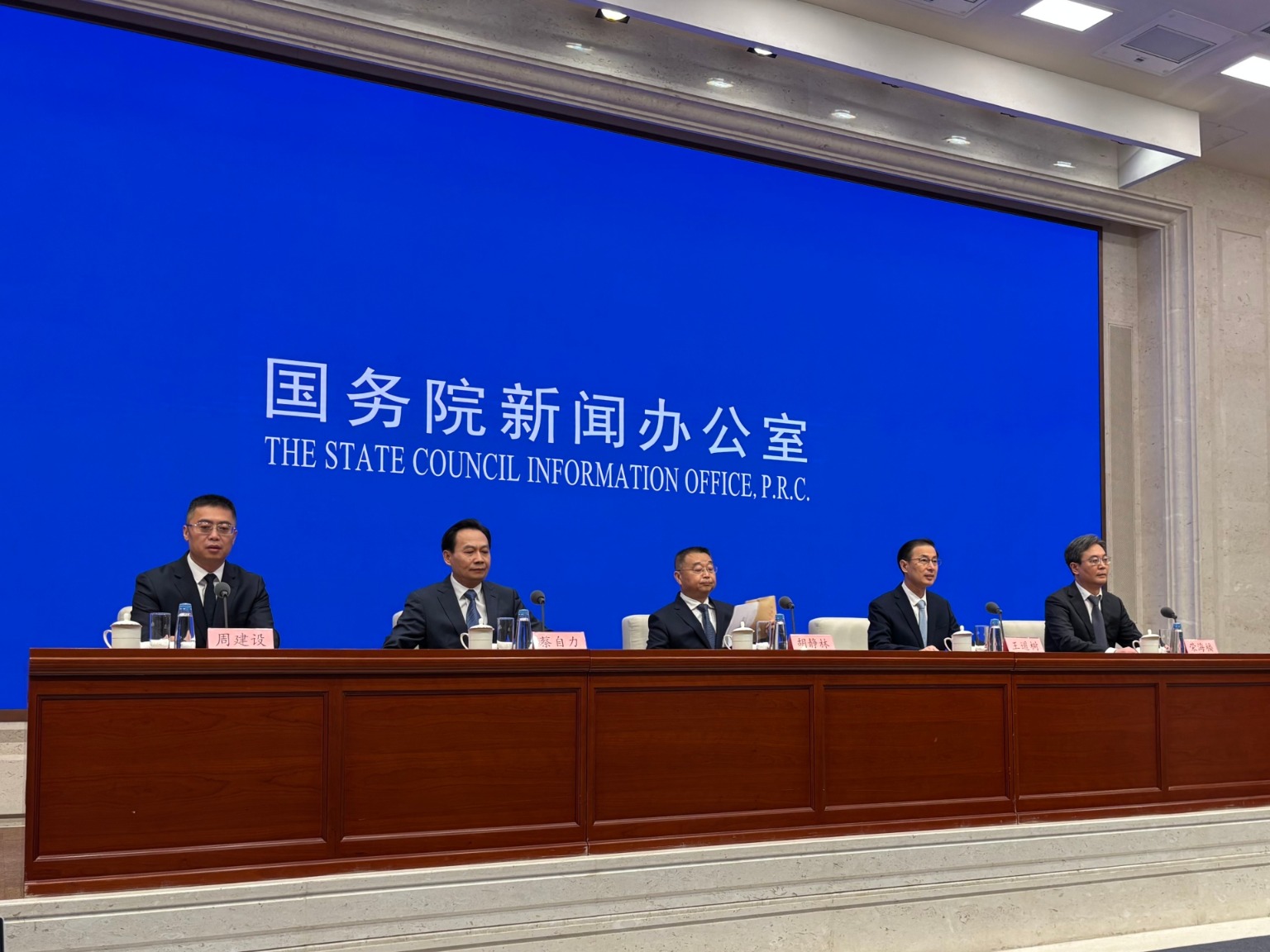
高质量完成“十四五”规划|“十四五”期间我国减税降费预计超10万亿元
Sou Hu Cai Jing· 2025-07-28 04:37
新华社北京7月28日电(记者刘开雄、申铖)国家税务总局在28日国新办举行的"高质量完成'十四五'规 划"系列主题新闻发布会上披露,"十四五"期间,我国累计新增减税降费预计超过10万亿元。 "2021年至今年上半年,全国累计新增减税降费9.9万亿元,预计到今年底将达10.5万亿元,年均新增减 税降费超2万亿元。"国家税务总局副局长蔡自力说。 在国家税费优惠及其他政策的有力推动下,高质量发展取得了积极成效。 税收发票数据显示,2021年至2024年,制造业企业销售收入占全部企业的比重保持在29%左右。特别是 制造业"高端化、智能化"稳步推进,装备制造业、高技术制造业销售收入年均分别增长9.6%和10.4%。 研发费用加计扣除是促进科技创新的重要税收支持政策。"十四五"期间,我国研发费用加计扣除政策不 断优化、力度不断加大,其中2024年度企业享受研发费用加计扣除3.32万亿元、享受户数61.5万户,较 2021年度分别增长25.5%和16.7%。 "税务部门始终坚持落实税费优惠政策实打实,依托税收大数据精准开展'政策找人',在政策直达快享 中增强了广大纳税人缴费人的获得感。"蔡自力说。(完) 蔡自力介绍,从政策导 ...
31个省份上半年GDP出炉:整体符合预期 中部地区表现亮眼
Zheng Quan Ri Bao· 2025-07-27 15:45
Core Insights - Hainan's GDP for the first half of 2025 reached 370.185 billion yuan, showing a year-on-year growth of 4.2% [1] - The national GDP for the same period was 66,053.6 billion yuan, with a growth rate of 5.3% [2] - 20 provinces reported GDP growth rates exceeding the national average, with Tibet leading at 7.2% [2] - Economic performance across provinces indicates a trend of exceeding initial annual growth targets, driven by high-tech manufacturing and consumption policies [2][3] Economic Performance - Guangdong topped the GDP rankings with 68,725.4 billion yuan, followed by Jiangsu, both exceeding 60,000 billion yuan [3] - Six provinces reported GDP exceeding 30,000 billion yuan, indicating strong economic performance [3] - The central region, particularly provinces like Hubei and Sichuan, showed higher growth rates compared to eastern provinces, reflecting a shift in economic dynamics [4] Future Economic Strategies - There is an emphasis on boosting domestic demand through investment and consumption initiatives in the second half of the year [4][5] - Investment strategies will focus on infrastructure projects and public investment to stimulate economic growth [5] - Consumption policies will include measures like "old-for-new" programs to enhance consumer demand [5] - The need for regional economic coordination and the transfer of industries from eastern to central and western regions is highlighted [4][5]
【新华解读】6月份我国规上工业企业利润边际改善 后期向好态势有望延续
Xin Hua Cai Jing· 2025-07-27 12:52
Core Viewpoint - In June, China's industrial enterprises showed signs of profit recovery, particularly in new momentum industries like equipment manufacturing, signaling a positive trend in the real economy [1][2]. Group 1: Profit and Revenue Trends - In June, the total profit of large-scale industrial enterprises in China reached 715.58 billion yuan, a year-on-year decrease of 4.3%, but the decline narrowed significantly by 4.8 percentage points compared to May [1]. - The revenue of large-scale industrial enterprises grew by 1.0% year-on-year in June, maintaining the same growth rate as in May [1]. - For the first half of the year, revenue increased by 2.5% year-on-year, while profits decreased by 1.8%, indicating a widening decline compared to the first five months but a narrowing decline compared to the end of 2024 [1]. Group 2: Factors Influencing Profitability - The overall decline in profits for large-scale industrial enterprises has been attributed to external environmental shocks, ongoing elimination of outdated capacity, low Producer Price Index (PPI), and insufficient domestic demand [2]. - The average accounts receivable collection period for large-scale industrial enterprises was 69.8 days at the end of June, a decrease of 0.7 days from the end of May, indicating improved cash flow [2]. Group 3: Policy Impact and Sector Performance - The implementation of the "Regulations on Payment of Funds to Small and Medium-sized Enterprises" since June 1 has improved overall collection efficiency for industrial enterprises, particularly benefiting private enterprises [3]. - In June, the profit growth rate for large-scale manufacturing enterprises shifted from a decline of 4.1% in May to an increase of 1.4%, driven by policies supporting equipment manufacturing and high-tech industries [3]. - Profits in the equipment manufacturing sector increased by 9.6% year-on-year in June, contributing significantly to the overall profit growth of large-scale industrial enterprises [3]. Group 4: Industry Trends and Future Outlook - The manufacturing sector is advancing towards high-end, intelligent, and green production, with significant profit increases in high-end equipment manufacturing and green manufacturing sectors [4]. - The profit growth rates for specific industries, such as electronic materials and lithium-ion battery manufacturing, reached 68.1% and 72.8% respectively in June [4]. - Looking ahead, the recovery of industrial enterprise profits is expected to continue, supported by domestic demand expansion and regulatory policies aimed at stabilizing market competition [5].
2025年1-6月工业企业盈利数据的背后:工业利润:反内卷支撑或较为渐进
ZHESHANG SECURITIES· 2025-07-27 09:56
Group 1: Industrial Profit Trends - In the first half of 2025, the total profit of industrial enterprises reached CNY 34,365.0 billion, a year-on-year decrease of 1.8%[2] - The profit growth rate slowed down, with June showing a 4.3% year-on-year decline, narrowing the drop by 4.8 percentage points compared to May[2] - The revenue profit margin for industrial enterprises was 5.15%, which is 0.22 percentage points lower than the same period last year[2] Group 2: Price and Demand Dynamics - The Producer Price Index (PPI) for June 2025 decreased by 3.6% year-on-year and 0.4% month-on-month, significantly impacting profit growth[2] - Effective demand remains insufficient, and industrial product prices are low, which continues to drag on profit recovery[3] - The industrial capacity utilization rate in Q2 2025 was 74.0%, slightly down by 0.1 percentage points from Q1, indicating a low position that hinders cost reduction[2] Group 3: Policy Impact and Sector Performance - The "Two New" policies are showing continued support for profit recovery, particularly benefiting the equipment manufacturing sector[3] - In June, the equipment manufacturing sector's revenue grew by 7.0% year-on-year, with profits increasing by 9.6%, contributing 3.8 percentage points to overall industrial profit growth[4] - High-end equipment manufacturing sectors, such as electronic materials and aircraft manufacturing, saw profit increases of 68.1% and 19.0% respectively[4] Group 4: Inventory and Market Conditions - As of June 2025, the inventory of finished products for industrial enterprises increased by 3.1% year-on-year, reflecting a flattening inventory cycle[9] - The current inventory-to-sales ratio remains high, indicating a willingness among enterprises to reduce inventory despite ongoing pressures[9] - The MPI industrial inventory forward index suggests that the inventory cycle will continue to exhibit a flattening characteristic throughout 2025[9]
21社论丨积极政策组合将推动下半年经济高质量发展
2 1 Shi Ji Jing Ji Bao Dao· 2025-07-25 22:45
Fiscal Performance - In the first half of the year, the national general public budget revenue was 115,566 billion yuan, a year-on-year decrease of 0.3%, with the decline narrowing by 0.8 percentage points compared to the first quarter [1] - Overall, the fiscal operation in China shows a stable trend despite a complex international environment [1] Economic Policies - The government is implementing more proactive macro policies to expand domestic demand and stabilize the market, ensuring overall economic stability in the first half of the year [1] - Structural support will be increased in the second half of the year to safeguard high-quality development, with a significant acceleration in the issuance of special bonds [2] Investment and Consumption - Manufacturing investment structure is continuously upgrading, with high-tech manufacturing showing strong growth, providing robust support for sustainable economic development [3] - Policies to promote consumption have been implemented, including expanding the scope of trade-in for consumer goods and increasing support for service consumption [3] Emerging Industries - The development of new productive forces is accelerating the high-quality development of key industries, with AI technology playing a crucial role in various sectors [4] - The semiconductor industry is expected to maintain an upward trend due to the growing demand for chips driven by AI applications [4] Real Estate Market - The government is intensifying efforts to stabilize the real estate market, optimizing supply structure and promoting long-term stable development [4] - More special bond funds are expected to be allocated to urban renewal projects, improving living conditions for residents [4] Market Competition - Measures will be taken to curb "involution" competition and optimize industrial layout, maintaining fair competition and eliminating backward production capacity [5][6] - Strengthening market supervision is essential to maintain market order and eliminate low-quality, low-price market phenomena [6]
上半年,济南市规模以上制造业增加值同比增长9.0%
Qi Lu Wan Bao Wang· 2025-07-25 12:38
Core Insights - Jinan's industrial production showed stable and rapid growth in the first half of 2025, with a year-on-year increase of 8.2% in industrial added value, outperforming national and provincial averages by 1.8 and 0.5 percentage points respectively [1] - The manufacturing sector in Jinan also experienced steady growth, with a 9.0% increase in added value, contributing significantly to the overall industrial growth [1] Group 1: Manufacturing Sector Performance - The added value of Jinan's manufacturing industry grew by 9.0% year-on-year, exceeding the overall industrial growth by 0.8 percentage points, and contributing 7.4 percentage points to the city's industrial growth [1] - Key industries such as computer communication and other electronic equipment manufacturing, as well as automobile manufacturing, saw substantial increases of 80.7% and 33.1% respectively, together contributing 9.9 percentage points to the overall industrial growth [1] - Conversely, the black metal smelting and rolling processing industry experienced a decline of 13.2% [1] Group 2: Key Sector Growth - The equipment manufacturing sector recorded a remarkable 24.8% increase in added value, significantly higher than the overall industrial and manufacturing growth rates by 16.6 and 15.8 percentage points respectively, contributing 11.0 percentage points to the overall industrial growth [3] - High-tech manufacturing also showed strong performance with a 25.0% increase in added value, surpassing the overall industrial growth rate by 16.8 percentage points and contributing 4.8 percentage points to the overall industrial growth [3] Group 3: Production and Sales Coordination - Jinan's industrial products maintained stable supply, with significant increases in production for key products such as new energy vehicles, which saw a doubling in output, and server production, which grew by 11.5% [3] - The production of generator sets increased by 42.7%, while crude steel and steel product outputs declined by 10.2% and 14.1% respectively [3] - The industrial sales rate in Jinan reached 98.8%, exceeding the provincial average by 4.4 percentage points, and showing improvements compared to both the previous quarter and the same period last year [3]

滚动丨广东9市公布经济“半年报”,梅州、肇庆、湛江、惠州、潮州增速超5%
Nan Fang Nong Cun Bao· 2025-07-25 10:32
Economic Overview - Guangdong province has released economic performance reports for the first half of 2025, with nine cities reporting growth rates exceeding 5% [2][3] - The overall economic growth rate for Guangdong province is 4.2% [6] City Performance - Meizhou's GDP reached 72.059 billion yuan, with an actual growth rate of 5.7%, surpassing the initial target of 5% [4] - Zhaoqing, Huizhou, and Chaozhou also reported growth rates above 5%, with Zhaoqing at 5.2% and the other three cities at 5.1% [5] - Dongguan and Qingyuan both recorded growth rates of 4.8%, exceeding the provincial average [6] - Yangjiang and Jieyang had lower growth rates of 3.5% and 3.4%, respectively [7] Sector Contributions - In Meizhou, the primary industry added value was 10.124 billion yuan (3.0% growth), the secondary industry 22.612 billion yuan (7.5% growth), and the tertiary industry 39.323 billion yuan (5.6% growth), indicating strong contributions from the secondary and tertiary sectors [10][11] - Advanced manufacturing in Meizhou saw an 8.4% increase in industrial output, with high-tech manufacturing growing by 21.7% [13][14] - Zhaoqing's primary industry added value was 17.534 billion yuan (4.8% growth), secondary industry 53.638 billion yuan (4.9% growth), and tertiary industry 64.629 billion yuan (5.6% growth), showing robust performance across all sectors [20][21] Industrial Growth - Huizhou's GDP was 291.006 billion yuan with a growth rate of 5.1%, driven by a 7.7% increase in the secondary industry [32] - Dongguan's GDP reached 606.784 billion yuan with a growth rate of 4.8%, supported by a 5.3% increase in the secondary industry [36] - Qingyuan's GDP was 106.855 billion yuan with a growth rate of 4.8%, with the secondary industry growing by 5.4% [40] Investment and Projects - In Zhanjiang, the GDP was 181.126 billion yuan with a growth rate of 5.1%, and the city has successfully attracted high-quality projects, with industrial output increasing by 129.9% [44][48] - The new projects in Zhanjiang totaled 3.29 billion yuan in investment [48] Challenges - Jieyang's GDP growth was 3.4%, lower than the previous year's 3.9%, with the secondary industry growing by only 3.6% [50][52] - Yangjiang's GDP growth remained at 3.5%, with the secondary industry increasing by 2.3% [54][56]
