
冶金

Search documents
加快制造业数智化转型升级 扎实推进国有企业创新发展
Ren Min Ri Bao· 2025-11-19 22:20
Group 1 - The core message emphasizes the need for the digital and intelligent transformation of the manufacturing industry to strengthen the foundation of the real economy [2] - The government aims to integrate artificial intelligence with enterprise research and production processes, fostering industry-specific models and promoting organizational changes for high-quality development [2] - There is a focus on enhancing the independent innovation capabilities of state-owned enterprises, with an emphasis on increasing investment in basic research and achieving breakthroughs in key technologies [3] Group 2 - The initiative encourages leading enterprises to establish internationally advanced "lighthouse factories" and smart production lines, while guiding small and medium-sized enterprises to accelerate their digital transformation [2] - State-owned enterprises are urged to collaborate with universities and research institutions to address industry needs, enhance the innovation ecosystem, and improve collaborative innovation efficiency [3] - The government is committed to promoting the development and application of domestic industrial software, ensuring compatibility with production equipment to solidify the foundation for digital transformation [2][3]
张国清在贵州、重庆调研时强调 加快制造业数智化转型升级 扎实推进国有企业创新发展
Xin Hua She· 2025-11-19 10:23
Group 1 - The core viewpoint emphasizes the need for the digital and intelligent transformation of the manufacturing industry and the innovation development of state-owned enterprises, aligning with the spirit of the 20th Central Committee of the Communist Party of China [1][2] - The focus is on integrating artificial intelligence with enterprise research and development, production, and manufacturing processes to enhance high-quality development in the manufacturing sector [1] - There is a call for state-owned enterprises to improve their independent innovation capabilities and to increase investment in basic research, particularly in key and frontier technologies [2] Group 2 - The initiative includes the establishment of verification platforms for concept and pilot testing, promoting a cycle of technological breakthroughs, scenario validation, and industrial application [2] - Encouragement for leading enterprises to build internationally advanced "lighthouse factories" and smart production lines, while guiding small and medium-sized enterprises to accelerate their digital transformation [1] - Collaboration between state-owned enterprises, universities, research institutions, and private enterprises is essential to optimize the innovation ecosystem and enhance overall collaborative innovation efficiency [2]
2024年内蒙古全部工业增加值历史性突破万亿元大关
Zhong Guo Xin Wen Wang· 2025-11-19 01:03
Core Points - Inner Mongolia's total industrial added value is set to exceed 1 trillion yuan in 2024, marking a historic milestone [1] - The average annual growth rate of industrial added value is projected at 9.3%, contributing 38% to the GDP, an increase of 5.6 percentage points compared to the end of the 13th Five-Year Plan [1] - Inner Mongolia ranks 14th nationally in total industrial output, moving into the upper-middle tier of the country [1] Industrial Structure - The industrial sector in Inner Mongolia is primarily composed of energy and manufacturing, with over 90 industrial products leading in national production capacity [2] - The energy sector includes coal production, total power generation capacity, and renewable energy, with 15 energy products ranking first in the country [2] - Inner Mongolia is the first province to exceed 100 million kilowatts in renewable energy capacity [2] Manufacturing Sector - The manufacturing sector has established key industries such as metallurgy, chemicals, agricultural and livestock product processing, and modern equipment manufacturing, with an average annual growth rate of 10.1% during the 14th Five-Year Plan [2] - Manufacturing contributes over 50% to the industrial added value, serving as the main engine for industrial growth [2] - In the manufacturing sector, 76 products have the largest production capacity in the country, including 21 in chemicals, 14 in new materials, 4 in modern equipment, 18 in biomedicine, and 9 in agricultural processing [2] Policy and Development - During the 14th Five-Year Plan, Inner Mongolia has improved mechanisms for the coordinated development of traditional, emerging, and future industries [2] - Policies have been developed for key industries such as coking, rare earths, lithium, fluorine chemicals, and dairy, enhancing the support and adaptability of the industrial policy system [2] - The establishment of a key industry guidance fund and the implementation of low-altitude economy development plans are part of the efforts to strengthen and optimize key industries [2]
中金 | 解码再工业化(二):美国制造业回流进行时——万亿投资背后的现实图景
中金点睛· 2025-11-18 23:59
Core Insights - The article discusses the trend of re-industrialization in the U.S. manufacturing sector, highlighting the impact of government policies, investment patterns, and the challenges faced in labor supply and infrastructure [1][2][4]. Group 1: Re-Industrialization Trends - The U.S. manufacturing sector has undergone a transformation from de-industrialization to re-industrialization, with government policies playing a crucial role through subsidies, tax cuts, and support for innovation [2][3]. - From 2020 to 2024, the share of spending on electronic and electrical equipment construction increased from 12% to 55%, with a compound annual growth rate (CAGR) of 93% [2][9]. - By the end of 2024, planned large project investments in the U.S. are expected to reach $1.7 trillion, although many projects remain in the planning stage [2][39]. Group 2: Investment and Production - Investment in manufacturing has significantly increased during Biden's administration, particularly in high-end manufacturing sectors [3][5]. - The actual output of the manufacturing sector has not yet fully reflected the increased investment, with a historical lag of about three years between construction spending and gross value added (GVA) [3][6]. - The GVA of U.S. manufacturing has shown a compound growth rate of 1.4% from 2019 to 2024, which is slower than the overall economic growth rate [6][19]. Group 3: Trade and Employment - The trade deficit in U.S. manufacturing has continued to expand, reaching $1.2 trillion by 2024, with significant deficits against Mexico and Southeast Asia [7][21]. - Employment in the U.S. manufacturing sector has stabilized, with the number of manufacturing jobs increasing from 11.51 million in 2010 to 12.82 million in 2024 [26][27]. - The share of manufacturing jobs in non-farm employment has remained stable at around 8-9% since 2010 [3][26]. Group 4: Challenges in Re-Industrialization - The U.S. faces challenges in labor supply and infrastructure, with a notable skills gap in the workforce and a lack of supporting infrastructure for manufacturing [4][46]. - Labor costs in the U.S. are significantly higher than in China, with skilled labor being particularly expensive and in short supply [42][47]. - The article highlights that the average wage for manufacturing workers in the U.S. is approximately five times that of their Chinese counterparts, contributing to higher overall manufacturing costs [42][43].


宏达股份:11月17日召开董事会会议
Mei Ri Jing Ji Xin Wen· 2025-11-17 10:11
2024年1至12月份,宏达股份的营业收入构成为:化工业占比57.09%,冶金业占比39.42%,其他业务占 比2.98%,酒店业占比0.5%。 每经AI快讯,宏达股份(SH 600331,收盘价:10.93元)11月17日晚间发布公告称,公司第十届第二十 四次董事会会议于2025年11月17日在中海国际中心H座14楼会议室以现场结合视频通讯方式召开。会议 审议了《关于续聘四川华信(集团)会计师事务所为公司2025年度财务审计机构和内控审计机构的议 案》等文件。 每经头条(nbdtoutiao)——展望"十五五" | 专访尹艳林:让有钱且愿消费的人顺利消费;个税起征点可 提高,最高边际税率可下调,让有关群体少缴税、多收入 (记者 张明双) 截至发稿,宏达股份市值为289亿元。 ...

赵伟:“十五五”三大主线与超常规科技攻关
申万宏源宏观· 2025-11-17 05:46
Core Viewpoint - The "15th Five-Year Plan" is a critical period for China's modernization, focusing on restructuring economic growth logic, shifting from optimizing traditional industries to "extraordinary" technological breakthroughs, and emphasizing fiscal and financial reforms to alleviate fiscal constraints and promote growth towards the 2035 vision [2][3]. Group 1: Key Tasks and Economic Context - The "15th Five-Year Plan" serves as a transitional phase, linking the "14th Five-Year Plan" and the 2035 modernization goals, requiring both strategic continuity and innovation [4]. - The plan addresses significant changes in the global landscape, domestic economic transformation, and the impact of a new technological revolution, which collectively shape the macro context for the plan [4][5]. Group 2: Economic Growth Baseline and Targets - To double the economic output by 2035 compared to 2020, the nominal GDP growth rate must average around 4% from 2025 to 2035, while per capita GDP must grow at approximately 3.9% [6][7]. - The plan sets ambitious targets for economic growth, reflecting a commitment to high-quality development and the integration of rapid economic growth with long-term stability [7]. Group 3: Industrial Policy and Technological Innovation - The plan prioritizes the transformation of traditional industries, emphasizing quality upgrades in sectors like mining, metallurgy, and chemicals to enhance global competitiveness [7][8]. - It outlines strategic emerging industries and future industries, including new energy, aerospace, and quantum technology, establishing a gradient development framework [7][8]. - Technological modernization is highlighted as a key support for China's modernization, with a focus on breakthroughs in critical core technologies across various sectors [8][9]. Group 4: Service Sector Development - The service sector is identified as having significant growth potential, with a notable gap in consumer spending compared to developed countries, indicating a potential market of nearly 3 trillion yuan [9]. - Systematic solutions for expanding domestic demand include increasing public service spending and enhancing the supply of quality consumer goods and services [9]. Group 5: Fiscal and Financial Reforms - The "15th Five-Year Plan" emphasizes reforms aimed at enhancing macroeconomic governance, with over 300 reform tasks to be completed by 2029 across various sectors [10][11]. - Key reform areas include market-oriented reforms, fostering new productive forces, and achieving green transitions, with a focus on establishing a unified national market [11][12]. - Financial reforms are crucial for improving local fiscal sustainability, addressing challenges in local government financing, and ensuring a clear division of responsibilities between central and local governments [12][13].
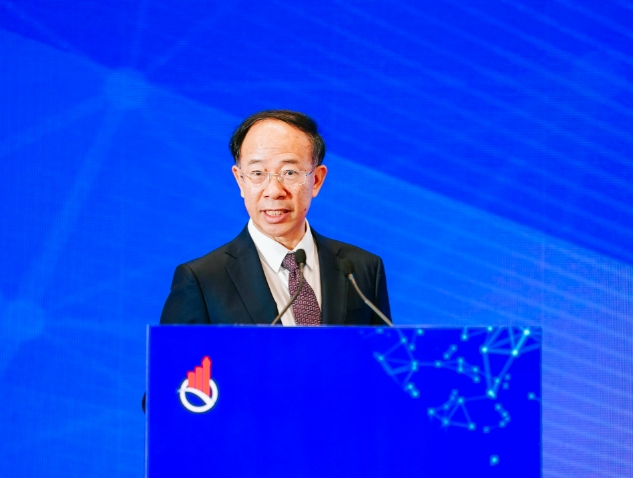
中央财经委员会办公室原副主任尹艳林:“十五五”上市公司高质量发展要从六个方面着力
Zheng Quan Ri Bao· 2025-11-14 05:32
Core Points - The meeting emphasizes the importance of technology empowering listed companies and returning value to patient capital, aligning with the current state of the Chinese economy [1] - The 20th Central Committee's Fourth Plenary Session has significant implications for the next five years, particularly regarding the 15th Five-Year Plan [1][2] Group 1: Achievements of Listed Companies - Listed companies have made significant achievements during the 14th Five-Year Plan, with a notable shift towards new and practical characteristics [2] - The number of listed companies in strategic emerging industries has increased, with their proportion rising from 42.6% to 52.3%, a 10 percentage point increase [2] - The profit share of listed companies in the real economy has reached 52%, surpassing the financial sector for the first time [2] - The market capitalization of the electronics sector has exceeded that of banking, with electronics at 12.7% compared to banking's 9.9% [2] Group 2: Innovation and R&D Investment - Innovation capabilities have significantly improved, with R&D investment by listed companies reaching 6.5 trillion yuan, a 189.3% increase compared to previous periods [3] - R&D investment accounted for 21.1% of revenue for listed companies in the first half of the year, reflecting a growing commitment to innovation [3] Group 3: Mergers and Acquisitions - The pace of mergers and acquisitions has accelerated, with over 14,000 cases and a transaction value of 7.6 trillion yuan during the 14th Five-Year Plan [4] - Mergers and acquisitions are seen as a means to optimize resource allocation and achieve technological upgrades [4] Group 4: Dividend Policies and Shareholder Returns - The regulatory framework has strengthened, with a focus on enhancing dividend policies, leading to a cumulative dividend payout of 10.4 trillion yuan, an 85.7% increase [5] - Share buybacks have also increased significantly, from over 200 billion yuan during the 13th Five-Year Plan to over 500 billion yuan [5] Group 5: Corporate Governance and Internationalization - Corporate governance standards have improved, with a focus on independent functioning and regulatory compliance [6] - The international competitiveness of listed companies has increased, with 14% of their business coming from overseas markets [6] Group 6: Future Directions and Strategic Goals - The 15th Five-Year Plan emphasizes high-quality development, with specific goals for nurturing new growth drivers and optimizing industrial structures [7][8] - The plan highlights the importance of deepening the real economy and integrating smart, green, and fusion development strategies [8][9] - There is a strong emphasis on enhancing technological empowerment and increasing R&D capabilities to support high-quality development [9][10]
轻工纺织产业“三年计划”出炉 山东19条产业链全覆盖
Da Zhong Ri Bao· 2025-11-13 01:16
Core Insights - The implementation of four action plans has achieved full coverage of 19 iconic industrial chains in Shandong Province, focusing on technological innovation in key industries [1] Group 1: Robotics Industry - The robotics industry will leverage the strategic opportunity of integrating robotics technology with artificial intelligence, focusing on key components, software systems, and complete machine manufacturing [2] - The plan aims to develop advanced servo motors, operating system software, and special robots, while expanding application scenarios across various sectors such as automotive, home appliances, and healthcare [2] - The goal is to create 100 representative benchmark application scenarios, positioning Shandong as a national hub for robotics technology innovation [2] Group 2: Modern Food Industry - The modern food industry will emphasize safety, nutrition, green, and intelligent development, addressing the entire supply chain from raw materials to processing equipment [2] - A technical system will be established for food safety, including traceability, quality control, and green packaging, enhancing consumer safety and satisfaction [2] - The industry aims to create over 100 innovative products, significantly increasing the added value of modern food [2] Group 3: Light Industry and Textiles - The light industry and textiles sector will focus on high-end, green, and intelligent development, enhancing low-carbon production processes and advanced product development [3] - Innovations will include multifunctional advanced fiber products and high-end medical textiles, as well as new paper products for specialized applications [3] Group 4: Modern Metallurgy Industry - The modern metallurgy industry will accelerate the development of high-end raw materials and precision processing technologies, targeting products like ultra-high-strength steel and marine aluminum alloys [3] - The focus will also be on developing frontier materials such as rare earth functional materials and special magnesium and titanium alloys to capture future industry opportunities [3] Group 5: Implementation Measures - The four action plans propose specific measures for promoting innovation resources, building innovation platforms, and ensuring the transformation of scientific achievements [3] - The provincial science and technology department will implement policies to inject new momentum into the construction of a modern industrial system [4]
张家港:统战赋能产业链 跑出向新“加速度”
Xin Hua Ri Bao· 2025-11-12 07:07
Core Insights - Zhangjiagang Municipal United Front Work Department integrates political, organizational, intellectual, and resource advantages into the industrial chain development, forming a new high-quality development pattern of "United Front + Industrial Chain" [1] Group 1: Talent Attraction and Innovation - Implementation of talent policies such as "Intelligent Gathering Port City" and "1+1+N" series, offering up to 5 million yuan housing subsidies for overseas talents and up to 100 million yuan comprehensive support for top talent teams [2] - Establishment of four overseas talent action groups focusing on key industries like metallurgy, biomedicine, and high-end textiles to enhance innovation in Zhangjiagang [2] - Hosting multiple overseas talent exchange events, resulting in hundreds of overseas talents engaging with local talents and institutions, injecting new energy into industrial chain innovation [2] Group 2: Collaborative Ecosystem Development - Formation of the "New Union Medical+" association to foster collaboration in the new medical industry, focusing on innovation platforms, technology breakthroughs, and market expansion [3] - Investment of 2.5 million yuan to create a smart entrepreneur club, coordinating various government departments to support enterprise growth and establish a service alliance for precise matching of enterprise needs and policy offerings [3] - Promotion of a service model combining business associations with industrial chains to enhance synergy between business development and industrial growth [3] Group 3: Education and Industry Integration - Development of a new ecosystem for industry-education integration involving government, schools, associations, and enterprises, focusing on key industries like new materials and high-end textiles [4] - Collaboration with leading companies to establish training bases and "order classes" to enhance practical skills and employment opportunities for students [4] - Establishment of a "Hometown Liaison Station" to provide support for employment and business development, enhancing interaction between schools and enterprises [4]
昆明“十四五”:经济总量连续跨过7000亿元、8000亿元台阶
Sou Hu Cai Jing· 2025-11-11 02:43
Economic Growth - Kunming's economic total has continuously surpassed 700 billion and 800 billion yuan since the start of the 14th Five-Year Plan, contributing to the province's economic growth rate increasing from 13.3% in 2020 to 31.9% in 2024 [1] - The city has focused on industrial development, with five industry chains including chemicals, metallurgy, tobacco, digital economy, and biomedicine reaching a scale of 100 billion yuan, while two additional chains in equipment manufacturing and new materials are accelerating towards the same goal [1] Industrial Development - Kunming has implemented reforms to address development challenges and stimulate market dynamics, establishing key industrial cooperation parks such as the Mohan-Ding border cooperation zone and the Shanghai-Yunnan Port Kunming Science and Technology City [1] - A total of 49 projects have been launched in the Mohan area, and the Shanghai-Yunnan Port Kunming Science and Technology City has attracted 123 enterprises [1] Investment Environment - The city has been recognized as one of the top investment hotspots in China for three consecutive years, significantly improving its business environment [1] - Kunming has taken the lead in the western region by introducing regulations to promote the development of the private economy and establishing an "Entrepreneur Day" [1] Trade and Tourism - Kunming is transforming its geographical advantages into developmental strengths, expanding its openness to a broader range of areas and depths [2] - The city's foreign trade import and export volume has increased from 54.59% in 2021 to 61.7% in 2024, indicating a significant rise in its trade activities [2] - In 2024, Kunming is expected to receive 996,000 inbound tourists, a year-on-year increase of 147.6%, with international tourism revenue reaching 417 million USD, up 129.6% year-on-year [2]