评级机构

Search documents
穆迪:散户投资者对私人信贷敞口不断增加将带来风险
智通财经网· 2025-05-08 03:43
Core Insights - Moody's warns that the influx of retail investors into private credit assets poses increasing risks to the U.S. economy [1] - Since the pandemic, the share of credit markets has shifted from public banks to private credit firms, with assets under management exceeding $2 trillion since 2014 [1] - The trend of retail investment in private credit continues despite market volatility, driven by the rise of open-ended perpetual funds [1] Group 1 - Retail investors are gaining exposure to the expanding private credit sector, primarily due to the emergence of open-ended perpetual funds that have fewer restrictions compared to traditional closed-end funds [1] - The popularity of exchange-traded funds (ETFs) focused on private credit is increasing, which may redefine access to private markets, provided that appropriate safeguards are in place [1] Group 2 - Moody's highlights that ETFs and perpetual funds offer greater flexibility in terms of investment acceptance and redemption compared to closed-end funds [2] - However, this flexibility introduces risks similar to bank runs, as mismatches between liquidity terms and investor expectations could undermine trust in fund sponsors [2] - The credit agreements in perpetual funds are less restrictive compared to closed-end funds, which raises concerns about liquidity management and transparency, essential for long-term success [2]

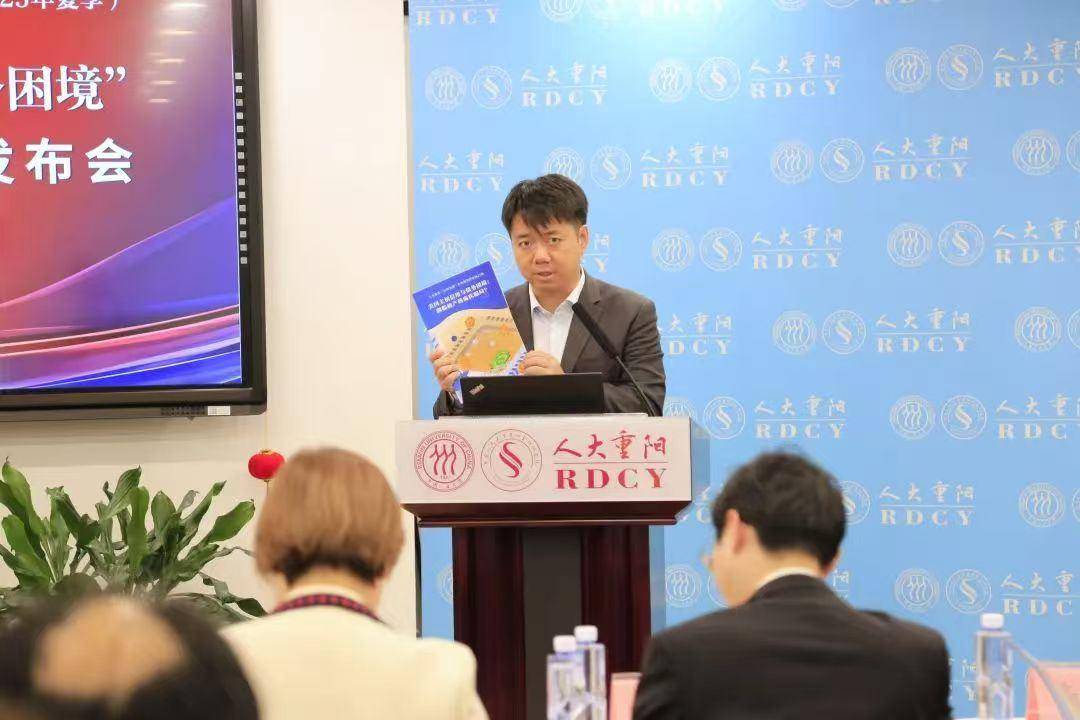
人大重阳发布报告 揭示美债濒临“庞氏骗局”破产边缘
Sou Hu Cai Jing· 2025-05-05 12:15
Core Viewpoint - The report from Renmin University of China's Chongyang Institute for Financial Studies warns of a significant risk of collapse in the U.S. economy and its debt system, predicting that 2025 may mark the year of a U.S. debt crisis, likening it to a Ponzi scheme nearing bankruptcy [1][4]. Economic and Financial Analysis - The U.S. national debt has reached $36.2 trillion, accounting for 123% of GDP, significantly exceeding the internationally recognized warning line of 60% [4]. - The report highlights that the U.S. government is increasingly reliant on "borrowing to pay off old debts," with approximately $9.3 trillion of public debt maturing in the 2025 fiscal year, representing one-third of total debt [4]. - Interest payments on U.S. debt are projected to reach $882 billion in the 2024 fiscal year, a 33.7% increase year-over-year, surpassing military spending for the first time [4]. - Cumulative interest payments over the next decade could total $13.8 trillion, nearly double the inflation-adjusted total from the past 20 years [4]. Policy Implications - The report criticizes the policies of the Trump administration, particularly the "reciprocal tariffs" and extreme fiscal tightening, which have led to a significant rise in inflation expectations and a drop in consumer confidence [3]. - It suggests that the combination of high tariffs and tax cuts will exacerbate social inequality and push inflation closer to 5%, further destabilizing the economy [4][5]. - The report warns that the U.S. government's loss of credibility under the current administration could lead to a market collapse similar to that of 2008 [3][4]. Global Economic Impact - The report indicates that the U.S. is increasingly viewed as a global adversary due to its aggressive tariff policies, which could lead to a contraction in global trade [5]. - It predicts that the collapse of U.S. debt will not signify the end of the international financial system but rather the beginning of a long process of restructuring the global credit system, with a shift towards a multipolar currency system [5]. Recommendations for China - The report advises China to strengthen its financial defenses against the risks posed by U.S. debt, including establishing a monitoring and early warning system for U.S. debt defaults [6]. - It emphasizes the need for China to enhance its economic resilience, improve domestic consumption, and promote the internationalization of the Renminbi [6].

泰国央行将利率降至1.75% 以应对贸易战与地震双重挑战
Xin Hua Cai Jing· 2025-04-30 09:08
穆迪评级机构周二晚将泰国信用评级展望从"稳定"下调至"负面",主要基于对泰国经济和财政状况进一 步恶化的担忧。穆迪特别提到,美国关税政策带来的不确定性对依赖出口的泰国经济构成重大挑战。 尽管面临多重经济压力,穆迪确认了泰国Baa1主权信用评级,认可其稳健的制度和治理结构,以及有 效的货币政策,这体现在泰国长期以来保持较低且稳定的物价水平,并有效控制通胀预期。 本月中旬,泰国央行助理行长Sakkapop Panyanukul表示,泰国应为外国投资放缓做好准备,因全球贸易 不确定性增加可能带来长期冲击。 鉴于美国计划提高关税,泰国央行已将美国经济增长放缓及全球出口萎缩纳入考量,并下调了GDP增长 预期。泰国央行称,若美国加征关税,泰国今年的经济增长率可能仅为1.3%。 泰国央行指出,经济下行的风险还源于游客减少。相较之下,这与泰国国家旅游局局长此前的讲话存在 较大分歧。 新华财经北京4月30日电(崔凯)泰国央行决定将关键利率降至1.75%,这是自2024年10月以来的第三 次降息。此次降息使利率降至两年来的最低点,符合多数经济学家的预期。 4月27日,泰国国家旅游局局长塔帕妮表示,尽管中国等市场的外国游客数量出现 ...
美股崩了
猫笔刀· 2025-04-04 14:18
清明节休假,全家老老小小的住酒店度假,这会晚上都去游泳池玩水了,就我一个人在房间里上钟。 今天虽然不开盘,但非常热闹,发生的事不少,你们听我一件一件说。 首先是中国决定对美发起关税报复,对原产于美国的所有商品加征34%关税,同时把一批美国企业列入 了出口管控管制名单。不仅态度十分强硬,而且反应迅速,美国那边刚宣布第二天中国的反制措施就出 来了,说明很早就已经有相关预案,就等美国出招立刻予以还击。 两边互加34%关税,这外贸基本上就没法做了,几千亿美元的生意,一个不打算再进口了,一个不打算 再出口了,一拍两散,就这么着吧。 美国之所以如此蛮横,底气在于他们是全球最大的贸易逆差国,而且比第2到第10的贸易逆差额加起来 还多,大部分国家在对美贸易中是赚钱的,所以不到万不得已不愿和美国翻脸。另外美国还是全球最大 的消费市场,将近20万亿的规模,占全球的1/3,如果放弃美国市场,多出来的商品卖到哪是一个很棘 手的问题。 具体到中美贸易,去年美国从中国进口5246亿,中国从美国进口1636亿,那显而易见的一笔账,都收 34%关税的话美国能收到更多的钱。但即便如此中国依然在第一时间做出了反击,在全球大多数国家和 地区对美关 ...
36万亿美债不还了?特朗普拒绝谈和,中国忍无可忍,断美“命脉”
Sou Hu Cai Jing· 2025-03-28 16:08
Group 1 - The U.S. national debt has surpassed $36 trillion as of the end of 2024, representing a nearly 40% increase since 2020, with an annual growth rate of 9%, significantly outpacing GDP growth [1][3] - The U.S. government has implemented three large-scale stimulus packages totaling $5 trillion since the COVID-19 pandemic, contributing to a persistent increase in the fiscal deficit [1][3] - Interest payments on U.S. federal debt are projected to reach $882 billion in 2024, exceeding the defense budget for the first time, which equates to the cost of burning 20 F-35 fighter jets daily [1][3] Group 2 - The U.S. is facing a political deadlock, with the Republican Party demanding $4.5 trillion in spending cuts over the next decade, while the Democratic Party blames the debt surge on a $2 trillion stimulus package from the Trump administration [3][5] - International rating agencies have downgraded the U.S. credit outlook, with Moody's predicting a loss of 7 million jobs and a 4% economic contraction if a default lasts for six weeks [3][5] Group 3 - China has been reducing its holdings of U.S. debt from a peak of $1.3 trillion in 2013 to $759 billion, while simultaneously increasing its gold reserves to 2,300 tons, becoming the world's largest gold buyer for 18 consecutive months [5][6] - The global economic landscape is shifting as countries accelerate de-dollarization efforts, with the share of the U.S. dollar in global reserves dropping from 73% in 2001 to 58%, the lowest in 25 years [6][8] Group 4 - The crisis is fundamentally a challenge to U.S. hegemony, as countries like Russia and India are increasing their gold reserves and promoting alternative currency settlement systems [6][8] - China is positioning itself as a responsible global leader by proposing initiatives for emerging market infrastructure and expanding cooperation among BRICS nations, contrasting with the U.S. approach of zero-sum games [8]
法国经济复苏再次面临“哑火”风险
Jing Ji Ri Bao· 2025-03-25 21:58
法国经济复苏再次面临"哑火"风险 近期,法国央行发布多项经济预测数据显示,法国2025年经济增长将持续放缓,凸显出在面临政局 动荡、债务高企、投资萎靡等内忧,以及贸易战威胁、外部需求疲软等外患下,法国经济复苏进程正面 临再次"哑火"风险,并将陷入"低增长—高债务"的恶性循环。 3月12日,法国央行发布最新预测报告显示,在外部不确定性形势持续冲击投资和出口部门的背景 下,2025年法国经济增速将仅为0.7%。同时该报告认为,2024年底至2025年初的疲弱增长未能为全年 经济复苏奠定良好基础。特别是在巴黎奥运会带来的提振效应逐渐消退下,2025年上半年,法国经济增 长将持续保持低迷。同时,法国央行预测,在外部市场持续受限下,法国本年度的经济增长将主要依靠 法国国内消费拉动,预计2025年法国通胀率将回落至1.3%,将有助于提高居民实际购买力,并对消费 增长形成支撑。同时,失业率将基本稳定,但将在今明两年达到7.8%的峰值水平。 此前,法国央行曾于2024年9月将法国2025年经济增速预期设定为1.2%,并于12月下调至0.9%。有 法国央行经济学家认为,本轮再次下调充分显示出对前期法国政局动荡及当下外部政治环境 ...
每日机构分析:3月25日
Xin Hua Cai Jing· 2025-03-25 15:50
每日机构分析:3月25日 荷兰国际银行:预计韩国央行5月采取宽松货币政策 穆迪:澳储行或需进一步降息 摩根士丹利:美联储宽松政策可能性被低估 巴克莱银行外汇策略师表示,短期内,欧元兑英镑的汇率可能在0.8345至0.8380的区间内波动,其 突破方向将取决于英国央行和欧洲央行政策预期的进一步明确。 ING分析师指出,美国消费者信心数据可能弱于预期,这将导致美元走低。市场对美国经济增长的 悲观情绪主要源于消费者数据的疲软。预计世界大型企业研究会 3 月消费者信心指数将从 98.3 降至 93.5,而 ING 预计该指数将降至 93.0。即使降幅略低于预期,市场也难以从该数据中看到美元的积极 因素。 穆迪分析师表示,尽管澳大利亚2025 - 2026年度预算为家庭提供了一定程度的纾困,但它并未解决 通胀中更为棘手的问题,比如低收入家庭面临的高昂保险费用和房租成本。要在抑制国内通胀的需求与 应对不断加剧的全球经济逆风之间取得平衡,并非易事。该预算展现出了值得注意的克制,没有进一步 推高通胀。穆迪重申其观点,即澳洲联储今年应再降息50个基点,使 2025年的累计降息幅度达到75个 基点。 荷兰国际银行表示,委内瑞拉是 ...
25%关税!刚刚,特朗普签了!
券商中国· 2025-03-25 01:40
Core Viewpoint - The article discusses the recent executive order signed by President Trump imposing a 25% tariff on goods imported from countries that directly or indirectly import Venezuelan oil, effective April 2. This move is expected to impact international oil prices and trade relations significantly [1][3][4]. Group 1: Tariff Implementation - The U.S. will impose a 25% tariff on all goods from countries importing Venezuelan oil starting April 2 [3][4]. - The Secretary of State has the authority to decide on the implementation of these tariffs, which will last for one year from the last import date of Venezuelan oil [3][4]. - Trump referred to this tariff as a "secondary tariff," similar to secondary sanctions aimed at third-party countries [4]. Group 2: Impact on Oil Prices - Following the announcement, international oil prices surged, with WTI crude oil futures rising by 1.21% to $69.11 per barrel, marking the highest level since March 4 [1][4]. - Brent crude oil futures also increased by 1.16%, reaching $73.00 per barrel [1][4]. Group 3: Additional Tariffs - Trump indicated plans to announce additional tariffs on automobiles, wood, and chips in the coming days, suggesting a broader approach to tariffs beyond the Venezuelan oil issue [7][8]. - He mentioned that not all tariffs would take effect on April 2, hinting at potential exemptions for certain countries [7][9]. Group 4: Economic Concerns - Analysts express concerns that escalating tariffs could lead to economic downturns in the U.S., with predictions of a 40% chance of recession this year, up from 30% earlier [10]. - The potential for stagflation, characterized by slow growth and high inflation, is also highlighted as a significant risk [10].
4月2日后,“不确定性”没了,“利空出尽”?特朗普信,市场敢信吗?
华尔街见闻· 2025-03-24 11:37
特朗普关税策略引发全球经济动荡,其"不确定性"或为极大化谈判筹码。 过去一周来,尽管受到美联储决议和大量期权到期的影响,标普、纳斯达克和罗素指数均小幅上涨,释放出"逐渐恢复正常"的信号。 不过,高盛交易员Mike Washington在最新的报告中指出: "虽然本土仓位受到的上行风险可以说大于下行风险,但在投资者扫清4月2日关税障碍以及对第一季度盈利有更清晰的解读之前,风险情绪仍将逐 日升温。" 此前, 见闻君曾分析指出 ,许多投资者将4月2日视为"恐慌巅峰日 " 。大摩、美银等机构也纷纷发出预警,认为全球投资者远未做好做空美国或全球股票 的准备,并预计华尔街的波动性可能至少持续到2025年下半年。 当前,有政策观察人士认为,4月2日是一个重要的时间节点——一旦跨过这一天,有了确定性,市场会平静下来。 4月2日后,市场真的可以高枕无忧了吗? 关税的"不确定性"或成特朗普团队的谈判筹码 随着4月2日的"关税大限"即将来临,全球金融市场正在消化特朗普可能实施的大规模关税政策所带来的不确定性。 然而,据媒体报道援引经济学家和政策观察家分析, 这种不确定性很可能不是偶然,而是特朗普团队的刻意策略,旨在为未来谈判创造最 ...
多家知名机构,紧急警告!
券商中国· 2025-03-20 23:23
Group 1: Economic Outlook - The risk of a recession in the U.S. is high and increasing, with Moody's chief economist Mark Zandi warning that Trump's tariff policies could push the economy into recession if implemented for three to five months [1][4][3] - Zandi noted that the current economic environment is fragile, with declining consumer and business confidence impacting investment plans [4][3] - The potential for a recession is described as a "designed recession," indicating that it could be a result of deliberate policy choices rather than external shocks [4] Group 2: Tariff Implications - Trump's announcement of reciprocal tariffs has raised concerns about its impact on various sectors, including agriculture and technology [3][5] - Analysts warn that tariffs could hinder the development of U.S. data centers and AI technologies, as much of the necessary hardware is sourced from abroad [5][6] - The imposition of tariffs on key components, such as semiconductors, could pose significant risks to the data center market, which relies on global supply chains [6] Group 3: Federal Reserve's Stance - The Federal Reserve's decision to maintain interest rates and its characterization of inflation as "temporary" has faced criticism, particularly from Allianz's chief economic advisor, who labeled it a "major policy mistake" [6][7] - Concerns are raised that the Fed's underestimation of inflation risks could lead to inadequate responses to economic changes, similar to past misjudgments during the pandemic [7][8] - Barclays economists suggest that the Fed's confidence in the temporary nature of price pressures may hinder its ability to respond effectively to evolving economic conditions [7][8]