光模块

Search documents
从「易中天」到英伟达,AI套现潮来袭
36氪· 2025-10-17 09:47
Core Viewpoint - A significant "cash-out wave" is sweeping through the global AI industry, with executives selling shares, raising concerns about potential structural risks in the sector [4][6]. Group 1: Cash-Out Wave - The cash-out trend involves major players across the AI supply chain, from chip manufacturers to cloud computing companies, leading to heightened market vigilance [5]. - Executives, including NVIDIA's CEO Jensen Huang, have been selling shares as part of pre-planned trading strategies, indicating a rational financial decision rather than a negative outlook on the AI industry [8][9]. - Huang has sold approximately 5.325 million shares of NVIDIA this year, cashing out over $920 million, with the selling activity closely aligned with stock price movements [9][11]. Group 2: Market Reactions and Implications - The cash-out actions of NVIDIA executives are part of a broader trend in the AI industry, with other companies like CoreWeave and Chinese firms also experiencing significant insider selling [13][14]. - Despite the large-scale selling, the immediate impact on stock prices is expected to be manageable due to the high proportion of institutional holdings and the structured nature of the sell-offs [15][16]. - The AI industry's explosive growth continues to bolster market confidence, mitigating the risks associated with executive sell-offs [19]. Group 3: Structural Risks - While the cash-out wave does not necessarily indicate a pessimistic view of the AI industry's future, it highlights potential systemic risks, including overvaluation and reliance on external financing [24][28]. - The rapid increase in capital expenditures in the AI sector has not translated into proportional profit growth, raising concerns about the sustainability of current valuations [27][29]. - If external financing costs rise or become difficult to obtain, it could lead to reduced capital expenditures, negatively impacting suppliers and potentially triggering a market correction [30][31].


继续反弹!中际旭创再涨3.63%收复五日线,创业板人工智能ETF逆市连涨!机构:关注AI算力链业绩兑现
Xin Lang Ji Jin· 2025-10-16 11:52
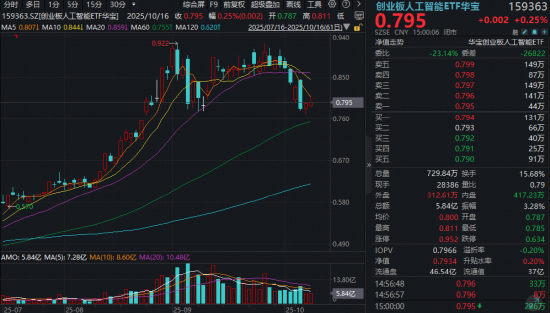
Core Insights - The A-share market experienced a high and then a pullback on October 16, with trading volume dropping below 2 trillion yuan, indicating increased risk aversion among investors [1] - The technology sector showed weakness, but the ChiNext index focusing on artificial intelligence (AI) managed to close in the green, highlighting a divergence in sector performance [1] - The largest AI-focused ETF on the ChiNext, ETF 159363, saw a slight increase of 0.25% and recorded a trading volume of 584 million yuan, marking two consecutive days of gains [1] Industry Analysis - The optical module sector, particularly within the computing power chain, has shown signs of recovery, with leading companies like Zhongji Xuchuang and New Yisheng expected to maintain high growth rates in Q3 due to strong overseas demand for 800G optical modules [3] - The AI data center market is anticipated to grow significantly, with Alibaba projecting a tenfold increase in data center energy consumption by 2032, which is expected to drive orders and EBITDA growth for leading data center firms [3] - TSMC's Q3 financial report exceeded market expectations, reinforcing optimism regarding the surge in demand for AI chips, with the company expressing increased confidence in the AI market's positive trajectory [4] Investment Opportunities - The AI computing power sector is viewed as a thematic investment opportunity, with recommendations to focus on the first AI-focused ETF on the ChiNext (159363) and related funds, which have a significant allocation towards computing power and AI applications [4] - The ChiNext AI ETF has a market size exceeding 3.6 billion yuan and has maintained the highest trading volume among its peers, indicating strong investor interest [4]



A股冲高回落,成交额失守2万亿,存储芯片、光模块逆势回暖
2 1 Shi Ji Jing Ji Bao Dao· 2025-10-16 07:55
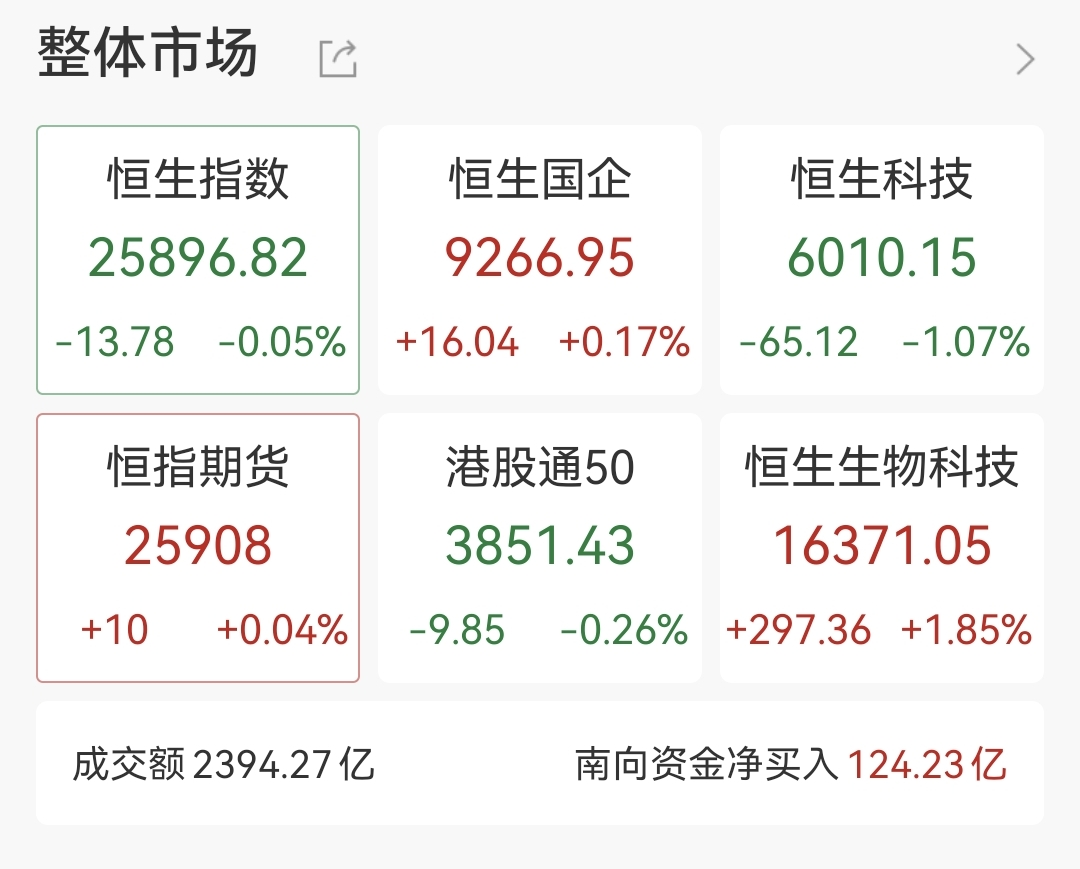
Market Overview - On October 16, the A-share market experienced a pullback after an initial rise, with the Shanghai Composite Index up 0.1%, the Shenzhen Component down 0.25%, and the ChiNext Index up 0.38% [1] - The total trading volume in the Shanghai and Shenzhen markets was 1.93 trillion, a decrease of 141.7 billion from the previous trading day, marking a return below 2 trillion for the first time since September 10 [1] Sector Performance - The coal sector continued its strong performance, with Dayou Energy (600403) hitting the daily limit for the fifth time in six days [2] - The port and shipping sector was active, with multiple stocks, including Haitong Development (603162), reaching their daily limit [2] - The pharmaceutical sector showed localized strength, with Guizhou Bailing and Luoxin Pharmaceutical (002793) both hitting the daily limit [2] - The banking sector collectively rose, with Agricultural Bank nearing historical highs [2] - In contrast, the controlled nuclear fusion concept stocks saw significant declines, with Hezhu Intelligent (603011) hitting the daily limit down [2] Specific Stock Movements - The zodiac speculation saw a resurgence, with Haima Automobile (000572) hitting the daily limit and Wanma Technology (300698) rising over 10% [3] - The storage chip concept regained momentum, with Demingli (001309) hitting the daily limit and Xiangnong Chip rising over 16%, bringing its market value to 49.5 billion [3] - The optical module CPO concept sector showed collective recovery, with key leaders like Zhongji Xuchuang (300308) and Xinyi Sheng (300502) turning positive during the trading session [3] News Impact - OpenAI is reportedly developing a five-year business plan to fulfill a $1 trillion spending commitment and has signed a letter of intent with SurEnergy to build a data center hub in Argentina, with an investment of up to $25 billion [3] - The optical module industry remains robust, with predictions from Light Counting indicating that the market for 800G Ethernet optical modules will exceed that of 400G by 2025, and the overall market for 800G and 1.6T modules expected to surpass $16 billion by 2029 [4] Hong Kong Market - In the Hong Kong market, the three major indices showed mixed results, with the Hang Seng Index down 0.05%, the Hang Seng China Enterprises Index up 0.17%, and the Hang Seng Tech Index down 1.07% [4] - The Hong Kong electric vehicle stocks continued to decline, with NIO-SW dropping over 13% at one point and closing down over 6% [4] Legal Issues - Reports indicate that the Singapore sovereign wealth fund, GIC, has filed a lawsuit against NIO and its executives in a U.S. court, which has contributed to market reactions [6]

光模块CPO延续强势,创业板人工智能ETF华夏、5G通信ETF涨近2%,中际旭创领涨
Mei Ri Jing Ji Xin Wen· 2025-10-16 02:44
Group 1 - The A-share market indices opened lower but quickly turned positive, with the optical module CPO concept sector showing strength for two consecutive days [1] - Key stocks such as Zhongji Xuchuang rose nearly 6%, with other companies like Xinyi Sheng, Changxin Bochuang, Tianfu Communication, and Guangku Technology also experiencing gains [1] - The recent market volatility has seen a rebound in the AI computing power sector, indicating high sector prosperity [1] Group 2 - The 5G Communication ETF (515050) tracks the CSI 5G Communication Theme Index, with a latest scale exceeding 8 billion [2] - The index has a high purity of "hard technology," with telecommunications and electronics accounting for nearly 80% of the total weight [2] - The AI-focused ETF (159381) tracks the ChiNext AI Index, with a significant weight in optical modules and a low comprehensive fee rate of 0.20% [2]
中际旭创10月15日获融资买入15.38亿元,融资余额145.60亿元
Xin Lang Cai Jing· 2025-10-16 01:35
Core Insights - Zhongji Xuchuang's stock increased by 2.32% on October 15, with a trading volume of 12.275 billion yuan, indicating strong market interest [1] - The company reported a net financing outflow of 1.67 billion yuan on the same day, with total financing and securities balance reaching 14.584 billion yuan [1] Financing Overview - On October 15, Zhongji Xuchuang had a financing buy-in of 1.538 billion yuan, with a current financing balance of 14.560 billion yuan, representing 3.70% of its market capitalization [1] - The financing balance is above the 90th percentile of the past year, indicating a high level of leverage [1] Securities Lending - On the same day, the company repaid 9,800 shares in securities lending and sold 3,300 shares, with a selling amount of approximately 1.1686 million yuan [1] - The securities lending balance stood at 2.34852 million yuan, exceeding the 70th percentile of the past year, suggesting a high level of short interest [1] Company Profile - Zhongji Xuchuang, established on June 27, 2005, and listed on April 10, 2012, is based in Longkou, Shandong Province [1] - The company's main business includes the research, design, manufacturing, sales, and service of motor stator winding equipment and optical module equipment, with 97.58% of revenue coming from optical communication transceiver modules [1] Financial Performance - For the first half of 2025, Zhongji Xuchuang reported a revenue of 14.789 billion yuan, a year-on-year increase of 36.95%, and a net profit attributable to shareholders of 3.995 billion yuan, up 69.40% year-on-year [2] Shareholder Information - As of June 30, 2025, the number of shareholders decreased by 33.73% to 128,300, while the average circulating shares per person increased by 51.75% to 8,613 shares [2] - The company has distributed a total of 1.943 billion yuan in dividends since its A-share listing, with 1.512 billion yuan distributed in the last three years [3]
光模块能否打破“老登顶”?高盛:还是有新高希望的
Zhi Tong Cai Jing· 2025-10-15 13:41
Core Viewpoint - Goldman Sachs has initiated a discussion on optical modules, focusing on two Chinese companies, Zhongji Xuchuang and Tianfu Communication, both receiving a buy rating and target price increases [1][2]. Group 1: Market Context - The stock prices of optical module companies have significantly increased this year, leading to profit-taking pressures [2]. - Investors are looking for more guidance on the demand and growth prospects for 800G/1.6T optical modules in 2027, especially in light of AI-driven industry growth [2][3]. Group 2: Company Analysis - Zhongji Xuchuang is the largest optical module supplier in China's data communication market, while Tianfu Communication is a key player with a focus on niche segments [3][4]. - Zhongji Xuchuang's strengths lie in its technology and partnerships, particularly in the 800G/1.6T optical module space, benefiting from AI data center expansion [3][4]. - Tianfu Communication excels in product offerings and cost management, leading in 800G module shipments and maintaining higher-than-average gross margins [4]. Group 3: Growth Catalysts - Zhongji Xuchuang's growth is driven by the penetration of high-end products like the 1.6T optical module in AI networks [4]. - Tianfu Communication's growth relies on the increasing demand for 800G modules and the potential application of optical modules in horizontal expansion networks by 2027 [4]. Group 4: Earnings Forecast Adjustments - Zhongji Xuchuang's revenue forecasts for 2025-2027 have been raised by up to 14%, with net profit estimates adjusted by 3%-14% [5]. - The target price for Zhongji Xuchuang has been increased from 442 yuan to 470 yuan, based on a projected P/E ratio of 30 times for 2026 [5]. - Tianfu Communication's revenue forecasts for 2025-2027 have been raised by 7%-17%, with net profit estimates adjusted by 7%-16% [6][7]. - The target price for Tianfu Communication has been increased from 398 yuan to 450 yuan, based on a projected P/E ratio of 27 times for 2026 [7].
回调结束?中际旭创反弹2%终结五连跌,创业板人工智能涨逾1%!算力需求旺盛,光模块高增长仍可期
Xin Lang Ji Jin· 2025-10-15 12:08
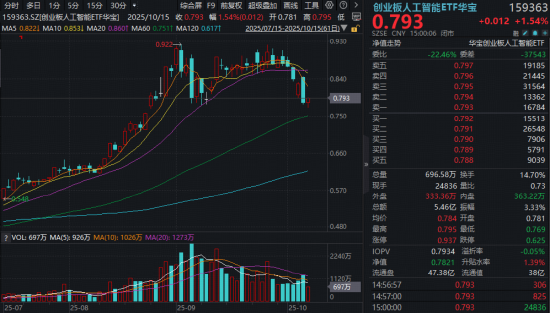
Core Viewpoint - The A-share market showed signs of recovery on October 15, with the ChiNext Index rebounding above 3000 points after five consecutive declines, indicating a potential turnaround in investor sentiment towards AI-related stocks, particularly in the optical module sector [1][3]. Group 1: Market Performance - The ChiNext AI Index rebounded by over 1%, with notable recoveries in leading optical module companies such as Zhongji Xuchuang, which rose by 2.32%, and New Yisheng, which increased by 1.92% [1]. - The largest and most liquid ChiNext AI ETF (159363) saw a price increase of 1.54%, ending a five-day decline, with total trading volume reaching 546 million yuan [1][4]. Group 2: Industry Trends - Recent performance in the computing power sector has been affected by negative sentiment due to overseas tariffs, but there are signs of recovery, particularly in the optical module segment, which is crucial for computing power [3]. - Institutions remain optimistic about the AI computing power sector, suggesting that short-term fluctuations do not alter the long-term growth trend, and they recommend accumulating positions during market dips [3]. Group 3: Valuation Insights - Longjiang Securities noted that the actual performance PE of leading optical module companies is significantly lower than consensus expectations, indicating potential for upward valuation adjustments [4]. - The current optical module market reflects a rapid amplification effect similar to that seen in the consumer electronics sector, suggesting both explosive growth potential and sustainability [4]. Group 4: Investment Recommendations - It is advised to focus on the first ChiNext AI ETF (159363) and related funds, which have over 70% of their portfolio allocated to computing power and more than 20% to AI applications, effectively capturing the AI thematic market [4]. - As of October 13, the ChiNext AI ETF (159363) had a total size exceeding 3.7 billion yuan, with an average daily trading volume of over 1 billion yuan, indicating strong market interest [4].
通信行业持续看好海外链光模块以及国产算力超节点
Shanxi Securities· 2025-10-15 07:58
Investment Rating - The report maintains an "Outperform" rating for the communication industry, indicating an expected performance exceeding the benchmark index by more than 10% [1][36]. Core Insights - The report emphasizes the resilience of the AI computing sector, particularly domestic computing capabilities, despite escalating trade tensions between China and the US. It suggests that necessary defensive measures may provide a degree of leverage [3][12]. - OpenAI's partnerships with NVIDIA and AMD are expected to significantly increase capital expenditure forecasts, with a projected need for up to $880 billion in capital investments for AI infrastructure [4][13]. - The report anticipates 2026 to be a pivotal year for domestic supernode servers, with major advancements from companies like Huawei and Alibaba, indicating a strong growth trajectory for the sector [5][14]. Summary by Sections Weekly Perspective and Investment Recommendations - The report advises maintaining a steady approach and considering incremental investments during market dips, particularly in the AI computing sector [3][12]. - Key companies to watch include those in the optical module sector such as Zhongji Xuchuang and New Yisheng, as well as supernode server manufacturers like Unisplendour and ZTE [6][16]. Market Overview - The overall market experienced a decline during the week of October 9-10, 2025, with the Shanghai Composite Index rising by 0.37% while the Shenwan Communication Index fell by 1.60% [7][16]. - Notable stock performances included ZTE and Guanghetong, which saw increases of 13.94% and 7.05%, respectively [7][29]. Sector Performance - The report highlights that the optical module sector has shown strong performance year-to-date, with significant growth expected as demand for AI-related infrastructure increases [6][23]. - The report identifies a concentration of market share among leading players in the supernode server and optical module markets, suggesting a trend towards increased value and market dominance for these companies [5][15].



刚刚,三条重磅消息落地!A股今天怎么走?全体股民做好准备
Sou Hu Cai Jing· 2025-10-15 02:31
Group 1 - The People's Bank of China (PBOC) injected 600 billion yuan through a 6-month reverse repurchase agreement, marking the fifth consecutive month of net liquidity injection, which alleviates funding anxiety in the market [1][2] - The banking sector reacted positively, with all 42 listed banks rising on October 14, indicating early positioning by funds, and historically, such large-scale liquidity injections have led to a more than 70% probability of A-share market gains the following day [2] - The manufacturing sector received a boost from a new policy issued by seven departments, outlining a four-year roadmap for service-oriented manufacturing, with specific targets set for 2028, focusing on "5G + industrial internet," "computing power infrastructure," and "industrial AI" [4][5] Group 2 - The Federal Reserve's signals of a potential 25 basis point rate cut and the nearing end of balance sheet reduction are expected to accelerate foreign capital inflow into A-shares, with a shift in foreign investment preferences towards low-valuation cyclical and high-dividend stocks [6] - The market is likely to see a "bottoming out and rebound" pattern, with strong support around the 3850-point level for the Shanghai Composite Index, and opportunities identified in financial stocks benefiting from PBOC's liquidity measures, manufacturing stocks supported by policy, and small-cap stocks with earnings surprises [7] - The recent performance of the dividend index and the shift in foreign capital preferences suggest that investors should diversify their holdings and consider adjusting positions based on market trends and earnings forecasts [6][7]
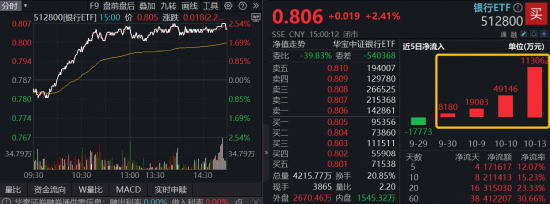
风云突变,A股孕育新机?银行、食饮携手走强,百亿顶流512800爆量大涨2.4%!资金抢筹高“光”159363
Xin Lang Ji Jin· 2025-10-14 11:46
Group 1: Market Overview - On October 14, the market experienced a sudden downturn after an initial rise, with technology sectors leading the decline, particularly in semiconductors and communications [1][4] - The banking sector showed resilience, with a significant increase in the bank ETF (512800), which rose by 2.4% and saw a net inflow of 1.894 billion yuan [1][6] - The Shanghai Composite Index closed down 0.62% at 3865.23 points, while the Shenzhen Component and ChiNext Index fell by 2.54% and 3.99%, respectively, with over 3500 stocks declining [1][4] Group 2: Banking Sector Performance - All 42 bank stocks in A-shares closed in the green, with over half of them rising more than 2%, led by Chongqing Bank which surged 6.68% [4][5] - The bank ETF (512800) recorded a trading volume of 3.374 billion yuan, marking a 54% increase in volume compared to the previous day, and achieving a historical high since its listing in 2017 [5][6] - The banking sector's price-to-book (PB) ratio has dropped to 0.67, indicating strong investment appeal, especially with a dividend yield of 4.2% compared to the 10-year government bond yield [8][9] Group 3: Food and Beverage Sector - The food and beverage sector showed strong performance, with the food ETF (515710) rising by 1.47%, supported by notable investments from prominent investors [3][11] - The food ETF has seen significant net inflows, totaling 64.38 million yuan over the past five trading days, indicating growing interest in the sector [13] - The valuation of the food sector remains low, with the food ETF's underlying index PE ratio at 20.08, suggesting a favorable time for investment [14][15] Group 4: Technology Sector Insights - The technology sector, particularly in AI and related hardware, faced significant declines, with the AI ETF (159363) dropping over 5.5% [16][18] - Despite the recent downturn, institutions remain optimistic about the long-term prospects of the technology sector, particularly in AI and related fields [19][20] - The market is witnessing a shift in focus towards defensive sectors, with banks and consumer staples gaining traction amid increased volatility [8][9]