半导体

Search documents
伊朗局势的关键推演:环球市场动态2026年3月10日
citic securities· 2026-03-10 02:59
Market Overview - Oil prices experienced extreme volatility, with WTI crude oil futures soaring to nearly $120 per barrel before plummeting to around $85 following comments from Trump about the end of military actions in Iran[4][26]. - The U.S. stock market rebounded after a significant drop, with the Dow Jones increasing by 239 points (0.5%) to close at 47,740.8, and the S&P 500 rising by 0.8%[8][9]. Asian Market Dynamics - The A-share market showed resilience, with the Shanghai Composite Index closing down 0.67% at 4,096.60 points, while the Hong Kong Hang Seng Index fell by 1.35% to 25,408.46 points[15][11]. - The Asian markets overall were under pressure, with Vietnam's index dropping 6.5% and South Korea's KOSPI down 6.0%[20][21]. Sector Performance - Energy stocks surged due to rising oil prices, with the energy sector in Hong Kong gaining 3.0%[11][16]. - The technology sector in the U.S. led the market rebound, with the information technology index rising by 1.8%[9]. Economic Implications - The ongoing conflict in Iran is expected to lead to increased input inflation, with potential short-term negative impacts on exports but long-term benefits for certain sectors[6]. - The gas industry faces narrowing margins, with domestic import costs projected to rise by 7% to 25% in 2026 due to geopolitical tensions[13]. Investment Recommendations - For the A-share market, it is advised to focus on sectors such as chemicals, non-ferrous metals, power equipment, and new energy, while increasing exposure to insurance and brokerage firms[6]. - In the U.S. market, defense and energy infrastructure stocks are expected to benefit from the current geopolitical climate[6].
英伟达版“龙虾”即将来袭,高“设备”含量的科创半导体ETF(588170)近3天获得连续资金净流入
Mei Ri Jing Ji Xin Wen· 2026-03-10 02:33
Group 1 - The core viewpoint of the articles highlights the significant growth and investment opportunities in the semiconductor sector, driven by the performance of related ETFs and the introduction of innovative AI technologies [1][2] Group 2 - The Kexin Semiconductor ETF (588170) saw a 2.23% increase, while the Semiconductor Equipment ETF Huaxia (562590) rose by 2.32% [1] - Notable individual stocks included Huahai Chengke, which increased by 6.29%, and Oulai New Materials, which rose by 6.15% [1] - The Kexin Semiconductor ETF experienced a turnover of 3% with a transaction volume of 261 million yuan, while the Semiconductor Equipment ETF Huaxia had a turnover of 3.06% and a transaction volume of 82.41 million yuan [1] - Over the past two weeks, the Kexin Semiconductor ETF's scale increased by 268 million yuan, leading its peers, while the Semiconductor Equipment ETF Huaxia saw a growth of 10.146 million yuan in the past week [1] - The Kexin Semiconductor ETF recorded a net inflow of 224 million yuan over three days, with a peak single-day inflow of 134 million yuan, averaging 7.451 million yuan daily [1] - The Semiconductor Equipment ETF Huaxia had a net inflow of 207 million yuan over five days, with a peak single-day inflow of 127 million yuan, averaging 4.137 million yuan daily [1] Group 3 - Nvidia plans to launch an open-source AI platform named NemoClaw, aimed at enabling companies to deploy AI agents in their workflows to replace employees in specific tasks [1] - OpenClaw has sparked a phenomenon in China, with major tech companies like Alibaba, ByteDance, and Xiaomi launching similar products, enhancing the AI industry's growth [2] - The emergence of such products is expected to boost the demand for domestic large models, promoting a positive cycle in AI accessibility and performance [2] Group 4 - The Kexin Semiconductor ETF tracks the only semiconductor equipment theme index on the Sci-Tech Innovation Board, with advanced packaging content being the highest in the market at approximately 50% [2] - The Semiconductor Equipment ETF Huaxia tracks the CSI Semiconductor Materials and Equipment Theme Index, with semiconductor equipment content being the highest in the market at around 63%, benefiting from the global chip price surge [2]

东海证券晨会纪要-20260310
Donghai Securities· 2026-03-10 02:21
Group 1 - The core inflation rate is expected to rise, with February CPI increasing to 1.3% year-on-year, driven by the timing of the Spring Festival, while PPI's decline continues to narrow, indicating potential for a positive turnaround earlier than market expectations [5][6][7] - The consumer electronics market is under pressure due to rising storage chip prices, leading to increased average selling prices (ASP) and a potential decline in product specifications, particularly affecting lower-end models [10][11] - Broadcom's first fiscal quarter performance exceeded expectations, with AI revenue doubling, and the company anticipates a 47% year-on-year revenue growth in the second fiscal quarter, driven by strong demand for AI-related products [12][13] Group 2 - The transportation sector is focusing on implementing "Artificial Intelligence +" initiatives during the 14th Five-Year Plan, aiming to enhance smart transportation and logistics systems [16] - The A-share market has shown signs of volatility, with major indices experiencing declines, indicating a cautious market sentiment [18][19] - The semiconductor industry in China remains optimistic, with opportunities in domestic production and AI-related sectors despite global supply chain challenges [10][14]
特朗普:若伊朗阻断霍尔木兹海峡,美国将施以更猛烈打击
21世纪经济报道· 2026-03-10 02:16
Group 1 - The article highlights a significant threat from U.S. President Trump towards Iran, stating that any action to block oil transportation in the Strait of Hormuz will result in a response that is "20 times more intense" than before [1] - The article mentions that Trump indicated the conflict with Iran would "soon" come to an end, but clarified that it would not conclude within the current week [1] Group 2 - The article reports a sharp decline in oil and gas stocks, with Shandong Molong in Hong Kong dropping nearly 20% and the shipping index plummeting by 14% [2] - It notes a significant rise in the Nasdaq, which increased by over 300 points, driven by a surge in semiconductor stocks, including a notable 11% rise in SanDisk and a 19% increase in Kingsoft Cloud [2]


油气股现跌停潮,港股山东墨龙跌近20%,集运指数大跌14%
21世纪经济报道· 2026-03-10 02:05
Market Overview - A-shares and Hong Kong stocks opened higher on March 10, with the Shanghai Composite Index rising by 0.31% and the ChiNext Index increasing by 2.51% [1] - The Hang Seng Index opened up by 1.6%, while the Hang Seng Tech Index rose by 1.69% [1] Sector Performance - The A-share computing hardware industry chain rebounded, with CPO and memory sectors leading the gains [1] - Cloud computing and computing leasing themes were actively traded, while semiconductor, AI applications, humanoid robots, and lithium mining stocks saw significant increases [1] - Shipping stocks experienced a low opening but rallied, with China Merchants Energy hitting the daily limit, COSCO Shipping Energy approaching the limit, and China Merchants South Oil rising over 6% [1] Declines in Oil and Gas Sector - The oil and gas sector faced a significant downturn, with the "Big Three" oil companies collectively dropping over 6% [1] - Specific stocks like Continental Oil and Shandong Molong hit the daily limit down, while others like Keli Co., Tress, and Potential Holdings opened down over 10% [1] - In the Hong Kong market, oil and gas equipment stocks also fell, with Shandong Molong dropping nearly 20%, despite having risen over 170% this year [1] Commodity Market Movements - Brent crude and NYMEX crude futures saw a sharp decline of 10% during trading, influenced by Trump's statement regarding military actions against Iran [3] - Domestic commodity futures mostly fell, with shipping futures leading the decline, and the shipping index (European line) dropping over 14% [3] - Energy products experienced a downturn, with crude oil prices falling over 13% [3] Notable Company Announcements - Contemporary Amperex Technology Co., Ltd. (CATL) announced projected revenues of 423.70 billion yuan for 2025, representing a year-on-year growth of 17.04%, and a net profit of 72.20 billion yuan, up 42.28% year-on-year [3]

这个国家,成为芯片新贵
半导体行业观察· 2026-03-10 02:04
Core Insights - The article discusses the transformation of Singapore into a key hub in the global semiconductor industry, driven by AI and geopolitical factors [2][3]. Group 1: Industry Overview - Singapore's semiconductor industry is projected to reach a value of SGD 160.2 billion (approximately USD 122.7 billion) by 2025, representing a growth of 17.1% from 2024 [3]. - The semiconductor sector accounts for 33.4% of Singapore's manufacturing output, contributing approximately SGD 46 billion (5.8% of GDP) and employing over 34,000 high-skilled workers [3]. - Singapore is a significant production base for NAND Flash and is positioned as a leading manufacturing hub for wafer foundries and advanced packaging [3][4]. Group 2: Strategic Initiatives - The Economic Development Board (EDB) of Singapore has implemented a coordinated policy framework to attract multinational corporations through investment incentives and industry support [3]. - The "Manufacturing 2030" strategy aims to increase manufacturing output by 50% while maintaining its share of GDP at around 20% [3]. - The government has raised its R&D budget to approximately SGD 28 billion to support chip design, processes, and equipment development [3]. Group 3: Advanced Manufacturing and Investment - Singapore's industrial strategy is shifting towards advanced manufacturing and packaging, particularly in high bandwidth memory (HBM) and AI chip supply chains [4]. - Micron has designated Singapore as a global center for NAND manufacturing, planning to invest USD 24 billion in new wafer fabrication facilities over the next decade [4]. - The establishment of a new HBM advanced packaging facility with an investment of USD 7 billion is expected to be operational by 2026, enhancing Singapore's role in the AI hardware supply chain [4]. Group 4: Emerging Trends and Challenges - The article highlights the growing importance of packaging and interconnect technologies as new competitive fronts in the semiconductor industry [5]. - Singapore is focusing on next-generation technologies such as heterogeneous integration, advanced packaging, silicon photonics, and wide bandgap materials [5]. - The country plans to increase R&D investments to SGD 37 billion over the next five years and has announced an SGD 800 million semiconductor research flagship program [5]. Group 5: Talent and Compliance Issues - Singapore faces structural challenges in talent supply, with a shortage of approximately 34,000 semiconductor engineers in Southeast Asia [6]. - The government is addressing this talent gap by relaxing foreign talent policies and enhancing funding for postdoctoral research [6]. - In response to rising geopolitical tensions, Singapore is strengthening its technology compliance management, including new export controls for advanced semiconductors and AI technologies [6].
特斯拉芯片,突发延期
半导体行业观察· 2026-03-10 02:04
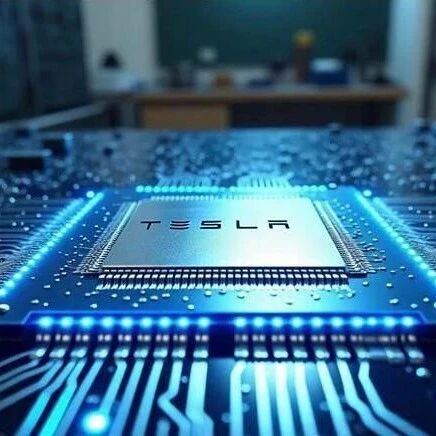
Core Viewpoint - The production of DeepX's next-generation neural processing unit (NPU) is delayed due to changes in the production schedule at Samsung's foundry, which also affects Tesla's AI chip production [2][3]. Group 1: Production Delays - DeepX's second-generation NPU, DX-M2, was initially scheduled for multi-project wafer (MPW) production in April but has been postponed by approximately six months [2]. - The delay in MPW production is attributed to Tesla's production schedule, impacting DeepX's timeline for mass production and quality testing [2][3]. - Full-scale sales of the DX-M2 are now expected to begin in Q4 of next year, making revenue from the already mass-produced DX-M1 crucial to bridge the gap [2]. Group 2: Technical Specifications - The DX-M2 is designed as a generative AI accelerator, capable of handling models with up to 100 billion parameters, with a maximum power consumption of 5 watts and a computing performance of 80 TOPS [3]. - The chip supports low-power DRAM standard LPDDR5X memory, enhancing its efficiency for AI data center workloads [3]. Group 3: Customer and Revenue Insights - DeepX's clients include major companies like Samsung, Hyundai, and Intel, with recent shipments of 40,000 DX-M1 chips and modules to Baidu [4]. - The unit price for DX-M1 chips ranges from $20 to $50, while modules are priced between $50 and $100, potentially generating revenue of $800,000 to $4 million, which constitutes 5% to 24% of DeepX's projected revenue of $17 million for the year [4]. Group 4: Tesla's AI Chip Production - Tesla is negotiating with Samsung to increase the production capacity of its next-generation AI chip, AI6, from an initial agreement of 16,000 wafers per month to an additional 24,000 wafers [5]. - If the new agreement is finalized, the total production capacity could reach approximately 40,000 wafers per month, significantly enhancing Samsung's production utilization [5]. Group 5: Strategic Implications - The collaboration between Tesla and Samsung reflects a strategic move to avoid sourcing critical components from China and Taiwan amid geopolitical tensions [7]. - The partnership has expanded beyond chip manufacturing, with Samsung's system LSI department developing 5G modems for Tesla, indicating a growing collaboration scope [7].

连战连捷!海光C86再破SPEC纪录!
半导体行业观察· 2026-03-10 02:04
Core Viewpoint - The article highlights the recent achievements of domestic chips, specifically the Haiguang C86, which has excelled in international virtualization performance tests, showcasing the advancement of Chinese semiconductor technology and its competitive edge in the global market [1][9]. Group 1: Performance Achievements - The Haiguang C86, in collaboration with Inspur's InCloud Sphere, scored 3782 points in the SPECvirt_sc2013 test, marking the highest performance for domestic virtualization software [1]. - This follows a previous record set in the SPEC Cloud IaaS 2018 test, indicating a trend of continuous improvement and recognition for domestic chips [1]. Group 2: Testing Standards - SPECvirt_sc2013 is recognized as the most rigorous virtualization performance testing standard, simulating real data center mixed loads, which includes various server types to assess the platform's capacity under high concurrency [4]. - The test evaluates the system's ability to handle real-world business operations, emphasizing the importance of performance in practical applications [4]. Group 3: Technical Insights - The Haiguang C86 demonstrated a single-core virtual machine density of 2.1 VMs/core, allowing for more virtual machines to run on the same physical cores, which translates to reduced hardware procurement and operational costs for users [4][5]. - Key optimizations included code simplification, resource usage reduction, and enhancements in CPU performance, all aimed at maximizing computational efficiency [5]. Group 4: Market Trends - The procurement logic in the domestic market has shifted from merely fulfilling tasks to a focus on cost-effectiveness, total cost of ownership (TCO), and sustainable evolution capabilities [7]. - The performance of the Haiguang C86 aligns with these new procurement standards, offering higher virtual machine density, compatibility with mainstream ecosystems, and reduced hidden costs associated with system migration [7]. Group 5: Conclusion - The achievements of the Haiguang C86 in international tests not only signify a breakthrough in high-performance computing for domestic chips but also reflect the collaborative capabilities of domestic hardware and software [9]. - True autonomy and control in the semiconductor industry are characterized by the ability to meet international standards and translate performance into tangible productivity in mainstream applications [9].


信达国际控股港股晨报-20260310
Xin Da Guo Ji Kong Gu· 2026-03-10 01:59
Market Overview - The Hang Seng Index (HSI) is currently facing support at 24,696 points due to escalating geopolitical tensions, particularly the conflict between the US and Iran, and the potential implementation of a 15% global tariff by the US [2] - The Chinese government's GDP growth target for 2026 is set between 4.5% and 5%, with a focus on more proactive fiscal policies and moderate monetary easing [2] - The HSI has formed a head-and-shoulders pattern since January, and if it falls below 25,000 points, it may test the support level of 24,696 points [2] Sector Focus - The AI sector is expected to see significant growth due to intensive upgrades in AI models and the semiconductor industry [3] - The Chinese Consumer Price Index (CPI) rose by 1.3% in February, marking the highest increase in over three years, driven by food prices [6] - Major smartphone brands in China, including Xiaomi and OPPO, are planning to raise prices for new models by 600 to 1,000 RMB, with flagship models potentially increasing by 2,000 to 3,000 RMB [7] Company News - Meig Smart (3268) priced its shares at 28.86 RMB, raising approximately 1.1 billion RMB, with a public offering oversubscribed by 173.12 times [8] - Shenghong Technology (300476.SZ) is expected to list in Hong Kong in April, aiming to raise over 2 billion USD for expansion and R&D [8] - Alibaba's cloud division is accelerating the construction of a large-scale computing center in Shanghai, with a total investment of 40 billion RMB [8]



伊朗:战争的结束由伊朗决定
21世纪经济报道· 2026-03-10 01:38
Group 1 - The Iranian Islamic Revolutionary Guard Corps stated that the end of the conflict will be determined by Iran, responding to U.S. President Trump's comments on the situation in Iran [1] - The spokesperson emphasized that Iran will resist U.S. and Israeli aggression with courage and determination, countering Trump's attempts to exert psychological pressure through lies and deception [1] Group 2 - Iran has set conditions for certain countries regarding the Strait of Hormuz, which includes the expulsion of U.S. and Israeli ambassadors [2] - The Nasdaq index surged over 300 points late at night, with semiconductor stocks experiencing significant gains, including SanDisk rising by 11% and Kingsoft Cloud increasing by 19% [2]