自动驾驶

Search documents
主线科技递表港交所主板
Zhi Tong Cai Jing· 2025-12-11 13:00
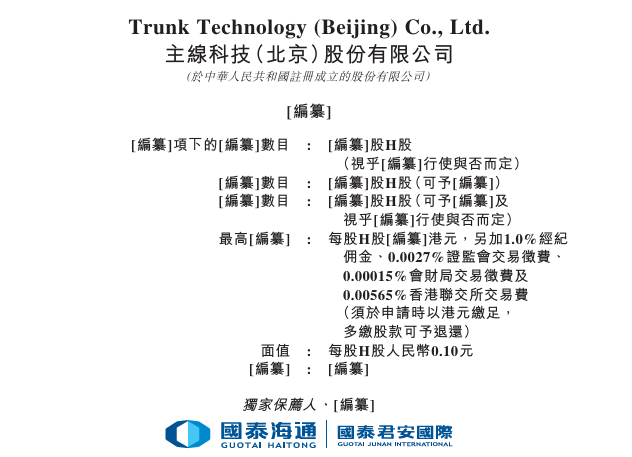
据港交所12月11日披露,主线科技(北京)股份有限公司(简称:主线科技)递表港交所主板,国泰海通为 其独家保荐人。招股书显示,主线科技是一家L4级自动驾驶卡车及解决方案提供商。公司以自主研发 的自动驾驶系统为核心,构建了"车-端-云"一体化的产品生态系统,为物流运输全场景提供全栈解决方 案。 | 編纂]項下的[編纂]數目 : [編纂]股H股 | | | --- | --- | | (視乎[編纂]行使與否而定) | | | [編纂]數目 ። | [编纂]股H股(可予[编纂]) | | [編纂]數目 | :「編纂]股H股(可予[編纂]及 | | 視乎[編纂]行使與否而定) | | | 最高[編纂] : | 每股H股[編纂]港元,另加1.0%經論 | | 佣金、0.0027%證監會交易徵費、 | | | 0.00015%曾財局交易徵費及 | | | 0.00565%香港聯交所交易費 | | | (須於申請時以港元繳足, | | | 多繳股款可予退還) | | | 面值 : | 每股H股人民幣0.10元 | | [編纂] : [編纂] | | 公司的解决方案包含三大核心产品:AiTruck(智能卡车)、AiBox(智 ...

11月车市基本符合预期,英伟达开源VLA模型
CAITONG SECURITIES· 2025-12-11 13:00
Group 1: Automotive Market Overview - In November, the national retail sales of passenger cars reached 2.225 million units, a year-on-year decrease of 8.1% and a month-on-month decrease of 1.1%, aligning with the initial forecast of a "low start, medium growth, and stable end" trend for the year [5][11][20] - Cumulative retail sales for the year reached 21.483 million units, reflecting a year-on-year growth of 6.1%. The growth rate fluctuated throughout the year, with a notable slowdown in the fourth quarter due to high base effects from the previous year [5][11][20] - The "old-for-new" subsidy policy has been a significant driver for growth, with over 11.2 million applications for subsidies by the end of October, although the average daily subsidy scale dropped to 30,000 units in November due to the suspension of subsidies in various regions [5][11][20] Group 2: Intelligent Driving Developments - NVIDIA has officially open-sourced its new Vision-Language-Action (VLA) model, Alpamayo-R1, marking a significant shift in autonomous driving technology from mere behavior imitation to deeper causal reasoning [6][33] - The model's dataset, approximately 100TB in size, has been uploaded to the open-source community, indicating a move towards more accessible high-end autonomous driving models [6][33] Group 3: Investment Recommendations - The report suggests focusing on companies with strong positions in automotive intelligence and leading software capabilities, including Rui Ming Technology, Dao Tong Technology, Hei Zhi Ma Intelligent, Horizon Robotics, and others [8][39]

马斯克霸气回怼Waymo:连对抗特斯拉的机会都没有
3 6 Ke· 2025-12-11 10:00
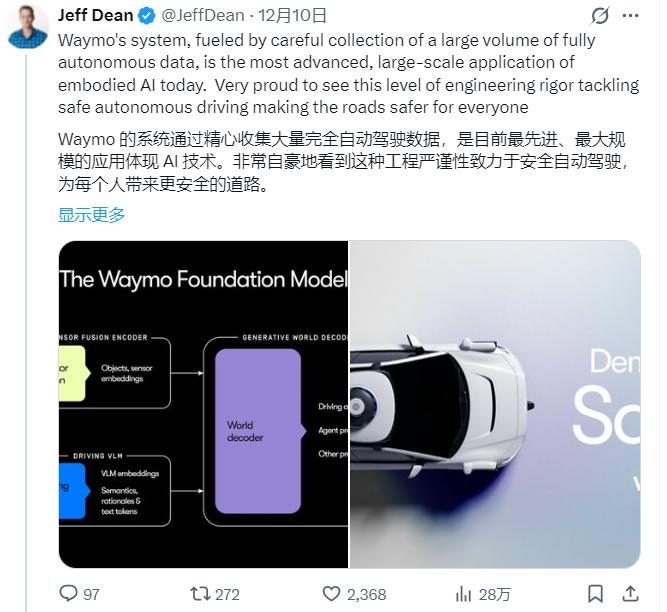
"Waymo从来没有真正与特斯拉抗衡的机会。" 这番大胆开麦,不用想也知道,来自一向"口无遮拦"的首富马斯克。 不过事出有因,他的回怼实际是因为谷歌DeepMind首席科学家发帖时,暗示特斯拉和Waymo相比,两家的Robotaxi还有差距。 借着这个档口,马斯克再度放话,3周内Robotaxi就会取消安全员——真正开始纯无人载客了。 马斯克回怼谷歌科学家:Waymo没机会抗衡 引得马斯克激情开麦的源头,来自谷歌DeepMind首席科学家、谷歌研究首席科学家、Gemini项目负责人杰夫·迪恩(Jeff Dean)在社交平台X上发的一篇 帖子。 这篇帖子原本是在展示谷歌旗下Waymo的基础模型。 这个模型通过融合端到端与模块化设计,构建了一个以"快速感知-深度推理"双系统为核心的世界模型架构: 系统1(快速反应):传感器融合编码器实时处理摄像头/激光雷达/雷达数据,生成物体、语义信息及嵌入向量,支持毫秒级驾驶决策; 系统2(深度推理):基于Gemini大模型的视觉语言模型(VLM),利用海量世界知识理解罕见场景(如车辆起火时主动绕行)。 两者共同输入世界解码器,生成高精度轨迹预测与安全验证信号。 原本只是一个简 ...

港股异动丨文远知行午后拉升涨超5% L4产品商业化落地加速推进
Ge Long Hui· 2025-12-11 07:44
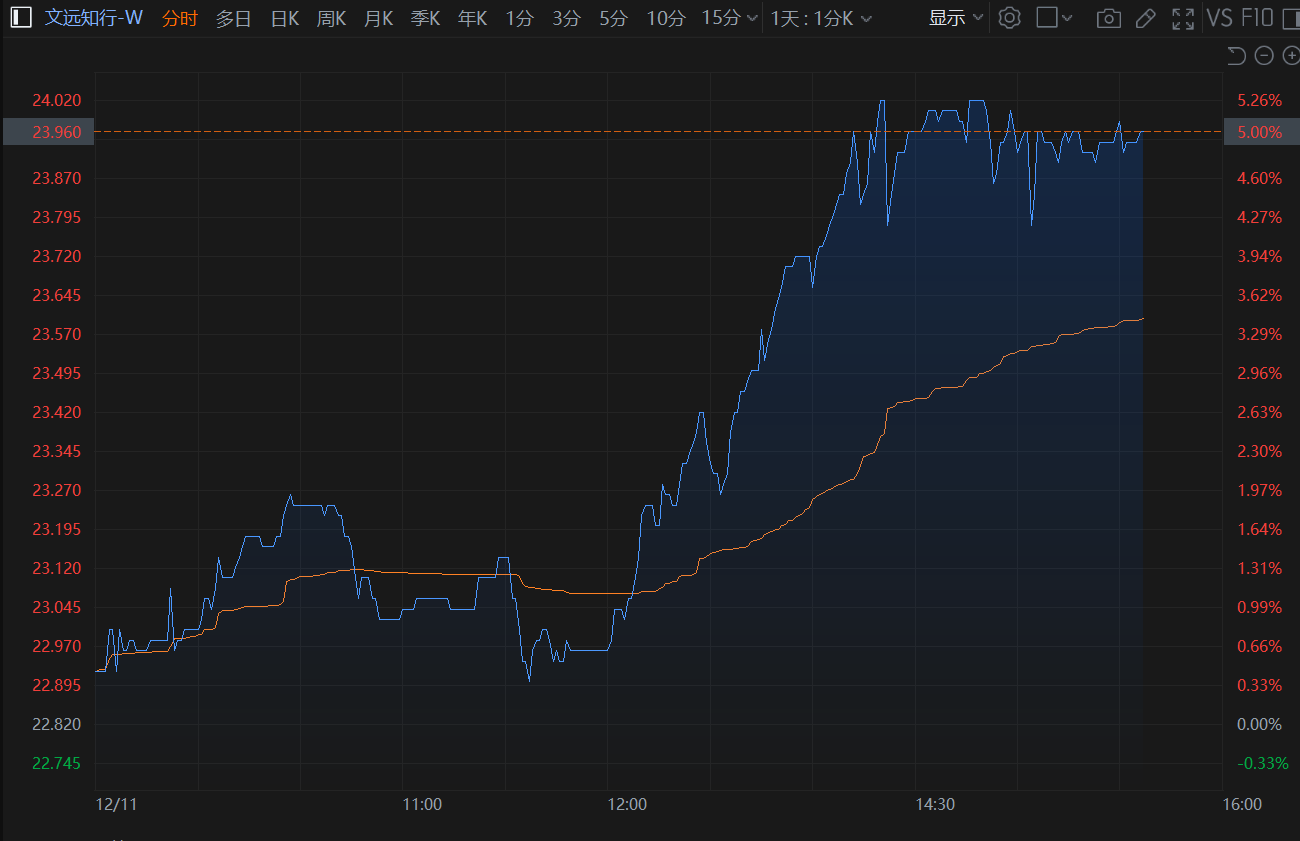
Core Viewpoint - Company shares of WeRide (0800.HK) surged over 5%, currently priced at HKD 23.96, with a total market capitalization of HKD 24.6 billion, highlighting strong investor interest in its autonomous driving technology and commercial expansion [1] Group 1: Company Developments - WeRide is a leading provider of L4 autonomous driving products and solutions, accelerating the commercialization of its L4 products [1] - On November 20, the company's Robotaxi received a fully autonomous license from the Swiss Federal Roads Office, making it one of the few tech companies to hold autonomous driving licenses in eight countries, including Switzerland, China, UAE, Saudi Arabia, Singapore, France, Belgium, and the USA [1] Group 2: Operational Expansion - As of October 31, WeRide has deployed over 300 Robotaxis in Guangzhou, with each vehicle capable of completing up to 25 trips during a 24-hour operational period [1] - On November 26, the company announced a partnership with Uber to officially launch L4 fully autonomous Robotaxi commercial operations in Abu Dhabi, with plans to scale the Robotaxi fleet to thousands of vehicles in the coming years, aiming for tens of thousands by 2030 [1]
对话斯年智驾CEO何贝:L4 智驾公司的宿命,是大集成商或大运营商丨L4十人谈
雷峰网· 2025-12-11 07:00
Core Viewpoint - The future of L4 autonomous driving companies is to become large integrators or major operators like Didi, as indicated by the founder of Sien Intelligent Driving, He Bei [1]. Group 1: Background and Development - He Bei graduated from Tsinghua University and joined Baidu in 2015, where he contributed to the development of autonomous driving technology [2][3]. - The early team at Baidu iV saw many members, including He Bei, leave to start their own ventures, driven by differing views on the future of autonomous driving technology [3][4]. - He Bei's initial focus was on a cost-effective, vision-based approach to autonomous driving, which contrasted with Baidu's emphasis on high-definition maps [4][10]. Group 2: Company Overview and Achievements - Sien Intelligent Driving, founded by He Bei in 2020, has completed eight rounds of financing and aims to achieve profitability by 2025 [4][5]. - The company has established strategic partnerships with two of the world's top three ports, Ningbo-Zhoushan and Qingdao, and has implemented solutions in key port areas [5][6]. - Sien Intelligent Driving's revenue is projected to reach around 500 million yuan in the coming year, with the company currently experiencing a slight loss [24][26]. Group 3: Market Challenges and Opportunities - The primary challenge for autonomous trucks is the difficulty in monetizing services, as clients are often reluctant to pay for autonomous vehicle operations despite the apparent market potential [6][35]. - The autonomous driving industry has experienced various waves of interest, with the current focus shifting towards logistics, ports, and mining [23]. - He Bei believes that the commercial value of autonomous vehicles is clearer in port operations compared to other sectors, as these environments have a more mature level of information technology [15][16]. Group 4: Future Outlook and Strategy - Sien Intelligent Driving plans to focus on delivery, customer acquisition, and expanding into international markets, with potential clients in Singapore, Brazil, and Abu Dhabi [36][37]. - The company aims to become a major player in the L4 commercial vehicle sector, emphasizing the importance of system integration capabilities and deployment efficiency [18][30]. - He Bei envisions Sien Intelligent Driving evolving into a large integrator, potentially diversifying through partnerships and acquisitions rather than solely expanding its own operations [39].

文远知行-W午后涨超4% 文远知行一段式端到端ADAS方案问鼎中国智驾大赛
Zhi Tong Cai Jing· 2025-12-11 06:33
Core Viewpoint - The stock of WeRide (文远知行-W) has increased by 4.73%, reaching HKD 23.9, with a trading volume of HKD 13.36 million, following its success in the China Intelligent Driving Competition in Taizhou, where its WePilot 3.0 ADAS solution achieved the highest score of 112.81 points, demonstrating exceptional "zero takeover" performance [1] Company Summary - WeRide is recognized as a global leader in Level 4 autonomous driving products and solutions [1] - The WePilot 3.0 represents a significant advancement in WeRide's capabilities, integrating end-to-end AI models, system integration, and deep collaboration between hardware and software [1] Industry Summary - Morgan Stanley remains optimistic about WeRide, citing its leading advantages in international strategic partnerships, potential long-term economic share growth in overseas ecosystems, and increasing domestic market recognition of Advanced Driver Assistance Systems (ADAS) [1] - These factors collectively support an attractive risk-return profile at the current valuation [1]
港股异动 | 文远知行-W(00800)午后涨超4% 文远知行一段式端到端ADAS方案问鼎中国智驾大赛
智通财经网· 2025-12-11 06:26
Core Viewpoint - The stock of WeRide (00800) rose over 4% following its success in the China Intelligent Driving Competition, showcasing its advanced ADAS solution WePilot 3.0, which achieved the highest score of 112.81 points [1] Group 1: Company Performance - WeRide's stock increased by 4.73%, reaching HKD 23.9, with a trading volume of HKD 13.36 million [1] - The WePilot 3.0 ADAS solution, developed in collaboration with Bosch, demonstrated exceptional performance, winning the competition with a "zero takeover" capability [1] Group 2: Industry Position - WeRide is recognized as a leading provider of L4 autonomous driving products and solutions globally [1] - Morgan Stanley remains optimistic about WeRide due to its strategic international partnerships, potential for increased market share overseas, and growing domestic recognition of advanced driver-assistance systems (ADAS) [1]
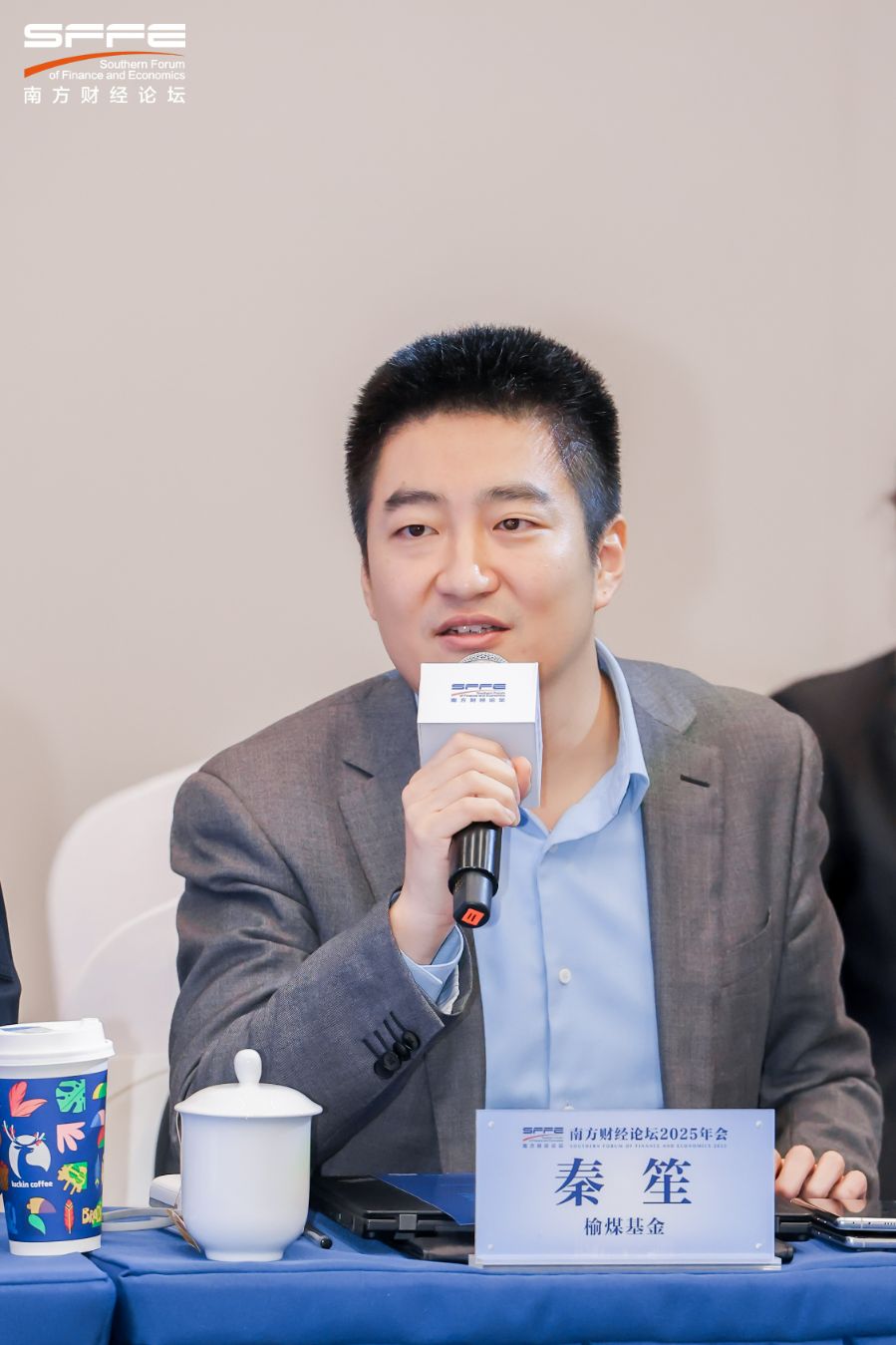
榆煤基金秦笙:传统能源、化工与AI融合存在巨大投资机会
2 1 Shi Ji Jing Ji Bao Dao· 2025-12-11 06:16
Group 1 - The 15th 21st Century Innovation Capital Conference was held in Guangzhou, where the general manager of Yumei Fund, Qin Sheng, discussed investment opportunities brought by artificial intelligence (AI) and its impact on the equity investment industry [1] - Yumei Fund, established in 2018 in Yulin, Shaanxi, has focused its investments primarily in the energy, chemical, and new materials sectors over the past seven years [3] - Qin Sheng highlighted the significant development space and investment opportunities in the integration of traditional chemical and energy sectors with AI, citing a recent investment in Mainline Technology, which combines autonomous driving with traditional application scenarios [3] Group 2 - Yumei Fund is advancing projects related to AI in thermal power frequency regulation, indicating a vast application landscape in traditional energy and chemical markets that could expand significantly with deep AI integration [3] - AI technology introduces new variables and challenges for investment institutions, as it allows for rapid generation of initial drafts for research reports and competitive landscape analyses, reducing the time required for these tasks [3] - Investment managers are not replaceable by AI; instead, they are required to possess higher discernment to determine the relevance and accuracy of information, with AI handling 80% of routine tasks, leaving the most valuable 20% for skilled professionals [3] Group 3 - As a government investment fund, Yumei Fund faces challenges from tools like DeepSeek, which allow government leaders to quickly search for relevant information during project presentations, necessitating more authoritative and professional responses from investment institutions [4] - AI serves as both an efficiency tool and a "stress test" that compels investment institutions to elevate their standards in response to the changes and challenges posed by information equality [4]
小盘高价的希迪智驾:263港元是否透支了赛道空间?
Jing Ji Guan Cha Bao· 2025-12-11 05:44
Core Viewpoint - The IPO of Hedi Zhijia at a price of 263 HKD raises concerns about whether the valuation is overstretched given the current market conditions and the company's financial performance [1][2][3] Company Summary - Hedi Zhijia plans to issue 5.4 million shares, with only 270,000 shares available for public offering, leading to a market capitalization of over 11.5 billion HKD and expected fundraising of approximately 1.42 billion HKD [1] - The company has reported continuous losses over the past three years, with adjusted net losses of 159 million, 138 million, and 127 million HKD respectively, indicating a lack of sufficient financial support for its high valuation [2] - The company's business model relies heavily on engineering delivery, resulting in significant cash flow volatility and long-term working capital pressure, with an unclear path to profitability [2] Industry Summary - The mining autonomous driving sector is characterized as a "can land, but cannot grow fast" market, with long project cycles, dispersed regions, and limited scalability, making it difficult to sustain high growth expectations typical of tech companies [2] - Hedi Zhijia ranks sixth among all smart driving commercial vehicle companies in China (including Hong Kong, Macau, and Taiwan) with a market share of only 5.2%, indicating that growth relies more on expanding engineering projects rather than productization [2] - The small issuance structure, with only 5.4 million shares and a concentrated public offering, raises concerns about the high pricing, as it allows underwriters to push the price to the upper limit, reducing the trading space in the secondary market [2]
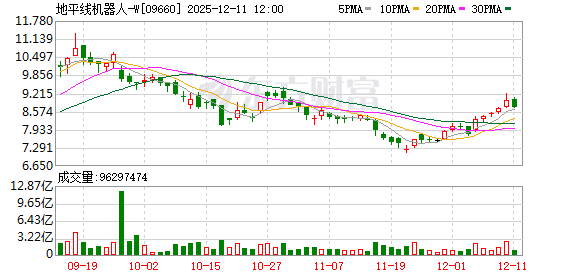
地平线苏箐:未来三年 自动驾驶行业将告别范式迭代狂飙
Zhong Guo Jing Ying Bao· 2025-12-11 04:28
Core Insights - The autonomous driving industry is expected to transition from rapid paradigm shifts to a phase of extreme optimization over the next three years, as stated by a veteran in the field [2][3] - The release of FSD V12 in 2024 is seen as a watershed moment for the industry, marking a significant technological breakthrough that could resolve long-standing bottlenecks [2][3] - Current deep learning technologies are showing signs of reaching their limits, and without breakthroughs in AGI theory, the industry may face a prolonged period of optimization rather than innovation [3][4] Industry Trends - The FSD V12's end-to-end architecture breaks existing barriers by extending deep learning applications from perception to decision-making, completing a technological revolution [3] - The paradigm shift allows for shared development frameworks and sensor configurations between L2 and L4 systems, enhancing collaboration and efficiency [3] - The industry is advised to focus on maximizing the potential of existing technologies, with an emphasis on improving chip performance and model capacity [4] Strategic Directions - The company plans to achieve a tenfold increase in computing power for each generation of AD products, supporting a tenfold scale of system evolution [3] - There is a focus on making L2 systems accessible to a broader market, targeting a price point that allows for wider adoption [4] - The ultimate goal remains to create machines that can replace human drivers, emphasizing the importance of endurance and precision in the industry’s long-term efforts [4]